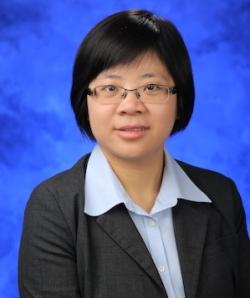
Dr. Chunling Niu is an Assistant Professor at the University of the Incarnate Word's Dreeben School of Education, specializing in quantitative methods, AI applications, and educational assessment. Her interdisciplinary research bridges data science, psychometrics, and program evaluation to address educational equity challenges. Key research areas include educational data mining, machine learning applications in assessment, and AI-driven decision-making frameworks. With approximately 40 peer-reviewed publications and leadership in developing AI curriculum, she pioneers technological innovations in educational research. Honors include the UIW Provost's Legacy Teaching Award and AEA Minority Serving Institute Fellowship. She directs major evaluation projects including UIW's QEP Assessment initiative.
Johan Segers is a Full Professor at the Department of Mathematics, KU Leuven , and a Visiting Professor at the Institut de statistique, biostatistique et sciences actuarielles (UCLouvain). His research bridges extreme value theory , copulas , statistical learning , and optimal transport , with applications in finance, environmental risk analysis, and multivariate statistics. Research Trends : Focus on extremal dependence, vine copulas, and Monte Carlo methods. Recent Article Trends : Combines extreme value theory with graphical models and optimal transport for high-dimensional data analysis. Awards & Honors : Prix Adolphe Wetrems (2012–2013) from the Académie Royale des Sciences, des Lettres et des Beaux-arts de Belgique Fellow of the Institute for Mathematical Statistics (IMS) Elected Member of the International Statistical Institute (ISI) Editorial Roles : Associate Editor for Advances in Applied Probability , Bernoulli , Electronic Journal of Statistics , and others. He also contributes to software development, including the R-package spatialTailDep .
Wouter Kager is an Assistant Professor of Probability in the Department of Mathematics at Vrije Universiteit Amsterdam. His research focuses on discrete systems with random spatial behavior, including lattice aggregation models, random fields, and self-interacting random walks. He is particularly interested in the limiting behavior and scaling limits of these models, contributing to Probability Theory and related disciplines. Research Interests: Kager's work explores the intersection of probability theory and statistical physics. His research includes studies on stochastic processes, lattice models (e.g., Ising model), aggregation phenomena, and network stability. He has developed tools for analyzing stochastic systems, such as rotor-router aggregation and diamond aggregation models. His recent work also addresses applications in coordination games and queueing theory. Tools & Contributions: Kager has created open-source tools for converting EPS/FIG files to PDF/PNG, optimizing n-up printing, and LaTeX presentation themes. These tools are widely used in academic and technical contexts. His contributions to computational methods reflect his interdisciplinary approach to research. Publications: His articles span topics like stochastic domination, critical phenomena in random graphs, and stability analysis of stochastic networks. Recent works include advancements in likelihood ratio analysis, convex cone theory, and coordination game models.
Werner Ploberger is the Thomas H. Eliot Distinguished Professor of Economics at Washington University in St. Louis. He holds a PhD in Applied Mathematics from Vienna University of Technology (1981) and a Habilitation in Econometrics (1993). His research focuses on Statistics, Econometric Methodology, and Time-Series Econometrics. He has held faculty positions at Vienna University of Technology, University of St. Andrews, and University of Rochester, achieving tenure in 1993 and promotion to full professor in 1995. His work spans structural break detection, Bayesian methods, and asymptotic theory. Recent publications explore infinite-dimensional parameter spaces, nonstandard estimation, and functional limit theorems. He serves on PhD admissions and committees. Research interests emphasize rigorous methodological advancements in econometrics, with a focus on time-series analysis and statistical foundations. His contributions include optimal tests for structural breaks, AIC-based Bayesian estimation, and the analysis of multivariate time-series breaks. His articles reflect a blend of theoretical depth and applied econometric challenges.
Young Ki Shin is a Professor of Economics at McMaster University, where he has established himself as a leading researcher in econometrics and economic theory. His work bridges theoretical developments with practical applications in statistical methods for economic analysis, with significant contributions to quantile regression, causal inference, and economic modeling. His educational background includes a Ph.D. in Economics from the University of Rochester (2002-2007) and a B.A. from Seoul National University (1996-2001). Professor Shin's research focuses on several key areas: causal inference and identification , where he develops methods to determine cause-effect relationships; modern computational algorithms and inference , creating efficient statistical methods for large datasets; and applications of statistical decision theory to economic problems. His work often addresses computational challenges in applying econometric methods to massive datasets. His recent publications demonstrate a strong focus on quantile regression methods, with several papers addressing computational challenges in applying these techniques to large datasets. He has made significant contributions to generalized method of moments (GMM) estimation and developed innovative approaches to monotone signaling equilibria in matching markets. His research spans from theoretical econometrics to applied economic questions, including analyses of government spending multipliers during economic crises. As an educator, Professor Shin has taught a comprehensive range of econometrics courses at both undergraduate and graduate levels, including Econometrics I, Econometrics II, and Applied Econometrics, reflecting his research expertise in both theoretical foundations and practical applications of econometric methods.
Kay Giesecke is Professor of Management Science & Engineering at Stanford University, where he has been on the faculty since 2005. He serves as the Founder and Director of Stanford's Advanced Financial Technologies Laboratory, Director of the Mathematical and Computational Finance Program, and is a member of the Institute for Computational and Mathematical Engineering. He has held visiting positions at Cornell, UCLA, and the International Monetary Fund, and serves on the Governing Board and Scientific Advisory Board of the Consortium for Data Analytics in Risk and the Council of the Bachelier Finance Society. Dr. Giesecke received his doctorate in 2001 from Humboldt Universität zu Berlin where he was a fellow of the Deutsche Forschungsgemeinschaft. His educational background forms the foundation for his interdisciplinary work at the intersection of finance, technology, and quantitative methods. Giesecke's award-winning research sits at the intersection of technology and finance, transforming risk intelligence, market oversight, and investment management. He pioneers stochastic models, statistical machine learning methods, computational algorithms, and software to better understand risk, identify opportunities, and support decision-making. His key application areas include risk management, market surveillance, fair lending, and sustainable investing. His work informs financial regulation, guides institutional practices, and contributes to more transparent, resilient, and equitable financial systems. His research spans blockchain technology, mortgage risk analysis, and computational methods for financial systems, demonstrating both theoretical depth and practical relevance. Professor Giesecke has been recognized with multiple prestigious awards for his research contributions: JP Morgan AI Faculty Research Award (2019) SIAM Financial Mathematics and Engineering Conference Paper Prize (2014) Fama/DFA Prize for the Best Asset Pricing Paper in the Journal of Financial Economics Gauss Prize of the Society for Actuarial and Financial Mathematics of Germany (2003) Giesecke has supervised 29 doctoral dissertations, with graduates going on to faculty positions at institutions such as UC Berkeley, Oxford, Wharton, and NYU; leadership roles at firms including Goldman Sachs, Google, JPMorgan, Amazon, and Morgan Stanley; and founding successful technology startups. His research has been supported by the National Science Foundation and several leading financial institutions including JP Morgan, Swiss Re, BBVA, Royal Bank of Scotland, State Street, and Amazon Web Services. As an academic leader, Giesecke is Editor of Management Science (Finance Area) and Associate Editor for Operations Research, Mathematical Finance, Journal of Financial Econometrics, SIAM Journal on Financial Mathematics and several other leading journals. He founded and organizes Stanford's annual AI in Fintech Forum, which brings together academic researchers and industry practitioners to discuss cutting-edge developments in financial technology. His Advanced Financial Technologies Laboratory serves as a hub for interdisciplinary research at the intersection of finance, computer science, and engineering.
Christiana Charalambous is a Lecturer in Statistics at The University of Manchester. Her research focuses on developing advanced statistical methodologies for medical and health-related applications, particularly in pain perception mechanisms and longitudinal data analysis. She is a core member of the Digital Futures research platform, contributing to statistical innovations in healthcare analytics. Her educational background includes a PhD in Statistics (2011) with a thesis titled Variable Selection in Joint Modelling of Mean and Variance for Multilevel Data , supervised by Professor Jianxin Pan. This work laid the foundation for her subsequent research in joint modelling frameworks. Key research interests span: (1) Biostatistical Modelling including copula-based joint models, longitudinal-survival analysis, and latent class models; (2) Pain Perception Dynamics exploring Bayesian estimation of pain-related traits and their neurophysiological correlates; (3) Infection Dynamics involving stochastic models for within-host disease progression and public health applications. Her methodological work integrates advanced statistical theory with clinical and epidemiological data. Recent articles highlight innovations in Gaussian copula frameworks, Burr distribution applications for infection timing analysis, and boundary effects of expectation in pain perception. Her work frequently bridges statistical theory with practical clinical challenges, such as optimizing biomarker variability analysis in longitudinal studies. As Principal Investigator of the Statistical Advisory Unit (SAU) project, she leads multidisciplinary collaborations advancing statistical methodologies across university departments. No scientific awards are explicitly mentioned in her profile. Her advisory contributions include supervising her own PhD research but no listed advisees. Research outputs are concentrated in statistical methodology with strong interdisciplinary medical applications, reflecting her role in the intersection of statistics and healthcare research.
Yanbo Tang is a Lecturer in Statistics at the Department of Mathematics, Faculty of Natural Sciences, Imperial College London. His research focuses on statistical theory and methodology, including Bayesian inference, high-dimensional asymptotics, numerical integration, and applications in astrophysics and social sciences. He is affiliated with the Artificial Intelligence Network and Mathematics research and teaching staff at Imperial College. Education: Not explicitly stated in the provided text. His research interests span statistical theory such as Laplace and saddlepoint approximations, adaptive quadrature methods, and copula models. He also explores applications in areas like extragalactic X-ray jet variability and parental psychological control effects on adolescents. Recent work emphasizes stochastic convergence rates and assumption-lean inference techniques. Selected publications (2020–2024) highlight contributions to high-dimensional statistical problems, asymptotic behavior of likelihood methods, and Monte Carlo integration challenges. His work bridges theoretical advancements with practical computational solutions in complex data analysis. No grants or awards are explicitly listed in the provided information. He contributes to academic discussions, such as commenting on Vansteelandt and Dukes' work on assumption-lean inference.
Liza Levina is the Vijay Nair Collegiate Professor and Chair of the Department of Statistics at the University of Michigan. She is affiliated with the Michigan Institute for Data and AI in Society and the Center for the Study of Complex Systems. Her expertise lies in high-dimensional statistical inference and statistical network analysis, with applications in neuroscience and imaging. She earned her PhD in Statistics from UC Berkeley in 2002 and has been at the University of Michigan since then. Her research focuses on network analysis, statistical learning, and big data, particularly in neuroimaging. She has received notable awards, including the ASA Junior Noether Award, and is a Fellow of both the ASA and IMS. She was an invited speaker at the 2018 International Congress of Mathematicians and an IMS Medallion lecturer. Levina’s work bridges theoretical advancements and practical applications, such as analyzing brain connectivity networks and developing methods for community detection in complex systems. She has contributed to methodologies for network cross-validation, pseudo-likelihood approaches, and conformal prediction in network-assisted regression. Her affiliations include leadership roles in the Department of Statistics and collaborations across interdisciplinary institutes. Her research has been recognized with prestigious acknowledgments, reflecting her impactful contributions to statistical science and its applications.
Christian Genest is a Distinguished James McGill Professor in the Department of Mathematics and Statistics at McGill University. He holds a PhD from the University of British Columbia and has been a leading figure in statistics and probability for decades. His research focuses on dependence modeling, extreme-value theory, multivariate analysis, and their applications in environmental science, hydrology, insurance, and risk management. Education: BSc (1977) Université du Québec à Chicoutimi, MSc (1978) Université de Montréal, PhD (1983) University of British Columbia. Genest has received numerous accolades, including Fellowships from the Royal Society of Canada, American Statistical Association, Institute of Mathematical Statistics, and Fields Institute. He served as SSC President (2007-2008), Director of the Institut des Sciences Mathématiques (2012-2015), and held the Canada Research Chair in Stochastic Dependence Modeling (2011-2025). He has supervised 59 MSc, 9 PhD students, and 15 postdocs, with ongoing mentorship of 2 MSc, 3 PhD candidates, and 2 postdocs. Genest is a prolific speaker, having delivered over 364 talks globally, including plenaries at major conferences like the Statistical Society of Canada and the Fields Institute. His work bridges theoretical advancements and practical applications, with contributions to copula theory, extreme-value analysis, and statistical methodology. He advocates for public engagement, delivering outreach lectures at schools and colleges across Quebec. Award Highlights: 2011 SSC Gold Medalist, 2015 Royal Society of Canada Fellow, 2023 CRM-Fields-PIMS Prize, and 2024 Emanuel and Carol Parzen Prize for Statistical Innovation. Grants and Leadership: Coordinated the CRM Risk in Complex Systems thematic program (2017), edited major statistical journals, and chaired departmental interim leadership (2022-2023).
Lang Wu is a Professor in the Department of Statistics at the University of British Columbia (UBC), part of the Faculty of Science. His research focuses on biostatistical methods for analyzing complex health science datasets, particularly longitudinal data with missing values, censored observations, and measurement errors. He has expertise in constrained statistical inference, joint modeling of longitudinal and survival data, and applications in HIV/AIDS and cancer studies. Education: B.Sc. in Mathematics from East China Normal University (China), M.Sc. in Mathematics from Tulane University (USA), Ph.D. in Statistics from the University of Washington (USA), followed by a postdoctoral fellowship at Harvard University's Biostatistics department. Research Interests include: Longitudinal data analysis Mixed effects models Joint models linking survival and longitudinal outcomes Missing data imputation techniques Constrained hypothesis testing Biostatistical applications in infectious diseases Current advisees include Sihaoyu Gao and Qian Ye. Contact information includes lang@stat.ubc.ca (primary) and langwuubc@outlook.com (alternative). No scientific awards are listed, though his extensive publication record indicates impactful contributions to statistical methodology in health sciences.
Eric Eisenstat is an Associate Professor and Director of HDR Programs in the School of Economics at The University of Queensland (UQ). He holds a Ph.D. from the University of California, Irvine (2007). His research focuses on Bayesian time-series econometrics, structural inference from multivariate models, model uncertainty/averaging, and big data shrinkage estimation. He also works on marketing mix models for policy and private organizations. Education: Ph.D. in Economics, University of California, Irvine (2007) Research Interests: Bayesian econometrics and time-series analysis Structural macroeconomic inference Model uncertainty and averaging Big data applications in economics Marketing mix modeling Consulting: Provides services to policy institutions and private organizations, specializing in big data-driven marketing mix models. Professional Activities: Director of Higher Degree Research (HDR) Programs Available for academic supervision
Prof. KC Gary Chan holds multiple academic roles at the University of Washington, including Professor of Biostatistics and Health Services, Adjunct Professor of Statistics, and Associate Director of the National Alzheimer's Coordinating Center. He earned a BSc in Actuarial Science from the University of Hong Kong and a PhD in Biostatistics from Johns Hopkins University. His research focuses on statistical methods for complex designs, interventions, and outcomes, with expertise in causal inference, clinical trials, and semiparametric models. Recent work emphasizes mediation analysis, nonparametric estimation, and robust statistical techniques. Key contributions include methodologies for handling biased sampling, recurrent event data, and mediation effects in longitudinal studies. His applied work spans healthcare quality improvement, mental health interventions, and neurodegenerative disease research. Chan has collaborated widely across disciplines and institutions, including the Fred Hutchinson Cancer Research Center and Veterans Affairs studies. His research has been supported by grants addressing cardiovascular health disparities, HIV prevention, and cognitive aging.
Lingxiao Wang is an Assistant Professor at the University of Virginia, specializing in advanced statistical methodologies for complex survey designs and epidemiologic research. His work bridges survey statistics, statistical learning, and public health applications, with a focus on improving population inference accuracy and developing representative risk models. Ph.D., Survey Statistics and Methodology, University of Maryland, College Park M.A., Applied Statistics, University of California, Santa Barbara B.S., Mathematics and Statistics, Shandong University His research centers on enhancing efficiency in regression analyses for two-phase sampling, integrating data from surveys/registries for minority subgroup risk estimation, and leveraging statistical learning to improve external validity in nonprobability samples. Recent work explores gene-environment independence in case-control studies and pharmaceutical effects on cancer risk. Key article trends include: calibration methods for complex surveys, kernel weighting techniques for nonprobability samples, haplotype-based genetic inferences, and risk modeling for public health applications. His 2025 publications highlight improved lung cancer risk models and calibration strategies for pooled samples.
Ming Wang, PhD is a Professor in the Department of Population and Quantitative Health Sciences at Case Western Reserve University School of Medicine. She also serves as Director of the Masters Program in Biostatistics . Her research focuses on statistical method development for biomedical and human health problems, including causal inference, longitudinal data analysis, and computational methods for genomic and imaging data. She collaborates on studies involving cancer, cardiovascular disease, kidney disease, neurodegenerative disorders, and child abuse. Education : PhD in Biostatistics, Emory University (2013) MSc in Biostatistics, University of Louisville (2008) BSc in Applied Mathematics, Peking University (2006) Research Interests : Methodological: Bayesian statistics, missing data, spatial statistics, risk prediction Clinical: Prostate cancer, kidney disease, cardiovascular outcomes, neurodegeneration Key Awards : Elected Member, International Statistical Institute (2021) Dean's Excellence in Teaching Award (2019) NISS/ASA Junior Faculty Presentation Award (2016) Professional Roles : Associate Editor: Biometrics , Statistics in Medicine , Journal of Biopharmaceutical Statistics Statistical Editor: Journal of the American Society of Nephrology Her work bridges statistical innovation with clinical impact, particularly in leveraging large-scale health data for precision medicine and population health strategies.