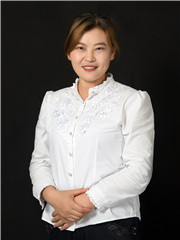
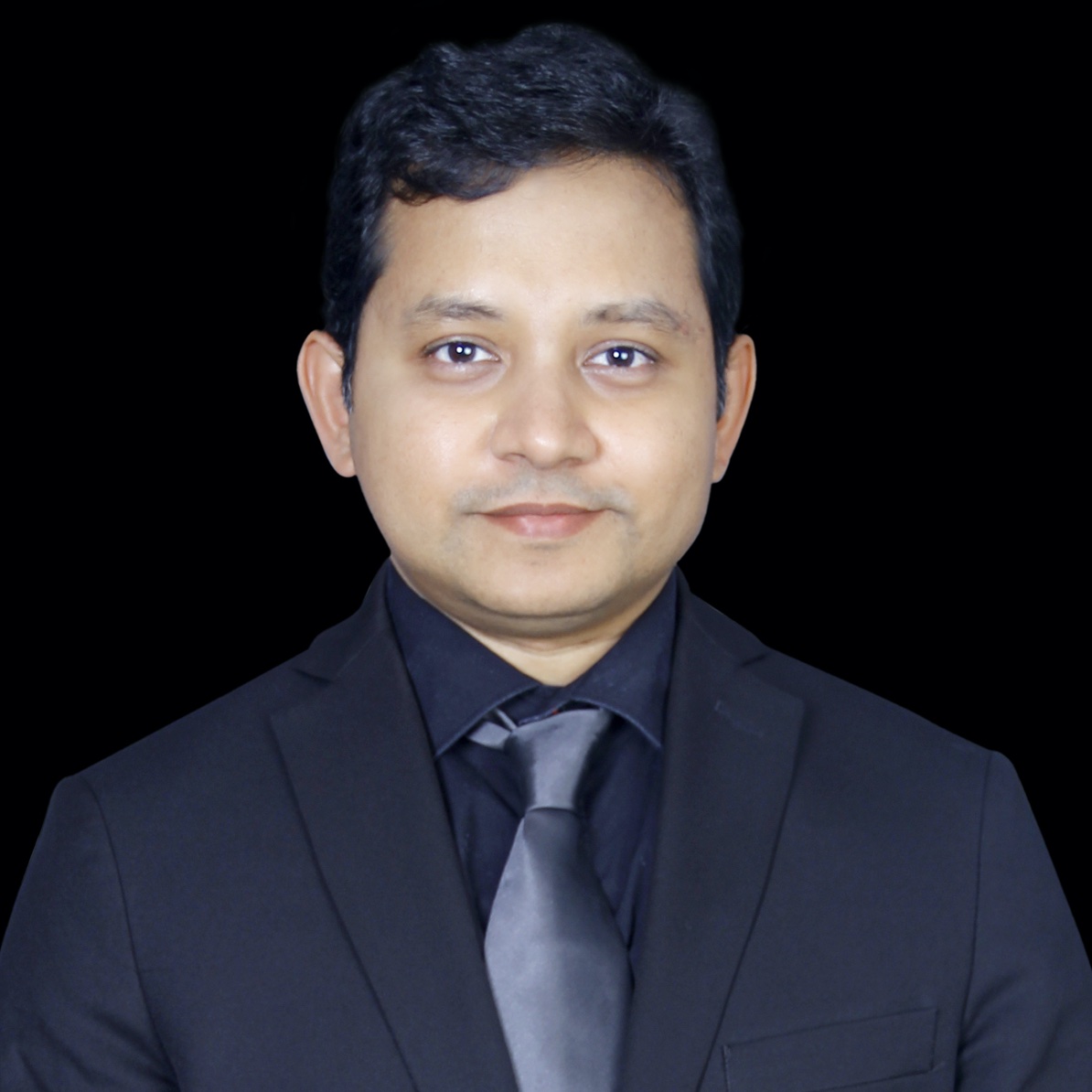
Irene van den Broek is an Assistant Professor at the College of Pharmaceutical Sciences , Utrecht University , within the Chemical Biology and Drug Discovery department. She combines academic roles with freelance data visualization work. Teaches Bioanalysis (Bachelor's level) Supervises students in academic writing and intervision Develops interactive R Shiny applications for citizen science projects Her research focuses on: Bioanalysis techniques Quantified Self health tracking Data Visualization for health & environmental data Wearable Devices integration (Ōura Ring, RescueTime) Key article trends include environmental monitoring ( Onze Lucht , Was het Donker? ) and personal health analytics using R packages like echarts4r and reactable . Projects emphasize interactive web visualization and citizen science applications. She provides: Academic writing guidance Tutoring frameworks for student intervision Workshops on scientific communication Key projects include: Onze Lucht (air quality heatmaps) Was het Donker? (light pollution visualization) Ōura Ring Analysis (sleep/activity metrics)
Itzik Ben-Itzhak is a University Distinguished Professor in the Department of Physics at Kansas State University . His research focuses on Experimental Atomic, Molecular & Optical Physics , particularly the interaction of intense ultrashort laser pulses with molecular ions. He leads a research group utilizing the Kansas Light Source (KLS) and a 3D momentum imaging system to study ionization and dissociation channels in molecular systems. Education: Ph.D. from The Technion, Haifa, Israel (1986) His research has explored vibrational trapping theories in H2+ dissociation, revealing suppression mechanisms tied to transition dipole moments rather than previously assumed trapping models. He has also investigated zero photon dissociation (ZPD) through Raman scattering processes. His work involves collaborations with theorists like B.D. Esry and experimentalists across multiple institutions. Recent publications highlight advancements in high-order harmonic generation , strong field-driven isomerization , and three-body fragmentation dynamics . His experimental setup modifications enable precise measurements of kinetic energy release (KER) and zero-KER dissociation processes. Research Support: Funded by the Department of Energy, National Science Foundation, and US-Israel Binational Science Foundation Advisees: Graduate student Naoki Iwaomoto (PhD) and postdoctoral researcher Chandan Bagdia He contributes to the development of 3D momentum imaging systems and ultrashort laser pulse applications , bridging experimental and theoretical approaches in quantum molecular dynamics.
Vincenzo Tamma is a Professor of Physics and Quantum Technology at the Faculty of Technology, School of Mathematics & Physics, University of Portsmouth . He is the Founding Director of the Quantum Science and Technology Hub (QSTH) and leads cutting-edge research in quantum technologies. M.Sc. in Physics, University of Bari (2006, Summa cum Laude) Ph.D. in Physics (University of Bari) and Applied Physics (University of Maryland Baltimore County, 2010) Research Interests focus on quantum physics fundamentals, quantum computation, quantum communication, and high-precision sensing. His work bridges quantum information , complexity theory , and general relativity , with applications in defense, risk & resilience , and advanced materials . Recent Publications highlight advancements in Mach-Zehnder interferometry , two-photon entanglement , and multi-parameter quantum estimation . These works emphasize Heisenberg-scaling precision , quantum imaging , and transverse-momentum analysis . Scientific Recognition includes the prestigious Giampietro Puppi Award for his Ph.D. thesis and a Best Application Paper (2024) for contributions to AI-driven prostate image segmentation. He has delivered over 80 invited lectures at institutions like MIT and Oxford. Projects include Distributed Quantum Optical Sensing and Multiphoton Quantum Sensing , aiming to enhance precision in quantum measurements and develop global quantum networks. His lab is affiliated with the Institute of Cosmology & Gravitation and Portsmouth Centre for Advanced Materials . Media & Outreach features coverage in outlets discussing quantum computing for defense, cold temperature records (38 picoKelvins), and thermal-light interference for remote sensing. He also organized international workshops such as the High Precision Quantum Sensing Conference (2021).
Dr. Roberto Dinapoli is a Principal Researcher and team leader at the Paul Scherrer Institute (PSI), specializing in microelectronics for high-energy physics and photon science. He earned his PhD from Université Montpellier II and holds a degree in Electronic Engineering from Polytechnic University of Bari. Education: PhD in Microelectronics (Université Montpellier II), Electronic Engineering (Politecnico di Bari) His research focuses on radiation-hard hybrid pixel detectors for synchrotrons and free-electron lasers (XFELs), including the development of EIGER, MÖNCH, MYTHEN III, and DOMINO chips. These systems enable high-resolution imaging, charge integration, and single-photon counting under extreme radiation environments. Recent publications highlight advancements in 25 µm pitch detectors, charge transport simulations using deep learning, and quantum efficiency optimization for soft X-rays. His work impacts applications in synchrotron radiation, nanoelectronics metrology, and high-speed imaging. Key Projects: EIGER (24kHz framing), MÖNCH (25µm pixel), MYTHEN III (50µm strips), DOMINO (2GHz memory) Dinapoli actively collaborates on detector patents licensed to DECTRIS and participates in EUROPRACTICE/CADENCE software management. He leads the Chip Design Competence Team (CDCT) at PSI.
Xia Li is an Associate Professor in the Department of Chemical and Materials Engineering at Concordia University, holding the Concordia University Research Chair in High Energy Rechargeable Batteries. She also serves as the Associate Director of the Concordia Collaborative Centre on Energy and its Transition (C2ET), driving research in sustainable energy storage solutions. Her educational background includes: Ph.D. in Mechanical and Materials Engineering from Western University, Canada (2012-2016) M.S. in Material Physics & Chemistry from Nankai University, China (2009-2012) B.Eng. in Chemical Engineering from Dalian University of Technology, China (2005-2009) Dr. Li's research spans energy storage and conversion with pioneering work in nanomaterials engineering for next-generation batteries. Her expertise covers Li-ion, Li-sulfur, and solid-state battery systems , including solid-state electrolytes , synchrotron-based characterization , and atomic/molecular layer deposition for interface stabilization. She develops innovative solutions for sulfur cathodes, polysulfide suppression, and high-energy-density storage. Analysis of her recent publications reveals a dominant focus on solid-state battery commercialization , with 70% of 2021-2023 work addressing interfacial challenges in sulfide-based electrolytes and sulfur cathodes. Her research uniquely bridges in-situ characterization with nanoscale interface engineering , establishing critical pathways for practical all-solid-state batteries while advancing sustainable organic and sodium-based systems. Her primary recognition includes: Concordia University Research Chair in High Energy Rechargeable Batteries Dr. Li mentors graduate researchers through Concordia's chemical engineering programs and leads externally funded projects within the C2ET initiative. Her teaching portfolio features specialized courses in battery materials (CHME 6101) and clean energy systems (CHME 6911), co-developed with industry partners like Hydro-Québec. She directs the Dr. Li Research Lab , which operates state-of-the-art facilities for thin-film deposition and synchrotron characterization. The lab collaborates with the Canadian Light Source and National Research Council to accelerate solid-state battery development through the C2ET consortium's industry-academic network.
Dagmara Kulig, PhD, Eng., serves as a Lecturer at the Department of Particle Interactions and Detection within the Faculty of Physics and Applied Computer Science at AGH University of Science and Technology in Kraków, Poland. Her research focuses on advancing radiation measurement technologies for medical applications, particularly in radiotherapy quality assurance and dosimetry innovation. Her primary research domains include Radiation Dosimetry, Medical Physics, and Radiotherapy, with specialized expertise in Optically Stimulated Luminescence (OSL) and Thermoluminescence (TL) phenomena. Kulig investigates novel luminescent materials—especially LiMgPO 4 -based compounds—and develops 3D-printed scintillators for precise dose measurement. Her work bridges experimental physics with clinical oncology through computational modeling and deep learning applications for treatment planning optimization. Analysis of her 15 most recent publications (2016-2025) reveals a consistent trajectory in radiation monitoring systems, with increasing emphasis on modular detector architectures and AI-driven medical imaging. The Dose-3D project represents a significant computational contribution, while her material science work on LiMgPO 4 dosimeters addresses critical challenges in signal stability and sensitivity. Recent publications demonstrate growing integration of 3D printing and deep learning for personalized radiotherapy solutions. Scientific awards: No awards documented in provided information Advising and grants: No student supervision details available No external funding sources specified Laboratory engagement: Core contributor to Dose-3D project developing Monte Carlo simulation platforms Experimental work on radiation detector systems at Department of Particle Interactions and Detection Material synthesis and characterization for luminescent dosimeters
Nicolas Martin is a CNRS Researcher at the Centre de Recherche Paul Pascal (CRPP), a joint research unit of the CNRS and the University of Bordeaux. Based in Pessac, France at 115 avenue Dr Schweitzer, he works as a member of the BIO 2.0 research team. His research focuses on liquid-liquid phase separation, coacervation, artificial cells, and stimuli-responsive systems. Dr. Martin's research centers on creating and studying synthetic cells using principles of liquid-liquid phase separation. His work explores how coacervate droplets serve as models for prebiotic protocells and how these systems can be engineered for various applications. He investigates stimuli-responsive systems that change properties in response to external triggers like light, with applications in synthetic biology and materials science. His research bridges chemistry, physics, and biology to understand and engineer compartmentalized systems that mimic cellular organization. Analysis of Dr. Martin's recent publications reveals a consistent focus on coacervate systems with increasing complexity. His work spans from fundamental studies of phase separation phenomena to practical applications in creating artificial cells. A notable trend is his growing emphasis on light-responsive systems and the integration of biological components into synthetic compartments. His research has evolved from studying basic coacervation phenomena to developing increasingly sophisticated protocell systems with multiple functionalities and environmental responsiveness. ANR PRC PROTOPOLYM (partner, 2025) ANR PRC SHEILA (partner, 2024) Doctoral Network SIGSYNCELL (partner, 2023) RIE U. Bordeaux Project (coordinator, 2023) ANR PRC CHEMinDROPS (partner, 2023) ANR PRC WalLesShape (partner, 2022) CEFIPRA (coordinator, 2022) ANR JCJC LASCO2 (coordinator, 2021) Nouvelle-Aquitaine Region Project (coordinator, 2020) ANR PRC CoSyCell (partner, 2019) IdEx Bordeaux Junior Chair (coordinator, 2018) Marie Skłodowska-Curie Individual Fellowship (declined, 2018) Dr. Martin has coordinated multiple significant research projects including the IdEx Bordeaux Junior Chair (2018), CEFIPRA (2022), and RIE U. Bordeaux Project (2023), demonstrating his leadership capabilities. He has served as a partner in numerous ANR-funded projects, indicating strong collaborative networks across French and international research institutions. His research has received consistent funding from various sources including the French National Research Agency, regional initiatives, and international collaborations. As a member of the BIO 2.0 team at CRPP, Dr. Martin collaborates with researchers working at the intersection of biology, chemistry, and physics. His laboratory focuses on creating and studying synthetic cellular systems using principles of phase separation. The team employs a multidisciplinary approach combining experimental techniques from multiple scientific disciplines to engineer and characterize complex coacervate systems with potential applications in biotechnology and synthetic biology.
Manuel Fuentes Conde is a full-time University Professor in the Department of Electronic and Automatic Engineering at the University of Jaén . He leads research in the Research and Development in Solar Energy group within the Center for Advanced Studies in Earth Sciences, Energy . His work bridges electronics engineering with sustainable energy solutions, particularly focusing on photovoltaic systems and their applications in water disinfection. Education : PhD in Electronics Technology (University of Jaén, 2009) with dissertation: Contribution to the modeling of the electrical behavior in real sunlight of crystalline silicon photovoltaic modules and ICs His research spans Solar Energy , Photovoltaic Systems , Water Disinfection Technology , and IoT Applications in Renewable Energy . He pioneers the SolWat hybrid system, combining photovoltaic energy generation with solar water purification. His projects address sustainable development goals , focusing on developing countries and refugee camps . Recent publications emphasize hybrid solar-water systems , IoT-enabled monitoring , and technology scalability . He has developed low-cost Arduino-based dataloggers for PV systems and explored the Bunsen–Roscoe Reciprocity Law in UV disinfection. His work includes field trials in Mexico and long-term evaluations of solar installations in Saharawi refugee camps. As an educator, he implements Project-Based Learning (PBL) in engineering courses, including Radio Control Vehicles and Applied Electronics . His technical contributions extend to 3G-connected monitoring systems and cost-effective sensors for solar applications, aligning with global development and sustainability objectives.
Abhi Saxena is a Postdoctoral Fellow at the University of Colorado Boulder and a researcher at the National Institute of Standards and Technology (NIST) , Boulder. His academic journey includes a Ph.D. in Electrical & Computer Engineering from the University of Washington, Seattle, under the mentorship of Professors Arka Majumdar and Rahul Trivedi, and a bachelor’s degree in Electrical Engineering from the Indian Institute of Technology (IIT) Delhi. Ph.D., Electrical & Computer Engineering, University of Washington, Seattle B.Tech, Electrical Engineering, Indian Institute of Technology (IIT) Delhi Abhi’s research focuses on the intersection of photonics , superconducting optoelectronics , nanofabrication , and neuromorphic systems . His work involves designing and fabricating photonic devices for quantum simulation, particularly using coupled cavity arrays (CCA) to engineer Hamiltonians. He has contributed to advancements in boundary tomography algorithms, site-controllable CCAs, and improving single-photon sources via nanocavities. His recent publications highlight trends in quantum simulation , integrated photonics , and phase-change materials for non-volatile photonic devices. Key areas include microring arrays , superradiance , and graph-based photonic systems . He also explores computational spectroscopy using meta-optics and silicon photonics with graphene heaters . Currently, Abhi is affiliated with the Quantum Nanophotonics Group at CU Boulder and NIST, where he works on transmitter circuits and integrated photonic systems. His Google Scholar profile lists 15 recent contributions to these fields.
Andrea Damascelli is a Professor in the Department of Physics & Astronomy at the University of British Columbia (UBC), where he also serves as the Scientific Director of the UBC Stewart Blusson Quantum Matter Institute and Co-Director of the UBC-Max Planck Institute-UTokyo Centre for Quantum Materials. He holds a Tier I Canada Research Chair in the Electronic Structure of Quantum Materials. Dr. Damascelli received his Bachelor's degree in Physics from the University of Milan and his Doctoral degree in Physics from the University of Groningen. His academic career includes postdoctoral work at Stanford University and the Stanford Synchrotron Radiation Laboratory before joining UBC as an Assistant Professor in 2002. Dr. Damascelli's research focuses on the electronic structure of quantum materials, with particular emphasis on strongly correlated electron systems, transition-metal oxides, and high-temperature superconductors. His work employs advanced spectroscopic techniques including time-, spin-, and angle-resolved photoemission spectroscopy (ARPES) and resonant elastic x-ray scattering (REXS). His laboratory investigates the interplay between spin, charge, and orbital degrees of freedom in novel complex systems and nanostructures, aiming to understand and control quantum electronic properties. His recent publications demonstrate a consistent focus on quantum materials with an emphasis on ARPES studies of cuprate superconductors, iron-based superconductors, iridates, and topological materials. His work often examines charge order phenomena, metal-insulator transitions, and the fundamental mechanisms behind high-temperature superconductivity. A growing trend in his research involves time-resolved studies of quantum dynamics and the development of computational frameworks for analyzing complex spectroscopic data. Dr. Damascelli has received numerous prestigious awards including: Fellow of the Max Planck Graduate Center for Quantum Materials (2021) Fellow of the CIFAR Quantum Materials Program (2019) Fellow of the Royal Society of Canada (2018) CAP/DCMMP Brockhouse Medal (2018) Tier I Canada Research Chair (2015) Fellow of the American Physical Society (2014) E.W.R. Steacie Memorial Fellowship from NSERC (2011) Sloan Research Fellowship (2007) Dr. Damascelli actively supervises graduate students and postdoctoral fellows in the Quantum Materials Lab at UBC. Among his known students is Cissy Suen, who completed a PhD on "Exploration of the Electronic Structure of the Mott Insulator Ca2RuO4." His research is supported by significant grants including his Canada Research Chair and collaborations with major facilities like the Canadian Light Source. He is currently establishing the Quantum Materials Spectroscopy Centre in Saskatoon to further advance quantum materials research in Canada. Dr. Damascelli leads the Quantum Materials Lab (QML) at UBC, which operates within the Stewart Blusson Quantum Matter Institute. The QML brings together expertise in theoretical modeling, advanced spectroscopy, and materials growth to create a comprehensive approach to studying quantum materials. His team collaborates extensively with international partners through the UBC-Max Planck Institute-UTokyo Centre for Quantum Materials, positioning Canada as a global leader in quantum materials research.
Professor Qiu Mingxia serves as a Professor at Shenzhen University of Technology's School of New Materials and New Energy since January 2024, previously holding the position of Associate Professor from 2017-2023. A recipient of the Shenzhen High-Level Leading Talent Award (Local Reserve Level), she holds a PhD in Materials Science and Engineering from Zhejiang University and has extensive experience in semiconductor research and academic leadership. Education: PhD in Materials Science and Engineering, Zhejiang University (2005-2008) Master in Materials Science and Engineering, North University of China (2002-2005) Research Focus: Professor Qiu's work centers on next-generation semiconductor technologies, with three interconnected pillars: developing perovskite-based optoelectronic devices for efficient light emission, engineering magnetic storage thin films for advanced spintronics applications, and innovating 3D printed porous materials for biosensing systems. Her research bridges fundamental materials science with practical device engineering, emphasizing solution-processed techniques and novel material interfaces. Publication Trends: Recent publications (2020-2024) reveal a strategic shift toward applied optoelectronics and spintronics, with increasing focus on perovskite LED efficiency optimization, quantum dot energy transfer mechanisms, and magnetic interface engineering. Educational research forms a secondary stream, documenting practical teaching reforms in applied technology universities. Her work shows strong industry alignment through patents in flexible electronics and laser fabrication. Scientific Recognition: Shenzhen High-Level Leading Talent Award (Local Reserve Level, 2012) Advanced Teaching Individual Award (Shenzhen University of Technology, 2019) Shenzhen Advanced Education Unit (2021, team award) Third Prize Shenzhen University Science and Technology Progress Award (2010) Research Leadership: Professor Qiu has secured leadership roles in high-impact national projects including the National 02 Major Project and NSFC Key Projects, while directing multiple Shenzhen-level initiatives in semiconductor manufacturing and educational innovation. Her patent portfolio demonstrates successful technology transfer in flexible conductive films and perovskite crystal engineering, reflecting strong industry-academia collaboration. Research Infrastructure: She directs laboratory facilities focused on thin-film deposition, nanomaterial synthesis, and optoelectronic characterization, maintaining active partnerships with semiconductor manufacturers through school-enterprise cooperation projects that integrate student training with industrial R&D needs.
Souvik Das is an Assistant Professor in the Department of Aerospace, Physics and Space Sciences at Florida Institute of Technology (Florida Tech). A high-energy physicist, he has been a member of the CMS Collaboration at CERN’s Large Hadron Collider since 2006, contributing to detector instrumentation and analyses that culminated in the 2012 discovery of the Higgs boson. Education & Experience: PhD Advisor: Anders Ryd (mentioned in INSPIRE profile) Postdoc: University of Florida (2011–2017) Staff Scientist: Purdue University (2017–2023) Current: Assistant Professor, Florida Tech (2023–present) Research Interests: Dr. Das focuses on experimental high-energy particle physics, particularly on the properties of the Higgs boson, electroweak symmetry breaking, and searches for new physics beyond the Standard Model. He has pioneered instrumentation efforts for the next-generation CMS detector upgrade and maintains active interests in quantum computing architectures and neuromorphic artificial intelligence as applied to particle-physics data analysis. Research Highlights: His work spans precision measurements of the Higgs boson width, searches for exotic Higgs decays into light pseudoscalars, studies of heavy-flavor and multi-strange hadrons in heavy-ion collisions, and development of machine-learning techniques for background estimation. His publications reflect contributions to both the CMS and STAR collaborations, covering topics from dielectron production to hypertriton formation. Scientific Awards: No specific awards were mentioned in the provided text blocks. Teaching & Mentoring: While no explicit list of students was provided, Dr. Das expresses a strong passion for teaching physics at both undergraduate and graduate levels. Laboratories & Teams: He leads instrumentation R&D within the CMS Collaboration and is involved in the Florida Tech High-Energy Physics group located in F.W. Olin Physical Sciences 342.
Tommy Nylander serves as Expert Professor of Physical Chemistry at Lund University's Faculty of Engineering (LTH), where he is Principal Investigator for NanoLund: Centre for Nanoscience. He holds cross-disciplinary roles in LU's Light and Materials profile area and LTH's Food and Bio initiative, reflecting his integrative research approach spanning surface science, colloid chemistry, and nanotechnology. His research centers on lipid self-assembly, interfacial phenomena, and nanostructured biomaterials, employing neutron scattering, X-ray techniques, and microscopy to investigate systems like sponge-phase nanoparticles, vesicular dispersions, and protein-lipid interfaces. Recent work explores enzymatic modification of food lipids, therapeutic protein stabilization, and ion-specific adsorption effects on oxide surfaces, with strong applications in drug delivery and sustainable materials. Current publications (2025) reveal consistent focus on structural characterization of lipid nanoparticles across Food Hydrocolloids, Langmuir, and Journal of Colloid and Interface Science, demonstrating interdisciplinary collaboration with biologists and engineers for biomedical and food science applications. Notable recognitions include: Norblad-Ekstrand-medal (2017) for surface science contributions Berols Nordic Research price for PhD thesis (1988) He supervises 17 graduate students and leads major grants including Swedish Research Council funding for neutron reflectivity optimization (2025-2026), ESS instrument development, and dietary regulation of gut-brain barriers. His work addresses UN Sustainable Development Goals through sustainable materials and health innovations. Nylander manages Lund's Surface Characterization infrastructure and Super ADAM neutron facility, collaborating with European Spallation Source teams on next-generation scattering instruments while hosting international researchers like Ben Humphreys (2020-2021).
Bernard J Kippelen is a Professor and Vice Provost for International Initiatives at the Georgia Institute of Technology, holding the Steven A. Denning Chair for Global Engagement. He is affiliated with the School of Electrical and Computer Engineering and directs the Center for Organic Photonics and Electronics (COPE). Education : Maitrise in Solid-State Physics (1985), Ph.D. in Nonlinear Optics (1990) from University Louis Pasteur in Strasbourg. Dr. Kippelen’s research spans organic optoelectronics, focusing on flexible and printed devices for lighting, photovoltaics, and sensors. His work explores structure-property relationships in organic materials and their integration into lightweight systems for biometric monitoring and self-powered sensing. He has pioneered solution-based electrical doping techniques and stable encapsulation methods for organic electronics. His publications include over 270 refereed articles with 25,000+ citations and an h-index of 82. He has co-authored 14 book chapters and holds 25 patents. Scientific Awards : NSF CAREER Award, 3M Young Faculty Award, Senior Member IEEE, Fellow of the Optical Society of America, Fellow of the International Society for Optical Engineering, Fellow of the Materials Research Society, and Fellow of the American Physical Society. Dr. Kippelen has served as Deputy Editor of Energy Express , founding editor of the same journal, and co-President of the Lafayette Institute, a commercialization initiative at Georgia Tech-Lorraine in France.
Prof. Dr. Snezana Stanković is a Full Professor at the Department of Textile Engineering within the Faculty of Technology and Metallurgy, University of Belgrade . Appointed in 2022, her work focuses on textile comfort, sustainable materials, and functional clothing design. She teaches courses like "Clothing Construction" and "Thermal Comfort Optimization." Key Research Areas: Textile Engineering, Material Science, Sustainable Textiles Notable Collaborations: Milada Novaković, Dušan Popović, Goran Poparić Her recent publications emphasize eco-friendly cellulose textiles, UV protection, and hemp-based materials. She has mentored 11 students across Basic, Master's, and Doctoral studies, including Ana Mićković (2024) on UV protective hemp textiles and Stefana Milosavljević (2024) on fluid management in knits. Despite her 2000 paper on metal fibers in yarns, no explicit scientific awards are documented in the provided text.