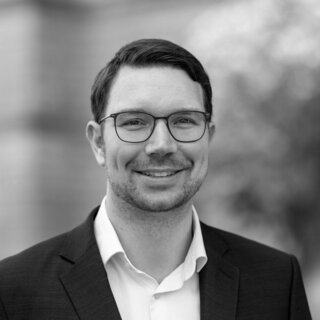
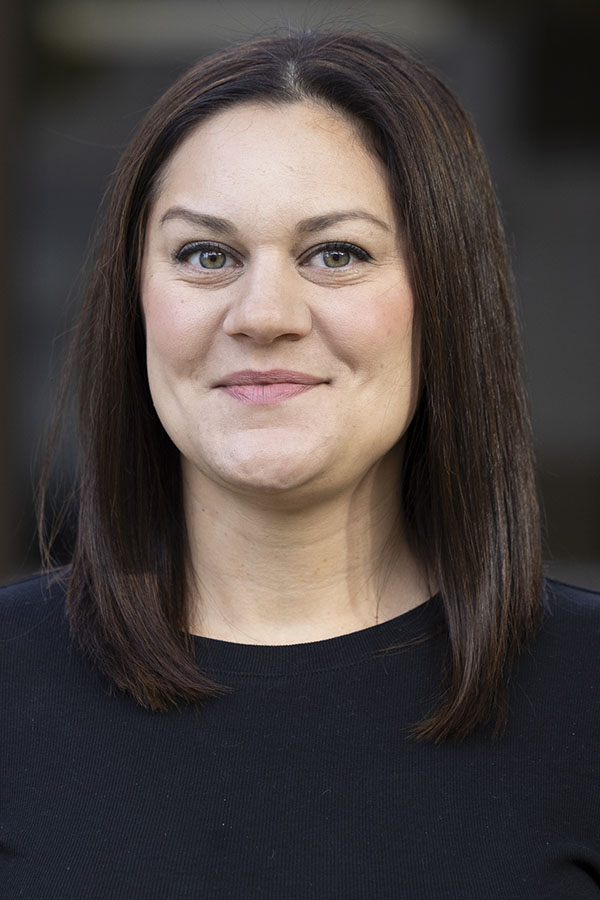
Dr. Fanny BOUTINET is a Lecturer in French Literature at the UFR Letters and Arts, University of Artois. She specializes in 17th-18th century women's memoirs, self-narrative practices, and book history. Current focus on 'Women's Memoirs' production by book professionals Key research areas: authorship, gender studies, historical bibliography Active in academic seminars and conferences Her publications analyze editorial processes, authenticity in historical memoirs, and gendered textual practices. She co-organizes doctoral seminars and participates in interdisciplinary research projects. Dr. Boutinet's academic activities include: 2023: Co-organized 'Littérarisation(s) 3' workshop 2020-2022: Co-organized doctoral seminar 'Raconter la publication: la place des femmes' 2023: Presented on editorial strategies in Courcelles' memoirs
Dr. Li Gerhalter is a Research Fellow at the University of Vienna's Department of History within the Faculty of Historical and Cultural Studies. She serves as Deputy Head of the Sammlung Frauennachlässe (Collection of Women's Personal Papers), focusing on gender history, archival science, and public history. Her work emphasizes autobiographical writing, material culture analysis, and crisis documentation. Role: Deputy Head, Sammlung Frauennachlässe Key Collaborations: International networks including University of Missouri-Kansas City and University of Hamburg Specialization: Gendered documentation practices, diary studies, and feminist archival frameworks Gerhalter's research spans from 20th century Austrian women's diaries to contemporary crisis documentation practices. She has pioneered analysis of household records, migration narratives, and prosopographical approaches to family histories. Her work bridges historical methodology with digital humanities and public engagement. Recent publications include 2025 studies on WWII diary practices and intersectional archival critiques, with 2024 contributions on public history methodologies. She has organized the annual Tea Hour der Sammlung Frauennachlässe since 2023 and contributed to radio discussions about diary practices in crisis contexts. Scientific Awards: Käthe Leichter-Preis der Arbeiterkammer Wien (2022) Her archival activities include organizing workshops on minority archives, participating in international conferences, and developing collaborative research seminars. The 2021-2025 publications demonstrate consistent engagement with gender history, migration studies, and public history frameworks.
Dr. Jonah Lipton is a Research Fellow at the Firoz Lalji Centre for Africa and the ESRC Centre for Public Authority and International Development at the London School of Economics and Political Science. Specializing in the anthropology of Sierra Leone and West Africa, his work examines youth experiences, family dynamics, crisis response, informal economies, global health systems, and humanitarian interventions through ethnographic fieldwork in Freetown's urban neighborhoods. His research program centers on long-term ethnographic engagement, beginning with PhD fieldwork conducted immediately before and during the 2014-2015 Ebola outbreak, which explored how young men navigated the crisis within intimate social and economic contexts of home and community. Subsequent research expanded to investigate 'family politics,' analyzing family meetings and domestic power structures in Sierra Leonean households. Lipton's methodological approach combines classic anthropological techniques with contemporary analysis of digital communication and urban political economy. Lipton's scholarly output reveals consistent thematic development across publications, with a clear trajectory from immediate Ebola crisis documentation to deeper theoretical contributions about social order during emergencies. His work demonstrates how global health interventions intersect with local cultural practices, particularly examining burial rituals as sites of cultural negotiation during the Ebola epidemic. The 2017 Journal of the Royal Anthropological Institute article 'Black' and 'White' Death established his reputation for analyzing how crises reveal underlying social tensions through the lens of everyday practices. As an active public intellectual, Lipton contributes to media discourse on pandemic responses, having drawn parallels between Ebola and coronavirus experiences. His forthcoming book 'In the Time of Ebola' (Cornell Press, November 2024) represents a significant scholarly contribution to the field. He convenes the LSE Critical African Writings reading group and maintains engagement with both academic and public audiences through diverse publication venues from scholarly journals to major media outlets.
Professor Meir Lubetski is a distinguished scholar in the Department of Modern Languages & Comparative Literature at Baruch College's Weissman School of Arts and Sciences, City University of New York. With decades of academic service, he has established himself as a leading expert in biblical studies, particularly focusing on the intersection of archaeology, epigraphy, and biblical interpretation. Dr. Lubetski earned his educational credentials from prestigious institutions including a Ph.D. from New York University, an M.S. in TV & Broadcasting from Brooklyn College, and multiple degrees from the Hebrew University of Jerusalem including an M.A. in Education and a B.A. in History/Political Science. His academic journey reflects a unique blend of Judaic studies, biblical scholarship, and media expertise. Professor Lubetski's research centers on making the Bible intelligible within its ancient context, with particular emphasis on how new archaeological discoveries and inscriptions impact biblical interpretation. His scholarly work bridges ancient Near Eastern culture, Rabbinic material, and biblical exegesis, providing fresh insights into difficult biblical passages. He has developed specialized expertise in Hebrew seals, bullae, and ostraca, examining how iconography and inscriptions illuminate biblical understanding. His extensive publication record shows a clear trajectory from broader biblical studies toward increasingly specialized epigraphic analysis. Early works focused on biblical interpretation through Rabbinic literature and comparative studies, while his more recent scholarship has concentrated on Hebrew inscriptions, seals, and iconography from the biblical period. This evolution reflects his growing specialization in using archaeological artifacts to inform biblical scholarship. SY Agnon Award for Academic Excellence (New York University, 1973) Bibliography Award, Honorable Mention (Association of Jewish Libraries, 2009) Scholars Assistance Award from Baruch College (multiple years) Commended by Chancellor Kibbee for academic distinction (1978) Cited by Cyrus H. Gordon for 'thought-provoking interpretations' Festschrift published in his honor: 'Visions of Life in Biblical Times' (2015) Professor Lubetski has served as a dedicated advisor for numerous independent study students across decades, as evidenced by his extensive teaching record of CMP/LTT 5000 Independent Study courses. His research has been consistently supported by multiple PSC-CUNY grants, including the recently completed 'Unlocking Secrets of Ancient Hebrew Inscriptions and Icons' (2021-2023) and the currently funded project of the same name (2022-2023). These grants have enabled his specialized research on Hebrew seals, inscriptions, and their iconographic elements. His scholarly influence extends beyond Baruch College through extensive conference presentations at major international venues including the Society of Biblical Literature, European Association of Biblical Studies, and World Congress of Jewish Studies.
Christopher Clarke serves as a Visiting Assistant Professor in the Translation Studies program at the University of Connecticut. His academic foundation includes a Ph.D. in French from The Graduate Center (CUNY, 2020), an M.A. in Literary Translation from New York University (2012), and a B.A. Honours in French from Simon Fraser University (2011). His educational background demonstrates deep interdisciplinary training: Ph.D. in French, The Graduate Center (CUNY), 2020 M.A. in Literary Translation, New York University, 2012 B.A. Honours in French, Simon Fraser University, 2011 Clarke specializes in Translation Studies with emphases on literary translation methodologies, 19th-21st century French literature (particularly interwar works, contemporary novels, and Oulipo experimentalism), and French cinematic traditions. His research bridges theoretical scholarship with creative practice, examining how linguistic and cultural transfer operates within avant-garde and surrealist frameworks. His recent publications reveal a consistent engagement with experimental literary forms across historical periods—from 19th-century biographical fiction to contemporary postmodern narratives—with recurring themes of procedural writing, cultural identity, and nonverbal communication systems. The works demonstrate technical mastery in handling complex literary devices while maintaining accessibility for modern readers. His scholarly recognition includes: French-American Foundation Translation Prize (2019) PEN/Heim Translation Fund Grant (2016) Multiple longlistings for PEN Translation Prize and Best Translated Book Award Finalist for French-American Foundation Prize (2017) Clarke actively contributes to the translation ecosystem through editorial leadership as co-editor of Hopscotch Translation and editor of World Poetry Review, alongside securing competitive grants like the PEN/Heim award. His collaborative work with the Outranspo creative translation collective since 2014 demonstrates commitment to innovative translation practices beyond traditional academic boundaries. As a core member of the Outranspo collective, Clarke participates in experimental translation performances and cross-disciplinary projects that challenge conventional notions of textual transfer, often incorporating elements of theater, visual art, and live interpretation to explore the physicality of linguistic exchange.
Marcel Mierwald is a Junior Professor at the Technische Universität Braunschweig and researcher at the Leibniz Institute for Educational Media (GEI). His work focuses on the didactics of educational media with a specialization in history, emphasizing digital transformation, empirical research in history teaching, and language-sensitive pedagogy. He contributes to interdisciplinary projects such as Empowering Police Officers and Teachers in Arguing Against Antisemitism (EMPATHIA³) and leads Generative KI als Bildungsmedium (GeKIB). Education: Studied history, politics, and educational science at Freie Universität Berlin and German studies at Ruhr University Bochum. Research: Explores digital educational media, generative AI applications, empirical history teaching, and historical consciousness in the post-digital era. Projects: Leads GeKIB, co-heads the working group Empirische Zugänge der Geschichtsdidaktik , and contributes to INTERXR and HiPBXR . Publications: 2024–2025 works address AI in education, digital source criticism, and migration history. Awards: No specific awards listed.
Dr. Japhy Wilson is a Lecturer in Human-Environment Interactions at the School of Environmental and Natural Sciences, Bangor University. He holds a PhD in International Politics and is a Fellow of the Higher Education Academy (HEA). His interdisciplinary research bridges human geography and development studies, focusing on the political ecology of development in the urban Anthropocene. Wilson’s academic background includes a BA in Philosophy, an MA in International Relations, a PGDip in International Political Economy, and a PhD in International Politics. His research is deeply field-based, with extensive work conducted in Mexico, Uganda, Ghana, Ecuador, and Peru. His research interests include utopian infrastructural megaprojects, political ecologies of extractivism, ideological legitimations of inequality, planetary urbanization, subaltern urbanism, and critical theory. Drawing on influences such as historical geographical materialism, psychoanalytic ideology critique, gonzo journalism, surrealism, and psychogeography, Wilson employs experimental and creative methodologies in his scholarship. His recent publications reveal a consistent focus on the intersections of capitalism, urbanization, and ecological crisis in the Global South, particularly in the Amazon. Themes of surrealism, absurdity, and apocalyptic urbanism recur across his work, reflecting his innovative theoretical and methodological approach. He frequently publishes in leading journals such as Antipode , Environment and Planning D , Urban Studies , and International Journal of Urban and Regional Research . Wilson has supervised five postgraduate students to completion, with research topics spanning labor struggles in China, resettlement in Mozambique, development fundraising in the UK, and wind farm politics in Mexico. He welcomes new research students in areas related to extractivism, megaprojects, planetary urbanization, and critical Latin American studies. He is the author of influential monographs including Jeffrey Sachs: The Strange Case of Dr Shock and Mr Aid (2014), Reality of Dreams: Post-Neoliberal Utopias in the Ecuadorian Amazon (2021), and Extractivism and Universality: Inside an Uprising in the Amazon (2023). His co-edited volume The Post-Political and Its Discontents (2014) with Erik Swyngedouw is a key text in critical political geography. Wilson’s current research project, The City at the End of the World (2019–2023), investigates Iquitos in the Peruvian Amazon as a site of zoonotic urbanization and surreal political ecologies under pandemic conditions.
Elizabeth D. Brookins is an Associate Professor in the Department of Life Sciences at Albany College of Pharmacy and Health Sciences (ACPHS), serving as Director of Pre-Professional Pathways. She holds a Ph.D. in Biomedical Sciences from Albany Medical College, an M.S. from the same institution, and a B.S. in Biochemistry from Siena College. Her work focuses on anatomy/physiology and advising best practices for health professions students. She has authored articles on survey analysis in academic advising and regional meeting planning, emphasizing leadership development and institutional collaboration. Education: Ph.D. in Biomedical Sciences, Albany Medical College M.S. in Biomedical Sciences, Albany Medical College B.S. in Biochemistry, Siena College Her research interests span health professions advising methodologies, pre-professional pathways optimization, and leadership in academic advising. She has contributed to NAAHP’s Best Practices guidelines and co-chaired the 2020 NAAHP National Meeting. Her awards include the Albany Medical College Alumni Travel Award (2007, 2009). Brookins is actively involved in professional organizations such as the Northeast Association of Advisors for the Health Professions (NEAAHP), where she served as President Elect (2018–2020), and the National Association of Advisors for the Health Professions (NAAHP). Her presentations address topics like ‘Writing Challenging Letters for Admissions Committees’ and ‘Developing Measurable Objectives for Advisors.’
Amanda Hirsch, Ph.D., is Assistant Director of Teaching Excellence and Support at Northern Illinois University's Center for Innovative Teaching and Learning. She specializes in pedagogy, educational technology, and curriculum development, with a focus on inclusive teaching practices and online learning. She holds an ACUE Certificate in Effective Teaching Practice Framework (2022) and is an Adobe Education Institute Fellow (2024). Education: Ph.D. in 19th Century British Literature and Bibliography (2016), M.A. in British and American Literature (2010), B.A. in English Literature and Theatre Arts (2004) Committee Memberships: NIU Innovative Teaching and Learning Advisory Committee (2024-present), NIU Course Materials Affordability Task Force (2023-present), Higher Learning Commission Quality Initiative Team (2022) Her research focuses on emerging pedagogies , technology integration , and equity in online learning , reflected in her publications and presentations. She has contributed to bibliographic reviews of Victorian literature and co-edited collections on Tom Stoppard's works. Scientific Awards include: Dr. Joseph Cipfl Faculty Research Grant (2021) Honorable Mention, Harlan Teller Dissertation Award (2017) Arnold B. Fox Award for Graduate Research Writing (2011, 2013) Online Learning Consortium (OLC) Institute for Emerging Leadership (2023) She coordinates teaching assistant training programs and facilitates faculty learning communities, while also contributing to Blackboard Ultra Transition Academy and the CITL Instructional Guide for University Faculty and Teaching Assistants.
Laura Feitzinger Brown is an Associate Professor of English at Converse University, where she also serves as Director of Arts and Humanities and Co-Director of the Nisbet Honors Program. She chairs the Department of English and plays a vital role in shaping interdisciplinary humanities education. Her academic home is in the College of Arts and Sciences within the Department of English. Education: BA – Williams College MA in English – University of Virginia PhD in English – University of North Carolina-Chapel Hill MA in Theology – Saint Leo’s University (2020) Dr. Brown's research centers on Renaissance British literature, with a focus on early modern religious writing, Catholic Englishwomen such as Mary Ward, the role of hearing in religious practice, and Shakespearean drama. Her teaching spans Shakespeare, early modern women writers, adolescent literature, and music and poetry. She emphasizes interdisciplinary approaches and has developed courses on life planning for honors students, integrating themes of career, graduate school, and work-family balance. Her recent scholarly output reflects a strong engagement with religious and literary history, particularly in the 16th and 17th centuries. Publications and reviews appear in venues like Sixteenth Century Journal , English Language Notes , and Christianity and Literature , covering topics from sermons and spirituality to gender and performance. Her conference presentations highlight both her research and her commitment to pedagogy and faculty development. Scientific Awards: Converse’s 2014 nomination for the SC Independent Colleges and Universities Excellence in Teaching Award Katheryne Amelia Brown Teaching Award (2005) Dr. Brown is actively involved in advising honors students and has designed a seminar on post-graduation planning that addresses graduate school, job markets, and balancing family and career. She has led major academic events such as the Converse Shakespeare Festival (2003), the 'Hymns in the South' Symposium (2009), and the 'Bringing History to Life' conference (2013), which brought together faculty, students, and K–12 educators with prominent authors like Ruta Sepetys. Her administrative leadership and collaborative spirit are central to her academic identity. She has also contributed to national conversations on research sustainability in teaching-intensive environments, notably through a 2021 panel for the Renaissance Society of America. Her interdisciplinary work bridges literature, theology, history, and education, making her a key figure in the humanities at Converse.
Tresa Randall is Associate Professor of Dance and Director of Studies for the Honors Tutorial Program in Dance at Ohio University's Chaddock + Morrow College of Fine Arts, School of Dance. She is a scholar, educator, choreographer, and leader in community dance and dance studies. Education: Ph.D. in Dance Studies, Temple University, 2008 Graduate Certificate in Women's Studies, Temple University, 2008 M.A. in Dance History and Criticism, University of New Mexico, 2000 B.A. in Dance, Hamilton College, 1993 (minor in Comparative Literature) Dr. Randall’s research centers on dance as a cultural and political practice, with expertise in modernist dance across the U.S., India, and Germany; feminist dance studies; critical pedagogies; and dance as community engagement. Her work interrogates how dance shapes identity, modernity, and ethics, and she has published in Feminist Modernist Studies , New German Dance Studies , and the Routledge Encyclopedia of Modernism . She emphasizes inclusive, collaborative, and socially just approaches in both research and teaching. Her recent scholarship reflects a strong trend in transnational modernism, archival research, and feminist re-readings of dance history. Themes include the Wigman School, Hanya Holm, Dalcroze-Hellerau, and contemporary choreographers like Beth Gill. Her publications span academic journals, encyclopedias, conference presentations, and critical blogs, demonstrating both scholarly rigor and public engagement. Scientific Awards and Honors: Presidential Teacher, Ohio University (2015–2018) Fellow, Ping Institute for the Teaching of the Humanities (2023) Faculty Visit Grant, DAAD (German Academic Exchange Service) Dr. Randall has played a pivotal role in academic leadership and mentoring. She led the creation of the first M.A. in Community Dance in the United States and mentors honors tutorial undergraduates in independent research and creative projects. She has developed numerous courses, including Writing Dance and Gender, Community Dance Theory and Practice, and Seminar in Dance Studies Research. While no specific grants beyond DAAD are listed, her funded research indicates active grant acquisition. She teaches across dance history, technique, composition, and graduate seminars. She is deeply involved in the School of Dance’s academic and creative life, contributing to curriculum innovation, student mentorship, and national scholarly discourse. Her work bridges performance, pedagogy, and research, fostering critical thinking and ethical engagement in dance.
Erin Murrah-Mandril is an Associate Professor in the Department of English at The University of Texas at Arlington, where she has been a faculty member since 2015. She is also a core faculty member of the Center for Mexican American Studies, contributing significantly to interdisciplinary research and curriculum development. Her academic work bridges literary studies, ethnic studies, and feminist theory, with a focus on Mexican American literary recovery and decolonial methodologies. Education: Ph.D., English Language and Literature, University of New Mexico, 2014 M.A., English Language and Literature, University of New Mexico, 2008 B.A., History, University of New Mexico, 2005 Her research centers on how time functions as a colonizing force in Mexican American literature, particularly through narrative disruption and historical erasure. Her acclaimed book, In the Mean Time: Temporal Colonization and the Mexican American Literary Tradition (2020), analyzes how authors navigated U.S. temporal dominance post-1848. Her recent work extends into Chicana feminism and the legacy of parteras (midwives), recovering marginalized women’s knowledge in the U.S.-Mexico borderlands. Her scholarly publications span journals such as Aztlan , Arizona Quarterly , and Western American Literature , and include contributions to edited volumes on ethnic studies pedagogy and Latinx literary history. Her work demonstrates a consistent engagement with archival recovery, narrative theory, and decolonial praxis. Scientific Awards and Honors: Honorable Mention, Thomas J. Lyon Book Award, Western Literature Association (2021) Choice Outstanding Academic Title, Association of College and Research Libraries (2020) Quality Matters Certification for Online Teaching (2017) Multiple fellowships and grants from the University of New Mexico and American Antiquarian Society She has advised numerous graduate students, serving on dissertation and thesis committees across the English department. Her service includes roles on the Graduate Studies Committee, Diversity and Inclusion Committee, and the Undergraduate Curriculum Committee. She is also an active public scholar, organizing teacher workshops and presenting widely at national conferences in Latinx studies, American literature, and feminist theory. Her current research continues to explore the intersections of gender, knowledge, and colonialism, particularly through the figure of the partera as a symbol of cultural resilience and feminist continuity.
Dr. Sjoerd-Jeroen Moenandar is an Assistant Professor at the University of Groningen’s Faculty of Arts, Department of Film Studies. He specializes in narrative studies, narratology, and cultural studies, with a focus on intercultural communication, media theory, and intangible cultural heritage. His roles include leading academic departments, teaching courses on storytelling and cultural theory, and managing the European Journal of Life Writing. Moenandar has held diverse academic positions across institutions like Radboud University, South Mediterranean University, and various universities of applied sciences, emphasizing practical applications of narrative theory in education and industry. His consultancy work spans storytelling strategies in organizations and policy development in higher education. Research interests include the intersection of narrative techniques with cultural heritage, identity formation, and societal discourse. He explores how narratives mediate intercultural encounters and shape contemporary art and media. Recent work examines conspiracy narratives, cultural marginalization, and heritage sustainability. Moenandar has supervised numerous theses and contributed to curriculum development in cultural studies and applied storytelling. Professional activities include editorial work for academic journals, policy consultancy, and leadership roles in educational quality assessment. His interdisciplinary approach bridges theory and practice, addressing societal challenges through narrative literacy and heritage preservation.
Sarah Peters is a Senior Lecturer in Drama at Flinders University, College of Humanities, Arts and Social Sciences. She works as a playwright and theatre practitioner specializing in verbatim theatre and community-engaged theatre making , particularly with youth organizations in South Australia. Her research focuses on collaborative theatre processes, dramaturgies of lived experience, and socio-political impacts of arts engagement. Doctor of Philosophy (2016), University of Southern QLD Master of Arts (2012), University of Southern QLD Bachelor of Drama/Bachelor of Education (2007), University of Southern QLD Her work spans disciplines including Performing Arts, Mental Health, Rural Sociology, and Social Justice. Recent projects like An Incomplete Encyclopedia of Hugs (2024) explore solo performance dramaturgies, while her 2025 Life Savings short film experiment integrates production technologies. Publications emphasize collaborative ethics and community outcomes. Honors include the CHASS Award for Excellence in Teaching (2022) , CHASS Early Career Research Excellence Award (2020) , and multiple grants. She serves as Book Reviews Editor for Australasian Drama Studies and leads research initiatives in creative practice.
PD Dr. Kristin Kastner is a Postdoctoral Researcher at the Institut für Ethnologie (Institute of Social and Cultural Anthropology) at Ludwig-Maximilians-Universität München. Specializing in the intersection of body politics, migration dynamics, and fashion as cultural practice, she has conducted extensive fieldwork in Senegal and Nigeria while examining transnational female migration to Europe. Her work bridges anthropology, gender studies, and material culture analysis. Education : Ph.D. in Anthropology (Munich/Bayreuth, 2011), Master of Arts in Anthropology and related fields (LMU Munich, 2003). Kastner's research interests include: Corporeal manipulation and mobility in African urban contexts Gender construction and border-crossing experiences Textile aesthetics as tools for sociocultural identity Her recent publication trends emphasize sartorial practices in Dakar, gendered migration patterns, and the epistemological role of material culture in understanding urban African societies. Collaborations with scholars like Kerstin Pinther and Basile Ndjio highlight her interdisciplinary approach. As a project leader in the DFG-funded Fashion and Styles in African Cities and a DAAD grantee for fieldwork in Dakar, she combines academic rigor with community engagement, including co-organizing conferences like Moving (at) the Border and contributing to public exhibitions such as the Ethnologischer Salon at Munich's Five Continents Museum.