Dr. Paweł Kwaśnicki is an Assistant Professor at the Department of Analytical and Engineering within the Faculty of Natural and Technical Sciences, John Paul II Catholic University of Lublin. His research focuses on advanced photovoltaic technologies, particularly third-generation solar cells, quantum dots, and transparent conductive oxides. He has contributed to scalable electrodeposition methods for platinum nanoparticles in dye-sensitized solar cells and explored TiO₂-based nanocomposites for energy applications. Research Trends: Specializes in photovoltaic materials (perovskite, TiO₂), thin-film deposition, and circular economy strategies for waste-to-energy systems. Key Collaborations: Works with institutions like Agricultural University of Krakow and ML System S.A. Laboratory. Supervisory Roles: Serves as a PhD thesis supervisor and has guided numerous bachelor's and master's theses on topics ranging from diet impacts to microplastics in food.
Ethan Williams is an Assistant Professor at the University of California, Santa Cruz, Department of Earth & Planetary Sciences. His research focuses on distributed acoustic sensing (DAS) applications in seismology, oceanography, and environmental monitoring, particularly studying wave dynamics, subduction geohazards, and ocean-solid Earth interactions. Ph.D. in Geophysics, California Institute of Technology (2023) M.S. in Geophysics, California Institute of Technology (2019) B.S. in Geophysics and B.A. in Music, Stanford University (2017) Research Interests: Williams specializes in DAS technology, subduction zone geohazards, surface wave dynamics, and ocean-solid Earth coupling. His work bridges seismic monitoring, marine geophysics, and environmental sensing. Publication Trends: His recent articles emphasize DAS innovation for offshore seismic monitoring, wave propagation analysis, and integrating fiber-optic data with conventional measurements. Themes include earthquake detection, climate change impacts, and multi-scale ocean dynamics. Scientific Awards: 2022 SSA Student Presentation Award for 'Continuous seismic monitoring of a building over 20 years' Advising & Collaboration: Williams collaborates with institutions like the University of Washington and Caltech, working on NSF-funded projects such as the Ocean Observatories Initiative. He invites prospective students/postdocs to contact him via email.
Assoc. Prof. Dr. Koray KIRIKCI is a faculty member at Kırşehir Ahi Evran University, Faculty of Agriculture, Department of Animal Science, where he currently serves as Associate Professor since 2024. Previously, he held positions as Doctoral Faculty Member (2020-2024) and Research Assistant (2011-2020) at the same institution. He also holds administrative positions including Department Vice Chair (since 2022), Education Coordinator (since 2021), and Education and Teaching Committee Member. Dr. KIRIKCI earned his BSc in Agricultural Engineering from Gaziosmanpaşa University (2005-2009), followed by an MSc in Animal Science from Ondokuz Mayıs University (2010-2012), and completed his PhD in Animal Science at the same institution (2012-2017). He also received a YÖKDİL certificate with 85 points in 2021. His research focuses on animal breeding and genetics, particularly in small ruminants. His primary interests include sheep and goat breeding, biometrics, genetics, gene polymorphisms related to reproductive traits, meat quality, and molecular markers for selection. He has made significant contributions to understanding the genetic basis of litter size, multiple births, and meat production traits in Turkish native sheep breeds. Analysis of his recent publications reveals a strong emphasis on reproductive genetics in sheep, particularly investigating BMP15 and GDF9 genes and their relationship with litter size. His work spans multiple Turkish native sheep breeds including Akkaraman, Karayaka, Çepni, and Of, as well as international collaborations with Kazakh researchers on Saryarka sheep. His research combines molecular techniques like PCR-RFLP with quantitative genetic analysis to identify markers for selective breeding. Dr. KIRIKCI has supervised at least one Master's student, Melike Kavuzkoz, whose thesis focused on FSHR, LHβ, and GPR54 gene mutations in Sakız sheep. He has taught numerous graduate and undergraduate courses including Genetic Analysis, Population Genetics, and Animal Breeding Methods. He has been principal investigator for 20 research projects, including studies on indel and major gene mutations related to multiple births in Ankara goats (2025-2027), polymorphism and phylogenetic relationships of BMP15 and GDF9 genes in native sheep breeds from Kazakhstan and Türkiye (2024-2025), and investigation of FSHR, LHβ, and GPR54 gene mutations in Sakız sheep (2023-2024). His work demonstrates strong international collaboration, particularly with Kazakh National Agrarian Research University.
Jie Chen is an Assistant Professor in the Department of Mechanical Engineering at Virginia Tech's College of Engineering. Their research bridges machine learning with engineering analysis and design under uncertainty, focusing on process-structure-property-performance relationships. PhD, Mechanical Engineering (2022) – Arizona State University MS, Civil Engineering (2018) – Beihang University BS, Civil Engineering (2015) – Beihang University Research interests include: physics-informed machine learning, uncertainty quantification, predictive maintenance, materials design, and advanced manufacturing. The SEAD Lab develops methods to integrate engineering analysis into stochastic machine learning algorithms and uses AI for knowledge discovery in uncertain environments. Recent publications emphasize: Digital twin frameworks combining machine learning and Bayesian optimization Graph neural networks for high-entropy alloy and molecular mixture property prediction Physics-guided neural networks for fatigue life analysis of additively manufactured alloys Uncertainty quantification in imbalanced regression tasks and multi-fidelity data fusion Real-time imaging of polymer deformation mechanisms The lab actively mentors students, including PhD candidate Yisheng Lu, and manages projects in predictive maintenance, fatigue modeling, and materials design.
Dr. Ernesto Elias Vidal Rosas is a Lecturer at the School of Electronics and Computer Science, University of Southampton. Previously, he was a Postdoctoral Researcher at UCL Medical Physics and Biomedical Engineering Department. He specializes in neuroimaging and optical technologies with extensive expertise in near-infrared spectroscopy (NIRS), diffuse optical tomography (DOT), and wearable brain imaging systems. He is currently accepting PhD students. Research Focus: Dr. Vidal-Rosas leads research in neuroimaging methodologies and brain-computer interfaces. His work emphasizes wearable technologies for clinical and home-based monitoring, with applications spanning from neonatal care to motor rehabilitation. Key research domains include: Development of high-density diffuse optical tomography (HD-DOT) systems Integration of EEG and fNIRS for brain-computer interfaces Real-time processing algorithms for neurofeedback applications Non-invasive monitoring of therapeutic responses in oncology He is currently involved in the Horizon Europe PUREMIND project focused on preventing mental illness through multimodal biomarker analysis. Academic Activities: Actively advises PhD candidates in Computer Science and teaches undergraduate courses including Healthcare Technology Design (ELEC2231) and Digital Control System Design (ELEC3206). His pedagogical research includes developing virtual tools for engineering education. Affiliations: Member of the Digital Health and Biomedical Engineering research group and the Institute for Life Sciences at Southampton.
Professor Efpraxia D. Zamani is a Full Professor of Information Systems at Durham University Business School, previously serving as Senior Lecturer at the University of Sheffield's Information School. Her research examines the organizational and social dimensions of Information Systems, with particular emphasis on digital poverty, emerging technologies, and workplace implications. Her research focuses on three interconnected domains: Digital poverty and inequalities (examining access disparities and policy impacts), Making sense of emerging technologies (analyzing adoption and resistance patterns), and Information Systems in the workplace (investigating hybrid work dynamics and gendered experiences). Zamani employs critical and qualitative methodologies to uncover how technological transformations affect marginalized groups and organizational practices. Analysis of her 15 most recent publications (2023-2025) reveals consistent engagement with societal challenges through an Information Systems lens. Her work spans digital governance, healthcare technology, crowdwork platforms, and AI ethics, predominantly published in top-tier journals like Information Systems Journal and Journal of Information Technology . A distinctive pattern is her focus on vulnerable populations—including informal caregivers, women in developing economies, and older adults—within technology adoption contexts. Key recognitions include: AIS Sandra Slaughter Service Award (2024) AIS Distinguished Member - Cum Laude (2025) Best Paper Award at ICIS 2013 Runner Up for SIG GTM Best Paper Award (2021) She supervises PhD candidates including Myrto Dimitriou and Sohee Kim while leading significant research initiatives. Current projects feature the Marie Skłodowska-Curie Actions Doctoral Network AGORA (funded by UKRI EPSRC) for Metaverse research training. Completed work includes British Academy-funded studies on digital inclusion in Derbyshire and Research England projects addressing digital poverty in South Yorkshire. Her grant portfolio demonstrates strong alignment with societal impact through technology. Zamani actively contributes to academic communities as co-chair of the AIS Women's Network College and Vice President of the UK Academy for Information Systems, while maintaining editorial roles at Information Systems Journal and Information Technology & People .
Professor Jon Gibbins is a faculty member at the University of Sheffield within the School of Mechanical, Aerospace and Civil Engineering . He serves as the Centre Director of the UK Carbon Capture and Storage Research Centre and is a Research Area Champion for Solvent Post-Combustion . With over 30 years of experience in coal/biomass gasification and CCS since 2002, his work spans academic, industrial, and policy domains. He contributes to global CCS initiatives, including the SaskPower CCS Global Consortium Advisory Committee , and advises on energy system balancing, economics, and regulation. Research Interests: Carbon Capture and Storage (CCS) Power Plant Engineering Coal and Biomass Combustion Hydrogen Production with CCS Techno-economic Analysis Flexible Power Plant Operation Recent Article Trends focus on CCS integration, solvent optimization, hydrogen decarbonization, and combustion dynamics. His work emphasizes partnerships with industry and governments, particularly in China and the UK, addressing climate policy, energy security, and technology deployment.
Cecilia Persson is a Professor at Uppsala University in the Department of Materials Science and Engineering; Biomedical Engineering. She leads the BioMaterial Systems (BMS) research group within the Division of Biomedical Engineering, focusing on the development of new biomaterials through additive manufacturing. She also directs a Competence Centre in Additive Manufacturing for the Life Sciences and the national Research Technology Platform WISE Additive. 2018, Professor in Materials Science, Uppsala University 2015, Docent (Assoc. Prof.) in Engineering Science with Specialization in Materials Science, Uppsala University 2009, PhD in Mechanical Engineering, University of Leeds 2004, MSc in Materials Engineering, European degree (EEIGM) with triple diploma Persson's research focuses on biomaterials, biomechanics, materials science, and additive manufacturing. Her work takes an integrated approach to solving clinical and sustainability problems, combining materials science, mechanical and biological engineering with new technologies like 3D printing and machine learning. Key research areas include magnesium-based alloys for bone substitutes, titanium-based alloys for permanent implants, and machine learning methods to enhance manufacturing efficiency. Analysis of her recent publications shows a strong emphasis on additive manufacturing of biomaterials, particularly magnesium and titanium alloys. Her work explores microstructure control, mechanical properties optimization, antibacterial properties, and patient-specific implant design. The research demonstrates a clear trajectory toward more sustainable, patient-adapted medical solutions using advanced manufacturing techniques. Persson has received funding from prestigious organizations including the Swedish Research Council (VR), the Knut and Alice Wallenberg Foundation (KAW), the Swedish Foundation for Strategic Research (SSF), Sweden's Innovation Agency (VINNOVA), and the EU. As an academic leader, Persson has served as Section Dean of Engineering (2020-2023), President of the Scandinavian Society of Biomaterials (2019-2023), and Coordinator of EU Innovative Training Network NU-SPINE (2019-2023). Her BioMaterial Systems research group takes an integrated approach to solving clinical and sustainability problems, bridging fundamental scientific mechanisms with high societal relevance.
Dr. Amarjeet Bassi is a Professor of Chemical and Biochemical Engineering in the Faculty of Engineering at Western University. He holds a Ph.D. and is a Professional Engineer (P.Eng). His research group has made significant contributions to environmental engineering, particularly in developing the world's first circulating fluidized bed ion exchange chromatography system. Dr. Bassi has established strong industry partnerships, including with Renix Inc. for commercializing his UIX technology and with Stanton Farms for phycoremediation research. Dr. Bassi's research interests focus on innovative environmental and bio-separation technologies. His work spans micro-algal applications for clean water and value recovery, integrated technologies for water refining and nutrient and energy recovery using biological systems, bio-separations, and biosensors. His research group pioneered the circulating fluidized bed ion exchange chromatography system (UIX), which is now being commercialized by Renix Inc. He has also developed significant expertise in phycoremediation, particularly for treating wastewater from dairy farms and greenhouse industries. Dr. Bassi's publication record demonstrates a strong focus on sustainable water treatment technologies, bioenergy production, and biodegradation of plastics. His recent work shows increasing attention to microplastic pollution, hydrothermal liquefaction of microalgae for bio-crude oil production, and innovative approaches to wastewater treatment using microbial systems and phycoremediation. Distinguished Speaker Award from IChE (2007) Engineering Science Prize for Outstanding Teaching at Western University (2000) SPIE Optics East Best Paper Award (2006) Dr. Bassi has graduated over 45 highly qualified personnel (PhDs, M.E.Sc and PDFs/Research Associates) and supervised more than 50 undergraduate research students. His research has been supported by significant grants from Canada Foundation for Innovation, NSERC Strategic Project grants, OMAFRA New Directions, and other funding agencies. He has served in leadership roles including President of the Canadian Society for Chemical Engineering (2014-2015) and as Associate Editor for the Canadian Journal of Chemical Engineering. Dr. Bassi leads an active research group focusing on innovative environmental technologies. His lab has developed the world's first circulating fluidized bed ion exchange chromatography system and has established successful industry partnerships, particularly with Renix Inc. for commercializing the UIX technology. His research group maintains strong collaborations with Stanton Farms for phycoremediation research and works with various industry partners on wastewater treatment and bioenergy projects.
Dr Vincenzo Abbate is a Senior Lecturer in Bioanalysis at King's College London , affiliated with the Faculty of Life Sciences & Medicine and serving as Programme Director for the MSc in Analytical Toxicology . He holds a Pharm.D. (2004, Federico II University of Naples) and a PhD in Chemistry and Analytical Sciences (2008, The Open University) . Prominent research themes include: Metal Chelators for Medical/Diagnostic Applications New Psychoactive Substances (NPS) Toxicology Forensic Drug Analysis Nuclear Medicine Radiotracers Recent publications highlight advancements in nanoneedles for lipidomics , thallium-based radiopharmaceuticals , and stability studies of synthetic cathinones , with a focus on interdisciplinary collaborations across bioanalysis, synthetic chemistry, and clinical translational research . Scientific Recognition : Maplethorpe Fellowship (2008) Chartered Chemist (CChem) and Chartered Scientist (CSci) President of IUPAC Subcommittee on Toxicology and Risk Assessment His grants and projects include BBSRC , MRC , and Parkinson’s UK funding, with industrial partnerships like Theragnostics Ltd and TicTac Communications . He leads a team of 10 researchers and is actively involved in Spatial Biology Network and Multiscale Biofilm Research Hub initiatives.
Catherine Neish is an Associate Professor in the Department of Earth Sciences at The University of Western Ontario. She serves as the Associate Director of Research for Western Space and is a Co-Investigator on NASA's Dragonfly mission to Titan. Her research focuses on planetary radar observations, impact cratering processes, and the geological evolution of planetary surfaces, particularly on the Moon, Titan, and other Solar System bodies. Ph.D. in Planetary Sciences, University of Arizona (2008) B.Sc. in Combined Honours Physics and Astronomy, University of British Columbia (2004) Her recent publications highlight studies on lunar impact crater thermophysics, Titan's impact melt dynamics, and radar-based analyses of planetary surfaces. She has contributed to missions including Lunar Reconnaissance Orbiter (Mini-RF), Cassini RADAR, and Dragonfly. Scientific Awards: College of New Scholars, Royal Society of Canada (2021) Early Researcher Award, Ontario (2017) Minor Planet 16972 Neish (2017) AGU Ron Greeley Award (2014) NASA Postdoctoral Fellowship (2012) NASA Group Achievement Award (2010) NSERC Postgraduate Scholarship (2005-2008) Julie Payette-NSERC Research Scholarship (2004-2005) Dr. Neish supervises a dynamic lab with current and former students investigating planetary geology, impact cratering, and remote sensing. Her work bridges field studies (e.g., Earth analogs), laboratory experiments, and spacecraft data analysis.
Cameron Churchill is an Assistant Professor at McMaster University 's Faculty of Engineering , Department of Civil Engineering. His work focuses on Life Cycle Assessment (LCA) of concrete materials and infrastructure, Sustainable Civil Infrastructure , and GIS-based Decision Support Systems for urban planning. Research Interests : LCA methodologies, sustainable concrete mixes, environmental impact analysis, photocatalytic materials, corrosion modeling, and transportation infrastructure design. Teaching : Courses include Engineering: Communications and Social Impact (2025), Integrated Cornerstone Design Projects (2017–2025), and Design and Synthesis Project in Civil Engineering (2012–2025). Recent publications analyze LCA trends in concrete with fly ash allocation, transportation distance impacts, and photocatalytic barrier cost analysis. His work also explores GIS applications for urban greening and traffic calming .
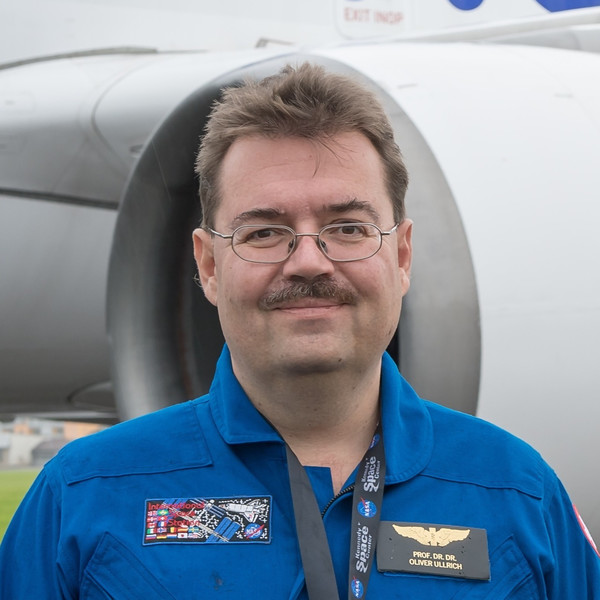
Oliver Ullrich is a Professor and Chair of Anatomy / Gravitational Biology and Cell Biomechanics at the University of Zurich. He also holds professorships in Space Biotechnology at Otto-von-Guericke-University Magdeburg, Space Medicine at EAH Jena, and an Adjunct Professor position at Beijing Institute of Technology. As an Academician of the International Academy of Astronautics , he leads the Swiss Parabolic Flight Program and directs the UZH Innovation Cluster “Space and Aviation” (UZH Space Hub). His research spans gravitational biology , space medicine , and cell biomechanics , focusing on cellular responses to altered gravity environments. His work explores Molecular changes in immune cells under microgravity/hypergravity Epigenetic adaptations to gravitational forces Medical challenges in space exploration Sustainable planetary resource utilization Innovations in spaceflight experiment platforms Recent publications highlight trends in space immunology , organoid analysis under gravity stress , and non-governmental parabolic flight infrastructure . Awards include the Albrecht-Ludwig-Berblinger Award of Aerospace Medicine . He serves on advisory boards for aerospace agencies and companies, and as a member of the executive board of the German Society for Aerospace Medicine : Albrecht-Ludwig-Berblinger Award of Aerospace Medicine As an active investigator in European, German, and U.S. space life sciences programs , he has led 19+ parabolic flight missions and contributed to ISS experiments.
Vincent Rotello is a University Distinguished Professor of Chemistry at the University of Massachusetts Amherst. He holds multiple affiliations including Faculty in the Graduate Program in Molecular & Cellular Biology, the Center for Bioactive Delivery, the Models to Medicine program, the Center for Personalized Health Monitoring, and the Materials Science and Engineering Interdisciplinary Graduate Program at the Institute for Applied Life Sciences. Dr. Rotello received his B.S. in Chemistry (Honors) from Illinois Institute of Technology in 1985, followed by an M. Phil and Ph.D. in Chemistry from Yale University in 1987 and 1990, respectively. He completed an NSF Postdoctoral Fellowship at the Massachusetts Institute of Technology from 1990-1993 before joining the faculty at UMass Amherst. Professor Rotello's research focuses on supramolecular chemistry, particularly the study and application of non-covalent interactions including hydrogen bonding and aromatic stacking. His work spans nanotechnology, bionanotechnology, bioorthogonal chemistry, drug delivery, and antimicrobial development. His laboratory explores how these molecular recognition concepts can address essential questions in biology, biomedicine, and material chemistry, with particular emphasis on using synthetic organic chemistry to engineer interfaces between synthetic and biological worlds. The group has published over 650 peer-reviewed papers to date. His recent publications reveal a strong trend toward bioorthogonal catalysis, particularly 'nanozymes' and 'polyzymes' - nanomaterial scaffolds incorporating transition metal catalysts for localized drug and imaging agent generation. His research increasingly addresses biomedical applications including cancer treatment, bacterial infection control, and diagnostic development, with significant focus on antimicrobial applications and biofilm eradication. Arthur C. Cope Scholar Award (2023) Highly Cited Researcher by Clarivate (2014, 2015, 2018-2023) Fellow of the American Association for the Advancement of Science Fellow of the Royal Society of Chemistry (UK) NSF CAREER award Cottrell Scholar award Camille Dreyfus Teacher-Scholar Sloan Fellowship Professor Rotello has mentored numerous graduate students and postdoctoral fellows, with recent PhD graduates including Dr. Aarohi Gupta and Dr. Aritra Nath Chattopadhyay. His research group maintains active collaborations across multiple disciplines and has secured significant funding for their work in nanotechnology and bionanotechnology. The group has published over 650 peer-reviewed papers, demonstrating consistent productivity and impact in their field. The Rotello Lab operates within the Lederle Graduate Research Tower at UMass Amherst, with office in room 379 and laboratory space in room 320. The group consists of graduate students, postdoctoral fellows, and visiting scholars from around the world, working collaboratively on projects spanning antimicrobials, bioorthogonal chemistry, drug delivery, and sensing technologies. The lab has documented numerous visiting scholars from institutions across Europe, Asia, and North America, indicating strong international collaborations.
Tiina Sikanen is an Associate Professor at the University of Helsinki within the Faculty of Pharmacy, Division of Pharmaceutical Chemistry and Technology . She leads the Chemical Microsystems Lab and serves as a supervisor for doctoral programmes in Drug Research, Chemistry and Molecular Sciences, and Materials Research and Nanosciences. Her research focuses on microfluidic systems, polymer microfabrication, and mass spectrometry applications in drug metabolism studies. Education : MSc in Chemical Technology (Aalto University, 2010), PhD in Pharmaceutical Chemistry (University of Helsinki, 2007) Her research integrates microfluidic total analysis systems with digital microfluidics to create 3D liver and cardiac cell culture models for studying extracellular vesicle activity and cytochrome P450 metabolism. Key projects include PREMIER (risk evaluation of medicines in environment) and CardioEV (cardiotoxicity biomarker discovery). Her recent publications highlight advancements in microdevice-based extracellular vesicle quantitation, Staphylococcus biofilm modeling, and sustainable pharmaceutical life-cycle analysis. Scientific awards include the Academy of Finland Award for Scientific Courage (2019) , Research Fellow (2017) , and Postdoctoral Researcher (2011) . She has supervised numerous Master's and doctoral theses, including Elina Kyllönen's MSc(Pharm) work on microfluidic sustainability challenges and Laura Sirviö's BSc research. Her lab employs 3D printing for cleanroom-free microdevice fabrication and participates in EU-funded initiatives like IMI2-RIA PREMIER.