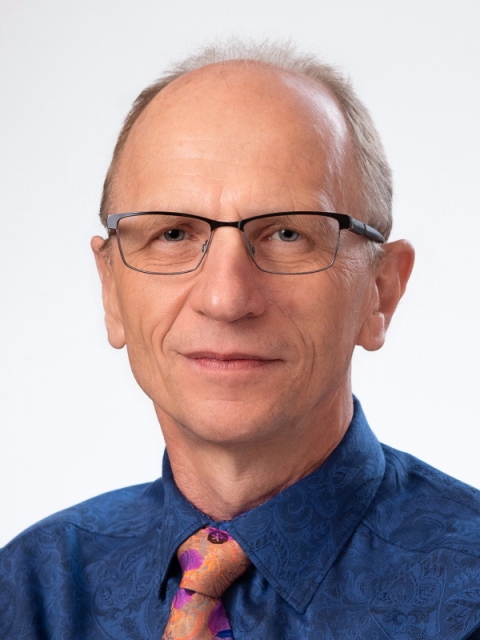
Thomas Ertl is a Professor at the University of Natural Resources and Life Sciences, Vienna (BOKU), leading the Institute of Sanitary Engineering and Water Pollution Control. His research focuses on urban water systems, emphasizing sustainable drainage, climate change adaptation, and nature-based solutions. He has coordinated 55 projects, including international initiatives in Albania and Austria, addressing stormwater management, wastewater heat recovery, and sewer infrastructure resilience. Key Projects : Analysing re-activated watercourses for urban resilience (2024–2028) Resilient rainwater management in Austria (2024–2028) Assessing pollutant emissions in Albania (2024–2027) Research Themes : Building Information Modeling (BIM) in wastewater systems Uncertainty analysis under climate change Stormwater pollution and heat island mitigation Awards : 2018: Goldene Ehrennadel des ÖWAV 1993: Best student award at AGIT 93 His recent publications highlight multidisciplinary approaches to wastewater energy recovery, spatial compatibility of nature-based solutions, and prioritization of stormwater management sites. He has supervised numerous theses and contributed to media discussions on urban climate resilience, including articles in Austrian outlets like futurezone.at and Der Kurier.
Dr. Carmen Falagan is a Senior Lecturer in Environmental Microbiology at the University of Portsmouth , affiliated with the Faculty of Science and Health and the School of the Environment and Life Sciences . Her work bridges microbial ecology, geomicrobiology, and applied environmental biotechnology. Research Interests: Dr. Falagan investigates how microbial communities thrive in extreme environments such as acidic pit lakes and mine drainage sites. Key areas include: Bioleaching and biomining for metal recovery Bioremediation of mining waste Microbial responses to climate change Discovery of novel acidophilic microorganisms Geochemical impacts of microbial activity Recent Research Trends: Her 2024-2022 publications focus on optimizing bioleaching processes, characterizing microbial roles in lithium extraction, and studying nutrient dynamics in acidic environments. Collaborative projects span interdisciplinary topics like planetary health and sustainable metal recovery. Teaching Roles: She teaches Microbiology, Evolution, Biodiversity, and Environmental Microbiology to undergraduates and MSc students, supervising honors projects on acidophilic microbes and antimicrobial resistance. Labs and Collaborations: Dr. Falagan is part of the Institute of Life Sciences and Healthcare and Institute of the Earth and Environment , collaborating on EU-funded initiatives like H2020-NEMO. Her work integrates field studies, lab experiments, and computational analysis to address mining environmental impacts.
Dirk Repsilber is a Professor of Medical Science at Örebro University, specializing in functional bioinformatics. He leads research on molecular patterns in patients to improve diagnosis and treatment. Born in Lübeck, Germany, he earned his PhD in ecological genetics from the University of Hamburg and held postdoctoral roles at institutions across Sweden and Germany. His work integrates bioinformatics, biostatistics, and clinical collaboration to address complex biological systems. Education: PhD in Ecological Genetics (University of Hamburg, 1999), postdoctoral training at Uppsala University and SLU, followed by roles at German institutions including Lübeck, Potsdam, Rostock, and Örebro. Research Interests: Molecular networks, biosignature development, systems biology approaches to genotype-phenotype mapping, and interdisciplinary collaborations in medicine, statistics, and computer science. Key Projects: BIO IBD (biomarker discovery in inflammatory bowel disease), Cell Painting for toxicity assessment, and systems-level immunomonitoring in pediatric oncology. Active in cross-disciplinary teams like the Center for Life Sciences Nutrition-Gut-Brain Interactions. Teaching & Supervision: Cross-disciplinary courses in bioinformatics, statistical counseling, and supervision of PhD students in diverse fields. Emphasizes problem-based learning and communication skills across disciplines.
Lisbeth Truelstrup Hansen is a Professor and Head of the Research Group for Food Microbiology and Hygiene at the National Food Institute, Technical University of Denmark (DTU), where she leads research in microbial food safety, environmental hygiene, and pathogen survival mechanisms. She is also affiliated with the DTU Microbes Initiative and actively contributes to projects addressing food safety, Arctic sanitation, and public health. University: Technical University of Denmark School: National Food Institute Department: Research Group for Food Microbiology and Hygiene Role: Professor and Research Group Head Her research focuses on microbial food safety, with particular emphasis on Listeria monocytogenes , biofilm formation, hygiene in food production, and innovative preservation and detection methods. She also investigates water and environmental hygiene, including sewage management in Arctic regions under climate change. Her work supports UN Sustainable Development Goals related to clean water, sanitation, and good health. The recent publications highlight a strong trend in applying genomics, machine learning, and predictive modeling to food safety challenges. Her team investigates disinfectant resistance in Listeria , growth modeling of Bacillus cereus , and quality assessment in seafood and processed foods, demonstrating a multidisciplinary approach combining microbiology, environmental science, and data science. Scientific Contributions: Lead researcher in multiple national and international projects Active contributor to food safety policy and public discourse Regular media and conference speaker on hygiene and food safety topics Lisbeth Truelstrup Hansen supervises several PhD students and collaborates across disciplines on grants related to foodborne pathogens, climate impact on water quality, and sustainable food production. She has led or co-led projects such as 'ArcticSewlution' and 'ILLUQ. PERMAFROST – POLLUTION - HEALTH', which integrate environmental engineering with microbiology for public health outcomes. She is involved in key research labs and teams including the Research Group for Food Microbiology and Hygiene and the DTU Microbes Initiative, which focus on pathogen detection, biofilm dynamics, and hygiene solutions for the food industry.
Syed Ahmar Shah is a Senior Research Fellow (Associate Professor) and the Director of Innovation at the Usher Institute within the College of Medicine and Veterinary Medicine at the University of Edinburgh. He holds a tenured academic position and leads the DIME group (Data-driven Innovation in MEdicine). His work bridges biomedical engineering, data science, and clinical medicine, with a focus on improving healthcare through technological innovation. Dr. Shah completed his educational journey with a BEng in Electronics Engineering from GIK Institute of Engineering Sciences and Technology in Pakistan, followed by an MSc and DPhil (PhD) in Biomedical Engineering and Biomedical Signal Processing and Machine Learning, respectively, from the University of Oxford. His academic credentials reflect his interdisciplinary expertise spanning engineering, data science, and medicine. His research interests center around the application of advanced data analytics to healthcare challenges. Specifically, he focuses on signal processing for time-series analysis and filtering, machine learning for classification, regression, and clustering tasks, and the development of digital health systems for chronic disease management. His work particularly targets chronic respiratory conditions like COPD and asthma, where he applies data mining techniques to electronic health records to identify patterns and develop predictive models. Dr. Shah's publication portfolio includes over 60 peer-reviewed articles in prestigious journals such as The Lancet, Brain, BMJ Open, Thorax, IEEE Transactions, JMIR, and JACI. His recent work demonstrates a strong trajectory in applying artificial intelligence to predict asthma attacks, analyze long COVID outcomes, and develop tools for personalized COPD care, particularly for women. His research often involves large-scale data analysis from national healthcare databases across the UK, Brazil, and Scotland, enabling cross-country comparisons of disease patterns and healthcare system responses. Florence Nightingale Award for Excellence in Healthcare Data Analytics (2023) As an active supervisor, Dr. Shah is open to PhD supervision enquiries and has contributed to training the next generation of researchers at the intersection of data science and healthcare. His DIME research group serves as a hub for innovative projects that combine engineering approaches with clinical medicine to address pressing healthcare challenges. Dr. Shah also engages with industry through data science consulting, offering expertise in developing intelligent algorithms for businesses with large datasets, particularly in healthcare but extending to other domains as well.
Christiane Woopen is a Professor for Ethics and Theory of Medicine at the University of Cologne , where she serves as Executive Director of the Cologne Center for Ethics, Rights, Economics, and Social Sciences of Health (ceres) . Her leadership extends to roles such as Head of the Research Unit Ethics and former Vice-Dean for Academic Development and Gender at the Medical Faculty, University Hospital Cologne. Educational Background: Medical degree from the University of Bonn, followed by specialization in gynecology and obstetrics before transitioning to bioethics. Her research focuses on ethical dimensions of reproductive medicine, neuroethics, personalized medicine, genome editing, and health in the digital age . She leads international projects addressing aging, health literacy, and AI governance. Recent publications emphasize genome editing policy, AI in healthcare, and ethical challenges of deep brain stimulation , reflecting her interdisciplinary approach to bioethics. Scientific Awards: Federal Cross of Merit 1st Class (2018) Member, European Academy of Sciences and Arts (2014) She has held advisory roles in national and international ethics bodies, including the European Group on Ethics in Science and New Technologies and UNESCO's International Bioethics Committee. Her leadership in ceres involves fostering research on aging, health literacy, and digital transformation, with a commitment to public engagement and interdisciplinary collaboration.
Andrea Passerini is a Full Professor in the Department of Information Engineering and Computer Science at the University of Trento, Italy, where he also serves as Coordinator of the PhD programme in Information Engineering and Computer Science (Ministerial Decree 45/2013). His academic footprint spans multiple departments including Mathematics, Sociology, Cellular Biology, and Industrial Engineering, reflecting deep interdisciplinary engagement across computational sciences and life sciences. His research centers on Machine Learning and Data Mining with specialized expertise in Neuro-Symbolic AI , Probabilistic Reasoning , and Statistical Relational Learning . He pioneers methods for graph-based learning, medical AI applications, and explainable systems, with significant contributions to bioinformatics (particularly RNA-protein interactions) and healthcare diagnostics. His work bridges theoretical rigor with practical implementations in critical domains. Analysis of his 2025 publications reveals dominant trends in neuro-symbolic integration for graph data, human-AI collaboration in medical decision-making, and robust recommender systems. His research increasingly focuses on interpretable AI for high-stakes applications like surgical planning and physician support, while advancing foundational techniques in graph neural networks and concept-based modeling. As PhD programme Coordinator, Professor Passerini mentors doctoral candidates across AI and computer science disciplines. His collaborative network extends to medical researchers at CIBIO (Cellular, Computational and Integrative Biology department) and industrial partners, though specific lab structures aren't documented in available materials. Current projects emphasize medical AI validation, temporal network modeling, and LLM integration with structured reasoning frameworks.
Anna Kuparinen is a Professor at the University of Jyväskylä's Faculty of Mathematics and Science, Department of Biological and Environmental Science. Her research group, EcoEvoAqua, focuses on aquatic species and their ecosystems, particularly eco-evolutionary dynamics. Key research areas include ecological modeling, fisheries-induced evolution, food web stability, and environmental impacts on species survival. Recent work examines predator reintroduction effects, climate-driven selection pressures, and parasite-host interactions in aquatic systems. Publications span theoretical ecology, conservation biology, and fisheries management. Her research emphasizes interdisciplinary approaches to address complex ecological challenges. Education details are not explicitly listed, but her academic career reflects extensive contributions to aquatic ecology and conservation. Awards are not mentioned in the text, though her prolific publication record indicates recognition in her field. She leads the EcoEvoAqua research team, which integrates computational models with empirical data to study ecosystem resilience and biodiversity. Ongoing projects include modeling Lake Oulujärvi dynamics and exploring manganese toxicity in fish populations.
Dr. Gordon O'Brien serves as a Senior Fellow in Water at the Gulbali Institute, Charles Sturt University (Australia), bringing over 20 years of expertise in African freshwater systems since 2004. A South African Council for Natural Scientific Professionals registered scientist and NRF (C2) rated researcher, he bridges academic research with practical water management solutions across continental scales. Education: Doctor of Philosophy (Ph.D.) from University of Johannesburg (2012) His research integrates sustainable water resource management, freshwater ecology, and fish/ fisheries sciences through probabilistic modeling of multiple stressors at regional scales. Specializing in environmental flows, ecosystem services, and ecotoxicology, he develops holistic frameworks for vulnerable socio-ecological systems facing climate change and anthropogenic pressures. Current work emphasizes digital innovation in water security through real-time monitoring and risk assessment. Recent publications reveal a strategic shift toward digital water management, featuring tools like FISHTRAC for fish monitoring and PROBFLO for environmental flow implementation. His research increasingly focuses on African river basins (particularly Limpopo and Incomati), addressing invasive species impacts, fish community dynamics, and AI-driven decision support systems while maintaining strong policy relevance for water-scarce regions. Scientific Recognition: South African National Research Foundation (C2) rating Dr. O'Brien has supervised over 12 PhD and 20 MSc students to completion while securing more than US$2.5 million in research funding from governmental, NGO, and international sources. His projects directly inform water policy development across Africa, with documented contributions to legislation and management frameworks. Current grant portfolios emphasize digital water security tools and transboundary river basin management. As leader of the Rivers of Life applied research program in South Africa and member of CSU's Inland Freshwater Fisheries Research Group, he directs field teams across Kruger National Park and the Limpopo Basin. His collaborative network spans 12 African nations and includes partnerships with the International Water Management Institute for basin-scale digital twin development.
Professor Charlotte Clarke is a faculty member in the Department of Sociology at Durham University and serves as Executive Director of the Wolfson Research Institute for Health and Wellbeing . Her research focuses on dementia care, aging, risk management, and technology-enabled education , with recent work examining cognitive frailty interventions, participatory care models, and cross-cultural caregiving dynamics in China. Key research areas: Dementia care, aging, social engagement, technology-enabled education, risk management Selected recent collaborations: CREST psychosocial intervention feasibility studies, Delphi consensus on cognitive frailty, participatory action research for post-diagnostic support Her publications span high-impact journals like Frontiers in Aging Neuroscience and Dementia . She supervises postgraduate researcher Jiaxi Li and collaborates with multidisciplinary experts globally. Current projects include policy briefs on air pollution’s impact on brain health and aging in the North reports.
Tony Cookson is a Professor of Finance and the Michael A. Klump Endowed Professor at the Leeds School of Business , University of Colorado Boulder, where he has served since 2013. His research spans empirical finance , household and corporate financial decision-making , and the impact of social media and legal institutions on financial behavior. He has published in top journals like the Journal of Finance , Journal of Financial Economics , and Management Science , focusing on topics from investor disagreement to fracking-induced debt repayment . Education : Ph.D. in Economics (University of Chicago), M.S. in Statistics and Applied Economics (Montana State University), B.S. in Economics (Montana State University) His research interests include: How social media shapes investor sentiment and trading patterns The economic consequences of fracking and casino policy Legal institutions and their role in credit market development Behavioral finance through LLM-driven investor personas His scientific awards include the Best Paper in Investments and Asset Pricing (MFA 2023) , NASDAQ Best Paper in Asset Pricing (WFA 2021) , and Finalist for TIAA Paul A. Samuelson Award (2021) . He serves as Editor at the Review of Corporate Finance Studies and Associate Editor at multiple top journals.
Hans-Peter Kohler is the Frederick J. Warren Professor of Demography and Professor of Sociology at the University of Pennsylvania. He co-directs the Population Aging Research Center (PARC) and chairs Penn’s Ph.D. Program in Demography. Ph.D. in Economics, University of California, Berkeley (1997) PI of multiple NIH and NSF grants (e.g., R01 HD044228, R21 AG053763, SES 172 9185) His research integrates demography, economics, sociology, and biology to study aging, health disparities, HIV/AIDS, and fertility in low- and high-income countries. Key projects include the Malawi Longitudinal Study of Families and Health (MLSFH) and Global Family Change (GFC) Project , which explore life-course health determinants, intergenerational support, and family structure transformations. Recent collaborative publications analyze cognitive aging in SSA (Journal of Alzheimer’s Disease 2023), mortality risk perception (PNAS 2024), and intergenerational transfers (Population and Development Review 2019). He has mentored students into faculty roles at institutions like NYU, University of Wisconsin, and University of Glasgow. His honors include the Clifford C. Clogg Award (PAA) and Otis Dudley Duncan Award (ASA), alongside leadership roles in the Society of Biodemography and Social Biology .
Lars E Fogelin is an Associate Professor at the University of Arizona specializing in the archaeology of Buddhism in South Asia. His research extends to the broader archaeology of religion, architectural studies, and the application of philosophy of science to archaeological reasoning, establishing him as a leading scholar in theoretical and material approaches to religious practice. Dr. Fogelin's work centers on material manifestations of Buddhist practice in early historic South Asia, particularly examining stupa architecture, monastic spatial organization, and ritual landscapes. He investigates how religious communities navigated social contradictions through spatial strategies and how material transformations reflected doctrinal shifts, such as the emergence of Mahayana Buddhism. His theoretical contributions emphasize inference to the best explanation and critical deconstruction of essentialist approaches in religious archaeology. His publication trajectory reveals consistent thematic focus across 20 years, with recurring exploration of Buddhist material culture, ritual practices, and methodological innovation. Early works established foundations in South Asian Buddhist archaeology, while later publications expanded into philosophical frameworks for interpreting religion. Key patterns include integration of ethnographic analogy with archaeological data, persistent attention to architectural evidence, and theoretical rigor in bridging anthropology, religious studies, and archaeological practice.
Matteo Dal Peraro is an Associate Professor at École polytechnique fédérale de Lausanne (EPFL) in the School of Life Sciences, where he leads the Laboratory for Biomolecular Modeling (LBM) within the Interfaculty Institute of Bioengineering (IBI). He also holds significant administrative roles as Head of IBI-SV Administration and Co-Director of IBI-STI Administration, demonstrating his leadership across both the School of Life Sciences and School of Engineering. His research bridges computational approaches with experimental validation to understand complex biological systems at multiple scales. His educational background includes a B.S. and M.S. in Physics from the University of Padua (2000), followed by a Ph.D. in Biophysics from the International School for Advanced Studies (SISSA) in Trieste (2004). He then completed postdoctoral training at the University of Pennsylvania under Professor M. L. Klein before joining EPFL as a Tenure Track Assistant Professor in late 2007. Dal Peraro's research focuses on computational biophysics and multiscale modeling of biological systems, with particular emphasis on membrane-protein interactions, nanopore sensing technologies, and structural biology. His work spans fundamental molecular mechanisms to applied educational technologies, demonstrating a commitment to both scientific discovery and knowledge dissemination. He has made significant contributions to understanding protein-membrane interactions, antibiotic resistance mechanisms, mitochondrial disorders, and viral pathogenesis through advanced computational approaches. His publication record shows a strong trend toward integrating augmented and virtual reality technologies with molecular modeling, exemplified by his development of the moleculARweb platform for chemistry and structural biology education. His research spans computational methods development, structural characterization of biomolecules, membrane biophysics, and applications to medically relevant problems including antibiotic resistance and neurodegenerative disorders. This interdisciplinary approach connects fundamental biophysical principles with practical applications in medicine and education. Dal Peraro has mentored numerous doctoral students through EPFL's PhD programs, particularly in Computational and Quantitative Biology. His leadership extends to serving on PhD program committees and directing research groups focused on computational molecular biology. He has established collaborations across multiple disciplines, facilitating integrative approaches to complex biological problems. He leads the Laboratory for Biomolecular Modeling (LBM), which develops and applies computational methods to study biological systems at multiple scales. The lab bridges molecular simulations with experimental validation, creating a synergistic approach to understanding complex biological phenomena. Dal Peraro's team has made significant contributions to membrane biophysics, protein folding, and the development of educational technologies that make structural biology accessible through augmented reality platforms.
Andrea Santangeli serves as a Supervisor in the Doctoral Programme in Wildlife Biology and holds a Docentship in the Organismal and Evolutionary Biology Research Program at the University of Helsinki's Faculty of Biological and Environmental Sciences. He maintains an additional affiliation as an Honorary Fellow at the University of Cape Town's FitzPatrick Institute of African Ornithology under the National Research Foundation Centre of Excellence since August 2019. His research spans international collaborations across multiple continents, with particular focus on African and European conservation challenges. Dr. Santangeli completed his doctoral thesis titled 'Assessing the effectiveness of different approaches to species conservation' at the University of Helsinki in 2013. His educational background established the foundation for his current research program focused on evidence-based conservation strategies and effectiveness assessment. His research interests center on wildlife conservation biology, particularly avian ecology and species protection. Santangeli's work examines human-wildlife interactions, conservation prioritization, and the effectiveness of different conservation approaches. He investigates how climate change affects species distributions and community composition, with special attention to vulture conservation, bird-feeding practices, and the impacts of agricultural systems on biodiversity. His approach integrates ecological, social, and policy dimensions to develop comprehensive conservation solutions. Species conservation effectiveness Human-wildlife interactions Climate change impacts on biodiversity Vulture conservation Bird community dynamics Ecosystem services assessment Analysis of Santangeli's recent publications (2023-2025) reveals a strong focus on interdisciplinary conservation science addressing urgent global challenges. His work increasingly integrates One Health approaches, examining connections between wildlife health, ecosystem functioning, and human activities. Key themes include climate change adaptation strategies, human dimensions of conservation, and technological innovations for monitoring and protection. His research shows growing emphasis on policy-relevant science that directly informs conservation decision-making at multiple scales. His scientific recognition includes an Honorary Fellowship at the University of Cape Town's prestigious FitzPatrick Institute of African Ornithology, part of the DST NRF Centre of Excellence. This position acknowledges his significant contributions to African ornithology and conservation science, particularly his work on vulture conservation across the continent. As a doctoral supervisor, Santangeli guides the next generation of conservation scientists through the Wildlife Biology doctoral program. His research is supported by multiple projects, including the ongoing 'Understanding the drivers and species ecological traits underpinning the global trade in wild birds' (2019-2024), which examines wildlife trade dynamics and conservation implications. His work demonstrates strong international collaboration networks across Europe, Africa, and beyond. Santangeli's research activities involve extensive fieldwork, data analysis, and policy engagement. He participates in academic visits to institutions like the Center d'Études Biologiques de Chizé in France and contributes to scientific conferences and peer review for leading conservation journals. His work often involves citizen science approaches, as evidenced by the 'iratebirds' project on aesthetic attraction to birds.