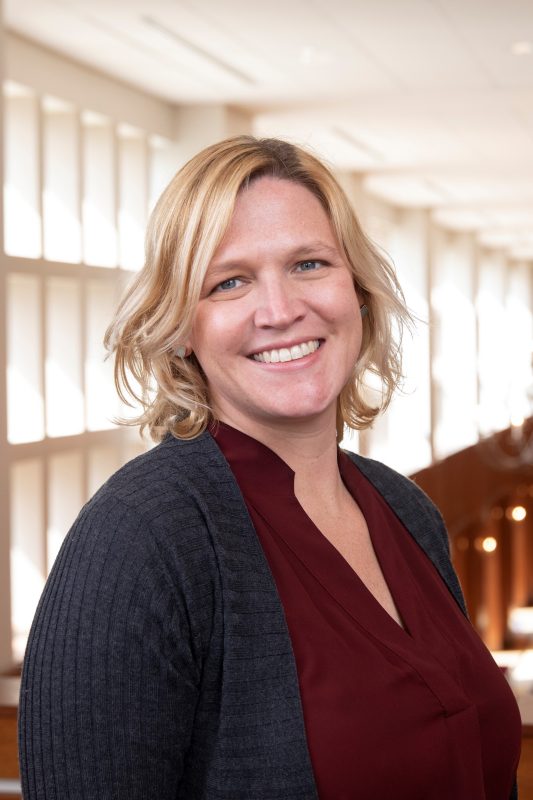
Anne Vingaard Olesen is a Guest Researcher and Senior Statistician at Aalborg University Hospital's Faculty of Health Sciences. With a PhD in Epidemiology and a Master in Theoretical Statistics and Mathematics, she specializes in traffic safety analysis, public health research, and statistical modeling. Affiliation: Aalborg University Hospital, Faculty of Health Sciences Education: PhD in Epidemiology (2007), Master in Theoretical Statistics and Mathematics Her research spans traffic safety (hazardous road locations, cyclist/pedestrian safety), public health (chronic pain outcomes, non-response bias in studies), and mental health (self-harm interventions). She employs prospective cohort designs, data integration techniques, and case studies. Recent publications demonstrate expertise in ambulance data applications for traffic safety ADHD medication and accident risk self-harm intervention evaluation health status metrics in chronic pain populations school wellbeing indicators She has received significant media coverage for findings on ADHD medication doubling solo traffic accident risks insurance data as a novel safety resource Current projects include SOLO: Strengthened efforts towards traffic victims ADHD-medicinering og risikoen for trafikulykker (TrygFonden funded) EASE: Intervention mod fartsyndere
Ishtiaque Fazlul is an Assistant Professor of Health Policy and Management at the College of Public Health and holds a joint appointment in the Department of International Affairs at the School of Public and International Affairs, University of Georgia. His academic journey includes previous positions as a Research Assistant Professor at Kennesaw State University, postdoctoral fellow at the University of Missouri, and research roles at Georgia State University's Center for the Economic Analysis of Risk and Georgia Policy Labs. Dr. Fazlul's research focuses on the intersection of health and education economics, examining how policies and institutions affect health outcomes and educational attainment. His work explores social determinants of health, maternal and child health, global health disparities, measurement of student disadvantage, and school funding mechanisms. He employs rigorous microeconometric methods to analyze large datasets and evaluate policy impacts, with particular attention to the Affordable Care Act's effects on insurance coverage and disparities, child marriage consequences on health behaviors, and innovative approaches to identifying at-risk students in public schools. His recent publications demonstrate a strong trend toward policy-relevant research with immediate practical applications, particularly in the areas of Long COVID economic impacts, early childhood education effectiveness, and improved measurement of student poverty. His work bridges academic research and policy implementation, as evidenced by numerous media appearances and policy briefs. Among his notable recognitions are the NIH AIM-AHEAD Program grant for Community-Engaged AI for Health ($100,000) and the Walton Family Foundation grant for Measuring Student Disadvantage ($146,000). His research has been featured in 14 news outlets including U.S. News, and he has contributed policy resources to organizations like the Data Quality Campaign and the Brookings Institute. Dr. Fazlul actively collaborates with researchers across institutions, frequently working with Cory Koedel and Eric Parsons on education-related projects, and with B.K. Datta on health-related studies. His work has significant implications for both domestic and international policy design in health and education sectors.
Prof. Dr. Heinrich Schradin is a full-time Professor at the University of Cologne , affiliated with the Faculty of Management, Economics and Social Sciences . He serves as Managing Director of the Institute of Insurance Science and has been a member of the Insurance Advisory Board of the German Financial Supervisory Agency (BaFin) since 2010. His academic career includes a Diploma in Business Administration from the University of Mannheim (1989) and postdoctoral research there. Research Focus: Insurance sciences, risk management, financial regulation, and business administration. Leadership: Member of the board of directors at the German Association for Insurance Sciences (DVfVW) since 2004; former Rectorate member (2002-2005). Key Contributions: Publications on Solvency II frameworks, shareholder value in insurance, and legal-economic impacts on life insurance business models. His work intersects with the University of Cologne's Key Profile Area 'Social and Economic Behavior' and the Reinhard Selten Institute's research umbrella. Scientific recognition includes three prestigious awards: the Albertus-Magnus-Teaching Award (2005, 2008, 2010), Berlin Prize for Insurance Sciences (2002), and Dr. Kurt Hamann Prize (1993).
Anup Malani is the Lee and Brena Freeman Professor at the University of Chicago Law School and a Professor at the Pritzker School of Medicine. He also holds significant affiliations as a University Scholar at Resources for the Future in Washington, a Research Associate at the National Bureau of Economic Research in Boston, and a Senior Fellow at the Schaeffer Center at the University of Southern California. Malani co-founded and serves as Faculty Director of the International Innovation Corps, a social service program sending University of Chicago and foreign university graduates to work on development projects in India and Brazil. Malani earned his PhD in economics and JD, both from the University of Chicago. He clerked for Judge Stephen Williams on the US Court of Appeals for the District of Columbia Circuit and Justice Sandra Day O'Connor on the US Supreme Court. His academic journey includes previous appointments at Harvard Law School as Roscoe Pound Visiting Professor and at the University of Virginia Law School as Associate Professor. Malani's research spans law and economics, health economics, and development economics. His law and economics work focuses on judicial behavior, empirical analysis of legal reforms, and blockchain. His health economics research examines infectious disease control, medical innovation value, health insurance, placebo effects, and medical conflicts of interest. His development economics work concentrates on healthcare supply and financing in India and urban slum quality of life. He leads major research initiatives including the Indian Health Insurance Experiment (an 11,000 household RCT) and impact evaluations of Mission Kakatiya in Telangana, India. Malani's research has been published in leading journals across multiple disciplines including Proceedings of the National Academy of Sciences, Journal of Political Economy, Harvard Law Review, and Nature Medicine. His recent work has focused significantly on COVID-19 pandemic analysis, particularly in Indian contexts, examining infection rates, mortality, and policy responses. Member, American Academy of Arts and Sciences (2021) Emergent Ventures Prize (twice in 2020 for serological work and epidemiological modeling) Order of the Coif (2000) John M. Olin Fellowship in Law and Economics (1998-2000) Bradley Foundation Fellowship (1997-2000) Malani advises governments in India and Indonesia on COVID policy with support from the Asian Development Bank and has advised the World Bank on COVID in South Asia. He serves on University of Virginia's working group planning a National COVID Commission. His teaching spans corporate law, health law, food and drug law, law and economics, and development in the Law School, plus economics and public policy courses across the university. He has supervised numerous research projects and has been principal investigator on multiple large-scale studies examining healthcare and development in India. Malani directs the International Innovation Corps, which partners with government officials in India and Brazil on innovative development projects. He previously served as Faculty Director of the Tata Centre for Development at the University of Chicago. His work bridges academic research with practical policy implementation through collaborations with government agencies, international organizations, and development institutions.
Selim MANKAI is a Lecturer at Université Clermont Auvergne, affiliated with the IAE Clermont Auvergne - School of Management within the Finance, Information and Corporate Responsibility (FIRE) Axis. His professional contact information includes email Selim.MANKAI@uca.fr and phone +33473177744. Dr. MANKAI specializes in research areas including Risk management, Insurance, Financial regulation, and Behavioral finance. His teaching portfolio encompasses Asset Markets, Financial Markets, Introduction to quantitative finance, and Finance and Value. His work demonstrates a strong focus on understanding risk perception, insurance demand patterns, and financial decision-making processes. His recent publication activity shows a consistent research trajectory in insurance economics and risk management, with his 2024 meta-analysis on insurance against small probability risks representing the culmination of years of specialized work in this domain. His research often employs quantitative methods and economic experiments to examine behavioral aspects of financial decision-making. Dr. MANKAI has received research support from the International center of research (CIR4), specifically through grant 2019CYCLONE-CIR4, which funded his meta-analysis work on insurance valuation. His collaborative research approach is evident through his work with colleagues such as Sébastien Marchand and Ngoc Ha Le. His academic contributions span multiple high-quality journals in economics and finance, with publications appearing in the Journal of Behavioral and Experimental Economics, Journal of Risk and Insurance, and Economic Modelling, among others. This demonstrates his ability to contribute to both specialized insurance research and broader financial economics literature.
Tove Christensen is an Associate Professor in the Department of Food and Resource Economics at the University of Copenhagen, specializing in economic regulation and food economics. Her research examines public sector roles in food systems, non-market good valuation, and decision-making under uncertainty. 1993: Masters degree in mathematics and economics (Cand. scient. Oecon) 1999: Ph.D. in Environmental Economics at the University of Copenhagen Her work spans food safety (Campylobacter, Salmonella), animal welfare economics, and consumer behavior trade-offs. She analyzes climate-smart agriculture adoption, sustainable food systems, and environmental impacts through interdisciplinary lenses combining economics, ethics, and social sciences. Key methodologies include contingent valuation and behavioral modeling under asymmetric information. Recent publications (2024-2025) emphasize animal welfare valuation (pig welfare pricing), farmer adoption barriers for climate-smart practices, and organic production challenges. Cross-cutting themes include European supply chain dynamics, Norwegian livestock sustainability, and consumer willingness-to-pay for ethical food attributes. Christensen has taught Masters courses 'Animal in Society' (2011) and 'Animals and Sustainability' (2016), plus Bachelor-level business economics (2015). Her collaborative projects involve Danish and European stakeholders, including a 2020 lecture on animal welfare-climate intersections. She operates within the Section for Consumption, Bioethics and Governance, focusing on ethical food production frameworks and consumer decision architecture in complex risk environments.
Casey Bell serves as Assistant Professor in the College of Business at Northwest Missouri State University, joining the institution in 2023. Dr. Bell teaches Principles of Marketing and Advanced Marketing Communication for MBA programs while maintaining active industry engagement. Educational background includes: B.A. from University of Missouri St. Louis B.A. from Northwest Missouri State University BSBA from Missouri Western State University Research centers on Relationship Marketing and Relationship Selling with significant extensions into family business dynamics. Scholarly work employs grounded theory and case study methodologies to investigate organizational behavior challenges, particularly manager anxiety during performance evaluations and succession planning in small-to-medium enterprises. This interdisciplinary approach bridges academic theory with practical business applications. Recent publications reveal strong thematic focus on managerial psychology within organizational structures and continuity planning for family-owned businesses, reflecting expertise spanning marketing, human resources, and entrepreneurial management. Professional recognition includes: 2022 Advisor of the Year at Missouri Western State University Multiple Top Sales Producer awards in independent insurance sector Dr. Bell maintains active industry practice through ownership of Consolidated Insurance Agents, LLC in St. Joseph, MO, bringing 35 years of practical experience in property & casualty and life/health insurance (licensed in MO/KS) directly into classroom instruction and research frameworks.
Yvonne Chueh is a Professor of Actuarial Science, Statistics, and Mathematics at Central Washington University in Ellensburg, Washington. She has over two decades of teaching experience across multiple institutions including the University of Connecticut, University of Wisconsin-Eau Claire, and Central Washington University. She served as Director of the CWU Actuarial Science program from 2001 to 2014 and remains actively engaged in both the CWU Computational Sciences master's program and the Actuarial Science program. Dr. Chueh earned her Ph.D. and M.S. in Math & Actuarial Science from the University of Connecticut and completed her B.S. in Pure Math at National Taiwan University. Prior to her academic career, she worked for Aetna ING in Hartford, Connecticut, and the Institute for Information Industry in Taipei, Taiwan. Professor Chueh's research focuses on implementing research and teaching tools through software engineering (CSTEP, AMOOF, SIWI) and industrial collaborations, efficient stochastic modeling for insurance industries, and computational intelligence. She has developed innovative approaches to stochastic modeling efficiency, including pivot/representative scenarios with parametric tail replication, and has created educational tools like the Actuarial Model Outcome Optimal Fit (AMOOF) software. Her work bridges theoretical actuarial science with practical applications in the insurance industry. Her publication record demonstrates a strong focus on mortality modeling, stochastic processes, and computational methods in actuarial science. Recent work includes applications to pandemic response (COVID-19 CHAT project), GPU-accelerated scenario reduction, and novel dependency measures for financial time series. Her research consistently addresses practical challenges faced by the insurance industry while advancing methodological approaches. Member of the Society of Actuaries since 1994 Council member (2013-2017) of SOA Education & Research Section Chair (2017) of SOA Education & Research Section Professor Chueh has been an active faculty advisor and advocate for teaching critical thinking through community inquiries, just-in-time learning, multimodal learning, and faculty-guided student research. She has presented at numerous conferences including the Society of Actuaries Life & Annuity Symposium, Actuarial Research Conference, and International Joint Conference on Neural Networks. Her industry collaborations include work with the American Academy of Actuaries and the Actuarial Foundation. She has developed several software tools including AMOOF3 for probability modeling and CSTEP for educational purposes, demonstrating her commitment to bridging theoretical knowledge with practical applications in actuarial science education and industry practice.
Julie Shortridge is an Associate Professor and Extension Specialist in the Department of Biological Systems Engineering at Virginia Tech's College of Agriculture and Life Sciences. Her work bridges academic research and practical application through Virginia Cooperative Extension, focusing on water resource management challenges in humid climates. Education: Ph.D. in Geography and Environmental Engineering, Johns Hopkins University, 2016 M.S.E. in Geography and Environmental Engineering, Johns Hopkins University, 2012 B.S. in Environmental Engineering Science, University of California – Berkeley, 2005 Dr. Shortridge's research focuses on water resources engineering and management, climate change impacts and adaptation, and risk and decision analysis in water systems. She employs systems engineering methodologies including risk analysis, data analytics, statistical modeling, and optimization to address water resource challenges. Her work spans both physical infrastructure and human decision-making aspects of water systems, with a particular emphasis on uncertainty surrounding climate change projections and their impacts on water availability. Her recent publications demonstrate a strong trend toward integrating machine learning with traditional hydrological modeling, addressing climate change adaptation in agricultural water management, and developing robust decision frameworks for water infrastructure planning under uncertainty. These works span multiple domains including irrigation efficiency, flood-induced migration, water withdrawal prediction, and climate service evaluation. Selected Awards: United States Fulbright – University of Oulu (Finland) Research Scholar 2024-2025 Global Opportunity Initiative Fellow, Virginia Tech College of Agriculture and Life Sciences, 2021 ASABE Blue Ribbon Award for Outstanding Educational Aid, 2018 Dr. Shortridge actively mentors graduate students, with several PhD and Master's students completing research under her guidance, including Laljeet Sangha who successfully defended his PhD in December 2022. She leads multiple research projects including USDA-funded initiatives on precision irrigation and nitrogen management, NSF-funded work on agent-based modeling of migration and sea level rise, and projects focused on climate tipping points in socio-environmental systems. Her extension work translates research into practical guidance for agricultural producers and water managers across Virginia. She directs the Water Systems Lab at Virginia Tech, which brings together engineering, environmental science, and social science approaches to address water resource challenges in a changing climate. The lab actively recruits MS and PhD students for research positions focused on climate resilience in agricultural and water systems.
Sophia Kustas Smith is an Associate Professor at the Duke School of Nursing and a member of the Duke Cancer Institute since 2013. Her work focuses on improving cancer survivorship and palliative care , particularly through technology-based behavioral health interventions . She earned her PhD and MSW at UNC-Chapel Hill and has led initiatives to integrate clinical cancer care with research. Current Appointments : Associate Professor (2020-Present), Duke School of Nursing Education : PhD and MSW from UNC-Chapel Hill; BS from SUNY-Albany (Cum Laude) Research Interests include leveraging mHealth technologies for PTSD management in cancer survivors, addressing racial disparities in palliative care , and enhancing patient-centered communication . Her grants include leadership in the Nurse LEADS program (2024-2029) and co-investigator roles in NIH-funded studies on chronic pain and home-based transplants. Recent Publications highlight trends in NCCN survivorship guidelines , PTSD screening tools , and mobile health interventions for blood cancer patients. In 2011 , she was recognized with the ICARUS Award for multidisciplinary research. She teaches courses like NURSING 580 and NURSING 920 , emphasizing science development and doctoral mentorship.
Su-Yun Lee is a Professor in the Department of Public Administration at Sejong University's Ocean Humanities College. With a Ph.D. in Social Welfare from Seoul National University, she has held academic positions since 2001 and previously conducted postdoctoral research at the University of Pennsylvania. Education: Ph.D., Seoul National University (1997) M.A., Seoul National University (1993) B.A., Seoul National University (1991) Her research focuses on Social Welfare Policy and Healthcare Policy , examining topics such as: Political economy of Korean welfare state development Globalization impacts on healthcare policy Health promotion behaviors across age groups Medical privatization debates post-democratization Digital divide in elderly healthcare technology adoption Key publication trends show expertise in cross-sector healthcare analysis , policy framing , and digital welfare innovation . Recent work explores AI companion robots for elderly care and smartphone accessibility for older adults. Major contributions : Scopus h-index of 54 with 15+ years of continuous research output Policy-informing studies referenced in 1 official source Active participation in healthcare deliberation committees As both educator and researcher, she teaches courses on welfare state theory and multicultural modern society while leading investigations into healthcare privatization dynamics and aging population challenges.
Professor Espen Ekberg works at BI Norwegian Business School's Department of Law and Governance , with research expertise in financial history, maritime history, and retail history. He holds a Ph.D. in Economic History and a Master's in Sociology from the University of Oslo. Education: Ph.D. (University of Oslo, 2008), Master Cand. Pol. (University of Oslo, 2002) Work Experience: Professor at BI (2018-Present), Part-time Professor at Norwegian University of Life Sciences (2020-Present), Postdoctoral Research Fellow (2009-2012) His research focuses on organizational behavior in consumer cooperatives, maritime economic development, and historical business systems. Recent publications analyze strategic renewal in co-ops, Scandinavian shipping networks, and financial sector transformations. Key trends in his work include: Cooperative organizational challenges Historical analysis of globalization Shipping industry evolution Insurance sector development Comparative business history Historical methodology applications Ekberg has served as Editor-in-Chief of Scandinavian Economic History Review (2019-2022) and President of the Scandinavian Society for Economic and Social History (2022-2024). He teaches courses on financial crises, business law, and global economics. His work addresses corporate efficiency, democratic legitimacy, and consumer-political integrity in cooperative organizations, while exploring the intersection of business history with contemporary economic issues.
Elena Pastorino is an Assistant Professor of Economics at the University of Minnesota and simultaneously holds multiple research appointments at Stanford University including Research Fellow at the Hoover Institution, Faculty Research Fellow in the Economics Department, and Social Science Research Scholar at the Stanford Institute for Economic Policy Research (SIEPR). Education: B.A. in Economics, Bocconi University (Italy), 1998 Ph.D. in Economics, University of Pennsylvania, 2005 Research Focus: Elena specializes in labor economics, development economics, and macroeconomics, with particular emphasis on understanding the determinants of individual wages, job mobility, consumption patterns, and aggregate employment dynamics. Her work examines how human capital, borrowing constraints, and firm market power influence labor market outcomes across both developed and developing economies. Research Themes: Her recent research explores the distributional impacts of minimum wage policies, the role of big data and artificial intelligence in dynamic pricing strategies, and the mechanisms driving wage growth and persistent income inequality. She has conducted extensive analysis on the effectiveness of social insurance programs and government policies in labor and output markets, with applications ranging from US labor markets to poverty alleviation programs in Latin America. Grants and Funding: Elena has secured significant research funding from prestigious institutions including the Banque de France, National Science Foundation, and Stanford's Human-Centered AI Institute, supporting her groundbreaking work on unemployment fluctuations, big data economics, and AI's impact on market performance. Collaborations: She maintains active research collaborations with leading economists including Jeremy Lise, Luigi Pistaferri, Erik Hurst, Patrick Kehoe, and Thomas Winberry, organizing major conferences such as the SITE conference at Stanford.
Hongmu Lee is a Professor at the School of Commerce, Waseda University, where he has been employed since 2002. He earned his PhD from Waseda University's Graduate School of Commerce (1991-1995) after completing his Master's degree at the same institution (1989-1991). His academic career includes previous positions as Associate Professor and Assistant Professor at Waseda University, and visiting scholar roles at Beijing University (2007-Present) and Temple University (2009-2011). His research focuses on risk management , insurance systems , pension frameworks , and financial consumer protection , with emphasis on international comparisons between Japan, Korea, and China. Key areas include catastrophe financing, corporate risk strategies, and insurance market globalization. His publications demonstrate strong focus on insurance industry dynamics, risk financing mechanisms, and pension systems, with recent work examining post-pandemic financial consumer behavior and international expansion of insurance companies. Research trends highlight comparative analyses of Asian markets and evolving risk management methodologies. Awards: Japan Society for Risk Management Outstanding Book Award (1996) Public Interest Trust Yasuda Wafu Memorial Youth Exchange Foundation Invitation Research Award (1996) He leads major research projects including Personal Risk Management and Insurance (JSPS-funded, 2022-2025) and Disaster and Insurance System (2017-2018). As Director of Waseda's Insurance and Risk Management Institute (2025-2029), he coordinates academic-industry collaborations. He chairs the International Academy of Financial Consumers (IAFICO) and holds leadership positions in multiple professional associations.
Keiko Hayashi is a Professor at the Graduate School of Accountancy, Faculty of Commerce. She contributes to academic education through teaching courses such as Advanced Auditing, Basic Auditing, and Ethics for Profession, while also engaging in concurrent research at the Research Institute of Business Administration. Primary Role: Professor in Accountancy Teaching Focus: Auditing practices, ethical frameworks, and insurance theory Sub-Affiliation: Global Education Center Research Engagement: Concurrent Researcher at Research Institute of Business Administration (2023–2059) Her research interests align with core disciplines in accounting and business administration, emphasizing practical applications in auditing and ethical compliance.