Ryan K. McBain is a Senior Policy Researcher at the RAND Corporation and an Adjunct Professor of Policy Analysis at the RAND School of Public Policy. His work focuses on designing and evaluating health policies targeting vulnerable populations, including those affected by mental health conditions, HIV/AIDS, homelessness, and poverty. He employs methodologies such as econometric analysis, cost-effectiveness modeling, and qualitative research. Internationally, he collaborates with organizations like the World Bank, WHO, and Partners In Health in sub-Saharan Africa and Haiti. McBain holds a D.Sc. and M.Sc. in Global Health (Health Economics & Policy Analysis) from Harvard University and a B.A. in Psychology from Gordon College and Oxford University. His research emphasizes telehealth trends, mental health crisis systems (e.g., 988 hotline preparedness), and the intersection of housing and healthcare access. He advocates for evidence-based solutions to address systemic inequities in healthcare delivery and advocates caution in leveraging AI for mental health interventions. Education: D.Sc. and M.Sc. in Global Health from Harvard University; B.A. in Psychology from Gordon College and Oxford University. Key Research Themes: Mental Health Policy, HIV/AIDS Programs, Telehealth Expansion, Homelessness Solutions. McBain’s recent work includes analyzing psychiatric bed shortages, evaluating permanent supportive housing programs, and assessing the competency of AI models in mental health contexts. He emphasizes interdisciplinary collaboration to bridge gaps between research and policy implementation.
Lawton R. Burns is the James Joo-Jin Kim Professor of Health Care Management and Professor of Management at the Wharton School, University of Pennsylvania. He serves as Co-Director of the Roy and Diana Vagelos Program in Life Sciences and Management and Chairperson of the Health Care Systems Department since 2008. Dr. Burns holds a PhD in sociology and an MBA in health administration from the University of Chicago, along with a BA from Haverford College. PhD, University of Chicago (1981) MBA, University of Chicago (1984) MA, University of Chicago (1976) BA, Haverford College (1973) His research focuses on healthcare supply chains, organizational innovation, and strategic management in health systems. He has authored or co-authored 15+ books, including analyses of integrated healthcare, pharmaceutical and medical device sectors, and global health systems in India and China. Recent works examine evidence-based healthcare innovation and the role of GPOs/PBMs in drug pricing. Dr. Burns advises on healthcare policy, including Senate testimony on pharmacy benefit managers and antitrust implications of physician-hospital organizations. His teaching covers healthcare strategy, managed care, integrated delivery networks, and the U.S. healthcare ecosystem, with courses requiring competitive analysis of producer, purchaser, and provider organizations. Board of Institute of Medicine, Health Services Research Section (2003) Arthur Anderson Distinguished Visitor, University of Cambridge (2001) Teacher of the Year, Administrative Medicine Program (1999) Edwin Crosby Memorial Fellowship (1992-93) Udall Fellowship (1990-91) Invited Lecture Series, Catholic University of Rome (1997)
David R. Just is a Professor and Director of Graduate Studies at the Charles H. Dyson School of Applied Economics and Management at Cornell University. He holds a Ph.D. (2001) and MS (1999) from the University of California, Berkeley, and a BA (1998) from Brigham Young University. His research focuses on behavioral economics, examining how environmental and psychological factors influence economic decisions, particularly in food choices and agricultural contexts. His work on school lunch programs and low-cost behavioral nudges has been widely recognized. He co-directs the Cornell Center for Behavioral Economics in Child Nutrition Programs. Key research interests include the application of behavioral insights to public health, consumer decision-making, and agricultural policy. His studies often combine field experiments with econometric analysis to address real-world challenges, such as improving food accessibility and sustainability. His work has been featured in prominent media outlets and has influenced policy initiatives in food systems and nutrition. Roles: Professor, Director of Graduate Studies, Co-Director of Cornell Center for Behavioral Economics in Child Nutrition Programs. Education: Ph.D. and MS in Agricultural and Resource Economics (UC Berkeley), BA in Economics (BYU). Research: Behavioral economics, food policy, agricultural decision-making, and sustainable practices. Affiliations: Cornell SC Johnson College of Business, College of Agriculture and Life Sciences.
Professor John Piggott AO FASSA is Scientia Professor of Economics at the University of New South Wales, where he serves as Director of the Australian Research Council Centre of Excellence in Population Ageing Research (CEPAR). He has held significant leadership roles at UNSW including three terms as Head of School of Economics, Associate Dean Research for the Business Faculty for 7 years, and Interim Dean of the Faculty. His expertise spans retirement economics, pension systems, and population ageing issues, with particular focus on Asia-Pacific region. His educational background includes: BA from University of Sydney MSc from London School of Economics PhD from University of London Professor Piggott's research focuses on retirement and pension economics, population ageing, and public finance. His work examines pension system designs across different countries, with particular emphasis on emerging Asian economies. He has conducted extensive research on retirement income systems, long-term care financing, and the economic implications of demographic change. His research has significant policy relevance, having informed government reviews and international organizations' work on ageing populations. He has published widely in leading international economics and actuarial academic journals, with recent work analyzing pension reforms in Indonesia, Thailand, and China. His recent publications demonstrate a strong focus on population ageing in the Asia-Pacific region, particularly examining pension systems and long-term care in emerging economies. His work bridges economics, public policy, and health services research, with increasing attention to the interconnections between demographic change, economic development, and social policy in aging societies. His research has directly influenced policy discussions through participation in the Henry Tax Review and Australian Ministerial Superannuation Advisory Committee. Professor Piggott has received numerous prestigious awards and honors: Fellow of the Academy of the Social Sciences in Australia (1992) Scientia Professor at UNSW (2011-present) ARC Australian Professorial Fellow (2011-2015) UNSW Business School's Staff Excellence Global Impact Award (2020) Officer of the Order of Australia (AO) (2020) Professor Piggott has supervised numerous PhD students including Rafal Chomik, Hoang Hoyen, and T Le Trang. He has secured substantial research funding including multiple ARC grants totaling over $27 million for the CEPAR Centre, Japan Economic and Social Research Institute projects, and Rockefeller Foundation support. His research has directly informed policy discussions through participation in the Henry Tax Review and Australian Ministerial Superannuation Advisory Committee, and he was appointed co-chair of the Think20 Task Force on Aging Population during Japan's G20 Presidency. As Director of CEPAR, Professor Piggott leads a major research center focused on population ageing research, bringing together interdisciplinary expertise to address the challenges of aging societies. The center collaborates with international partners including the US National Academy of Medicine and OECD, and has played a key role in establishing the International Pension Research Association. His work has significant real-world impact, with his research on JobKeeper transition proposals during the COVID-19 pandemic receiving widespread media attention.
Steven D. Levitt is a Professor at the University of Chicago 's Booth School of Business and director of the Becker Center on Chicago Price Theory . His work spans economics, criminology, education, and behavioral science, with a focus on empirical analysis of real-world issues. Education: BA from Harvard (1989), PhD from MIT (1994) Key Research Areas: Crime economics, educational incentives, behavioral economics, and market dynamics Scientific Awards: 2004 John Bates Clark Medal, Time Magazine's 100 Most Influential People (2006) Levitt's article portfolio includes groundbreaking studies on topics like early childhood education (CogX program), abortion's impact on crime , cheating detection algorithms , and behavioral economics in education . His work often challenges conventional wisdom through unconventional data analysis. Prior research collaborations with Roland Fryer , John List , and Chad Syverson have produced influential papers on racial disparities , real estate markets , and juvenile crime . His NBER working papers demonstrate consistent methodological rigor and innovation.
John Z. Ayanian serves as the Alice Hamilton Distinguished University Professor of Medicine and Healthcare Policy at the University of Michigan, holding joint appointments as Professor of Internal Medicine in the Medical School, Professor of Health Management and Policy in the School of Public Health, and Professor of Public Policy in the Gerald R Ford School of Public Policy. As inaugural Director of the Institute for Healthcare Policy and Innovation (IHPI), he leads a consortium of 700 faculty members across 15 schools and maintains clinical practice as a general internist at Michigan Medicine. His academic foundation includes a Bachelor of Arts in history and political science from Duke University (1982), medical degree from Harvard Medical School (1987), and master's in public policy from Harvard Kennedy School (1987), followed by residency and fellowship at Brigham and Women’s Hospital and post-doctoral training in health services research at Harvard School of Public Health. Dr. Ayanian's research program investigates health equity, access to care, and quality of care with particular attention to social determinants including race/ethnicity, gender, socioeconomic status, and insurance coverage. His work critically examines Medicaid expansion impacts, Medicare Advantage disparities, and policy responses to health inequities, often utilizing large-scale claims databases and cross-institutional collaborations. Current projects include the federally-authorized evaluation of Michigan's Medicaid expansion program serving over 700,000 adults. Analysis of his 15 most recent publications (2025) reveals three dominant research thrusts: (1) Medicare Advantage vs Traditional Medicare comparisons across diverse clinical conditions, (2) Medicaid policy evaluation including unwinding impacts and expansion effects, and (3) innovative measurement of health equity through new indices and AI applications. His work consistently emphasizes methodological rigor in health services research while maintaining strong policy relevance. His scientific honors include: Election to the National Academy of Medicine Master status in the American College of Physicians John Eisenberg National Award for Career Achievement in Research Distinguished Investigator Award from AcademyHealth Election to Alpha Omega Alpha and Association of American Physicians Dr. Ayanian leads the federally-funded Healthy Michigan Plan evaluation team of 15 faculty members and serves as founding Editor-in-Chief of JAMA Health Forum, previously holding editorial positions at the New England Journal of Medicine. His research receives substantial federal support focused on health policy evaluation, with particular emphasis on vulnerable populations. He actively mentors students and junior faculty across multiple disciplines. As Director of IHPI, he fosters interdisciplinary collaboration across 15 schools at the University of Michigan. His leadership extends to center memberships in AI and Digital Health Innovation, Caswell Diabetes Institute, and Center for Global Health Equity, where he promotes data-driven solutions to health disparities through cross-campus partnerships and innovative research methodologies.
Dr. Daniel Allen is a Lecturer in Human Geography at Keele University's School of Life Sciences, specializing in human-animal relations. An IUCN/SSC otter specialist, his research on otter conservation and dog theft informs policy and advocacy. He led an Environment Agency project on otter predation perceptions and founded the 'Pet Theft Reform' campaign, influencing UK legislation (Pet Abduction Act 2024). His research examines human-animal bonds, including dog theft impacts and mental health benefits. Current projects include 'No pets! Young people’s transitions to campus living,' funded by the Society for Companion Animals Studies. Teaching includes modules on Nature Conservation, Space and Society, More-than-human Geographies, and Animals and Society. He supervises PhD student Emma Randall on eco-therapy. Awards include the Daily Mirror’s Peoples Pet Awards Special Recognition (2021) and the PM’s Points of Light Award (2022). Publications emphasize spatial justice, animal advocacy, and policy impacts, with recent work on pet theft trends and human-animal bonds in crises.
Jonathan Gruber is the Ford Professor of Economics and Department Head at the Massachusetts Institute of Technology (MIT), where he has taught since 1992. He is a leading expert in health economics, behavioral economics, labor economics, and public policy. Gruber has been deeply involved in major healthcare reforms, including architecting Massachusetts’ 2006 health reform and advising the Obama administration on the Affordable Care Act (ACA). He has held significant roles, such as former Director of the National Bureau of Economic Research’s Health Care Program and former President of the American Society of Health Economists. Served as Deputy Assistant Secretary for Economic Policy at the U.S. Treasury (1997-1998) Member of the Institute of Medicine, American Academy of Arts and Sciences, and Econometric Society Recipient of the Guggenheim Fellowship (2020) and the American Society of Health Economists Inaugural Medal (2006) His research focuses on healthcare policy, tax policy, and the economic implications of social programs. He has authored influential books like Public Finance and Public Policy and Health Care Reform: A Graphic Novel . Gruber’s work bridges academic research and practical policymaking, addressing issues like universal coverage, Medicaid expansion, and the economic impacts of healthcare reforms. His awards and honors reflect his contributions to advancing healthcare equity and economic analysis. Gruber’s policy advocacy and academic output have shaped national and international debates on health systems, taxation, and social welfare.
Professor Guy Woodward is a Professor of Ecology at Imperial College London's Department of Life Sciences (Silwood Park), part of the Faculty of Natural Sciences. He leads the NERC ERCITE Programme and holds affiliations with the Freshwater Biological Association, serving on its Board of Directors. His research focuses on the impacts of stressors like chemical pollution, climate change, and habitat alteration on aquatic ecosystems, particularly food web dynamics and metabolic theory. Woodward has secured over £13M in grants, including a £2.5M ERCITE grant, and collaborates with international experts such as Dr. Jose Montoya and Prof. Owen Petchey. His work emphasizes individual-based approaches to ecological networks and the application of allometric scaling laws. Key contributions include studying geothermally heated streams in Iceland and experimentally warming mesocosms to understand climate impacts. Woodward has supervised numerous PhD students, including Dr. Gabriel Yvon-Durocher, Dr. Julia Reiss, and Dr. Eoin O'Gorman. Education: PhD in Ecology from the University of London and BSc (Hons) in Ecology & Environmental Management from Cardiff University. His research spans over 20 years, with notable grants from NERC, the European Science Foundation, and AXA Insurance. He co-authored the Next Generation Biomonitoring series and serves as Series Editor for Advances in Ecological Research (Elsevier). Current affiliations include the Georgina Mace Centre for the Living Planet and the Grantham Institute. Research highlights include quantifying climate-warming effects on food webs, developing metabolic theory applications, and investigating synergistic stressor impacts. His team explores ecological resilience, with projects like 'Restoration of Chalk Rivers' and 'Climate Change Impacts on Freshwater Food Webs'. Woodward's work bridges theoretical and applied ecology, aiming to inform conservation and ecosystem restoration strategies.
Libertad González is an Associate Professor of Economics at Universitat Pompeu Fabra and a researcher at the Barcelona School of Economics (Barcelona GSE). She is affiliated with the Department of Economics and Business, located at the Ciutadella Campus in Barcelona. She holds prestigious research grants, including an ICREA Academia Award and an ERC Consolidator Grant, underscoring her leadership in economic research. Research Interests: Her work spans Labor Economics, Public Economics, and Health Economics, with a strong focus on policy-relevant issues such as reproductive rights, parental leave, gender equality, and the socioeconomic impacts of health policies and pandemics. She uses rigorous empirical methods to evaluate long-term outcomes of social and health interventions. Her recent publications analyze the effects of abortion legalization, paternity leave reforms, and the impact of the Covid-19 pandemic on reproductive health. These studies reflect a consistent theme of evaluating how institutional and policy changes affect individual behavior and long-term socioeconomic and health outcomes, particularly for women and families. Scientific Awards: ICREA Academia Award ERC Consolidator Grant Advising and Grants: While specific students are not listed, she leads major funded research projects, including an ERC Consolidator Grant, which supports independent, high-impact research. Her ICREA Academia award recognizes excellence in both research and teaching, suggesting active mentorship and academic leadership. Labs and Research Teams: She collaborates with leading institutions and researchers across Europe, including the Centre for Economic Performance (LSE) and Nada Es Gratis. She is actively engaged in policy communication, presenting her findings through videos, interviews, and public blogs.
James M. Carson is the Daniel P. Amos Distinguished Professor of Insurance and Head of the Department of Insurance, Legal Studies, and Real Estate at the Terry College of Business, University of Georgia. He also serves as Director of the C. Herman Terry RMI Program, teaching courses at undergraduate, masters, and doctoral levels. Previously, he held the Midyette Eminent Scholar and Department Head roles at Florida State University (2001-2011) and the Katie Research Professor position at Illinois State University (1993-2001). PhD in Risk Management and Insurance, University of Georgia (1993) MA in Finance/Insurance, University of Nebraska-Lincoln (1989) BSBA in Finance/Insurance, University of Nebraska-Lincoln (1986) His research emphasizes the economics of risk and insurance, market discipline, insurer pricing, solvency, regulatory and ethical issues, and financial planning. He has extensively studied corporate risk management, internal capital markets, and the interplay between housing price declines and property insurance fraud. Professor Carson’s publications span journals such as the Journal of Risk and Insurance, Insurance: Mathematics and Economics, and the North American Actuarial Journal. His work explores themes in actuarial modeling, financial ethics, and insurance market efficiency. Past-President of the American Risk and Insurance Association (2004-2005) President of the Western Risk and Insurance Association (2000-2001) Awarded Midyette Eminent Scholar and Katie Research Professor titles He has co-authored seminal texts like Principles of Risk Management and Insurance and a forthcoming volume on Warren Buffett’s risk management principles. His prior roles include leadership in academic insurance programs and editorial contributions to journals such as the Journal of Risk and Insurance.
Dr. Reine van der Wal is an Associate Professor at the Faculty of Social and Behavioural Sciences , Utrecht University, specializing in Social, Health and Organisational Psychology . Her work focuses on the intersection of social relationships, forgiveness, and organizational dynamics. Research Themes: Forgiveness, interpersonal relationships, workplace psychosocial risks, and interdisciplinary teaching. Collaborations: Graduate School of Life Sciences, UWV (Dutch Employee Insurance Agency), Netherlands Labour Authority. Her research explores relationship imbalances in organizations and families, including restoring social safety after trust breakdowns, forgiveness in post-divorce co-parenting, and workplace aggression. She integrates findings into policy development on social safety at Utrecht University. Key Publications (2024-2017) address forgiveness in late childhood, romantic relationships, work-family guilt during the pandemic, and dyadic coping in chronic illness. These works span psychology, organizational ethics, and developmental studies, emphasizing emotional regulation and social cohesion. Scientific Awards: SPSP Service Award (In-Mind Magazine, 2016) Advising: Supervises PhD research on social safety in academia (Julia Houben) and institutional trust (Michiel Kuik). Involved in workplace psychosocial risk research with Netherlands Labour Authority.
John Aloysius Zinda is an Associate Professor in the Department of Global Development at Cornell University and Director of the Polson Institute for Global Development. His research focuses on socio-environmental interactions, particularly flood risk management in the U.S. and rural development/conservation in China. He is affiliated with the East Asia Program and the Cornell Atkinson Center for Sustainability. Educated at Vanderbilt University (B.A.), Johns Hopkins-Nanjing (Certificate), University of Michigan (M.S.), and the University of Wisconsin-Madison (Ph.D.), Zinda teaches courses on environmental sociology, disaster risk, and GIS methods. His work bridges conceptual frameworks with empirical analyses of social-environmental systems, emphasizing equity and policy impact. Research emphasizes how marginalized communities navigate environmental risks and policies, including flood mitigation in New York and reforestation in China. Recent studies highlight racial disparities in flood preparedness and the tensions between authoritarian governance and ecological conservation. His publications span journals like Environmental Sociology , Society & Natural Resources , and World Development . Teaching includes GDEV 3240: Environmental Sociology and DSOC 6340: Risk and Disaster , fostering analytical skills for social-environmental advocacy. His research teams collaborate with governments and NGOs, producing actionable insights for sustainable development. Zinda's work addresses global challenges through interdisciplinary approaches, linking local practices to macro-level policies.
Alexandra Roulet serves as Assistant Professor of Economics at INSEAD and holds a CEPR Research Fellowship. Previously, she advised President Macron and Prime Minister Borne on economic policy from June 2022 to September 2023. Education: Ecole Normale Supérieure (Paris) PhD in Economics, Harvard University (2017) Research Focus: Her work centers on labour economics with specialized attention to gender wage disparities, job search dynamics, and unemployment insurance impacts. She integrates environmental economics through analysis of technological choices under market competition, and explores education economics via school tracking effects on mental health. Methodologically, she leverages administrative datasets and firm-level analysis for causal inference in policy-relevant contexts. Publication Trends: Recent outputs (2017-2022) reveal consistent investigation of labour market structures, particularly gendered firm-level wage effects and spatial job search behavior. Her research demonstrates interdisciplinary expansion into environmental innovation and educational policy, characterized by rigorous quasi-experimental designs using French administrative data. Scientific Recognition: 2017 Upjohn Institute Dissertation Award (co-winner) Professional Engagement: As an INSEAD faculty member, she contributes to graduate education and research supervision. Her government advisory role underscores direct policy impact, particularly in French economic strategy. The CEPR affiliation connects her to pan-European economic research networks for collaborative projects. Research Infrastructure: Her CEPR Research Fellowship provides access to extensive academic networks and policy forums, facilitating data-sharing partnerships and interdisciplinary collaboration across European institutions.
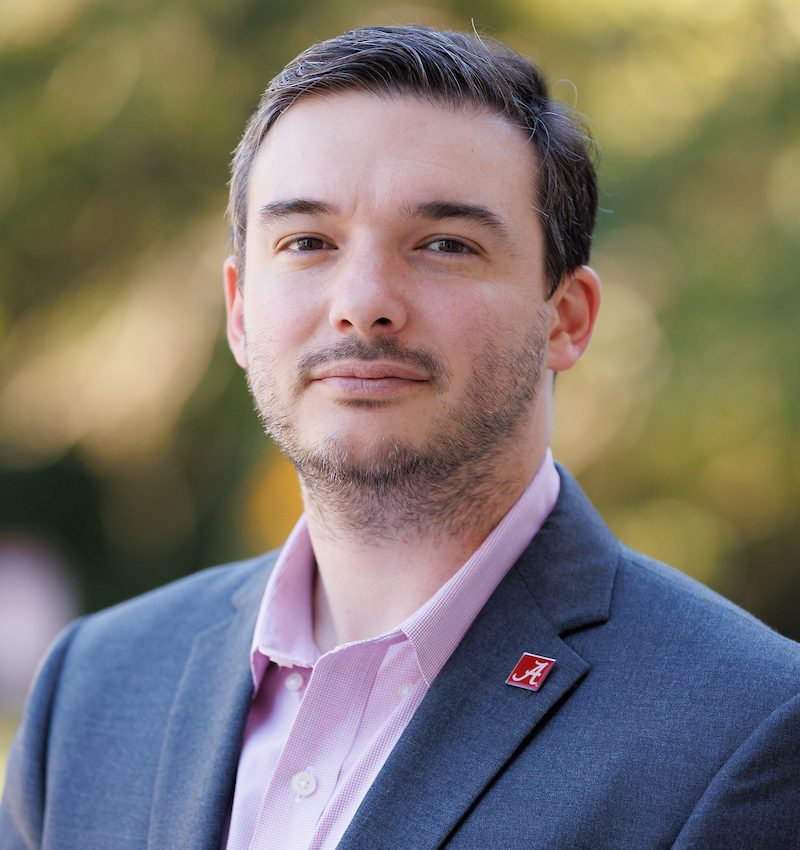
Dr. Patrick Shane Crawford serves as Assistant Professor in the Department of Civil, Construction and Environmental Engineering at the University of Alabama's College of Engineering. Affiliated with the Center for Sustainable Infrastructure and Alabama Water Institute, his research focuses on enhancing community resilience to tornadoes, floods, and hurricanes through interdisciplinary engineering approaches integrating social science and policy perspectives. His educational background includes: B.S. in Civil Engineering (2012, University of Alabama) M.S. in Civil Engineering (2014, University of Alabama) Ph.D. in Civil Engineering (2018, University of Alabama) Dr. Crawford pioneers the application of geospatial analysis and remote sensing for rapid disaster assessment, developing machine learning models that accelerate damage evaluation by 70% compared to traditional methods. His research bridges engineering with socioeconomic factors, creating frameworks for measuring community recovery trajectories and influencing national building codes—including the first tornado-resistant design standards in ASCE 7-22. Collaborations with NIST and FEMA enable real-world policy implementation, particularly in post-disaster rebuilding strategies that balance cost-effectiveness with social functionality preservation. Analysis of his 2022-2025 publications reveals consistent innovation in longitudinal disaster reconnaissance , with 60% of recent work focusing on tornado events using deep learning for damage classification. Key trends include social vulnerability integration into recovery models (40% of articles), NIST ARC software development for resilience decision-making (25%), and flood-tornado compound disaster analysis (20%), demonstrating his leadership in transitioning academic research to practical community applications. Active in federal partnerships, Dr. Crawford's 2025 feature Confident but Exposed: How Prepared Are U.S. Homeowners for Extreme Weather? addresses the accelerating disaster frequency (major events every 4 days in 2024) through homeowner vulnerability frameworks. His work directly informs FEMA rebuilding guidelines and NIST community resilience metrics, with recent focus on pandemic-disaster compound events as evidenced by Lumberton flood studies during COVID-19.