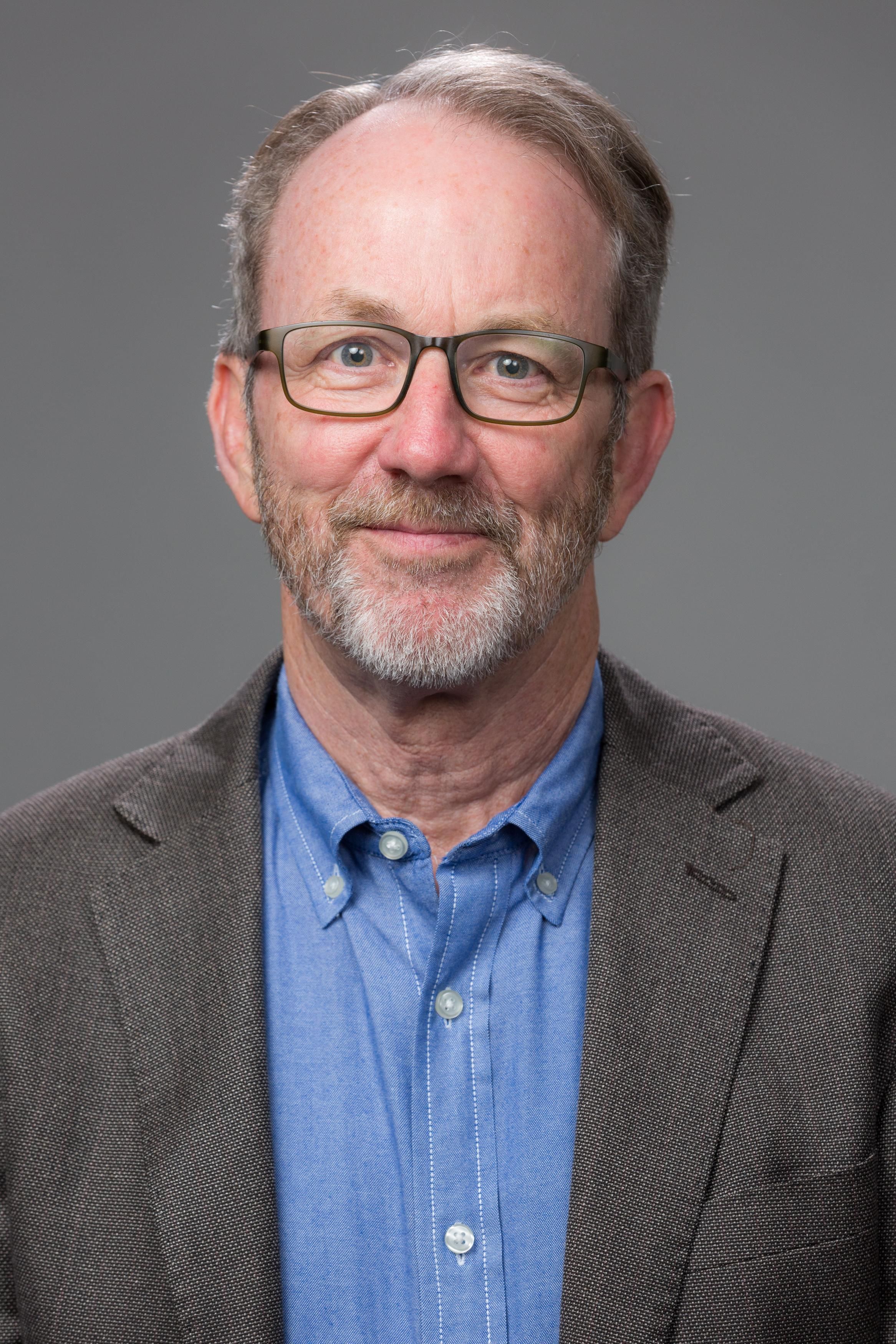
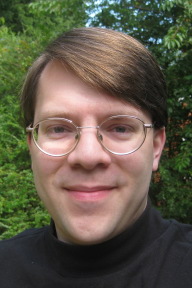
Max Koch is a Professor at Lund University's School of Social Work, specializing in the intersection of social policy, ecological sustainability, and postgrowth theories. His research explores how capitalist restructuring impacts welfare, inequality, and climate action, with a focus on sustainable welfare systems and degrowth. Current projects: 'Economic Elites in the Climate Change Transformation' (PI, 2023-2028), 'Regulating the Polluter Elite' (2024-2027), 'FLYWELL' (2023-2026). Former projects: 'Postgrowth Welfare Systems' (2021-2025), 'Sustainable Welfare for a New Generation' (2020-2023). He teaches political economy, social inequality, and ecological sustainability at Lund University, directing the 'Social Policy in Europe' course. As a Visiting Scholar, he has collaborated with institutions in Spain, the Netherlands, Scotland, and Chile. His work contributes to UN Sustainable Development Goals (SDGs) related to climate action and reduced inequalities. Scientific award: Atlas Prize (2019) for degrowth research. Editorial roles: Environmental Values, advisory boards for ORSI and Collorative Future Making. Recent publications analyze planetary boundaries, postgrowth welfare models, and climate policy synergies. His research emphasizes interdisciplinary approaches combining social practices with policy innovation.
David Parrott is a Professor of Early Modern European History at New College, University of Oxford, and serves as Penry Williams Fellow, Tutor in History, and Precentor. He holds a MA (M.A. DPhil Oxf) and completed his BA and DPhil in History at Oxford (Christ Church and Wolfson College) before joining the University of York as a lecturer. Returning to New College in 1992, he specializes in teaching European history between 1500-1700, with a focus on France, Italy, and political/military/cultural themes. His courses include historiography, methodology, and specialized topics like the Thirty Years' War and early modern court culture. His research focuses on 17th-century France and Northern Italy, particularly military history, mercenaries, and private military organizations. Current work explores France’s mid-17th-century crisis. He has published extensively on early modern warfare, including Richelieu’s Army (2001) and The Business of War (2012). No scientific awards are listed, though his scholarly contributions are significant. His teaching and research highlight interdisciplinary approaches to military and political history. While no grants or advising activities are detailed here, his academic roles emphasize mentorship through tutorials and college governance. He contributes to New College’s academic and chapel life as a Tutor and Precentor.
Rick Hoyle is a Professor of Psychology and Neuroscience at Duke University, where he serves as Associate Chair of the Department of Psychology and Neuroscience. He is also a Faculty Network Member of the Duke Institute for Brain Sciences. His academic career spans decades, with significant contributions to understanding self-regulation and adolescent development. Dr. Hoyle earned his B.A. from Appalachian State University (1983), followed by an M.A. (1986) and Ph.D. (1988) from the University of North Carolina, Chapel Hill. He progressed from Assistant to Associate to Full Professor at the University of Kentucky from 1989 to 2003 before joining Duke University. His research focuses on how adolescents and emerging adults manage goal pursuit through self-regulation, taking a broad view that accounts for personality, environment, cognition, emotion, and social influences. He employs longitudinal methods with repeated assessments, sometimes spanning years with data collection multiple times per year, or intensive studies with assessments several times daily. His lab develops innovative measurement tools including self-report measures of self-control and grit, as well as unobtrusive approaches using mobile phones and wearable devices to track goal pursuit in natural settings. His recent publications reveal a strong focus on self-regulation in digital contexts, adolescent substance use, socioeconomic influences on development, and innovative measurement approaches. His work increasingly integrates technology (social media analysis, wearable devices) with traditional psychological research methods to understand real-world behavior. Fellow, Association for Psychological Science (2013) Dr. Hoyle has secured numerous research grants totaling millions of dollars, including the current Real-Time and Randomized Tests of Social Media and Mental Health Links in Early Adolescence (2024-2029), NCCU Duke - Substance Use Research & Education (2024-2029), and Mid-Life Health Inequalities in the Rural South: Risk and Resilience (2023-2028). His grant portfolio demonstrates sustained funding for research on adolescent development, substance use, self-regulation, and health disparities. He teaches advanced courses including Applied Structural Equation Modeling and Psychology and Neuroscience Grant Writing, mentoring the next generation of researchers in quantitative methods and research design. His work through the Center for the Study of Adolescent Risk and Resilience (2008-2025) has established a significant research infrastructure for longitudinal studies of adolescent development. Current projects examine social media effects on mental health, substance use patterns, and the impact of environmental factors on adolescent well-being using innovative digital tracking methods.
Risto Miikkulainen is a Professor of Computer Science and Neuroscience at the University of Texas at Austin and VP of AI Research at Cognizant AI Lab. He directs the UTCS Neural Networks Research Group and is currently on leave from UT, working on Evolutionary Computation and Deep Learning at Sentient Technologies, Inc. Education: Ph.D. in Computer Science, UCLA, 1990 M.S. in Applied Mathematics, Helsinki University of Technology (now Aalto University), 1986 Risto Miikkulainen's research focuses on biologically-inspired computation such as neural networks and evolutionary computation. His work spans three main areas: (1) Neuroevolution, evolving complex deep learning architectures and recurrent neural networks for sequential decision tasks in robotics, games, and artificial life; (2) Cognitive Science, developing models of natural language processing, memory, and learning that shed light on disorders such as schizophrenia and aphasia; and (3) Computational Neuroscience, studying the development, structure, and function of the visual cortex, episodic memory, and language processing. His research combines theoretical understanding of biological information processing with practical applications for developing intelligent artificial systems. His recent publications (2025) show a strong focus on evolutionary approaches to AI development, particularly in neural architecture search, loss function optimization, and explainable AI. Many papers explore the intersection of evolutionary computation with deep learning, creating more efficient and transparent AI systems. His work spans theoretical foundations and practical applications in areas ranging from environmental control systems to cognitive modeling. Scientific Awards: College of Fellows, International Neural Network Society, 2024 Best Pathway to Impact Award, NeurIPS Climate Change workshop, 2024 AAAI Fellow, 2023 IEEE CIS Evolutionary Computation Pioneer Award, 2020 Gabor Award, International Neural Network Society, 2017 Outstanding Paper of the Decade Award, International Society for Artificial Life, 2017 IEEE Fellow, 2016 Multiple Best Paper Awards at GECCO, CIG, and CEC conferences Deployed Application Award, AAAI/IAAI-2013, AAAI/IAAI-2018 Miikkulainen has extensive experience mentoring students through undergraduate research courses like CS378 Computational Intelligence in Game Design I and II, where students develop independent research projects on the OpenNERO research platform. He has received multiple awards for deployed applications, demonstrating the practical impact of his research. His work has led to the development of the NERO game platform, which serves as both an educational tool and research platform for AI. He directs the UTCS Neural Networks Research Group, which focuses on neuroevolution, cognitive science models, and computational neuroscience. The group has developed the NERO (Neuro-Evolving Robotic Operatives) platform, a machine learning game that allows users to train intelligent agents through evolutionary computation. The group's work spans theoretical research and practical applications in AI, with connections to both academic and industry partners.
Professor Catherine Allerton is a faculty member in the Department of Anthropology at the London School of Economics and Political Science (LSE). She specializes in the materialities and mobilities of everyday life, with a focus on place, kinship, childhood, migration, and temporalities in island Southeast Asia. Her fieldwork spans a two-placed village in Flores, Indonesia, and Kota Kinabalu, Sabah, East Malaysia. Her research emphasizes interdisciplinary ethnographic methods, particularly involving child participants to challenge adult-centric approaches. She launched the 'Childhood in the Migrant City' exhibition using child-taken photographs from her ESRC-sponsored research. Current projects include exploring discordant temporalities between migration systems and childhood development, as well as completing a book manuscript on moral economies of belonging. Key research interests include the social and political dimensions of landscapes, the anthropology of children, and the impacts of legal status on marginalized youth. She teaches an LSE course on 'Children and Youth in Contemporary Ethnography' and actively supervises PhD students focusing on childhood, migration, citizenship, and Southeast Asian studies. Her work addresses exclusionary practices tied to race, religion, and legal frameworks in Malaysia and Indonesia. Languages spoken include Bahasa Manggarai, English, Indonesian, and Malay. No part-time status is mentioned, indicating full-time faculty commitment.
Roi Livne is an Associate Professor and Department Associate Chair in the Department of Sociology at the University of Michigan, within the College of Literature, Science, and the Arts. He holds a Ph.D. from the University of California-Berkeley (2016). His research focuses on the intersections of morality, culture, and economics within healthcare systems, particularly addressing end-of-life care, healthcare economics, and the sociological implications of modern medicine. Education: Ph.D. in Sociology from UC Berkeley (2016). Current courses include SOC 305-001: Introduction to Sociological Theory. Research interests include the sociology of morality, medical sociology, qualitative approaches, and the sociological analysis of science and technology. His seminal work, Values at the End of Life: The Logic of Palliative Care , examines the moral and economic tensions in end-of-life decision-making. Livne's recent projects explore the moral economy of healthcare pricing, sociological dimensions of the COVID-19 pandemic, and the concept of limits in modernity. His publications address topics such as the cultural and economic frameworks shaping healthcare decisions, the ethics of resource allocation, and the societal impact of pandemics. While no specific awards are listed, his work has contributed significantly to debates in medical sociology and economic theory. Advising and grants are not explicitly detailed here, though his roles suggest active mentorship and research leadership. His work is affiliated with the University of Michigan's Sociology Department, with office hours booked via https://www.wejoinin.com/livne.
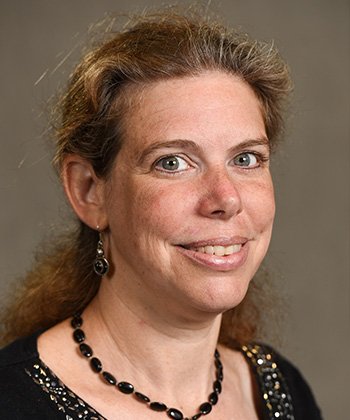
Dr. Ellen Posman is a Professor and Chair of the Department of Religion at Baldwin Wallace University, Ohio. She also chairs the Faith & Life program and holds a Ph.D. from the University of California, Santa Barbara (UCSB), an M.T.S. from Harvard Divinity School, and a B.A. from Stanford University. Her research focuses on comparative religion, particularly Asian religions and Judaism, with specialties in exile/diaspora studies, Buddhism, and religious violence. She has conducted ethnographic research in India, Nepal, Israel, Palestine, Turkey, Taiwan, Thailand, and Sri Lanka, exploring topics like Theravada Buddhist nuns' ordination rights and the intersection of religion with globalization. Posman’s teaching spans introductory religion courses to specialized topics such as Asian religions, religion and violence, and women in religion. She led a study-abroad initiative to India (2007–2008) examining religion’s role in poverty and development. Her work emphasizes civic engagement pedagogy, including contributions to the Spotlight on Teaching section of Religious Studies News. She co-edited a special journal issue on religious communities in exile and has published widely on Buddhism, interfaith dialogue, and religious pedagogy. Posman’s research has been funded by grants, including an NEH summer seminar on classical Buddhist texts. She is featured in the documentary Bhikkhuni: Buddhism, Sri Lanka, Revolution , highlighting her expertise on Theravada nuns. Her academic service includes roles as a reviewer for the American Academy of Religion and collaborative projects on transnational pedagogy and interfaith engagement.
Dr. Hannah Zdansky is an Assistant Professor of English at Belmont Abbey College, specializing in medieval languages, literatures, and manuscript studies. Her research focuses on cross-cultural connections in medieval Britain and Ireland, particularly exploring multilingualism, religion in literature, and medieval reading practices. She holds a B.A. from Baylor University, an M.A. from the National University of Ireland, Galway, and a Ph.D. from the University of Notre Dame. Her expertise spans Old and Middle English, French, Irish, Welsh, and Latin, with a methodological focus on digital humanities and the history of the book. Dr. Zdansky’s work examines how medieval literary and material cultures were shaped by multicultural interactions, including studies on medieval manuscripts, the role of women in literary production, and the intersection of religion with secular narratives. Her recent scholarly engagements include presentations on topics like the transnational dimensions of medieval texts, the interplay between sacred and secular themes in works such as Gui o Bharbhuic , and comparative analyses of Welsh and English manuscript traditions. Her publications span peer-reviewed articles, encyclopedia entries, and book reviews, reflecting her commitment to interdisciplinary medieval studies. Dr. Zdansky teaches a wide range of courses, from Old English Language and Literature to Irish History, emphasizing close textual analysis and historical context. She has advised numerous students through independent studies and thesis work, fostering academic rigor and intellectual curiosity in her classroom.
Dinah Ribard is a Director of Studies at the École des Hautes Études en Sciences Sociales (EHESS), working within the Centre de Recherches Historiques (CRH). She serves as Center Director for the GRIHL (Groupe de recherche interdisciplinaire sur l'histoire du libéralisme) research group. Her academic career has been dedicated to the historical study of work, intellectual practices, and cultural production from the early modern period through the 19th century. Ribard completed her thesis in December 2000 at the University of Paris III - Sorbonne Nouvelle under the direction of Alain Viala, entitled "Live Tell Think. Research on the literary status of the philosopher: the Lives of philosophers in France 1650-1766." She was formerly a student at the École Normale Supérieure (Ulm) and holds a degree in Modern Literature. Prior to her position at EHESS, she served as an ATER (Attaché Temporaire d'Enseignement et de Recherche) at Paris III University from 1999 to 2001 and taught at Lycée Jacques-Feyder in Epinay sur Seine from 2001 to 2003. Ribard's research focuses on the history of work from multiple perspectives - examining both intellectual work (1600-1900) and material labor. She investigates how work has been conceptualized, narrated, and institutionalized throughout history. Her work explores the relationship between knowledge production and labor, analyzing how different professions and social statuses have shaped intellectual and cultural practices. She examines the historical construction of disciplines, professions, and social classifications, with particular attention to how writing practices intersect with work identities. Her recent publications reveal a consistent focus on the relationship between writing, work, and social identity across the early modern and modern periods. Ribard's scholarship demonstrates how textual practices were embedded in specific work contexts, from artisanal workshops to academic institutions. Her work shows how literary forms were used to construct professional identities and how writing practices served as forms of political action. She has made significant contributions to understanding the historical relationship between intellectual labor and material production. Ribard has published extensively, including the notable 2023 book "Le Menuisier de Nevers. Poésie ouvrière, fait littéraire et classes sociales (XVIIe-XIXe siècle)" which examines how working-class poetry was historically constructed and marginalized. Her scholarship challenges traditional literary classifications and reveals how social categories have been historically produced through cultural practices. As Director of Studies at EHESS, Ribard supervises doctoral students and contributes to the academic training of historians. She co-responsible for the Grihl seminar and teaches courses at EHESS on topics including "Writings of the Past. Literature and History: Methods, Theories, Fields" and "History and stories of work." Her teaching reflects her research interests in the intersection of literary practices, historical methodology, and social analysis. Within the CRH, Ribard is affiliated with the GRIHL research group, which focuses on the interdisciplinary history of liberalism. Her work bridges historical, literary, and sociological approaches to understanding the development of social and intellectual categories. Through her research, teaching, and institutional leadership, Ribard has made significant contributions to the historical understanding of work, knowledge production, and cultural classification.
Prof. Zeljko Miletic serves as a full professor at the Department of Archaeology, Faculty of Philosophy, University of Zadar, where he has been employed since 1986. He teaches core courses across all archaeology study levels including Institutions of the Roman World, Roman Army in Illyricum, Romanization of Ancient Illyricum, Economy of Roman Dalmatia and Histria, and Ancient Religion in the Adriatic-Danubian Region. His educational credentials include: Graduate Archaeologist and Art Historian, Faculty of Philosophy in Zadar (1986) Master of Science (Topography of the Salonitan necropolises), Faculty of Philosophy in Zagreb (1989) Doctor of Science (Mithraism in the Roman province of Dalmatia), Faculty of Philosophy in Zadar (1997) Miletic specializes in religious practices and military history within Roman provincial contexts, with particular focus on the Eastern Adriatic region. His research integrates field archaeology with socio-economic analysis of Romanization processes, examining how religious syncretism and military infrastructure shaped cultural transitions in Dalmatia and Pannonia. This interdisciplinary approach bridges classical archaeology, anthropology, and historical geography to reconstruct lived experiences in Roman frontier provinces. No scientific awards are documented in the source material. As academic leader, Miletic coordinated the Archaeology of the Eastern Adriatic postgraduate program and served as doctoral mentor/head until 2015. He secured principal investigator roles for the MZOS-funded projects Religious Life on the Eastern Adriatic in Roman Times and Cult and Religion on the Eastern Adriatic Coast in Roman Times, while collaborating on international initiatives including Corpus Monumentorum Mithriacorum with Heidelberg University. His grant portfolio demonstrates sustained focus on Roman provincial religious networks. Miletic directs field operations at Krka National Park's Burnum archaeological site and established antiquities collections at Humac Museum in Bosnia and Herzegovina. His excavation teams operate across key Adriatic-Danubian sites including Salona, Nin, Galovac, and Asseria, with continuous fieldwork spanning over three decades to document Roman provincial infrastructure.
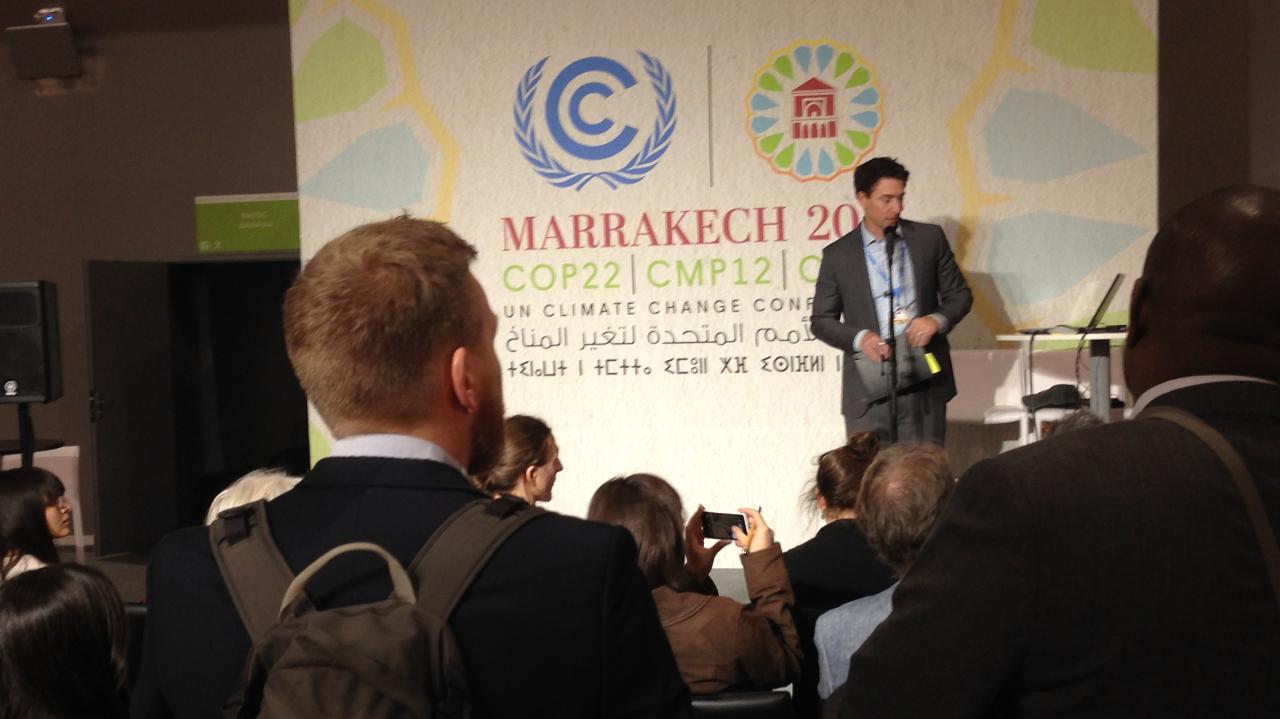
Maxwell (Max) Boykoff is a Professor in the Environmental Studies department at the University of Colorado Boulder and a Fellow in the Cooperative Institute for Research in Environmental Sciences (CIRES). He holds a PhD in Environmental Studies from the University of California, Santa Cruz (2006) and an MBA from the University of Colorado Boulder (2023), complementing his BS in Psychology from The Ohio State University. His research focuses on two primary arenas: the cultural politics of science, climate change and environmental issues, examining how attitudes and behaviors shape action possibilities; and transformations of carbon-based economies, with emphasis on science-policy interfaces and decarbonization politics. His work explores how climate science finds meaning in everyday life and feeds back into policy decisions. Boykoff's publications demonstrate consistent focus on climate communication, media representations, policy conflicts, and societal transformations. His recent work emphasizes digital communication strategies, climate health connections, countermovement analysis, and creative engagement methods. Article trends show increasing attention to social media dynamics, global comparative studies, and interdisciplinary approaches spanning environmental studies, communication, and political science. Awards & Recognition: CU Excellence in Leadership Program (2022) Contributing Author to IPCC Sixth Assessment Report Deputy Editor at Climatic Change journal (over a decade) He leads significant research initiatives including the Media and Climate Change Observatory (MeCCO) monitoring global climate coverage across 82 sources in 40+ countries, Inside the Greenhouse (creative climate communication project), and the Colorado Local Science Engagement Network . He serves on the Independent Science Panel for New Zealand's Deep South Challenge. Boykoff teaches courses including Climate Change Politics & Policy, Creative Climate Communication, Political Economy and the Environment, and Science & Environmental Communication. He mentors through the Red Cross/Red Crescent Climate Centre Internship Program and integrates research with teaching and service commitments.
FOONG Pin Sym is a Senior Research Fellow at the Saw Swee Hock School of Public Health, National University of Singapore. She leads the Telehealth Core, a research center focused on developing and studying eHealth projects. Her academic background includes a Master's in Human Computer Interaction Design and a PhD in Interactive Media. Her research emphasizes patient-centered technologies, with a focus on chronic disease prevention, caregiver support, and mobile health applications. Her work addresses challenges in healthcare decision-making, end-of-life care, and lifestyle interventions. Notable projects include developing digital tools for diabetes risk communication, caregiver decision support systems, and studies on telehealth during the pandemic. She teaches courses in Human-Computer Interaction, Mobile Interaction Design, and Technology for Older Adults. Her research spans qualitative and quantitative methodologies, including randomized controlled trials and participatory action research. She actively participates in interdisciplinary collaborations across health, technology, and design sectors to improve patient and caregiver outcomes. Education: PhD in Interactive Media, Master's in Human Computer Interaction Design Labs/Teams: Leads the Telehealth Core research team Grants/Projects: SMART-GDM Study, Vita project for dementia care
Westley Weimer is a Professor in the Department of Electrical Engineering and Computer Science (EECS) at the University of Michigan, College of Engineering. He teaches advanced courses such as EECS 590 (Advanced Programming Languages) and EECS 481 (Software Engineering), and has previously taught at the University of Virginia. His research integrates software engineering, programming languages, and cognitive science, focusing on automated program repair, program analysis, and the neuroscience of code comprehension. University: University of Michigan School: College of Engineering Department: Department of Electrical Engineering and Computer Science Academic Rank: Professor His research interests include automated program repair (e.g., GenProg), software quality, cognitive modeling of programming, neuroimaging studies of code review, and the application of medical imaging to software engineering. He explores deep questions at the intersection of consciousness, time, and computation, advocating for interdisciplinary approaches to understanding the mind through programming behavior. The most recent publications reflect a trend toward empirical and cognitive studies in software engineering, combining automated repair with human factors, neuroimaging (fMRI, TMS), and real-world software challenges. Themes include bias in code review, programming under cognitive influences, and the neurological basis of code comprehension. His work increasingly bridges computer science with psychology, neuroscience, and social science. Scientific awards include multiple Distinguished Paper Awards at ICSE, FSE, and ESEC/FSE, Best Paper and Runner-up awards, and several 10-Year Most Influential Paper Awards from ASE, GECCO, POPL, and ASPLOS, recognizing the lasting impact of his contributions to automated software repair and program analysis. He has advised numerous PhD and Master’s students, many of whom have gone on to faculty positions or industry research roles. He contributes to academic service through organizing diversity and inclusion initiatives, maintaining graduate career resources, and promoting ethical and inclusive practices in computing. He leads a vibrant research group focused on improving software quality through both technical and human-centered innovations, with ongoing projects in automated repair, cognitive modeling, and secure systems.
Glenn Roisman is a Professor at the Institute of Child Development , University of Minnesota. He holds the Distinguished McKnight University Professor and Robert Holmes Beck Chair of Ideas in Education titles, reflecting his scholarly influence and teaching excellence. Education: PhD (2002), University of Minnesota Roisman’s research examines how early relationship experiences shape lifespan psychological, interpersonal, physical, and cognitive health . His work integrates longitudinal data from birth to adulthood, focusing on normative and atypical caregiving environments. Recent publications analyze the predictive validity of attachment assessments (Strange Situation, Adult Attachment Interview), genetic/environmental contributions to attachment styles, and pathways from early adversity to cardiometabolic health. His projects leverage data from the NICHD Study of Early Child Care and Youth Development , Minnesota Longitudinal Study , and Minnesota Twin Registry . Scientific Awards : Distinguished McKnight University Professor Robert Holmes Beck Chair of Ideas in Education Roisman’s collaborations with institutions like Pennsylvania State University and grants from NHLBI , NICHD , and NIA underscore his leadership in developmental science. He is open to advising new PhD students in 2026, emphasizing multi-method and multi-informant research approaches.
Mark Coeckelbergh is a Professor of Philosophy at the University of Vienna, specializing in the philosophy of technology, AI ethics, and robot ethics. He is affiliated with the Department of Philosophy and the Research Network Data Science at the University of Vienna. In addition to his academic position, Coeckelbergh has held significant roles including Former President of the Society for Philosophy and Technology (SPT) and Member of the European Commission's High-Level Expert Group on Artificial Intelligence (AI HLEG). His research focuses on the ethical, political, and philosophical implications of emerging technologies, particularly artificial intelligence and robotics. Coeckelbergh has published extensively in these areas, authoring influential books such as Robot Ethics (2022), The Political Philosophy of AI (2022), and Why AI Undermines Democracy and What To Do About It . His work explores how AI systems affect democratic processes, human agency, and social relationships. Recent publications demonstrate a strong focus on the relationship between AI, democracy, and ethical governance, examining how AI systems can both threaten and potentially enhance democratic processes through algorithmic transparency and participatory design approaches. Finalist of the World Technology Award 2017 Coeckelbergh teaches various courses including 'Introduction to Philosophy of LLMs,' 'LLMs and the Future of Writing,' 'Ethics and Robotics,' and 'Global Governance of AI.' He has supervised numerous students working on topics related to technology ethics and philosophy. He has been involved in several major research projects including H2020 PERSEO, WWTF Democracy Responsible Entrepreneurship, and FP7 DREAM (Development of Robot-Enhanced therapy for children with Autism spectrum disorders). Coeckelbergh has also announced upcoming guest professorships at the Institute of Philosophy of the Czech Academy of Sciences and Uppsala University, where he will work on environmental and technology ethics projects.