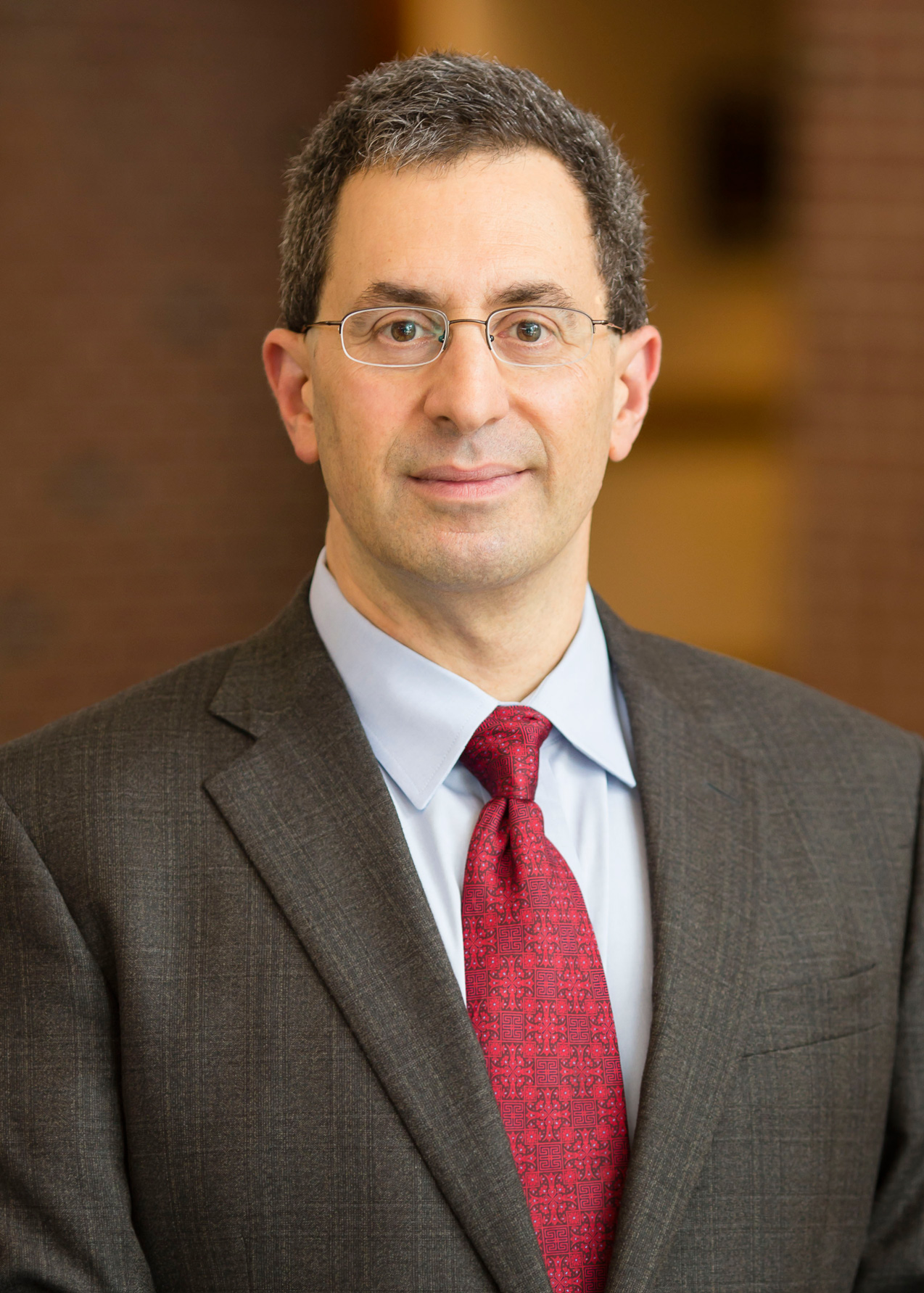
Haoqi Zhang is an Associate Professor at Northwestern University in Computer Science and Design, with offices at 2133 Sheridan Rd., Evanston, IL. He directs the Design, Technology, and Research (DTR) program and co-directs the Delta Lab with interdisciplinary collaborators. His work bridges Social Computing , Human-Computer Interaction , Artificial Intelligence , and Learning Science to create socio-technical systems advancing human values. Education: PhD in Computer Science from Harvard University (2012) BA in Computer Science and Economics from Harvard University (2007) Research interests focus on Computational Ecosystems that interweave community processes, social structures, and intelligent systems to promote values like self-direction , metacognition , and belonging . His projects include agile research studios for training researchers, opportunistic collective experiences for remote collaboration, and flexible coordination in crowdsourcing systems. Recent publications examine metacognitive learning in CS education, dialectical activities in HCI, and trust dynamics in crowdfunding. Supported by National Science Foundation grants in Cyber-Human Systems and Cyberlearning, plus Microsoft FUSE Labs and Northwestern institutional awards. Awards include Microsoft FUSE Labs Research Award Northwestern Office of the Provost Award for Digital Learning Notable Paper Award at HCOMP 2013 Best Paper Honorable Mention at CHI 2018 Mentors PhD students Kapil Garg and Gobi Dasu , while fostering over 100 students through DTR. Runs a Junior Faculty Support Group since 2022, providing emotional and professional support for early-career academics.
Prof. Dr. Mimoza Anastoska Jankulovska serves as a full Professor at the Faculty of Technical Sciences and Informatics, International Slavic University "G.R. Derzhavin", delivering courses across both Sveti Nikole and Bitola campuses in North Macedonia. Her academic career spans over 30 years with significant contributions to computer science education and educational technology integration. Her educational foundation includes: Doctor of Technical Sciences from Faculty of Information and Communication Technologies, University "Sv. Kliment Ohridski", Bitola Postgraduate studies at Pedagogical Faculty, University "Sv. Kliment Ohridski", Bitola Undergraduate degree in Electrical Engineering from Faculty of Electrical Engineering, University "Kiril and Metodij", Skopje Prof. Jankulovska's research centers on Educational Technology and ICT in Education, with specialized focus on Internet Technologies, Programming methodologies, and digital transformation in learning environments. Her work critically examines infrastructure challenges, teacher training needs, and pedagogical adaptations required for effective technology integration, particularly emphasizing crisis-responsive education models as demonstrated during pandemic lockdowns. Her 12 publications from 2005-2021 reveal an evolving research trajectory: early work established foundations in educational information systems and project management, while recent studies analyze pandemic-driven digital shifts, database utilization in Macedonian education, and social media's pedagogical implications. Collectively, these works demonstrate consistent engagement with technology's role in reshaping educational assessment, teacher responsibilities, and student engagement across diverse learning contexts. With extensive project leadership experience at IMOR (2000-2020) combined with current teaching responsibilities in core computer science subjects, Prof. Jankulovska bridges theoretical research with practical implementation in North Macedonia's educational landscape.
Richard J. Ross is the David C. Baum Professor of Law and Professor of History at the University of Illinois at Urbana-Champaign, where he holds a joint appointment in the College of Law and History Department. He serves as co-director of the Illinois Program in Legal History and founder/director of the Symposium on Comparative Early Modern Legal History. His academic career spans multiple institutions, having previously held positions at the University of Wisconsin-Madison and visiting appointments at Harvard, NYU, University of Pennsylvania, Hebrew University, and Tel Aviv University. Dr. Ross earned his BA (1984), JD (1989), and PhD in History (1998) from Yale University, where he served as symposium editor and senior editor of the Yale Law Journal. His interdisciplinary training bridges legal and historical scholarship, providing a unique perspective on the development of law in historical context. Professor Ross's research focuses on three primary areas: the development of early American law in comparative context, the political and intellectual history of legal communications, and the intertwined influence of law and religion on governance. His comparative approach examines American law through the lenses of Spanish New World empire and British Ireland, revealing how America came to see itself as a law-centered society. He has made significant contributions to our understanding of legal pluralism, particularly in colonial contexts where settler law interacted with indigenous legal traditions. His work on legal communications explores how law was transmitted and understood across imperial boundaries, while his research on law and religion investigates how theological concepts shaped legal thought in early modern England and America. Professor Ross's scholarly output demonstrates consistent engagement with comparative legal history, particularly focusing on the early modern period (c. 1492-1815). His publications reveal a sophisticated understanding of how legal systems developed differently yet interconnectedly across the British and Spanish empires. A recurring theme in his work is the concept of legal intelligibility - how different legal cultures understood and negotiated with each other's legal principles. His recent work increasingly emphasizes the role of indigenous peoples in shaping colonial legal systems, challenging traditional narratives of imperial legal dominance. Honorable mention for the 1999 Sutherland Prize from the American Society for Legal History 2013 Carroll P. Hurd Award for Excellence in Faculty Scholarship from the University of Illinois College of Law As director of the Illinois Legal History Program and founder of the Symposium on Comparative Early Modern Legal History, Professor Ross has created important platforms for scholarly exchange. The biennial Symposium brings together law professors, historians, and social scientists to explore comparative legal history topics, traditionally meeting at the Newberry Library in Chicago. His leadership in these initiatives has fostered interdisciplinary collaboration and advanced the field of legal history. Professor Ross has also received research fellowships from Yale Law School, Yale's Institute for Social and Policy Studies, the American Historical Association, the Institute for Research in the Humanities at the University of Wisconsin, and the Spencer Foundation. Professor Ross directs the Illinois Legal History Program and the Symposium on Comparative Early Modern Legal History, creating collaborative spaces for scholars examining law in historical context. His work bridges multiple academic communities, connecting legal scholars with historians and bringing together specialists in British, Spanish, and indigenous legal traditions.
Robert J. Nemiroff , University Professor of Physics at Michigan Technological University's College of Sciences and Arts , is a distinguished astrophysicist and Fellow of the American Physical Society. Known for co-creating the Astronomy Picture of the Day (APOD) in 1995 and founding the Astrophysics Source Code Library (ASCL) in 1999, he has significantly advanced open science and public engagement. His research spans gamma-ray bursts, gravitational lensing, and cosmological constraints, with a focus on relativistic effects and observational innovation. Education PhD in Astronomy and Astrophysics, University of Pennsylvania Research Interests Nemiroff's work explores gamma-ray bursts as cosmological probes, gravitational lensing phenomena, and relativistic illumination fronts to orient nebulae. He pioneered CONCAMs , fisheye cameras deployed globally for all-sky monitoring, and investigated unconventional ideas like ultralight energy and dark energy-Higgs connections . His recent studies include Cherenkov radiation coherence and AI-generated astronomical imagery. Scientific Awards NSF CAREER Award (1997) MTU Research Award (2012) MTU University Professor (2021) Exceptional Graduate Mentor Award (2021) Advising and Grants Mentoring eight PhD students, including Bijunath Patla (Harvard) and Lior Shamir (Lawrence Tech), Nemiroff emphasized collaborative research. His NSF-funded projects included deploying CONCAMs at major observatories and developing the ASCL, which now lists 2600+ codes. He also led interdisciplinary efforts to post free online courses like 'Physics X' and 'Astro 101'. Labs and Teams He led the Night Sky Live (NSL) project, creating a global network of fisheye cameras for cloud and transient monitoring. The ASCL, now housed at MTU, remains a critical resource for code transparency. His work often involved partnerships with NASA, Kitt Peak, and institutions in Thailand, Chile, and Israel.
Melissa Ocepek is an Assistant Professor at the School of Information Sciences , University of Illinois at Urbana-Champaign. She holds a PhD in Information Studies from the University of Texas at Austin and a B.A. in Political Science and Sociology from Pepperdine University. Education: PhD in Information Studies (UT Austin), B.A. in Political Science and Sociology (Pepperdine) Her research focuses on everyday information behavior using cultural and critical theory frameworks, with a unique emphasis on food studies and ethnography. She explores how people interact with information in mundane contexts like grocery shopping and leisure activities, often employing shadowing and participant observation methods. Recent publications analyze serendipity in bookshops, sensory grocery shopping behaviors, and historical food advertising. She has co-authored two books: Food in the Internet Age and Formal and Informal Approaches to Food Policy with William Aspray and George Royer. Her 2019 INTERACT paper won a Best Paper Award. Scientific Awards: Best Paper Award Winner, INTERACT 2019 Ocepek teaches courses like Libraries, Information and Society (IS510AC) and Independent Study (IS589MGO). She collaborates internationally on misinformation governance and has contributed to studies on food-buying behavior during the COVID-19 pandemic. Her work bridges library science with informatics through her Faculty Affiliate role in Illinois Informatics.
Amanda Ciafone serves as Associate Professor across multiple units at the University of Illinois including the Department of Media & Cinema Studies, Institute of Communications Research, History department, Unit for Criticism and Interpretive Theory, and Center for Latin American and Caribbean Studies. Her interdisciplinary scholarship bridges cultural history, political economy, and media studies with particular emphasis on capitalism's cultural manifestations and corporate power structures. Professor Ciafone earned her PhD and MA in American Studies from Yale University and BA in American Civilization from Brown University. Her educational foundation informs her critical approach to understanding American culture within transnational contexts, especially regarding Latin America. As a cultural historian of capitalism, Ciafone examines how media constructs meaning around economic systems and social relations. Her research spans cultural history of the United States in global contexts, political economy of media industries, and social movement responses to corporate power. She currently pioneers work in humanistic aging studies, investigating technology's relationship with old age while co-editing the 'Geopolitics of Information' book series on critical media studies. Ciafone's publications demonstrate consistent engagement with corporate-cultural dynamics, from historical analyses of Coca-Cola's global expansion to contemporary examinations of aging and care work. Her scholarship reveals how media representations shape economic understanding while highlighting social movement resistance to corporate narratives across different historical periods. Her scholarly excellence has been recognized through prestigious awards: Fellow of the Center for Advanced Study (2020-2021) Faculty Fellow, Illinois Program for Research in the Humanities (2017-2018) Media & Cinema Studies Teaching Award (2016-2018) Illinois Program for Research in the Humanities Prize (2014-2015) Fellow of the John W. Kluge Center at Library of Congress (2013-2014) Campus Award for Excellence in Undergraduate Teaching (2021) As Director of Graduate Studies for the Institute of Communications Research, Ciafone mentors emerging scholars while developing innovative curricula that connect media literacy with critical economic analysis. Her teaching spans 500-student lectures and intimate seminars, with particular commitment to serving underrepresented students through publicly engaged pedagogy. She actively bridges academic research with public understanding, as demonstrated by her feature in Fox Nation's 'A History of the World in Six Glasses' (2022) where she shared Coca-Cola expertise, and through multimedia resources like the Scalar digital companion to 'Counter-Cola'.
Radosław Sztyber is a Professor at the University of Zielona Góra, affiliated with the Faculty of Humanities and Institute of Polish Philology. He serves as head of the Workshop of Early Literature and Editing and as editor-in-chief of Polish Philology. Annals of the University of Zielona Góra . His academic career spans from his graduation in 1993 through earning his doctorate in 1999 and habilitation in 2013. Dr. Sztyber's research focuses on Polish literary history, particularly Baroque literature, manuscript studies, and the editing of historical texts. His work centers on 16th-17th century Polish literature with special emphasis on the Lisowczyks (a historical Polish military unit) and authors like Wojciech Dembołęcki. He has contributed significantly to the study of early Polish prints, manuscripts, and editorial practices. His scholarly output shows consistent focus on historical Polish literature and editorial practices, with particular attention to the Baroque period. His publications demonstrate expertise in textual criticism, historical documentation, and the interpretation of early Polish literary works, especially those related to military history and political thought of the era. Dr. Sztyber actively supervises students and collaborates with colleagues on academic projects. He has served on the jury for the Regional Committee of the Polish Language and Literature Olympiad since 2023 and became a member of the Scientific Council of the Cyprian Norwid Public Library in Zielona Góra in 2025. He leads the Workshop of Early Literature and Editing and collaborates with various academic institutions, including participating in projects with the National Museum in Prague. His work bridges traditional philological research with modern digital approaches to textual scholarship.
Professor Dorota Ilczuk serves as a Professor at SWPS University's Faculty of Humanities in Warsaw, Department of Cultural Studies. She directs the Creative Economy Research Center within the Institute of Humanities and is associated with the East Asian Civilization Research Center. Her research focuses on cultural economics , creative industries management , and cultural policy , with particular expertise in artists' labor markets and civil society dynamics. Professor Ilczuk pioneered cultural economics as an academic discipline in Poland and has shaped research methodologies for studying artistic communities. Her recent work analyzes trends in Poland's creative sector, including comprehensive studies of artists' working conditions ( Counted and Counted 2024 ) and theater industry dynamics ( Scena Polska 2024 ). These publications demonstrate her focus on empirical research of creative labor markets and cultural policy implementation. At SWPS University, she teaches courses on cultural project funding, cultural economics, competitive transformations, and cultural policy at multiple governance levels. Her academic leadership extends to directing the Creative Economy Research Center where she oversees significant research initiatives. Professor Ilczuk founded the Pro Cultura Foundation and served as President of CIRCLE (Cultural Information and Research Centres Liaison in Europe) from 2001-2007. She remains active as a member of the European Cultural Parliament and Scientific Council of the Warsaw Public Library, while collaborating with international organizations including ERICArts, ACEI, and ISTR. As an expert for the Council of Europe and European Union, she contributes to international research programs on cultural issues. Her grant-funded projects include CICERONE: Creative Industries Cultural Economy Production Network and China Horizons. Her research team's methodological innovations in counting artistic communities have established new standards for cultural statistics in Poland.
Victor Snell is an Industry Professor in Engineering Physics at McMaster University with 50 years of experience in nuclear reactor safety, licensing, and computer code validation. His work focuses on CANDU reactor technology, severe accident management, and regulatory compliance for advanced nuclear systems. Research interests span Nuclear Engineering , Reactor Safety , Licensing Procedures , and Thermal Hydraulics . His recent publications analyze power reactor reactivity coefficients , severe accident programs , and computer code validation in nuclear contexts. Key trends in his 15 most recent articles (2000-2020) include reactor design safety ( ACR-1000 ), licensing harmonization across international markets, computer simulation for thermalhydraulic phenomena, and PIRT methodology for accident analysis. Collaborative efforts with institutions like UNENE and CNS are recurrent themes. As an instructor, he taught the course Nuclear Reactor Safety Design - UN 803 in 2019 and 2022. His career includes extensive work with the Canadian Nuclear Society and Atomic Energy of Canada Limited.
Dr. Michael Norton is an Adjunct Assistant Professor at the John Glenn College of Public Affairs at The Ohio State University. As Chief Policy Analyst at Reinvestment Fund, he focuses on public policy, policy analysis, and place-based research, examining how urban environments influence access to housing, healthcare, education, and economic opportunities. His work spans real estate markets, healthy food access, childcare quality, and educational reform.
Thierry Turletti is a researcher at the DIANA project-team within Inria Sophia Antipolis-Méditerranée, affiliated with Université Côte d'Azur. He holds a Master (DEA), PhD, and HDR in Computer Science from the University of Nice Sophia Antipolis (1990, 1995, 2006). His research focuses on Wireless Networks , Programmable Networks , Networking Experimental Platforms , and Reproducible Research . He co-led the R2lab testbed for 5G experimentation and contributed to projects like NAI, MUST, FPNG, SLICES-RI, DrIVE, and FIT-R2Lab. Education : DEA (1990), PhD (1995), HDR (2006) in Computer Science from University of Nice Sophia Antipolis Professional Affiliations : Inria Sophia Antipolis (1995-present), MIT Laboratory for Computer Science (postdoc 1995-1996) His research interests span Wireless Networks , Programmable Networks , and Reproducibility in network experimentation. Recent work explores 5G/6G observability , network slicing , and decentralized SDN control . He has advised over 15 PhD students, including Yasser Amami (5G/6G observability), Mohammad Bagher Tavassoli (5G/6G slice evaluation), and Alina Quereilhac (network evaluation environments). Scientific contributions include 30+ journal and conference publications on topics ranging from WiMAX modules to DTN routing and SDN frameworks . He has served on numerous technical program committees and editorial boards for journals like Wireless Networks and Advances in Multimedia . Awards include Senior Member of IEEE (2007) Senior Member of ACM (2009) Best Paper Awards at ICNS3 (2010), NS-3 Workshop (2013), and WNS3 (2015) .
Johannes Reckel is a Senior Lecturer and subject specialist in Altaic, Paleoasian, and East Asian languages, cultures, and ethnology at the Lower Saxony State and University Library in Göttingen since 2004. He is also a Privatdozent at the University of Hamburg and teaches Korean, Manchurian, and Mongolian studies. His affiliations include the East Asian Seminar at the University of Göttingen. Altaic and Paleoasian Languages, Literatures, and Cultures (DFG-funded) International Association of Mongolian Studies (IAMS) Pan-Asiatic Conference (PIAC) Societas Uralo-Altaica Reckel's research spans Altaic Studies , Manchurian History , and Korean-Manchurian Relations . He has conducted extensive fieldwork in Manchuria, Xinjiang, and Vladivostok, focusing on the Bohai Empire , Jurcen people, and endangered languages like Sibo and Oirat. His work combines historical analysis , archaeology , and linguistic studies . His recent publications (2016–2015) emphasize language preservation in Central Asia and the development of Oirat script . Earlier works (2001–2007) explore ethnolinguistic interactions and historical dynamics between Korea and Manchuria. Reckel has received scholarships from the DAAD , Korea Foundation , and Chiang Ching-kuo Foundation . His academic leadership includes heading the DFG-funded special collection on Altaic languages.
Michelle Giles serves as Program Director and Associate Professor of Instructional Design and Technology within the College of Education at the University of Houston-Clear Lake. Her academic leadership focuses on advancing educational technology integration across teacher preparation programs and K-12 settings. Her research expertise spans: Instructional Design methodologies Educational Technology implementation K-12 Technology Integration frameworks Peer Mentoring systems for teacher development STEM/STEAM curriculum innovation Analysis of her publication history (2015-2021) reveals consistent investigation into how mental models, collaborative structures, and social media tools shape technology adoption among educators. Her work emphasizes practical applications for improving teacher candidates' technological proficiency through peer mentoring, structured grouping, and model curriculum design. Dr. Giles has received the following recognition: American Association of Adjunct Education Adjunct of the Year Award (2013) She currently directs two key research initiatives: Peer Mentoring and Its Influence on Technological Knowledge examining mentorship impacts on technology skills, and Predictors of Technology Integration identifying factors enabling effective classroom technology use. These projects directly inform her program leadership and teacher training approaches.
Marina Clerico is an Associate Professor at the Politecnico di Torino in the Department of Environmental, Land and Infrastructure Engineering (DIATI) . She serves as a Member of the Joint Committee for Teaching and contributes to doctoral education in Civil and Environmental Engineering and Peace Studies . Her academic profile spans 20 years of teaching and research experience. Research Interests: Air quality monitoring, environmental noise, occupational safety and health, climate change adaptation, particulate matter analysis, environmental impact assessment ERC Sectors: Atmospheric chemistry, climatology, environmental health, sustainable design, industrial ergonomics SDGs: Good health and well-being, quality education, sustainable cities, climate action Academic Output Trends are dominated by: particulate matter analysis (PM1-PM10), temperature inversion effects , indoor-outdoor pollution correlation , and noise risk assessment . Her work bridges environmental engineering and occupational health , with methodologies integrating low-cost sensor networks , spatial analysis , and data-driven pollution modeling . Notable Projects: LIBRA (2024-2026) - Environmental awareness through air quality libraries PROBEST (2020-2022) - Circular economy in wood-energy chains ECOLOG (2024-2025) - Environmental monitoring systems Supervised Students: Davide Gallione - Air quality measurement systems Nicole Mastromatteo - Urban pollution analysis Labs: DIATI Safety Laboratory focusing on: excavation safety , noise pollution , and occupational risk assessment
Giovanni Sileno is an academic specializing in Artificial Intelligence, Logic Programming, and Knowledge Representation, with teaching appointments at the University of Amsterdam, EPITA Paris, and Université Pierre et Marie Curie. His primary affiliation is with the Informatics Institute at the University of Amsterdam where he serves as a Lecturer. His research interests span multiple domains within computer science, focusing particularly on formal methods for normative systems, agent-based programming, and logic-based knowledge representation. His work bridges theoretical computer science with practical applications in policy modeling, forensic science, and business information systems. Dr. Sileno has developed several notable software projects including AgentScriptCC for single-threaded intentional agents, DCPLschema for normative policy specifications, and libraries for normative primitives in Answer Set Programming. His GitHub activity shows consistent contributions from 2012 through 2025, indicating active engagement in both research and development. His publications reflect a strong focus on formal methods applied to practical problems, with particular emphasis on normative systems, agent architectures, and logic programming applications. The research trajectory shows evolution from foundational topics in logic and numeral systems toward increasingly sophisticated applications in policy modeling and agent-based systems. As an educator, he has taught across multiple institutions and disciplines, covering topics from basic programming paradigms to advanced knowledge representation and formal modeling techniques. His teaching spans undergraduate to master's level courses in information studies, cognitive science, data science, and forensic science.