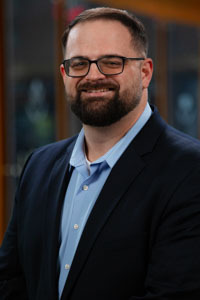
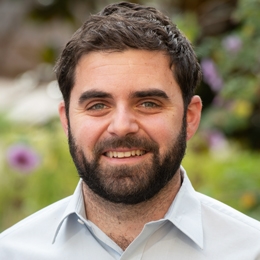
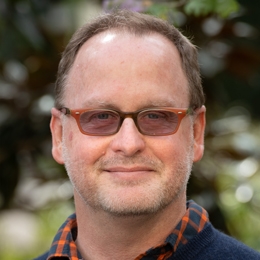
Miranda Kay Montez serves as an Assistant Professor and Reference and Instruction Librarian at Mercy University Libraries. Her role encompasses research support, instructional services, and information literacy development for the university community. Her professional focus centers on Library Science and Information Literacy , with expertise in reference services, academic librarianship, and research support methodologies. She develops tailored instructional materials and provides one-on-one research consultations to enhance scholarly information navigation. As a Reference and Instruction Librarian, Montez delivers classroom instruction sessions, creates discipline-specific research guides, and supports faculty in integrating information literacy into curricula. Her work directly contributes to student research competency across all academic programs at Mercy University.
Dr. Jan Lacina is the Bezos Family Foundation Endowed Chair in Early Childhood Education and Senior Associate Dean for Research, Graduate Studies & Strategic Partnerships at Texas Christian University's College of Education. A nationally recognized leader in early childhood education and literacy, she has authored over 100 publications and five books, with research focusing on literacy development, children's literature, and teacher preparation. Her research interests span: Early childhood literacy development Critical reflection through children's literature Writing instruction methodologies Teacher preparation programs Inclusive educational practices Dr. Lacina's editorial leadership includes current service as Associate Editor of the Early Childhood Education Journal and former roles as Co-Editor of The Reading Teacher and Editor of the Journal of Research in Childhood Education . Significant awards and honors: Notable Books for a Global Society Practitioner Award (ILA, 2025) Jerry Johns Outstanding Teacher Educator Award (ILA, 2023) Warren Faculty Fellowship, Holocaust Museum Houston (2022, 2024, 2025) Research fellowships at International Youth Library (Germany), University of New Brunswick, and University of Southern Mississippi TCU Dean's Teaching Award (2023) As Senior Associate Dean, she leads research initiatives and graduate programs while maintaining international collaborations through her role as U.S. Ambassador to the United Kingdom Literacy Association and President-Elect of the American Reading Forum.
Greg Engstrom is a Teaching & Learning Librarian at Eastern Kentucky University (EKU), based in Crabbe Library. His role involves integrating library resources with academic instruction across disciplines. He holds a multidisciplinary educational background spanning psychology, music theory, library science, and composition. Engstrom's research interests center on Music Theory , Art , and educational methodologies within library contexts. His expertise bridges creative disciplines and information science, suggesting focus areas in music analysis, arts education, and academic resource development. While no specific publications are listed, his doctoral training in Music Theory & Composition indicates specialized knowledge in musical structures, historical contexts, and creative processes. His psychology background further suggests potential interdisciplinary research in cognition and artistic perception. Contact: greg.engstrom@eku.edu | (859) 622-6273 | Office: Crabbe Library, 204P
Dr. Josh Waltman serves as Associate Professor of Theological Studies at Liberty Theological Seminary, Liberty University, where he teaches courses in theology, apologetics, and research methodology. His academic credentials include: Ph.D. in Theological Studies with apologetics concentration from Columbia International University M.S.L.S. from University of Kentucky M.Div. and M.A.R. from Liberty Baptist Theological Seminary B.A. from Liberty University His research bridges theological inquiry and practical ministry application, with primary focus on apologetics (particularly divine hiddenness and trinitarian responses), biblical lament theology, and information literacy in faith contexts. His dual expertise in theology and library science creates unique interdisciplinary connections between epistemology and religious education. Recent publications reveal two distinct scholarly trajectories: theological works addressing divine hiddenness and psalms of lament, alongside library science contributions on training student employees and supporting online theological education. This synthesis reflects his background as both ordained minister and academic librarian, demonstrating how information literacy principles intersect with theological truth-seeking. A lifelong Virginian and ordained pastor, Dr. Waltman has served churches statewide as elder, preacher, and teaching pastor. He mentors students toward becoming truth-and-love champions for Christ within local churches while maintaining active engagement with theological discourse through podcasts and interviews.
Chandrakana Nandi is the Director of US R&D at Certora and an affiliate assistant professor in the Department of Computer Science & Engineering at the University of Washington's College of Engineering. She completed her PhD at the University of Washington working with Zachary Tatlock and Dan Grossman in the PLSE research group. Her research focuses on building tools for scaling automated formal verification to real-world programs, particularly for DeFi applications. She works extensively with equality saturation techniques (egg project) and has made significant contributions to computational fabrication through projects like Carpentry Compiler, Szalinski, and LambdaCAD. Her work bridges programming languages, compilers, and digital fabrication, creating novel tools that transform how we design and manufacture physical objects. Nandi's publication record shows a strong trajectory in programming language techniques applied to verification and fabrication. Her work on equality saturation has become foundational in the field, with the egg library enabling state-of-the-art results in compiler optimization and program synthesis. Recent work has expanded into formal verification of smart contracts, demonstrating the versatility of her research approach across different domains. Distinguished Paper Award at OOPSLA 2021 Sigplan Research Highlight for POPL 2021 As Director of US R&D at Certora, she leads research efforts on verification tools for languages like WASM and techniques to help users write formal specifications more easily using mutation testing. She has served in numerous organizational roles for major programming languages conferences including as Workshops Co-Chair for ICFP 2025 and Committee Member for PLDI Review Committee. Nandi has established herself as a leader in the intersection of programming languages and computational fabrication, with her work on equality saturation becoming particularly influential across multiple subfields of programming languages research.
Graham Gussin is a Part-Time Lecturer in Postgraduate Sculpture at the Slade School of Fine Art, University College London, where he has maintained a 0.4 full-time equivalent position since 2011, initially as a Teaching Fellow in Post Graduate Fine Art Media before moving to his current role. His academic career spans over two decades, with previous teaching positions at Chelsea School of Art, Goldsmiths College, Central Saint Martins, and Kent University. Gussin's research practice centers on exploring relationships between time and space using both material and immaterial approaches. He creates work that uses location, site, and atmosphere with reference to cinematic spaces and narratives to cause friction between ideas of the real and the imagined. Central to his practice is the concept of 'Terrain Vague' - an umbrella term involving place and agency, which he explores through the relationship between geographic and psychological 'states' and how they affect thinking around contemporary issues. His methodology employs diverse media including sculpture, text, photography, moving images, video, installation, and sound to investigate perception of time, space, and scale, frequently appropriating and manipulating images from art history, popular culture, and cinema. The deconstruction of cinematic materials reveals his special interest in film language's structural elements rather than its narrative articulations. His recent artistic output demonstrates consistent exploration of cinematic language, spatial perception, and the relationship between visible and invisible elements. His works often deconstruct cinematic materials to reveal structural elements rather than narrative articulations, creating ambiguity that engenders a deconstruction of the notion of the sublime. Over the past decade, he has developed projects examining utopian and dystopian spaces, the urban and rural, and the 'productive zone' that exists geographically and psychologically, with notable works including 'The Divergent Gaze' (2019), 'The Mary Jane Paintings' (2018), and 'Studio Monte Palace' (2018). Gussin has introduced and directed cross-area symposia at the Slade School around various themes, including the subject of love in contemporary practice and a yearly project with Siobhan Davies Dance Studios. His teaching methodology incorporates his artistic research directly into pedagogical approaches, creating meaningful connections between his studio practice and academic instruction. He has developed specific courses such as 'Text, Performance and Digital Media' for BA students at Central Saint Martins.
Dr Clare Thornley serves as an Honorary Research Fellow within the Department of Information Studies at University College London (UCL), contributing to academic discourse through specialized research in information retrieval systems and emerging library technologies. Her position reflects an active scholarly affiliation despite non-salaried status. Her research expertise spans critical domains including: Information Retrieval Theory and Evaluation Bibliometric Analysis of Multimedia Systems RFID Technology Implementation in Libraries Ethical Frameworks for Information Professionals Information Management Strategies Pedagogical Approaches to IR Education Analysis of her 2011-2012 publications reveals concentrated investigation into TRECVid video retrieval benchmarking (including bibliometric and impact studies), comprehensive assessment of RFID's ethical and operational dimensions in library contexts, and innovative problem-based learning methodologies for teaching information retrieval. This work consistently bridges theoretical inquiry with practical library applications, emphasizing professional implications of technological adoption. Scientific Awards: No awards referenced in source materials Advising and Funding: No doctoral/master's students identified No grant funding details provided Research Infrastructure: No laboratory or team affiliations documented
Louis Knecht serves as Full Time Faculty at Dominican University of California, holding dual roles as University Archivist and Reference and Instruction Librarian within the Archbishop Alemany Library. He concurrently holds the La Vida Dominican Community Engagement Fellowship. His academic credentials include: MLIS from University of California, Los Angeles (specializing in archival studies) BA in History from UC Santa Barbara Knecht's research centers on bridging academic archives with disciplines traditionally excluded from primary source research. His work emphasizes innovative access to diverse archival formats, driven by a commitment to inclusive information literacy and student engagement in historical research methodologies. Professional recognition includes: La Vida Dominican Community Engagement Fellowship Prior to his current position, he spent two years at Humboldt State University developing archival preservation systems and outreach programs. His practice integrates library instruction with community-focused archival curation, expanding access to underrepresented historical narratives through targeted student engagement initiatives.
Aaron Richardson serves as Full Time Faculty at Dominican University of California, holding dual roles as Research and Instruction Librarian and Writing & Signature Works Fellow at the Archbishop Alemany Library. His expertise centers on humanities research and writing support across academic programs. His educational foundation includes: MLIS in Information Science from San Jose State University MA in History from California State University, Sacramento BA in Philosophy from Whitworth University Richardson's scholarly work bridges virtue epistemology and cognitive theory with practical applications in information literacy pedagogy. He develops instructional frameworks that cultivate intellectual virtues and critical thinking through library-based learning. His research examines how philosophical epistemology enhances students' research processes and knowledge evaluation skills in digital environments. As Writing & Signature Works Fellow, he implements specialized writing support for capstone projects and signature assignments university-wide. His library instruction sessions focus on humanities disciplines, guiding students through complex research methodologies and source evaluation.
Jason Vance serves as a Professor and Information Literacy Librarian at Middle Tennessee State University's James E. Walker Library, where he has accumulated over 20 years of professional experience in library instruction and research consultations. He functions as the official library liaison to the Department of English and is currently pursuing a PhD in English at the same institution. His academic background includes: MS in Library and Information Science from Simmons University BA in English from Western Kentucky University Professor Vance maintains a dual research focus: in library science, he investigates information literacy methodologies, instructional techniques, and the historical significance of pack horse librarians; in literature, he examines American modernist movements and the cultural impact of the Federal Writers Project. His subject expertise is demonstrated through 11 specialized research guides covering English, Film Studies, Literature, Public Writing and Rhetoric, and African American Literature, with view counts exceeding 850 for his senior capstone guide. No scientific awards or honors are documented in the available materials. Regarding academic mentorship, the provided information does not specify any graduate students supervised by Professor Vance, nor does it reference research grants or funding awards.
Bilyana Stoyanova Stoyanova serves as faculty at Technical University of Gabrovo, Bulgaria, where she maintains office 1337 with contact email bilyana_zheleva@abv.bg. Her professional activities focus on educational technology implementation within mathematics instruction, evidenced by participation in six university research projects and eleven scientific publications between 2012-2019. She specializes in bridging traditional pedagogy with digital solutions for technical education contexts. Her research centers on e-learning security frameworks, computational mathematics applications, and ICT integration in applied mathematics courses. Key investigations include comparative analyses of traditional versus technology-enhanced teaching methods, with particular emphasis on online exam integrity in MOOCs and secure file handling in virtual learning environments. Her work demonstrates consistent focus on practical implementation challenges within Bulgarian higher education institutions. Publication trends reveal progressive specialization from foundational digital library applications (2013) toward advanced security protocols for online assessments (2015) and computational optimization tools (2017-2019). The majority of her output appears in national Bulgarian conferences, with select international collaborations in Ukraine, Macedonia, and India, reflecting regional academic networks focused on educational technology adaptation. She actively contributed to six research initiatives at TU Gabrovo including EU-funded projects like 'Development and implementation of virtual technologies for sustainable distance learning' (2012, financed by OP 'Development of Human Resources' and European Social Fund). Her project roles consistently involve practical implementation aspects across modern educational technologies (2014-2015), triangulation methodologies (2012-2013), and identification systems (2011), demonstrating hands-on technical engagement rather than theoretical research.
Björn Fisseler serves as a Research Associate in Specialized Media Didactics within the Dean's Office of the Faculty of Psychology at FernUniversität in Hagen, Germany's national distance learning university. His position bridges academic research with institutional leadership in digital accessibility and inclusive education. Dr. Fisseler's research focuses on digital accessibility, universal design for learning, and inclusive educational technology, with particular emphasis on creating accessible learning environments for students with disabilities. His work examines the intersection of technology, disability, and education across multiple dimensions including institutional policies, faculty development, and practical implementation strategies. He has developed frameworks for understanding accessibility challenges in higher education and has contributed significantly to understanding how digital transformation can either enhance or hinder inclusion. His publication portfolio shows a clear trajectory toward increasingly sophisticated analyses of digital accessibility, with recent work exploring the implications of artificial intelligence for inclusive education. The breadth of his research spans theoretical frameworks, empirical studies using methodologies like Q-method, and practical implementation guides for educators. Dr. Fisseler has received recognition through a Google Scholar h-index of 9 and i10-index of 8, reflecting the impact of his work in the field of digital accessibility and inclusive education. His research has been cited across multiple disciplines including education, psychology, rehabilitation technology, and library science. He actively contributes to academic discourse through numerous keynote addresses, invited lectures, and conference presentations at major international venues including CSUN Assistive Technology Conference, EDULEARN, and University:Future Festival. His work bridges academic research with practical implementation, as evidenced by his involvement in developing institutional guidelines like the "Leitfaden zur Digitalen Barrierefreiheit" (Guideline for Digital Accessibility).
Dr. Sridhar Chimalakonda serves as Associate Professor and Head of the Department of Computer Science & Engineering at the Indian Institute of Technology Tirupati, with an adjunct appointment as Associate Professor at the University of Waterloo. His academic leadership spans software engineering research and educational innovation. His educational qualifications include: Ph.D. from International Institute of Information Technology Hyderabad, India MS by Research from International Institute of Information Technology Hyderabad, India Research expertise encompasses: Software Engineering : Empirical studies, quality assurance, reuse methodologies, product lines, architecture, ontologies, and gamification Educational Technologies : Instructional design optimization, personalized learning systems, and VR/AR applications for educational storytelling and laboratories Human Computer Interaction : User-centered design in educational and software development contexts Publication analysis (2021-2024) reveals a strategic evolution from foundational software engineering research toward integrated educational applications, particularly in gamified machine learning education for K-12 audiences and sustainable software practices. His work demonstrates consistent methodological rigor in empirical studies while expanding into cross-disciplinary educational technology innovation.
Yuksel Goktas is a Professor of Instructional Technology at Ataturk University in Turkey, specializing in the integration of technology in educational settings. With a strong research portfolio spanning over a decade, he has made significant contributions to the field of educational technology, particularly in flipped classroom methodology, augmented reality applications, and educational technology policy in Turkey. His research expertise encompasses: Web 2.0 technologies in education Technology integration strategies Instructional design models (ADDIE, ARCS, Gagne) Flipped classroom methodology and its impact on student motivation Augmented reality applications for language and history education Gamification in learning environments Virtual worlds as educational platforms Professor Goktas' scholarly work demonstrates consistent focus on practical applications of educational technology across various educational levels. His research on flipped classrooms has shown significant improvements in student motivation, achievement, and cognitive load reduction. His analyses of educational technology trends in Turkey provide valuable insights into national educational technology development and policy implementation. His publications reveal a strong emphasis on methodological rigor, with studies employing both quantitative and qualitative approaches to examine technology integration challenges and opportunities in Turkish educational contexts. Professor Goktas has contributed significantly to educational policy discussions through critical evaluations of technology integration projects in the Turkish education system, highlighting the need for better analysis of previous initiatives and more strategic planning for future technology implementation.
Dr. James Paterson serves as a Senior Lecturer in the Department of Computing at Glasgow Caledonian University, where he has established himself as a prominent figure in computer science education research. His work spans multiple domains including computational thinking development, educational tool design, and the application of computing principles to logistics and vocational training. Dr. Paterson's research interests center on innovative approaches to computing education, with particular focus on computational thinking development through embodied activities , design patterns for teaching programming concepts , and cloud computing applications in educational settings . His work bridges theoretical computer science with practical educational applications, often exploring how visualization tools and physical activities can enhance learning outcomes for students at various levels. His publication record shows increasing productivity in recent years, with significant contributions in 2024-2025 spanning logistics data integration frameworks, computational thinking pedagogy, technology adoption in higher education, and adult apprenticeship motivations. These works demonstrate his ability to connect computing education with real-world applications across multiple disciplines. Dr. Paterson actively contributes to the academic community through service roles including: Chair of the 29th Annual Conference on Innovation and Technology in Computer Science Education (2024) Peer reviewer for ACM Transactions on Computing Education Invited speaker at numerous international conferences including Computing at School Scotland and EMIP'17 Spring Academy As a Co-Investigator on the Advanced Logistics Data Integration project with JOHN G. RUSSELL (TRANSPORT) LIMITED, he applies computing expertise to practical industry challenges, demonstrating the real-world impact of his research. His work aligns with UN Sustainable Development Goals, particularly those related to quality education and sustainable industry practices.