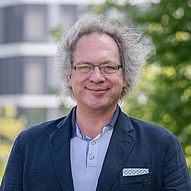
Jan Jokisch is a Researcher and PhD student at the Max Planck Institute for Empirical Aesthetics in Frankfurt am Main, Germany, affiliated with the Heisenberg research group. His academic background includes a Master's in Comparative Literature from Johannes Gutenberg University Mainz and the University of Massachusetts Amherst, and a Bachelor's in Comparative Literature and Philosophy from Mainz. He has lectured in German language and literature at Argentine universities and served as a translator for the DEFA Film Library. His research focuses on drama history, quantitative and digital literary studies, and methodologies in the humanities, with current collaboration on the DFG-funded 'Forager Folklore Database (FFDB)' project. Education highlights include a thesis on 'Epistemological Horror in Literature' (2021) and a BA thesis reinterpreting Shklovsky's literary theory through Heidegger's phenomenology (2018). Jokisch has been recognized with DAAD scholarships (2019, 2021) and the Gutenberg Lehrkolleg Award (2018). He has authored and edited conference proceedings, including works on distant reading methodologies and interdisciplinary language studies. His academic work bridges computational analysis with traditional humanities, emphasizing the role of technology in literary research. Collaborations and editorial roles reflect his commitment to fostering international student scholarship and innovative research practices.
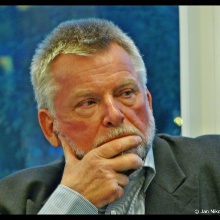
Gerhard Hirschfeld is an Honorary Professor at the Department of History, University of Stuttgart, and has served as Director of the Bibliothek für Zeitgeschichte since 1989. His research focuses on Social and Cultural History of World War I , Comparative Occupation History of World War II , 20th Century Netherlands History , and Academic Emigration post-1933 . He has been a Fellow of the Netherlands Institute of Advanced Studies in the Humanities and Social Sciences (1996/1997, 2006/2007) Fellow of the German Historical Institute London and held leadership roles including Chair of the German Committee for the History of WWII (1991–2000) and President of the International Committee for the History of WWII (2000–2010). His publications span monographs, edited volumes, and essays on occupation policies, collaboration, and exile studies. Recent works emphasize the media representation of WWI , continuity of nationalist rhetoric , and ethical dimensions of historical taboos . He contributes to journals like Zeithistorische Forschungen and Tijdschrift voor Geschiedenis . Scientific awards include Fellowships at NIAS and DHIL Editorial leadership in academic series like Zeit der Weltkriege and Schriften der Bibliothek für Zeitgeschichte and advocacy for interdisciplinary war studies.
Thomas Riechert is a Professor at the Leipzig University of Applied Sciences (HTWK Leipzig), specifically within the Faculty of Computer Science and Media. He serves as Dean of Media Informatics, Chairman of the Media Informatics Study Commission, and Academic Advisor for Media Informatics. Additionally, he is a Member of the Faculty Council, Faculty representative in the IT committee, and Library Commission. He also acts as Spokesperson of the Institute of Computer Science at the HTWK. Appointed in 2014 in the field of information systems and data management, Riechert holds a doctorate from the University of Leipzig (2012, magna cum laude) and graduated as a computer scientist from TU Dresden in 2000. Professor Riechert's research focuses on information systems, data management, Semantic Web technologies, knowledge engineering, and Linked Data. His work bridges computer science with digital humanities, particularly in creating knowledge graphs for historical research. He has made significant contributions to RDF vocabulary management, ontology editing tools, and academic history databases. His research demonstrates a strong emphasis on practical applications of semantic technologies in information management systems. Analysis of his recent publications reveals a consistent trajectory in semantic web technologies applied to knowledge representation and historical data. His work shows progression from foundational semantic technologies toward increasingly sophisticated applications in digital humanities, particularly in academic history research. The Heloise project appears to be a major focus, developing common research models for collaborative historical research using Linked Open Data. His publications span both technical aspects of semantic technologies and their application in humanities contexts. Professor Riechert actively contributes to academic community building through conference organization and student engagement. His leadership roles in the Faculty of Computer Science and Media demonstrate his commitment to shaping computer science education. His research integrates practical software development with theoretical advancements in knowledge representation. As Dean of Media Informatics, Riechert oversees academic programs and research initiatives in this field. His work with the Heloise network demonstrates leadership in interdisciplinary research connecting computer science with historical scholarship. His office hours are held on Mondays from 10:00 to 11:00 in room ZU 407 at HTWK Leipzig.
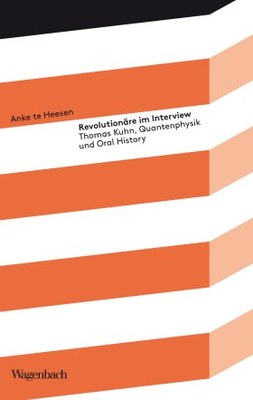
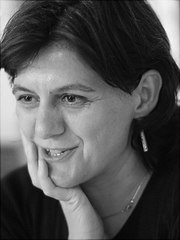
Professor Anke te Heesen is Chair of the History of Science with a focus on the history of education and the organization of knowledge in the 19th and 20th centuries at Humboldt-Universität zu Berlin. She has held this position since 2011 and is also the spokesperson (since 2024) of the DFG Center for Advanced Studies 'Applied Humanities – Politics and Genealogy,' alongside Professor Viktoria Tkaczyk. Previously, she served as Professor for Empirical Cultural Studies at the University of Tübingen (2008-2011) and founding director of the Museum of the University of Tübingen (2006-2008). Her academic career includes research positions at the Max Planck Institute for the History of Science in Berlin (1999-2006), the German Hygiene Museum Dresden (1998-1999), and the Research Center for the European Enlightenment (1996-1997). Professor te Heesen's research spans multiple interconnected fields including the history of humanities, natural history in the early modern period, museum and exhibition history, organization and notation methods of sciences, and the relationship between science and art. She has a particular interest in how knowledge is formed, organized, and presented through various material and institutional practices. Her work often examines the intersection of academic knowledge production with material culture, focusing on objects, collections, and exhibition practices as sites of knowledge formation. Her recent publications reveal a strong focus on the history of interviews as research methodology, the development of exhibition catalogs as scholarly monographs, and the material history of knowledge practices. The analysis of her 15 most recent articles shows consistent engagement with themes of materiality, the organization of knowledge, and the historical development of scholarly practices, particularly in the humanities. Her work frequently bridges historical analysis with contemporary scholarly concerns about knowledge production and dissemination. Spokesperson of the DFG Centre for Advanced Studies 'Applied Humanities: Genealogy and Politics' (since 2024) Senior Fellow, Collegium Helveticum, Zurich (WS 2023/24) Visiting Scholar, Max Planck Institute for History of Science (since 2021) Dibner Research Fellowship, Huntington Library (2020) Senior Research Fellowship, Lichtenberg Kolleg (2020) Professor te Heesen has held significant leadership roles including Ombudsperson of Humboldt University of Berlin (since April 2024) and Head of the Commission for Studies and Teaching at the Institute of History (since April 2024). She serves on multiple advisory boards including the Scientific Advisory Board of the project 'Serious Donations' at the Museum of Natural History in Berlin (since 2020), the DFG Review Board for History (2020-2024), and the Robert K. Merton Center for Science Studies at Humboldt University (since 2019). She is also a member of the editorial boards of several scholarly journals including Reports on the History of Science and History of Science and Humanities. Her work extends to museum practice and curation, with significant contributions to understanding how universities can leverage their collections to create meaningful educational experiences that connect historical context with contemporary research. She has initiated important publication series including 'Sonderdruck' (since 2016) and 'Minima Literatur- und Wissensgeschichte kleiner Formen' (since 2020).
Dr. Alba Fedeli is a Researcher and Head of Project RFK06 at the Cluster of Excellence 'Understanding Written Artefacts' (UWA), University of Hamburg. Her work focuses on early Qur’anic manuscripts, combining philological analysis with natural sciences. She leads projects such as What is in a Scribe’s Mind and Inkwell (2023–2025) examining the Gotha Collection, and InterSaME (2020–2023) exploring oral-written transmission of Middle Eastern sacred traditions. Her research spans palimpsest studies, material analysis of manuscripts, and digital humanities. Notable outputs include studies on Qur’anic codicology, authentication methods, and interdisciplinary methodologies. Dr. Fedeli collaborates internationally with institutions like the Vatican Library and the Gotha Research Library, contributing to global efforts in cultural heritage preservation. Her academic contributions include 14 publications across peer-reviewed chapters, journal articles, and digital platforms. She actively participates in workshops, conferences, and public engagement through blogs like the Forschungsbibliothek Gotha to disseminate research findings.
Christian Wolff is a University Professor and Chair of Media Informatics at the Institute for Information and Media, Language and Culture at the University of Regensburg. Since April 2022, he has served as the founding Dean of the Faculty of Computer Science and Data Science, while maintaining secondary membership in the Faculty of Languages, Literature and Cultural Studies (SLK). His academic career spans over three decades with significant contributions to multiple disciplines at the intersection of computer science and humanities. Wolff's research interests center around multimedia and multimodal information systems, electronic publishing, and text technology, particularly text mining. His work bridges computer science with digital humanities, legal informatics, and social media analysis. Recent publications demonstrate a strong focus on large language models, sentiment analysis applications across various domains, legal technology innovations, and virtual reality research for cognitive studies. His interdisciplinary approach has produced significant contributions in both technical and humanities domains. His recent publication trends reveal a strategic shift toward applied AI research, particularly in legal technology (LegalTech), social media analysis, and sentiment analysis using large language models. The publications show increasing collaboration across disciplines, connecting computer science with law, political science, literature, and psychology. His work on the digital basis document for legal proceedings represents a major practical application of his research in the German justice system. East Bavarian Cultural Prize Doctoral Award of the University of Regensburg Wolff has led numerous interdisciplinary research projects connecting computer science with humanities and legal studies. His leadership extends to institutional roles including Dean of Research, Vice Dean, and Dean of Faculty positions. He has been instrumental in establishing the new Faculty of Computer Science and Data Science at the University of Regensburg, demonstrating significant impact on institutional development and research infrastructure. Wolff directs research initiatives focused on text technology, digital humanities, and legal informatics. His work with the INDIGO - Internet and Digitization Eastern Bavaria initiative and the TRIO project demonstrates commitment to regional technology transfer and innovation. The interdisciplinary nature of his research groups connects computer scientists with legal scholars, linguists, and social scientists to address complex digital transformation challenges.
Christiane Kruse is a Professor of Art History and Visual Cultures at the Muthesius University of Art and Design Kiel since 2011. She serves as the Managing Director of the Institute for Art, Design, Media (IKDM) since 2014 and previously held the Equal Opportunities Officer role until 2020. Education: Doctorate (Dr. phil.) at LMU Munich (1994) Habilitation at University of Konstanz (2002) with Venia Legendi Studies in Art History, Modern German Literature, and Medieval Studies (1983–1989) Research Interests span art history, visual cultures, image anthropology, media theory, and cultural studies. Her work explores the intersection of art, technology, and identity, with a focus on iconoclasm, gender representation, and sustainability in design. She investigates how visual media shape historical memory and contemporary discourse. Recent Publications address topics like contemporary iconoclasm, eco-art practices, and the role of masks in global visual cultures. Her edited works trace historical dialogues between art and science, religious imagery, and interdisciplinary approaches to image-making. Scientific Awards: Research Fellowship from Herzog August Library Wolfenbüttel (2007) Fellow at the Wissenschaftskolleg zu Berlin (2010–2011) Other Roles include Visiting Professorships at Humboldt University Berlin (2013/14) and University of Karlsruhe (2004/05), Acting Professorships at TU Dresden and Braunschweig University of Fine Arts, and contributions to curatorial projects like documenta 13.
Paula Schneider serves as Teacher for Special Tasks at the University of Art and Design Offenbach am Main , heading their book and paper workshop since 2020. She studied Book Art at Burg Giebichenstein Halle (2013-2019) and previously taught at Bezalel Academy (2017-2020). Her work bridges bookbinding , literary experimentation , and archival research through installations, artist books, and public interventions. Education : 2019: Diploma in Book Art, Burg Giebichenstein University of Halle Teaching : 2020–present: Lecturer for special tasks at HfG Offenbach 2017–2020: Annual courses at Bezalel Academy for Arts and Design, Jerusalem Screen printing tutor during studies Her artistic research explores narrative structures , time perception , and memory systems through works like Inner Monologue (2018) and Mio Mnemotop (2021). Recent projects include Night Frost (2024) examining textual accumulation and Cloudburst Working on the Textberg (2024) using mining metaphors for textual analysis. She examines book formats (e.g., leporello, monotypes, screen printing) to interrogate knowledge preservation (Rabaraababaraba, 2015) and urban observation (Praise of the Gate, 2023). Notable exhibitions include Because We Are Young (2021) analyzing GDR industrial history and Between (2019) at Halle/Leipzig Airport, which required mobile audience engagement with audio pieces about airport soundscapes. Her works have been featured in Text3 and Spin n errei tours. Contact: schneider@hfg-offenbach.de | Workshop: +49 69.80059-245 | Office: +49 69.80059-106
Prof. Dr. Giulio Busi is a distinguished C4 Professor of Jewish Studies at the Institute of Jewish Studies, part of the Department of History and Cultural Studies at the Free University of Berlin. Born in Italy, he earned his doctorate in Judaic Studies in 1989 and has held academic positions at the University of Venice (1992-1999) before joining the Free University of Berlin in 1999. He is a Fellow of the Accademia Nazionale Virgiliana in Mantua (since 2004) and serves on the Scientific Board of the Hanadiv Foundation in London (since 2003). Busi's research centers on the history of Jewish mysticism and Jewish culture in late antiquity and the early modern period. His scholarly work spans Kabbalah studies, Jewish manuscript traditions, Hebrew literature, and Jewish-Christian intellectual exchanges during the Renaissance. He has made significant contributions to understanding Jewish mystical traditions, particularly through his extensive work on Giovanni Pico della Mirandola's Kabbalistic Library and the transmission of Jewish esoteric knowledge in early modern Europe. His publications reveal a consistent focus on Jewish cultural history, with particular attention to the intersections between Jewish thought and broader European intellectual currents. Busi's research demonstrates how Jewish mystical traditions influenced and were influenced by Christian humanism, particularly through the study of Hebrew texts and Kabbalistic literature. His recent work has expanded into contemporary Jewish issues, including Shoah commemoration and modern Jewish identity. Busi has served as editor for 'The Kabbalistic Library of Giovanni Pico della Mirandola' and 'Berlin Studies in Judaism,' while also contributing to the advisory boards of Materia Giudaica (Bologna) and Studia Rosenthaliana (Amsterdam). His extensive publication record includes numerous scholarly books, edited volumes, and over two hundred articles in both academic journals and major newspapers like Il Sole 24 Ore, where he has regularly contributed cultural commentary since the early 2000s. Notably, a farewell conference for Prof. Busi is scheduled for June 19, 2025, suggesting an imminent conclusion to his tenure at the Free University of Berlin. Throughout his career, he has organized significant academic conferences on Jewish topics, including gatherings on Jewish travelers, strategies of cultural persistence, and the transmission of Hebrew knowledge between cultures.
Professor Thomas Weitin is a leading scholar at Darmstadt University of Technology's Institute of Linguistics and Literary Studies, where he heads the German Studies - Digital Literary Studies department. As Director of the LitLab, he bridges traditional literary scholarship with cutting-edge computational and cognitive science methodologies. His work positions him at the forefront of the digital humanities movement in Germany. Weitin's research focuses on the intersection of digital literary studies and cognitive science, particularly examining how humans process literary texts through methods like eye-tracking, EEG, and physiological measurements. His 'Reading at Scale' project analyzes 19th-century German novellas to explore the middle ground between close reading and distant reading approaches. Weitin argues against the simplistic 'close vs. distant reading' dichotomy, advocating instead for methodologically appropriate scale selection based on specific research questions. Analysis of Weitin's recent publications reveals a strong interdisciplinary approach combining literary theory, cognitive neuroscience, and data science. His work increasingly incorporates empirical methods to study reading processes, moving beyond purely textual analysis to investigate the physiological and cognitive dimensions of literary reception. This represents a significant methodological shift in literary studies toward evidence-based approaches to understanding how literature affects readers. Weitin maintains significant leadership roles including membership on the Editorial Board of Frontiers in Human Neuroscience, Senior Editorship of Open Library of Humanities, and Executive Board membership of the Digital Humanities Cooperation between TU Darmstadt and the University of Konstanz. He serves as a reviewer for major funding organizations including the German Research Foundation (DFG) and the Science Council. At the LitLab, Weitin oversees research infrastructure including eye-tracking equipment (both stationary and mobile glasses), EEG amplifiers, and physiological measurement devices for pulse, heart activity, and skin conductance. This sophisticated laboratory enables multimodal studies of reading that combine textual analysis with direct measurement of reader responses, representing a novel approach to literary scholarship.
Thomas Alan Schwartz is a Professor of History, Political Science, and European Studies at Vanderbilt University, specializing in U.S. foreign relations, Modern European History, and Cold War dynamics. His work examines the strategic integration of Germany into Western alliances and the evolution of transatlantic diplomacy. His research spans themes like realism in American foreign policy, the impact of the Vietnam War on European relations, and U.S.-German collaboration during European integration. Current projects include a biography of Henry Kissinger and a concise Cold War history. Professor Schwartz has received multiple accolades, including the Stuart Bernath Book Prize, Harry S. Truman Book Award, and Madison Sarratt Prize for Excellence in Undergraduate Teaching. He has also held prestigious fellowships from institutions such as the Woodrow Wilson International Center for Scholars and the Norwegian Nobel Institute. Stuart Bernath Book Prize (Society of American Foreign Relations) Harry S. Truman Book Award (Truman Presidential Library) Social Science Research Council Fellowship Madison Sarratt Prize for Excellence in Undergraduate Teaching (Vanderbilt, 2013) Chi Chapter of the Kappa Alpha Order Book Award (2008) He has contributed to public discourse through lectures such as 'The Arab Spring: Revolution in the Middle East' (2011) and 'Henry Kissinger, Vietnam, and Iraq' (2010), highlighting his expertise in diplomatic continuity and crises.
Dr. Hanna Wimmer is a Professor of European Medieval Book Culture at the University of Hamburg's Art History Seminar , part of the Faculty of Humanities . She leads the Centre for the Study of Manuscript Cultures (CSMC) as spokesperson for Research Field I: 'Formatting Multigraphic Artefacts' and co-leads the 'Theory and Terminology' working group within the Cluster of Excellence 'Understanding Written Artefacts' (UWA). Her research focuses on medieval manuscripts, particularly Northern European book culture, visual organization patterns, and text-image interactions in knowledge transfer. Education & Career: Studied Art History, German Studies, and Theology at University of Hamburg and Courtauld Institute of Art (London) Aby Warburg Fellow (2007–2010) and Isa Lohmann-Siems Fellow (2010–2011) Junior Professor at Hamburg's Art History Department (2014–2024) PhD (2012) on 13th/14th century Aristotle manuscripts, awarded Karl H. Ditze Prize (2013) Key Projects: UWA Cluster (2019–2025): Spokesperson for multigraphic artefacts SFB 950 'Manuscript Cultures' (2011–2020): Led sub-projects on Biblia Pauperum and Psalter manuscripts Lead 'Reframing Old Contents' project (2019–2022): Analyzed late-medieval one-volume libraries Research Themes: Medieval book layouts, visual organization systems, marginalia, text-image dynamics, and material culture of manuscripts. Specializes in how manuscripts recontextualized knowledge for new audiences through formatting innovations. Awards: 2013 Karl H. Ditze Prize for doctoral thesis Publications: Over 19 scholarly works including Canones: The Art of Harmony (2020) and Manuscripts and Performances (2024). Active in developing digital tools like the TAMAR project for manuscript annotation. Labs/Teams: Core member of CSMC, collaborating internationally on global manuscript cultures research.
Prof. Dr. Thomas Stäcker is a Part-time Professor for Digital Humanities at the Department of Information Sciences, University of Applied Sciences Potsdam. He serves as Director of the University and State Library Darmstadt (since 2017) and Deputy Director of the Herzog August Library Wolfenbüttel (since 2009). His career spans roles as a librarian at Herzog August Bibliothek (since 1998) and Johannes a Lasco Library in Emden (1997-1998). Education: Master's degree in History of Philosophy and Latin (1991), doctorate (1994) from TU Braunschweig, University of Essex, and University of Osnabrück Research: Digital Humanities, digitization of early printed books, XML/TEI encoding, OCR technologies, and cultural heritage preservation Leadership: Key roles in major digitization projects (e.g., VD17, Dünnhaupt Digital) and digital library development His work bridges library science with scholarly research, emphasizing open access, digital editions, and metadata standards. He has authored/co-authored numerous monographs, including the 2015 'Grenzen und Möglichkeiten der Digital Humanities' and the 2016 Festschrift chapter on open access. Stäcker co-edited digital editions like Christoph Heidmann's Oratio de Bibliotheca Julia (2013) and maintained active engagement through blogs like 'dhd-blog.org' (2015 post on humanities research data).
Dimitra Fimi is Professor of Fantasy and Children’s Literature at the University of Glasgow , where she co-directs the Centre for Fantasy and the Fantastic . She is a leading Tolkien scholar and expert in fantasy literature, with a particular focus on mythopoeia, medievalism, and Celtic influences. Key affiliations: University of Glasgow, Centre for Fantasy and the Fantastic, Perspectives on Fantasy book series Her research explores: Tolkien’s myth-making and linguistic creativity Celtic myth in modern fantasy Historical intersections between fantasy and academia World-building methodologies Racial and cultural discourse in fantasy Recent publications analyze Sir Gawain chronology, The Gnomobile , and fantasy languages. She has contributed to BBC’s Bargain Hunt and TLS, and co-edited Realms of Imagination for the British Library exhibition. Major awards: Mythopoeic Scholarship Award (Inklings Studies, 2010) Tolkien Society Award (Best Book, 2017) Mythopoeic Scholarship Award (Myth and Fantasy Studies, 2019) Tolkien Society Outstanding Contribution Award (2021) Active in public engagement, she curated the Tiny Treasures miniature book exhibition and contributes to podcasts, documentaries, and media discussions on fantasy literature.
Mieke Roscher is a Senior Lecturer in Social and Cultural History specializing in Human-Animal Studies at the University of Kassel. She has headed the Department of Social and Cultural History with a special focus on human-animal relationships since October 2020. Previously, she was a junior professor at the University of Kassel from 2014 to 2020 and integrated into the LOEWE research group 'Animal-Human-Society,' which she chaired as spokesperson from 2017. In 2020, she completed her habilitation on animal historiography. For the academic year 2023/2024, she was appointed Senior Fellow at the Historisches Kolleg München. Her educational background includes studies at Georg August University of Göttingen, London School of Economics, Middlesex University, and University of Bremen, where she completed her doctorate on the history of the British animal rights movement in 2008. She subsequently worked as a postdoc at the German Historical Institute in London and completed a library traineeship at the Oldenburg State Library from 2011 to 2013. Dr. Roscher's research focuses on animal history and human-animal studies, gender history, British history, colonial history (particularly British India), Nazi history, and the history of social movements. Her work demonstrates how human-animal relationships have shaped historical developments across various contexts. She is particularly interested in how animals function as political symbols, cultural markers, and historical actors. Her extensive publication record shows consistent engagement with the 'Animal Turn' in historical scholarship, examining topics ranging from Nazi animal policies to zoo history during wartime, from animal rights movements to colonial wildlife conservation. Her work increasingly focuses on methodological approaches to studying human-animal relations historically while exploring specific case studies across different historical periods. Senior Fellow at the Historisches Kolleg München (2023/2024) Spokesperson for LOEWE research group 'Animal-Human-Society' (2017-2020) Editor of 'Animals in History' book series (Böhlau Verlag) Associate researcher at New Zealand Centre for Human-Animal Studies Founding member of Forum Animals and History Member of Animal Theory Research Initiative Dr. Roscher actively supervises doctoral students working on diverse topics in animal history, from agricultural animal shows to zoo history and vegetarian movements. Her international collaborations include co-editing volumes with scholars from Germany, New Zealand, and the United States. She maintains strong connections with research institutions across Europe and participates in interdisciplinary research projects that bridge historical scholarship with contemporary animal studies.