Prof. Dr.-Ing. Richard Membarth is a Research Professor for System-on-a-Chip and AI at the Edge Computing at Technische Hochschule Ingolstadt (THI). He is affiliated with the Hardware-Software Co-Design group and holds a secondary position at the German Research Center for Artificial Intelligence (DFKI) Saarbrücken. Co-creator of DSL frameworks like AnyDSL and Hipacc Key contributor to MetaDL (AI metaprogramming) and PRIME (predictive rendering) His research bridges GPU computing , domain-specific languages , and compiler technology , with recent work on Vulkan SPIR-V compilation and device-driven SpMV algorithms . Notable awards include the HiPEAC Paper Award (2018) and multiple Best Paper Awards for his compiler frameworks.
Sara Galletti is Associate Professor in the Department of Art, Art History & Visual Studies at Duke University's Trinity College of Arts & Sciences. Her research focuses on early modern architectural history with emphasis on Mediterranean construction practices, stereotomy, and cross-cultural exchanges between France and Italy during the Renaissance. Education: Ph.D. in History of Architecture and Urbanism, joint program, Université de Paris IV-Sorbonne and Università IUAV di Venezia (2004) M.Arch., Università IUAV di Venezia (1999) Galletti's research centers on architectural knowledge transfer in the pre-modern Mediterranean, particularly stone vaulting techniques and stereotomy. Her recent book project History of Stone Vaulting in the Pre-Modern Mediterranean (funded by NEH) examines how construction practices traveled across cultural boundaries. She has pioneered studies on Philibert de L'Orme's theoretical contributions, revealing how paper-based design transformed building practices. Her work uniquely bridges architectural theory, construction history, and gender studies, with special attention to Maria de' Medici's architectural patronage in Paris. Her publications demonstrate consistent focus on Mediterranean construction networks, French-Italian architectural exchanges, and the materialization of political power through space. Recent articles analyze stereotomy from Cairo to Paris, revealing transregional knowledge flows that challenge Eurocentric architectural histories. Scientific Awards: Thomas Langford Lectureship Award (Duke University, 2015) Bruno Zevi Special Mention (2012) Andrew W. Mellon Assistant Professorship (2011) Galletti actively mentors doctoral students specializing in early modern architecture, currently supervising Lachlan Hassman while having previously guided dissertations by Iara Dundas, Brittany Forniotis, Dana Hogan, and Elisabeth Narkin. She leads the multi-year "Building Duke" initiative documenting campus architectural history, securing Bass Connections grants (2018-2021). Her editorial work includes the Journal of Medieval and Early Modern Studies (2016-2024) and Opus Incertum (2018-2020). As Principal Investigator for the NEH-funded project on Mediterranean stone vaulting (2021-2022), she directs fieldwork and digital modeling efforts. Her leadership extends to Duke's 2030 Working Group reimagining shared governance and the Library Steering Group.
Bridget Whearty serves as an Associate Professor in the English, General Literature and Rhetoric department at Binghamton University, where she also holds affiliation with the Center for Medieval and Renaissance Studies. Her academic work spans multiple disciplinary boundaries, connecting literary studies, medieval scholarship, and digital humanities with critical perspectives on information and archival practices. Whearty earned her PhD from Stanford University and completed her BA at the University of Montana. Her educational background informs her interdisciplinary approach that bridges traditional literary scholarship with contemporary digital methodologies and critical theory. Her research interests focus on queer and trans perspectives in medieval literature and material culture, with particular attention to how digital technologies reshape our understanding of medieval manuscripts. She explores how digital humanities projects engage with issues of labor, representation, and erasure in both historical and contemporary contexts. Her work critically examines the intersections between medieval book production, modern digital scholarship, and the politics of archival representation. Whearty's publications reveal a consistent thread connecting medieval manuscript studies with contemporary digital practices, particularly examining how digital projects handle issues of labor, representation, and accessibility. Her work demonstrates how medieval studies can inform contemporary digital humanities practices while simultaneously using digital methodologies to uncover new perspectives on medieval texts and material culture. Her notable awards include the 2023 John Grace Memorial Book Historian in Residence at the University of British Columbia, the 2022 Harpur College Faculty Research Grant, and the 2020 New Chaucer Society Early Career Essay Prize. Additional recognition includes the University of Glasgow Library Visiting Research Fellowship and multiple internal Binghamton University research awards. Whearty has been actively involved in grant-funded research initiatives, particularly through her role as co-Principal Investigator of 'Always Here: a Queer+Trans Global Medieval Sourcebook,' an emerging digital project and open educational resource. Her community engagement includes participation in the Center for Civic Engagement's Community Engaged Teaching Fellows Program. She is the creator of the influential Caswell Test (#CaswellTest), which challenges humanities scholars to engage more rigorously with the work of archivists and librarians when writing about 'the archive.' This framework has gained recognition for addressing critical gaps in how scholars conceptualize archival labor and representation.
Eric Rebillard is the Avalon Foundation Professor in the Humanities at Cornell University, affiliated with the College of Arts and Sciences and departments/programs including Classics, History, Archaeology, Jewish Studies, Medieval Studies, and Religious Studies . His work bridges historical analysis with archaeological and literary approaches to Late Antiquity and early Christianity. Education: PhD in Classics from the Sorbonne (1993) Former affiliations: French CNRS (1996-2003), École française de Rome Research focuses on religious practices in Late Antiquity , particularly early Christian martyr narratives, burial customs, and the social dynamics of religious identity . His scholarship challenges conventional narratives about the exclusivity of Christian communities and emphasizes the fluidity of religious self-identification. Publications span monographs, edited volumes, and translated papers, with recurring themes of Roman Empire , Augustine of Hippo , and funerary archaeology . Key article trends include analysis of martyr texts , material culture , Augustinian theology , and Christianization processes in the Latin West. Awards include a Guggenheim Fellowship (2020-21) for his project on the triumph of Christianity. Grants supported interdisciplinary collaborations, such as the OpenURL citation project with Cornell University Library (2009).
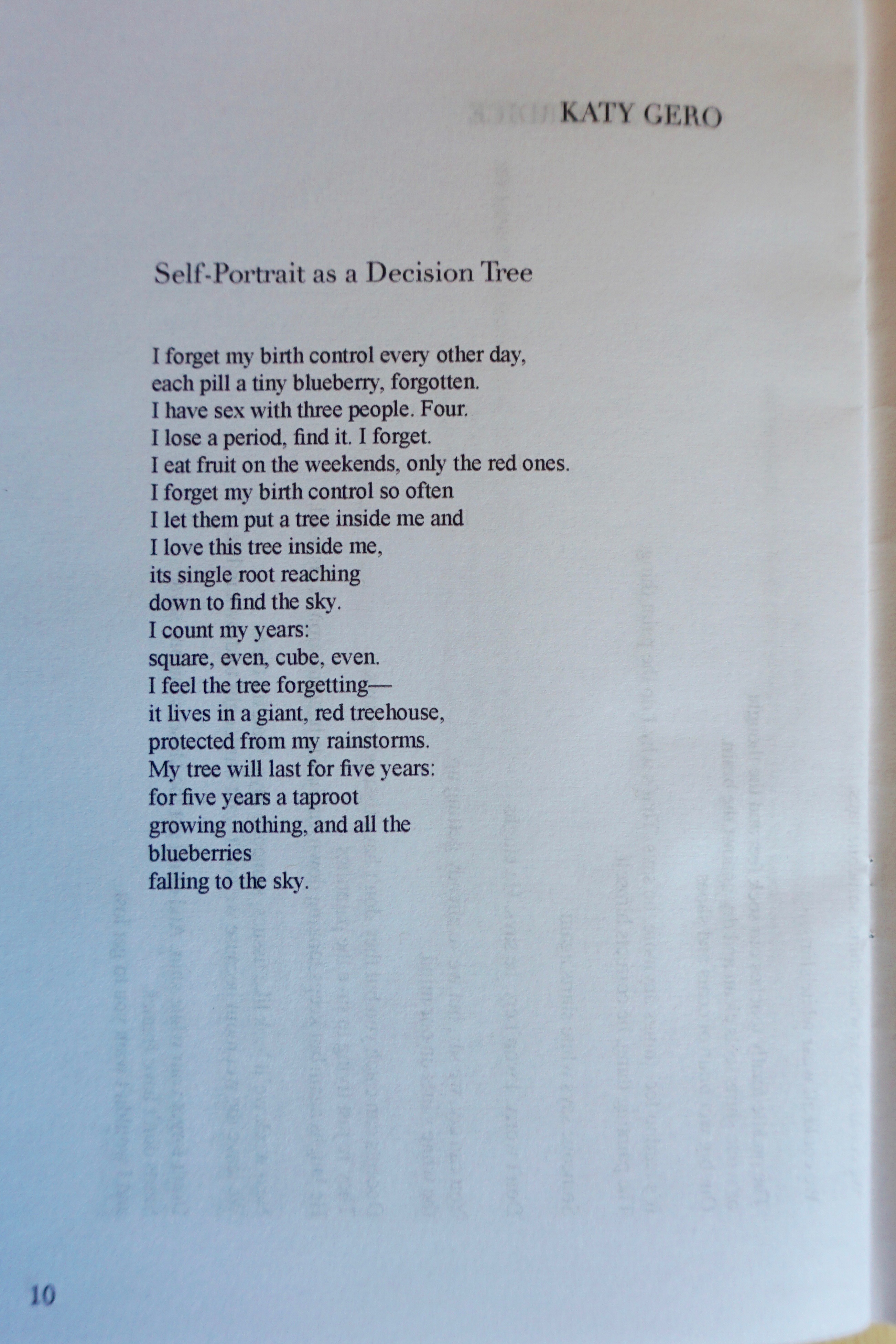
Katy Ilonka Gero is a Lecturer at the School of Computer Science, University of Sydney , with prior postdoctoral roles at Harvard University and the Library Innovation Lab. She holds a PhD in Computer Science from Columbia University (2022) and a BS in Mechanical Engineering from MIT (2017). Education : PhD in Computer Science (Columbia University, 2022); BS in Mechanical Engineering (MIT, 2017) Her research focuses on Human-Computer Interaction in creative domains, particularly how language models impact creative practice, ownership, and learning . She develops community-driven AI models through co-design with creative communities and investigates ethical data governance practices. Recent work includes designing interactive writing tools for metaphor creation and exploring the social dynamics of AI support in writing . The 15 most recent articles reflect trends in AI-augmented creativity (Metaphoria, CHI 2019), AI ethics (Nature Machine Intelligence 2023), and human-AI collaboration (CHI 2020 Best Paper). These works span language model evaluation , creative ownership , and technical innovations in soft robotics (2012) and science communication (2021). Scientific Awards : NSF Graduate Research Fellowship Brown Institute for Media Innovation Grant Amazon Research Award Best Paper - CHI 2025 Honorable Mention - CHI 2024 Best Paper - CHI 2020 As a poet and essayist , she co-edits Ensemble Park , a human-computer co-writing magazine, and authored the dynamic poetry book The Anxiety of Conception (2025). Her grants include support from the National Science Foundation , Brown Institute , and Amazon . For technical details, visit her personal website or GitHub.
Vanesa Miseres is an Associate Professor of Spanish in the Department of Romance Languages and Literatures at the University of Notre Dame's College of Arts and Letters. Her academic home is complemented by affiliations with the Gender Studies Program, and fellowships at both the Nanovic Institute for European Studies and the Kellogg Institute for International Studies. Currently serving as Associate Editor for the Latin American Research Review (the academic journal of LASA), Professor Miseres maintains an active scholarly profile that bridges literary criticism, gender studies, and historical analysis. Professor Miseres earned her Ph.D. and M.A. from Vanderbilt University and completed her undergraduate studies at Universidad Nacional de Rosario in Argentina. Her research focuses on nineteenth- and early twentieth-century Latin American literature with specializations in travel writing, war literature, women writers, gender studies, food studies, and the intersections of women and science. Her work demonstrates particular expertise in analyzing how women navigated cultural and intellectual spaces during periods of social transformation. Her scholarly output reveals a consistent thread examining how women's writings challenged conventional gender roles and national narratives. Through her analysis of travelogues, war narratives, botanical knowledge, and domestic practices, Miseres illuminates how women created intellectual networks and shaped cultural discourse despite societal constraints. Her recent publications increasingly explore the connections between material culture, visual representation, and women's intellectual production. Professor Miseres's work has been recognized with prestigious awards including the 2018 Alfredo Roggiano Prize for Latin American Literary Criticism and an Honorable Mention for the Victoria Urbano Critical Monograph Prize. She has also received significant research support through a Mendel Fellowship from the Lilly Library, a Global Gateway Faculty Research Award from Notre Dame, and a Humboldt Fellowship for Experienced Researchers. Currently, Professor Miseres collaborates with Anthropology Professor Vania Smith-Oka on a project empowering Latinx women who experienced violence during pregnancy and childbirth through art and literature. This initiative, supported by Humanities Without Walls and the University of Notre Dame, has been selected by the Franco Institute for its New Research Innovation Collaboratives and has received additional support from the Notre Dame Arts Initiative.
Luca Frediani is a Professor in Theoretical and Computational Chemistry at the Hylleraas Center, Department of Chemistry, UiT The Arctic University of Norway. His research focuses on advanced quantum chemistry methods, including density functional theory, multiwavelet basis sets, and solvation modeling. He actively develops computational tools like MRChem and VAMPyR for molecular electronic structure calculations. Current affiliation: UiT The Arctic University of Norway Research group: Theoretical and Computational Chemistry Teaching: KJE-2001 Theoretical Chemistry and Spectroscopy His work spans relativistic quantum chemistry, numerical methods for response properties, and benchmarking of basis set limits. Publications emphasize eliminating basis set errors, multiwavelet applications, and polarizable continuum models for solvation. He collaborates extensively on software development for quantum chemistry. Recent articles highlight multiwavelet-based DFT at the basis set limit, noise-tolerant force calculations, and relativistic effects in electronic structure. Sub-fields include scalar relativity, cavity-free solvation, and metal-ligand interaction accuracy.
Éva Péteri is an Associate Professor at the School of English and American Studies , Department of English Studies , Eötvös Loránd University, Budapest. Her academic work bridges literature, art history, and cultural studies, with a focus on Victorian visual culture and its intersections with Hungarian artistic traditions. Academic Rank: Associate Professor Institution: Eötvös Loránd University Contact: peteri.eva@btk.elte.hu Her research explores Pre-Raphaelite art, Shakespearean visual adaptations, and the cultural memory of British literature in Hungary. She has extensively analyzed Victorian religious imagery, interlibrary cooperation systems, and the socio-political dimensions of 19th-century British painting. Key article trends include: Victorian art's symbolic and moral dimensions Intermedial adaptations of literary works Cultural exchange between British and Hungarian art Documentation of urban and historical narratives in painting Periodical monitoring systems for academic resources Her publications also address library science challenges, including interlibrary loans and digital resource management (2008-2018), though no formal scientific awards are listed. She has not provided student advisement records in available texts.
Prof. Dr. rer. nat. Rainer Leupers is a faculty member at RWTH Aachen University, chairing the Department of Software for Systems on Silicon. His research focuses on embedded systems, hardware-software co-design, virtual prototyping, and security in computing-in-memory architectures. He has published extensively on RRAM accelerators, logic locking, and neuromorphic security. Chair of Software for Systems on Silicon Research in hardware security and deep learning accelerators Recent publications on cross-tool virtual frameworks and thermal side-channel attacks His work bridges system-level modeling with practical security implementations, emphasizing reliability and performance in heterogeneous computing environments. Key trends in his 2025-2023 articles include compute-in-memory optimization, neural network inference efficiency, and security vulnerabilities in emerging hardware. Awards and formal recognitions are not explicitly detailed in the provided materials. He has not directly mentioned advising students or research grants in the given text fragments. The chair's contact information includes an office at ICT Cube 1, Electrical Engineering, Aachen, with direct email and website links.
Wook-Jin Clark is a Professor of Sequential Art at the Savannah College of Art and Design (SCAD) since 2020, where he also earned his MFA and BFA in Sequential Art. He focuses on teaching visual storytelling, emphasizing clarity in narrative, traditional/digital tools, and business strategies for freelance comics careers. Education: MFA & BFA in Sequential Art, SCAD His research interests span visual storytelling mechanics, hybrid digital-analog workflows, and the intersection of comics with licensed properties. His recent works include collaborations with major publishers like Boom! Studios, Image Comics, and Gudetama Comics. Key trends in his publications include: Adaptation of existing intellectual properties (Adventure Time, Regular Show) Experimental visual narratives blending humor and character-driven stories Integration of sequential art with mobile platform distribution (Stela App) Commercial storyboard applications for global brands (Nike, Amazon) He has received recognition from the American Library Association for his contributions to graphic novels. His industry experience includes partnerships with: Boom! Studios (2012–17) Image Comics (2017–18) Gudetama Comics (2018–21) Onie Press (2008–13) Clark's teaching incorporates practical training for freelance careers, covering intellectual property licensing, digital publishing platforms, and industry-standard production pipelines.
Kenneth R. French is the Roth Family Distinguished Professor of Finance at the Tuck School of Business, Dartmouth College . He specializes in the behavior of security prices and investment strategies, with a focus on asset pricing models and empirical finance. PhD, University of Rochester (1983) MS, University of Rochester (1981) MBA, University of Rochester (1978) BS, Lehigh University (1975) His research includes pioneering work on the three-factor model (with Eugene Fama), value effect , and the interplay between risk, return, and capital structure. He maintains a comprehensive Data Library with U.S. and international research returns, breakpoints, and factor models. Recent methodological updates to his data include transitions to CRSP Flat File Format 2.0 , revisions to operating profitability calculations, and adjustments for accounting standards like FASB 109 and FASB 106 . His work also extends to momentum factors , reversal effects , and industry portfolios across 5–49 categories. Email: kenneth.r.french@tuck.dartmouth.edu | Phone: 603-646-0797
Professor Thomas Weitin is a leading scholar at Darmstadt University of Technology's Institute of Linguistics and Literary Studies, where he heads the German Studies - Digital Literary Studies department. As Director of the LitLab, he bridges traditional literary scholarship with cutting-edge computational and cognitive science methodologies. His work positions him at the forefront of the digital humanities movement in Germany. Weitin's research focuses on the intersection of digital literary studies and cognitive science, particularly examining how humans process literary texts through methods like eye-tracking, EEG, and physiological measurements. His 'Reading at Scale' project analyzes 19th-century German novellas to explore the middle ground between close reading and distant reading approaches. Weitin argues against the simplistic 'close vs. distant reading' dichotomy, advocating instead for methodologically appropriate scale selection based on specific research questions. Analysis of Weitin's recent publications reveals a strong interdisciplinary approach combining literary theory, cognitive neuroscience, and data science. His work increasingly incorporates empirical methods to study reading processes, moving beyond purely textual analysis to investigate the physiological and cognitive dimensions of literary reception. This represents a significant methodological shift in literary studies toward evidence-based approaches to understanding how literature affects readers. Weitin maintains significant leadership roles including membership on the Editorial Board of Frontiers in Human Neuroscience, Senior Editorship of Open Library of Humanities, and Executive Board membership of the Digital Humanities Cooperation between TU Darmstadt and the University of Konstanz. He serves as a reviewer for major funding organizations including the German Research Foundation (DFG) and the Science Council. At the LitLab, Weitin oversees research infrastructure including eye-tracking equipment (both stationary and mobile glasses), EEG amplifiers, and physiological measurement devices for pulse, heart activity, and skin conductance. This sophisticated laboratory enables multimodal studies of reading that combine textual analysis with direct measurement of reader responses, representing a novel approach to literary scholarship.
Professor Aboubakar Sanogo is a distinguished faculty member at Carleton University's School for Studies in Art and Culture in Ottawa, Canada. He holds cross-appointments with the Institute of African Studies (IAS), the Institute for Comparative Studies in Literature, Art and Culture (ICSLAC), and the Curatorial Studies Program. A prominent scholar and practitioner in African cinema studies, Sanogo plays a vital role in both academic and cultural spheres through his research, teaching, curation, and policy work. Sanogo earned his M.A. and Ph.D. from the School of Cinematic Arts at the University of Southern California (USC) in Los Angeles. His academic journey has positioned him as a leading expert in African and diasporic film studies. Professor Sanogo's research spans African and Afro-diasporic cinemas, documentary film theory and history, transnational and world cinemas, film preservation and restoration, colonial cinema, early and silent cinema, and film festival studies. His work bridges academic scholarship with practical cultural interventions, particularly in film preservation and festival curation. He is currently completing two major manuscripts: The History of Documentary in Africa and The Indocile Image: The Cinema of Med Hondo , along with an edited collection on Med Hondo's work. His scholarly output demonstrates a consistent focus on African film heritage, with particular attention to preservation challenges, historical contexts, and theoretical frameworks. The articles reveal a progression from foundational work on colonial cinema and early African film history toward more contemporary analyses of African film production, distribution, and reception in the digital age. SSHRC Insight Grant Smithsonian Institution Fellowship Ford Foundation Fellowship Sanogo has made significant contributions through the African Film Heritage Project (AFHP), a partnership between FEPACI, Martin Scorsese's Film Foundation, and UNESCO, which aims to preserve 50 historically significant African films. He serves as North American Regional Secretary for the Pan African Federation of Filmmakers (FEPACI) and founded Carleton University's World Cinema Forum and the annual African Film Festival of Ottawa (AFFO). His work extends to organizing master classes with renowned directors including John Akomfrah, Patricio Guzman, Idrissa Ouedraogo, and Med Hondo, and delivering invited talks at major institutions worldwide. As an established film curator, Sanogo has organized programs for the Toronto International Film Festival (TIFF) Cinematheque, the Pan-African Film Festival of Ouagadougou (FESPACO), the Il Cinema Ritrovato Film Festival in Bologna, and the Smithsonian Institution. His curatorial work includes significant retrospectives on Med Hondo and René Vautier, contributing to the preservation and recognition of important African filmmakers.
Mario M. Kubek is an Assistant Professor in the Department of Computer Science at Georgia State University. He holds a Dipl.-Inf. (2005) from Ilmenau University of Technology, Germany, a Dr.-Ing. (2012) from the University of Hagen, Germany, and a Habilitation (2018) from the same institution. His research spans artificial intelligence, text mining, natural language processing, and security in mobile communication systems. Education: Dipl.-Inf. (2005), Dr.-Ing. (2012), Habilitation (2018) all in Computer Science His recent work focuses on decentralized web search engines, network-based natural language processing, and contextual search algorithms. He has authored over 40 publications and five books, with expertise in large-scale distributed systems and mobile communication security. The DocAnalyser service he co-developed demonstrates his contributions to automated topic extraction and document analysis.
Dr. Pedro Mediano is a Lecturer in Computing at Imperial College London's Department of Computing (Faculty of Engineering). His research focuses on complex systems, information theory, and their applications in neuroscience, artificial intelligence, and cognitive science. He is affiliated with the Artificial Intelligence Network and leads interdisciplinary projects exploring synergistic interactions in brain dynamics, psychedelic neurodynamics, and causal emergence. Key research areas include quantifying high-order interactions in complex systems, developing information-theoretic tools for analyzing neural data, and modeling consciousness through integrated information theory. Mediano has pioneered frameworks like the Shannon invariants for scalable information decomposition and developed software tools such as THOI for analyzing higher-order interactions. Recent work examines how psychedelics alter brain entropy, the role of metastability in cognitive processes, and the computational principles underlying causal emergence in machine learning models. His studies integrate mathematical rigor with empirical neuroscience, bridging theoretical and applied domains. Mediano has collaborated on whole-brain models of psychedelic-induced neural complexity and explored the interplay between oxygen metabolism and brain evolution. He holds affiliations with Imperial's AI Network and regularly publishes in top journals across computational neuroscience and complexity science. Current projects include developing open-source tools for information decomposition and investigating the neural correlates of consciousness under altered states.