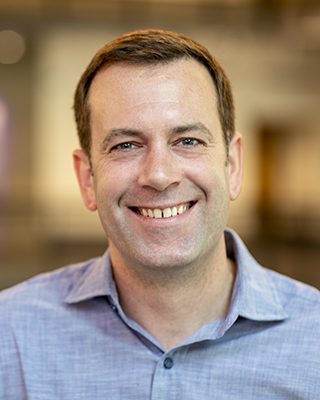
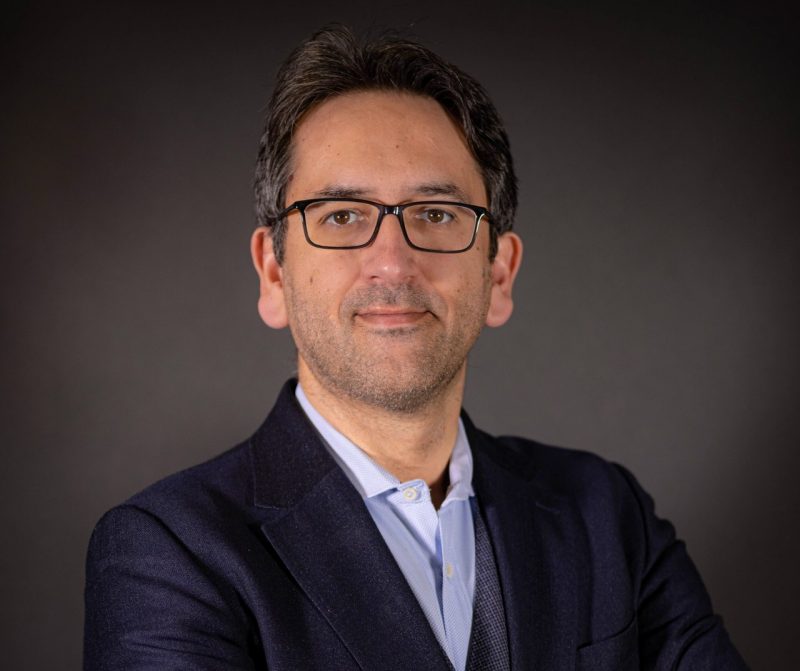
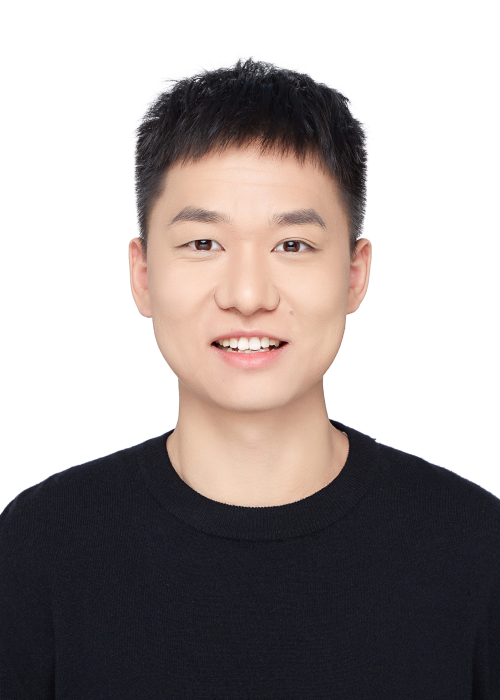
Ioannis Gkioulekas is an Assistant Professor at the Robotics Institute within Carnegie Mellon University's School of Computer Science, with a courtesy appointment in Electrical and Computer Engineering. He leads the Computational Imaging Lab at CMU, focusing on joint hardware-software approaches to develop advanced imaging systems. His research spans computational imaging, computer vision, and graphics, addressing challenges like non-line-of-sight imaging, 3D sensing, and adaptive optics. Research interests include: Computational imaging systems design Non-line-of-sight and single-photon imaging LiDAR, SONAR, and interferometry applications Physics-based and differentiable rendering Probabilistic modeling and Monte Carlo methods Recent publications (2019-2021) demonstrate strong focus on waveguides, light transport simulation, 3D sonar reconstruction, and computational tomography. Common themes include inverse problems, wave-based imaging, and differentiable simulation techniques bridging graphics and sensing. Current advising includes Master's student Neham Jain and affiliates Bakari Hassan, John Liu, Bailey Miller, Sreekar Ranganathan, and Arjun Teh. Past students include PhD graduates Arpit Agarwal and Shumian Xin, and Master's student Shirsendu Halder.
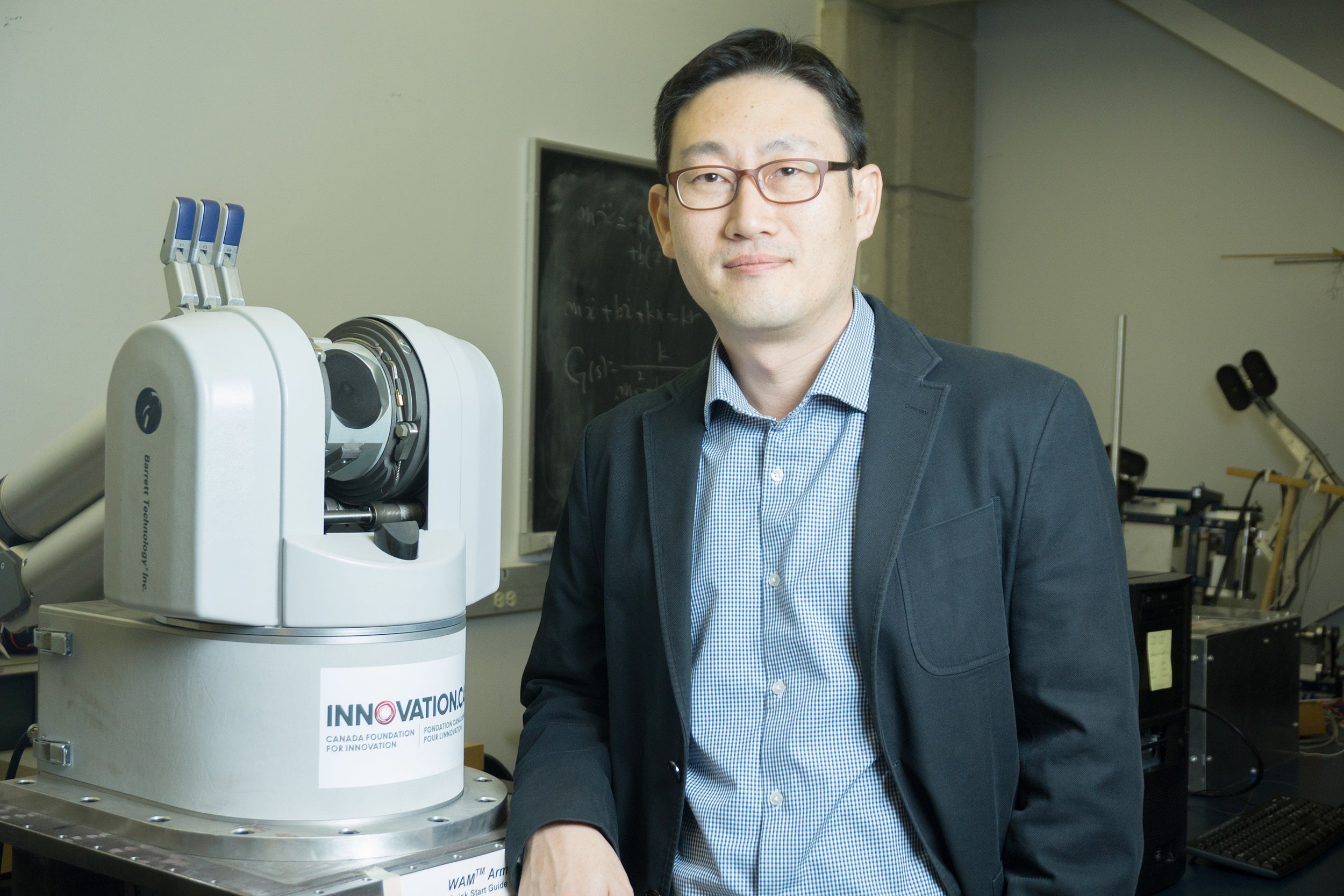
Soo Jeon is a Professor in the Department of Mechanical and Mechatronics Engineering at the University of Waterloo, part of the Faculty of Engineering. He holds a PhD from the University of California at Berkeley (2007) and prior degrees from Seoul National University. His research focuses on mechatronics, dynamic systems, and control, with applications in robotics, autonomous systems, and precision motion control. He has held roles as Assistant Professor (2009–2015), Associate Professor (2015–2024), and Full Professor (2024–present). Professor Jeon’s expertise includes intelligent sensing and control for mechatronic systems, nonlinear dynamics, and autonomous systems. He has received notable awards such as the 2022 Engineer of the Year Award (AKCSE/KOFST), 2015 NSERC Discovery Accelerator Supplement, and 2010 ASME Rudolf Kalman Best Paper Award. He serves as an Associate Editor for several journals, including the ASME Journal of Dynamic Systems and IEEE Transactions on Automation Science and Engineering. His research interests span robotics, control systems, and automation, with recent work on autonomous navigation, tactile exploration, and model predictive control. He supervises graduate students in MASc and PhD programs and teaches courses like ME 649 (Control of Machines and Processes) and ME 360 (Introduction to Control Systems). Jeon holds patents in areas like low-power magnetic locks and remote plasma source seasoning. His lab, the Waterloo Mechanical Systems & Control Laboratory (WMSCL), focuses on advanced mechatronics and robotics projects, including collaborations with international institutions such as the Korea Institute of Machinery & Materials (KIMM).
Brett Sanders is a Professor in the Department of Civil and Environmental Engineering at the Samueli School of Engineering, University of California, Irvine. His research focuses on developing innovative algorithms for flow and transport in river and coastal systems and integrating information technologies to create more accurate and efficient simulation tools for flood hazard assessment. His primary research interests include: Flooding and erosion hazards, particularly coastal flooding and urban flooding Surface water quality Low impact development impacts on hydrology Dam-break flooding Aerial and terrestrial lidar scanning Geographical information systems High performance computing for simulation tools Social dimensions of flood risk and adaptation behaviors Dr. Sanders' recent publications (2024-2025) reveal a comprehensive research program addressing both technical and social aspects of flood risk. His work spans computational hydrodynamics, flood hazard mapping, infrastructure vulnerability assessment, and the socioeconomic dimensions of flood risk. He has made significant contributions to understanding multi-grid modeling of urban flooding, post-fire flood hazards, satellite-based monitoring of land motion, and social inequalities in flood exposure. His research demonstrates how flood dynamics are more complex than simple bath-tub filling models suggest, with important implications for urban planning and climate adaptation. Dr. Sanders has received recognition as a Chancellor's Professor at UC Irvine, indicating distinguished scholarly achievement. His educational background includes: Ph.D. in Civil Engineering from the University of Michigan (1997) M.S. in Civil Engineering from the University of Michigan (1994) B.S. in Civil Engineering from the University of California, Berkeley (1993)
Jens Behley is a Lecturer (Privatdozent) and postdoctoral researcher at the Department of Photogrammetry, University of Bonn. He completed his habilitation in 2023 with a thesis on LiDAR-based spatio-temporal scene understanding for autonomous vehicles and earned his PhD in 2014 under Prof. Armin Cremers. His research focuses on LiDAR perception, agricultural robotics, and 3D scene understanding. Behley is an Associate Editor at IEEE Robotics and Automation Letters (RA-L) and has authored influential datasets like SemanticKITTI and BonnBeetClouds3D. Education: PhD in Computer Science, University of Bonn, 2014 Habilitation in Photogrammetry, University of Bonn, 2023 Research Interests: LiDAR-based perception in urban and agricultural environments, machine learning for robotics, semantic mapping, SLAM algorithms, and 3D reconstruction. His work bridges computer vision and robotics, with applications in autonomous vehicles and precision agriculture. Awards: Best Agri-Robotics Paper Award (IROS 2024) Outstanding Reviewer Awards (ECCV, CVPR, ICRA) Faculty Award for Geodesy (2021) Advisees & Grants: Behley collaborates extensively with the PRBonn lab and researchers like Cyrill Stachniss, focusing on projects funded by EU Horizon and industry partners. His team develops open-source tools for LiDAR processing (e.g., KISS-ICP, VDBFusion). Labs/Teams: Part of the Photogrammetry and Robotics Institute (IGG) at the University of Bonn, contributing to the PRBonn research group.
Jeong Joon (JJ) Park is an Assistant Professor in the Department of Computer Science and Engineering at the University of Michigan. His research focuses on computer vision, graphics, and artificial intelligence with applications in 3D/4D reconstruction, generative modeling, robotics, and medical imaging. He holds a position in the College of Engineering and actively seeks PhD students and postdoctoral researchers aligned with his research interests. Dr. Park’s work emphasizes interdisciplinary approaches, combining geometric deep learning with generative models to address challenges in scene understanding, novel view synthesis, and multi-modal perception. His lab explores both foundational techniques and applied systems, often collaborating with industry and academia on real-world problems. Key research directions include diffusion models for sparse data restoration, trajectory-conditioned 4D generation, and uncertainty-aware sensor fusion for autonomous systems. His publications span top-tier conferences like CVPR, ICCV, and NeurIPS, reflecting a strong publication record in computer vision and graphics. He teaches courses in computer vision and advises students on advanced projects requiring significant weekly commitments. Prospective applicants are encouraged to apply through the U-M CSE PhD program and contact him directly for collaboration opportunities.
WonSook Lee is a tenured Full Professor in the School of Electrical Engineering and Computer Science at the University of Ottawa’s Faculty of Engineering. Her expertise spans medical imaging, machine/deep learning, computer graphics, and computer vision. She earned her Ph.D. in Computer Science from the University of Geneva (Switzerland) and holds degrees from POSTECH (Korea) and NUS (Singapore). Before academia, she worked at Korea Telecom, Samsung Advanced Institute of Technology, and Eyematic Interfaces Inc. (USA). Her research focuses on applications such as virtual/augmented reality, MRI/CT/Ultrasound analysis, and 3D mesh modeling. She has authored over 130 publications, including 30+ journal papers, and serves on conference committees and editorial boards. Lee has secured major grants (NSERC, CFI, ORF) as Principal Investigator and contributed to global initiatives like South Korea’s National Research Foundation. Her lab explores cutting-edge techniques in medical imaging, AI-driven object detection, and multimodal systems. Notable projects include adversarial perturbation analysis for model robustness, cross-domain GANs for semantic segmentation, and real-time ultrasound-enhanced pronunciation training. She actively promotes interdisciplinary research in healthcare technology and autonomous systems.
Dr. Samuel Cheng is an Associate Professor at the Gallogly College of Engineering , University of Oklahoma , specializing in Electrical and Computer Engineering . He holds a Ph.D. in Electrical Engineering from Texas A&M University (2004), preceded by M.S. and M.Phil. degrees from the University of Hawaii and Hong Kong University of Science and Technology. Education: B.S. (University of Hong Kong, 1995), M.Phil. (HKUST, 1997), M.S. (University of Hawaii, 2000), Ph.D. (Texas A&M, 2004) Professional Experience: Senior Research Engineer at Advanced Digital Imaging Research (2004-2005), prior internships at Microsoft Asia and Panasonic Technologies His research focuses on Information Theory , Signal and Image Processing , and Pattern Recognition , with applications in remote sensing, urbanization analysis, and disaster monitoring. His publications span topics including urban impervious surface mapping , nighttime light analysis , and machine learning for environmental data . His work often integrates multi-source datasets (e.g., Landsat, LiDAR, social media) for spatiotemporal modeling. Technical Expertise: Spectral unmixing, machine learning, thermal remote sensing, GIS integration Key Applications: Power outage detection, vegetation-crime correlation, PM2.5 estimation, smart meter data fusion Dr. Cheng holds three US patents in digital watermarking and is affiliated with IEEE, Sigma Xi, and AAAS. His recent articles demonstrate a trend toward leveraging AI for remote sensing challenges and analyzing urbanization impacts on ecosystems.
Dr. Stewart Worrall is a Senior Research Fellow at the Australian Centre for Field Robotics (ACFR) within the University of Sydney. His research focuses on autonomous systems, robotics, and intelligent transportation systems, particularly in the areas of autonomous vehicle perception, human-robot interaction, and sensor fusion. He has contributed to numerous high-impact publications on topics such as edge case testing for autonomous vehicles, collaborative perception frameworks, and context-aware human-robot interaction design. His work integrates robotics hardware, computer vision, and machine learning to address challenges in autonomous driving, crowd dynamics, and urban mobility scenarios. Current research students under his supervision explore topics ranging from light field imaging for autonomous driving to human-machine interfaces for vehicles. Worrall has pioneered datasets like the University of Sydney Campus Dataset and the ACFR Five Roundabouts Dataset, which are critical for evaluating autonomous systems. His contributions span academic conferences (e.g., IEEE IV, ICRA) and journals, emphasizing both technical innovation and societal impacts of autonomous technologies. Key labs/teams: Core member of the ACFR, collaborating across disciplines including robotics, computer science, and urban design.
Prof. Dr.-Ing. Christoph Stiller is a full professor at the Karlsruher Institut für Technologie (KIT) and serves as the director of the Institute of Measurement and Control Technology (Institut für Mess- und Regelungstechnik, MRT). His work focuses on autonomous driving, sensor fusion, probabilistic estimation, HD mapping, motion planning, and intelligent transportation systems. Education: Details on his academic degrees are not provided in the text, but he holds the title of Dr.-Ing. indicating a doctoral degree in engineering. Research Interests: Prof. Stiller's research spans a wide array of topics critical to the development of autonomous vehicles. His work includes: Sensor Fusion: Integrating data from LiDAR, cameras, and radar to create robust perception systems. HD Mapping & Localization: Developing high-definition maps and precise localization techniques for urban and highway environments. Motion Planning & Decision Making: Creating algorithms for safe and efficient trajectory planning under uncertainty. Machine Learning & AI: Applying deep learning and reinforcement learning to perception, prediction, and control tasks. Publication Trends: His recent publications (2023–2025) emphasize robust traffic light detection, image stitching for panoramic views, motion prediction using redundancy reduction, and safety-enhanced model predictive control. The work increasingly integrates learning-based methods with classical control and estimation theory. Scientific Awards: No specific awards are listed in the provided text. Teaching & Supervision: Prof. Stiller teaches foundational and advanced courses in measurement and control systems, probabilistic estimation, and autonomous driving. He holds regular office hours during both summer and winter semesters and is actively involved in advising students and researchers. Labs & Teams: He leads the Institute of Measurement and Control Technology (MRT) at KIT, which is engaged in cutting-edge research in autonomous systems. The institute collaborates with industry and academia on large-scale projects such as UNICARagil and various European initiatives.
Dr. Joyoung Lee is an Associate Professor in the Department of Civil and Environmental Engineering at New Jersey Institute of Technology (NJIT). He previously served as Laboratory Manager at the Federal Highway Administration's Saxton Transportation Operations Laboratory. His research focuses on Connected Vehicle (CV) systems, including applications in traffic management, signal control optimization, and autonomous vehicle infrastructure integration. Dr. Lee holds a Ph.D. (2010) and M.S. (2007) in Transportation Engineering from the University of Virginia, and a B.S. (2000) in Transportation Engineering from Hanyang University. His work emphasizes CV-based solutions for real-time traffic systems, cooperative vehicle-infrastructure systems (CVIS), and autonomous vehicle integration. Notable achievements include the 2019 IEEE CAVS Best Paper Award and multiple best paper recognitions from PTV User Group Meetings. His research also addresses traffic safety through innovations like the Virtual Guide Dog system for visually impaired pedestrians and advanced traffic monitoring frameworks using LiDAR and computer vision. Education: Ph.D., Transportation Engineering, University of Virginia (2010) M.S., Transportation Engineering, University of Virginia (2007) B.S., Transportation Engineering, Hanyang University (2000) Dr. Lee's research interests span smart city infrastructure, edge computing for traffic systems, and sustainable transportation solutions. He has pioneered algorithms for cooperative intersection management, automated platooning systems, and federated learning-based traffic optimization. His work bridges theoretical models with real-world implementation through partnerships with FHWA and industry stakeholders. Key contributions include development of the Cumulative Travel-Time Responsive (CTR) traffic signal control system, smart arrival notification systems for paratransit services, and advanced microsimulation calibration techniques. His lab focuses on translating CV data into actionable strategies for safer, more efficient transportation networks. Awards: IEEE CAVS Best Paper Award (2019) ASCE Grand Challenge Innovation Contest Honorable Mention (2017) PTV VISSIM Best Paper Awards (2012, 2008) Excellence in Research Award (University of Virginia, 2011) Ongoing projects include semi-decentralized graph neural networks for traffic forecasting and low-cost LiDAR-based traffic monitoring systems. His work addresses critical challenges in autonomous vehicle integration, incident management, and infrastructure resilience through interdisciplinary collaborations.
Esa Rahtu is a Professor in the Department of Computer Science at Aalto University, Finland. His research focuses on computer vision, machine learning, and deep learning applications. He leads projects in image coding, neural networks, 3D reconstruction, object pose estimation, and anomaly detection. Rahtu has contributed to over 98 research outputs since 2017, with recent work emphasizing Gaussian splatting for SLAM, neural radiance fields, and hybrid video codecs for human-machine compatibility. His expertise spans visual-inertial odometry (e.g., ADVIO dataset), LiDAR-based place recognition, and manufacturing quality control systems. Key areas include: 3D scene reconstruction using Gaussian splatting techniques Deep learning models for anomaly detection in industrial processes Hybrid video codecs optimizing human perception and machine processing Multi-sensor fusion for robotic navigation and indoor mapping Notable datasets include ADVIO for visual-inertial odometry and FIORD for 3D reconstruction benchmarking. His research aligns with UN SDG 9 (Industry, Innovation & Infrastructure) and SDG 4 (Quality Education) through advancements in smart manufacturing and educational technology. Rahtu has received continuous research funding, including a grant period from April to June 2018. His work emphasizes practical applications, collaborating on real-world challenges like paper manufacturing quality control and smartphone-based 3D reconstruction.
Byron Boots is the Amazon Professor of Machine Learning in the Paul G. Allen School of Computer Science and Engineering at the University of Washington, where he directs the UW Robot Learning Laboratory. He also serves as a Principal Research Scientist in the Seattle Robotics Lab at NVIDIA Research and co-chairs the IEEE Robotics and Automation Society Technical Committee on Robot Learning. Dr. Boots received his Ph.D. from the Machine Learning Department in the School of Computer Science at Carnegie Mellon University, where he was a member of the Sense, Learn, Act (SELECT) Lab co-directed by Carlos Guestrin and his advisor Geoff Gordon. Prior to joining the University of Washington faculty, he was an Assistant Professor in the School of Interactive Computing within the College of Computing at Georgia Tech, and before that, he completed a post-doc in the Robotics and State Estimation Lab directed by Dieter Fox at the University of Washington. Professor Boots' research focuses on the intersection of machine learning, artificial intelligence, and robotics, with particular emphasis on developing theory and systems that tightly integrate perception, learning, and control. His work spans computer vision, state estimation, localization and mapping, high-speed navigation, motion planning, and robotic manipulation. His group develops algorithms drawing from deep learning and neural networks, nonparametric statistics, graphical models, nonconvex optimization, quantum physics, online learning, reinforcement learning, and optimal control. The research demonstrates a strong theoretical foundation while maintaining practical relevance to real-world robotic systems. His recent publications reveal a clear trend toward integrating advanced machine learning techniques with robotics, particularly in model predictive control, motion planning, and learning-based approaches to robot control. His work shows increasing focus on developing theoretically grounded methods that can handle the complex, nonlinear dynamics of real-world robotic systems while maintaining computational efficiency. The publications span top venues including ICRA, CoRL, IROS, and NeurIPS, demonstrating broad impact across multiple subfields of robotics and AI. Finalist for Best Systems Paper at Conference on Robot Learning (CoRL-2021) Multiple papers selected for oral presentations at top robotics conferences Work recognized for theoretical contributions and practical applications in robot learning As director of the UW Robot Learning Laboratory, Boots leads a vibrant research group focused on fundamental and applied research in robot learning. The lab maintains strong collaborations with NVIDIA Research and has produced numerous high-impact publications that bridge theory and practice. Professor Boots teaches courses in autonomous robotics, machine learning, and reinforcement learning, contributing to both undergraduate and graduate education at the University of Washington.
Murat Kantarcioglu is a Professor of Computer Science at Virginia Tech, affiliated with the College of Engineering. He is also a Faculty Fellow at the Commonwealth Cyber Initiative (CCI) and directs the Data Security and Privacy Lab. Previously, he held the Ashbel Smith Professorship at the University of Texas at Dallas. His research focuses on data and AI security, privacy, blockchain, and cybersecurity. He has received notable awards, including the NSF CAREER Award and IEEE Technical Achievement Award, and is a Fellow of AAAS and IEEE. Education: Ph.D. in Computer Science (Purdue University), B.S. in Computer Engineering (Middle East Technical University). Research Interests: Privacy-preserving machine learning and data analytics Adversarial machine learning and cybersecurity Blockchain technology and applications Healthcare data security and genomics privacy Risk and incentive models for assured data sharing Awards and Recognition: NSF CAREER Award AMIA Homer R. Warner Award IEEE ISI Technical Achievement Award Fellow of AAAS and IEEE Distinguished Member of ACM Advising and Labs: Directed over 20 PhD/Master’s students, many in cybersecurity and privacy domains. Founder and director of Virginia Tech’s Data Security and Privacy Lab. Associate at Harvard’s University Data Privacy Lab. Service and Leadership: Extensive program committee roles in top conferences (KDD, AAAI, IEEE ICDE). Former CCI co-chair for IEEE TrustCom. Co-authored influential textbooks on adversarial machine learning.
Xieyuanli Chen is an Associate Professor at the National University of Defense Technology (NUDT), China. He holds a Dr.-Ing. (summa cum laude) from the University of Bonn (2022), a Master's in Robotics from NUDT (2017), and a Bachelor's in Electrical Engineering from Hunan University (2015). His research focuses on robot learning, perception, and navigation, with an emphasis on LiDAR-based SLAM, autonomous systems, and semantic perception. Education: PhD: University of Bonn, 2018-2022 (supervised by Prof. Cyrill Stachniss) Master's: NUDT, 2015-2017 Bachelor's: Hunan University, 2011-2015 Research interests include robotics, autonomous systems, computer vision, and LiDAR perception. He has authored over 90 papers in top venues like TRO, RSS, ICRA, and CVPR. He serves as an Associate Editor for IEEE RA-L, ICRA, and IROS, and is a member of the RoboCup Rescue Robot League Technical Committee. Awards include the RSS Pioneer Award (2021), Best-in-Class RoboCup awards, and recognition as a World’s Top 2% Scientist (2024). His work spans LiDAR localization, moving object segmentation, and efficient semantic mapping. He advises students in robotics and autonomous systems. Labs/Teams: Active in the PRBonn group (University of Bonn) and leads research at NUDT on LiDAR-based perception systems.
Hassan Foroosh is a Professor in the Department of Electrical Engineering and Computer Science at the University of Central Florida (UCF), directing the Computational Imaging Laboratory (CIL). He holds a Ph.D. in Computer Science from INRIA-UNSA, France (1996). Prior to UCF, he worked as a Senior Research Scientist at UC Berkeley (2000–2002) and an Assistant Research Professor at the University of Maryland, College Park (1997–2000). Research Interests: His work focuses on Computer Vision, Image Processing, Machine Learning, and Signal Processing. Notable contributions include LiDAR-based perception, adversarial attacks on detectors, medical imaging analysis, and dataset design for action recognition. His research is supported by NASA, NSF, ONR, and industry partners. Publications & Impact: Over 130 peer-reviewed papers, including influential work on super-resolution techniques, transformer networks for 3D object detection, and adversarial machine learning. His recent work explores analytical reasoning in LLMs and multimodal fusion in sports analytics. Awards: Pierro Zamperoni Award (2004), Best ICPR Paper (2004), Sun Microsystems Academic Excellence Award (2004). Labs/Teams: Director of the Computational Imaging Lab (CIL), UCF. Grants: Active funding from NASA, NSF, and industry collaborators.