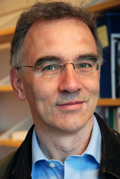
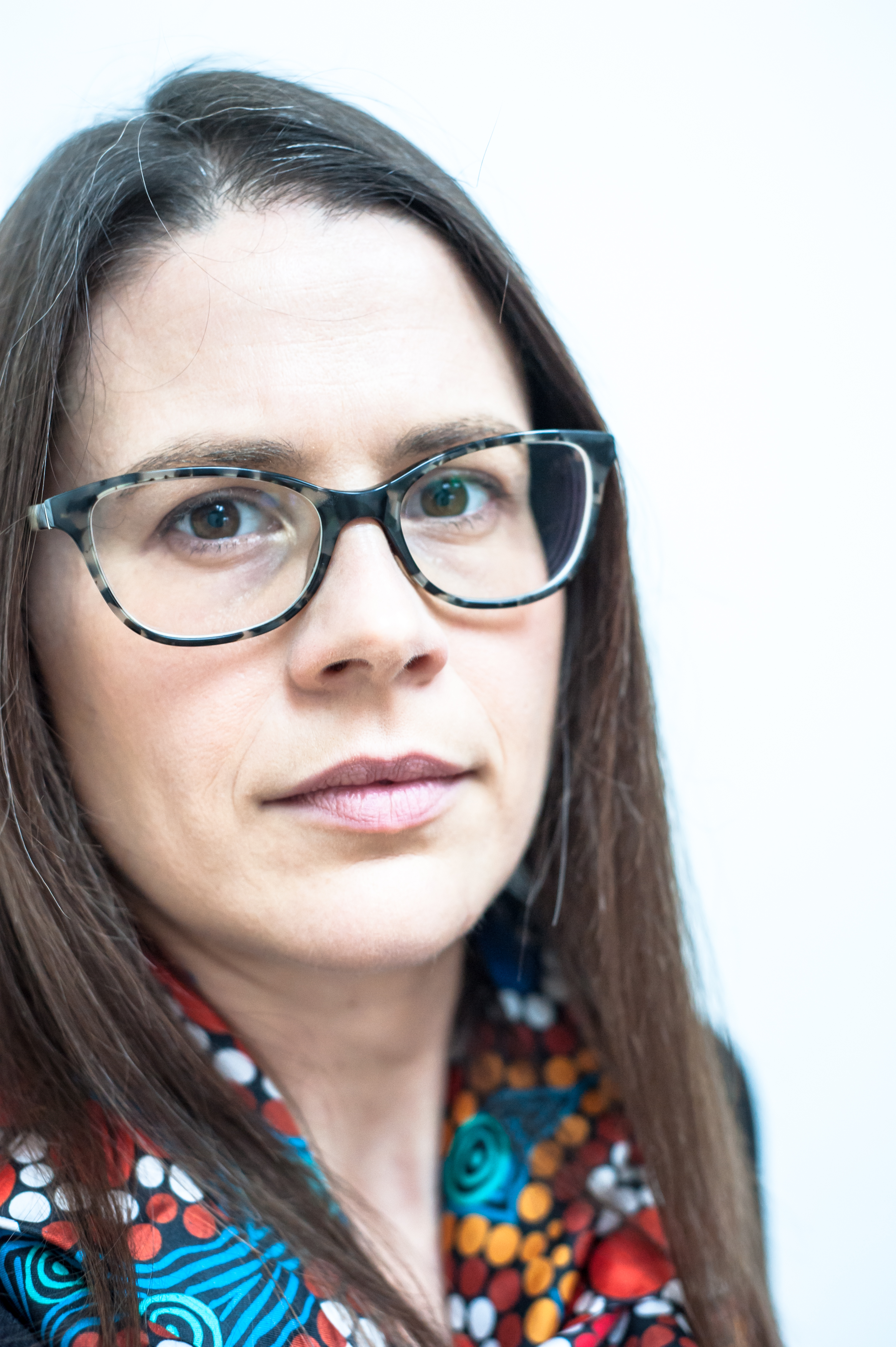
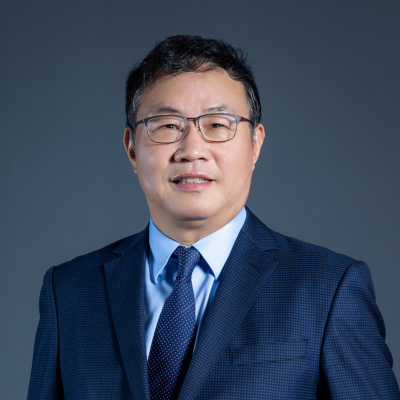
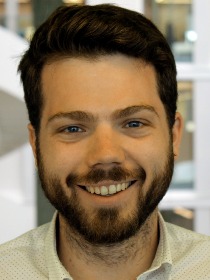
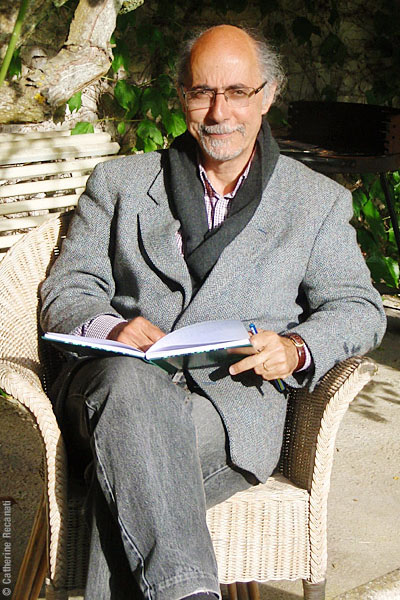
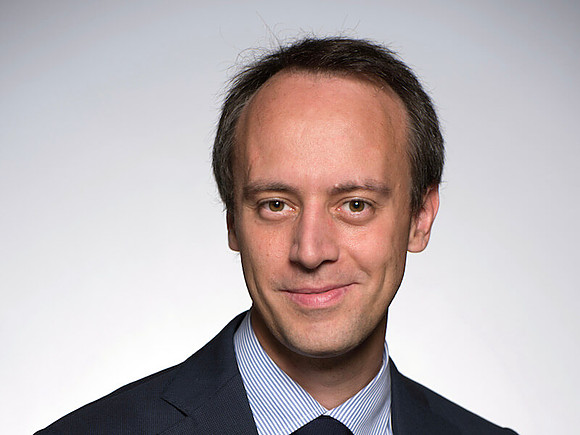
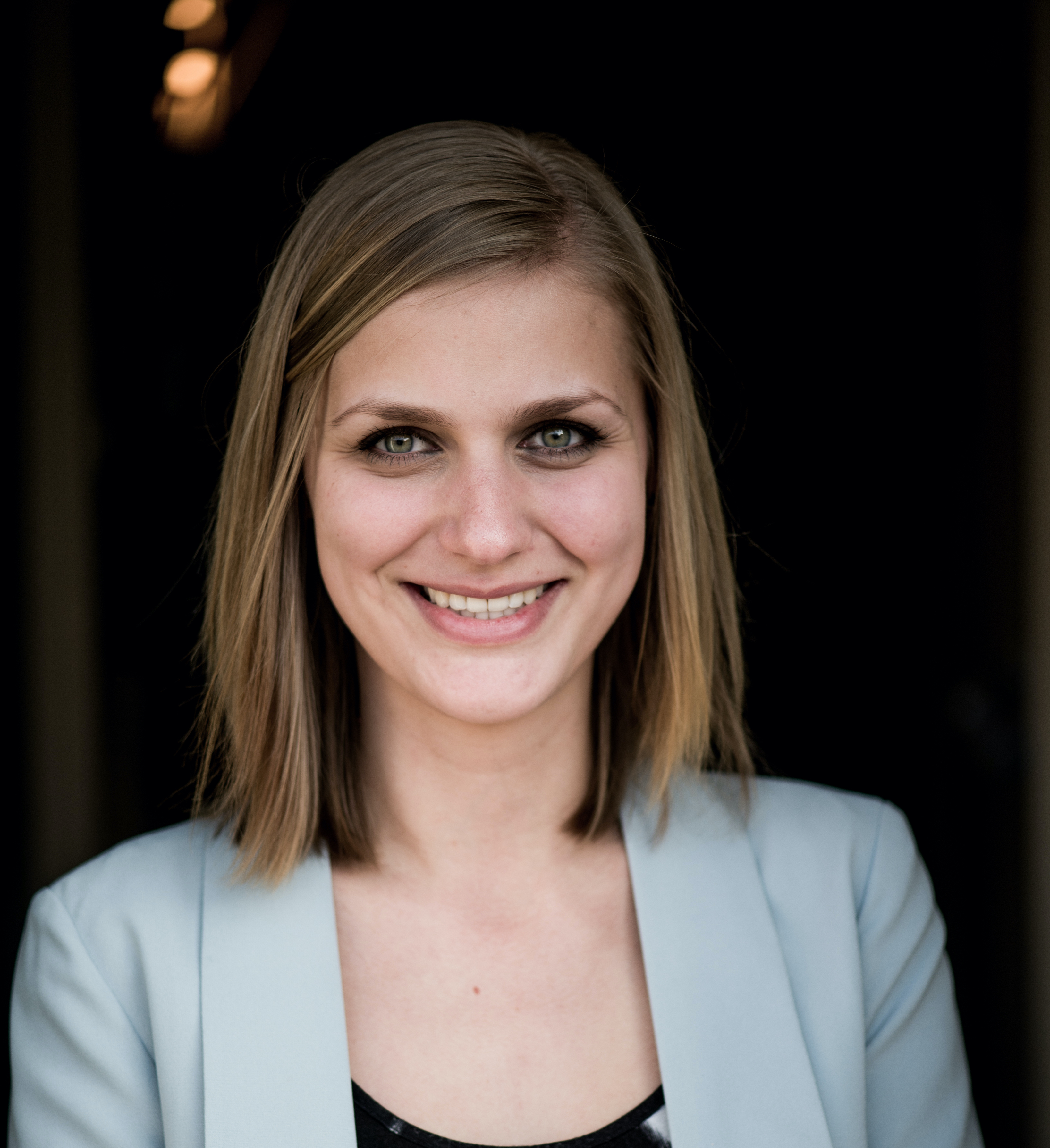
Christian-Emil Smith Ore is an Associate Professor and head of the Unit for Digital Documentation (EDD) at the University of Oslo. With 25+ years in digital humanities, he focuses on cultural heritage documentation, lexicography, and electronic text editions. His work emphasizes standards like TEI for text encoding and CIDOC-CRM for data interchange to enable cross-disciplinary research integration. Research interests span: Digital methods for cultural heritage preservation Lexicographic research and corpus linguistics Semantic modeling of historical texts Development of digital infrastructures for humanities research Cross-institutional data interoperability Publications from 2017-2024 demonstrate consistent focus on lexicographic innovation, archaeological data modeling, and digital preservation. Key thematic clusters include: Evolution of Norwegian lexicography and language standardization Semantic frameworks for cultural heritage data integration Digital tools for historical text analysis and dictionary development Professional leadership includes: Co-founding the Medieval Nordic Text Archive (menota.org) Chairing Digital Humanities in Nordic countries (DHN) Co-chairing TEI ontology SIG Leading conceptual modeling for Archaeological Digital Excavation Documentation (ADED) infrastructure
Dr. Tamara Polajnar is a Visiting Researcher at the Department of Computer Science and Technology, University of Cambridge. Her research focuses on computational linguistics and natural language processing, with particular emphasis on distributional semantics and semantic compositionality. Her research interests span multiple areas including computational semantics, distributional models, and semantic composition. She develops tensor-based methods for representing meaning and investigates techniques for semantic analysis of text at different levels from phrases to documents. Her work combines theoretical linguistics with practical machine learning approaches. Her publications primarily focus on compositional distributional semantics, exploring how to effectively combine word vectors to represent larger linguistic units. Recent work examines discourse-level representations and evaluation methods for semantic models. She has contributed datasets and frameworks that advance the understanding of how computational models can capture linguistic phenomena. She actively contributes to the research community through the development of specialized datasets and evaluation resources. Her work on RELPRON provides valuable resources for evaluating compositional distributional models, while her research on short scientific summaries addresses challenges in processing academic text.
Dr. Zhengdao Ye is a Senior Lecturer in the Linguistics Program at the Australian National University's School of Literature, Languages & Linguistics. She holds a PhD in Linguistics from ANU and has taught at multiple institutions including Monash University and the University of New England. Her research focuses on semantics, pragmatics, and intercultural communication with particular emphasis on Chinese linguistics and cultural pragmatics. Education: BA (East China Normal University), GradDip (ANU), MA and PhD (ANU). Research Interests: She explores meaning, culture, and cognition across languages, focusing on emotion semantics, cross-cultural communication, and the Natural Semantic Metalanguage (NSM) theory. Key areas include lexical-cultural analysis of concepts like happiness, pain, and danger, as well as translatability and bilingualism. Professional Activities: She has held visiting roles at institutions globally, including Italy’s IUO and Mexico’s UNAM. She co-organizes the annual NSM Workshop and leads the NSMLab@anu international research node. Awards: Recipient of the 2021 VC’s Award for Excellence in Supervision. Teaching: Leads courses on semantics, cross-cultural communication, and Chinese linguistics. Active in supervising PhD, Honours, and Master’s students, with a focus on projects like Sinitic language ideophones and emotion discourse in migrant families. Projects: Current initiatives include studies on Chinese migrants to Australia and linguistic approaches to meaning-building.
Alex de Carvalho is an Associate Professor of Psychology at Université de Paris, affiliated with the Laboratoire de Psychologie du Développement et de l'Éducation de l'Enfant (LaPsyDÉ). He holds a PhD in Cognitive Sciences from École normale supérieure, PSL University (2017) and conducted postdoctoral research at the University of Pennsylvania with John Trueswell. His research focuses on language acquisition, syntax development, and cognitive mechanisms in children. Education: PhD in Cognitive Sciences, École normale supérieure, PSL University (2017) M.A. in Cognitive Sciences, École normale supérieure, Paris (2014) B.A. in Linguistics/Education, Federal University of Rio de Janeiro (2011) Research Interests: Language acquisition, syntax development, prosody-syntax interaction, and real-time language processing in infants and young children. His work employs methods like eye-tracking and EEG to study how children integrate prosodic, syntactic, and semantic cues during language learning. Collaborations: Partnerships with institutions in the USA (University of Pennsylvania, Temple University, University of Delaware), UK (University of Edinburgh), and Brazil (Universidade Federal do Rio de Janeiro). Teaching: Leads courses on developmental psychology, language acquisition, and research methods at Université de Paris and École Normale Supérieure. Supervises graduate and undergraduate students in experimental research. Labs: Director of the BabyLab at École normale supérieure, focusing on early language development and cognitive processes.
Professor Jie Xu serves as Dean of the Faculty of Arts and Humanities, Director of the Center for Linguistics, and Director of the Confucius Institute at the University of Macau. He holds a PhD from the University of Maryland (USA) and has extensive academic experience across multiple institutions. His research focuses on grammatical theory, Chinese linguistics, and language education. Key areas of study include comparative syntax of Chinese and English, principle-based grammatical analysis, and innovative language use in literary works. He has authored over 20 books and numerous peer-reviewed articles in leading journals like Language and Linguistics and Journal of Chinese Linguistics . Notable contributions include formal analyses of Chinese syntax, studies on language variation in dialects, and theoretical frameworks for linguistic rule violations in creative contexts. Professor Xu teaches advanced courses on Chinese linguistics and has pioneered interdisciplinary research bridging formal grammar and sociolinguistics. Education: PhD (1993) in Linguistics, University of Maryland; MA (1988) in East Asian Linguistics, University of Hawaii; MA (1984) in Chinese Linguistics, Central China Normal University; BA (1981) in Chinese Language and Literature, Henan University. His research explores grammatical universals through Chinese syntax, with recent work addressing sentence structure variability, dialect lexical integration into standard Chinese, and cross-linguistic comparisons of ellipsis phenomena. He collaborates internationally on projects like language policy formulation and pedagogical frameworks for multilingual education.
Alexander Martin is an Assistant Professor in Phonology at the University of Groningen (Netherlands), affiliated with the Center for Language and Cognition (CLCG). His research focuses on understanding how cognitive and social factors shape linguistic systems, with a particular emphasis on phonology, sociolinguistics, and language typology. He holds a PhD from École Normale Supérieure (Paris) and has conducted postdoctoral work at the University of Edinburgh and Paris. Education: PhD in Cognitive Science from École Normale Supérieure (2017), supervised by Sharon Peperkamp. Previous postdoctoral positions include the Centre for Language Evolution (Edinburgh) and the SMIC project (Paris). Research Interests: Experimental phonology, language typology, cognitive biases in linguistic structure, sociolinguistic variation (e.g., variable liaison in French), bilingual phonological perception, and the role of morphophonological features in Bantu languages. Key Contributions: Pioneering studies on cognitive universals in noun phrase word order, experimental evidence for phonetic naturalness in learning biases, and analysis of social meaning in linguistic variation. Active in supervising PhD students and collaborating internationally on projects involving language contact and perception. Professional Roles: Editor of TABU Festschrift for Jack Hoeksema (2024) and co-supervisor of PhD candidates at the University of Groningen and Université Paris Cité.
François Recanati is a Professor at Collège de France since 2018, previously serving as Directeur d'Études at École des Hautes Études en Sciences Sociales (EHESS) and Researcher at CNRS. His academic roles include Director of the Institut Jean-Nicod, a research lab at École Normale Supérieure focusing on philosophy, linguistics, and cognitive science. He has held visiting positions at Harvard, UC Berkeley, and University of St Andrews. His research interests span philosophy of language, philosophy of mind, pragmatics, semantics, analytic philosophy, and cognitive science. Notable contributions include theories on mental files, truth-conditional pragmatics, and contextual semantics. He has authored over 100 articles and a dozen monographs, including Literal Meaning (2004) and Mental Files in Flux (2016). Recanati has received prestigious awards such as the CNRS Silver Medal (2014), American Academy of Arts and Sciences membership (2012), and the Pufendorf Medal (2008). He directed the ERC-funded 'Context, Content and Compositionality' project (2009–2013). His academic contributions extend to editorial roles, serving on journal boards and editing book series. He has delivered major lectures including the Pufendorf Lectures (Lund, 2008) and Frege Lectures (Tartu, 2014).
Riitta Salmelin is a Professor at Aalto University (formerly Helsinki University of Technology), where she has been faculty since 2002. She serves as a leading research scientist at the Brain Research Unit within the Low Temperature Laboratory. Previously, she held the prestigious position of Academy Professor with the Academy of Finland from 2006-2011. Her work bridges physics, neuroscience, and cognitive science through advanced neuroimaging techniques. Dr. Salmelin earned her Doctor of Technology in Physics from Helsinki University of Technology in 1989, followed by a Docent position in Applied Physics in 1995. Her educational background in physics provided the foundation for her pioneering work in applying magnetoencephalography to cognitive neuroscience. Salmelin's research focuses on cortical rhythmic activity, neuroimaging of language perception and production, and the neural basis of normal language function and language disorders. She has made significant contributions to understanding interareal functional connectivity using multimodal imaging techniques, particularly magnetoencephalography (MEG) and functional magnetic resonance imaging (fMRI). Her work has illuminated how the brain processes speech, reading, and language at millisecond resolution, revealing critical timing differences between normal and impaired language processing. Her 101 peer-reviewed publications demonstrate a consistent trajectory from methodological innovations in MEG to sophisticated applications examining language processing across multiple domains. The most recent publications reveal increasing sophistication in analyzing functional connectivity, with particular emphasis on how rhythmic brain activity supports language comprehension and production. Her work shows how temporal dynamics of neural processing differ between normal language function and disorders like dyslexia. Member of Academia Europaea (2002) Member of Academia Rodinensis Pro Remediatione (2002) Member of Finnish Academy of Science and Letters (2009) Wiley Young Investigator Award, Organization for Human Brain Mapping (2000) Philips Nordic Prize for Research on Neurodevelopmental Disorders (2003) Professor Salmelin has supervised 11 completed MSc theses and 6 PhD dissertations, with numerous additional students in progress. Her grant portfolio includes major international funding from the James S. McDonnell Foundation, European Science Foundation, EU Framework Programmes, and Human Frontier Science Program, as well as substantial national support from the Academy of Finland and Sigrid Jusélius Foundation. She has served on numerous editorial boards including Human Brain Mapping (as Associate Editor) and Brain Topography, and has been active in organizing major international conferences in her field. Salmelin leads research at the Brain Research Unit, part of Aalto University's Low Temperature Laboratory. Her work integrates physics, engineering, and neuroscience to develop and apply advanced neuroimaging methodologies. She has established herself as a world leader in time-sensitive neuroimaging of language processes, creating methodological frameworks that have been widely adopted in cognitive neuroscience.
Dr. Guido Löhr is an Assistant Professor at the Faculty of Social Sciences and Humanities at Vrije Universiteit Amsterdam, specializing in the Reasoning and Argumentation department. His work bridges philosophy, cognitive science, and technology ethics. He holds a PhD from Ruhr University Bochum and École normale supérieure, along with advanced degrees in Cognitive Science and Philosophy. His research focuses on conceptual engineering , joint action theory , predictive processing , and AI ethics . Notable themes include the ethical implications of technological disruptions, the nature of abstract concepts, and normativity in collective agency. Recent work explores how technologies like chatbots reshape social norms and moral responsibilities. He teaches courses such as "Ethical AI" and "Logic" , emphasizing interdisciplinary approaches to contemporary philosophical challenges. His 27+ publications span conceptual ethics, social ontology, and cognitive science, often applying predictive processing frameworks to linguistic and social phenomena. While no formal awards are listed, his prolific output reflects sustained contributions to conceptual engineering and technology ethics. His advising focuses on graduate students in philosophy and cognitive science, though specific advisee names are not provided in the text.
Lorenzo Tomasin is a full professor in the Italian Section at the University of Lausanne (UNIL), holding the chair of history of the Italian language. Previously, he served as vice-rector at Ca' Foscari University in Venice and taught at Bocconi University in Milan. His research bridges Romance philology, linguistics, and literary history, focusing on medieval practical texts, 18th-20th century authors, and the interplay between linguistic and cultural history. He collaborates with the Centre for Dialectology and Ethnography of Ticino, emphasizing Venetian dialectology and historical lexicography. Key contributions include studies on the VEV (Vocabolario storico-etimologico del veneziano) and analyses of language contact in medieval manuscripts. His work integrates traditional philology with digital methodologies, addressing topics like etymology, textual criticism, and sociolinguistic dynamics. Education: Diploma and Perfezionamento from Scuola Normale Superiore in Pisa. Academic roles include visiting positions at UCLA and Indiana University. Research interests also encompass Italian dialects, historical grammar, and the methodology of linguistic historiography. His publications span lexicography, cultural semiotics, and the history of the Italian language, with a focus on microhistorical approaches to linguistic evolution. Recent articles highlight his engagement with digital lexicography, the semantic history of words, and interdisciplinary approaches to language history. He has contributed to projects like the Storia dell'italiano scritto and collaborates internationally on Romance language studies. His scholarship bridges medieval and modern linguistic phenomena, emphasizing empirical rigor and historical context.
Fernando Benites de Azevedo e Souza is a researcher at Zurich University of Applied Sciences (ZHAW) specializing in Natural Language Processing (NLP) and text analytics. He collaborates across disciplines including cultural management, speech recognition, and low-resource language technologies. Key research areas: NLP applications in arts management, speech-to-text systems, and German dialect identification Active in SwissNLP community and VarDial conference series Focus on practical implementations: e-assessment integrity, transliteration resources, and resource-constrained deep learning His work demonstrates technical expertise in: Comparative analysis of ASR systems (CEASR corpus) Transliteration pattern detection (TRANSLIT resource) Dialect identification challenges Combining lexical and sentiment analysis Scientific achievements include: Ranked first in ALTA 2018 patent classification competition Multiple top-three finishes at VarDial evaluations First place in GermEval 2020 low-resource speech recognition task
Xiangdong Xing is a Distinguished Professor and Changjiang Scholar at Shaanxi Normal University, leading the Language Resource Development Research Center. He holds a PhD from Shandong University (2000) and completed postdoctoral research at Nankai University (2000-2003). His research focuses on tone sandhi, Mandarin dialectology, and syntax-morphology interfaces, with over 100 publications and authored works on Shaanxi dialects. During April 2019, he participated in EHESS's Visiting Professors Program, delivering lectures on topics such as word tone dynamics, nominal diminutives, and Guanzhong dialect syntax-semantics. His work emphasizes methodological advancements in dialect surveys and typological studies of Mainland East Asia. Education: PhD, Shandong University (2000) Postdoctoral Research, Nankai University (2000-2003) Research interests include the interplay between lexical tone systems and morphosyntactic structures, particularly in Western Mandarin and Jin dialects. His recent work investigates reduplication patterns and their implications for nominal morphology. He has pioneered studies on deadjectival nouns in Guanzhong dialects, revealing their prosodic and syntactic functions. Recent lectures at EHESS highlighted advancements in understanding tone sandhi’s role in lexical and grammatical processes. These presentations contributed to broader discussions on areal typology in East Asian languages. Awards: Changjiang Scholar Xing heads research initiatives focusing on language resource development, integrating empirical fieldwork with theoretical linguistics. His current projects aim to refine methodologies for dialect documentation and comparative analysis.
Germán Labrador Méndez is an Associate Professor of Spanish and Portuguese at Princeton University, where he has taught since 2008. He also held visiting roles at the Universität Hamburg and CUNY-The Graduate Center. His research focuses on Spanish and Galician cultural history, memory studies, and the intersection of poetry with social movements. Key works include Culpables por la literatura (2017), which examines counter-cultural dynamics during Spain's transition to democracy, and Libidinal Economy in the Spanish Transition (2018), co-curated with the Museo Nacional Centro de Arte Reina Sofía. His scholarship bridges literary analysis with political critique, addressing topics like post-Francoist culture, crisis narratives, and the aesthetic politics of national identity. He earned his PhD from Universidad de Salamanca (Spain) and Université Paris IV-La Sorbonne (France). Awards include recognition in Art Forum ’s 2017 best books list. Current projects include an anthology of anti-Francoist poets and studies on Spain’s post-2008 cultural crises. Education: Ph.D. Spanish Literature (Salamanca & Sorbonne), M.A. Spanish and Latin American Literature (Salamanca & Sorbonne), B.A. Hispanic Philology (Salamanca). Publications span articles in Journal of Spanish Cultural Studies , Revista Hispánica Moderna , and edited volumes. He collaborates with cultural institutions like MACBA and the Reina Sofía Museum.
Dr. Merel Scholman is an Assistant Professor at Utrecht University within the Department of Languages, Literature and Communication and affiliated with the Institute for Language Sciences . Her research focuses on how people use language to create meaning through discourse relations , investigating cognitive processing of coherence markers in written, spoken, and visual communication. PhD in Language Science and Technology from Saarland University (summa cum laude, 2019) Research Master in Linguistics from Utrecht University (cum laude, 2015) Visiting researcher at Lancaster University and University of Edinburgh Her work combines theoretical psycholinguistics with computational modeling , using quantitative empirical methods like corpus analysis and crowdsourcing experiments. Recent research examines cross-modal discourse signals across Nigerian Pidgin , English , and European languages , while methodological contributions explore annotation reliability and experimental design. Publications demonstrate expertise in discourse markers , coherence relations , and low-resource NLP , with applications to gesture synthesis , spoken language analysis, and educational tools . She received the Veni grant for her project on natural discourse structure signals across modalities. As an educator, she contributes to the Communication and Information Sciences (BA) and Linguistics (RMA) programs, teaching courses like Writing Style as a Choice . Her methodological innovations in crowdsourcing and annotation frameworks have shaped discourse analysis practices in computational linguistics.
Dr. Gerda Ana Melnik-Leroy serves as Senior Researcher at Vilnius University's Institute of Data Science and Digital Technologies, specializing in the Cognitive Computing Group. Her interdisciplinary work bridges cognitive science, linguistics, and data analytics with significant contributions to understanding human factors in decision-making and language processing. Her academic credentials include: Doctorate in Cognitive Sciences (2019) PhD studies at École Normale Supérieure's Laboratory of Cognitive Science and Psycholinguistics, Paris (2016-2019) Master of Cognitive Science (cognitive psychology major) from École Normale Supérieure, Paris (2014-2016) Melnik-Leroy's research examines cognitive biases in data visualization, second language phonetic acquisition, and synthetic speech perception mechanisms. She investigates how exponential growth misinterpretation affects decision-making and explores perceptual differences between congenitally blind and sighted individuals in speech processing contexts. Her methodological approach combines behavioral experiments with computational modeling to address real-world cognitive challenges. Analysis of her 15 most recent publications (2019-2025) reveals two dominant research trajectories: (1) Cognitive bias mitigation in data visualization, particularly regarding exponential growth misinterpretation and graph design optimization, and (2) Cross-modal speech processing, including L2 phonetic training efficacy and synthetic speech evaluation across diverse user populations. These streams demonstrate consistent integration of cognitive theory with practical data science applications. Within the Cognitive Computing Group, Melnik-Leroy contributes to interdisciplinary collaborations that advance human-centered computing. Her experimental work informs both theoretical models of cognition and applied solutions for educational technology and accessible human-computer interfaces, maintaining active research output through university-affiliated projects at Akademijos St. 4, Vilnius.