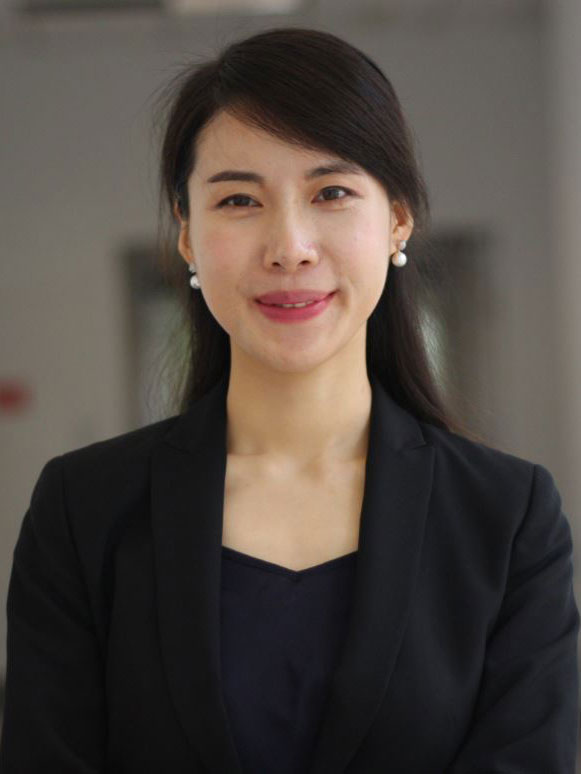
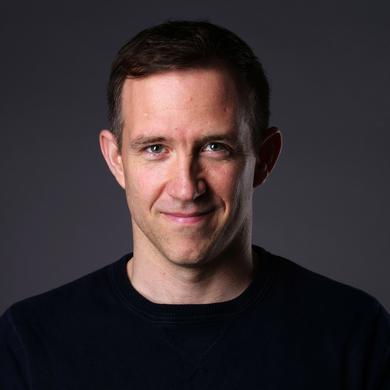
Laurie Mook is an Associate Professor and Associate Director in the School of Community Resources and Development (CRD) at Arizona State University (ASU). She is also affiliated with the Lodestar Center for Philanthropy & Nonprofit Innovation and the Center for Organization Research and Design (CORD). Her research focuses on the social economy, including nonprofits, cooperatives, social enterprises, volunteerism, and social accounting. She holds a Ph.D. in Adult Education and Community Development from the University of Toronto, along with an M.Ed. and B.A. from Canadian institutions. Dr. Mook’s academic contributions include co-authoring influential books such as Understanding the Social Economy: A Canadian Perspective (2018) and editing the Canadian Journal for Nonprofit and Social Economy Research . Her teaching spans courses like Social Marketing and Strategic HR Management, emphasizing online pedagogy and curriculum design. Her awards include the 2021 Distinguished Service Award from ANSER and multiple Outstanding Faculty Awards at ASU. She has been a leader in professional associations like ANSER and ARNOVA, contributing to conference organization, editorial roles, and policy discussions. Her work bridges academic research, nonprofit practice, and social innovation, addressing topics like volunteer management, impact measurement, and the role of technology in the social economy.
Dr. Hongli (Julie) Zhu is an Associate Professor in the Department of Mechanical and Industrial Engineering at Northeastern University's College of Engineering. Her research focuses on sustainable energy storage, multifunctional materials, and advanced manufacturing, with emphasis on developing environmentally friendly biomass-derived materials, all solid-state batteries, and flow batteries. She leads the ZHU Lab at Northeastern University, which is dedicated to creating safer, cheaper, and higher performance energy storage solutions while exploring multifunctional materials derived from nature. Dr. Zhu received her PhD from South China University of Technology and Western Michigan University (2004-2009). She conducted postdoctoral research at KTH Royal Institute of Technology in Sweden (2009-2011), focusing on biodegradable and renewable biomaterials from natural wood, followed by additional postdoctoral work at the University of Maryland (2012-2015), where she researched nanocellulose and energy storage. Dr. Zhu's research spans multiple disciplines at the intersection of materials science, energy storage, and sustainable manufacturing. Her work addresses critical challenges in energy storage technology, including developing all solid-state batteries, flow batteries, and high energy density battery systems. She has pioneered research in sustainable biomass-derived materials, particularly investigating cellulose, hemicellulose, and lignin for applications in bendable, implantable, and biocompatible electronics. Her lab also focuses on advanced manufacturing techniques, including high-speed roll-to-roll processing for emerging advanced materials and devices. Analysis of Dr. Zhu's publication record reveals a strong focus on next-generation battery technologies, particularly solid-state systems. Her research demonstrates significant contributions to understanding and improving lithium dendrite suppression, electrode architecture optimization, and interface stabilization in solid-state batteries. She has also made substantial advances in sustainable materials derived from natural resources, developing applications for cellulose nanostructured fibers, paper, and aerogel/hydrogel systems. MRS Communications Early Career Distinguished Presenters and JMR Distinguished Invited Speakers (2024) Selected in Stanford University List of Top 2% Scientists Worldwide (2021-2024) College of Engineering Faculty Fellow (2023) Soren Buus Outstanding Research Award (2022) Women in Materials Science, Advanced Materials (2021 and 2022) Women Scientists at the Forefront of Energy Research, ACS Energy Letters (2020) Innovator of the Year 2013, Maryland Jakob Wallenberg Scholarship, Sweden Dr. Zhu has secured significant research funding from various sources, including the National Science Foundation and Department of Energy. Her current projects include "Uncovering the mechano-electro-chemo mechanism of fresh Li in sulfide based all solid-state batteries through operando studies" (NSF), "Enabling Advanced Electrode Architecture through Printing Technique" (DOE), and "Engineering the Metal Sulfide Interface in All Solid State Batteries through Operando Study" (NSF). She collaborates with industry partners including Rogers Corporation and has developed patented technologies related to sustainable materials and energy storage. Dr. Zhu serves as Codirector of Advanced & Intelligent Manufacturing, Editor of Progress in Materials Science, and on the Editorial Advisory Board of Chemical Society Reviews. The ZHU Lab at Northeastern University is a highly interdisciplinary research group that bridges scales from the nanoscopic to macroscopic and system level. The lab's work has led to numerous patents, including "Natural fiber composites as a low-cost plastic alternative" and "Fire-retardant Nanocellulose Aerogel, and Methods of Preparation and Uses Thereof." The group focuses on making energy storage safer, cheaper, and higher performing while exploring multifunctional materials derived from nature, with particular emphasis on applying high-speed roll-to-roll manufacturing to emerging advanced materials and devices.
Joe Paton is a Professor and Principal Investigator at the Champalimaud Neuroscience Programme, Champalimaud Foundation in Lisbon, Portugal. He leads the Paton Lab which focuses on understanding how animals determine which environmental cues are predictive of behaviorally relevant events, known as the credit assignment problem. His research combines behavioral experiments with neurophysiological recordings in rodents to investigate neural mechanisms of time perception and decision making. Dr. Paton's research interests center on interval timing, temporal processing in the brain, and the neural basis of learning. His work particularly examines how the striatum and dopamine systems contribute to time perception and how animals solve the credit assignment problem through statistical inference in the time domain. His lab employs advanced techniques including optogenetics, neural recordings, and computational modeling to address these questions. Analysis of Dr. Paton's recent publications reveals a strong focus on striatal function in timing processes, with particular attention to how neural populations encode temporal information. His work bridges behavioral neuroscience with computational approaches, demonstrating how timing mechanisms influence decision making and learning processes. The research spans multiple levels from cellular mechanisms to behavioral outputs. Midbrain dopamine neurons control judgment of time (2016) Striatal dynamics explain duration judgments (2015) A Scalable Population Code for Time in the Striatum (2015) The Neural Basis of Timing: Distributed Mechanisms for Diverse Functions (2018) Dr. Paton has mentored numerous PhD students and postdoctoral researchers through the INDP (International Neuroscience Doctoral Program) and supervises a diverse team including research technicians, postdocs, and students. His lab has contributed significantly to understanding the neural basis of time perception and its role in learning and decision making. The Paton Lab also develops experimental tools and frameworks like Bonsai for behavioral neuroscience research.
Professor Richard Bolden is a Professor of Leadership and Management at the Bristol Business School, University of the West of England (UWE), where he also directs the Bristol Leadership and Change Centre. His career includes over a decade at the University of Exeter Business School and experience as a consultant, research psychologist, and software developer. He holds a PhD, MA, and BSc. His research focuses on distributed leadership, leadership development in complex systems, and cross-sector partnerships. Key areas include leadership in higher education, healthcare, and public services, with emphasis on paradoxes, complexity, and inclusion. He has published extensively, including a 2023 second edition of Exploring Leadership (Oxford University Press) and serves as Associate Editor of the Leadership journal. Prof. Bolden leads leadership modules for UWE's EMBA and clinical practitioner programs. His funded projects involve organizations like the NHS Leadership Academy and Singapore Civil Service College. Awards include Fellowship with the International Leadership Association. His work bridges academic theory and practical application, addressing systemic challenges through collaborative, inclusive leadership frameworks. Current interests include post-pandemic academic leadership and the 'great resignation' impact.
David Churchill is an Associate Professor in the Department of Computer Science at Memorial University of Newfoundland (MUN), specializing in Artificial Intelligence and Real-Time Strategy (RTS) Game AI. He holds a PhD from the University of Alberta and has been actively involved in AI research since 2009. His work focuses on AI for RTS games like StarCraft, emphasizing heuristic search, combat simulation, and build order optimization. He organizes the annual AIIDE StarCraft AI Competition and maintains open-source projects like UAlbertaBot and SparCraft. Education: BSc in Pure Mathematics and Computer Science (MUN) MSc in Computer Science (MUN, 2009) PhD in Computing Science (University of Alberta, 2016) Research Interests: AI in video games, heuristic search algorithms, RTS game strategies, multi-agent systems, and robotics. His work bridges theoretical AI with practical applications in competitive gaming and robotics. Publications & Awards: Notable contributions include Search Ordering for StarCraft Build Order Optimization (2024) and Hierarchical Portfolio Search in Prismata (2017, Best Student Paper Award). His research has advanced combat simulation (SparCraft) and build-order planning (BOSS) in RTS games. Awards: Best Student Paper Award (2017) Best Paper Award (2013, 2022) Advising & Labs: Supervised over 20 graduate and undergraduate theses at MUN. Leads the StarCraft AI Competition and contributes to open-source projects like UAlbertaBot and STARTcraft. Currently not accepting new graduate students due to funding constraints.
Yu Meng is an Assistant Professor in the Department of Computer Science at the University of Virginia (UVA), part of the School of Engineering and Applied Science. He joined UVA in 2024 as a tenure-track faculty member. His research focuses on machine learning, natural language processing (NLP), and data mining, with recent emphasis on large language models (LLMs), alignment, reliability, and ethical AI development. Educated at the University of Illinois Urbana-Champaign (UIUC), Meng earned his Ph.D. in 2023 under advisor Jiawei Han. His doctoral thesis, Efficient and Effective Learning of Text Representations , received the ACM SIGKDD 2024 Dissertation Award. He also held a visiting researcher position at Princeton University under Danqi Chen and was a Google PhD Fellow. His work has been recognized with awards including the Superalignment Fast Grant from OpenAI and notable publications at venues like NeurIPS, ICLR, and ACL. Meng’s research explores topics such as preference optimization (SimPO), retrieval-augmented generation (InstructRAG), and zero-shot learning. He actively serves on program committees for top conferences (ICLR, ICML, NeurIPS) and as an action editor for Transactions of Machine Learning Research (TMLR) . He teaches graduate-level courses on NLP, emphasizing cutting-edge LLM topics like architecture design, instruction tuning, and ethical considerations. Key achievements include contributions to LLM alignment via retrieval optimization, efficient pretraining techniques, and foundational work on weakly supervised learning. His research bridges theory and practice, addressing both technical challenges and societal impacts of AI systems.
Dr. Edoardo Bertone is a Senior Lecturer at Griffith University's School of Engineering and Built Environment - Architecture and Design. He holds a PhD in Water Resources Engineering from Griffith University and Bachelor/Master degrees in Civil Engineering from the Polytechnic University of Turin. His research focuses on data-driven modeling, Bayesian Networks, and System Dynamics applied to water resources management, climate change adaptation, and the water-energy nexus. He is affiliated with Griffith's Cities Research Institute and Australian Rivers Institute, collaborating on projects with water utilities, governments, and private entities. Dr. Bertone has received awards such as the 2024 PVC Science Excellence in Teaching and the JSPS Fellowship (2022). He supervises doctoral and master's students in areas like water quality management and climate change impacts. Education: PhD in Engineering (Griffith University, 2015); MEng and BEng in Civil Engineering (Polytechnic University of Turin, 2009-2011). Research Interests: Water quality modeling, drinking water optimization, data-driven prediction, climate change adaptation, and sustainable development goals. He leads over 25 funded research projects, including initiatives on reservoir water quality management in Thailand, real-time nutrient monitoring, and cyanobacteria bloom modeling. Dr. Bertone’s work integrates advanced sensors, machine learning, and Bayesian networks to address environmental challenges. Awards: Listing includes PVC Excellence Awards (2024, 2017), JSPS Fellowship, and recognition as a Rising Star in Queensland Science (2015). Grants & Supervision: Principal supervisor for 10+ doctoral candidates and collaborator on projects funded by Seqwater, CSIRO, and the Ian Potter Foundation. Key grants include $745k for biofertilizer combatting eutrophication and $269k for coagulation optimization models. Dr. Bertone’s contributions extend to urban sustainability, co-editing the book *SeaCities: Urban Tactics for Sea-Level Rise* and developing frameworks for integrating SDGs into architectural education.
Houman BOROUCHAKI is a Professor at the University of Technology of Troyes (UTT), France, with over 20 years of academic leadership. He has served as Head of the Automatic Mesh Generation and Advanced Methods (GAMMA3) project team since 2008 and previously led the Laboratory of Mechanical Systems and Concurrent Engineering (LASMIS) (2005-2007). His work bridges academic research and industrial applications through collaborations with INRIA , French Petroleum Institute (IFPEN) , Dassault Aviation , and others. Research Interests: A pioneer in adaptive meshing , he focuses on finite element methods , geometric modeling , and numerical simulations . His innovations underpin mesh generation algorithms , 3D triangulation software , and industrial applications in metal forming, composite simulation, and subterranean modeling. Scientific Trends: His recent work emphasizes metric-based meshing , high-order geometric validity , and parallel processing for mesh generation , with applications in petroleum reservoirs, aviation surfaces, and nanomaterials. His Google Scholar profile reflects 25+ years of contributions to meshing and simulation. Teaching: With 22 years of experience, he teaches courses on meshing , numerical analysis , geometric modeling , and computer graphics at UTT, covering undergraduate to PhD levels. Labs & Teams: He leads the interdisciplinary GAMMA3 team and has contributed to LASMIS (mechanical engineering), L2n (CNRS-UMR 7076) (nanomaterials), and LIST3N (computer science).
Neelakantan R. Krishnaswami is a Professor of Computer Science at the University of Cambridge's Computer Laboratory , and a Fellow of Trinity College . His research focuses on the intersection of program verification, programming language design, and foundational topics like type theory and semantics. His work spans areas such as refinement types, parser design, separation logic for systems software, and the semantics of reactive programming. Notable contributions include the Datafun language for higher-order Datalog and the λert type theory for explicit refinement types. He has also developed foundational frameworks for verifying imperative programs using advanced type systems and logical relations. Key publications include 'Explicit Refinement Types' (ICFP 2023), 'flap: A Deterministic Parser with Fused Lexing' (PLDI 2023), and 'CN: Verifying Systems C Code' (POPL 2023). His work frequently addresses challenges in efficiency, correctness, and modularity for both functional and imperative systems. His awards include Distinguished Paper Awards at PLDI 2019 and POPL 2020. His research integrates theoretical rigor with practical tooling, exemplified by contributions to languages like Coq, Lean, and Haskell.
Stephen Hughes is a Full Professor in the Department of Physics, Engineering Physics and Astronomy at Queen’s University, Canada. He holds appointments in the Faculty of Arts and Science and is affiliated with the Centre for Nanophotonics. His research focuses on theoretical and computational nanophotonics, quantum optics, and light-matter interactions. He has co-founded Lumerical Solutions, a leading photonics software company acquired by ANSYS in 2020, and has held postdoctoral positions in Germany, Japan, and the U.S. Education: PhD (Heriot-Watt University, Edinburgh), Postdoctoral work at NTT Basic Research Labs (Japan) and others. Industry Experience: Co-founder of Lumerical and Galian Photonics. Research interests include quantum photonics, nanophotonics, semiconductor optics, photonic crystals, cavity-QED, quantum dots, and topological photonics. His group explores applications in quantum technologies, optomechanics, and metamaterials. Collaborations span global institutions, focusing on both fundamental physics and applied nanophotonics. Labs/Groups: The Hughes Group (Theoretical Quantum and Nanophotonics) operates a state-of-the-art computational lab funded by CFI and MRI Ontario. Current projects involve inverse design techniques, ultrastrong coupling regimes, and quantum trajectory simulations.
Pankaj Aggarwal is a Professor of Marketing in the Department of Management at the University of Toronto Scarborough (UTSC), with a cross-appointment to the Rotman School of Management. He holds a PhD in Marketing from the University of Chicago and has held academic leadership roles, including former Associate Chair of the UTSC Department of Management. His research focuses on consumer-brand relationships, anthropomorphism, and judgment/decision-making, with publications in top journals like the Journal of Consumer Research and Psychological Science . He is recognized as a leading scholar in consumer behavior, ranked 1st in Canada and top 25 globally. Aggarwal teaches courses ranging from undergraduate marketing principles to PhD-level consumer psychology seminars and serves on editorial boards for major marketing journals. Education: PhD in Marketing (University of Chicago), MBA from the University of Chicago and IIM Ahmedabad, and a B.A. in Economics from St. Stephen’s College, Delhi University. Research Interests: Consumer-brand relationships, brand anthropomorphism, judgment and decision-making, advertising, and social psychology. His work explores how brands are perceived as human-like entities and how this influences consumer behavior, including service evaluations, product preferences, and ethical decisions. Grants & Leadership: Aggarwal has secured multiple grants from SSHRC (Social Sciences and Humanities Research Council) and other institutions, focusing on topics like anthropomorphism, brand relationships, and decision-making norms. He has held editorial roles at the Journal of Consumer Research and Journal of the Association for Consumer Research , and is a Fellow of the Institute of Brand and Brand Relationships. Teaching & Mentorship: Teaches courses such as Principles of Marketing, Advertising Management, and PhD-level consumer psychology seminars. Supervises graduate students and mentors researchers in consumer behavior and marketing strategy.
Jack Puleo is a Professor and Chair in the Department of Civil and Environmental Engineering at the University of Delaware (UD), and a core faculty member of the Center for Applied Coastal Research (CACR). He holds a Ph.D. from the University of Florida, a Master’s from Oregon State University, and a Bachelor’s from Humboldt State University. His research focuses on coastal hydrodynamics, sediment transport, and nature-based solutions for coastal resilience. He has served as Associate Chair and Director of CACR, and was a Fulbright Scholar and Visiting Professor at Plymouth University (2011-2012). Research Interests: Small-scale hydrodynamic processes and sediment transport in coastal zones Remote sensing and sensor networks for coastal monitoring Nature-based solutions for coastal protection Munitions mobility in nearshore environments Climate change impacts on coastal flooding Awards and Honors: NSF CAREER Award (2007) ASCE Teaching Awards University of Delaware Teaching Awards (twice) Chi Epsilon Advising Award ASBPA Robert G. Dean Award German DAAD Scholarship Labs and Collaborations: Core member of the Center for Applied Coastal Research (CACR), collaborating on projects such as UXO mobility studies, coastal flooding modeling, and military infrastructure resilience. Active in interdisciplinary work with the Naval Research Laboratory and joint bases like Langley-Eustis.
Aida Jebali is a Professor of Operations and Supply Chain Management at SKEMA Business School's Digitalization Academy. She holds a PhD and Habilitation (HDR) from Grenoble Institute of Technology and has held faculty positions at ESIEE Paris, University of Sharjah, Masdar Institute, and Prince Sultan University. Her research focuses on supply chain resilience, pandemic planning, healthcare operations, and maritime logistics. Education: 2023: HDR in Industrial Engineering, Université Grenoble Alpes 2004: PhD in Industrial Engineering, Grenoble INP 2000: Master of Science in Industrial Engineering, Grenoble INP 1999: National Engineer Diploma, Ecole Nationale d'Ingénieurs de Tunis Research Interests: Pandemic resilience in supply chains Maritime logistics and quay crane optimization Emergency medical service design Healthcare operations and operating room scheduling Environmental sustainability in supply chains Recent Contributions: Her work addresses critical challenges such as pandemic-induced disruptions, ambulance relocation systems, and carbon-efficient supply chains. Recent studies include optimizing production under pandemic conditions and resilience strategies for food supply chains. Awards: High Level Scientific Stay (French Ministry of Foreign Affairs, 2009 & 2007) PhD Scholarship Award (French Ministry of Foreign Affairs, 2000) PhD Supervision: Co-director: G. Pinto, H. NOUIRA, R. BOUJEMAA Jury Member: L. WANG Research Affiliations: Senior Editor of IMA Journal of Management Mathematics and active reviewer for top journals such as International Journal of Production Economics .
Yonghwi Kwon is a Visiting Assistant Professor in the Department of Computer Science at the University of Virginia. His research focuses on software systems security, cyber forensics, and software engineering. He received the CAREER Award for developing dynamic defenses against cyber threats. His work emphasizes securing software from cyber attacks, recovering forensic evidence, and improving software testing and reverse engineering techniques. Key research areas include memory safety mechanisms, automated vulnerability detection in web applications and mobile systems, and forensic analysis of phishing campaigns. He has pioneered frameworks like CMASan for memory allocator-aware sanitization and Racedb for detecting race conditions in database-backed systems. His contributions span cloud security automation, kernel exploitation analysis, and embedded system fuzzing. Notable achievements include the 2025 CAREER Award supporting his dynamic defense research, and impactful publications in areas like Android information leakage detection (DryJIN), Bluetooth protocol fuzzing (BTFuzzer), and autonomous driving bug discovery (Drivefuzz). His work bridges theoretical computer science with practical cybersecurity solutions.
Professor Ashish Sharma is a Professor of Hydrology and Water Resources in the School of Civil and Environmental Engineering at the University of New South Wales, Sydney, Australia. With a PhD in Civil Engineering from Utah State University and extensive experience in hydrological research, he has established himself as a leading expert in his field. Dr. Sharma's research focuses on hydrological uncertainty, with particular emphasis on the impact of climate change and variability on hydrological practice. His work spans multiple areas including remote sensing applications, stochastic hydrological modeling approaches, development of hydrological models, and addressing key hydrology challenges such as design flood estimation and water resources management. He has made significant contributions to understanding how climate change affects hydrological extremes and water availability. His publications reveal a strong trend toward advanced modeling techniques for climate change impact assessment, with recent work focusing on spectral transformation methods, multivariate bias correction in climate models, flood forecasting improvements, and the relationship between temperature and precipitation extremes. His research increasingly integrates remote sensing data with hydrological modeling to address challenges in data-scarce regions. Professor Sharma has held significant leadership positions including President of the International Commission of Hydrologic Sciences (IAHS) Commission on Statistical Hydrology (STAHY) since 2016, service on the Australian Research Council's College of Experts twice, and participation on the Technical Committee for the Australian Rainfall and Runoff Design Flood Estimation guidelines (ARR2016). In addition to his research leadership, Professor Sharma actively mentors students and collaborates with researchers globally, as evidenced by his extensive publication record across top hydrology and climate journals. His work bridges theoretical hydrology with practical applications for water resources management under changing climate conditions.