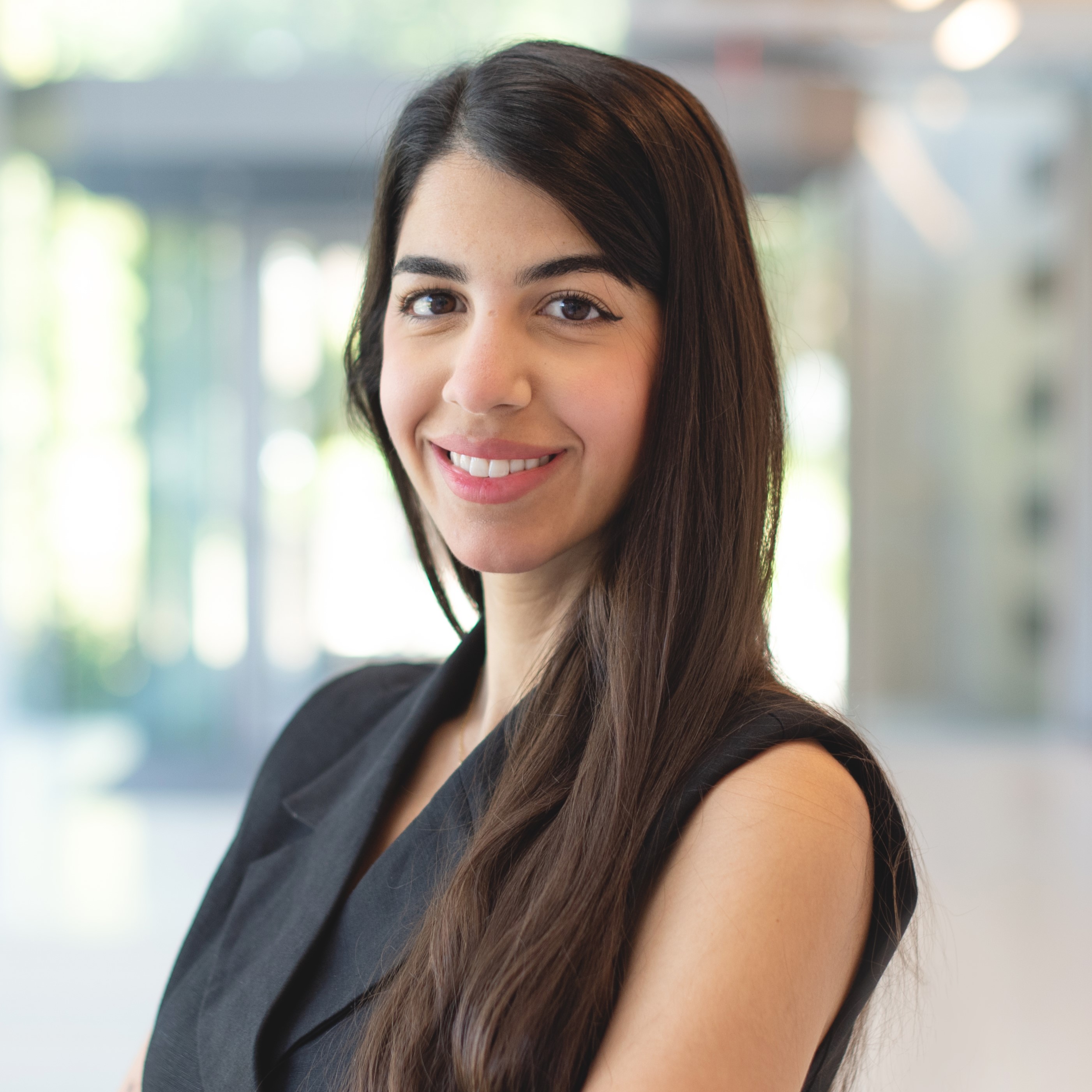
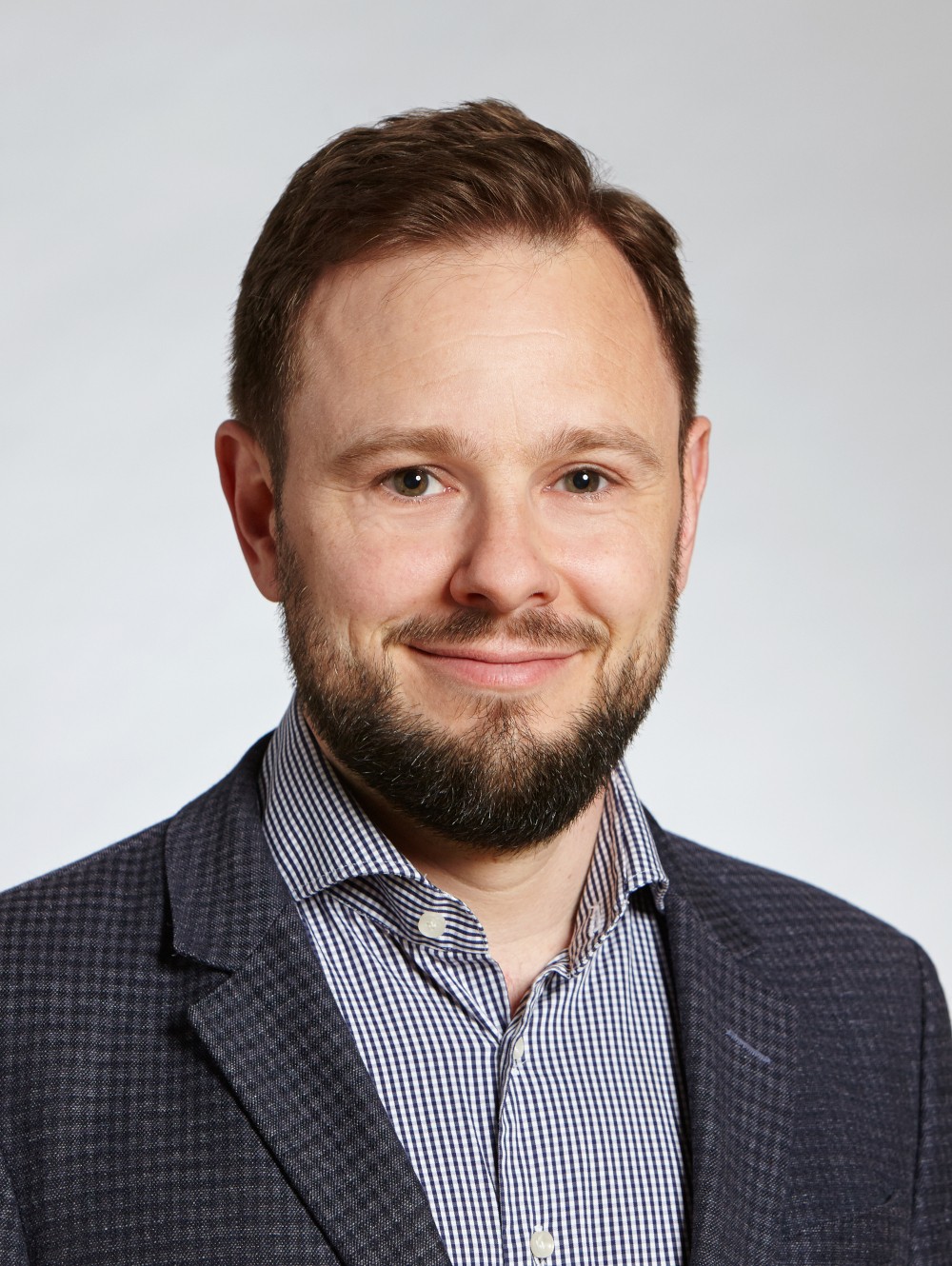
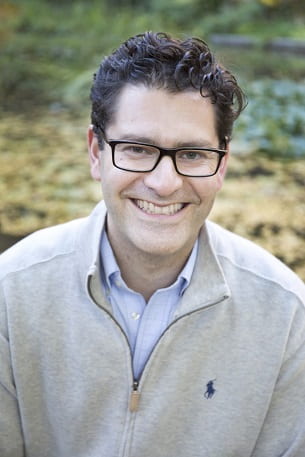
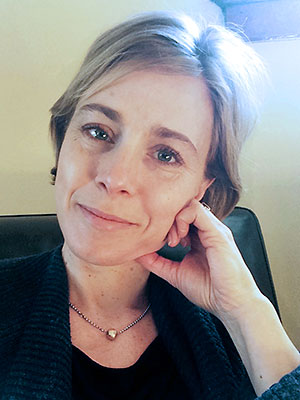
Aline Eid is an Assistant Professor in the Department of Electrical and Computer Engineering at the University of Michigan Ann Arbor, directing the Beam Dynamics research group. Her work bridges electromagnetics, wireless systems, and autonomous technologies, with a focus on mmWave/sub-THz sensing, backscatter communications, and wireless power transfer. PhD in Electrical and Computer Engineering (Georgia Tech, 2021) MS in Electrical and Computer Engineering (American University of Beirut, 2017) Postdoctoral Associate at MIT Media Lab (Signal Kinetics group) Research Interests: She pioneers systems that use electromagnetic waves to address societal challenges in Sustainable energy networks Smart cities/infrastructures Autonomous vehicles/robots Her group develops mmID tags for radar vision, batteryless sensors, and 5G-based wireless power grids. Scientific Impact: Recognized with awards including IEEE RFID Best Paper (2023) Proceedings of the IEEE Best Paper (2023) IEEE MTT-S Graduate Fellowship (2020) She leads commercialization efforts for warehouse robotics via MTRAC grant and startup Atheraxon. Advising: Mentors 8 students across PhD (Skanda Harisha, Sepideh Ghasemi, Yunfei Liu), Master's (Longyu Guo), and undergraduates (Mohamed Safawi, Katherine Shih, Andy Wang, Adrian Velazquez) in projects spanning robotics, IoT, and electromagnetic engineering. Labs: Beam Dynamics group at U-M Radiation Laboratory, collaborating with Atheraxon and MTRAC for technology translation.
Dr. Yunjie Yang is an Associate Professor at the University of Edinburgh's School of Engineering, with affiliations at the Edinburgh Futures Institute (EFI), the Edinburgh Generative AI Laboratory (GAIL), and the Edinburgh Centre for Robotics. He previously held the Chancellor's Fellow in Data Driven Innovation (2018-2023) and Bayes Innovation Fellow (2023-2024) positions. His research focuses on AI-powered sensing and imaging, machine learning, and soft sensors & electronics for robotics. Yang received his PhD in Engineering Electronics from the University of Edinburgh, MSc in Control Science & Engineering from Tsinghua University, and BEng in Measurement & Control Engineering from Anhui University. After his PhD, he worked as a Postdoctoral Research Associate in Chemical Species Tomography before securing his lectureship. His research interests center on developing intelligent sensing systems that replicate human perception capabilities for robotics and intelligent systems. He pioneers flexible sensing and imaging technologies across various scales through innovative multi-modal sensors, soft electronics, and their modeling using machine learning approaches. His work aims to enable autonomous physical artificial intelligence by bridging the gap between robotic systems and human-like perception. Analysis of his recent publications reveals a strong focus on soft robotics perception, particularly through electrical impedance tomography (EIT) and transformer-based architectures. His research spans medical imaging applications, digital twin modeling for industrial processes, and machine learning approaches for sensor data interpretation. The trend shows increasing integration of physics-informed deep learning with traditional tomographic techniques to achieve higher accuracy and efficiency. European Research Council (ERC) Starting Grant (2024) IEEE J. Barry Oakes Advancement Award (2024) IEEE I&M Society Graduate Fellowship Award (2015) Multiple Best Paper Awards Senior Member of IEEE Fellow of the International Society for Industrial Process Tomography Fellow of the Higher Education Academy ESI highly cited papers Dr. Yang serves as Associate Editor for IEEE Transactions on Instrumentation and Measurement and holds editorial positions with Scientific Reports and IEEE Sensors Journal. His research has been licensed to overseas research institutes and industry partners and received wide media coverage including BBC, EFE, USA Today, and STV. He has secured significant grant funding including the prestigious ERC Starting Grant. He leads the Edinburgh SMART Lab (Sensing/imaging + Machine Learning + Robotics), which aims to replicate human perception capabilities for robotics and advance flexible sensing technologies through innovative multi-modal sensors and machine learning approaches. The lab focuses on enabling autonomous physical artificial intelligence with applications spanning medical diagnostics, industrial monitoring, and advanced robotics systems.
Tong Lam is an Associate Professor in the Department of Historical Studies and the Graduate Department of History at the University of Toronto, where he also directs the Dr. David Chu Program in Asia-Pacific Studies at the Asian Institute. His research sits at the intersection of media studies, environmental history, and science and technology studies (STS), focusing on the politics and aesthetics of mobilization in China’s special zones across socialist and postsocialist eras. Employing interdisciplinary methodologies, his work explores themes such as state-precipitated violence, industrial ruination, and the socio-political implications of technology. He is a visual artist whose lens-based projects interrogate military violence, surveillance, and postindustrial landscapes. His recent scholarship analyzes postsocialist urbanism, digital governance, and the temporalities of infrastructure. While the absence of explicit scientific awards or student advisement records in the provided text precludes their inclusion here, his publications and creative practice reflect a sustained engagement with critical historical inquiry and contemporary socio-technological challenges.
Dr. Galina Miazhevich is a Senior Lecturer at the School of Journalism, Media and Culture (JOMEC) at Cardiff University, UK. Previously, she served as a lecturer at the University of Leicester's School of Media, Communication and Sociology (2013-2017) and as the Gorbachev Media Research Fellow at the University of Oxford (2008-2012). Her academic career focuses on media representations in post-communist contexts, with particular expertise in Russian and Eastern European media landscapes. Dr. Miazhevich earned her PhD from the University of Manchester, where she subsequently worked for two years as a Research Associate on an AHRC-funded project examining representations of Islam as a security threat. Her educational background has informed her research trajectory, which bridges media studies, political communication, and cultural analysis of post-Soviet societies. Dr. Miazhevich's research spans several interconnected domains: media representations of Islam and multiculturalism in Europe; media and democracy in post-communist Europe; gender, media, and emergent forms of post-Soviet identity; feminism; Eurovision and popular culture; and diaspora, transnationalism, and media. Her work consistently examines how media shapes and is shaped by political transitions, identity formation, and social movements in post-Soviet contexts, with particular attention to marginalized voices and resistance practices. Analysis of Dr. Miazhevich's recent publications reveals a consistent focus on resistance, identity, and power dynamics in post-Soviet media environments. Her work increasingly examines gender and sexuality as political categories, particularly through the lens of feminist and LGBTQ+ resistance to authoritarian regimes. The Eurovision Song Contest serves as a recurring analytical framework for understanding cultural diplomacy and nation-branding strategies. More recently, her research has pivoted toward documenting anti-war resistance following Russia's invasion of Ukraine, examining how celebrities and media figures navigate political dissent under authoritarian conditions. Dr. Miazhevich has received several notable recognitions for her scholarly contributions: AHRC Leadership grant 'A Quiet Revolution: Discursive Representations of Non-heteronormative Sexuality in Russia' (2018-2020, £250,960) Visiting Fellowship at the Davis Centre for Russian and Eurasian Studies, Harvard University (Fall 2023) Fellow of the Higher Education Academy (FHEA) Associate Editor for the Oxford Encyclopedia of Race, Ethnicity, and Communication (2024) Dr. Miazhevich actively mentors the next generation of scholars, currently co-supervising PhD students Diyana Dobreva (with Professor Martin Innes) and John Tasker (with Professor Paul Bowman). She welcomes PhD proposals in areas including digital culture and resistance, media management and misinformation, media and democracy, representation of minority groups, post-communist identity politics, gender and feminism, Eurovision and popular culture, and geopolitics and nation-branding. Her grant portfolio demonstrates sustained success in securing competitive research funding, including leadership of an AHRC grant and participation in the Academy of Finland project FEMCORUS (2021-2025). Dr. Miazhevich is deeply engaged with academic communities, serving as co-convenor of the (Digital) Media and Culture group at the British Association for Slavic and East European Studies (BASEES) since 2016 and as a member of the Advisory Board of the European Communication Research and Education Association (ECREA) since 2021. Her work extends beyond academia through public engagement, including invited talks at prestigious institutions like Harvard University and participation in policy-relevant events at Chatham House addressing LGBTQ+ politics in Russia.
Prof. Dr. Nadine Hartmann serves as Visiting Professor for Future Philosophy and Scenarios in the Field of Art and Media Philosophy at the Karlsruhe Academy of Art and Design (Hochschule für Gestaltung Karlsruhe), a reform university founded in 1992 in collaboration with the ZKM | Center for Art and Media in Karlsruhe. Her position aligns with the institution's mission of connecting traditional arts with media technology and electronic production processes. Hartmann holds a doctorate in cultural studies with her thesis titled 'Thinking Like a Girl: Figuration, Fil(l)iation, and Sexual Difference' (forthcoming with Turia & Kant). Her academic journey includes significant appointments across German institutions, demonstrating her expertise in philosophical and theoretical approaches to art and media. Hartmann's research focuses on the intersection of psychoanalysis, aesthetics, and feminist philosophy of difference. Her work examines how gender, identity, and philosophical frameworks shape artistic production and media theory. She approaches philosophical questions through the lens of contemporary art practices, exploring how theoretical concepts manifest in creative processes and media technologies. Her research contributes to ongoing dialogues about sexual difference, figuration, and filiation within contemporary philosophical discourse. Throughout her career, Hartmann has maintained strong connections with Berlin's academic institutions, particularly the Berlin University of the Arts (UdK Berlin), while also contributing to philosophical discourse at other major German universities. Her teaching spans multiple disciplines within the arts and humanities, reflecting the interdisciplinary nature of contemporary media philosophy. Hartmann has been actively involved in research networks, including the DFG network 'Dispositiv der Menge' and the DFG network 'Other Knowledge' in artistic research and aesthetic theory, demonstrating her commitment to collaborative scholarly work at the intersection of art and philosophy. Her academic trajectory shows consistent engagement with theoretical frameworks that bridge artistic practice and philosophical inquiry, particularly through the lens of feminist thought and psychoanalytic theory. Hartmann's work contributes to expanding philosophical discourse within art education and practice-based research contexts.
Yi Gu is an Associate Professor of modern and contemporary art and visual culture at the University of Toronto Scarborough (UTSC), with cross-appointments in the Department of Arts, Culture and Media and the Department of East Asian Studies. Her scholarly work centers on Asian visual culture, particularly China's artistic and photographic history from the early twentieth century to the present. Her research interests include cold war visual culture, post-socialist art, Chinese photography history, contemporary photography in Asia, mass art and amateurism, and visual methodologies across disciplines. Gu's work is driven by examining the political ambitions and social functions of art, as well as the politics of aesthetics. Her recent research has focused on aesthetic capitalism and digital surveillance in China, leading to studies of the Digital Countryside initiative and CCP aesthetics anchored in agrarian imaginary. Gu's publications reveal a consistent engagement with visual epistemology, particularly how Chinese artists and photographers have negotiated modernity, nation-building, and transnational influences. Her work spans from early twentieth-century open-air painting practices to contemporary digital visual culture, demonstrating how visual practices serve as critical sites for understanding China's social and political transformations. As co-editor of the open-access academic journal Trans Asia Photography and convening member of the research project 'Alternative Collections and Digital Humanities: Twentieth-Century Chinese Art and Visual Culture,' Gu actively contributes to expanding the field of Asian visual studies through collaborative scholarly initiatives. At UTSC, Gu teaches undergraduate courses on modern and contemporary Asian art, lens-based media in Asia, public art, and art and digital culture. Her scholarly approach combines art historical methods with visual culture studies, media theory, and cross-disciplinary perspectives to examine how visual practices shape and are shaped by political and social contexts in China and beyond.
Ju Hui Judy Han is an Associate Professor in Gender Studies at the University of California, Los Angeles, with additional affiliations at the Center for Korean Studies, Center for the Study of Women, and Asia Pacific Center. Her office is located in 1117 Rolfe Hall at UCLA. As a cultural geographer, Professor Han is committed to building critical and transnational conversations concerning gender, sexuality, and activism, regularly contributing to community-based projects and public events both on campus and beyond. Professor Han received her Ph.D. in Geography from UC Berkeley and her B.A. in English and Women's Studies from UC Berkeley. Her educational background bridges humanities and social sciences, providing a strong foundation for her interdisciplinary research. Her research interests span (Im)mobilities, Religion and difference, conservatism, LGBTQ/queer politics and activism, Comics and graphic novels, Korean studies, and Cultural geography. Professor Han approaches these topics through a critical lens that emphasizes transnational perspectives, particularly focusing on South Korea and the Korean diaspora. Her work often examines how power operates through spatial arrangements and how marginalized communities navigate and resist dominant structures. She has developed innovative approaches to studying activism through comics and graphic nonfiction, creating accessible yet theoretically rich analyses of complex social phenomena. Professor Han's publications reveal consistent engagement with queer politics in South Korea, religious movements, and transnational activism. Her work shows a progression from analyzing specific case studies to developing broader theoretical frameworks about resistance, solidarity, and spatial politics. The recurring themes across her publications include the intersection of religion and queer politics, the spatial dimensions of activism, and the transnational connections between social movements. UCLA Center for the Study of Women/Barbra Streisand Center, inaugural Barbra Streisand Fellowship on Truth in the Public Sphere Podcast Support Grant, University of California Humanities Research Institute (UCHRI), 2021-22 Society of Hellman Fellows Award, UCLA, 2021-22 UCLA Faculty Career Development Award, 2018-2019 Co-Applicant, 'Protesting Publics in South Korea,' SSHRC Insight Grant (PI: Jennifer Jihye Chun), 2015-2020 Co-Investigator, 'Urban Aspirations in Seoul: Religion and Megacities in Comparative Studies,' Max Planck Institute, 2011-2017 Professor Han actively contributes to public discourse through media appearances and community engagement. She has received significant research funding supporting her work on South Korean protest movements and urban religious dynamics. Her teaching portfolio is diverse, including the Gender Studies undergraduate core class on power (102), senior capstone seminars (187), elective courses on transnational feminist politics (131) and comics and graphic nonfiction (185), as well as graduate seminars on feminist geographies, queer temporalities, and research design.
Christoph Stadtfeld is Associate Professor of Social Networks at ETH Zurich's Department of Humanities, Social and Political Sciences and co-director of the ETH Social Networks Lab. His research examines social network dynamics, focusing on tie formation processes, network effects on individuals, and advanced statistical methodologies for longitudinal network analysis. Education: PhD from Karlsruhe Institute of Technology (2011) Postdoctoral researcher and Marie-Curie fellow at University of Groningen, University of Lugano, and MIT Media Lab (2011-2014) His work bridges sociology, statistics, and computer science to address fundamental questions about how social structures evolve and influence behavior. Key interests include relational event modeling, co-evolution of networks and attributes, and applications in mental health, political polarization, and scientific collaboration. He develops innovative methods for analyzing dynamic networks using cutting-edge computational approaches. Recent publications reveal strong emphasis on methodological rigor in temporal network analysis, with significant contributions to relational event modeling and dynamic network actor frameworks. His work increasingly addresses societal challenges including political polarization, mental health impacts of social isolation, and innovation dynamics in healthcare. Scientific awards: Raymond Boudon Award of the European Academy of Sociology (2017) Freeman Award of the International Network for Social Network Analysis (2021) As co-director of the ETH Social Networks Lab, Stadtfeld leads interdisciplinary research teams developing novel network methodologies. His work has been supported by prestigious fellowships including Marie-Curie funding, and he actively mentors graduate students in network science methodology and applications across diverse domains. The ETH Social Networks Lab serves as a hub for advancing network theory and methodology, with ongoing projects examining student networks during crises, scientific collaboration dynamics, and innovation ecosystems through the lens of network science.
Marc G. Berman is a Professor and Chair of the Department of Psychology at the University of Chicago. His research focuses on understanding how environmental factors interact with human cognition, emotion, and behavior, particularly through the lens of environmental neuroscience. He leads the Environmental Neuroscience Lab (ENL), investigating how natural and urban environments influence brain function, memory, attention, and mental health. Dr. Berman holds a B.S.E. in Industrial and Operations Engineering from the University of Michigan and a Ph.D. in Psychology and Engineering from the same institution. His postdoctoral training was at the Rotman Research Institute in Toronto. Prior to Chicago, he was an Assistant Professor at the University of South Carolina. His research interests include the cognitive and affective benefits of natural environments, brain network efficiency, and the neurobiological underpinnings of self-control and emotion regulation. Recent work explores how urban design elements (e.g., greenspace, street activity) relate to crime rates and mental health outcomes, leveraging big data from social media and geospatial tools. Key contributions include demonstrating that natural environments improve memory and attention by ~20%, and that city characteristics like population diversity and segregation correlate with implicit racial biases. His lab employs fMRI, neuroimaging, computational modeling, and ecological data to quantify brain-environment interactions. Dr. Berman collaborates across disciplines, integrating neuroscience, psychology, urban planning, and data science to inform evidence-based environmental design for public health. Current projects include analyzing social media data to map gang networks and investigating how heat and greenspace influence emotional states in urban populations.
Dr. Bob Beitle Jr. is a Professor of Chemical Engineering and Senior Associate Vice Chancellor for Research and Innovation at the University of Arkansas. He joined the department in 1993, earned tenure in 1998, and was promoted to Full Professor in 2006. His research spans biochemical engineering , bioseparation , fermentation , and adaptive technology for the disabled , with significant work on protein purification, catalytic nanoparticles, and sustainable bioprocesses. Education: BS, MS, PhD in Chemical Engineering from the University of Pittsburgh (1987, 1991, 1993) Dr. Beitle's research combines experimental and computational approaches, focusing on peptide-directed nanoparticle synthesis and biocatalysis . His recent publications highlight advancements in MOF-based separations , CO2 capture materials , and viral detection platforms . He has secured grants like the CAREER Award and led projects in industrial partnerships and student development . Scientific contributions include multiple patents in bioseparation and software interfaces. Awards span decades: teaching honors (1988–2007) and mentorship recognition . He serves on the Cell and Molecular Biology Program Advisory Committee and the Executive Committee for the Biochemical Technology Division of ACS . Lab initiatives involve genomic data-driven affinity tail design and membrane-assisted fermentation systems .
Anindita Banerjee is an Associate Professor in the Department of Comparative Literature at Cornell University's College of Arts and Sciences, with cross-appointments in the Environment & Sustainability Program, History of Art and Visual Studies, Literatures in English, and Romance Studies. She serves as SAP Core Faculty for the South Asia Program and has been instrumental in establishing Cornell's Environmental and Sustainability Program, where she built and chaired the environmental humanities concentration for four years. Her research explores the relationship between imagining and making futures across diverse contexts, focusing on the evolving interfaces between science, technology, and culture; natural and built environments; media and information systems; and the migration of people, things, ideas, and images. Spanning Eastern Europe, Central Asia, the Indian subcontinent, and Latin and African Americas, her work examines networks of exchange, innovation, production, and consumption that emerge outside conventional coordinates of the modern world. Her scholarship has been featured in BBC Culture, Radio Free Europe, Medium, and Meduza. She has authored multiple books including the award-winning We Modern People: Science Fiction and the Making of Russian Modernity (2013), which won the Science Fiction and Technoculture Studies book prize, and is currently working on Reactionary Worldbuilding (MIT Press, 2026) and Border Environments (Cornell, 2026). Her research demonstrates consistent engagement with science fiction as a critical lens for examining global environmental, technological, and social transformations. Science Fiction and Technoculture Studies book prize Ivy+ Mellon Leadership Fellow (2024-25) Academic Venture Fund grant from Cornell Atkinson Center for Sustainability Social Sciences and Humanities Research Fellowship Banerjee serves as a faculty fellow of the Cornell Atkinson Center for Sustainability and is a participating member of cross-college programs in Biology and Society, Media Studies, and Visual Studies. She co-led a workshop series and engaged-learning course on border spaces and environmental justice supported by a grant from the Mario Einaudi Center for International Studies. As an Ivy+ Mellon Leadership Fellow, she serves as Special Assistant to the Dean of the Cornell School of Continuing Education, focusing on academic leadership and governance with an emphasis on diversity and inclusion.
Paulo Blikstein is an Associate Professor of Communication, Media, and Learning Technologies Design at Teachers College, Columbia University. He holds affiliations with the Mathematics, Science & Technology department and the Communication, Media, and Learning Technologies Design program. His expertise spans curriculum design, digital innovation, science education, and educational technology. Dr. Blikstein earned a Ph.D. in Learning Sciences from Northwestern University (2009), M.Sc. in Media Arts & Sciences from MIT Media Lab (2002), and degrees in Engineering from the University of São Paulo (Brazil). His research focuses on leveraging technology to enhance learning through computational modeling, maker education, and tangible interfaces. He leads the Transformative Learning Technologies Lab and the FabLearn Program, which develop innovative tools like MoDa and PlayData, integrating computational thinking with real-world science experiments. His work emphasizes equitable access to technology-driven education, particularly in the Global South. Recent projects include deploying cloud labs for biology education, analyzing disinformation dynamics via agent-based models, and exploring how social media influences political radicalization. He critiques commercial education technology discourse through a critical pedagogy lens, advocating for culturally responsive, hands-on learning. Blikstein’s research bridges theory and practice, addressing systemic challenges in science education through participatory design with teachers and communities. His labs create sustainable educational technologies, such as DIY liquid handling robots and haptic feedback systems, to democratize STEM access. He also investigates computational identity formation in K-12 students and the role of making in fostering gender equity in STEM.
Professor Ali Yapar is a faculty member at Istanbul Technical University in the Electronics and Communication Engineering department. His research focuses on Electromagnetics , Microwave Engineering , and Antenna Technologies , with a particular emphasis on inverse scattering problems and microwave imaging for biomedical applications. He has supervised numerous graduate students and led projects related to breast cancer treatment and rough surface imaging. PhD in Electronics and Communication Engineering from Istanbul Technical University (1997) MSc in Electronics and Communication Engineering (1995) His recent publications analyze advanced techniques for microwave hyperthermia systems, reverse time migration methods, and Newton-based solutions for electromagnetic inverse scattering. Key projects include TUBITAK-funded initiatives on microwave tomography and brain stroke imaging. He serves as a project investigator and executive for electromagnetic research programs. Research areas span Electromagnetic Wave Propagation , Green's Function Applications , and Dielectric Material Analysis . Collaborations include IEEE members and international researchers in computational electromagnetics.
Associate Professor David Smith is a Senior Lecturer in American Politics and Foreign Policy at the University of Sydney, jointly appointed between the United States Studies Centre and the School of Social and Political Sciences. Dr. Smith earned his BA from the University of Sydney and his PhD from the University of Michigan. His academic journey has positioned him as a leading expert in American politics with a distinctive Australian perspective. Dr. Smith's research focuses on the intersection of religion and politics, American and comparative political development, collective violence, and theories of the state. His work often examines how religious identity shapes political behavior and policy outcomes, with particular attention to the American context. His comparative approach extends to examining Australian politics through the lens of American political development, creating a unique transnational perspective that informs both fields. His recent publications demonstrate a strong trend toward examining the relationship between identity politics, religious values, and public policy. He has made significant contributions to understanding vaccine policy acceptance across political spectrums, the role of religion in foreign policy decisions, and the dynamics of racism and anti-racism in contemporary politics. His research bridges theoretical political science with practical policy implications, particularly in the areas of public health communication and international relations ethics. Dr. Smith has supervised several graduate students including Anastasiya BYESYEDINA working on "The Re-construction of Ukrainian Identity During Revolutions" and Yiyang XU researching "Rationality and Beauty in International Politics." He is currently leading an Australian Research Council Discovery Project titled "The ideologies and practices of anti-racism in Australia" alongside colleagues Soutphommasane T and Park J.
Anna Mansson McGinty is an Associate Professor in the Department of Geography and the Department of Women's and Gender Studies at the University of Wisconsin-Milwaukee, where she bridges spatial analysis with gender and religious studies to examine Muslim communities in Western contexts. Education: PhD in European Ethnology, Lund University, Sweden (2002) MA in European Ethnology, Lund University, Sweden (1996) BA in European Ethnology, Lund University, Sweden (1994) Her research centers on Muslim geographies, feminist methodology, and identity formation, with emphasis on how gender, religion, and political contexts shape lived experiences of Muslim communities in America. She investigates conversion narratives, youth cultures, and resistance to Islamophobia through an intersectional lens, particularly in Milwaukee's diverse urban landscape. Analysis of her 12 publications (2006-2023) reveals consistent focus on embodied Muslim identities in the U.S., evolving from conversion studies toward spatial analyses of Islamophobia and collaborative community research. Key thematic clusters include racialized urban spaces, gendered religious expression, and discursive battles over citizenship, all grounded in ethnographic approaches that prioritize Muslim voices and agency. As Lead Faculty Advisor at UWM's Center for 21st Century Studies, she directs the multiyear Muslim Milwaukee Project with Caroline Seymour-Jorn and Kristin Sziarto, fostering academic-community partnerships that inform her ongoing study of competing Muslim identity representations in American political discourse.