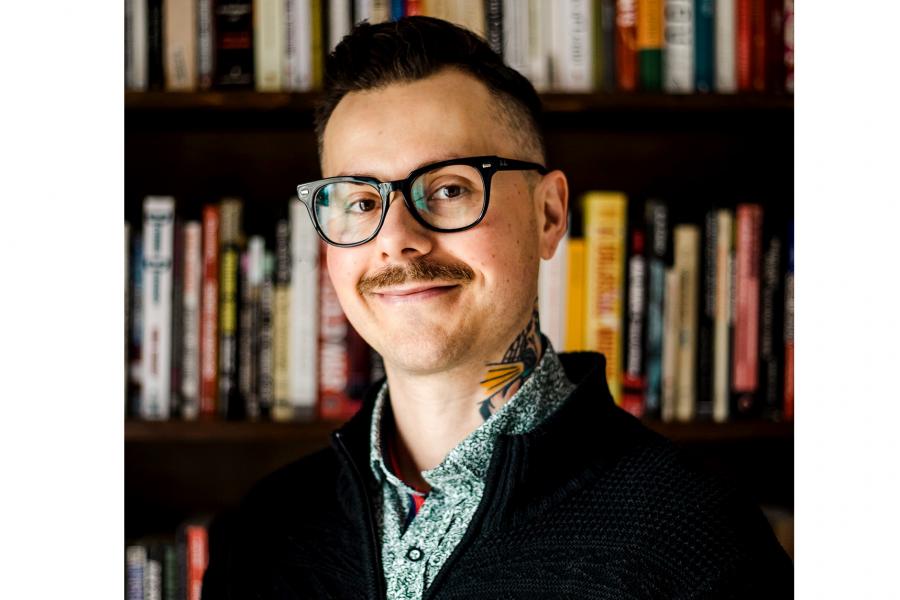
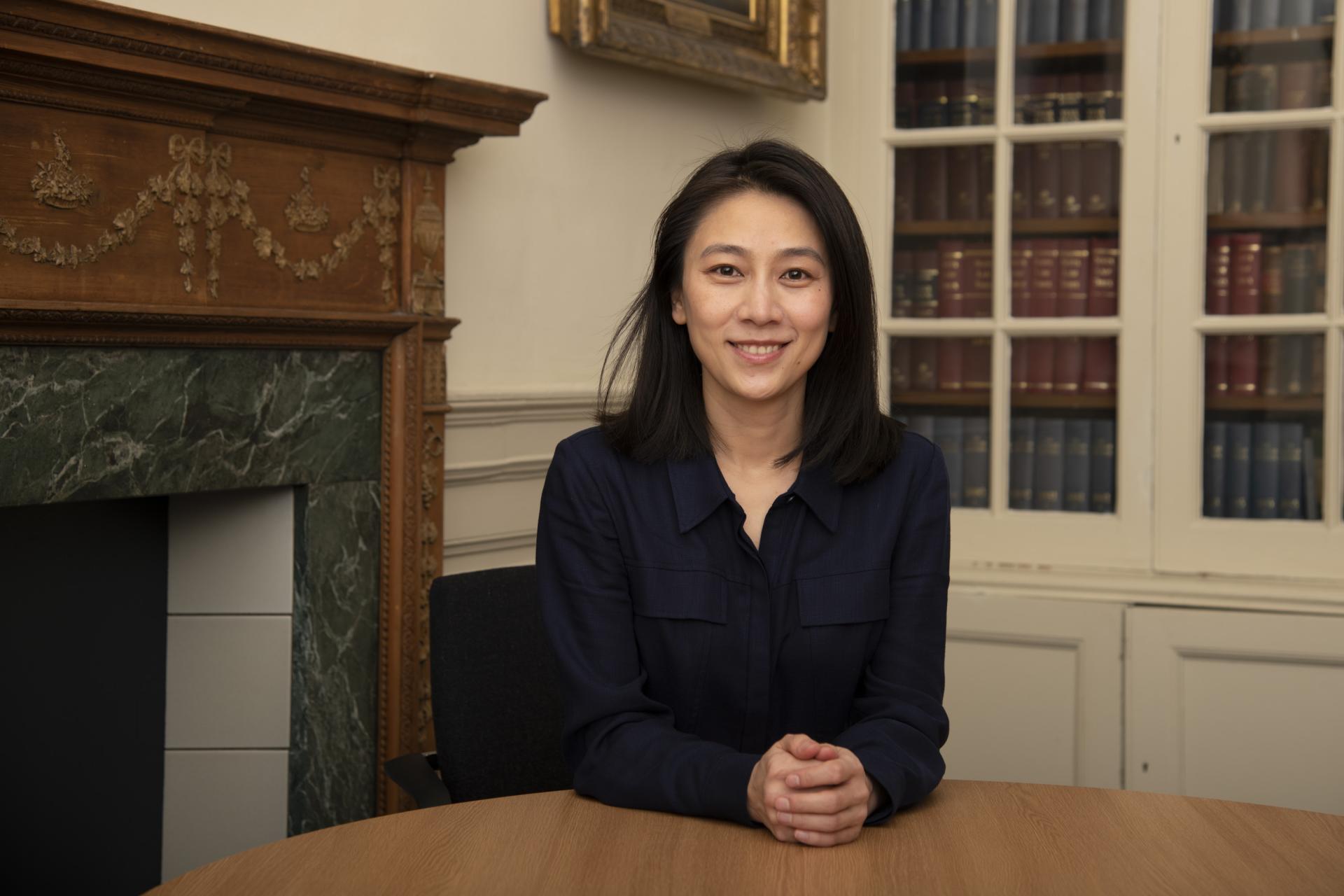
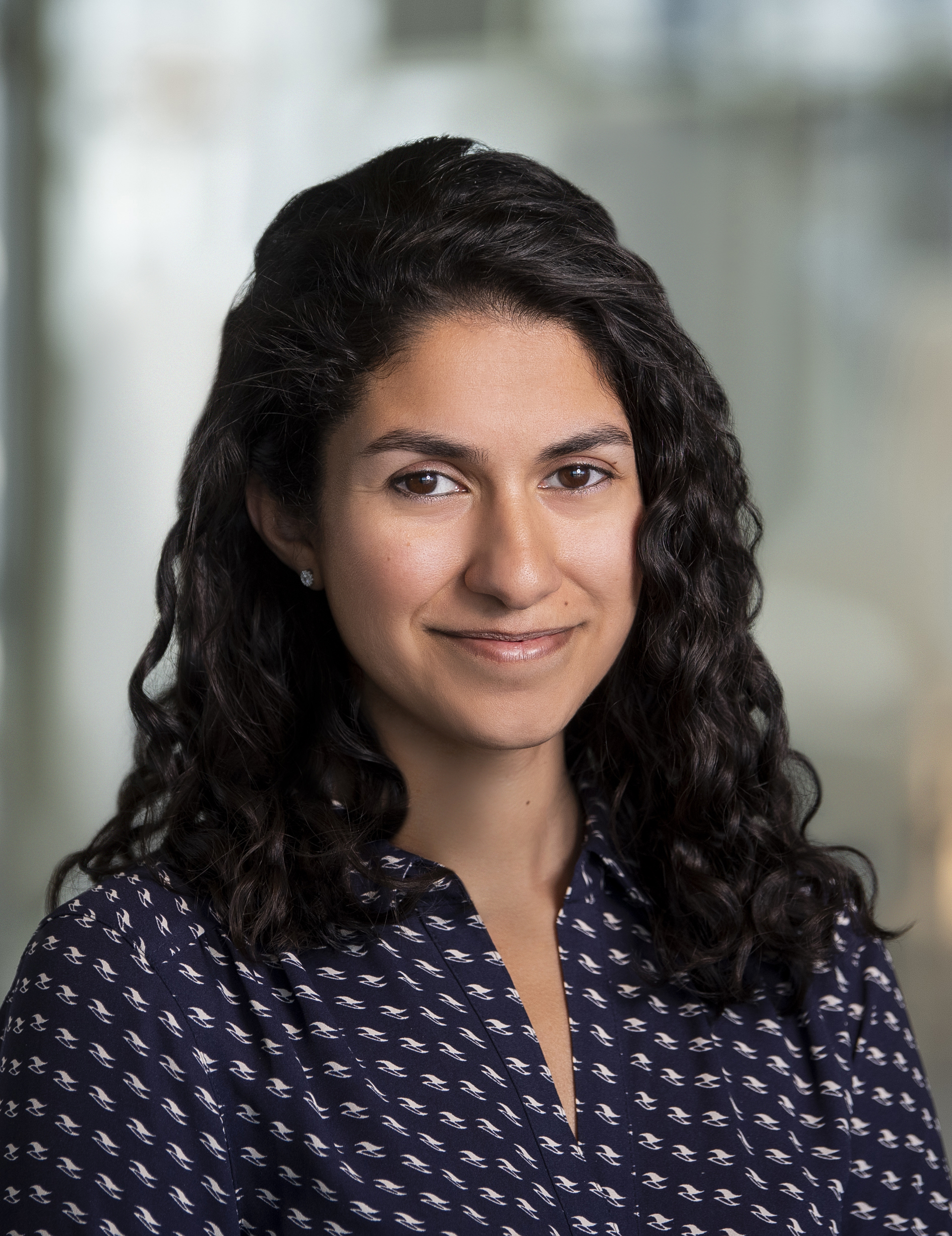
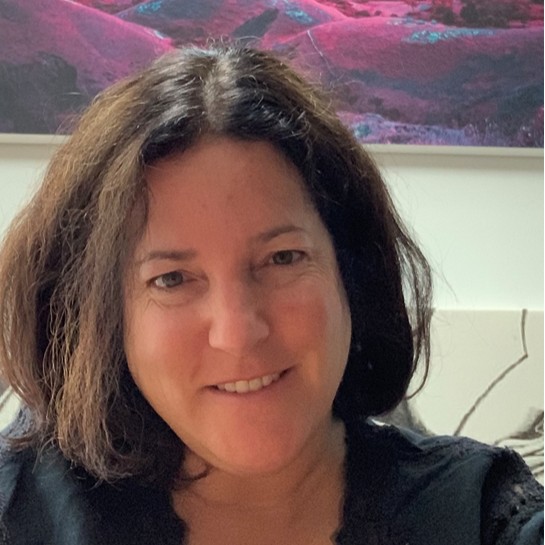
Susan Fino is a Professor at the College of Liberal Arts and Sciences, Wayne State University. Her research focuses on public law, American constitutional law, administrative law, and the role of state supreme courts. She holds a B.A. from Johns Hopkins University, an M.A. and Ph.D. from Rutgers University. She has received the President's Award for Excellence in Teaching. Her courses include American Government (PS1010) and Constitutional Law (PS5110/PS5120), taught across multiple terms from 2023 to 2025. Dr. Fino's research explores judicial federalism, state constitutional frameworks, and legal interpretations of rights. Her work analyzes topics like church-state relations, taxation provisions in state constitutions, and assisted suicide debates. She has written extensively on state supreme court dynamics, including landmark cases and institutional performance metrics. Her scholarship bridges legal theory with practical governance challenges at both state and federal levels. Her publications span over three decades, addressing evolving legal landscapes such as the Rehnquist Court’s federalism approach and technological impacts on criminal sentencing. She consistently engages with issues at the intersection of law, politics, and societal values.
Schloss Dagstuhl - Leibniz Center for InformaticsGermany
Florian Tramèr is an Assistant Professor in the Department of Computer Science at ETH Zurich, Switzerland, leading research at the intersection of machine learning security, privacy, and AI safety. His work focuses on identifying and mitigating security vulnerabilities in machine learning systems, particularly in large language models and other AI systems. Tramèr's primary research interests include adversarial machine learning, membership inference attacks, privacy-preserving AI, and the security implications of large language models. His work has significantly advanced our understanding of how machine learning models memorize training data, how this memorization creates privacy risks, and how to evaluate the robustness of machine learning systems against various attacks. His recent publications demonstrate a strong focus on practical security challenges in deployed AI systems, including data extraction from language models, adversarial attacks against generative AI, and developing more rigorous evaluation methodologies for machine learning security. Tramèr's research has been published in top venues including ICLR, NeurIPS, ICML, and IEEE Security & Privacy. Tramèr is actively collaborating with leading researchers in the field including Nicholas Carlini, Matthew Jagielski, and Javier Rando, contributing to important initiatives like the International AI Safety Report. His work bridges theoretical security concepts with practical implications for real-world AI deployment.
Adam King is an Assistant Professor in the Labour Studies Program at the Faculty of Arts, University of Manitoba. His research focuses on labor regulation, employment standards enforcement, Indigenous labor dynamics, deindustrialization impacts, and labor market policy. He co-investigates a SSHRC Partnership Grant project on migrant labor in settler-colonial contexts. Education: PhD in Sociology (York University, 2019) MA in History (University of Toronto, 2011) BA in Sociology/History (Trent University, 2010) His research examines the political economy of labor regulation, including enforcement mechanisms in federally regulated sectors and contested Indigenous labor relations. He analyzes deindustrialization's social consequences and contributes to debates on job guarantee proposals and right-wing populism's influence on labor movements. Recent publications explore topics like Indigenous labor law frameworks, precarious creative workers' unionization, and gendered identities in deindustrializing communities. He actively engages with media outlets such as CBC, The Globe and Mail, and The Maple's 'Class Struggle' newsletter.
Dr. Ruiqiao Zhang serves as a Senior Lecturer in Corporate Finance, Corporate and Commercial Law at the University of Edinburgh's School of Law, where she is affiliated with the Edinburgh Centre for Commercial Law. Her office hours are held Thursdays from 13:00-14:00, and she can be contacted via telephone (+44 (0)131 650 6957) or email (Ruiqiao.Zhang@ed.ac.uk). Her academic credentials include: Bachelor of Law and Bachelor of Science from Chinese institutions Master of Civil and Commercial Law (China), Master of International Commercial and Trade Law (Netherlands), and Master of Comparative Law (Canada) Doctor of Civil Law (DCL) from McGill University under Professor Lionel Smith Dr. Zhang's research centers on trust law evolution in financial markets, with emphasis on comparative analyses between Common Law and Civil Law systems—particularly China's adoption of trust principles. Her work examines trustee roles in commercial contexts, beneficiary interests in commercial trusts, and regulatory frameworks for trust applications in asset management. She bridges theoretical legal concepts with practical financial market demands, highlighting tensions between traditional trust structures and modern entrepreneurial functions. Analysis of her publication trends reveals consistent focus on trust law's adaptation to financial innovation, with increasing attention to Chinese regulatory frameworks and cross-border implications. Her research spans corporate finance, international trade law, and property rights, demonstrating how commercial trusts evolve from guardian entities to active financial instruments while navigating jurisdictional complexities. No scientific awards were documented in the provided materials. Dr. Zhang accepts PhD students and maintains active advisory roles with the Scottish Ethnic Minorities Lawyers Association, China Law Society, and Cross Party Group on China of the Scottish Parliament. Her consultancy work connects academic research with policy development in UK-China legal cooperation, including participation in the Third UK-China Rule of Law Roundtable. She contributes to the Edinburgh Centre for Commercial Law's research initiatives, focusing on commercial trusts' regulatory challenges and their integration into civil law jurisdictions through comparative legal studies.
Maria Eugenia Bartoloni is a Full Professor of European Union Law at Sapienza University of Rome, Department of Legal and Economic Studies. She is also a member of the doctoral program faculty for "Internationalization of Legal Systems and Fundamental Rights" at Università della Campania "L. Vanvitelli" and previously served as its Master's Degree Course President. She coordinates the journal Il Diritto dell’Unione europea and serves on editorial boards for multiple EU law publications. Education: PhD in International and EU Law from Macerata University (2004), Law Degree (1999) from Macerata University. Research Interests: Focus on EU constitutional law, international legal norms coordination, fundamental rights application, judicial protection limits, and EU foreign/security policy. Her recent work explores the EU's unique legal frameworks for maritime concessions, the Charter of Fundamental Rights' scope, and the evolving legal dimensions of EU international relations. She has participated in numerous national and international research projects. Scientific Awards Marie Curie Fellow (2015) Principal Investigator for SELECT Project – "StrEnghten Lay and honorary judges European CompeTencies" (JUST-AG-2020 / JUST-JTRA-EJTR-AG-2020)
Chris De Sa is an Associate Professor in the Department of Computer Science at Cornell University, affiliated with the Cornell Machine Learning Group and leading the Relax ML Lab. His research focuses on algorithmic, software, and hardware techniques for high-performance machine learning, particularly relaxed-consistency stochastic algorithms like asynchronous and low-precision stochastic gradient descent (SGD). He earned his Ph.D. from Stanford University under advisors Kunle Olukotun and Chris Ré. His work emphasizes constructing efficient, parallel, and distributed machine learning frameworks for deep learning and data analytics. Education: Ph.D. in Computer Science, Stanford University (2017) Research Interests: Algorithmic techniques for scalable ML, quantization, distributed optimization, hyperbolic geometry in ML, and reliable measurement of ML systems. His group develops frameworks for efficient inference/training and explores the intersection of ML with domains like agriculture and plant science through courses like PLSCI 7202. Recent Highlights: DARPA YFA Grant (2024), NSF CAREER Award, Google Research Scholar Award, and multiple best paper recognitions. Key contributions include QuIP quantization methods, Coneheads attention mechanisms, and theoretical advances in decentralized training. Awards: NSF CAREER Award DARPA YFA Grant (2024) Google Research Scholar Award Mr. & Mrs. Richard F. Tucker Teaching Award Grants & Advising: Advises 8 Ph.D. students (including Ruqi Zhang, Yucheng Lu, A. Feder Cooper) and holds leadership roles in MLSys conferences. Active in grant-funded research (e.g., NSF Robust Intelligence). Labs/Teams: Leads the Relax ML Lab and participates in Cornell’s Institute for Digital Agriculture (CIDA).
Gautam Kamath is an Assistant Professor at the University of Waterloo's Cheriton School of Computer Science, a Faculty Member at the Vector Institute, and a Canada CIFAR AI Chair. He leads The Salon, a research group focused on statistics, algorithms, machine learning, and optimization. His work bridges theoretical foundations with practical applications in data privacy and robustness, contributing to both academic research and real-world deployments that impact millions of users. Dr. Kamath earned his PhD and SM degrees in Electrical Engineering and Computer Science at MIT, where he was advised by Costis Daskalakis. Prior to MIT, he graduated from Cornell University in May 2012 with a degree in Computer Science and Electrical and Computer Engineering, where he worked with Bobby Kleinberg. His academic journey reflects a strong foundation in both theoretical computer science and practical applications. His research focuses on developing solutions for trustworthy and reliable machine learning and statistics, with particular emphasis on data privacy and robustness. He addresses fundamental problems in these areas, revitalizing statistical toolkits for the modern data era where privacy preservation is paramount. His work spans theoretical foundations of differential privacy to practical applications that have been deployed at scale, including contributions to systems that protect the sensitive information of hundreds of millions of individuals. Analysis of his recent publications reveals a strong trend toward addressing the interplay between privacy, robustness, and machine learning performance. His work increasingly examines practical deployment challenges while maintaining theoretical rigor, with growing emphasis on diffusion models, generative AI, and the legal implications of AI systems. There's a clear trajectory from foundational privacy theory toward addressing real-world implementation challenges across diverse application domains. Canada CIFAR AI Chair Ontario Early Researcher Award 2024 Caspar Bowden Award for Outstanding Research in Privacy Enhancing Technologies STOC Best Student Presentation Award ICML 2024 Best Paper Award Microsoft Research Fellow at the Simons Institute for the Theory of Computing Dr. Kamath actively mentors students, with notable successes including Valentio Iverson winning the Germain-Erdős Undergraduate Award and Chris Trevisan receiving the CRA Outstanding Undergraduate Researcher Award. His service to the research community is extensive, serving as Editor-in-Chief of TMLR, on the Executive Committee of the Learning Theory Alliance, and on steering committees for major conferences including ICML, COLT, and ALT. He has organized numerous workshops focused on privacy-preserving machine learning and differential privacy. Through The Salon research group, Dr. Kamath fosters a collaborative environment where postdoctoral fellows, graduate students, and undergraduates work together on cutting-edge problems at the intersection of statistics, algorithms, machine learning, and optimization. The group maintains strong connections with industry partners and participates in major research initiatives, including the Vector Institute's privacy and security research efforts. Looking forward, Dr. Kamath will be moving to the Computer Science department at NYU's Courant Institute of Mathematical Sciences in September 2026, where he plans to expand his research program.
Cesla Amarelle serves as Full Professor and Chairholder of Public Law and Migration Law at the University of Neuchâtel's Faculty of Law. Her academic leadership extends to co-directing the Swiss Center for Migration Law (CDM) and contributing to national research initiatives including the National Center of Competence in Research (NCCR) 'On the Move'. She concurrently holds significant public appointments as Chair of the Institute of European Law at the University of Fribourg and Federal Commissioner for Women's Issues, with recent expert designation to the Federal Round Table on signature collection integrity for 2024. Her academic foundation includes a law degree from the University of Lausanne (1996), LL.M. in European and International Economic Law from the University of Fribourg, and doctoral thesis from the University of Lausanne (2004). Her career progression at the University of Neuchâtel spans assistant professor (2009-2014), extraordinary professor (2015-2016), and full professor positions since 2016, complemented by earlier research roles at Swiss National Science Foundation and University of Fribourg. Professor Amarelle's research centers on migration law frameworks, human rights protections in asylum systems, and constitutional dimensions of European integration. Her work critically examines the intersection of migration governance with digital technologies, climate change impacts, and gender equality. Current projects analyze temporary protection regimes, non-refoulement principles in technological contexts, and the evolving relationship between Swiss migration law and European legal frameworks. Her scholarship consistently bridges theoretical legal analysis with practical policy implementation challenges. Her extensive publication record demonstrates evolving focus from foundational migration law codification toward contemporary challenges including digital discrimination, child rights in emergency contexts, and sustainable finance frameworks. Recent scholarship reflects increasing engagement with technological impacts on migration governance and the humanitarian dimensions of temporary protection systems, while maintaining rigorous analysis of constitutional and European law interfaces. Professor Amarelle actively contributes to academic and public discourse through leadership in the Swiss Center for Migration Law and participation in the NCCR 'On the Move' consortium. Her public service includes significant political roles as Vaud State Councilor for Education (2017-2022) and National Councilor (2011-2017), where she chaired key committees on political institutions and finance while representing Swiss higher education interests nationally. She maintains active engagement with professional associations including the Swiss Conference of Higher Education Institutions and Conference of Directors of Public Education.
Virginia Polytechnic Institute and State UniversityUnited States
Rachel Marion Scott is a Professor and Chair of the Department of Religion and Culture at Virginia Polytechnic Institute and State University, within the College of Liberal Arts and Human Sciences. She is also affiliated with ASPECT (Alliance of Social, Political, Ethical, and Cultural Thought), reflecting her interdisciplinary engagement with political and ethical theory in Islamic contexts. Her research centers on Islamic political thought, modern Islamic law, constitutional development in Muslim-majority countries, and personal status law. She has made significant contributions to understanding the interplay between religion and the nation-state, particularly in Egypt. Her scholarly work explores how religious authority is negotiated in constitutional frameworks, the evolution of Islamic legal thought, and the role of institutions like al-Azhar and the Muslim Brotherhood in shaping political discourse. Professor Scott’s publications reveal a sustained focus on the dynamics of Islamic law in modern governance, with a particular emphasis on Egypt’s constitutional history and legal reforms. Her work bridges religious studies, political science, and legal theory, addressing themes such as secularism, religious pluralism, citizenship, and hermeneutics. The articles show a trajectory from broader studies of political Islam to more nuanced analyses of constitutionalism, gender, and religious authority. She has authored two major monographs: The Challenge of Political Islam: Non-Muslims and the Egyptian State (Stanford University Press, 2010) and Recasting Islamic Law: Religion and the Nation State in Egyptian Constitution Making (Cornell University Press, 2021), both of which are central to contemporary scholarship on Islam and governance. While no formal list of awards is provided in the text, her publications with leading academic presses indicate recognition and scholarly impact in her field. Rachel M. Scott advises graduate students and contributes to academic mentorship through her leadership roles. As department chair, she oversees curriculum development, faculty collaboration, and interdisciplinary initiatives. There is no explicit mention of external grants, but her research output suggests engagement with funded scholarly projects or institutional support. She is affiliated with research initiatives related to Islamic studies, political thought, and constitutional law, particularly through her work with ASPECT and the Department of Religion and Culture. These affiliations support collaborative scholarship on ethics, cultural thought, and the role of religion in public life.
Zina Makar is an Assistant Professor of Law at the University of Baltimore School of Law, specializing in prison law, criminal procedure, and civil rights. Her work critically examines the intersection of carceral systems and legal rights, with a focus on prisoners’ rights and the transformative impact of technology on incarceration. Education L.L.M., Georgetown University Law Center J.D., University of Maryland Francis King Carey School of Law B.S., University of Maryland Research Interests Makar’s scholarship delves into the jurisprudence of prison law, exploring how carceral spaces shape individuals’ relationships with the state. Her recent work investigates the role of carceral technologies in redefining the nature of incarceration. She examines the ethical and legal implications of surveillance technologies in prisons, the erosion of dignity in prison law, and the systemic issues of pretrial detention and bail reform. Her research also addresses the procedural aspects of criminal law, including the Supreme Court’s shadow docket and the implications of per curiam decisions. She advocates for doctrinal integration to address disenfranchisement and unnecessary incarceration, contributing to broader conversations on criminal justice reform. Scientific Awards Baltimore City Bar Association's Public Interest Attorney of the Year Award (2017) Grants and Advocacy Before entering academia, Makar was an Open Society Institute Fellow from 2014 to 2016. During her fellowship, she established the Pipeline to Habeas program, which serves as a model for the Baltimore City Office of the Public Defender in challenging wrongful pretrial detention. Her advocacy efforts led to the pretrial release of 101 protestors arrested following the death of Freddie Gray, highlighting her commitment to bail reform and civil rights. Labs and Teams While no specific lab or research team is mentioned, her collaborative work with the Baltimore City Office of the Public Defender underscores her ongoing engagement with legal practitioners and reform advocates.
The Chinese University of Hong Kong (CUHK)Hong Kong SAR
Prof. Dennis Hie (許學峰教授) is an Associate Professor at the Faculty of Law , The Chinese University of Hong Kong. A solicitor admitted in Hong Kong and England & Wales, he specializes in corporate law, mergers and acquisitions, joint ventures, and China-related commercial matters. Education: LLB, City University of Hong Kong PCLL, City University of Hong Kong LLM, The University of Hong Kong His research focuses on Company Law , Hong Kong and PRC Commercial Law , and Cross-border Legal Conflicts . Recent publications address corporate governance, partnership law, and contractual frameworks in Hong Kong and China contexts.
Professor Rodrigo Olivares-Caminal is a leading academic in Banking and Finance Law at Queen Mary University of London's Centre for Commercial Law Studies (CCLS). He holds an LLB from Buenos Aires, an LLM from Warwick, and a PhD from London. His roles include Editor-in-Chief of the Business Law Review and advisory roles at UNCTAD, World Bank/IFC, and international law firms. His expertise focuses on international finance, insolvency law, cross-border litigation, and sovereign debt restructuring. Education: LLB (Buenos Aires) LLM (University of Warwick) PhD (London) Research Interests: Specializes in sovereign debt crises, cross-border insolvency frameworks, and legal aspects of financial crises. His work bridges law, economics, and public policy, addressing systemic risk, creditor equality, and the design of sustainable debt management frameworks. He advocates for improved transparency in sovereign lending and equitable restructuring mechanisms. Professional Contributions: Authored/edited 7 books and over 100 peer-reviewed articles/chapters. Key works include *Debt Restructuring* (OUP), *Expedited Corporate Debt Restructuring in the EU*, and *Legal Aspects of Sovereign Debt Restructuring*. Serves on editorial boards of major law journals and advises international institutions on financial regulation and crisis containment. Grants & Awards: No specific awards mentioned, but recognized internationally for contributions to insolvency law and sovereign debt policy. Has received honors from Saudi Arabia’s Bankruptcy Commission and participation in high-level policy dialogues (e.g., UNCTAD, IMF). Teaching & Mentorship: Leads postgraduate courses on Corporate Finance Law, Sovereign Debt Restructuring, and Bank Resolution. Teaches globally at institutions in Spain, Italy, Greece, France, China, and Argentina. Active in professional training programs across Africa, Asia, Middle East, and Europe. Labs/Teams: Core member of Queen Mary’s Insolvency & Governance Research Group. Collaborates with global networks like the International Insolvency Institute and the European Banking Authority. Leads interdisciplinary projects on sovereign debt frameworks and cross-border financial stability.
Professor Carla Ferstman serves as Director of the Human Rights Centre at Essex Law School, University of Essex, holding a full Professorship since October 2021 after previously serving as Senior Lecturer from January 2018 to September 2021. She is an internationally recognized expert in human rights law with extensive practical experience in international human rights institutions. Education: DPhil in Public International Law from University of Oxford (2015) LLM in International Law from New York University (1998) Barrister and Solicitor from British Columbia Bar Association (1994) LL.B in Law from University of British Columbia (1993) BA in Philosophy from University of Western Ontario (1990) Professor Ferstman's research spans three interconnected domains: Public International Law (focusing on law of international organizations, consular assistance, and application of human rights principles); Human Rights Law (specializing in enforcement mechanisms, remedies and reparation, accountability of state and non-state actors, and terrorism law); and International Criminal Law (particularly victims' rights, reparations, prosecutorial discretion, and complementarity). Her work consistently bridges theoretical frameworks with practical implementation challenges. Analysis of her recent publications reveals a clear trajectory toward increasingly complex human rights implementation issues, with growing emphasis on accountability mechanisms, civil society space protection, and the practical realities of reparation systems. Her scholarship shows particular focus on the tension between state sovereignty and human rights obligations, especially in migration contexts and peacekeeping operations. Scientific Awards: Essex Faculty of Arts and Humanities Supervisor of the Year award (2022) MacArthur Foundation Award for Creative and Effective Institutions (awarded to REDRESS during her tenure as Director) Professor Ferstman actively supervises doctoral candidates in human rights and law, with current students including Matteo Bassetti, Benjamin Khastan, Kani Areef, and Nataly Santana Sanchez. Her recent grant funding includes projects on Conflict Reporting Ethics (2025, University of Essex), Accountability for Online Harm Under International Criminal Law (2023, Modern Law Review), and UK Government Accountability for International Crimes (2020, University of Essex ESRC IAA). She has held prestigious fellowships including the O'Brien Residential Fellowship at McGill University (2023) and Fernand Braudel Fellowship at the European University Institute (2022). As a member of the Council of Europe's Expert Council on NGO Law since 2018, Professor Ferstman contributes to shaping civil society regulation across Europe. She also serves on the Justice Rapid Response SGBV Justice Experts Roster and the Advisory Committee of Lawyers for Justice in Libya, demonstrating her commitment to practical human rights implementation beyond academic work.
Nathalie Chalifour is an Associate Professor at the University of Ottawa Faculty of Law and Co-Director of the Centre for Environmental Law and Global Sustainability. Her work focuses on environmental law and policy, sustainable development, and social justice, with particular expertise in carbon taxation, climate change, constitutional law, and Indigenous environmental rights. Expertise: Domestic/International Environmental Law, Women and Environment, Environmental Justice, Sustainable Agriculture Contact: natchali@uOttawa.ca | Office: 613-562-5800 ext. 3331 Languages: French and English Research explores intersections between legal frameworks and climate action, including constitutional authority for carbon pricing, distributional impacts of environmental policies, and gender dimensions of climate policy. Recent projects analyze youth-led climate litigation under Charter equality guarantees and jurisdictional conflicts in Canadian climate federalism. Articles span environmental justice, climate litigation strategies, carbon tax constitutional challenges, and sustainable forestry tools. Notable work includes analyses of interprovincial pipeline GHG regulation, Indigenous community impacts of climate policy, and legal mechanisms for environmental rights enforcement.
Giorgio Maniaci is an Associate Professor of Jurisprudence at the University of Palermo . He teaches courses such as Human Rights and Logic and Legal Methodology , and offers office hours for student consultation. Current academic rank: Associate Professor Teaching subjects: Human Rights, Logic and Legal Methodology Email: giorgio.maniaci@unipa.it His research focuses on Legal Philosophy , Human Rights Law , and Bioethics , with a particular emphasis on autonomy, legal paternalism, and moral realism. His work intersects Liberalism with interdisciplinary perspectives from economics, psychology, and feminist theory. The 15 most recent publications reflect his engagement with topics such as personal identity, surrogacy ethics, liberal democratic theory, and the harm principle. These works span Monographs , Magazine Articles , and Book Chapters , demonstrating a commitment to both theoretical and applied legal discourse.