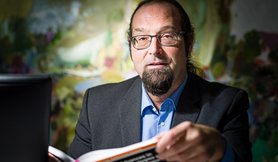
Sebastian Meyer is a lecturer at the University of Bielefeld , Bielefeld University of Applied Sciences , and FernUni Hagen . He holds a doctorate in law (2004) and has been a member of the legal profession since 2005 (admitted to the bar). His academic and professional focus lies in the intersection of law and technology, particularly in data protection and information technology law. Education Law (state examination), University of Bielefeld, Hanover, and Vienna Computer Science (additional subject) Legal Informatics (LL.M.) Doctorate in Law (2004), University of Bielefeld Professional Roles Admitted to the bar (2005) Data protection auditor (2009) Appointed as a notary (2012) Specialist lawyer for information technology law (2016)
Dr. Heinz Misera is a Lecturer at the Faculty of Law of Bielefeld University , Germany. His work appears to intersect with the university's strategic research area on the Socio-Technical World , focusing on the legal and societal implications of interactive intelligent systems like AI and robotics. The Faculty of Law at Bielefeld University is actively involved in interdisciplinary research on the impact of technical systems on societal domains, including partnerships with industry leaders such as Miele, Bertelsmann, and Honda, as well as public sector institutions.
Rashelle Hayes is an Adjunct Associate Professor at the T.H. Chan School of Medicine, UMass Chan Medical School, within the Department of Population and Quantitative Health Sciences. Her career focuses on tobacco control, behavioral interventions, and health communication. Education: PhD in Clinical Psychology, MS in Clinical Psychology, BS in Psychology Key Research Areas: Smoking cessation for underserved populations, tobacco regulatory science, health communication, training healthcare providers, and behavioral counseling Her recent publications emphasize tobacco use patterns, regulatory policies, and environmental determinants of smoking behavior. She has contributed to understanding: Impact of marketing exposure on rural adolescents Neighborhood deprivation effects on tobacco retail Point-of-sale dynamics in vape shops Implementation of tobacco treatment programs Hayes has participated in multiple NIH-funded studies as PI or Co-Investigator, including the development of the Quantitative Subtle Gender Bias Index and interventions for nondaily smokers. She specializes in mixed-methods research and clinical training program evaluation.
Prof. Dr. Tim Pidun serves as Professor and Dean of Administrative Information Technology at the Faculty of Computer Science/Mathematics at HTW Dresden. He holds the Professorship for Business Informatics/Digital Administration and leads the Administrative Information Technology program, which prepares students for careers in public sector IT, government digital services, and administrative process optimization. His research interests span Administrative Informatics, Business Informatics, Digital Administration, Performance Management Systems, and Public Administration Process Prioritization. Pidun's work focuses on the digital transformation of government services, examining how administrative processes can be optimized through technology while maintaining compliance and efficiency. Analyzing his recent publications (2018-2025), Pidun demonstrates a consistent focus on the intersection of technology and public administration. His research trajectory shows evolution from foundational work on performance measurement systems to contemporary issues in administrative digitization, AI implementation in government, and frameworks for digital competencies. Key themes across his publications include process optimization, knowledge management in administration, and addressing the gap between e-government visions and practical implementation. Pidun actively contributes to professional organizations including the German Computer Science Society (GI) and the Association of German Engineers (VDI). He serves on important committees such as Acquin for Higher Education Accreditation, the BMBF Deutschlandstipendium Selection Committee, and the DAAD Selection Committee for Funding Measures. As Dean, he oversees curriculum development for the Administrative Information Technology program, teaching courses in Fundamentals of Administrative Informatics, Administrative Information Systems, Business Information Systems, and Performance Management Systems. His educational approach emphasizes practical application through partnerships with organizations including Datev, UiPath, and JobRouter, providing students with real-world experience in digital administration technologies.
Mark S. Lachs, M.D., M.P.H. is the Irene and Roy Psaty Distinguished Professor of Medicine at the Weill Cornell Medical College and Co-Chief of Geriatrics and Palliative Medicine. He also serves as the Director of Geriatrics for The New York Presbyterian Health Care System. Dr. Lachs maintains a practice at The Irving Sherwood Wright Center on Aging, a community-based ambulatory care practice for older adults that he founded with Dr. Ronald Adelman in 1998. Dr. Lachs' educational background includes: M.D. from New York University School of Medicine (1985) M.P.H. in chronic disease epidemiology from Yale University (1990) Residency in Internal Medicine at The Hospital of the University of Pennsylvania Dr. Lachs' major area of interest is the disenfranchised elderly, with extensive research in elder abuse and neglect, adult protective services, measurement of functional status, ethics, and the financing of health care. His work spans clinical care, research, and policy development in geriatric medicine. He has published extensively on elder mistreatment, with a particular focus on innovative approaches to screening, intervention, and prevention. His research often examines the intersection of healthcare systems, social services, and legal frameworks in addressing the needs of vulnerable older adults. Dr. Lachs has received numerous honors and awards including an American College of Physicians Teaching and Research Scholarship, a National Institute on Aging Academic Leadership Award, and a Paul Beeson Physician Faculty Scholarship. He is also the recipient of RO1 funding from the National Institute of Health to study the impact of crime on the physical and emotional health of older adults. Recently, he was asked to serve as an advisor for the World Health Organization on Elder Abuse. As an educator, Dr. Lachs is deeply committed to training the next generation of geriatricians. He and Dr. Adelman lead a student interest group in Geriatric Medicine at Cornell. His service extends to various organizations including membership on an Institute of Medicine Committee to address the training needs of health professionals in family violence, participation in the AMA/ABA joint conference on family violence, and serving on the Board of the American Federation for Aging Research. Dr. Lachs founded the Cornell Center for Aging Research and Clinical Care (CARCC) in January 2000, a multidisciplinary group focused on advancing scientific discoveries into clinical practice, teaching geriatric medicine, and creating a community of gerontologists at Cornell. His approach to geriatric care encompasses outpatient, hospital, long-term care, and house call settings, reflecting his commitment to comprehensive care for older adults across all care environments.
Dr. Andrew J. Barnhart serves as a Researcher at the Department of Systematic Theology and Ethics within the Faculty of Protestant Theology at the University of Bonn, where he has held a Research Associate position since 2023. He concurrently functions as a Scientist in the European Research Council (ERC) funded SIMTWIN project led by Prof. Dr. Matthias Braun, investigating ethical implications of digital twins in precision medicine. His academic trajectory includes a Marie Skłodowska-Curie Research Fellowship at KU Leuven's Centre for Biomedical Ethics and Law (2019-2023) focused on organoid ethics within the Horizon 2020 OrganoVIR consortium, preceded by adjunct professorship in Philosophy and Biomedical Ethics at Frederick Community College (2016-2019) and research at King's College London (2015-2016). Barnhart's research program critically examines emerging biotechnologies through interdisciplinary bioethics lenses. His core focus areas include ethical frameworks for human brain organoids, governance of digital health twins, disability-inclusive neuroethics, and philosophical foundations of novel biotechnologies. He employs ecological-enactive disability models to challenge pathologizing approaches in mental health ethics while developing context-sensitive governance structures for cross-jurisdictional biotech applications. His work consistently bridges theoretical philosophy with practical policy implications, emphasizing stakeholder engagement and social justice considerations. Analysis of his 13 recent publications (2021-2025) reveals three dominant thematic clusters: organoid ethics (70% of output), digital twin governance (20%), and disability bioethics integration (10%). The organoid research demonstrates progressive conceptual refinement from initial moral status debates toward sophisticated governance frameworks addressing regulatory gaps and international harmonization challenges. His digital twin publications pioneer normative approaches for decommissioning protocols and communication ethics in AI healthcare, while disability-focused work innovatively applies neurodiversity principles to organoid research design. Scientific recognition includes: Marie Skłodowska-Curie Research Fellowship (2019-2023) Barnhart's current ERC SIMTWIN project represents significant grant funding advancing digital twin ethics, building on prior Horizon 2020 OrganoVIR consortium experience. Though no formal students are documented, his collaborative projects involve cross-institutional mentoring within European research networks. He maintains active roles in Bonn's Social Ethics Group and contributes to international bioethics discourse through policy-relevant scholarship. He operates within the University of Bonn's Social Ethics Group under the Chair of (Social) Ethics, contributing to the ERC SIMTWIN project's interdisciplinary team that integrates computer scientists, clinicians, and ethicists. His work environment emphasizes empirical ethics approaches combining philosophical analysis with stakeholder interviews and policy analysis for real-world implementation.
Dr Stergios Aidinlis is a faculty member at Durham Law School (Durham University) with expertise in Data Law , Privacy Law , and Technology-Governance Intersections . He focuses on ethical frameworks for data sharing in public sectors and the role of law in enabling responsible innovation. Email: stergios.aidinlis@durham.ac.uk Research Centres: Durham Law School His research explores tensions between GDPR compliance and LawTech innovation , emphasizing administrative data governance and algorithmic accountability . Recent work includes books on Big Data for the Public Good (2025) and analyses of RRI implementation challenges in EU-funded security projects. His publications reveal a trend toward ethically governed data ecosystems , particularly in government-business collaborations and judicial transparency , with a focus on reconciling public accountability and private sector engagement . PhD Supervisions: 6 current students including Apapen Panduang , Wesam Alshami , and Haoran Yang
Elly Park is an Assistant Professor at the Department of Occupational Science & Occupational Therapy, Faculty of Medicine, University of British Columbia. She holds dual qualifications as a registered occupational therapist (BC) and a PhD in Rehabilitation Medicine from the University of Alberta (2015). Her academic journey includes teaching roles at the University of Alberta and current work with the MOT North program in Prince George, BC. BSc in Life Sciences, University of British Columbia MScOT, University of Alberta (2009) PhD in Rehabilitation Medicine, University of Alberta (2015) Park specializes in digital storytelling applications for health research, particularly focusing on dementia, obesity and osteoarthritis, and neurodiverse populations like autism spectrum disorders. Her work bridges narrative inquiry with knowledge translation, emphasizing psychosocial risk factors and social equity. Her publications demonstrate consistent exploration of narrative methodologies (digital storytelling, narrative inquiry) across diverse populations including individuals with intellectual disabilities, mothers with cognitive challenges, and adults with chronic conditions. She integrates these approaches into both clinical and educational contexts. Scientific awards include postdoctoral fellowships at the Canadian Consortium on Neurodegeneration in Aging and Alberta Bone and Joint Health Institute.
Dr. Hebah Ismail serves as Assistant Professor of Clinical Anesthesiology at Weill Cornell Medical College and Assistant Attending Anesthesiologist at NewYork-Presbyterian Hospital, specializing in obstetric anesthesiology for operating rooms, procedural sites, and labor/delivery at the Alexandra Cohen Hospital for Women and Newborns. Her educational background includes: M.D. from New York University School of Medicine (2016) J.D. from Harvard Law School (2010) A.B. from Harvard College (2006) Dr. Ismail's research integrates clinical anesthesia with global health innovation, focusing on obstetric care systems in Africa. Her work employs digital tools like WhatsApp for maternal health referrals in Ghana and analyzes surgical training frameworks in Zambia. As a dedicated global health advocate, she conducts fieldwork across Botswana, China, Zambia, and Rwanda while pursuing advanced training through Weill Cornell's Global Health Fellowship. Her publication trends (2017-2022) reveal consistent focus on health system strengthening in resource-limited settings, with emphasis on technology-enabled solutions for maternal mortality reduction and surgical education capacity building. Scientific recognition includes: Global Health Research Award (during medical school) Finalist, Gertie Marx Research Competition Dr. Ismail actively contributes to clinical education and global health initiatives through collaborative partnerships with African institutions, though specific grant details aren't documented in source materials. Her dual medical-legal expertise uniquely informs health policy approaches within international clinical teams. She currently participates in the Department of Anesthesiology Global Health Fellowship, directing projects that bridge clinical practice, health technology, and medical education across multiple continents.
Prof Philip Treleaven is Professor of Computer Science at the Department of Computer Science, University College London since 1986. He holds a PhD from the University of Manchester and has significantly contributed to Artificial Intelligence Financial Computing Blockchain Technologies Human-Centered Computing . His recent publications focus on Ethical AI applications Token economy modeling Algorithm auditing Language model bias mitigation Financial market dynamics Explainable AI systems . These works demonstrate interdisciplinary research spanning computer science, finance, and policy domains.
Christine Storr is a Lecturer and Doctoral Candidate in Law & Informatics at the Department of Law, Stockholm University. She has been affiliated with the department since 2001, following a law degree from Austria and an LL.M. in Law and Information Technology from Stockholm University. Research Focus: Christine specializes in IT law, with expertise in privacy, e-commerce, marketing law, and freedom of expression. She is the editor and main author of Cyber Law in Sweden , part of Kluwer’s International Encyclopaedia for Cyber Law. Her doctoral project examines legal information retrieval, the concept of legal information within the doctrine of legal sources, and lawyers' information-seeking behavior. Teaching Roles: She teaches undergraduate courses in Legal Information Retrieval, European Law, and Family Law. She is Course Director for Media Law, Introduction to Administrative Law for Public Employees, and Marknadsjuridiska perspektiv at Stockholm Business School. Notable Publications: Her work includes analyses of IoT legal challenges, GDPR implementation in Sweden, and innovative virtual law cases for pedagogy. She collaborates with legal experts like Pam Storr, Per Nordenson, and Henrik Nilsson. Project Highlights: Christine’s research on Legal Information as a Tool (2001–2025) explores intersections between legal doctrine, technology, and user behavior. Her publications address ambiguities in language, algorithmic bias, and systemic information anxiety among legal professionals.
Professor Paul Luff is a leading academic at King's Business School, King's College London , specializing in the intersection of organizational practices and technological innovation . His research employs video-based ethnography to examine technology integration in high-stakes environments like healthcare, finance, and control rooms , with a focus on AI, robotics, and human-computer interaction . Key Research Themes: Designing explainable AI systems through interdisciplinary collaboration Investigating human-robot dynamics in surgical and auction settings Developing methods for analyzing technology in complex workplaces Grants & Collaborations: Holds funding from ESRC, EPSRC, and EU , and contributes to the Trusted Autonomous Systems Hub and King's AI Institute . His work spans Computer Science, Sociology, and Healthcare . Scientific Impact: Over 70 peer-reviewed articles and 35 book chapters Google H-index: 47 (14,500+ citations) 2017 CSCW Lasting Impact Award
Lusine Aghajanova is a Clinical Associate Professor at Stanford University School of Medicine, specializing in Reproductive Endocrinology & Infertility . She serves as Director of Third Party Reproduction at Stanford Fertility and Reproductive Health since 2019 and assumed the role of Fellowship Director in 2025. Affiliated with the Maternal & Child Health Research Institute (MCHRI) , her clinical focus spans endometrial receptivity, implantation, endometriosis , and fertility preservation. MD (1996) and PhD (2006) from Yerevan State Medical University Residency in Obstetrics & Gynecology at Baylor College of Medicine (2012) and UCSF (2014) Fellowship in Reproductive Endocrinology & Infertility at UCSF (2017) Her research explores endometrial biomarkers (e.g., BCL6/SIRT1 levels) and their correlation with fertility outcomes, while recent studies examine AI-driven clinical decision support systems and gestational surrogacy legal frameworks . She has authored over 50 peer-reviewed publications and provides peer-review services for 12 journals. Current clinical interests include optimizing non-surgical ectopic pregnancy treatments using methotrexate protocols and investigating endometrial regeneration post-miscarriage. As a multilingual clinician (Russian, Armenian), she integrates cross-cultural perspectives into reproductive healthcare delivery.
Peter Procházka is an Assistant Professor at the University of Economics in Bratislava, affiliated with the Faculty of Economic Informatics and the Department of Applied Informatics . His teaching and research focus on IoT , UX Design , Multimedia Applications , and technical education. His research spans several subfields, including: IoT : Development of educational tools using Arduino, smart device integration, and open-source platforms. Generative AI : Prompt engineering for neural networks and machine learning applications. Web Analysis : SEO tools, linguistic summaries for data visualization, and compliance with public administration standards. His publications highlight a trend toward data-driven decision-making in technology, including big data, machine learning, and IoT frameworks. He has also contributed pedagogical works on computer hardware, multimedia, and IoT, alongside collaborative studies on digital citizenship and pandemic response in educational institutions.
Joseph P. Ryan is a Professor at the University of Michigan School of Social Work . He serves as Co-Director of the Child and Adolescent Data Lab , an applied research center focused on data-driven policy and practice in child welfare and juvenile justice. His work includes studies such as: Randomized clinical trial of recovery coaches for substance-abusing parents in Illinois ( AODA Demonstration ) Foster care placement prevention for young children in Michigan ( MI Family Demonstration ) Pay for Success (social impact bonds) study for high-risk adolescents in Illinois Kellogg Foundation Education and Equity study on educational outcomes for foster youth Ryan’s research spans child welfare, juvenile justice, public policy, and racial equity , with a focus on data utilization for systemic reform. His recent publications analyze: Racial disparities in child maltreatment reporting AI applications for confidential data analysis Environmental impacts on child abuse Opioid-related risk stratification for families He holds editorial roles at four journals and has received awards for public impact and research excellence. Ryan also teaches courses like Child Welfare System and Integrative Seminar: Child Maltreatment , emphasizing empirical evidence in academic and practical settings.