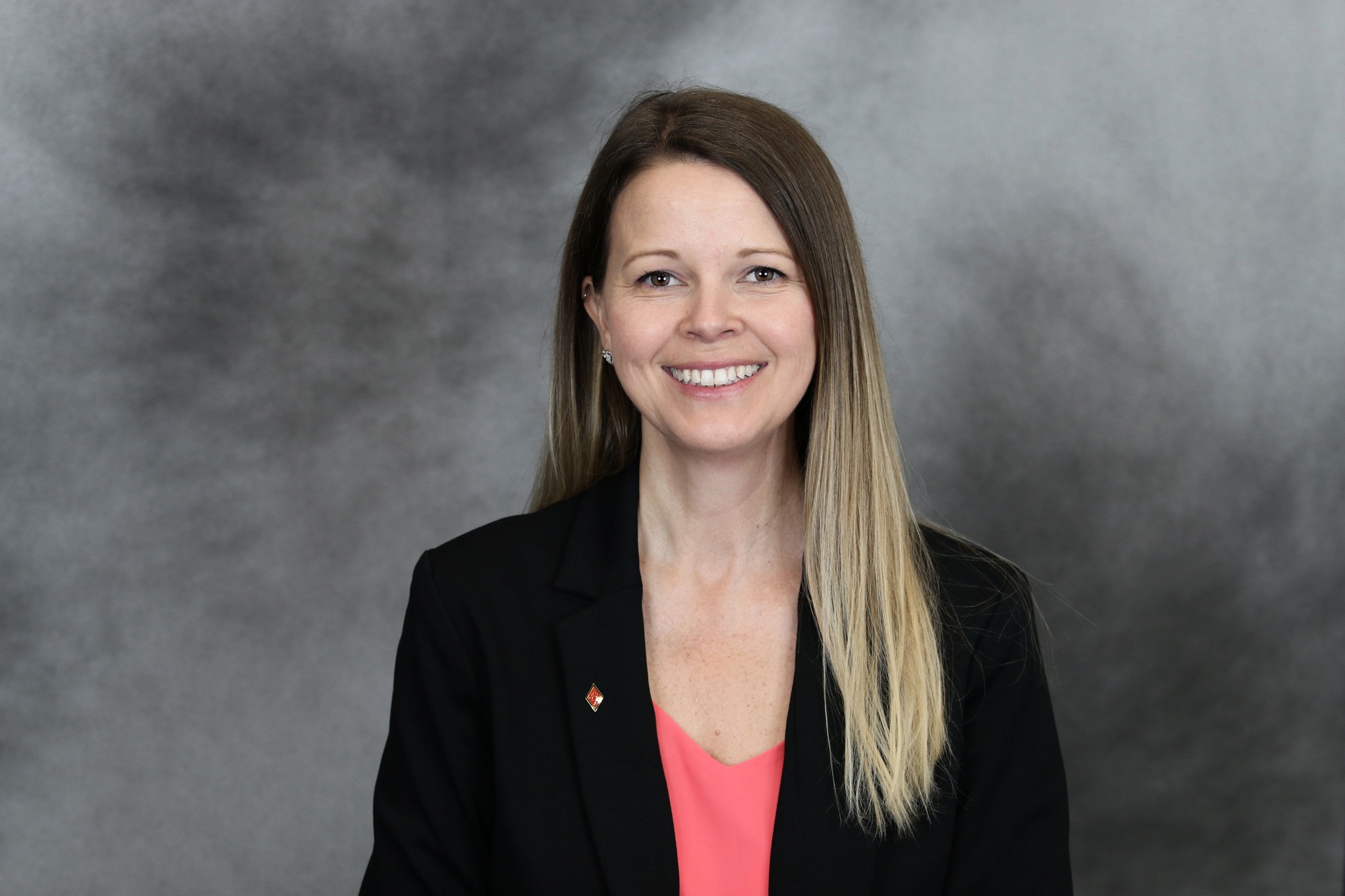
Jillian Bohlen is an Associate Professor at the University of Georgia within the College of Agricultural & Environmental Sciences , specifically the Department of Animal and Dairy Science . Her work focuses on dairy cattle reproduction, teaching, and youth development in agricultural sciences. Education: B.S. in Dairy Science, University of Georgia (2003) M.S. in Dairy Science, University of Georgia (2005) Ph.D. in Animal Sciences, Clemson University (2012) Dr. Bohlen's research emphasizes applied reproduction in cattle , including synchronization techniques, ultrasound applications in reproductive programs, and embryo competency. She integrates students into all research projects despite lacking a formal research appointment. Her teaching interests span dairy cattle production , reproductive management , and contemporary agricultural issues , with courses like ADSC 3620 (Dairy Cattle Production), ADSC 4010 (Issues in Animal Agriculture), and ADSC 4410 (Applied Reproductive Management). Scientific awards include: Student Career Success Influencer Award (2024) Russell Award for Excellence in Undergraduate Teaching (2023) UGA Creative Teaching Award (2022) CAES Early Career Teaching Award (2022) Hoard's Dairyman Youth Development Award (2021) Larry Benyshek Teaching Award (2017) She actively promotes agricultural education through programs like the Commercial Heifer Project , Dairy Cattle Judging , and Dairy Quiz Bowl . Additionally, she participates in funded projects related to methane emissions , heat stress mitigation , and antibiotic alternatives in dairy farming.
Albrecht Fuess is a Professor of Islamic Studies at Philipps University of Marburg since 2010, specializing in Middle Eastern History (13th–17th centuries), Mamluk socio-cultural dynamics, and contemporary European Islamic discourses. His research spans historical continuity in Ottoman-Mamluk-Safavid interactions, Islamic youth cultures, and Mediterranean geopolitics. Research Focus: Medieval Islamic history, Transottomanica mobility studies, Islam in Europe, and cultural integration of Muslim migrants. Awards: Le Studium Fellowship (2007–2009) at Université de Tours. His publications emphasize military-economy interplay, legitimacy through religious narratives, and resource management in empires, with a focus on Mamluk and Ottoman transformations. He has advised on doctoral projects covering topics like Islamic welfare, Arabic ʾAmālī literature, and Cypriot-Ottoman relations. Leadership: Co-coordinator of Transottomanica (DFG-SPP 1981), member of ANR and DAAD committees, and liaison professor for the German National Academic Foundation. Editorial Roles: Co-editor of 'Transottomanica' and 'Muslim Worlds' series, and advisory board member for journals in Cairo, Paris, and Leuven.
Adam Soliman is an Assistant Professor in the John E. Walker Department of Economics at Clemson University's College of Business. His research focuses on the intersection of economics, crime, and public policy, with particular expertise in drug policy, policing behavior, and enforcement strategies. Dr. Soliman's research interests center on understanding the economic incentives behind criminal behavior and law enforcement responses. His work examines how changes in punishment severity affect police behavior, with a particular focus on drug policy reforms. He investigates whether police treat enforcement effort and punishment severity as complements or substitutes, challenging conventional 'War on Drugs' approaches. His research combines economic theory with empirical analysis of geocoded crime data to provide evidence-based insights into criminal justice policy. His publication record demonstrates significant contributions to understanding drug markets, opioid epidemics, and policing strategies. His work shows that weakening drug sale penalties leads to decreased drug arrests without displacement to non-drug offenses, suggesting police treat enforcement and punishment as complements. His research indicates that certain enforcement reductions may not incur large public safety costs, challenging traditional deterrence models. As an active researcher in criminology and public policy, Dr. Soliman collaborates with scholars from various institutions including University of Colorado, University of Pittsburgh, and Duke University. His work appears in working paper series such as the Economic Research Initiatives at Duke (ERID) and has been cited in related fields including public economics, criminology, and urban studies.
Kora DeBeck is a Distinguished Professor of Substance Use and Drug Policy in the School of Public Policy at Simon Fraser University, a CIHR Applied Public Health Chair, and Dorothy Killam Fellow. She is also a Research Scientist with the BC Centre on Substance Use and Principal Investigator of the At-Risk Youth Study (ARYS), a longitudinal cohort tracking over 1,200 street-involved youth. Her research focuses on substance use policy, health services for marginalized populations, and the structural drivers of drug-related harms. She has published over 200 peer-reviewed articles challenging ineffective drug enforcement models and advocating for policy reforms. Recent publications analyze trends in opioid use, harm reduction during the COVID-19 pandemic, drug decriminalization, and youth-focused interventions. Her work consistently addresses social inequities through data-driven approaches to the toxic drug crisis. CIHR Applied Public Health Chair Dorothy Killam Fellow Michael Smith Health Research BC Scholar Award Distinguished SFU Professorship She has secured over $50 million in research funding, including $21M as principal investigator for ARYS. Her lab collaborates with healthcare providers, community organizations, and policymakers to translate research into practice.
Jorge Lemus is an Associate Professor of Economics at the University of Illinois at Urbana-Champaign, with a dual appointment in the College of Liberal Arts & Sciences and the College of Law. His research focuses on industrial organization, microeconomics, and the intersection of patent law with innovation policy. He holds a PhD in Economics and maintains affiliations in both economics and law schools, reflecting his interdisciplinary work. Key research interests include strategic patent examination processes, merger impacts on market competition, and design of contests and contracts in regulatory contexts. His work often addresses issues such as signaling in dynamic competitions, regulatory frameworks for innovation, and antitrust implications of patent settlements. Lemus has contributed to debates on topics like organizational disruption in the airline industry and the efficacy of post-grant patent opposition systems. Publications frequently explore empirical and theoretical dimensions of contests, patent litigation strategies, and regulatory outcomes. His work bridges economic theory with legal and policy analysis, particularly in areas affecting technological advancement and market dynamics. External collaborations and grants are not explicitly detailed in the provided texts, but his research website (https://sites.google.com/site/jorgelemuswebsite/) likely contains further details on ongoing projects and affiliations.
Erik P.M. Vermeulen is a Full Professor of Business and Financial Law at Tilburg University and a key researcher at the Tilburg Law and Economics Center (TILEC) in the Netherlands. He also serves as Senior Counsel Corporate/Vice President at Philips International B.V. , focusing on corporate governance, M&A, and securities law. His academic work spans comparative company law, innovation, and sustainable legal frameworks. Current Affiliation: Professor at Tilburg Law School Practice: Corporate governance and venture capital at Philips His research explores how legal structures influence corporate competitiveness and innovation, particularly in digitalization and AI. He emphasizes the intersection of Law & Technology , Responsible Organizations , and Entrepreneurial Finance . Recent article trends include insights on: 2025: AI-driven corporate transformation and global compliance 2024: Gen X's tech struggles and urban well-being 2020: Evolution of governance frameworks He directs Tilburg's International Business Law Program and advises SMEs through the International Venture Club . His global teaching spans institutions in Colombia, Belgium, Japan, and Israel.
Professor Sarah Hall serves as the 1931 Professor of Geography and a Fellow at St John’s College, University of Cambridge. She is a Senior Fellow and Deputy Director at UK in a Changing Europe , where she examines UK-EU relations and the economic geography of post-Brexit financial services. Her research integrates cultural economy and political economy frameworks to analyze the spatial impacts of global financial shifts on cities, particularly focusing on London’s role as a financial hub and its evolving ties with China and the EU. Education: MA, PhD Her work, funded by the ESRC, British Academy, Leverhulme Trust, and Nuffield Foundation, explores how macroeconomic transitions—such as Brexit, China’s financial rise, and finance-led capitalism—reshape regional economies. She employs geographically sensitive approaches to bridge academic, public, and policy debates. Research Trends across her 2023–2015 publications emphasize: Post-Brexit financial services job displacement and regulatory divergence State capitalism’s role in Chinese banking expansion into London Interlocking corporate-policy networks between EU financial centres Offshore RMB market dynamics in the UK Marketization of higher education and elite recruitment Scientific Recognition : British Academy Mid-Career Fellowship (2016–17) Fellow of the Academy of Social Sciences (2020) She contributes to Geoforum as Co-Editor-in-Chief and mentors prospective PhD students in economic geography and financial geopolitics.
Sarah E. Light is the Mitchell J. Blutt and Margo Krody Blutt Presidential Professor and Professor of Legal Studies & Business Ethics at the University of Pennsylvania's Wharton School. She serves as Faculty Co-Director of Wharton’s Climate Center and holds primary appointments in the Legal Studies & Business Ethics department. Her educational background includes a JD from Yale Law School (2000), an M. Phil in Politics from Oxford University as a Rhodes Scholar (1997), and an AB in Social Studies, Magna Cum Laude, from Harvard University (1995). Professor Light's research examines the intersection of environmental law, corporate sustainability, and business innovation. Her work addresses how corporate law structures function as environmental law, private environmental governance through business actions (including carbon fees and financial sector decisions), and First Amendment implications of regulating greenwashing. She employs interdisciplinary approaches connecting legal doctrine with business strategy and environmental science. Her publications reveal strong trends in private environmental governance mechanisms, climate risk management in financial systems, and the evolving regulatory landscape for corporate sustainability claims. Recent work focuses on greenwashing regulation, banking sector climate action, and non-extractive corporate relationships with public lands. Penn Fellows Program (2023-2024) Multiple Wharton Teaching Excellence Awards (2018-2021) ARCS Emerging Sustainability Scholar Award (2018) Haub Environmental Law Distinguished Junior Scholar (2015) Top 20 Article in Environmental Law & Policy Annual Review (2020) Professor Light has advised numerous student groups and projects, particularly through experiential courses like 'Wharton in the Wild' where she leads field-based environmental management education. Her grant activities include leadership roles at the Wharton Climate Center and Penn Program on Regulation, with research supported by interdisciplinary initiatives focused on climate governance and business innovation. She maintains active pro bono mediation work with federal courts and community organizations. As Faculty Co-Director of the Wharton Climate Center, she leads interdisciplinary research initiatives connecting business strategy with climate solutions, fostering collaboration between academia, industry, and policymakers through conferences, publications, and executive education programs.
George Triantis is the Richard E. Lang Professor of Law and Dean of Stanford Law School. He joined Stanford's faculty in 2011 and has held leadership roles including Senior Associate Vice Provost for Research (2020–2024), Charles J. Meyers Professor of Law and Business (2015–present), and inaugural director of the Stanford Cyber Initiative (2014–2017). Prior to Stanford, he was the Eli Golston Professor of Law at Harvard Law School and held positions at the University of Chicago, University of Virginia, and University of Toronto. His expertise lies in contracts, commercial law, bankruptcy, and the intersection of law with economics and business. Education: B.A. (University of Toronto, 1980), LL.B. (University of Toronto, 1983), LL.M. (University of Virginia, 1986), J.S.D. (Stanford Law School, 1989). Research focuses on contract design principles, bankruptcy processes, and bargaining power dynamics. He has pioneered applying options theory to contracts and authored foundational work on debtor-in-possession financing. His scholarship addresses how economic theories influence legal frameworks in commercial transactions and public policy. Awarded memberships include the American Academy of Arts & Sciences, World Commerce and Contracting Association, and American Law Institute. He taught courses such as bankruptcy law, contract design, and global legal practices, including a program in São Paulo with FGV Brazil. Led initiatives in research integrity, international engagements, and risk management at Stanford. Collaborates with the Rock Center for Corporate Governance and contributes to legal policy debates on innovation and disruption in transactional law.
David Mwambari serves as Associate Professor at KU Leuven's Faculty of Social Sciences within the Unit Leuven International and European Studies (LINES). He leads the ERC-funded TMSS project on Life Narratives of Violence Among Refugees from Africa's Great Lakes Region and holds affiliations with the Oxford Consortium on Human Rights and the Centre for Mediation in Africa at the University of Pretoria. His educational background includes BA/MA in International Relations from United States International University-Africa, MA in Pan-African Studies from Syracuse University, and PhD in History from La Trobe University. He previously held academic positions at King's College London, Ghent University, and United States International University-Africa. Mwambari's research centers on memory studies with emphases on post-genocide Rwanda, colonial durabilities, and refugee narratives. His work examines how cultural memory shapes state formation, peacebuilding, and identity politics through interdisciplinary methodologies blending historical analysis, ethnography, and critical theory. Recent projects investigate vernacular memory practices during crises and the spatial dimensions of post-conflict reconstruction. His scientific contributions include the monograph Navigating Cultural Memory (Oxford University Press, 2023), co-edited volume Beyond History (Rowman & Littlefield, 2020), and editorial roles for Qualitative Research journal and Brill's 'Mobilizing Memory' series. His publications demonstrate evolving focus from leadership studies toward memory politics and decolonial research methodologies. European Research Council (ERC) Grant for TMSS Project Fellow at Churchill College, University of Cambridge African Academic Diaspora Fellow at CODESRIA FWO Postdoctoral Research Fellowship Mwambari actively mentors early-career scholars across Africa, Latin America, and East Asia while contributing to public discourse through Al Jazeera and community projects training history teachers in East Africa. His consultancy work addresses cross-disciplinary challenges in healthcare, education, and security, reflecting his commitment to applied scholarship beyond traditional academic boundaries.
Anthony Niblett is a Professor and Canada Research Chair in Law, Economics, & Innovation at the University of Toronto Faculty of Law. He is an Affiliate Researcher with the Vector Institute for Artificial Intelligence and co-founder of Blue J, a startup leveraging AI for tax and legal professionals. Education: Ph.D. in Economics, Harvard University (2009) M.A. in Economics, Harvard University (2006) LL.B. (Honours), University of Melbourne (2003) B.Com. (Honours in Economics), University of Melbourne (2003) Bigelow Fellow, University of Chicago His research bridges artificial intelligence , innovation , and legal theory , with a focus on contract law , competition policy , and judicial behavior . He explores how machine learning transforms legal practice, regulatory frameworks, and judicial decisions. His work includes self-driving contracts , computational antitrust , and the personalization of law . Recent publications analyze AI’s role in legal disagreement , gender gaps in employment law , and computational merger reviews . His articles emphasize the intersection of technology , economics , and legal reform . Scientific Awards: Canada Research Chair in Law, Economics, & Innovation Bigelow Fellow, University of Chicago He serves as an Academic Advisor at the Future of Law Lab and contributes to Blue J , advancing AI applications in legal domains. His teaching includes Contract Law , Torts , and Economic Analysis of Law .
Raymond Ku is the John Homer Kapp Professor of Law at Case Western Reserve University School of Law. He has served as Associate Dean for Academic Affairs and Co-Director of the Center for Law, Technology and the Art. His work focuses on Constitutional Law, Cyberlaw, Privacy, and Copyright, with an emphasis on how technology and evolving societal norms intersect with individual liberties. Education Juris Doctor (J.D.), New York University (1995) Bachelor of Arts (A.B.), Brown University (1992) Professor Ku’s research explores the tensions between free speech and copyright, the implications of digital technology on privacy, and the constitutional boundaries of surveillance. His publications span topics like peer-to-peer file sharing, reproductive rights, and data privacy, reflecting a commitment to addressing contemporary legal challenges through interdisciplinary lenses. His scholarship appears in prestigious law reviews, including Berkeley, Chicago, and Vanderbilt. He authored the first casebook on cyberspace law. Awards include the 2009 Distinguished Teacher Award and being voted Professor of the Year by the 2009 graduating class. Raymond Ku clerked for Judge Timothy K. Lewis and practiced constitutional, intellectual property, and antitrust law before transitioning to academia. He has taught at multiple institutions, contributing to legal education and research related to technology and civil liberties.
Dr. Susana Castro-Kemp is an Associate Professor in Psychology and Human Development at University College London's Institute of Education (IOE), where she serves as Director of the Centre for Inclusive Education (CIE) since September 2023. Previously, she was a Reader in Education at the University of Roehampton for eight years. Her work focuses on inclusive education policy and practice globally, with particular expertise in special educational needs and disabilities (SEND), early childhood intervention, and mental health in schools. The IOE has been ranked number one in the world for Education for several consecutive years, providing an ideal environment for her impactful research. Dr. Castro-Kemp holds a PhD in Psychology jointly awarded in 2012 by the University of Porto (Portugal) and the University of North Carolina at Chapel Hill (USA). Her doctoral research was fully funded by the Foundation for Science and Technology/European Commission and the Global Education and Development Studies scholarships. She is a Chartered Psychologist with the British Psychological Society, a Senior Fellow of Advance HE, and a Recognised Research Supervisor by the UK Council for Graduate Education. Dr. Castro-Kemp's research centers on policy regulating education, health, and welfare services for children, particularly those with support needs. She examines inclusive education practices from users' perspectives, policy models leading to effective inclusive pedagogy, and country-level policy impacts on outcomes for children with special educational needs. Her work moves away from diagnostic labels toward engagement and civic participation as educational outcomes. She also investigates inclusion and early intervention in low- and middle-income countries, mental health in schools, and quality of early childhood education. Her recent publications reveal several key trends in inclusive education research. There's growing emphasis on understanding educational experiences through the voices of children and families rather than diagnostic labels. Much of her work examines the implementation gap between inclusive education policy and classroom practice. She has conducted significant research on how children with special educational needs experienced the pandemic, revealing both challenges and unexpected "silver linings" for some groups. Her corpus analysis of Ofsted reports shows narrow focus in early childhood education inspections, while her work on SEND policy increasingly takes an international comparative approach. Dr. Castro-Kemp has received recognition for her impactful work, including: Best Digital Humanities Project for Community Engagement Prize (2023) from the National Institute of Humanities and Social Sciences of South Africa for her project "Optimising collaborations and reducing inequalities of Early Childhood Intervention in post-Covid-19 South Africa" Dr. Castro-Kemp has secured approximately £1.3 million in research funding from various sources including ESRC, British Academy/Leverhulme Trust, European Commission, and private sponsors. Her current major project is 'ScopeSEND' (2024-2026), funded by the Nuffield Foundation (£250,000), examining international SEND policies. She has led numerous projects including "Transdisciplinary provision for children with disabilities in the Global South" (£3,500), "Optimising collaborations in South Africa" (£47,200), and "Froebel meets Ofsted" (£19,185). As a supervisor, she mentors MA/MSc and PhD students in education policy, early childhood, and inclusive education, having been nominated for student choice awards for excellent feedback and outstanding research supervision. As Director of the UCL Centre for Inclusive Education since 2023, Dr. Castro-Kemp leads a team focused on advancing knowledge exchange and research in inclusion and special needs. The Centre works with schools, educators, parents, and early years settings to translate research into practice. Her international collaborations include work with the World Health Organization as a technical advisor on the use of the International Classification of Functioning, Disability and Health (ICF) system in educational contexts. She also serves on the SEN Policy Research Forum and has provided oral evidence to the House of Commons Education Select Committee.
Dr Georgios Batsakis is a Reader in International Business & Economics at Brunel Business School, Brunel University London. His research and teaching focus on internationalization processes of multinational enterprises (MNEs), strategic management, and digitalization in global markets. PhD in Management Studies (2014) - Brunel Business School MSc in Business Economics (2010) - Erasmus School of Economics BSc in Business Administration (2006) - University of The Aegean, School of Business His research spans international business, examining temporal dimensions of MNE internationalization, product/geographic diversification, foreign market entry modes, and the impact of digitalization on global operations. He has published extensively in top journals like the Journal of International Business Studies and Global Strategy Journal , with recent work highlighting the intersection of digital transformation and international diversification. Scientific recognitions include Poets&Quants' Best 40-Under-40 Business School Professors in 2022 and Fellowship of the Higher Education Academy (2019). He serves as Track-Chair for academic conferences and ad-hoc reviewer for leading journals. Advisor to pre-seed startups in Greece on business model formulation Mentor and judge in global startup competitions (e.g., VISA Innovation Program, Disrupt Greece)
Naomi Murakawa is an Associate Professor in the Department of African American Studies at Princeton University, School of Arts and Sciences. Her research focuses on the reproduction of racial inequality in American politics, particularly in the realms of crime policy and the carceral state. Her scholarly work bridges political science, critical race theory, and legal studies. Key areas of interest include mass incarceration, racial liberalism, the historical development of crime control, and the paradoxes of reform within the criminal justice system. Her research, reflected in publications such as The First Civil Right: How Liberals Built Prison America and numerous journal articles, reveals how ostensibly progressive policies have contributed to the expansion of the prison system. Themes across her work include the racialized foundations of state power, the limitations of liberal reform, and the structural persistence of racial inequality in law and governance. Scientific Awards and Fellowships: Fellowship from Columbia Law School’s Center for the Study of Law and Culture Fellowship from Robert Wood Johnson Foundation’s Health Policy Research Program Professor Murakawa has advised graduate students and contributed to major scholarly and public conversations on race and justice. Her work has been supported by significant research grants and fellowships, enabling deep historical and theoretical analysis of the American carceral state. She is a leading voice in interdisciplinary debates on decarceration, abolition, and transformative justice. She is affiliated with research initiatives focused on race, law, and inequality, contributing to collaborative teams examining the intersections of policy, history, and social movements. Her ongoing scholarship continues to challenge conventional narratives about crime, punishment, and racial progress in the United States.