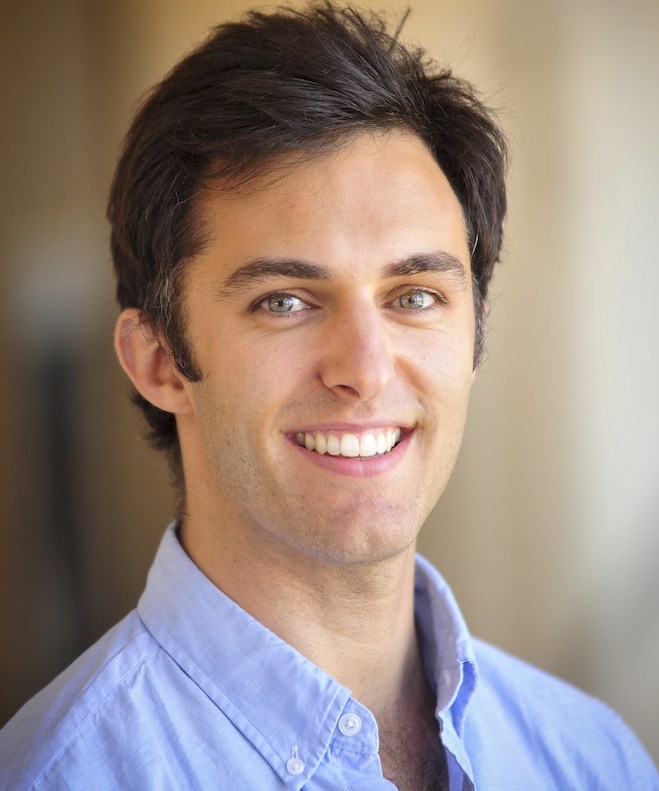
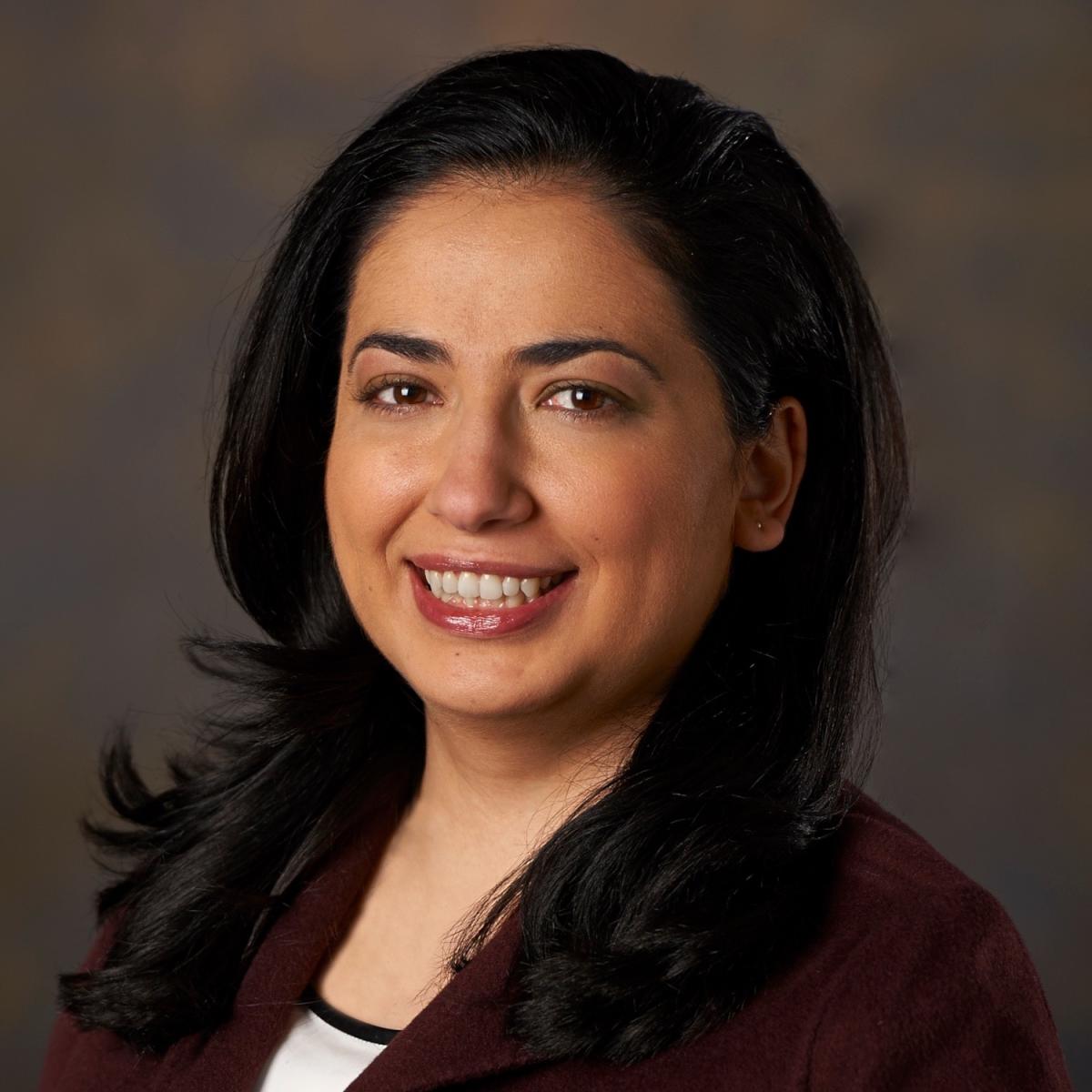
Daniel M. Roy is a Full Professor at the University of Toronto, with cross-appointments in the Department of Computer Science, Department of Statistical Sciences, and Department of Electrical and Computer Engineering. He serves as Research Director at the Vector Institute and holds the CIFAR Canada AI Chair. Research Focus: Foundational principles of prediction, inference, and decision-making under uncertainty across machine learning, statistics, mathematical logic, applied probability, and computer science. Scientific Contributions: Key work in learning theory, statistical network analysis, probabilistic programming, and information-theoretic frameworks for generalization. Awards: ICML 2024 Best Paper Award for "Information Complexity of Stochastic Convex Optimization" and promotion to Full Professor in 2024. Student Advising: Actively mentors Ph.D. candidates and postdoctoral researchers with strong quantitative backgrounds, particularly at the intersection of machine learning, statistics, and computer science. Email: daniel.roy@utoronto.ca
Zaid Harchaoui is an Adjunct Professor in the Department of Statistics at the University of Washington. His research focuses on machine learning, generative AI, and algorithmic optimization, with applications spanning ecology, neuroscience, and artificial intelligence. He explores learning under distributional shifts and develops tools for scalable generative models in language and vision domains. University: University of Washington Department: Statistics Research Focus: Learning from data with computational, inferential, and mathematical rigor; distributional shift adaptation; generative model scaling Email: zaid@uw.edu His recent work emphasizes generative AI applications in ecology and neuroscience, stochastic optimization for robustness, and algorithmic efficiency in large-scale learning. Key contributions include techniques for distributionally robust optimization, interpretable authorship obfuscation, and uncertainty quantification in behavior classification. Scientific awards and honors are not explicitly mentioned in the provided text. Collaborative efforts often intersect with nonlinear control algorithms, spectral analysis, and privacy-preserving machine learning frameworks.
Sarah Dean is an Assistant Professor in the Computer Science Department at Cornell University, affiliated with the College of Engineering. Her research focuses on the interplay of machine learning, optimization, and dynamics in real-world systems, particularly in control theory, recommendation systems, and ethical AI. Education: PhD in EECS, University of California, Berkeley (2021) Postdoctoral Research, University of Washington (2021-2022) Research Interests: Data-driven control systems, reinforcement learning, recommendation systems, user dynamics, algorithmic fairness, and the societal impacts of AI. She emphasizes foundational understanding of how learning systems interact with human and social processes. Recent Work Trends: Her articles explore topics like bilinear system identification, user participation dynamics in recommendation platforms, and ethical considerations in AI development. Recent work includes harm mitigation strategies and mathematical modeling of AI-human feedback loops. Awards: AI2050 Early Career Fellow (2024) Best Paper at ICML 2018 (Delayed Impact of Fair Machine Learning) Best Student Paper in Imaging Systems (OSA Congress 2018) Advising & Labs: Advises over 15 graduate and undergraduate students. Leads research on interactive ML systems, with contributions to projects like the 'MSGD' repository for streaming data learning. Active in the GEESE group, promoting socially responsible computing.
Noah D. Goodman is Associate Professor of Psychology and Computer Science, and Linguistics (by courtesy) at Stanford University. He directs the Computation & Cognition Lab (CoCoLab) at Stanford, where he leads research on computational models of cognition, integrating logic and probability. His work spans cognitive psychology, linguistics, and computer science. Primary Appointment: Psychology Department By Courtesy: Computer Science Department and Linguistics Department Director: Computation & Cognition Lab (CoCoLab) Goodman's research focuses on computational models of cognition, with particular interest in probabilistic approaches to understanding human thought. His work integrates logic and probability to model concepts, categorization, intuitive theories, causal learning and reasoning, social cognition (including reasoning about others' goals, beliefs, and actions), cognitive development (especially acquisition of abstract knowledge), and natural language semantics and pragmatics. He has made significant contributions to the development of probabilistic programming languages as tools for cognitive modeling. His recent publications demonstrate a strong trend toward integrating probabilistic modeling with linguistic theory and social cognition. The articles span computational cognitive science, natural language processing, and artificial intelligence, with a consistent theme of using probabilistic frameworks to understand complex cognitive phenomena. Many papers explore how humans make inferences under uncertainty across different domains. Goodman teaches several courses at Stanford including Language and Thought (Psych 132), Computation and Cognition: the Probabilistic Approach (Psych 204/CS 428), Foundations of Cognition (Psych 205), and Introduction to Cognitive Science. He has also led seminars on topics ranging from natural and artificial intelligence to the science of meditation.
Prof. Gabriela Hug is a Full Professor at ETH Zurich's Department of Information Technology and Electrical Engineering, serving as Deputy Head of the Department and Deputy Head of the Power Systems and High Voltage Lab. She leads the Energy Science Center (ESC) and holds adjunct roles at Carnegie Mellon University. Her research focuses on modeling, control, and optimization of electric power systems for sustainable energy transitions. Education: PhD in Information Technology and Electrical Engineering, ETH Zurich (2004–2008) MSc in Information Technology and Electrical Engineering, ETH Zurich (1999–2004) Research Interests: Her work addresses challenges in smart grid integration, renewable energy systems, and advanced control strategies. Key areas include vehicle-to-grid technologies, distribution network optimization, and energy storage system planning. She emphasizes data-driven approaches and collaborative frameworks for grid resilience and flexibility. Key Achievements: Recipient of the 2019 ALEA Award (ETH Zurich) NSF Career Award (2013) IEEE Outstanding Young Engineer Award (2013) Leadership & Roles: Co-Director, NCCR Automation (Swiss National Centre of Competence in Research) Board Chair, Energy Science Center (ESC) Adjunct Faculty, Carnegie Mellon University Labs & Teams: Power Systems Laboratory (ETH Zurich) Energy Science Center (multi-disciplinary research hub)
Franz Heukamp is the Director General of IESE Business School at the University of Navarra and Professor in the Department of Decision Analysis. He holds the Antonio Valero Chair of Business Administration since 2016 and previously served as Vice Dean of the MBA program and Secretary General of IESE. His academic background includes a Ph.D. in Engineering from the Massachusetts Institute of Technology, an Ingénieur Civil des Ponts et Chaussées from Ecole Nationale des Ponts et Chaussées in Paris, and a Diplom-Ingenieur from Technische Universität München. Professor Heukamp's research focuses on behavioral decision-making with a special interest in neuroeconomics, examining how people make decisions under uncertainty, particularly regarding time-probability trade-offs. His work bridges business decision theory with neuroscience, as evidenced by his publications in journals like Management Science , European Neuropsychopharmacology , and British Journal of Pharmacology . In recent years, he has expanded his research interests to include artificial intelligence applications in management and sustainability. His recent scholarly output shows a progression from fundamental decision theory research to practical applications of AI in business leadership and management education. He has published extensively on risk preferences, intuition in decision making, and the neurological basis of economic choices, with increasing focus on how digital transformation and AI are reshaping management practices. As Director General, Heukamp has championed several strategic initiatives including internationalization efforts across North America, Latin America, and Central Europe, development of new degree programs like the Master in Management and Munich Executive MBA, and integration of digital learning technologies while maintaining the school's commitment to in-person educational excellence. Professor Heukamp is an active member of both the Institute for Operations Research and the Management Sciences and the Neuroeconomics Society, reflecting his interdisciplinary approach to business education and research. His leadership prioritizes supporting faculty research, advancing lifelong learning solutions for executives, and maintaining IESE's mission of service to society through academic innovation.
Shane G. Henderson is the Charles W. Lake, Jr. Professor in Productivity at Cornell University's School of Operations Research and Information Engineering (ORIE). His research focuses on the intersection of optimization and simulation, with applications to complex systems such as bike-sharing networks, medical scheduling, and ambulance deployment. He emphasizes practical societal relevance, addressing challenges in healthcare, transportation, and parallel computing environments. Education: B.Sc. (Mathematics), University of Auckland (1992) M.S. (Statistics), Stanford University (1995) Ph.D. (Operations Research), Stanford University (1997) Research Interests: Structured simulation optimization, parallel computing applications, applied probability, and case-driven problem-solving. Recent work includes MRI scheduling, radiation treatment planning, and land/air ambulance systems. He advocates for methodologies that leverage convexity or quasi-convexity to enhance algorithmic efficiency and robustness. Awards and Recognition: 2016 Tau Beta Pi Professor of the Year 2014 Sonny Yau '72 Excellence in Teaching Award 2011 Hess Research & Education Award NSF CAREER Award (1999) Teaching & Service: Courses in probability, simulation, and mathematical modeling using case-based learning. Served on award committees for INFORMS Nicholson Prize, Pierskalla Prize, and Impact Prize. Organized major conferences including the 2009 INFORMS Applied Probability Society conference and multiple Winter Simulation Conferences. Currently co-edits simulation-optimization testbeds for experimental comparisons. Labs & Collaborations: Active in Cornell's collaborative research environment, focusing on interdisciplinary projects with industry partners like Motivate (bike-sharing systems). Engaged in advancing methodologies for complex systems through data-driven approaches.
Steven I-Jy Chien serves as Professor and Director of the Transportation Program within the Department of Civil and Environmental Engineering at the New Jersey Institute of Technology (NJIT). His career spans academia, government, and industry with significant contributions to transportation engineering research and practice. His educational credentials include: Ph.D. in Civil and Environmental Engineering from University of Maryland-College Park (1995) M.S. in Civil and Environmental Engineering from University of Maryland-College Park (1991) B.S. in Civil Engineering from Tamkang University (1983) Professor Chien's research focuses on transportation system resilience, sustainable transit operations, and advanced traffic modeling. His work addresses critical challenges in urban rail networks, demand-responsive transit services, and energy-efficient transportation systems. He employs sophisticated computational methods including genetic algorithms, machine learning, and Bayesian approaches to solve complex transportation problems involving network vulnerability, passenger behavior, and infrastructure optimization under uncertainty. Analysis of his recent publications reveals strong emphasis on transportation resilience against cascading failures, sustainable operations for electric transit systems, and pandemic-responsive aviation scheduling. His research spans diverse geographic contexts including major Chinese metropolitan areas and U.S. transportation networks, demonstrating global applicability of his methodologies. His professional recognition includes: 2024 Keynote Speaker at Union-Tech Lecture, National Taiwan Ocean University 2022 Keynote Speaker at International Conference of Chinese Institute of Transportation 2022 Best Poster Award from New Jersey Department of Transportation Professor Chien has secured research funding from federal agencies including the Federal Highway Administration (FHWA) where he contributed to CORSIM traffic simulation software development. His industry experience with China Engineering Consultants Inc. and Information Dynamic Inc. informs his practical approach to transportation challenges. As Transportation Program Director, he oversees curriculum development and industry partnerships that prepare students for transportation sector careers. He maintains active collaboration with transportation agencies globally, particularly through his leadership in the Transportation Program at NJIT which serves as a hub for innovation in urban mobility solutions.
Adam Zylbersztejn is an Assistant Professor (Maître de conférences HDR) at Université Lumière Lyon 2 and affiliated with GATE Lyon Saint-Etienne, a research group in economics. He holds a PhD from the Paris School of Economics (2013) and previously conducted postdoctoral research at WU Wien (Vienna University of Economics and Business). His research focuses on behavioral economics using experimental methods to study individual and interactive decision processes, particularly in contexts involving trust, strategic uncertainty, and cultural variability. Key research areas include behavioral game theory, experimental finance, and the impact of nonverbal communication in economic interactions. His work has been published in top journals such as Journal of Economic Psychology , Games and Economic Behavior , and Experimental Economics . Recent studies examine topics like anonymity effects in charitable giving, trust in market exchanges under oath, and cognitive processes in asset markets using eye-tracking technology. His ongoing projects include research on risk-incentive tradeoffs and ambiguity framing in decision-making. While no formal academic awards are listed, his work has received press coverage in outlets like Le Monde and CORTEX Mag . He collaborates widely with institutions such as GATE-LSE and the Paris School of Economics, contributing to both theoretical and applied economic inquiry.
Tim G. J. Rudner is an Assistant Professor in the Department of Statistical Sciences at the University of Toronto, a Faculty Member at the Vector Institute, and a Title A Fellow at Trinity College, University of Cambridge. He was previously an Assistant Professor and Faculty Fellow at New York University. University: University of Toronto School: Faculty of Arts and Science Department: Department of Statistical Sciences Affiliation: Vector Institute, Trinity College (Cambridge) He holds a PhD in Computer Science and an MSc in Statistics from the University of Oxford, where he was advised by Yee Whye Teh and Yarin Gal, and a BS in Applied Mathematics and Economics from Yale University. PhD: Computer Science, University of Oxford MSc: Statistics, University of Oxford BS: Applied Mathematics and Economics, Yale University His research focuses on building robust, transparent, and trustworthy machine learning systems, particularly for high-stakes applications. He develops probabilistic models that improve generalization under distribution shifts, provide reliable uncertainty estimates, and enable fair and interpretable predictions. His work spans generative models, large language models, healthcare, and biomedical discovery. The recent publications highlight a strong trend toward function-space modeling, Bayesian regularization, and AI safety. Tim's work emphasizes principled uncertainty quantification, robustness to subpopulation and semantic shifts, and the development of frameworks for AI governance and specification. His research bridges theoretical advances with real-world applications, especially in safety-critical domains like medicine and defense. Tim has received numerous accolades including being named a Rhodes Scholar, Qualcomm Innovation Fellow, and 2024 Rising Star in Generative AI. He was awarded a $700,000 Foundational Research Grant and a $30,000 Apple Seed Grant for improving LLM trustworthiness. Rhodes Scholar Qualcomm Innovation Fellow AISTATS Notable Paper Award (2024) Outstanding Paper Award, ICLR GenAI4DM Workshop (2024) Apple Seed Grant ($30,000) Foundational Research Grant ($700,000) NeurIPS Spotlight Talk 2024 Rising Star in Generative AI He actively mentors students, particularly first-generation and low-income scholars, and has contributed to major policy frameworks including the OECD AI Classification Framework and a series of CSET issue briefs on AI safety. His work demonstrates a strong commitment to responsible AI development, combining technical rigor with societal impact. Tim leads research efforts at the intersection of machine learning theory and practical deployment, with ongoing projects in generative modeling, reliable LLMs, and AI governance. His lab produces high-impact work regularly published at top-tier conferences such as NeurIPS, ICML, and AISTATS.
Jose Apesteguia is an ICREA Research Professor at the Department of Economics and Business, Universitat Pompeu Fabra, Barcelona, Spain. His research focuses on behavioral economics, decision theory, experimental economics, and game theory, with particular emphasis on topics such as behavioral heterogeneity, rationality measures, stochastic choice models, and social preferences. Apesteguia has collaborated extensively with scholars like Miguel A. Ballester and Jörg Oechssler, producing influential work on topics ranging from imitation dynamics to the impact of language on moral decisions. His research integrates theoretical frameworks with experimental methods, exploring how individuals make decisions under uncertainty, time preferences, and social contexts. Key contributions include the development of measures of rationality and welfare, as well as analyses of behavioral adaptation and the role of information in competitive environments. His work frequently bridges economic theory with empirical validation, addressing real-world issues such as rule compliance in public institutions and team performance in organizations. Apesteguia’s publications span top journals including the American Economic Journal: Microeconomics , Journal of Economic Theory , and Econometrica . He teaches advanced courses on bounded rationality and behavioral decision theory at the undergraduate and graduate levels. His research has been applied to fields like finance (e.g., copy trading behavior) and public policy (e.g., promoting compliance in libraries).
Marina Agranov is Professor of Economics at the California Institute of Technology (Caltech), affiliated with the Division of Humanities and Social Sciences. She directs research through the Ronald and Maxine Linde Institute of Economic and Management Sciences, Center for Social Information Sciences (CSIS), and Center for Theoretical and Experimental Social Sciences (CTESS), and serves as Research Associate at the National Bureau of Economic Research (NBER). Her academic credentials include a B.A. from St. Petersburg State Technical University (1999), M.A. from Tel Aviv University (2004), and Ph.D. from New York University (2010). She joined Caltech as Assistant Professor in 2010 and was promoted to full Professor in 2017. Agranov's research pioneers experimental and behavioral economics, focusing on strategic decision-making in bargaining games, social learning environments, network interactions, and information dynamics. Her work examines how individuals form beliefs and navigate tensions between personal goals and collective outcomes, often using controlled laboratory experiments to test theoretical predictions about human behavior under uncertainty. Her recent publications reveal a consistent methodological approach: blending game-theoretic models with experimental validation to investigate communication effects, randomization preferences, and institutional design. Key trends include analyzing how uncertainty impacts committee negotiations, how complexity influences egalitarian outcomes in legislative bargaining, and how information structures shape social learning on networks. Her scientific recognition includes: Associated Students of Caltech (ASCIT) Teaching Award (2017-18) Professor Agranov's research has secured significant institutional support through Caltech centers and NBER affiliation, with findings featured in major economics journals and Caltech news coverage including "Decision by Committee: How Uncertainty Shapes Negotiations" (December 2024) and "Experimental Economics in Theory and Practice" (July 2023). Her work on committee decision-making under uncertainty has direct implications for institutional design in political and corporate governance. She actively contributes to Caltech's research ecosystem through CSIS and CTESS, which facilitate interdisciplinary collaborations in social sciences and experimental methodology development.
Fatma Kılınç-Karzan is an Associate Professor of Operations Research at Carnegie Mellon University's Tepper School of Business, with a courtesy appointment as Associate Professor of Computer Science. She is also affiliated with the Algorithms Combinatorics and Optimization (ACO) PhD Program and was a Visiting Scientist at Berkeley's Simons Institute for the Theory of Computing during Fall 2017. Her educational background includes a PhD from Georgia Institute of Technology's H. Milton Stewart School of Industrial & Systems Engineering with a minor in Mathematics, supervised by Prof. Arkadi Nemirovski. She earned her B.S. and M.S. degrees from the Industrial Engineering Department of Middle East Technical University with a minor in Information Systems. Dr. Kılınç-Karzan's research spans mathematical optimization with emphasis on convex and non-convex optimization theory, algorithms, and applications. Her work bridges theoretical foundations with practical implementations in optimization under uncertainty (robust optimization, chance constraints, distributionally robust optimization), machine learning (preference learning from limited data), and business analytics. She develops foundational theory for large-scale optimization problems with applications in decision making under uncertainty and high-dimensional statistical inference. Analysis of her recent publications reveals a strong focus on convex hull characterizations, semidefinite programming relaxations, distributionally robust optimization, and online convex optimization frameworks. Her work demonstrates increasing integration of optimization theory with machine learning applications, particularly in developing data-driven approaches for decision making under uncertainty. NSF CAREER Award (2015) INFORMS Optimization Society Young Researcher Prize (2015) INFORMS Junior Faculty Interest Group (JFIG) Best Paper Award (2014) BP Junior Faculty Chair (2014-2015) Faculty Giving Chair (2012-2013) Wimmer Fellowship (2012-2013) Dr. Kılınç-Karzan has successfully mentored numerous PhD students who have received prestigious awards, including the 2021 INFORMS Optimization Society Best Student Paper (1st prize) and multiple honorable mentions. Her research has been supported by significant grants including an NSF CAREER Award, an ONR grant (with S. Küçükyavuz), and an AFOSR grant. She serves on editorial boards for Mathematical Programming, Operations Research, Mathematics of Operations Research, and other leading journals, and has held leadership positions in professional societies including the Mathematical Optimization Society and INFORMS Computing Society. Through her affiliations with CMU's Tepper School, Computer Science Department, and ACO Program, she collaborates across disciplines to advance optimization theory and its applications. Her professional service includes committee chair roles for major INFORMS competitions and program committee leadership for international optimization conferences.
Danqi Luo is an Assistant Professor of Innovation, Technology and Operations (ITO) at the Rady School of Management, University of California, San Diego. Her research focuses on understanding patients' and physicians' behavior in healthcare delivery systems, leveraging operations management, causal inference, and machine learning techniques to optimize decision-making processes. Ph.D. in Operations, Information & Technology from Stanford Graduate School of Business Bachelor's degrees in Mathematics and Physics from Bryn Mawr College Her work addresses critical challenges in healthcare operations, including a project during her Ph.D. that developed an online wait time provision system using electronic medical records and machine learning. This system, implemented at San Mateo Medical Center, reduces delays for high-acuity patients by dynamically prioritizing care. Her research spans healthcare operations, behavioral operations management, and data-driven decision-making under uncertainty, offering actionable insights for improving efficiency in service delivery systems.
Ming Hu is a Professor and University of Toronto Distinguished Professor of Business Operations and Analytics at Rotman School of Management, University of Toronto. He serves as Area Coordinator for the Operations Management & Statistics Area and holds editorial leadership roles including Editor-in-Chief of Naval Research Logistics and Associate Editor for multiple top journals. MS in Applied Mathematics, Brown University (2003) PhD in Operations Research, Columbia University (2009) His research focuses on sharing economy , social operations , and platform economics , examining how operational decisions can maximize societal benefit. Key areas include crowdfunding , two-sided markets , crowdsourcing , and group buying , with applications to DEI , sustainability , and AI-empowered operations . Recent work analyzes spatial operations in delivery systems, algorithmic fairness , and climate change adaptation in agricultural supply chains. His publications span top journals like Management Science and Operations Research , covering topics from blockchain traceability to quantum-inspired optimization . Scientific recognitions include: Wickham Skinner Early-Career Research Award (2016) Best Operations Management Paper in Management Science (2017) 2018 Poets & Quants Best 40 Under 40 MBA Professors As an Amazon Scholar (2022–) and Chair of Chain Analytics Institute (2023–), he bridges academic research with industry applications in AI-driven logistics and sustainable operations.