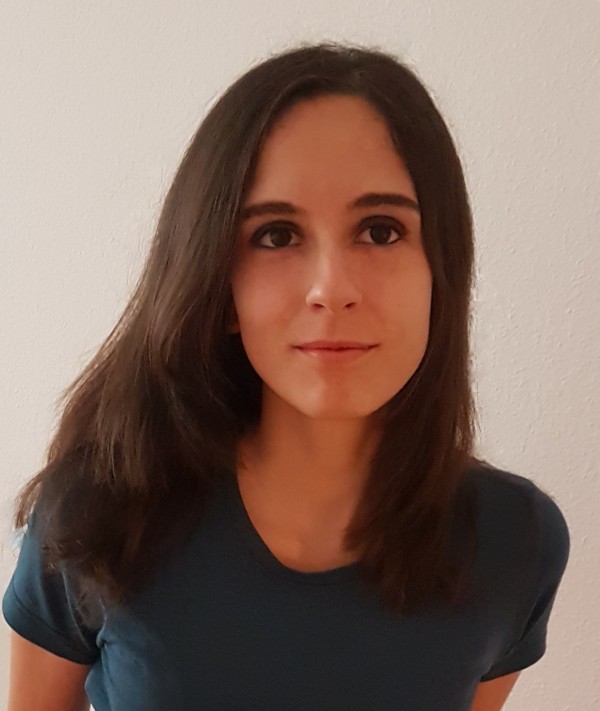
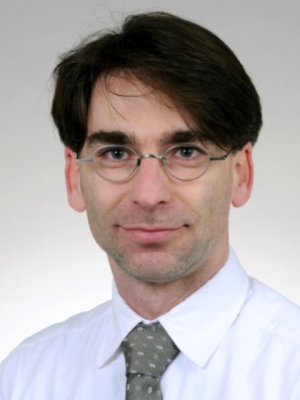
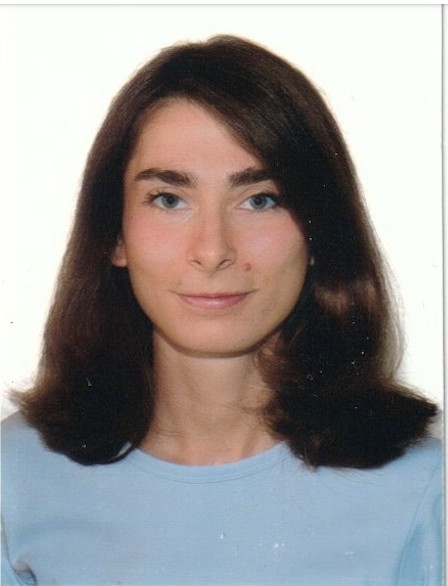
Dr. Miriam Filippi is a Lecturer at ETH Zurich's Department of Mechanical and Process Engineering, where she leads research in soft robotics and bio-hybrid systems. Her work centers on integrating biological principles into engineering platforms, particularly through the development of engineered muscle tissues for bio-actuation in robotics and medical applications. Her research interests span: Bio-hybrid actuator design using skeletal muscle tissues Perfusion strategies for scalable tissue constructs Neuromuscular interface development Autonomous control systems for bio-robotics Sustainable biofabrication methods Recent publications demonstrate a strong focus on advanced bioprinting techniques, bioelectronic interfaces, and computational approaches to tissue engineering. Her work consistently bridges fundamental biological principles with robotic applications. Dr. Filippi coordinates several interdisciplinary projects including 'Biofabrication of Neuromuscular Tissue Models' and 'Sensorized Bio-actuators for Autonomous Bio-robotics', collaborating with institutions across Europe. She manages the Soft Robotics Laboratory's biosafety protocols and sustainability initiatives while advising on the integration of functional materials with cellular hydrogels.
Prof. Dr. Sebastian Kozerke is Full Professor at ETH Zürich's Department of Information Technology and Electrical Engineering, leading the Professorship for Biomedical Imaging. His research program develops advanced magnetic resonance imaging methods for cardiac applications, focusing on ultra-fast dynamic imaging of perfusion, cardiac mechanics, and microstructure analysis. Key innovations include k-t undersampling techniques and parallel imaging methods that significantly advance spatiotemporal resolution in medical imaging. Professor Kozerke's research spans multiple domains including perfusion imaging, diffusion tensor imaging for myocardial microstructure, and real-time metabolic imaging using dynamic nuclear polarization. Current investigations explore hyperpolarized 13 C pyruvate metabolic imaging, neural network applications for cardiac analysis, and low-field MRI techniques. His work consistently bridges fundamental physics with clinical translation. Publications demonstrate leadership in cardiovascular MRI innovation. Recent work establishes consensus standards for hyperpolarized MRI studies (2025), develops deep learning frameworks for flow quantification (FlowMRI-Net), and advances microstructure analysis in cardiomyopathy (2025). Earlier foundational work includes contributions to diffusion imaging, parallel MRI methods, and cardiac DTI techniques. Professor Kozerke teaches core courses including 'Biomedical Imaging' (227-0385-10L), 'Biomedical Engineering' (227-0386-00L), and leads the 'Seminar on Biomedical Magnetic Resonance' (227-0980-00L). He founded EXCITE Zurich, a joint center for experimental and clinical imaging technologies. Career progression includes: PhD and Venia legendi from ETH Zurich, research at King's College London, co-founding GyroTools (2003), professorship at King's College London (2008), University of Zurich (2010), and ETH Zurich dual appointment (2014).
Michele Magno is a Senior Lecturer and Privatdozent at ETH Zürich's Department of Information Technology and Electrical Engineering (D-ITET), leading the D-ITET Center for Project-based Learning (pbl.ee.ethz.ch). He holds a PhD in Electronic Engineering from the University of Bologna (2010) and has held visiting roles at institutions like the University of Nice and Mid Sweden University. His research focuses on low-power systems, wearable devices, energy harvesting, and IoT applications. Magno has authored over 350 peer-reviewed papers, with a Google H-index of 49. Notable awards include the 2024 Best Paper Award at ECCV and multiple best poster/demo recognitions at IEEE conferences. His industrial collaborations include projects with STMicroelectronics, Texas Instruments, and Logitech. Teaching contributions include courses on embedded systems, FPGA programming, and machine learning on microcontrollers. Magno's innovations span smart sensors for wind turbines, bio-medical monitoring, and autonomous racing systems, with patents in touch communication and energy-neutral devices. Recent work emphasizes ultra-low-power solutions for AI-integrated wearables, energy-efficient IoT nodes, and real-time embedded vision systems. His labs and teams pioneer technologies like TinyssimoRadar for in-ear gesture recognition and WakeMod for ultra-low-power IoT connectivity.
Dr. Yulia Sandamirskaya is the Head of the Research Center 'Cognitive Computing in Life Sciences' at Zurich University of Applied Sciences (ZHAW), where she leads a research group focused on neuromorphic cognitive architectures for embedded AI systems. Her work integrates neural dynamics with robotic control , spanning real-time tasks such as sensing, planning, decision-making, learning, and motor control for assistive robots. She collaborates extensively with institutions like ETH Zurich and KTH Royal Institute of Technology, utilizing neuromorphic hardware such as dynamic vision sensors (DVS) and robotic platforms. Her research encompasses neuromorphic architectures for obstacle avoidance, path integration, and sequence learning, as well as theoretical frameworks like Dynamic Neural Fields (DNFs) for cognitive modeling. She explores autonomous learning mechanisms, including unsupervised and reinforcement learning, and applies these to robotics in domains such as spatial language grounding and haptic exploration . Her group has published extensively on topics like event-based vision , resonator networks , and hardware implementations of neural algorithms. Dr. Sandamirskaya has supervised multiple MSc theses on neuromorphic systems and robotic applications, with advisees working on projects like UAV obstacle avoidance, tactile object recognition, and neural-dynamic sequence generation. She actively contributes to workshops and conferences, including Science Robotics , CVPR , and IEEE conferences , and her work addresses challenges in low-power, high-speed robotic agents operating in real-world environments.
Dr. Anna Scampicchio is a Researcher at ETH Zürich, affiliated with the Professorship for Intelligent Control Systems. Her work focuses on advancing control theory and machine learning methodologies, particularly in data-driven control systems, model predictive control, and Bayesian learning techniques. She has contributed to the development of algorithms for system identification, optimal control, and robust control strategies. Her research integrates theoretical analysis with practical applications in robotics and dynamical systems. Key publications include studies on kernel methods, randomized signatures for learning dynamics, and Bayesian multi-task learning approaches. Dr. Scampicchio holds a Ph.D. (implied by her title) and has published extensively in top-tier journals and conferences, addressing challenges in intelligent control systems and machine learning integration.
Dr. Evren Mert Turan is a Lecturer at ETH Zürich's Department of Energy and Process Systems Technology. His academic background includes a Bachelor's and Master's in Chemical Engineering from the University of Cape Town, followed by a PhD in Process Systems Engineering at the Norwegian University of Science and Technology. His research focuses on integrating machine learning and optimization techniques to address decision-making challenges under uncertainty in energy systems and process engineering. Evren's expertise spans model predictive control, real-time optimization, and data-driven approaches for complex systems. He has contributed to advancements in semi-infinite programming, feedback control policies, and steady-state detection algorithms. His work emphasizes practical applications in sustainable energy systems and industrial process optimization. Key research trends include the development of neural network-based control strategies, convex optimization methods for reduced computational complexity, and experimental validation of novel algorithms. His publications highlight interdisciplinary approaches blending machine learning with traditional engineering methodologies. Evren currently teaches the course 'Introduction to Modeling and Optimization of Sustainable Energy Systems' and actively engages in collaborative research at ETH Zürich. His contributions to scientific machine learning aim to enhance robustness and reliability in dynamic systems analysis.
Stefan Gysin, MD, PhD, MME, is a faculty member at the University of Lucerne’s Faculty of Health Sciences and Medicine . As Head of the Joint Medical Master’s Program (University of Lucerne and Zurich), he focuses on curriculum design, academic quality assurance, and interprofessional education. His work includes coordinating master’s theses, advising students, and organizing academic events.
Andreas Fischer is an Ordentlicher Professor at the Fribourg School of Engineering and Architecture (HES-SO), specializing in Pattern Recognition, Machine Learning, and Document Analysis. His research focuses on handwriting recognition, graph-based methods, and applications in cultural heritage preservation and medical imaging. Education: BSc in Computer Science from Fribourg School of Engineering and Architecture Research Interests: Graph Neural Networks for automata universality analysis Hybrid systems for Vietnamese stele keyword spotting Medical image analysis (colorectal cancer, tumor budding) Large language models for post-OCR correction Key Projects: TAINA Technology (handwriting validation for tax forms) Swisscom (Swiss German to High German translation) Hasler Foundation (Vietnamese stele graph-based analysis) Publications: Over 30 peer-reviewed articles in top journals/conferences (IEEE Access, Medical Image Analysis, Pattern Recognition, etc.), with focus on graph-based methods, handwriting recognition, and medical applications. Grants & Roles: Principal Applicant for multiple industry-funded projects (TAINA, Swisscom) Co-developer of DIVA-DAF deep learning framework
Zahno Silvan is a Professor at HES-SO Valais-Wallis - Haute Ecole d'Ingénierie, affiliated with the School of Engineering and IT and the Department of Industrial Systems. His work focuses on advancing Industry 4.0, Data Science, and embedded technologies. He leads and collaborates on innovative projects addressing challenges in manufacturing automation, predictive maintenance, and teleoperation. Research interests include FPGA-based systems, machine learning integration for quality control, and IoT-driven industrial solutions. Key projects include the PmPm framework for interactive ML in manufacturing, AT-Com for teleoperated construction machinery, and collaborations with companies like Constellium and Eversys to reduce production costs and improve efficiency. He has secured significant funding, including Innosuisse grants and industry partnerships, totaling over CHF 3 million across ongoing and completed projects. His contributions span academic-industry collaborations, emphasizing digital transformation and sustainable manufacturing practices.
Dr. Xiang-Zhao Kong is a Lecturer at the Institute of Geophysics, ETH Zurich, within the Department of Earth and Planetary Sciences (D-EAPS). He holds a PhD in Environmental Engineering from ETH Zurich (2010), where he was awarded the ETH Medal for his dissertation. His career includes postdoctoral research at the University of Minnesota and a Research Fellowship at the University of Queensland before returning to ETH Zurich in 2015. His research focuses on geothermal energy, flow and transport processes in porous media, reactive transport modeling, and subsurface engineering. Key areas include fractured formations, geothermal reservoir optimization, and CO₂ sequestration. He employs advanced computational methods like lattice-Boltzmann solvers and machine learning for subsurface flow modeling and reservoir characterization. Dr. Kong’s work bridges experimental and theoretical approaches, with notable contributions to mineral precipitation dynamics, fluid-rock interactions, and phase transition fracturing. His publications span geothermal systems, carbon capture, and subsurface energy storage. Recent efforts emphasize de-risking CO₂-Plume Geothermal (CPG) technologies and advancing fracture modeling via neural networks. Awards: ETH Medal for PhD Dissertation (2011) Teaching: Leads the 'Groundwater' course (Autumn Semester 2025).
Dr. Andreas Lichtenberger is a Lecturer at the Department of Physics at ETH Zürich. His research focuses on advancing physics education through innovative technologies like augmented reality and exploring effective teaching methodologies. His work emphasizes conceptual understanding in electromagnetism, kinematics, and vector fields, with a particular interest in formative assessment strategies and the role of multiple external representations (MER) in learning. Key research areas include: Technology-enhanced learning (AR/VR in physics education) Cognitive aspects of physics concept acquisition Gender differences in representational competence Experimental validation of educational interventions His publications highlight contributions to: Designing AR tools for Lorentz force visualization Concreteness fading pedagogy in secondary physics Eye-tracking analysis of student problem-solving Development of competency assessment inventories No scientific awards are explicitly listed. He collaborates widely with educational researchers and physicists, contributing to both theoretical and applied aspects of STEM education.
Prof. Christoph Studer is a Full Professor of Integrated Information Processing at ETH Zurich's Department of Information Technology and Electrical Engineering. He leads the Integrated Systems Laboratory and directs SwissChips. His research focuses on wireless communication, machine learning, signal processing, and hardware-efficient algorithms, with applications in B5G systems, sensing-communication integration, and low-power signal processing. He holds a Ph.D. and M.S. from ETH Zurich (2009 and 2006) and has held academic positions at Cornell University before returning to ETH in 2020. Notable honors include the NSF CAREER Award (2017), ETH Medal for Doctoral Dissertation (2011), and multiple teaching awards. Education: M.S. and Ph.D. in Information Technology and Electrical Engineering, ETH Zurich (2006, 2009) Visiting Researcher, Stanford University (2005) Research Interests: Develops algorithms and hardware for high-throughput, low-power wireless systems. Key areas include: B5G multi-antenna systems and simultaneous sensing-communication (SISCO) Analog-to-feature (A2F) conversion for low-power signal classification Hardware-software co-design for efficient microchip integration Publications: Focus on channel charting, jammer mitigation, and deep learning for communication. Recent work includes CSI2Vec, jammer-resilient synchronization, and distributed MIMO systems. Awards: US NSF CAREER Award (2017) Michael Tien Teaching Award (2016) ETH Medal for Doctoral Thesis (2011) Labs/Teams: Leads the Integrated Systems Laboratory at ETH and directs SwissChips, a national initiative for integrated circuit development.
Dr. Chakaveh Ahmadizadeh is a Lecturer at the Department of Health Sciences and Technology, ETH Zürich. Her research focuses on biomedical and mobile health technology, particularly in wearable sensing systems for physiological and movement monitoring. Position: Lecturer Institution: ETH Zürich Research Interests: Wearable sensors, machine learning for health, smart textiles, physiological signal processing Recent work highlights include: Textile-based capacitive strain sensors for robust hand gesture recognition Multi-plane knee angle monitoring systems Machine learning integration for FMG signal analysis Passive wireless textile sensors for movement tracking Sweat resistance testing for wearable health applications
Cesare Alippi is a Full Professor at the Faculty of Informatics, Università della Svizzera italiana (USI), and also holds a professorship at Politecnico di Milano, Italy. He serves as a visiting Professor at Guangdong University of Technology (China) and Consultant Professor at Northwestern Polytechnic of Xi'an (China). His academic leadership extends to multiple international institutions where he has served as a visiting researcher including UCL (UK), MIT (USA), ESPCI (France), CASIA (China), A*STAR (Singapore), and University of Kobe (Japan). Professor Alippi's research interests center around graph-based learning, adaptation and learning in non-stationary environments, and intelligence for embedded, cyber-physical systems and IoT. His work bridges theoretical foundations with practical applications in sensor networks, environmental monitoring, and industrial processes. He has established significant research infrastructure including the Wireless Embedded Systems (WEmSy) Lab and the Internet of Things Lab, with notable deployments for marine environment monitoring in Queensland, Australia and the Fiji Islands, as well as rockfall and landslide monitoring systems across Italy and Switzerland. His research output shows a clear evolution toward graph-based deep learning approaches for time series analysis, anomaly detection, and spatiotemporal forecasting, reflecting the growing importance of graph neural networks in handling complex relational data in non-stationary environments. Major Awards: IEEE CIS Enrique Ruspini Meritorious Service Award (2024) IEEE CIS Outstanding Computational Intelligence Magazine Paper Award (2018) Gabor Award from International Neural Network Society (2016) IBM Faculty Award (2013) IEEE Instrumentation and Measurement Society Young Engineer Award (2004) Professor Alippi has held significant leadership roles including Past Board of Governors member of the International Neural Network Society, Past member of the Administrative Committee of the IEEE Computational Intelligence Society, and Past Vice-President for Education of the IEEE Computational Intelligence Society. He has served as Associate Editor for Proceedings of IEEE and several other prestigious journals. His research has been supported through numerous grants including an IBM Faculty Award in 2013 specifically for research on Intelligent Embedded Systems working in non-stationary environments. His research infrastructure includes the Wireless Embedded Systems (WEmSy) Lab and the Internet of Things Lab, with notable deployments including a sophisticated automatic, adaptive, sustainable and reliable wireless monitoring system for marine environments deployed in Queensland, Australia (2007) and under deployment at the Fiji Islands (2014-2015). He has also led several top-world deployments for rockfall and landslide monitoring across Italy and Switzerland since 2010, demonstrating the practical impact of his research in real-world harsh environments.
Prof. Ingo Scholtes is a Full Professor of Machine Learning for Complex Networks at Julius-Maximilians-Universität Würzburg's Center for Artificial Intelligence and Data Science (CAIDAS). He holds a doctorate in computer science and mathematics from the University of Trier and has held roles including SNSF Professor at the University of Zurich, Full Professor at Bergische Universität Wuppertal, and Senior Assistant at ETH Zürich. His research focuses on higher-order graph analytics for temporal networks, machine learning, and computational social science. Education: PhD in Computer Science (University of Trier, Germany), Postdoctoral Research at ETH Zürich (2011–2016), and prior roles at Karlsruhe Institute of Technology and CERN. Research Interests: Machine learning on graphs, temporal network analysis, higher-order network models, and their applications in software engineering and social systems. He develops open-source tools like pathpy and git2net for network analysis. Recent Work: Focuses on causality-aware graph neural networks, temporal graph isomorphism, and network science applications in AI. Recent articles include studies on temporal network dynamics, path prediction, and Bayesian inference of network transitions. Awards: SNSF Professorship (2018), Junior-Fellowship (2014), and German Academic Scholarship Foundation (2004-2005). Active in editorial roles for EPJ Data Science and leadership in GI's Computational Social Science working group.