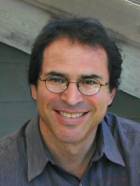
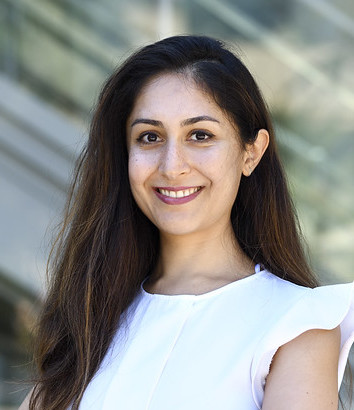
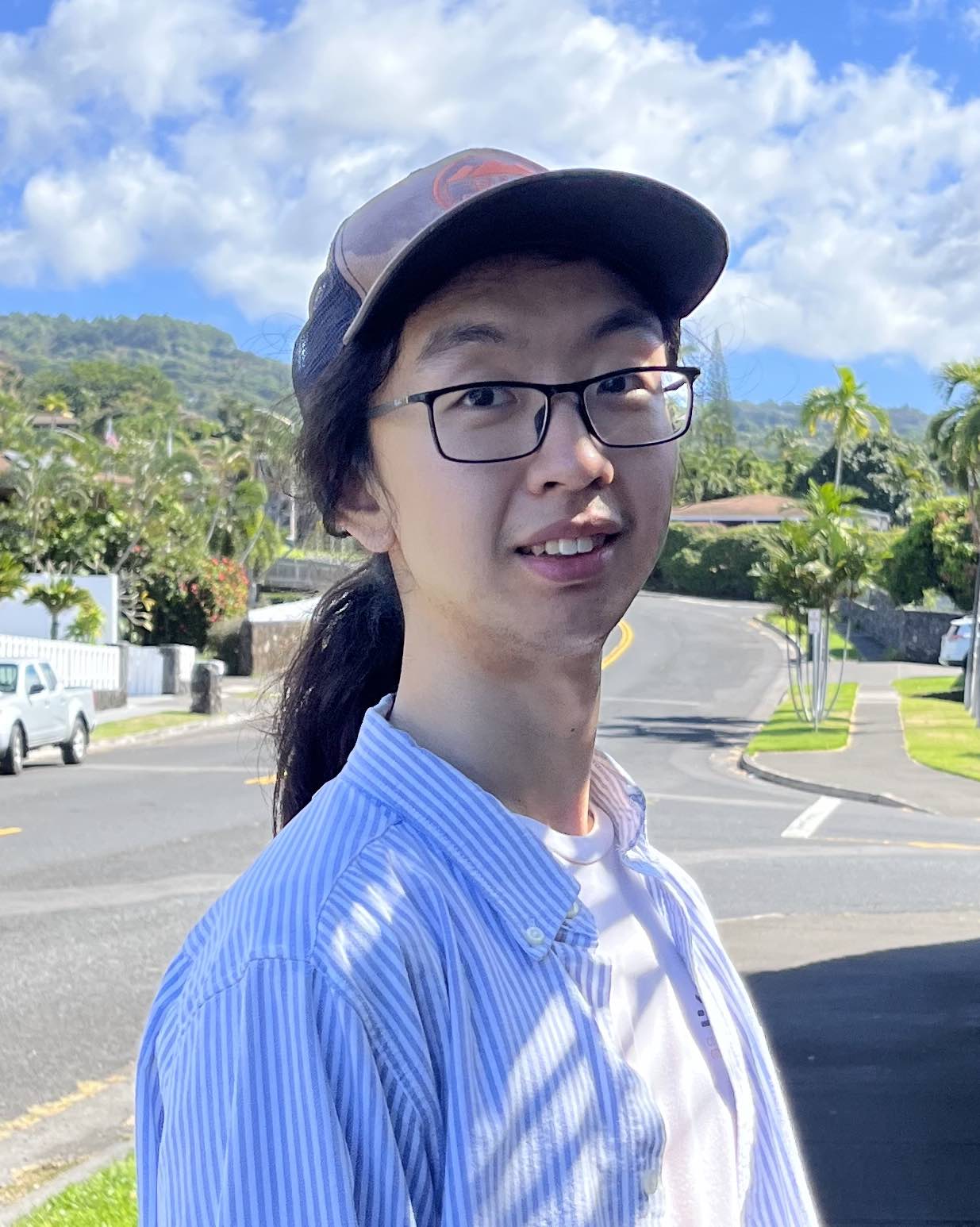
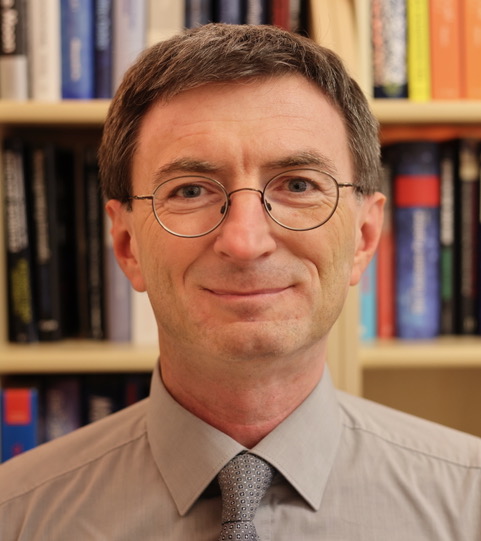
Khuzaima Daudjee is a Professor and David R. Cheriton Faculty Fellow in the Cheriton School of Computer Science at the University of Waterloo. His research focuses on systems-oriented problems at the intersection of systems and data management, particularly building large-scale systems, storage infrastructure in the cloud, and modern hardware applications. He leads projects in distributed database systems, elastic scaling, and resource optimization. His recent work includes Caerus (geo-replicated transactions), Tiresias (predictive storage), and MorphoSys (automatic physical design metamorphosis). Daudjee has chaired major conferences including ICDE 2026 and serves on editorial boards for VLDB, SIGMOD, and IEEE TKDE journals. His awards include ACM Distinguished Scientist and multiple best paper awards. Educational initiatives include developing distributed systems teaching materials and supervising graduate students across database and distributed systems domains. His industry collaborations involve cloud infrastructure optimization and scalable data processing frameworks.
Wei Xiang is an Assistant Professor of Economics at the University of Michigan's Department of Economics, housed within the College of Literature, Science, and the Arts. He earned his Ph.D. in Economics from Yale University in 2024, focusing on international trade, macroeconomics, and environmental economics. His research bridges economic theory with applied analyses, addressing global trade dynamics, macroeconomic policies, and environmental sustainability. Education: Ph.D. in Economics, Yale University (2024). Research Interests: His work explores the intersection of international trade policies, macroeconomic stability, and environmental regulations. He examines how trade agreements influence economic growth and environmental outcomes, with a focus on empirical methodologies to assess policy impacts. Additionally, he investigates macroeconomic models to understand global economic fluctuations and their implications for sustainable development. Publications: His recent articles highlight contributions to vehicle communication systems, signal processing, and wireless technologies, reflecting interdisciplinary engagement with engineering applications. These include real-time prediction models for GPS errors and beamforming optimization in vehicular networks. Labs/Teams: Not explicitly stated, but his research collaborations likely involve interdisciplinary teams in economics, engineering, and environmental science.
Rafał Jończyk is an Assistant Professor at the Department of Pragmatics, Faculty of English, Adam Mickiewicz University in Poznań, Poland, where he conducts research at the intersection of psycholinguistics, affective neuroscience, and bilingualism. His work primarily investigates how emotional processing differs between native and second languages using neurophysiological methods, particularly EEG. With a Ph.D. in English Linguistics from Poznań (2015) and postdoctoral experience at Pennsylvania State University, he has established himself as a leading researcher in bilingual emotional processing. His research interests span Affective Neuroscience , Experimental Pragmatics , Psycholinguistics , Bilingualism and Emotion , and the Neurophysiology of Creativity . His methodology heavily relies on EEG to examine language processing, with particular focus on emotional language comprehension and production in bilingual contexts. His work has demonstrated how bilinguals process emotional content differently in their native versus second languages, revealing reduced sensitivity to negative content in the second language. Jończyk's research program has evolved from early work on hemispheric specialization for emotional words to sophisticated EEG studies of emotional anticipation and metaphor processing in bilinguals. His most recent work explores hyperscanning methodologies to study real-time bilingual communication and the neural correlates of creative thinking in bilingual contexts. His publications show a clear progression from foundational studies of emotional word processing to increasingly complex investigations of emotional communication in naturalistic contexts. Cognitive Neuroscience Society Post-doctoral Fellows Award (2018) START scholarship for most talented young Polish scientists (2018) Scholarship from the Minister of Science and Higher Education (2020) Travel Grant Award for International Symposium on Bilingualism (2013) As Principal Investigator, Jończyk leads two major National Science Center projects examining psychophysiological correlates of affective language processing in bilinguals (2016-2018) and neurophysiological correlates of emotional speech production in bilingualism (2021-2025). He also participates in multiple international collaborations including NSF-funded research on divergent thinking in engineering education. His editorial roles include Topic Editor for Brain Sciences and Associate Editor for Applied Psycholinguistics, reflecting his standing in the field. He teaches courses in Psycholinguistics, Emotions in Social Communication, and Creativity and Language at the university level.
Professor Mark King is a leading academic in Sports Biomechanics at Loughborough University, affiliated with the School of Sport, Exercise and Health Sciences, where he serves as Lead for the Sport Performance Research Theme. He holds a BSc (1993) and PhD (1998) in Mathematics and Sports Science from Loughborough, with career progression from Lecturer (1999) to Senior Lecturer (2006), Reader (2012), and Professor (2019). He is also Warden of Royce Hall since 1999, overseeing 375 students' welfare. Education: BSc in Mathematics and Sports Science (1993), PhD in subject-specific computer simulation of dynamic jumping (1998). Affiliations: England and Wales Cricket Board (ECB), International Cricket Council (ICC), Badminton World Federation, Lawn Tennis Association. His research focuses on optimizing elite sport performance through biomechanical analysis, particularly in cricket and badminton. Key areas include injury prevention (e.g., ACL risks in badminton, lumbar stress injuries in cricket bowlers) and technique optimization. He has pioneered ICC-accredited testing for illegal bowling actions and explored machine learning applications in data collection. His work highlights trends in cricket fast bowling kinematics, racket sports smash mechanics, and gender-specific performance metrics. He actively collaborates with national and international sports organizations to translate research into practical guidelines for athletes and coaches. Awards: None explicitly mentioned in the text. Grants/Advising: No listed advisees, but extensive industry partnerships support his research. Labs/Teams: National Centre for Sport and Exercise Medicine (NCSEM), part of his research infrastructure.
José Eduardo Villalobos Graillet is an Assistant Professor of Spanish at Idaho State University , specializing in Modern Peninsular Literature and Culture with a focus on visual culture (film and television) . He previously held a position as Spanish Instructor at Wilfrid Laurier University in the Department of Languages and Literatures. Research Areas : Spanish Film Studies, Spanish Medieval Literature, Latin American and Caribbean Studies, Teaching Spanish as a Foreign Language, Visual Culture, and Critical Pedagogy. His scholarly work examines film and television adaptations of 'La Celestina' , analyzing censorship dynamics across Francoist Spain, the Democratic Transition, and contemporary Spain. He also contributes to Spanish pedagogy , developing technological tools like Lang-8 for written expression and culturally immersive teaching units on topics such as winter festivals and Caribbean music. His publications span both critical academic analysis and methodological innovations for language instruction. Key Themes in Publications : Adaptation fidelity, political censorship, intercultural pedagogy, and the role of digital platforms in language learning.
Michele Zorzi is a Professor of Telecommunications at the School of Engineering, University of Padova, Italy, where he has held a faculty position since 2003. He leads the SIGNET (Signal processing and Networking) Research Group, focusing on cutting-edge wireless networking challenges including mmWave communications and underwater networks. His extensive publication record exceeds 600 papers in top-tier journals and conferences, reflecting significant contributions to the field through both theoretical and experimental work. He received his Laurea Degree (1990) and Ph.D. (1994) in Electrical Engineering from the University of Padova. Prior academic appointments include Politecnico di Milano (1993-1996), University of California San Diego (1995-1998), and University of Ferrara (1998-2003), where he progressed from Associate Professor to full Professor. His educational trajectory demonstrates deep roots in Italian academia with international exposure. Professor Zorzi's research spans wireless communications and networking, with current emphases on mmWave networking for vehicular systems, underwater acoustic/optical communications, non-terrestrial networks, and AI-driven networking solutions. His group conducts experimental validations including at-sea trials for underwater systems and testbeds for vehicular networks. Key projects include PRATA for predictive QoS in autonomous driving and IoT-based environmental monitoring of the Venice Lagoon, demonstrating practical applications of theoretical work. Analysis of his 2022-2025 publications reveals strong trends in applying artificial intelligence to networking challenges across diverse environments. There is significant emphasis on vehicular networks (predictive QoS, teleoperated driving), underwater systems (acoustic/optical communications, AUV swarms), and satellite networks (Starlink integration, NTN security). Experimental validation in real-world scenarios like the Venice Lagoon monitoring project and underwater sea trials characterizes his applied research approach. His scientific accolades include: IEEE Fellow (2007) IEEE Communications Society Best Tutorial Paper Award (2008, 2019) Stephen O. Rice Best Paper Award (2018) Multiple best paper awards at IEEE conferences (2005-2020) As principal investigator for numerous European and US research projects plus 20+ industry-funded initiatives, Professor Zorzi has mentored over 35 PhD students and post-docs. Graduates now hold prominent positions at institutions including Stanford, UCSD, CTTC, and Huawei. His SIGNET group maintains active international collaborations and contributes to open-source networking tools via GitHub, demonstrating commitment to community engagement. The SIGNET Research Group, housed within the Department of Information Engineering, operates specialized experimental facilities for mmWave and underwater communications. Current initiatives include AI-based predictive QoS frameworks for vehicular networks, underwater optical communication systems using ultraviolet light, and large-scale IoT deployments for environmental monitoring. The group's GitHub presence indicates strong open-science practices, while recent sea trials confirm hands-on experimental capabilities beyond theoretical work.
Edward H. Adelson is the John and Dorothy Wilson Professor of Vision Science at MIT, affiliated with the Department of Brain and Cognitive Sciences and the Computer Science and Artificial Intelligence Laboratory (CSAIL). His research spans computer vision, human vision science, and robotics, with a focus on artificial touch sensing and tactile robotics. He has pioneered technologies like the GelSight tactile sensor, enabling high-resolution touch sensing for robots surpassing human skin sensitivity. Adelson holds a PhD in Experimental Psychology from the University of Michigan (1979) and a BA in Physics and Philosophy from Yale University (1974). His career includes roles at MIT since 1987, progressing from Associate Professor to Professor and later the Wilson Chair. He contributed to early vision theories, including the plenoptic function and motion energy models, and has been recognized with prestigious awards like the Helmholtz Prize (2013) and Rank Prize (1992). His research interests include material perception, optical sensing, and the integration of vision and touch. Key innovations include the plenoptic camera, layered representation techniques for motion analysis, and tactile sensors for robotics. Adelson has authored over 300 publications and holds numerous patents in imaging, vision, and robotics. Awards and honors include membership in the National Academy of Sciences and the American Academy of Arts and Sciences. His work bridges neuroscience and engineering, advancing both fundamental understanding and practical applications in robotics and computer vision.
Baharan Mirzasoleiman is an Assistant Professor in the Department of Computer Science at the University of California, Los Angeles (UCLA), where she leads the BigML research group. Prior to joining UCLA, she was a postdoctoral research fellow in Computer Science at Stanford University working with Jure Leskovec. She received her Ph.D. in Computer Science from ETH Zurich advised by Andreas Krause. Her research focuses on addressing sustainability, reliability, and efficiency of machine learning, with particular emphasis on improving big data quality by developing theoretically rigorous methods to select the most beneficial data for efficient and robust learning. Her work spans several critical areas including data efficiency, robustness against label noise and data poisoning, and addressing spurious correlations in machine learning models. She has made significant contributions to understanding how neural networks exploit spurious features that correlate with certain categories during training but fail to generalize to minority groups. Professor Mirzasoleiman's research demonstrates how theoretically grounded approaches can lead to practical improvements in model robustness and efficiency across various applications including medical diagnosis and environmental sensing. Her work has resulted in the development of the SpuCo package, a Python library that provides modular implementations of state-of-the-art methods to address spurious correlations, along with controllable synthetic datasets like SpuCoMNIST and large-scale vision datasets like SpuCoAnimals. She has received numerous prestigious awards including the ETH medal for Outstanding Doctoral Thesis, being selected as a Rising Star in EECS by MIT, an NSF Career Award, a UCLA Hellman Fellows Award, and an Okawa Research Award. Her students have also received multiple fellowships and awards including Amazon Doctoral Student Fellowships and an OpenAI Superalignment Fast Grant. Professor Mirzasoleiman actively contributes to the academic community through invited talks at major conferences including ICML, ICLR, NeurIPS, and KDD, as well as co-organizing workshops on new frontiers in adversarial machine learning and sparsity in neural networks. She has developed educational resources including tutorials on Foundations of Data-efficient Learning presented at ICML 2024.
Zongyi Li is a Research Fellow at Massachusetts Institute of Technology , hosted by Kaiming He. They are currently pursuing a Ph.D. in Computing and Mathematical Sciences at Caltech (2019-2025), mentored by Anima Anandkumar and Andrew Stuart. Ph.D. candidate: Computing and Mathematical Sciences, Caltech (2019-2025) B.Sc. in Computer Science and Mathematics with a Jazz minor from Washington University in St. Louis (2015-2019) They focus on Neural Operators for learning solution operators in Partial Differential Equations (PDEs) , particularly in fluid mechanics and earth science . Their work models physical simulations with chaotic behaviors and complex geometries, showing applications in weather forecasting , carbon storage , and aerodynamics simulation . Publications emphasize resolution-invariant models , chaotic systems , and zero-shot super-resolution capabilities. Their research combines Fourier analysis , graph networks , and physics-informed loss functions to achieve state-of-the-art performance in PDE solving with up to 1000x speedup over traditional solvers. Fellowships: Kortschak Scholarship PIMCO Fellowship Amazon AI4Science Fellowship Nvidia Fellowship MIT Novo Nordisk AI Fellowship Code & Open-Source: Co-developer of the NeuralOperator library Implementations for Fourier Neural Operators , Graph Neural Operators , and Tensorized Neural Operators Media Recognition: Quanta Magazine MIT Tech Review NVIDIA Features Towards Data Science
Prof. Dr.-Ing. Hakan Kayal serves as University Professor for Aerospace Engineering at the University of Würzburg, holding the Chair of Computer Science VIII (Space Technology) and chairing the Interdisciplinary Research Center for Extraterrestrial Studies (IFEX). His leadership bridges computer science and space systems engineering within the university's Institute of Computer Science. Research focuses on three synergistic domains: nanosatellite development for extraterrestrial missions (including the SONATE-2 6U platform demonstrating AI-driven onboard processing), scientific investigation of Unidentified Anomalous Phenomena (UAP) through the university's collaboration with the Federal Aviation Office, and spacecraft autonomy systems enabling higher mission independence. Current projects include the NEAlight mission (extended to develop the Apophis Interceptor concept for the 2029 asteroid flyby), VaMEx3-MarsSymphony for Mars exploration, and JMU Space Observatory initiatives. Publication trends reveal strong emphasis on asteroid defense strategies (particularly for Apophis), CubeSat-based UAP detection methodologies, and real-time AI processing in constrained space environments. His team actively engages students through ADS-B tracking, Meteosat App development, and Moon Base 2030 projects, while recent recognition includes co-authoring a landmark UAP review in Progress in Aerospace Sciences with 33 international scientists.
Theo Damoulas is a Professor of Machine Learning at the University of Warwick with a joint appointment in the Department of Computer Science and Statistics. He is a Turing AI Fellow (2021-2026) through UK Research and Innovation, an ELLIS member, and a Visiting Professor at New York University's Center for Urban Science and Progress (CUSP). He founded and leads the Warwick Machine Learning Group and has directed major projects at The Alan Turing Institute including Project Odysseus and the London Air Quality project. Education includes: PhD in Probabilistic Multiple Kernel Learning (University of Glasgow, 2009) MSc in Informatics (Distinction, University of Edinburgh, 2004) MEng in Mechanical Engineering (1st Class, University of Manchester, 2003) His research focuses on probabilistic machine learning and Bayesian statistics, emphasizing the integration of structural priors, spatiotemporal dependencies, physical laws, and causal relationships. Key applications include Digital Twins, urban science, and computational sustainability. His work advances robust and scalable inference methodologies for complex real-world systems. Publications demonstrate strong emphasis on Bayesian methods, spatiotemporal modeling, and uncertainty quantification, with applications spanning battery modeling, urban mobility, federated learning, and causal inference. Recent work shows increased focus on physics-informed models, federated learning frameworks, and causal abstraction techniques. Major scientific awards: Turing AI Acceleration Fellowship (2021-2026) Best Paper Awards (Wilkes 2024, AISTATS 2022, IEEE ICMLA 2010) ACM SIGMOD Most Reproducible Paper (2017) Dissertation Award (Classification Society 2012) Teaching Excellence nominations (Warwick 2015-2017) He actively advises PhD students and secured significant grants including the £multi-million Turing AI Fellowship. Current doctoral researchers investigate federated learning, causal inference, and spatiotemporal modeling. He leads the Warwick Machine Learning Group, a cross-departmental team developing foundational ML methods for scientific and societal challenges.
Holly J. Benjamin, MD is a distinguished sports medicine specialist at the University of Chicago, serving as the inaugural Director of the Primary Care Sports Medicine Program at UChicago Medicine Student Wellness Center. She holds leadership positions including Chair of the Committee on Sports Medicine & Fitness for the Illinois Chapter of the American Academy of Pediatrics, and serves as Head Medical Team Physician for the WNBA Chicago Sky and medical officer for major events including the Bank of America Chicago Marathon, US Soccer, and USA Triathlon. Her educational background includes: B.S. in Integrated Life Sciences, Kent State University (1994) Combined BS/MD, Northeastern Ohio Universities College of Medicine (1994) MD, Northeastern Ohio Universities College of Medicine (1994) Residency in Pediatrics, The University of Chicago Children's Hospital (1997) Fellowship in Primary Care Sports Medicine, Lutheran General Hospital (1998) Dr. Benjamin specializes in sports medicine with particular expertise in youth, adolescent, and collegiate athletes. Her research spans acute and overuse sports injuries, concussion management, sport biomechanics, and musculoskeletal ultrasound. She has made significant contributions to understanding injury prevention strategies, safe return-to-play protocols, and the psychological aspects of sports injuries. Her work frequently addresses female athletes and elite/professional athletes, with emphasis on evidence-based approaches to optimize performance while minimizing injury risk. Recent publications demonstrate a strong focus on concussion research, with multiple studies examining diagnostic approaches, recovery trajectories, and factors influencing outcomes. Her work spans biomechanics, mental health considerations in sports injuries, and innovative approaches to injury prevention across various athletic populations. Her scientific recognition includes: Election as Fellow of the American College of Sports Medicine (2003), becoming the second female pediatrician ever elected Election as Fellow of the American Medical Society of Sports Medicine Distinguished Alumni Award from The New Aurora High School Alumni (1999) Invitation to serve as volunteer physician for the Olympic Training Center (2008) Multiple expert contributions to national media including Runner's World and the Naperville Sun Dr. Benjamin actively mentors through her coaching roles at high school and collegiate levels, emphasizing safe return-to-play post-injury and injury prevention. She has developed educational content through video productions for the American Academy of Pediatrics and serves as head team physician for the University of Chicago Lab School and the NCAA Division III UChicago Maroons. Notably, she is one of only a few sports medicine specialists in the country offering diagnostic and procedural musculoskeletal ultrasound in her office, demonstrating her commitment to advanced diagnostic capabilities for patient care.
Massimo Piccardi is a Professor of Natural Language Processing (NLP), Computer Vision, and Machine Learning at the University of Technology Sydney (UTS) , where he has been since 2002. He currently serves as the Head of the School of Electrical and Data Engineering and leads the Big Data Analytics program at the Global Big Data Technologies Centre. His research focuses on advancing NLP, machine learning applications in healthcare, and cybersecurity in IoT systems. He has authored over 200 journal papers and conference proceedings, secured significant ARC and CRC grants, and holds the IEEE Computer Society Distinguished Contributor Award (2022). Education & Professional Roles: Joined UTS in 2002, progressing from Associate Professor (2002–2007) to Professor (2008–present). Serves as Associate Editor for IEEE Transactions on Big Data and Editor for Artificial Intelligence in Medicine. Active in professional societies including IEEE, ACL, and ALTA (President, 2023–2024). Research Interests: Core areas include NLP (translation, summarization, adversarial attacks), healthcare informatics (clinical NLP, health service analysis), and cybersecurity (IoT security, privacy-preserving systems). Cross-cutting themes include generative models, cross-lingual systems, and ethical AI. Grants & Projects: Principal Investigator on ARC Discovery/Linkage projects and CRC grants. Recent projects include controllable machine translation (Amazon), privacy-preserving digital agriculture, and STEM innovation (ASTRID project with NBN Co). Labs & Collaborations: Leads the UTS Global Big Data Technologies Centre, collaborating on projects like adversarial NLP attacks, medical machine translation, and secure IoT frameworks.
Vicente Talanquer is a University Distinguished Professor in the Department of Chemistry and Biochemistry at the University of Arizona, College of Science. His academic journey includes a B.S., M.A., and Ph.D. in Chemistry from the Universidad Nacional Autónoma de México (UNAM), followed by postdoctoral research at the University of Chicago's James Frank Institute. He has held various academic roles, including Professor and Associate Professor at UNAM before joining the University of Arizona in 2000. His research focuses on chemistry education, particularly student reasoning, assessment, and the development of chemical thinking. Key areas include understanding how students conceptualize chemical reactions, design learning progressions, and improve formative assessment strategies. He has led initiatives such as the Instructional-Teams Model to enhance teaching practices in STEM courses. Dr. Talanquer has received numerous awards, including the ACS Award for Achievement in Research (2021) and Arizona Professor of the Year (2015). He actively contributes to national and international educational committees, editorial boards, and professional societies such as the American Chemical Society and NARST. His work emphasizes curriculum innovation, teacher preparation, and fostering equity in science education. His research is supported by grants from the National Science Foundation and the UA Provost Investment Fund, focusing on active learning, large-enrollment course redesign, and systems thinking approaches. Talanquer's publications span over 200 peer-reviewed articles, textbooks, and educational resources in chemistry education, reflecting his commitment to advancing both research and practice in the field.
Zhiyong Huang is an Associate Professor at the National University of Singapore (NUS) School of Computing. He holds multiple leadership roles, including Deputy Director of the NUS Business Analytics Centre, Director of the Computing Translational Research & Development (C-TReND) Centre, and Assistant Dean (Industry Relations). He is also a Senior Principal Investigator at the NUS Chongqing Research Institute. Education: PhD in Computer Science from École Polytechnique Fédérale de Lausanne (EPFL), MEng and BEng in Computer Engineering from Tsinghua University. Leadership: Senior Member of ACM and IEEE, Pioneer Member of ACM SIGGRAPH, and Chair of the Singapore ACM SIGGRAPH Chapter. Research Interests: His work spans Data Analytics, Machine Learning, Computer Vision, Human-Robot Interaction, and Computer Graphics. Key projects include the NUS Digital Twin initiative and secure data analytics pipelines. Article Trends: Recent publications focus on time series generation, cryptocurrency benchmarks, medical image registration, and phishing detection. These works integrate machine learning, computer vision, and multimodal systems. Scientific Awards: Finalist, World Technology Summit & Awards (Entertainment, 2010) Bronze, National Science and Technology Progress Award (1992) Tsinghua 12.9 Distinguished Young Teacher Award (1989) Grants & Service: Extensive involvement in Singapore's IT Standards Committee, review panels for EDB SIIRD projects, and editorial roles. He has served as PC co-chair, local chair, and reviewer for numerous conferences and journals.