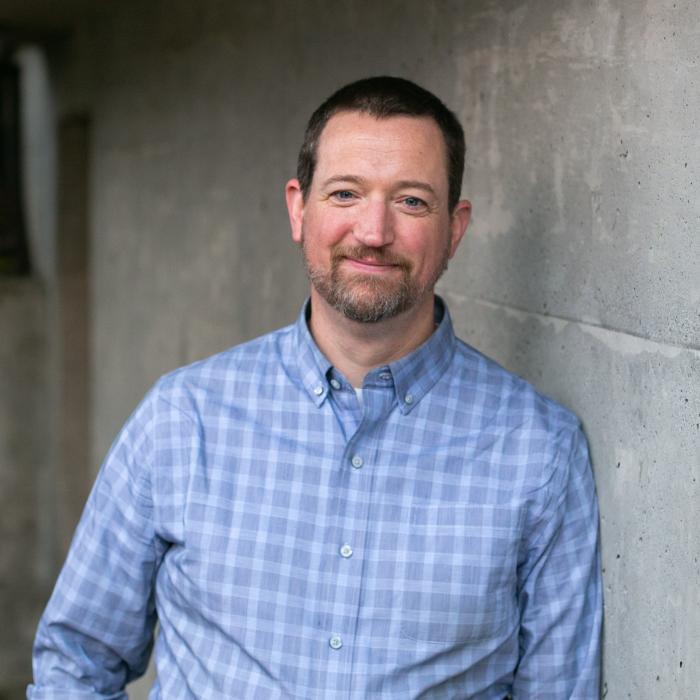
Thomas Nordahl is a Professor of Pedagogy at the University of Inland Norway, affiliated with the Faculty of Teacher Education and Pedagogy and the Department of Pedagogy. He has been at the institution since 2006, focusing on research and academic leadership. Nordahl holds a doctorate from the University of Oslo (2000) and a master’s in pedagogy (cand. paed). He is additionally a Professor II at Aalborg University. Education: Doctorate in Pedagogy (University of Oslo, 2000); Master’s in Pedagogy (cand. paed); Qualified general teacher. His research interests center on learning environments, inclusion, adapted education, pedagogical analysis, and educational leadership. He supervises PhD fellows and oversees internal/external research projects, including analyzing SePU’s extensive data collections. He teaches across kindergarten and school sectors, emphasizing practical educational challenges. Nordahl leads initiatives within the Center for Practice-Oriented Educational Research and the Centre for Studies of Educational Practice, focusing on bridging theory and practice in education. His work addresses contemporary issues in educational policy and leadership.
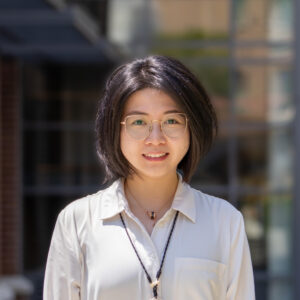
Dr. Hengrui Cai is an Assistant Professor of Statistics at the University of California Irvine (UCI), affiliated with the Donald Bren School of Information and Computer Sciences. She holds a Ph.D. in Statistics from North Carolina State University (NCSU) and a B.S. in Statistics from Zhejiang University. Her research focuses on causal inference, reinforcement learning, and graphical models, with applications in precision medicine, healthcare analytics, and epidemiology. She develops interpretable solutions for individualized decision-making, particularly in healthcare settings such as ICU patient treatment optimization and pandemic analysis. Notable achievements include the NSF CDS&E-MSS Award (2024), ICS Research Awards (2023–2024), and recognition for contributions to causal discovery and policy evaluation. Dr. Cai advises graduate and undergraduate students on projects involving causal AI, machine learning, and healthcare data analysis. She teaches courses like 'Causal Machine Learning' and 'Introduction to Probability and Statistics,' emphasizing interdisciplinary approaches to real-world problems. Her work integrates statistical theory with practical applications, exemplified by software tools like ANOCE-CVAE for causal mediation analysis and the Sepsis EHR Benchmark Environment for reinforcement learning. Dr. Cai collaborates widely, contributing to projects such as quantifying the impact of the 2020 Hubei lockdowns on virus spread in China through causal graph analysis.
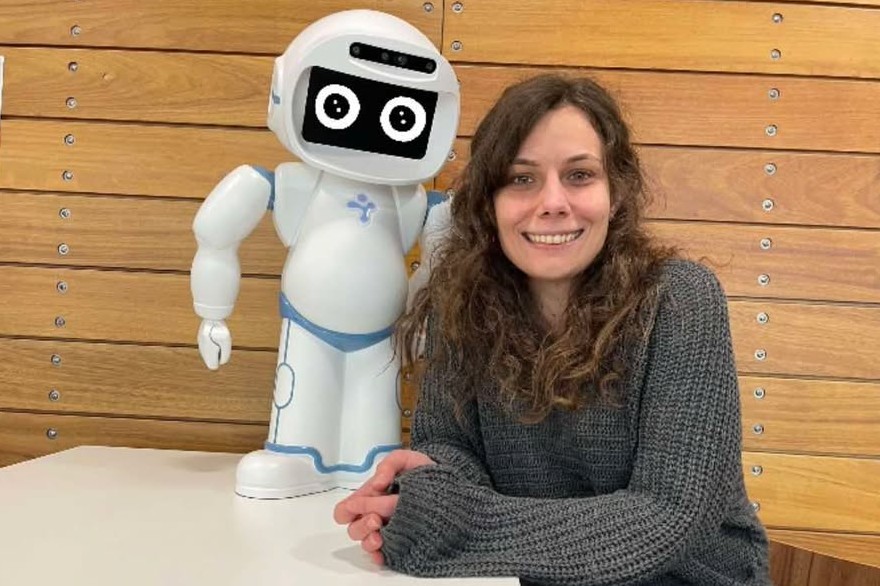
Fethiye Irmak Dogan is a Postdoctoral Research Associate at the University of Cambridge's Department of Computer Science and Technology, working in the Affective Intelligence and Robotics Laboratory. She holds a Ph.D. in Computer Science from KTH Royal Institute of Technology (2023), an M.Sc. and B.Sc. in Computer Engineering from Middle East Technical University (METU). Her research focuses on human-robot interaction, continual learning, and socially appropriate robot behaviors leveraging explainability. She has conducted robotics research at KTH's Division of Robotics, Perception and Learning and collaborated internationally, including a visiting scholar stint at Georgia Institute of Technology. Education highlights include: B.Sc., Computer Engineering, METU (2015) M.Sc., Computer Engineering, METU (2018), with research at Kovan Robotics Lab Ph.D., Computer Science, KTH (2023), with visiting research at Georgia Tech Research interests emphasize deploying autonomous robots in human environments, resolving ambiguous user instructions through explainability, and enabling socially intelligent robot behaviors. Recent work explores continual learning for context adaptation, multimodal frameworks for human-robot collaboration, and vision-language models for wellbeing assessment in children. Key projects include BT-ACTION (modular instruction understanding), GRACE (LLM-driven socially appropriate actions), and STREAK (continual learning for household tasks). Her contributions span robotics, AI ethics, and human-centered design, with a focus on real-world applications in healthcare and education.
Kevin Schut, a Teaching Professor at Trinity Western University's School of the Arts, Media + Culture, is a Game Studies scholar with expertise in video games, religion, ethics, and media ecology. He earned his PhD in Communication Studies (2004) and BA in Communication Arts & Sciences, History (1996), and has held leadership roles including Associate Dean and Chair of Media + Communication. His 2013 book Of Games & God explores Christian perspectives on gaming. PhD, Communication Studies, University of Iowa (2004) BA, Communication Arts & Sciences & History, Calvin College (1996) His research focuses on moral decision-making in games, media's cultural impact, and technology-religion intersections. Recent projects include analyzing procedural generation in No Man’s Sky and faith-based game design frameworks. Key awards include the 2013 Word Guild Best Book award and TWU's 2009 Provost’s Innovative Teaching Award. He teaches courses like Video Games and Culture and Media, Culture, and Criticism .
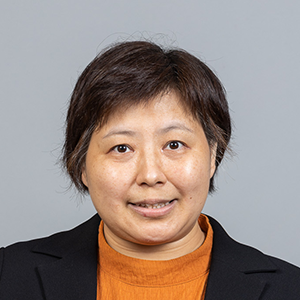
Liu Lili is a Lecturer (Educator Track) in the Department of Computer Science at the School of Computing, National University of Singapore. She holds a Ph.D. from Nanyang Technological University and a Master's in Computer Science from Shanghai University. Prior to NUS, she served as a Senior Research Scientist at Singapore Polytechnic and a Scientist at A*STAR's Institute of High-Performance Computing. Her research focuses on Machine Learning, Computer Vision, and Multi-modal Learning, with applications in FinTech, Social Media Analysis, and Algorithms & Theory. Notable projects include AI-driven coating inspection systems for marine assets and behavioral competency assessment tools for navigational safety. She has contributed to robotics for construction quality assessment and interactive virtual environments for rehabilitation. Liu's publications span AI applications in finance, robotics, and material science, reflecting her expertise in bridging theoretical computer science with practical industrial solutions. Her work emphasizes automation, anomaly detection, and multi-modal data integration.
Gergely Baics is an Associate Professor of History and Urban Studies at Barnard College, serving as Helman Endowed Faculty Chair of Urban Studies and Faculty Co-Director of the Barnard Empirical Reasoning Center. He holds a joint appointment between the History Department and Urban Studies Program, with collaborative ties to Columbia University's History Department and the Center for Spatial Research at GSAPP. His research focuses on spatial and urban history, digital public history, and 19th-century U.S. economic and social dynamics. Notable projects include the Envisioning Seneca Village 3D digital model and the Mapping Historical New York spatial atlas. Education: B.A. (2002) and M.A. (2003) from ELTE University and Central European University in Budapest; M.A. and Ph.D. (2009) in History from Northwestern University. His work has been supported by grants from the American Council of Learned Societies, the Andrew W. Mellon Foundation, and the Max Weber Fellowship. Research interests emphasize urban food systems, spatial analysis of historical patterns, and digital methods. His book Feeding Gotham (2016) was recognized as one of the Financial Times' Best History Books. Current projects explore 19th-century urban peripheries and Indigenous urban systems in colonial Spanish America. Awards include Barnard's Gladys Brooks Teaching Award and a CaGIS Map Design Competition win. Courses taught include transnational urban history, New York City history, and spatial history methodologies. Collaborative efforts involve multidisciplinary teams across institutions, focusing on public-facing digital history projects.
Dr. Anna Bobak is a Senior Lecturer in Psychology at the University of Stirling, UK. She holds a PhD from Bournemouth University (2016) and joined Stirling as a Research Assistant on an EPSRC project under Peter Hancock before transitioning to her current role. Her primary research focuses on individual differences in unfamiliar face recognition, particularly developmental prosopagnosia, and the reliability of face-processing assessments. She also investigates neurodiversity in women, emphasizing lived experiences of autism and ADHD, including camouflaging behaviors and societal awareness. Research Interests: Face Recognition: Examines perceptual strategies, diagnostic criteria (e.g., Balanced Integration Score), and technological applications in forensic contexts. Neurodiversity: Explores gender-specific manifestations of autism and ADHD, societal perceptions, and support mechanisms. Cognitive Methodology: Advances psychometric rigor in face-processing studies and critiques measurement validity. Her work bridges theoretical research and real-world applications, such as evaluating automated face recognition technology’s biases and collaborating on initiatives like #ScienceForUkraine to aid displaced academics. She is affiliated with the Cognition in Complex Environments research group and contributes to global security and resilience themes at Stirling.
Dr. Jeremy Knox is an Associate Professor of Digital Education at the University of Oxford's Department of Education (since 2023). Previously, he served as Senior Lecturer at the University of Edinburgh and co-directed its Centre for Research in Digital Education. His research critically examines interactions between education, data-driven technologies, and societal structures, with ESRC- and British Council-funded projects exploring AI ethics, digital inequality, and global educational policies. He co-convenes the Society for Research in Higher Education's Digital University network and teaches on the MSc in Education's Digital and Social Change pathway. Education: PhD and MSc from University of Edinburgh; PGCE from University of Reading (awarded ESRC scholarship for PhD). Key Works: Authored influential books including AI and Education in China (2023), Data Justice and the Right to the City (2022), and Artificial Intelligence and Inclusive Education (2019). Awards: ESRC PhD Scholarship (2014). Research interests focus on postdigital theory, AI ethics, data justice, and global educational technology dynamics. His work critiques algorithmic governance in education and advocates for participatory data practices. Recent projects analyze China's AI education policies and the socio-technical implications of datafied learning environments. Publications span topics like MOOCs, learning analytics, and the political economy of EdTech, emphasizing critical perspectives on technological determinism. His writing bridges philosophy, sociology, and education policy to address systemic inequities exacerbated by digital tools.
Victoria J. Orphan is the James Irvine Professor of Environmental Science and Geobiology at Caltech, where she directs the Center for Environmental Microbial Interactions. Her research investigates microbial processes in anaerobic ecosystems including deep-sea methane seeps, hydrothermal vents, and coastal sediments using interdisciplinary approaches combining molecular biology, stable isotope techniques, and geochemistry. Her laboratory focuses on: Microbial partnerships in methane cycling Ecophysiology of uncultured archaea and bacteria Viral ecology in marine environments Biogeochemical impacts of microbial communities Blue carbon sequestration in seagrass ecosystems Professor Orphan has developed innovative methods including BONCAT-FISH and nanoSIMS for studying microbial activity in environmental samples. Her research group maintains active field programs in Monterey Canyon and hydrothermal vent systems, and develops high-pressure incubation systems for studying deep-sea microbes. She teaches courses on microbial ecology and evolution, and mentors graduate students through the Geobiology and Environmental Science programs.
Özer Özkahraman is a postdoctoral researcher at the Division of Robotics, Perception and Learning (RPL) at KTH Royal Institute of Technology. He works under Ivan Stenius and John Folkesson, focusing on underwater mission planning, simulation, and integration of autonomous systems. His email is ozero@kth.se . He completed his PhD at KTH under Petter Ögren, researching large-scale multi-agent coverage planning for autonomous underwater vehicles (AUVs). Current projects include the SMaRCSim multi-domain simulation platform and development of underwater vehicles like LoLo, SAM, and Evolo. Research interests span autonomous underwater systems, multi-agent coordination, control systems, and simulation infrastructure. He emphasizes modular, accessible frameworks for vehicle testing and real-world deployment. His work bridges theoretical methods (e.g., control barrier functions) with practical applications in marine robotics. Publications focus on AUV navigation, environmental sensing, and adaptive control. Projects like Real2Sim aim to align simulation with real-world vehicle dynamics using motion capture data. He collaborates internationally on topics like data-driven damage detection and model compression for resource-constrained robots. No academic awards are explicitly mentioned. He actively seeks collaborators for projects in sonar simulation, flow field modeling, and cyber-physical system integration.
Natacha Crooks Dr. Natacha Crooks is an Assistant Professor in the Department of Electrical Engineering and Computer Science (EECS) at UC Berkeley. Her research focuses on distributed systems, databases, and security, with a particular emphasis on consistency models, BFT protocols, and cloud computing. She is a founding member of the SkyLab and a core contributor to the Data Systems and Foundations Group at Berkeley. She holds a Ph.D. in Distributed Systems from the University of Texas at Austin (2019) and a BA in Computer Science and Law from the University of Cambridge (2012). Affiliations & Roles: Assistant Professor, UC Berkeley EECS Visiting Researcher at Azure Research, Security & Privacy Founding Member of SkyLab Member of Berkeley Center for Decentralized Intelligence Former Scientific Advisor at Improbable and Astronomer Research Interests: Her work bridges distributed systems and database research, addressing challenges in transactional consistency, fault-tolerant protocols, and cloud resource optimization. Key themes include: Designing scalable BFT consensus algorithms Secure multi-cloud storage solutions Optimizing distributed transaction processing Privacy-preserving distributed systems Awards & Recognition: Sloan Research Fellow (2025) NSF CAREER Award ACM SIGOPS Dennis M. Ritchie Doctoral Dissertation Award (2020) IEEE CS TCDE Early Career Award (2024) Teaching: Fall 2025: CS 294-282 (Research Culture and Community Norms), Wheeler 130. Industrial Collaboration: Prior roles include visiting researcher at Cornell University, Microsoft Research (DMX group), and Imperial College London. Industrial partnerships include work with Materialize, Astronomer, and Improbable.
Anant Sahai is the Qualcomm Chair Professor in the Department of Electrical Engineering and Computer Sciences (EECS) at the University of California, Berkeley. He holds affiliations with the Berkeley Artificial Intelligence Research Lab (BAIR), Berkeley Laboratory for Information and System Sciences (BLISS), and the Berkeley Wireless Research Center (BWRC). His academic journey includes a BS from UC Berkeley (1994), and MS (1996) and PhD (2001) degrees from MIT. He previously worked at Enuvis, Inc., focusing on adaptive software radio techniques for low-SNR GPS environments. Research interests span machine learning, wireless communication, information theory, signal processing, and decentralized control, with a focus on intersections between these fields. Key areas include spectrum sharing, ultra-reliable low-latency wireless protocols, and the foundations of overparameterized machine learning. Recent work explores in-context learning in modern AI models. He has received awards such as the IEEE ComSoc Leonard G. Abraham Prize (2012) and teaching/mentorship accolades at Berkeley. He advises UC Berkeley’s Eta Kappa Nu chapter and coordinates machine learning efforts for NSF’s SpectrumX. Current teaching includes CS 182/282A on deep neural networks. His lab focuses on theoretical and applied challenges in communication systems, AI, and control theory. Awards: IEEE ComSoc Leonard G. Abraham Prize (2012), Teaching Excellence Awards (2015–2017) Grants: NSF Center for Spectrum Innovation (SpectrumX), multiple collaborative projects in wireless and AI Labs/Teams: BLISS, BAIR, BWRC
Brad Hayes is an Associate Professor of Computer Science at the University of Colorado Boulder within the College of Engineering and Applied Science, where he directs the Collaborative AI and Robotics (CAIRO) Laboratory. He also serves as Chief Technology Officer at Circadence, leading efforts in developing AI-enabled products for cybersecurity training and assessment. Undergraduate degree from Boston College PhD in Computer Science from Yale University Postdoctoral Associate at MIT Professor Hayes' research focuses on developing techniques that enable autonomous agents and robots to learn from and collaborate with humans safely, reliably, and productively. His work occurs at the intersection of pervasive and personalized artificial intelligence, human-robot teaming, and decision support. He has made significant contributions to collaborative robotics, dependable explainable AI, and imitation learning, with applications spanning manufacturing, healthcare, disaster response, autonomous vehicles, and space exploration. His recent publications reveal a strong emphasis on human-robot interaction, with particular focus on improving predictability in collaborative tasks, developing explainable AI systems that build trust, leveraging augmented and virtual reality for enhanced collaboration, and creating more efficient learning algorithms from human demonstrations. His work increasingly integrates large language models and advanced neural network architectures while maintaining a strong human-centered design approach. Sustainability Recognition (2025) for computational efficiency in motion planning Best Student Paper Runner-up at AAMAS 2022 Nominated for Best Technical Paper at HRI 2024 Best Technical Paper Runner-up at HRI 2019 Hayes has successfully mentored numerous graduate students through the CAIRO Lab, including multiple PhD graduates in 2024 alone. His lab receives funding from various organizations supporting research in human-robot interaction and collaborative AI. He frequently collaborates with industry partners and has established connections with major technology companies through his research and speaking engagements. The CAIRO Lab, under Hayes' direction, is a vibrant research environment focused on turning theoretical concepts into practical applications through hands-on work with real robots and human participants. The lab's research spans multiple domains including manufacturing, disaster response, autonomous vehicles, and space exploration, with a consistent emphasis on safe and effective human-machine teaming.
Dominic Thibault is an Assistant Professor at the Faculty of Music, Université de Montréal . His research-creation explores human-machine interaction in musical contexts, focusing on embodied cognition through electroacoustic compositions, audiovisual performances, and musical software development. Co-director, Laboratoire Formes·Ondes Active member, CIRMMT (Centre for Interdisciplinary Research in Music Media and Technology) Research axis leader, Expanded Musical Practice (CIRMMT) Member, Québecor Millénium entrepreneurship committee Scientific committee member, ACFAS
Qian Lou serves as an Assistant Professor in the Department of Computer Science at the University of Central Florida and is an active member of the university's Cybersecurity and Privacy Cluster. His research program targets critical challenges in deep learning systems, specifically enhancing efficiency, privacy, and security for applications in computer vision and natural language processing. His academic foundation includes: Ph.D. in Computer Engineering from Indiana University, Bloomington M.S. in Computer Engineering from Indiana University Bloomington B.S. in Computer Science from Shandong University Lou's research spans deep learning methodologies with specialized focus on computer vision and natural language processing systems. His work integrates cybersecurity principles into machine learning architectures, particularly through privacy-preserving techniques and secure computational frameworks. This interdisciplinary approach bridges computer systems architecture with practical AI deployment challenges, emphasizing efficiency optimizations for resource-constrained environments. His scholarly recognition includes: 2018 AAMAS Best Paper Finalist 2016 AAMAS Best Demonstration Paper Finalist University of Southern California Merit Fellowship Professionally, Lou contributes extensively to the academic ecosystem through program committee service and peer review activities for leading conferences and journals in artificial intelligence and computer science. His industry experience at Samsung Research AI Center informs his applied research perspective and technology transfer approach. Within UCF's Cybersecurity and Privacy Cluster, Lou collaborates on cross-disciplinary initiatives addressing real-world security vulnerabilities in AI systems, working alongside researchers from engineering, data science, and policy domains to develop robust computational frameworks.