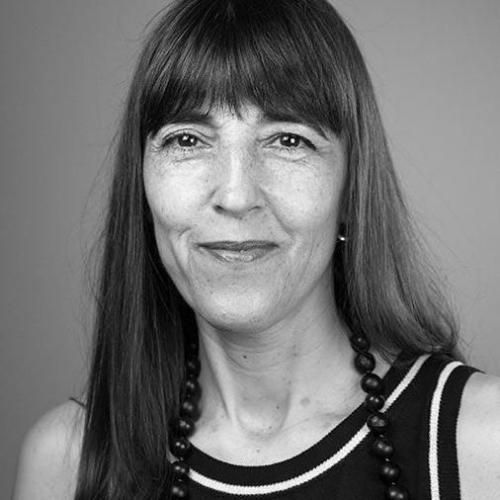
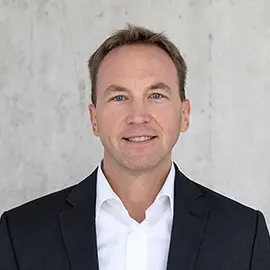
Nelson Sepulveda Alancastro is a Professor and Interim Chairperson of Electrical and Computer Engineering (ECE) at Michigan State University's College of Engineering, with a joint appointment in Mechanical Engineering (ME). He holds a Ph.D. (2005) and M.S. (2002) from Michigan State University, and a B.S. (2001) from the University of Puerto Rico-Mayaguez. His research integrates micro/nano sensors, smart materials, and energy harvesting, with applications in biomedical devices, environmental monitoring, and MEMS. Research Focus: Dr. Sepulveda's work centers on ferroelectret nanogenerators, vanadium dioxide-based reconfigurable devices, flexible sensors, and machine learning for sensor data analysis. His lab develops self-powered systems for biomechanical monitoring, invasive species detection, and concussion prediction. Awards and Honors: MSU Withrow Teaching Excellence Award (2018) MSU Withrow Diversity Excellence Award (2018) Michigan State University Teacher-Scholar Award (2015) NSF Career Award (2010-2015) IEEE Senior Member (2011) Students and Team: He advises Ph.D. candidates including Ian González-Afanador, Gerardo Morales-Torres, and Henry Dsouza. His Advanced Microsystems Group (AMG) focuses on interdisciplinary projects spanning materials science, MEMS, and embedded systems.
Daniel Müller-Gritschneder is an Adjunct Teaching Professor (Privatdozent) at the Technical University of Munich (TUM), affiliated with the Chair of Electronic Design Automation. He leads the 'Electronic System Level' research group, focusing on embedded systems, TinyML, virtual prototyping, and hardware resilience. He temporarily served as head of the Chair of Real-Time Systems (2019–2020) and holds a senior membership in IEEE. His research spans: TinyML : Optimizing neural network inference for microcontrollers. Virtual Prototyping : Fast simulation for embedded software development (e.g., ETISS simulator). Runtime Verification : Hardware monitoring for safety-critical systems. Fault Tolerance : Cross-layer resilience against soft errors. Design Automation : NoC synthesis and RISC-V toolchain optimization. His publications emphasize RISC-V-based systems, TinyML deployment, fault injection, and embedded AI. Recent works show trends toward compiler-assisted security, thermal management, and automated design-space exploration for edge devices. Awards: Best Paper Award (SiPS 2019) Habilitation Award (Bund der Freunde der TUM, 2019) 2nd Best Paper (SMACD'15) Best Paper nominations at DAC'07, DATE'10, Analog'10, NOCS'13 He advises researchers in the Electronic System Level group and contributes to EU projects (e.g., Scale4Edge). His lab develops tools like ETISS, MLonMCU, and Seal5 for RISC-V and TinyML ecosystems.
Baris Kasikci is an Associate Professor in the Paul G. Allen School of Computer Science & Engineering at the University of Washington. Previously (2017-2023), he was a Morris Wellman Assistant Professor in the Electrical Engineering and Computer Science Department at the University of Michigan. His research focuses on building efficient and trustworthy computer systems through innovative combinations of approaches from systems, computer architecture, and programming languages. Dr. Kasikci received his PhD in Computer Science at EPFL and has held research positions at Microsoft Research Cambridge, Google, Intel, and VMware. His work addresses critical challenges in system reliability, security, and performance in increasingly complex software ecosystems. His research interests center on improving the efficiency of datacenter applications and machine learning systems, analyzing and fixing failures, and enhancing hardware security. His lab develops techniques for automated bug detection, formal verification of distributed systems, and building systems support for heterogeneous hardware architectures. Recent projects include Whisper (profile-guided branch misprediction elimination), Huron (taming false sharing), and Agamotto (automatic detection and repair of bugs in persistent memory applications). Analysis of his recent publications shows a strong trend toward optimizing large language model serving, hardware security, and performance optimization for modern heterogeneous architectures. His work bridges traditional systems research with emerging AI infrastructure needs, particularly in efficient LLM serving, security vulnerabilities in modern hardware, and performance optimization for heterogeneous computing environments. NSF CAREER award Microsoft Research Faculty Fellowship Intel Rising Star Award VMware Early Career Faculty Grant Google Faculty Award Roger Needham PhD Award (best PhD thesis in computer systems in Europe) Patrick Denantes Memorial Prize (best PhD thesis at EPFL) Best Paper Award at OSDI'18 Best Paper Award at MICRO'22 Dr. Kasikci has advised numerous PhD students who have gone on to prestigious positions in academia and industry, including Tanvir Ahmed Khan (Assistant Professor at Columbia University), Akshitha Sriraman (Assistant Professor at CMU), and Jiacheng Ma (AMD). His research has been supported by significant grants from NSF, DARPA, Intel, Google, Microsoft, VMware, and Amazon. His lab, the EfesLab, focuses on building tools and techniques that make computer systems more reliable, secure, and efficient. The EfesLab, led by Dr. Kasikci, brings together postdocs, PhD students, and undergraduate researchers to tackle fundamental challenges in systems reliability and performance. The lab has developed numerous influential tools including Whisper, Huron, and Agamotto that address critical performance and reliability issues in modern computing systems. Current research directions include efficient LLM serving, security of emerging hardware technologies, and automated debugging techniques.
Lavagnon Ika is a Full Professor of Project Management at the Telfer School of Management, University of Ottawa. He serves as MSc Program Director for both Management and Health Systems Programs and is the Founding Director of the Major Projects Observatory. With a joint doctoral program background from Université du Québec (UQAM) and affiliations with institutions in France, Australia, China, Benin, Senegal, South Africa, and Ghana, he bridges global research and practice in project management. BAC C (Collège Père-Aupiais) B.B.A. (Institut National d'Économie) BAC G2 (National Examination) M.Sc. (UQO) Ph.D. (UQAM) His research focuses on major infrastructure delivery, project behavior, risk management, and tackling grand challenges like climate change through projects. He is recognized as a world leader in global development project management, particularly for World Bank and Global Affairs Canada-funded initiatives in Africa. Professor Ika has authored over 65 peer-reviewed papers and co-authored a book on fuzzy projects (McGraw-Hill, 2023). His work appears in top journals like International Journal of Project Management and World Development , with over 5,280 Google Scholar citations and 173,000 ResearchGate reads. He serves as Associate Editor for the International Journal of Project Management . IPMA Global Research Award (2017, 2022) Emerald Outstanding Paper Award (2017) Telfer Established Researcher Award (2021) Finalist - UK APM Research Paper of the Year (2023) He has supervised over 70 graduate students globally and contributed to policy-making as a World Bank Fellow (2021) and Carnegie African Diaspora Fellow (2022). His advisory roles include SSHRC, FQRSC, and PMI grant adjudication committees. Current funded projects total over $296,500, including SSHRC grants and industry partnerships. As an Extraordinary Professor at the University of Pretoria and contributor to Cambridge University Press' upcoming Handbook on Project Behavior , he advances cross-disciplinary collaboration. His teaching spans B.Com to PhD levels across five continents, with consulting clients like Transport Canada and the African Capacity Building Foundation.
Mark Olsen is an Associate Teaching Professor in the Department of Biological Sciences at the University of Notre Dame, College of Science. He has been a faculty member since 1994 and is deeply committed to undergraduate education and research engagement. His roles include Coordinator of the Majors/Honors Biology Laboratory Program and Academic Co-Director of the Notre Dame Summer Scholars Program in Life Sciences. His educational background includes: Ph.D. in Comparative Physiology and Biochemistry, University of Notre Dame (1994) M.S. in Ecology, University of Notre Dame (1989) A.B. in Biology, Summa cum Laude, St. Michael’s College (1981) Mark Olsen's research and teaching focus on biology education , with strong emphasis on ecology, environmental biology, entomology, and anatomy and physiology . He champions active learning through place-based education , collaborative research teams , and experiential laboratory and fieldwork . A key aspect of his pedagogy is integrating authentic research into undergraduate curricula via the Course-Based Undergraduate Research Experience (CURE) model, particularly in partnership with Dr. Jason McLachlan’s lab on salt marsh plant responses to environmental change. His work promotes early undergraduate research participation, STEM retention, and student integration into the scientific community. He coordinates the annual Internship Information Workshop and has contributed to NSF-funded STEP and RET grants aimed at enhancing STEM education. His scientific and educational contributions have been recognized with prestigious awards: Edmund Joyce, CSC Award for Excellence in Undergraduate Teaching (2018) Kaneb Center Outstanding Faculty Teaching Award (2001) He is actively involved in professional service, including as a question writer for the National Science Bowl, mentor for the Sustainability Minor Capstone, advisor for the Fly Fishing Club, and member of the TPAC Teaching Faculty Executive Committee. He also supports outreach to K–12 educators as a resource teacher in Place-Based Education and has reviewed for the NASA Climate Change Educational Initiative. Mark Olsen advises and mentors numerous undergraduates through research internships, Summer Scholars, and laboratory courses. He has played a key role in NSF grants focused on student success and has led initiatives that connect classroom learning with real-world scientific inquiry. His leadership extends to program development and academic advising, fostering a supportive environment for first-year science majors. He is associated with several academic and outreach initiatives, including the Notre Dame Summer Scholars Program, the CURE research integration project, and the College of Science Internship Information Workshop. These programs form a cohesive ecosystem aimed at enhancing student engagement, research experience, and long-term success in STEM fields.
Marcus Bellamy is an Associate Professor of Operations and Technology Management at the Questrom School of Business, Boston University . His research focuses on innovation , environmental sustainability , and performance dynamics in supply networks, using empirical models to analyze spatial resource proximity and interdependence. Education : PhD in Operations & Technology Management from Georgia Tech (2015), MS in Industrial Engineering (2010), BS in Aerospace Engineering from University of New Mexico (2006). His research bridges supply chain structure with outcomes like CSR practices , resilience , and economic welfare . He employs visual analytics and computational tools to study industries ranging from automotive to electronics , addressing policy impacts and platform economies like Uber . Recent work trends include analyzing two-sided sharing platforms , environmental disclosure in supply chains, and network resilience under risks. His empirical studies often integrate spatial spillovers and collaborative ecosystems . Scientific Awards : Isabel Anderson Career Development Professorship 2019 AOM Best Paper in Supply Chains 2013 AOM Operations Management Division Best Student Paper Fulbright Scholar (Madrid, Spain) NSF STEP Fellow Bellamy has served as a founder of the PhD Project Committee under the White House Initiative on Hispanic Education and collaborated with corporations like Lockheed Martin and General Motors on supply chain risk & resilience. His methodological contributions include interactive visual analytics systems for network evaluation.
Prof. Dr. Harald Ritz serves as Professor of Practical Computer Science, especially Business Informatics, at the Technical University of Central Hesse (THM) within the Department of Mathematics, Natural Sciences and Computer Science since 2003. He holds leadership roles as Chair of Examination Committees for B.Sc. and M.Sc. Business Information Systems and Spokesperson for the MNI department in the Business Informatics Working Group (AKWI). His educational background includes a Diplom in Business Informatics (Dipl.-Wirtsch.-Inform.) and doctorate (Dr. rer. pol.) from the Technical University of Darmstadt, following professional experience at SAP SI AG and a professorship at Heilbronn University of Applied Sciences. Ritz's research centers on AI-driven digital transformation for data-driven enterprises, with focus on the “Data to Decision” value chain encompassing Framing, Allocation, Analytics, and Preparation phases. His work integrates business intelligence, data warehousing, machine learning, and SAP ecosystems to address challenges in SME digitalization, operational IT management, and educational technology. Current projects emphasize AI applications in higher education, including intelligent tutoring systems and automated feedback mechanisms. Analysis of his 15 most recent publications reveals a consistent trajectory toward applied AI solutions in business contexts, particularly in intelligent chatbots for educational support, financial trading algorithms, and cloud-based data infrastructure. The research demonstrates increasing integration of no-code platforms, real-time analytics, and domain-specific AI applications across logistics, banking, and procurement sectors. No scientific awards were documented in the source materials. Professor Ritz actively supervises academic development through bachelor’s and master’s theses, doctoral research, and collaborative projects. Current initiatives include the “Winfy” AI chatbot (v4.0, 2025), AI-based feedback systems for educational content (Freiraum 2025 grant), the frits intelligent tutoring project with Prof. Kammer, and doctoral research on AI adoption in SMEs. His work bridges theoretical research with practical implementation in SAP environments and cloud platforms. He operates within THM’s MNI department infrastructure, collaborating through the Business Informatics Working Group (AKWI) and contributing to the Digital Classroom communication platform for online education.
Benedikt Fecher is a Scientific Advisor at the OrA project at CATALPA Graduate School , affiliated with the FernUniversität in Hagen . He leads the 'Knowledge & Society' program area at the Alexander von Humboldt Institute for Internet and Society (HIIG) since 2017. Research Interests include data-driven research, open science & open access, research infrastructures, science communication, and societal impact measurement. His work explores how digitization transforms academic practices and societal engagement. Publications highlight interdisciplinary approaches to societal impact assessment, digital education, and the role of open science in the social sciences. Recent studies focus on EdTech adoption during the pandemic and strategies for building sustainable research infrastructures. Labs & Teams : Fecher collaborates with the CATALPA research cluster, which emphasizes cross-institutional, solution-oriented interdisciplinary research.
Md. Zoheb Hassan serves as an Assistant Professor in the Department of Electrical Engineering and Computer Engineering at Laval University, where he leads cutting-edge research in wireless communications and spectrum management. His academic role includes graduate recruitment and active participation in the university's research ecosystem, particularly through the Establishment of the Next Generation of Professors program funded by FRQNT. Dr. Hassan's research centers on spectrum sharing and management, wireless communication systems, and communications network control systems. He pioneers the integration of digital twin technology and machine learning to solve critical challenges in next-generation networks, including interference management in 5G/6G aerial corridors, Internet of Vehicles, and satellite-terrestrial integration. His work emphasizes practical implementations such as proof-of-concept demonstrations for tactical networks and proactive resource allocation in dynamic environments. Analysis of his 2024-2025 publications reveals a dominant trend toward AI-driven wireless resource optimization, with 12 of 15 recent papers featuring digital twins for interference management, spectrum sharing, and energy efficiency. Key thematic clusters include vehicular communications (4 papers), underwater IoT networks (2 papers), and hardware-impairment resilient designs (3 papers), demonstrating his focus on bridging theoretical advances with real-world deployment challenges across diverse network topologies. Dr. Hassan has secured significant competitive funding for his research initiatives: Digital Twin-Enhanced Interference Management for Next-Generation Radio Access Networks in the FR3 Band (FRQNT, 2025-2027) Center for Radio Frequency and Communications Systems, Technologies and Applications (FRQNT, 2024-2030) Context-Aware Spectrum Sharing and Management for Next Generation Wireless Networks (NSERC, 2024-2029) Development of innovative technologies for modeling predictive systems in urban mobility (MITACS, 2022-2026) Springboard to Discovery supplement for Context-Aware Spectrum Sharing (NSERC, 2024-2025) He actively mentors doctoral candidates, currently supervising Mahima Karim (PhD in Electrical Engineering, expected 2025) and Mohammadamin Parhizgar (PhD in Electrical Engineering, expected 2024). His supervisory approach combines theoretical rigor with practical problem-solving, focusing on spectrum management algorithms and digital twin implementations for next-generation networks. While specific laboratory affiliations aren't detailed in the source material, his projects indicate strong alignment with Laval University's wireless research infrastructure and the Center for Radio Frequency and Communications Systems.
Filippo Menczer is a Professor of Informatics and Computer Science and Director of the Center for Complex Networks and Systems Research at Indiana University School of Informatics and Computing. He maintains courtesy appointments in Cognitive Science and Physics, and is affiliated with the Center for Data and Search Informatics and the Biocomplexity Institute. Additionally, he holds a Fellowship at the ISI Foundation in Torino, Italy. His research spans computational analysis of digital ecosystems with emphasis on: Web Science: structural and behavioral analysis of internet-scale systems Social Media Dynamics: information diffusion, meme competition, and attention economy modeling Complex Networks: traffic pattern analysis, popularity dynamics, and social link prediction Publications from 2009-2012 reveal consistent focus on social network analytics and information diffusion mechanisms. Key trends include modeling attention-limited meme competition, bursty popularity patterns in social media, and social link prediction through metadata analysis. His work integrates network science, computational social science, and data mining to decode online behavior. His scientific recognition includes: Fellow of ISI Foundation (2013) He leads the NaN research group within the Center for Complex Networks and Systems Research, focusing on interdisciplinary approaches to complex information networks and social media analytics.
Isabella "Izzi" Hinks serves as a Teaching Assistant Professor in the Computer Science Department at the University of North Carolina at Chapel Hill. She completed her Ph.D. in Geospatial Analytics at NC State University's Center for Geospatial Analytics in 2024, where she was advised by Dr. Josh Gray. Her academic journey began with dual B.Sc. degrees in Computer Science and Environmental Science, along with a minor in Statistics and Analytics, all earned at UNC Chapel Hill. Dr. Hinks' research focuses on developing innovative algorithms to estimate the adaptive potential of small-scale agriculture in poverty-affected regions. Her work combines computer science expertise with environmental applications, particularly in using remote sensing technologies and deep learning techniques to monitor smallholder farming systems. She has made significant contributions to understanding how smallholder farmers can enhance their climate resilience through strategic adaptations, leveraging both satellite data and field observations. Her publication record demonstrates a consistent focus on applying advanced computational methods to agricultural monitoring challenges. The most recent articles show a progression from basic field boundary mapping using deep learning toward more sophisticated analyses of climate adaptation impacts on smallholder resilience. Her work increasingly integrates multiple data sources, including satellite imagery, household surveys, and on-the-ground measurements, to create comprehensive assessment frameworks for agricultural systems in developing regions. Among her notable recognitions is the Gladys West Award from the Center for Geospatial Analytics' fourth annual CGA Awards, received in January 2023. Her research on deep learning-based smallholder field delineation was featured in an NC State University News article in April 2023, highlighting the practical significance of her work. Dr. Hinks has been actively involved in several research initiatives, including work with the RESCuE Consortium in Thailand monitoring coastal ecosystem rehabilitation and supporting underserved communities during the Covid-19 pandemic through Curamericas Global. She was also a founding member of Acta Solutions, a tech start-up focused on helping local governments optimize decisions using constituent data. Her presentations at major conferences like the AGU Fall Meeting demonstrate her growing prominence in the field of geospatial analytics for agricultural applications.
Mercedes Herrero de la Fuente is a Professor at Antonio de Nebrija University's School of Communication and Arts in Madrid, specializing in Journalism and Media Innovation. Holding a PhD in Information Sciences from Complutense University of Madrid, she coordinates the doctoral program in Innovation in Digital Communication and Media while leading research through the INNOMEDIA Research Group. Her academic affiliations include active participation in multiple national research projects funded by Spain's Ministry of Science and Innovation. Her research focuses on the intersection of digital technologies and communication, with particular emphasis on data journalism, transmedia narratives, disinformation combat strategies, and gender representation in media. Recent work explores augmented reality applications in journalism, accessibility for people with disabilities in the audiovisual sector, and women's leadership in media production. She has conducted research fellowships at Cornell University, Radboud Universiteit, Salford University, and Charles University. Herrero de la Fuente has published extensively in high-impact journals, with her most recent work examining AI applications against electoral misinformation, women creators in streaming platforms, and immersive journalism technologies. Her research demonstrates consistent focus on emerging media technologies and their societal implications, particularly regarding inclusion and verification practices. As an educator, she previously directed Nebrija University's Master's in Digital and Data Journalism (2016-2021) and Master's in Television Journalism (2015-2020), while currently teaching in both undergraduate and graduate programs. Her professional background includes eight years as a producer for TELEMADRID News, providing practical industry experience that informs her academic work.
Dr. Christian Russ is a Senior Lecturer at the Institute of Business Information Technology , Zurich University of Applied Sciences (ZHAW), with expertise in digital transformation, IT leadership, and business-IT alignment. His work spans healthcare, education, and automotive sectors, focusing on agile IT governance and adaptive business models. Current roles: Program Director MAS IT-Leadership and TechManagement Key projects: ZHAW Digital Culture Assessment, Monitoring eCH Standards Research interests include digital transformation , agile IT , health informatics , and emerging technologies . Recent publications analyze post-pandemic organizational culture, medical AI regulation, and cloud infrastructure in healthcare. 2025: Organizational culture shifts during/after pandemic 2024: ML solutions in Swiss hospitals under MDR 2023: iPaaS cloud security in healthcare 2023: Agile transformation in non-profits Scientific recognitions: Best Paper Award at SMART 2018 "Educate to lead" award (Soroptimist International Europa, 2016) Active in the ZHAW Digital Health Lab, he leads projects on tech startup coaching, digital ecosystems, and IT governance. His teaching covers IT strategy, digital transformation, and enterprise service management at ZHAW.
Barbara Bigliardi is an Associate Professor at the Department of Engineering and Architecture, University of Parma, with national scientific qualification for full professor in Economic-Management Engineering (SSD ING-IND/35). She serves as President of the Management Engineering Program at University of Parma and Director of Bachelor's/Master's programs at University of San Marino, co-leading double-degree initiatives between the two institutions. Over 100 publications (57 SCOPUS-indexed) with H-index=20 Editorial roles: Cambridge Scholars Publishing (2019), MDPI Sustainability, Sci, European Journal of Innovation Management Key research areas: Open Innovation, Technology Transfer, Food Industry Innovation, Industry 4.0, Supply Chain Sustainability Recent Publications (2024-2025) demonstrate leadership in: Industry 4.0 integration with circular economy AI applications in public administration and healthcare Digitalization of food supply chains Green startup resource orchestration Simulation-based optimization in remanufacturing Sustainable additive manufacturing Scientific Recognition : 2005 Emerald Highly Commended Award 2013 Most Cited Paper in Trends in Food Science & Technology 2019 Highly Cited Paper in Review of Policy Research Research Leadership includes: National Observatory on Start-ups (President since 2021) National Observatory on Reputation (Vice President since 2019) INAIL-funded mobile risk assessment systems (2018-2020) INAF space technology transfer projects (2018-present) Academic Contributions : Supervised over 300 theses Deputy Coordinator of Industrial Engineering Doctoral Program Director of Management Engineering Programs (Parma & San Marino) Founder of academic spin-offs: Sistemi per il marketing di contenuto S.r.l. (2016-present), Univenture SrL (2006-2010)
Amir Aryani is an Associate Professor at the School of Business, Law and Entrepreneurship , Swinburne University of Technology . He leads the Social Data Analytics (SoDA) Lab within the Social Innovation Research Institute , focusing on data-driven solutions for health and social challenges. His work involves large-scale cross-institutional projects with international collaborators including the British Library , ORCID , and NIH . Research Focus: Data modeling, real-time analytics, and information retrieval for social-good initiatives Collaborations: CERN, Data Archiving and Networked Services (DANS), and Global Information Systems (GESIS) His research explores data science applications in mental health, community resilience, and sustainable development. Key trends in his publications include: Mapping research to United Nations Sustainable Development Goals Developing hybrid expert-finding models using NLP and graph algorithms Creating interoperable research graphs for cross-platform discovery Assessing social impact of data projects in non-profit sectors Amir is actively involved in PhD supervision and has secured funding from Australian Research Council , National Health and Medical Research Council , and philanthropic foundations . He also contributes to community data projects through the SoDA Lab , which builds tools for social connection analysis and humanitarian response optimization.