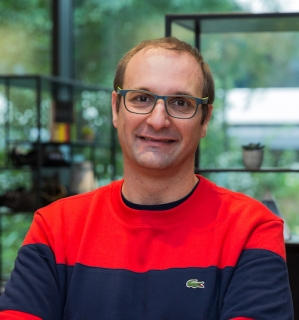
Leonardo Badia is an Associate Professor at the University of Padova . He holds a PhD in Information Engineering from the University of Ferrara and has held academic positions at IMT Lucca Institute and the University of Padova since 2016. Research Interests : His work focuses on mathematical optimization for communication networks, including Markov models for protocol analysis, cross-layer optimization of routing/scheduling/resource allocation, Age-of-Information (AoI) , energy harvesting , and game theory applications. He has published over 200 papers in top-tier journals and conferences. Recent Articles highlight his contributions to AoI optimization, adversarial modeling in CPS, strategic cooperation in IoT/metaverse, and energy-efficient network protocols. His work spans telecommunications , game theory , and networking , with subfields like hybrid ARQ , multi-radio resource management , and QoS-aware scheduling . Awards : Best Paper Awards at IEEE MobiWac 2005, IEEE CAMAD 2006, and IEEE Globecom 2007.
Enrico Tronci is a Full Professor in the Department of Computer Science at Università degli Studi di Roma La Sapienza , Italy. His research focuses on model checking, formal verification, and synthesis of cyber-physical systems, with applications to mission-critical and safety-critical domains such as space systems, smart grids, and healthcare. He leads the Model Checking Lab (MCLab) and has coordinated numerous national and international research projects funded by organizations including the European Community (EC), European Space Agency (ESA), and Italian Ministry of University and Research (MUR). Research Highlights : Automatic control software synthesis from closed-loop specifications Model checking algorithms for hybrid and stochastic systems Technology transfer in sectors like energy, transportation, and aerospace Teaching : Undergraduate: Software Engineering (Fall 2024) Graduate: Automatic Verification of Intelligent Systems (Fall 2024), Verification and Validation of Intelligent Systems (Spring 2025) Scientific Awards : Recipient of the IBM-Italia 1987 prize for best thesis in Artificial Intelligence Publications Trends : 2024: Scaling up model checking for cyber-physical systems via HPC 2023: Hormonal impact on behavior and fault-tolerant sensor deployments 2021-2022: In silico clinical trials, smart grid management, and scenario enumeration 2020: AI-guided diabetes patient modeling and forensic psychiatry applications Software Tools : QKS (Quantized Kontrol Synthesizer) NashMV (MAD systems verification) CMurphi (Hybrid systems model checker) FHP-Murphi (Probabilistic verification) BSP (Boolean symbolic programming)
Alessandro Checco is an Assistant Professor in the Computer Science Department at University of Rome La Sapienza. His research focuses on crowdsourcing, distributed systems, and privacy-preserving technologies, bridging theoretical computer science with practical applications that consider human factors in technological systems. He has established himself as a significant contributor to the field of human computation and privacy-aware systems. His educational background includes: 2020: Fellowship of Higher Education from The University of Sheffield, Higher Education Academy 2015: Ph.D. in Mathematics from Hamilton Institute (Design of decentralised algorithms applied to channel/code selection and convex optimisation for throughput fairness of 802.11 networks) 2010: M.Sc. in Mathematical Engineering from University of Roma "Tor Vergata" (110/110 with great distinction) 2009: Erasmus Scholarship at Universiteit Gent, Department of Telecommunications 2007: B.Sc. in Mathematical Engineering from University of Roma "Tor Vergata" (110/110 with great distinction) Checco's research spans multiple areas at the intersection of computer science and social implications of technology. He is particularly interested in Crowdsourcing for Human Computation, Distributed Private Recommender Systems, Information Retrieval, Data Privacy, Distributed Systems, User Data Obfuscation in Web Systems, Societal and Economic Analysis of Online Work, Crowd Workers Unionisation, and Algorithmic Bias. His work often examines how technological systems can be designed to respect user privacy while maintaining functionality, and how crowd work can be structured to be more equitable for workers. His recent publications demonstrate a clear evolution in research focus, beginning with foundational work in wireless networks and distributed algorithms, then shifting toward human computation and privacy-preserving systems. His most recent work increasingly addresses the societal implications of crowd work, including investigations into crowd worker unionization and cooperative models. Several publications examine gender bias in algorithmic systems, reflecting growing attention to fairness and ethical considerations in his field. Among his notable achievements: All That Glitters is Gold-An Attack Scheme on Gold Questions in Crowdsourcing (Best Paper Award) Checco has secured significant research funding and led important projects including the H2020-funded FashionBrain project as Research Director and the EPSRC-funded BetterCrowd project as Research Associate. His work on the FashionBrain project demonstrates his ability to lead large-scale, interdisciplinary research initiatives. He has also received the Technology Innovation Development Award (TIDA) from Science Foundation Ireland. His research has practical applications across multiple domains including recommendation systems (BLC: Private Matrix Factorization Recommenders), peer review assistance using AI, smart farming technologies, and cooperative models for crowd workers (CrowdCO-OP). He has developed frameworks for understanding worker behavior in crowdsourcing platforms and created methods for improving quality control in human computation systems.
Francesco Benedetti is an Associate Professor of Psychiatry at the Faculty of Medicine and Surgery, Vita-Salute San Raffaele University in Milan, a position he has held since 2018. He directs the Psychiatry and Clinical Psychobiology research unit at the Neuroscience Division of the IRCCS San Raffaele Hospital in Milan, a role he has occupied since 2009. Additionally, he serves as Head of the Simple Structure with departmental value in the Department of Clinical Neurosciences at the same hospital since 2002. Dr. Benedetti completed his medical degree from the University of Modena in 1991 with full marks and honors, followed by specializations in Clinical Psychology from the University of Milan (1995) and Psychiatry from Vita-Salute San Raffaele University (2005), both with full marks and honors. He obtained National Scientific Qualifications for associate professor (2014) and full professor (2017) in Psychiatry. His research focuses on the intersection of neuroscience and behavioral disorders, with particular emphasis on brain imaging of psychopathology, psychiatric genetics (especially imaging genetics), chronobiology and chronotherapy, neurobiology of mood disorders, schizophrenia, and anxiety disorders. He also investigates clinical psychobiology across the lifespan and neuroinflammation in psychiatric conditions. His work spans from basic neuroscience to clinical applications, with a strong translational focus. Dr. Benedetti's recent publications demonstrate a strong focus on advanced computational approaches to understanding mood disorders, neuroimaging biomarkers, and the relationship between inflammation and psychiatric conditions. His research increasingly incorporates machine learning techniques and multi-modal approaches to differentiate psychiatric conditions and predict treatment outcomes. International Society for Bipolar Disorders Best Poster Award (2008) European College of Neuropsychopharmacology Best Poster Award (2001) Premio "Antonio D'Errico" (2000) Dr. Benedetti has supervised numerous doctoral students through his participation in doctoral committees at Vita-Salute San Raffaele University from 2018-2024. He leads several significant research initiatives including the EU-funded MOODSTRATIFICATION project (2018-present) investigating immune signatures for therapy stratification in mood disorders, and participates in the international ENIGMA network (2017-present) focused on neuroimaging genetics in psychiatry. He directs the Psychiatry and Clinical Psychobiology research unit at IRCCS San Raffaele Hospital, which collaborates with multiple European research centers through networks like ENPACT (European Network on Psychosis, Affective disorders and Cognitive Trajectory) and previously MOODINFLAME (2008-2012), which investigated neuroinflammation in mood disorders.
Angelo Natalicchio is an Assistant Professor at the Department of Mechanics, Mathematics & Management within the College of Engineering at Politecnico di Bari (POLIBA). His research focuses on innovation management, sustainable business models, and digital transformation, with applications across sectors including manufacturing, energy, and creative industries. He investigates how organizations leverage external knowledge, manage technological convergence, and navigate crowdfunding dynamics. Research Themes Microfoundations of lean startup capabilities Sustainability in additive manufacturing Digital transformation strategies Crowdfunding and innovation diffusion Knowledge recombination in inter-organizational networks Publication Trends Recent work analyzes patent-driven sustainability advancements, status dynamics in collective achievements, and innovation contests in SMEs. His studies span 2011–2025, covering domains from orbital regime deterioration to energy sector digitalization, reflecting interdisciplinary approaches combining business strategy with technical systems.
Manuela Battipede is Associate Professor of Flight Mechanics & Control at the Politecnico di Torino , Department of Mechanical and Aerospace Engineering (DIMEAS). Since 2002 she has led research and teaching in aerospace guidance, airworthiness, neural-network-based virtual sensors, and trajectory optimisation, coordinating EU H2020 and Clean Sky projects, industrial airworthiness certification contracts, and supervising PhD students in aerospace engineering. Education & Academic Career Joined Politecnico di Torino as a confirmed Associate Professor (Prof.ssa Associata Confermata). Visiting Researcher, West Virginia University, USA (April–September 2002). Research Interests Her work integrates control theory , flight mechanics , and artificial-intelligence-based sensing to enhance safety and efficiency of air and space vehicles. Key themes include: 4-D trajectory optimisation for climate-neutral aviation. Certifiable virtual air-data systems using neural networks. Flutter suppression and intelligent flight control for fixed-wing and rotary-wing aircraft. Low-thrust orbital mechanics, collision avoidance, and end-of-life disposal for satellites. Lighter-than-air platforms and VTOL hybrid drones for earth-observation and fire-monitoring missions. Scientific Awards & Recognition PoCN – Proof of Concept Network (2015), AREA Science Park, Italy. Regular evaluator for SESAR Joint Undertaking, EU H2020, and European Commission programmes. Doctoral Advising & Funding Since 2011 she has served on the PhD board of the Aerospace Engineering doctorate at Politecnico di Torino, currently supervising: Giorgio Antonio Orlando (39th cycle, 2023–) Gabriele Tarascio (39th cycle, 2023–) She has been Scientific Director of >20 competitively funded projects (EU Clean Sky MIDAS, ESA, MIUR-PRIN, EASA certification contracts, etc.) and commercial consultancy contracts exceeding €3 M. Laboratories & Teams Battipede leads the Modelling, Simulation and Control of Aircraft research group at DIMEAS, managing real-time hardware-in-the-loop test rigs, CubeSat development platforms, and an integrated multi-aircraft simulation laboratory for education and industrial validation.
Gioacchino Cafiero is an Associate Professor at the Department of Mechanical and Aerospace Engineering (DIMEAS), Polytechnic University of Turin. His research focuses on data-driven experimental fluid mechanics, particularly applying machine learning techniques like deep reinforcement learning and genetic algorithms to control turbulent flows and optimize fluidic actuators. As a member of the Fluid Dynamics research group, he leads projects such as GREENER (drag reduction via sinusoidal riblets) and WINDED (drone wind investigation), while also directing commercial research on friction stress measurement methodologies. Specializes in turbulent flow control and machine learning applications Teaches PhD courses on Machine Learning for Flow Control Supervises students in aerospace engineering programs Recent publications analyze jet turbulence with explainable AI, heat transfer fluctuations in channel flows, and riblet-induced drag reduction. His work bridges aerospace engineering and fluid dynamics, contributing to SDG goals 9 (Industry Innovation) and 13 (Climate Action). Scientific awards include the Learning to Teach (L2T) Open Badge from Politecnico di Torino.
Stefano Marchesiello is a Full Professor of Applied Mechanics at the Polytechnic University of Turin, Department of Mechanical and Aerospace Engineering (DIMEAS), a position he has held since 2019. His academic work spans theoretical studies, numerical applications, and experimental tests within the field of Applied Mechanics. He maintains active roles in doctoral education, serving on mechanical engineering doctoral colleges from 2013/2014 through 2024/2025, and teaches courses including Dynamics and Identification of Nonlinear Systems, Dynamics of Mechanical Systems, Vibration Mechanics, and Machine Mechanics for Aerospace Engineering. Marchesiello's research focuses on modal analysis and identification, damage diagnosis in structures and construction materials, damping systems, mechanical vibrations, and nonlinear dynamics. His primary research lines include vehicle-bridge dynamic interaction, dynamic identification techniques in linear and nonlinear fields, damage identification, vibrations of continuous systems with non-proportional damping, innovative vibration damping devices, diagnostics and monitoring of rotating systems, and pantograph-catenary dynamic interaction. His work bridges theoretical mechanics with practical engineering applications, particularly in transportation infrastructure and mechanical systems. His recent publications demonstrate a strong focus on nonlinear system identification, structural health monitoring, and vibration analysis across various mechanical and aerospace applications. Marchesiello's research shows increasing integration of machine learning techniques with traditional mechanical engineering approaches, particularly in system identification and damage detection. His work spans from fundamental nonlinear dynamics to practical applications in railway systems, rotating machinery, and structural components. Certificate of reviewing awarded by Journal of Sound and Vibration - Elsevier, Netherlands (2013) Certificate of Excellence in Reviewing - Mechanical Systems and Signal Processing 2013 awarded by Elsevier, Netherlands (2013) Marchesiello serves as Scientific Director for multiple commercial research contracts, particularly with Officina Fratelli Bertolotti SpA, focusing on vibration damping systems for railway catenaries and rotor dynamics modeling. He has led research projects from 2008 through 2023, demonstrating sustained research leadership and industry collaboration. His editorial work includes membership on the Editorial Board of SHOCK AND VIBRATION since 2018, and he has served on program committees for the International Conference on Damage Assessment of Structures (DAMAS) across multiple years. He is actively involved with the Dynamics of Mechanical Systems and Identification research group (DIMEAS), which focuses on developing advanced methods for analyzing and identifying mechanical systems with both linear and nonlinear behaviors. His research integrates computational modeling, experimental validation, and practical applications across multiple engineering domains.
Mariano Serrao is an Associate Professor at the Department of Medical-Surgical Sciences and Biotechnologies, Sapienza University of Rome, specializing in neurology and rehabilitation medicine. With over two decades of academic and clinical experience, he maintains active scientific collaborations with institutions including IRCCS C. Mondino in Pavia, Aalborg University in Denmark, and IRCCS Neuromed of Pozzilli. His work bridges clinical neurology with advanced biomechanical analysis and neurorehabilitation technologies. MD with honors (110 e lode) from Sapienza University of Rome (1994) Neurology specialization with honors (70/70 e lode) (1999) PhD in Neuroscience and Motor Rehabilitation and Behavioral Sciences (2003) Dr. Serrao's research focuses on the intersection of neurology, biomechanics, and rehabilitation. His primary areas include electromyography, spinal reflex analysis, evoked potentials, movement disorders, and the physiology and pathophysiology of both movement and pain. He has pioneered work in clinical biomechanics, particularly in gait analysis for neurological conditions including cerebellar ataxia, Parkinson's disease, and stroke rehabilitation. His recent work integrates artificial intelligence with biomechanical data to improve diagnosis and treatment of rare neurological disorders. His 86+ publications demonstrate a clear trajectory from foundational neurophysiological research toward innovative rehabilitation approaches. Recent work increasingly incorporates AI, mixed reality, and wearable technology for neurorehabilitation, while maintaining strong roots in headache disorders and migraine pathophysiology. His research bridges basic neurophysiology with clinical applications, particularly in movement disorders and pain mechanisms. Professional Affiliations Italian Neurological Society (SIN) Italian Society of Clinical Neurophysiology (SINC) Italian Society for the Study of Headaches (SISC) Italian Society of Neurological Rehabilitation (SIRN) President and Founding Member of the Italian Society of Movement Medicine (since 2007) Editorial Activities Dr. Serrao serves as reviewer for numerous prestigious journals including Clinical Neurophysiology, Archives of Physical Medicine and Rehabilitation, and European Journal of Neurology. Research Infrastructure He leads the Repetitive Magnetic Stimulation Laboratory and directs the research project "Decoding the spinal motor output in individuals with Hereditary Spastic Paraplegia." His teaching includes courses in Neurology, Rehabilitation Methodology, and Pediatric and Geriatric Rehabilitation for Physiotherapy and Orthopedics programs.
Francisco Facchinei is a Professor at Sapienza University of Rome, affiliated with the Department of Computer, Automatic and Management Engineering Antonio Ruberti within the College of Engineering. His research spans nonlinear and non-differentiable optimization, complementarity problems, variational inequalities, and game theory applications in telecommunications. His work focuses on developing algorithms for nonconvex optimization with ghost penalties, asynchronous distributed methods, and applications in healthcare and communications systems. Key Contributions: Foundational work in variational inequality theory, generalized Nash equilibrium problems, and optimization over dynamic networks. Recent Trends: Emphasis on asynchronous parallel algorithms, stochastic optimization, and non-invasive medical diagnostics via machine learning. He has held academic positions at Sapienza University since 1990, progressing from Ricercatore to Professore Ordinario. No scientific awards are explicitly mentioned in the provided texts.
Alessandro Giuseppi is an Assistant Professor in Tenure Track at the University of Rome La Sapienza's Department of Computer, Control, and Management Engineering (DIAG). He leads research in intelligent control systems and smart networks at the Network Control Laboratory, while serving as CTO of the startup Automation Intelligence and Control (AICO). As Associate Editor for IEEE Transactions on Automation Science and Engineering and International Journal of Control, Automation, and Systems , he bridges academic research with practical applications. M.Sc. & Ph.D. in Automatic Control from La Sapienza National Scientific Qualification for Associate Professor (2023) Active in EU/National funded projects since 2016 His research spans intelligent systems, network control, and AI integration in automation. Publications emphasize federated learning, deep learning applications, and control theory advancements across domains like autonomous vehicles, healthcare, and industrial automation. Key awards include the Minerva Prize (twice) and Telespazio's T-TeC. Recent publications address: (1) Federated learning with adaptive topologies, (2) Healthcare AI for diabetes management and portal hypertension diagnosis, (3) Industrial AI for manufacturing quality control, and (4) Smart network control in 5G/6G telecommunications. 2023 Premio Minerva - Best Postdoctoral Researcher 2021 Premio Minerva - Best PhD Candidate 2021 Best ETRI Journal Paper 2020 Telespazio Technology Contest Winner As course instructor, he teaches Intelligent and Hybrid Control, Automazione, and Laboratorio di Automatica. His leadership extends to co-founding startup AICO and collaborating with CRAT research consortium on Horizon Europe projects.
Fabrizio Silvestri is a Full Professor at Sapienza University of Rome's Department of Computer, Automatic and Management Engineering (DIAG), where he coordinates the Ph.D. program in Data Science. He leads the RSTLess research group focusing on Robust, Safe, and Transparent Deep Learning. Research interests: Artificial Intelligence, Machine Learning, Web Search, Natural Language Processing, Information Retrieval, Graph Neural Networks Research Trends from recent publications reveal: Advancements in sequential recommendation systems using topological and sheaf-based neural networks Focus on sustainable AI through eco-aware graph neural networks Counterfactual explanations for graph models and machine unlearning Security applications in dense retrieval and data poisoning defense Time series analysis for 5G network monitoring Integration of attention mechanisms and positional encoding in Transformers Scientific Achievements : ECIR 2018 Test of Time Award 3 Best Paper Awards (ECIR 2007, IEEE WI 2004, WSDM 2011 Runner-Up) Yahoo! Patent Milestone Award Recipient of Yahoo! Labs Excellence Program (LEAP) and Faculty Research Engagement Program (FREP) Finalist for ERCIM Cor Baayen Award (2005) Academic Leadership : Holds 9 industrial patents from Yahoo! and Facebook AI. Directed Facebook AI research groups combating malicious content. Ph.D. in Computer Science from University of Pisa with thesis on High-Performance Issues in Web Search Engines . Supervises thesis projects through the RSTLess group website .
Jlenia Toppi is an Associate Professor at the Department of Computer, Control and Management Engineering, Sapienza University of Rome. With a background in Biomedical Engineering (B.Sc. and M.Sc. summa cum laude from University of Rome, Ph.D. from University of Bologna), she leads research at the Neuroelectrical Imaging and BCI Laboratory, IRCCS Fondazione Santa Lucia, focusing on EEG signal processing, brain connectivity modeling, and graph theory applications in cognitive and clinical neuroscience. Education: B.Sc. Clinical Engineering (2006), M.Sc. Biomedical Engineering (2009), Ph.D. Biomedical Engineering (2013) Awards: IEEE EMBC Student Paper Finalist (2012), Young Bioingegneria Award (2012), IEEE EMBS Best Poster (2011) Her research develops advanced EEG methodologies for brain mapping and dynamic connectivity estimation , applied to disorders of consciousness, stroke rehabilitation, and social neuroscience. She pioneered hyperscanning EEG for interpersonal brain-to-brain analysis and contributed to BCI systems like RECOM and The Promotoer. Recent publications highlight her work on hybrid BCI rehabilitation , muscle synergy extraction , and multi-modal assessment of therapeutic interventions . She serves as editor for Computation and Mathematical Methods in Medicine and collaborates with international projects including Horizon 2020.
Gilbert Babin is a Professor of Information Technologies at HEC Montréal, where he is affiliated with GRESI, ERPsim Lab, and Tech3Lab. He has been cited 1331 times according to Google Scholar, indicating significant scholarly impact in his field of research. His research interests span several key areas in information systems and business technology: Enterprise Resource Planning (ERP) systems Business simulation and serious games Cognitive aspects of information systems use Business intelligence and analytics Operations management education Professor Babin's work demonstrates a strong focus on the intersection of information technology and business processes, particularly through simulation-based approaches. His publication history shows an evolution from technical optimization problems (1996-2007) to applied business contexts (2010-2012), with his most recent work exploring the integration of neuroscientific approaches with enterprise systems. His research on ERP simulation games has been particularly influential, with his 2011 paper receiving 132 citations. His current research trajectory includes innovative cross-disciplinary work combining information systems with cognitive neuroscience, examining how brain-computer interfaces can enhance sustained attention in business contexts. This represents a cutting-edge direction that bridges traditional information systems research with emerging neurotechnologies.
Rosario Iaria serves as an Associate Professor in the Department of Physics and Chemistry at the University of Palermo, Italy, where he maintains active teaching and research responsibilities. His academic profile demonstrates continuous engagement with the university since at least 2011, teaching specialized courses including High Energies Astrophysics with Laboratory and Planetary Volcanism across Physics and Georisks programs. His research expertise spans several critical domains in modern astrophysics: High energy phenomena in X-ray binary systems Neutron star physics and accretion processes Cyclotron line formation and variability in pulsars Time-domain analysis of transient cosmic events Development of machine learning techniques for X-ray spectral analysis Multi-messenger approaches to gamma-ray burst studies Analysis of his recent publications (2024-2025) reveals a strong methodological focus on spectral and timing techniques applied to extreme astrophysical environments. His work frequently utilizes data from major observatories including NICER, NuSTAR, XMM-Newton, and Fermi, with particular emphasis on orbital dynamics in X-ray binaries, cyclotron line physics, and reflection spectroscopy in compact object systems. Dr. Iaria's contributions extend to instrumental development projects such as HERMES (Gamma-ray burst and gravitational wave counterpart hunter) and theoretical investigations into quantum gravity phenomena. His research bridges observational data analysis with theoretical modeling, advancing our understanding of matter under extreme gravitational and magnetic fields.