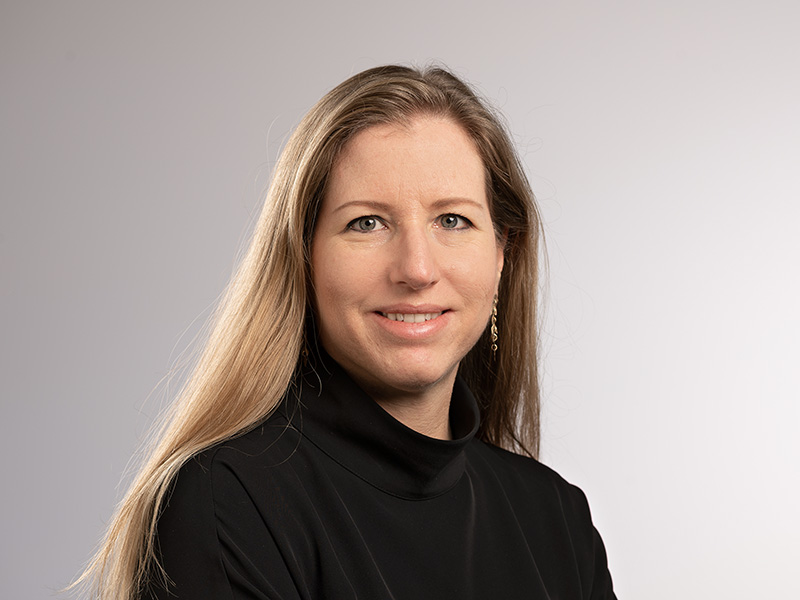
Dr. Daphné Chopard is a Researcher affiliated with the Professorship for Medical Data Science at ETH Zürich. Her work focuses on advancing medical data science through machine learning, clinical informatics, and multimodal learning applications in healthcare. She specializes in areas such as time-series analysis in critical care, generative models for medical data, and natural language processing for clinical texts. Her research emphasizes improving healthcare outcomes through innovative data-driven approaches, including projects like the SwissPedHealth pediatric data network and foundational work on multimodal variational autoencoders. Dr. Chopard’s contributions span clinical decision support systems, adverse event detection in trials, and acronym disambiguation in medical narratives. Her recent projects include studies on ventilation protocols in pediatric critical care and weakly-supervised learning applied to medical imaging datasets like MIMIC-CXR. She collaborates on initiatives to enhance representation learning in multimodal healthcare contexts, reflecting her commitment to bridging AI advancements with practical clinical applications.
Prof. Dr. Sven Panke is a Full Professor and Head of the Department of Biosystems Science and Engineering at ETH Zürich. His research focuses on bioprocess engineering, synthetic biology, and enzymatic process development. Key areas include miniaturized bioreactor systems, microbial engineering for novel metabolite production, and high-throughput screening methodologies. Education: Studied Biotechnology at TU Braunschweig, with postgraduate research at the German National Research Center for Biotechnology and ETH Zurich. Transitioned from industry (DSM) to academia in 2001 as an Assistant Professor, progressing to Associate Professor (2007-2009) before leading the BSS department. Research interests emphasize directed evolution of enzymes, metabolic pathway engineering, and systems biology approaches to optimize microbial production systems. Current projects include bio-indigo synthesis, antimicrobial peptide discovery, and synthetic biology tools for cellular engineering. Labs/Teams: Leads the Bioprocess Engineering Lab at ETH Zurich, collaborating on projects like the E. coli import system design and γ-glutamyltransferase engineering. Active in developing microfluidics platforms for parallel reaction analysis. Grants/Advising: Funded by initiatives in sustainable biomanufacturing and synthetic biology. Supervises graduate students in bioprocess design and microbial systems engineering.
Martin Huber is Professor of Applied Econometrics and Policy Evaluation at the University of Fribourg, Switzerland, within the Faculty of Management, Economics and Social Sciences, Department of Economics. He leads the Chair of Applied Econometrics and maintains an active research profile with numerous publications in top economics and statistics journals. His work bridges theoretical econometrics with practical policy applications across multiple domains including labor, health, and education economics. Professor Huber earned his Ph.D. in Economics and Finance in 2010 and served as Assistant Professor at the University of St. Gallen until 2014. He has conducted research stays at Harvard University (2011/2012) and the University of Sydney (2014 and 2019), establishing an international research network. His academic affiliations include the Committee for Econometrics of the Verein für Socialpolitik, Global Labor Organization, Soda Labs (Monash Business School), and Centre for European Economic Research (ZEW) Mannheim. Huber's research focuses on data-based causal analysis , machine learning applications in economics , and policy evaluation methods . He specializes in developing and applying statistical and econometric methods for measuring causal effects, with particular emphasis on semi- and nonparametric microeconometrics. His work spans labor economics (gender occupational segregation, maternal labor supply), health economics, education policy, and competition policy (bid-rigging cartels detection). His recent publications (2023-2025) demonstrate a clear trajectory toward integrating machine learning techniques with traditional econometric methods for causal inference. This includes developing frameworks for causal discovery, improving difference-in-differences methods with machine learning, and creating novel approaches for detecting collusion in markets. His 2023 book "Causal Analysis: Impact Evaluation and Causal Machine Learning with Applications in R" (MIT Press) has become a key reference in the field. As an active researcher, Professor Huber directs several research projects including experimental evaluations of gender occupational segregation in the Swiss apprenticeship market. His work combines theoretical rigor with practical policy relevance, often employing experimental and quasi-experimental methods to address questions of causal mechanisms in social and economic phenomena. Through his Chair of Applied Econometrics, Huber supervises Ph.D. students and maintains an active research group focused on advancing causal inference methodologies. His work has significant implications for evidence-based policymaking across multiple sectors, particularly in evaluating the effectiveness of social programs and economic policies.
Professor Sebastian Hiller is a Full Professor at the Biozentrum of the University of Basel, Switzerland, where he leads a research group focused on structural biology and biophysics. His laboratory specializes in using nuclear magnetic resonance (NMR) spectroscopy to elucidate the structures and functions of proteins and their interactions at the atomic level. His research spans several key areas including molecular chaperones and protein folding mechanisms, outer membrane protein biogenesis in bacteria, and kinase signaling pathways. Notably, his group has made significant contributions to understanding how chaperones like trigger factor function, the mechanisms of outer membrane protein assembly through the Bam complex, and dynamic kinase interactions. Their work has direct implications for neurodegenerative diseases and antibiotic development. The Hiller lab's recent publications demonstrate a strong focus on NMR methodology development, protein folding dynamics, and structural mechanisms of antibiotic action. Their research on darobactin's mechanism of action against Gram-negative bacteria represents a significant advance in antibiotic discovery. The group frequently publishes in high-impact journals including Nature, Science, and Nature Communications. ICMRBS Founder's Medal (2018) EMBO Young Investigator (2014) ERC starting grant (2011) SNSF professorship (2010) SNSF scholarship for young researchers (2008) Professor Hiller supervises numerous PhD students and postdoctoral researchers, with many alumni having secured prestigious positions in academia and industry. His laboratory maintains strong collaborations across multiple institutions and has received significant funding through ERC grants and other competitive mechanisms. The Hiller group also operates advanced NMR facilities that serve the broader research community at the University of Basel.
Lena Jäger is a Professor in the Department of Computational Linguistics at the University of Zurich (UZH). Her research focuses on the intersection of linguistics, computational cognitive science, and machine learning, particularly analyzing cognitive mechanisms underlying human language processing through experimental psycholinguistics, computational modeling, and NLP methods. She holds an MA in Chinese Language and Culture, an MSc in Experimental and Clinical Linguistics, a PhD in Cognitive Science, and a BSc in Computer Science. Prior to UZH, she led a Machine Learning Junior Research Group funded by the German Federal Ministry of Education and Research (2020) and conducted postdoctoral research at the University of Potsdam. Her work emphasizes developing machine learning methods for analyzing eye-tracking data to uncover cognitive processes reflected in eye movements. Notable contributions include creating multilingual eye-tracking corpora (e.g., MultiplEYE, PoTeC) and advancing tools like pymovements for data processing. Her research spans applications in language comprehension, biometric identification, and clinical diagnostics (e.g., ADHD detection via eye movements). Education: BA/MA: Chinese Language and Culture (University of Freiburg, Tongji University, Beijing Language and Culture University, Université Paris 7) MSc: Experimental and Clinical Linguistics (University of Potsdam) PhD: Cognitive Science (University of Potsdam) BSc: Computer Science (concurrent with PhD) Awards: Machine Learning Junior Research Group Grant (2020). Labs/Teams: Leads computational linguistics and machine learning research groups at UZH, collaborating on projects like ScanDL and CoLAGaze. Her recent work bridges AI and cognitive science, exploring how language models emulate human reading behaviors and developing frameworks for ethical AI applications. Ongoing projects include improving fairness in biometric identification systems and analyzing individual differences in reading through synthetic data.
Christina Hertel is an Assistant Professor of Entrepreneurship and Director of the Geneva Responsible Entrepreneurship Center (GREC) at the University of Geneva (UNIGE). She holds a PhD from the Technical University of Munich (TUM School of Management) and completed a postdoctoral fellowship at the École Polytechnique Fédérale de Lausanne (EPFL). Her research focuses on the intersection of entrepreneurship, sustainability, and collective action, particularly exploring community-based approaches for sustainable local development and impact measurement for responsible businesses. Christina leads a Swiss National Science Foundation-funded research project on community entrepreneurship and civic wealth creation. Her work bridges academic research with practical applications, collaborating with startups, incubators, and policymakers to design strategies that enhance economic, social, and environmental impact. She aims to establish Geneva and UNIGE as global hubs for responsible entrepreneurship. In teaching, she emphasizes experiential learning, designing courses that empower students to tackle real-world challenges. She organizes GREC events to foster student engagement in responsible entrepreneurship. Her research has been published in top journals like the Journal of Business Venturing and Academy of Management Discoveries, and she actively presents at international conferences such as the Academy of Management Annual Meeting and Social Entrepreneurship Conference. Key initiatives include developing frameworks for community resourcefulness in new ventures and advancing standards for responsible entrepreneurship. Her contributions span academic publications, policy engagement, and educational programs, all aligned with fostering sustainable and impactful business practices.
Julian Adamek is a computational cosmologist and lead developer of gevolution , a general-relativistic N-body code for cosmological simulations. His work focuses on modeling relativistic effects in cosmic structure formation to better understand gravity’s role on large scales and dark energy. Research Interests: Computational Cosmology, Theoretical Cosmology, Large-scale structure of the Universe, Relativistic N-body simulations. Technical Leadership: Lead developer of gevolution , a public cosmological simulation code available via GitHub. Recent publications span diverse applications of deep learning in geospatial analytics, environmental monitoring, and computer vision, including phenology modeling, biomass mapping, conflict assessment, and 3D reconstruction from point clouds. Key Trends: Integration of AI/ML for environmental tasks, cross-domain applications (cosmology, ecology, forestry), and satellite data processing. Technical Focus: Transformer networks, diffusion models, super-resolution imaging, and ensemble learning for uncertainty quantification. Julian collaborates with researchers in cosmology and geospatial science, though specific students or awards are not mentioned in the provided texts.
Anastasios P. Vassilopoulos is an Adjunct Professor and Head of the Composite Mechanics Group (GR-MEC) at the École Polytechnique Fédérale de Lausanne (EPFL) within the School of Architecture, Civil and Environmental Engineering (ENAC). He holds additional roles as Director of the Doctoral Program in Civil and Environmental Engineering (EDCE) and is affiliated with multiple research groups and committees at EPFL. His expertise spans composite materials, structural adhesives, and offshore renewable energy systems. Education: PhD in Mechanical Engineering, University of Patras, Greece (2001) Dipl. Mechanical Engineer, University of Patras, Greece (1995) Erasmus Exchange, University of Bristol, UK (1994–1995) Research Interests: Offshore renewables, particularly wind turbine blade materials and joints Fatigue analysis of composite materials and adhesive joints Experimental and analytical methods for composite structures Design of composite constructions and structural integrity His work emphasizes practical applications in engineering, including wind energy systems and fiber-reinforced polymer (FRP) composites. Teaching & Labs: Teaches courses on structural mechanics, advanced composites, and floating offshore renewables Leads the GR-MEC lab, focusing on composite mechanics and joint behavior Supervised over 15 PhD students at EPFL Grants & Projects: Swiss National Science Foundation-funded projects on bonded composite structures and wind turbine blade materials Research on fire-resistant composite bridge decks and lightning effects on composite structures
Natalia Díaz Rodríguez is an Assistant Professor of Artificial Intelligence at ENSTA ParisTech, where she works in the Computer Science and Systems Engineering department within the Autonomous Systems and Robotics Lab (U2IS). She is also affiliated with the INRIA Flowers team, focusing on developmental robotics. Her research spans deep learning, reinforcement learning, continual learning, and symbolic AI, with applications in explainable AI, computer vision, and robotics for social good. Her academic background includes a double PhD in Artificial Intelligence from Abo Akademi University and the University of Granada, alongside MSc degrees in Soft Computing and Computer Engineering from the University of Granada. She contributes to interdisciplinary AI, particularly in robotics, ethics, and healthcare applications, and co-organizes workshops on continual learning. Double PhD in Artificial Intelligence (2015), Abo Akademi University and University of Granada Doctoral diploma on Innovation and Entrepreneurship (2017), EIT Digital MSc in Soft Computing and Intelligent Systems (2012), University of Granada MSc in Computer Engineering (2010), University of Granada Her recent publications focus on trustworthy AI, including bias identification, counterfactual explanations, and continual learning strategies, reflecting her commitment to ethical and robust AI systems. She also explores AI applications in structural engineering, climate visualization, and financial risk assessment, emphasizing practical deployment and interpretability.
Ulrik Brandes serves as Full Professor and Head of the Department of Humanities, Social and Political Sciences at ETH Zurich, holding the Professorship for Social Networks. He actively teaches courses including Network Analysis and Applied Network Science: Sports Networks for Fall semester 2025, with office location at WEP J 14, Weinbergstr. 109, Zurich. His research spans Social Network Analysis, Graph Theory, and Network Science, with significant applications in sociology, sports analytics (particularly soccer and Australian Football League), and archaeological networks. As a longstanding member of the International Network for Social Network Analysis (since 2001) and the Academy of Sociology (since 2017), he bridges theoretical graph algorithms with practical interdisciplinary applications, recently expanding into sports analytics through the Football Scouting Association (2023). Analysis of his recent publications reveals strong thematic continuity in network centrality, temporal dynamics, and robustness, with increasing application diversity across sports analytics, archaeological trade networks, and decentralized social media platforms. His work consistently emphasizes efficient computational methods for real-world network problems. Honors: Simmel Award (2024) Prof. Brandes maintains active research leadership through departmental oversight and course development, though specific grant details and student advisement records are not publicly documented in available sources. His departmental role indicates substantial administrative responsibilities alongside research and teaching commitments.
Emily Cross is a Full Professor at the Department of Humanities, Social and Political Sciences at ETH Zurich, leading the Social Brain Sciences Professorship since spring 2023. She previously held professorships at Bangor University (Wales), University of Glasgow (Scotland), Macquarie University (Australia), and Western Sydney University's MARCS Institute (Australia). Her research centers on how embodied experience shapes social learning and perception across diverse contexts. Key contributions include identifying neural signatures of embodied expertise using dancers, developing embodied neuroaesthetics theory, uncovering neurocognitive foundations of visual learning across lifespans, and pioneering paradigms for human-robot social engagement. Her interdisciplinary approach bridges technology, performing/visual arts, and social sciences to explore experience-dependent plasticity at brain and behavioral levels. Recent publications (2024-2025) demonstrate intense focus on human-robot interaction dynamics, aesthetic movement perception, and context-dependent social cognition. Work increasingly examines self-disclosure mechanisms to robots, cultural influences on robot acceptance, and neural correlates of movement synchrony, reflecting her expanding influence at the neuroscience-robotics intersection. Scientific awards include: Philip Leverhulme Prize for Psychology Jacob Bronowski Award from British Science Foundation Young Talent Award from Dutch Neuroscience Society RoboHub and Insight Analytics top women in robotics listings Australia’s Superstars of STEM (2022) Cross passionately trains next-generation scientists with emphasis on research ethics. Her work attracts major funding from ERC, NIH, Fulbright Commission, ESRC, EPSRC, and UK Ministry of Defence. She serves on UNESCO’s International Bioethics Committee (co-rapporteur for neurotechnology ethics report) and as Associate Editor for International Journal of Social Robotics. She leads ETH Zurich's dynamic Social Brain Sciences group, which embraces interdisciplinarity through research paradigms bridging technology, performing/visual arts, and biological/social sciences, while maintaining active roles in editorial boards and conference committees including Intelligent Virtual Agents and Affective Computing meetings.
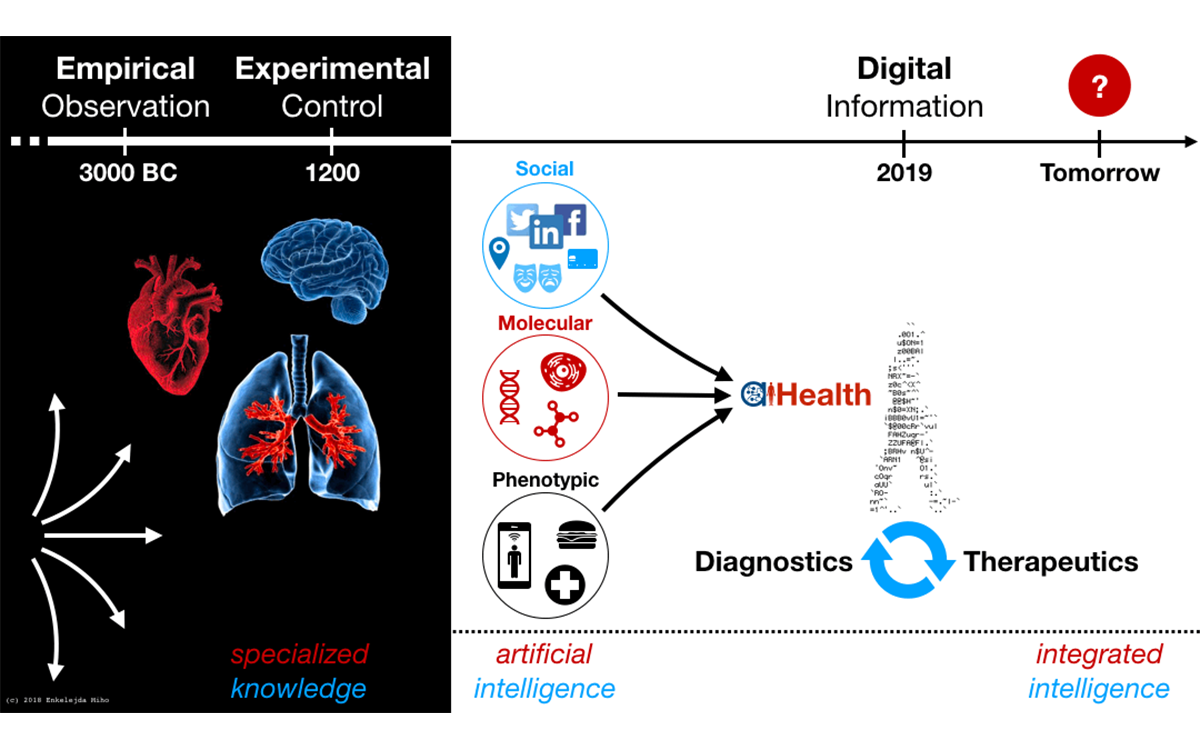
Prof. Enkelejda Miho is a Professor of Digital Life Sciences at the School of Life Sciences, FHNW, leading the aiHealthLab. Her work bridges computer science/AI with life sciences, focusing on drug discovery, personalized medicine, and immunology. She holds roles as Team Leader at aiHealthLab and Group Leader at the Swiss Bioinformatics Institute. Research Interests : She applies machine learning to analyze immune repertoires, antibody engineering, and autoimmunity diagnostics. Her lab develops computational tools like the RWD-Cockpit for real-world data analysis and synthetic antibody-antigen models (Absolut!) to advance biotherapeutics. Her work on dengue immunity and monoclonal gammopathies highlights translational applications. Key Projects : The aiHealthLab focuses on AI-driven diagnostics and therapeutics. Her contributions include AI frameworks for antibody specificity prediction, age-related immune repertoire changes, and large-scale network analysis of antibody repertoires. Labs/Teams : Leads aiHealthLab and collaborates with the Swiss Bioinformatics Institute, integrating computational and experimental immunology.
Heiko Schuldt is a Full Professor of Computer Science at the University of Basel and leads the Databases and Information Systems (DBIS) group. His research spans databases, transaction management, cloud data systems, digital libraries, and multimedia retrieval, with a focus on distributed systems, data streams, and service-oriented architectures. He studied at the University of Karlsruhe (KIT) and received his PhD from ETH Zurich in 2001. From 2003-2006, he served as an associate professor at UMIT, Austria. Education: University of Karlsruhe (Computer Science), ETH Zurich (PhD, 2001) Research Interests: His work integrates databases, cloud computing, and multimedia retrieval, emphasizing scalable systems for lifelog data, sports analysis, and VR/AR environments. Projects include vitrivr, Polypheny-DB, and StreamTeam. Recent Publications: Trends focus on VR/AR multimedia retrieval, cross-modal analysis, and polystore systems. Key contributions include open-source frameworks for video/image retrieval and immersive analytics. Advising: Supervised over 50 theses in areas like mixed reality, polystore optimization, and gesture-based interfaces.
Arnaud Bertsch is a Lecturer at the École Polytechnique Fédérale de Lausanne (EPFL) within the School of Engineering (STI) and the Department of Microengineering (IEM). He is affiliated with the Microsystems Laboratory 1 (LMIS1) and has been actively involved in teaching advanced microfabrication techniques and MEMS sensor/actuator practicals. His research spans microfluidics, nanofluidics, biomedical devices, and 3D microfabrication, with a focus on neural probes, drug delivery systems, and cell manipulation technologies. Microfluidic hydrodynamic and dielectrophoretic systems Nanovolcano microelectrode arrays for electrophysiology Thermal control of ionic transport in nanochannels 3D lipid microrobots for drug delivery MEMS-based intraocular pressure sensors Arnaud Bertsch has supervised PhD students including Torres Vila Pol, Zhang Tao, and past advisees like Clémentine Lipp, Nicolas Maïno, and Joan Teixidor. His work bridges fundamental research in nanofluidics with applied biomedical solutions, contributing to fields such as neuroscience, cancer therapy, and implantable medical devices. The articles listed demonstrate expertise in microsystem design, electrochemical sensing, and biofabrication technologies.
Michal Bassani-Sternberg is an Assistant Professor on conditional pre-tenure at the Faculty of Biology and Medicine, University of Lausanne (UNIL), and an Assistant Member at the Ludwig Institute for Cancer Research, Lausanne. She leads the Antigen Discovery Group and the Immunopeptidomics Unit at the Center for Experimental Therapies, Department of Oncology, UNIL-CHUV. Her work bridges proteogenomics, mass spectrometry, and computational biology to advance personalized cancer immunotherapy. Her educational background includes a Bachelor, Master, and Doctorate in Biology from the Technion – Israel Institute of Technology, Haifa, all earned with Cum Laude distinction. She completed postdoctoral training at the Technion and the Max Planck Institute for Biochemistry, Germany, in the group of Prof. Matthias Mann. Dr. Bassani-Sternberg's research focuses on identifying cancer-specific Human Leukocyte Antigen (HLA) ligands to guide the development of personalized immunotherapies. Her group develops cutting-edge proteogenomic and mass spectrometry-based immunopeptidomics approaches to discover tumor-associated antigens, neoantigens, and non-canonical peptides. A key contribution is the development of NeoDisc, a continuous bioinformatics pipeline that integrates genomics, transcriptomics, and immunopeptidomics data for direct neoantigen identification in clinical trials. Her recent publications, appearing in high-impact journals such as Nature , Nature Biotechnology , Immunity , and Nature Cancer , reflect a strong trend in integrating multi-omics data to understand tumor immunogenicity, T cell responses, and antigen presentation dynamics. Her work increasingly incorporates machine learning to improve neoantigen prediction and TCR specificity inference. She has been recognized with the Pfizer Research Prize in 2021 for her contributions to immuno-oncology. Pfizer Research Prize (2021) Dr. Bassani-Sternberg leads an active research group involved in phase I clinical trials for personalized cancer vaccines and adoptive T cell therapies. Her lab is supported by major grants from the Swiss Cancer League, Swiss National Science Foundation, and ISREC Foundation. She mentors doctoral and postdoctoral researchers and collaborates extensively within the Lausanne immuno-oncology ecosystem, including CHUV and Ludwig Lausanne. Her lab, the Bassani-Sternberg Lab, is part of the Department of Oncology’s research platforms and focuses on immunopeptidomics, antigen discovery, and the development of analytical tools for personalized immunotherapy.