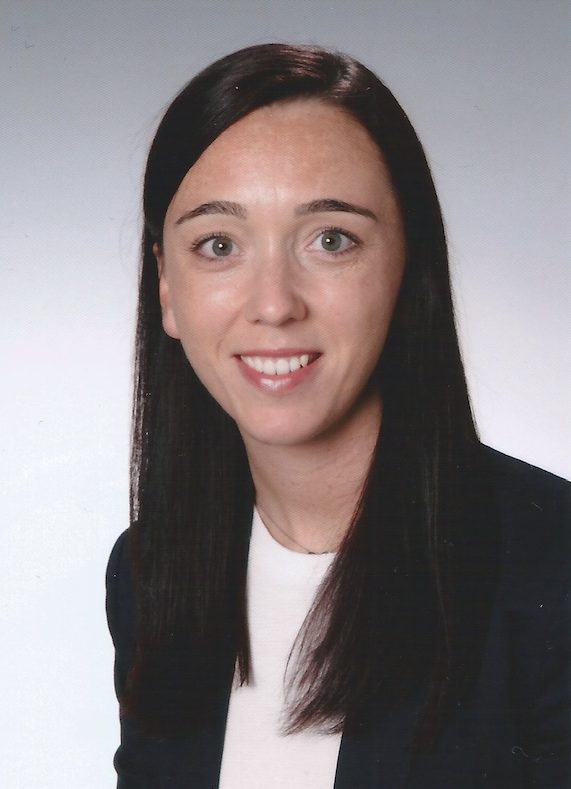
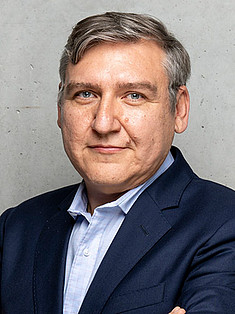
Adrian Vulpe-Grigorasi is a Junior Researcher at the Center for Digital Health and Social Innovation , affiliated with the Institute of Health Sciences at FH Steyr (FHSTP.ac.at). He holds BEng and MEng degrees and specializes in interdisciplinary research at the intersection of machine learning, cognitive science, and biomedical engineering. His research focuses on: Cognitive load assessment using VR systems and biosensors Development of multimodal machine learning frameworks for health monitoring Applications of GANs in ECG analysis and synthetic data generation Energy systems optimization through data-driven approaches Key projects include: Realistic clinical XR training systems Attention performance classification via eye tracking Smart grid forecasting with GAN data augmentation Adrian has published in conferences such as IEEE Informatics, CGI, and ACM MUM. His work bridges theoretical machine learning advancements with practical healthcare and energy applications.
Andreas Tockner is a researcher at the Institute of Forest Growth, part of the Department of Ecosystem Management, Climate and Biodiversity at the University of Natural Resources and Life Sciences, Vienna (BOKU). He holds a Dipl.-Ing. and B.Sc. degree and is currently pursuing PhD studies since 2021 as part of the "Building Like Nature" program at BOKU University. His work focuses on applying advanced laser scanning technologies to forest resource management and inventory. Dr. Tockner's educational background includes a Diplom-Ingenieur (Dipl.-Ing.) and Bachelor of Science (B.Sc.) degrees. His PhD studies at BOKU University began in 2021 as part of the "Building Like Nature" program. He is actively developing expertise in software development for instance segmentation and feature extraction of 3D point clouds. His research interests center around forest resource management with a strong emphasis on ground-based laser scanning technologies, particularly mobile LiDAR systems. He specializes in software development for instance segmentation and feature extraction of 3D point clouds, which has significant applications in modern forest inventory and monitoring. His work bridges the gap between advanced geospatial technologies and practical forestry applications, enabling more precise and efficient forest management practices. He has developed expertise in analyzing forest structures through 3D point cloud data, with particular focus on tree species classification, forest regeneration monitoring, and timber measurement at individual log levels. Dr. Tockner's publication record reveals a clear progression toward increasingly sophisticated applications of laser scanning technology in forestry. His work has evolved from basic measurement techniques to complex analysis of forest ecosystems, including species identification, wood quality prediction, and even long-term forest projections using digital twin technology. His interdisciplinary approach combines forestry, computer science, and data analytics to solve practical challenges in forest management. Advancements in personal laser scanning for forest inventory Methods for tree species classification using intensity patterns Techniques for quantifying forest regeneration Digital twin applications for forest modeling and future projections Dr. Tockner has supervised two Master's theses in 2025: "Evaluierung boden-, luftgestützter und hybrider Methoden zur Forstinventur im Naturpark Sparbach" by Elias Kimmel and "Assessing the Potential of Personal Laser Scanning to Quantify Tropical Tree Structures" by Luca Stephan Seiler. His research is supported by multiple projects including "Lidar based forest monitoring and harvesting planning" (2023-2026) funded by Federal Ministries and "Forest Inventory with Personal Laserscanners" (2022-2025) funded by the Austrian Research Promotion Agency (FFG). He is actively involved in developing practical applications of laser scanning technology for forest management, with a particular focus on making these technologies accessible for field operations. His work on using Apple iPad Pro with integrated LiDAR technology demonstrates his commitment to practical, field-deployable solutions that can transform traditional forest inventory practices.
Magdalena Schmidbauer is a Lecturer at the University of Salzburg, affiliated with the Department of Educational Science, School Research and School Practice (BIWI) within the Faculty of Digital and Analytical Sciences. She holds the academic rank of Lecturer and is actively involved in teaching and academic activities. Her research interests focus on educational science, school practice, pedagogical methodologies, and curriculum development, contributing to the department's emphasis on empirical studies in education and teaching-learning processes. No specific articles or awards are listed in the provided texts, but her role reflects a commitment to academic and practical contributions in education. Contact details include the Erzabt-Klotz-Straße 1, 5020 Salzburg address and the email magdalena.schmidbauer@plus.ac.at .
Univ.-Prof. Dr. Julia Brandl is a Full Professor of Human Resource Management and Employment Relations at the University of Innsbruck's Faculty of Business Administration. She leads the Human Resource Management & Employment Relations group within the Department of Organisation and Learning. Her research focuses on strategies for managing shifting priorities in employment relations, emphasizing frameworks like Économie des conventions (EC), institutional theory, and paradox analysis. Key areas include pay transparency legislation, language in job advertisements, and up-skilling for temporary workers. Brandl holds a PhD in Social and Economic Sciences (WU Wien, 2004) and a Habilitation in Management (Wirtschaftsuniversität Wien, 2011). She has received the Diversitas-Preis (2022) for her team's development of the inclusive language decoder JADE. Her work bridges academic research and practical HR challenges, with over 111 publications and significant citation impact (86,262 reads). Current projects include analyzing the societal implications of pay disclosure laws and the role of technology in fostering inclusive hiring practices. She collaborates internationally, notably with the Dutch HRM Network and institutions like ResearchGate. Brandl's teaching integrates cutting-edge research, ensuring students engage with contemporary HRM debates and methodologies.
Professor Anne Hecksteden holds a professorship at the Institute of Sports Science, University of Innsbruck since 2022. A physician with a multidisciplinary background in sports science, her research focuses on exercise physiology, injury prevention, recovery management, and biomarker applications in sports medicine. Her work integrates data analytics, molecular biology, and clinical insights to address performance optimization and athlete health. Before joining Tyrol, Hecksteden spent nearly three decades near Saarbrücken, completing her medical studies and residency while balancing elite sports careers in inline skating (German champion) and horseback riding. Her competitive spirit translates into academic rigor, evident in her over 100 peer-reviewed articles across sports science, physiology, and clinical medicine. Key research themes include: Exercise intensity prescription and training adaptation mechanisms Injury epidemiology and return-to-play protocols in football/badminton Thermoregulation and cross-adaptation strategies Blood-borne biomarker profiling for recovery assessment MiRNA expression patterns in training response Her 2025 publications emphasize data-driven approaches in sports decision-making and personalized training strategies. Recent work on Bayesian networks for injury prediction and heat therapy applications showcases cutting-edge methodological innovation. Awards/recognitions: While specific awards aren't listed, her sustained academic output and leadership in sports medicine research position her as a field authority. Labs/Teams: Leads the Saddle, Skates and Sports Lab, collaborating with international sports federations and clinical institutions on translational research projects.
Christian Huck is a full Professor and Head of the Institute of Analytical Chemistry and Radiochemistry at the University of Innsbruck. He holds roles including Deputy Head of Institute (2009), Vice-President of the Austrian Chemical Society (2019), and Head of the Faculty of Chemistry and Pharmacy Council (2021). His academic journey includes a Dr.rer.nat. (1998), Habilitation in Analytical Chemistry (2006), and professorships at Universities of Stuttgart (2014) and Innsbruck (2015). Research focuses on vibrational spectroscopy (NIR/MIR/Raman/FUV), quantum chemical simulations, separation technologies (LC/MS/MS), and applications in phytomics, metabolomics, and proteomics. He leads projects like 'Cereal' (Interreg Austria-Italy) and 'Qualimeat' (Interreg Austria-Bavaria), and collaborates with industries like Bionorica SE. His lab uses advanced instruments including Bruker SenterraII Raman and Orbitrap Exploris 120. Huck is an award-winning scientist with honors including the SAS Fellow Award (2021) and Birth Award (2022). He chairs conferences like NIR 2023 and serves on editorial boards of Spectrochimica Acta and Frontiers in Chemistry . Current research spans forensic bone analysis, environmental microplastics, and handheld NIR sensors for food safety.
Sophie Bauernfeind is a researcher at the University of Applied Sciences Hagenberg, affiliated with the Research Center Hagenberg and AIST Center of Excellence Medical Engineering/TIMed Center. Her work bridges information and communications technology with medical engineering, focusing on orthopedic solutions through digital innovation. Her research interests center on prosthetic and orthotic engineering , leveraging additive manufacturing and adaptive modeling to create patient-specific medical devices. She specializes in applying automated processes to orthopedic aids, with particular emphasis on shoe insoles and foot biomechanics , integrating clinical knowledge with digital workflows for enhanced patient outcomes. Recent publications reveal a strong trend toward AI-driven orthopedic solutions , with 80% of her 2023-2025 work focusing on digital customization of orthotic devices. Key themes include patient-specific 3D printing applications (Industry 4.0), clinical knowledge extraction from medical records, and AI-powered diagnostic systems for orthopedics, reflecting a strategic shift toward data-driven medical device development. As Co-Investigator for the MOVE project (Modeling Orthoses for Vitality Enhancement, 2023-2024), she contributed to research advancing orthosis customization through additive manufacturing. Her collaborations span clinical partners and engineering teams, focusing on translating research into practical orthopedic solutions. She actively participates in conferences like ICECCME 2023, demonstrating engagement with the international biomedical engineering community. Her laboratory work centers on the AIST Center of Excellence Medical Engineering/TIMed Center, where she utilizes advanced prototyping facilities for orthopedic device development. Current activities involve integrating clinical data systems with manufacturing pipelines to streamline production of personalized orthotics, with future work likely expanding into real-time biomechanical monitoring systems.
Lars Mehnen serves as a Senior Lecturer and Researcher at the University of Applied Sciences Technikum Wien (UAS Technikum Wien) in Austria, where he has been teaching since 2019 in Computer Science and previously from 2003-2019 in Biomedical Engineering. His academic career includes significant roles at Vienna University of Technology as University Assistant (2004-2007) and Research Assistant (1998-2002), along with leadership positions in major international space initiatives including QB50 (2010-2013), GENSO (2006-2010), and SSETI (1999-2006). TU-Wien: Dipl.Ing. in Computer Engineering and Medical Informatics Dr. Techn. from Institute for Fundamentals and Theory of Electrical Engineering and Institute of Technical Mathematics Mehnen's research spans multiple domains with particular expertise in Artificial Intelligence, Evolutionary Algorithms, and Sensor Technology. His work in explainable and non-parametric evolutionary algorithms represents cutting-edge contributions to AI methodology. In biomedical engineering, he has developed innovative magnetoelastic skin curvature sensors for cardiovascular monitoring and other medical applications. His teaching portfolio is exceptionally diverse, covering Statistics (parametric and non-parametric), Artificial Intelligence, Aerodynamics (particularly for sports equipment), Physics for game engineering, and extensive programming topics including Java, C/C++, Python, and functional programming languages. His publication record from 2001-2024 shows a clear evolution from early work on magnetostrictive bilayer sensors toward more recent applications of machine learning in biological classification, medical diagnostics, and educational technology. The 2024 publication on ChatGPT's diagnostic accuracy for medical conditions demonstrates his engagement with the latest AI developments. His research consistently bridges theoretical computer science with practical applications in healthcare, sports engineering, and space technology. Mehnen has been deeply involved in European collaborative projects throughout his career, including QB50 (EC F7), GENSO (ESA initiative), and B-Sens (EC-Project in 5th framework). These projects involved coordination with numerous universities and institutions across Europe, demonstrating his ability to lead international research collaborations. His work on the SSETI Express satellite project resulted in the successful launch of a micro-satellite at the end of 2005. At UAS Technikum Wien, Mehnen contributes to curriculum development across multiple domains including statistics, AI, programming, and physics. His research on paraglide control systems demonstrates application of his expertise to sports safety technology, while his recent work in teaching analytics shows commitment to improving educational outcomes through data-driven approaches.
Simon Kranzer is a Senior Lecturer and Head of Research Group at the Department of Information Technologies and Digitalisation, FH Salzburg. His work bridges academic research and practical application in digital transformation. Location: Campus Urstein, Room 425 Contact: simon.kranzer@fh-salzburg.ac.at | +43-50-2211-1316 Research Focus: Digital Twins for industrial systems Collaborative Robotics (Co-Bots) in retail Knowledge Transfer between academia and industry Operational Technology (OT) Security Data Acquisition and Visualization Programming Language Applications in industrial contexts Research Trends: Recent publications show expertise in retail automation (service robots, customer behavior analysis), industrial digital twins, and OT security. Earlier work spans GIS-SCADA integration, medical software implementation, and 3D microstructure analysis. Collaborative Projects: Active in interdisciplinary living labs, smart factory bootcamps, and 5G-based robotics exploration.
Egon Lüftenegger is a Senior Lecturer at Fachhochschule Salzburg's Department of Information Technologies and Digitalisation. His work bridges academia and industry through innovative process mining and sentiment analysis applications. PhD in Information Systems (TU Eindhoven) Focus on Service-Dominant Logic and Business Process Management Active in Industry 4.0 and Digital Transformation research His research explores sentiment-driven process redesign, technology-enabled social inclusion, and smart production analytics. Publications highlight process mining frameworks , LLM applications in BPM, and service-dominant business models . Current projects involve creating tools like SentiProMoWeb and Cost-Benefit Tracker, with applications in manufacturing, airline services, and education sectors.
Prof. Dr. Kevin Heng is Chair Professor of Theoretical Astrophysics of Extrasolar Planets at Ludwig Maximilian University of Munich, with additional honorary professorships at University College London and University of Warwick. Previously, he served as Executive Director of the Center for Space and Habitability and Professor of Astronomy & Planetary Science at the University of Bern, Switzerland. Dr. Heng received his Ph.D. in astrophysics from the University of Colorado at Boulder in 2007, following undergraduate studies at the National University of Singapore. His academic path included prestigious positions as Zwicky Prize Fellow at ETH Zurich and Member of the Institute for Advanced Study at Princeton. Professor Heng's research focuses on theoretical astrophysics, particularly exoplanetary atmospheres. His work spans atmospheric radiative transfer, dynamics, and chemistry, with applications to missions like ARIEL, JWST, and next-generation space telescopes. He has developed analytical methods and applied machine learning and Bayesian inference to exoplanet science. His innovative approach extends to 'Geoastronomy,' which unifies principles of astrophysics and geochemistry for studying rocky exoplanets. Dr. Heng's recent publications show a strong trend toward analyzing exoplanet atmospheres using data from cutting-edge missions like JWST, with particular focus on hot Jupiters, super-Earths, and sub-Neptunes. His research often combines theoretical modeling with observational data to understand atmospheric composition, dynamics, and evolution across diverse planetary types. Awards and Recognition: ERC Synergy Grant (2025-2031) for Project GEOASTRONOMY Fellow of the Royal Astronomical Society (2023) ERC Consolidator Grant (2018-2023) for Project EXOKLEIN Chambliss Astronomical Writing Award (2018) for his textbook 'Exoplanetary Atmospheres' NCU-Delta Young Astronomer Lecturership Award (2015) Professor Heng has secured substantial research funding totaling over 3.383 MCHF + 12.06 M€, including leadership roles in major projects like PlanetS NCCR. He serves on science teams for multiple space missions including ARIEL, PLATO, and CHEOPS, and has advised numerous students and postdocs through his research groups focused on exoplanet atmosphere modeling and data analysis. His laboratory develops theoretical models and computational tools for exoplanet characterization, with current work focusing on the 'Hot Rocks Survey' of bare rocky exoplanets and advancing retrieval methods for next-generation telescope data.
Thirumulanathan D. is an Assistant Professor in the Department of Economics at the Indian Institute of Technology Kanpur. He specializes in game theory, mechanism design, optimization, and mathematical economics, with additional interests in data analytics, deep learning, and wireless communication. His early academic and cultural achievements include reciting all 1330 couplets of Thirukkural at age 4, performing ASHTAVADHANAM at 8, and completing DCA and PGDCA courses by age 10. He has been felicitated by Tamil Nadu's government and Indian parliamentary campus for his contributions. University: Indian Institute of Technology Kanpur Department: Economics Email: nathan@iitk.ac.in Award highlights: Honorary Doctorate from World Academy of Arts & Culture, USA Kural Prize from Tamil Nadu government
Prof. Roland Grabner , holding the chair in Giftedness Research at the Institute of Psychology, Faculty of Natural Sciences, University of Graz, Austria, since 2014, previously served as a W3 Professor in Educational Psychology at Göttingen University (2012-2014). His research integrates cognitive neuroscience and mathematics education, focusing on individual differences in mathematical ability, bilingual learning effects, and neurostimulation applications for educational enhancement. Current research spans neural mechanisms in arithmetic learning and teacher professionalization Principal investigator in FWF-funded projects on non-invasive brain stimulation Key contributor to the Brain and Behavior research network His scientific focus areas include: Cognitive neuroscience of mathematical learning Giftedness and expertise development Language-switching costs in education Transcranial electrical stimulation (tES) applications Intelligence-creativity interactions Neuroimaging in educational contexts Analysis of his 15 most recent publications reveals strong emphasis on: Arithmetic cognition neural correlates Language dependency in knowledge acquisition Creativity assessment methodologies Brain stimulation for learning enhancement Interference effects in mathematical reasoning Neuroeducational intervention design Awarded both the INGE St Research Prize (2007) for mathematics education publications and the Karpow Chess Academy Science Prize (2007) for chess expertise studies, Grabner serves on multiple educational advisory boards including: Scientific Board of FUTURE EDUCATION network Austrian Center for Giftedness and Talent Research International Panel of Experts for Gifted Education (iPEGE) Steierische Gesellschaft für Psychologie (StGP)
Jochen Mosbacher is a Research Fellow at the Department of Psychology, Karl Franzens University Graz. His work spans neuroscience, cognitive psychology, and human-technology interaction, with affiliations to the Faculty of Natural Sciences and Research Careers Campus consortia. Focus: Neuropsychology & Non-invasive Brain Stimulation Specialization: Arithmetic Learning & Cognitive Processes Active in interdisciplinary networks like "Gehirn und Verhalten" His recent research explores the intersection of AI, wearable biosensors, and cognitive resilience. Publications highlight applications of transcranial stimulation in arithmetic learning and stress monitoring in industrial settings. Current projects include gamified mental health interventions and explainable AI frameworks. Scientific recognition includes: Giselher Guttmann Preis (2022) Young Investigators Preis der Österreichischen Alzheimergesellschaft (2016, 2014) INGE St. Forschungspreis (2013) Mosbacher contributes to academic governance as ÖGP Jung-WissenschaftlerInnensprecher since 2017, advocating for early-career researchers in Austria.
Joachim Klerx is a Researcher specializing in technology-driven strategic analysis. His work focuses on cybersecurity, digital ecosystems, and innovation networks, with affiliations including contributions to the Horizon Scanning Center for cyber-threat assessment. Research Interests: Klerx investigates the intersection of Artificial Intelligence, Big Data, and socioeconomic systems. Key themes include: Digital transformation in security contexts Economic efficiency in open-source ecosystems Risk modeling for emerging technologies His publications emphasize practical frameworks for cyber-defense and organizational foresight. Publication Trends: Recent works (2018-2023) demonstrate a focus on cybersecurity innovation, including hacker community dynamics, command system evolution, and foresight methodologies. Research consistently integrates computational analytics with strategic planning. Professional Activities: He actively presents at international conferences, including topics like: Radicalization analysis through internet memes Supply chain risk assessment Strategic resource analysis for defense systems