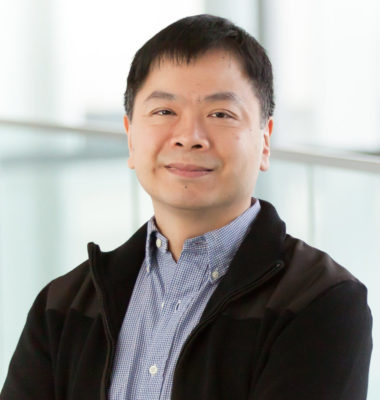
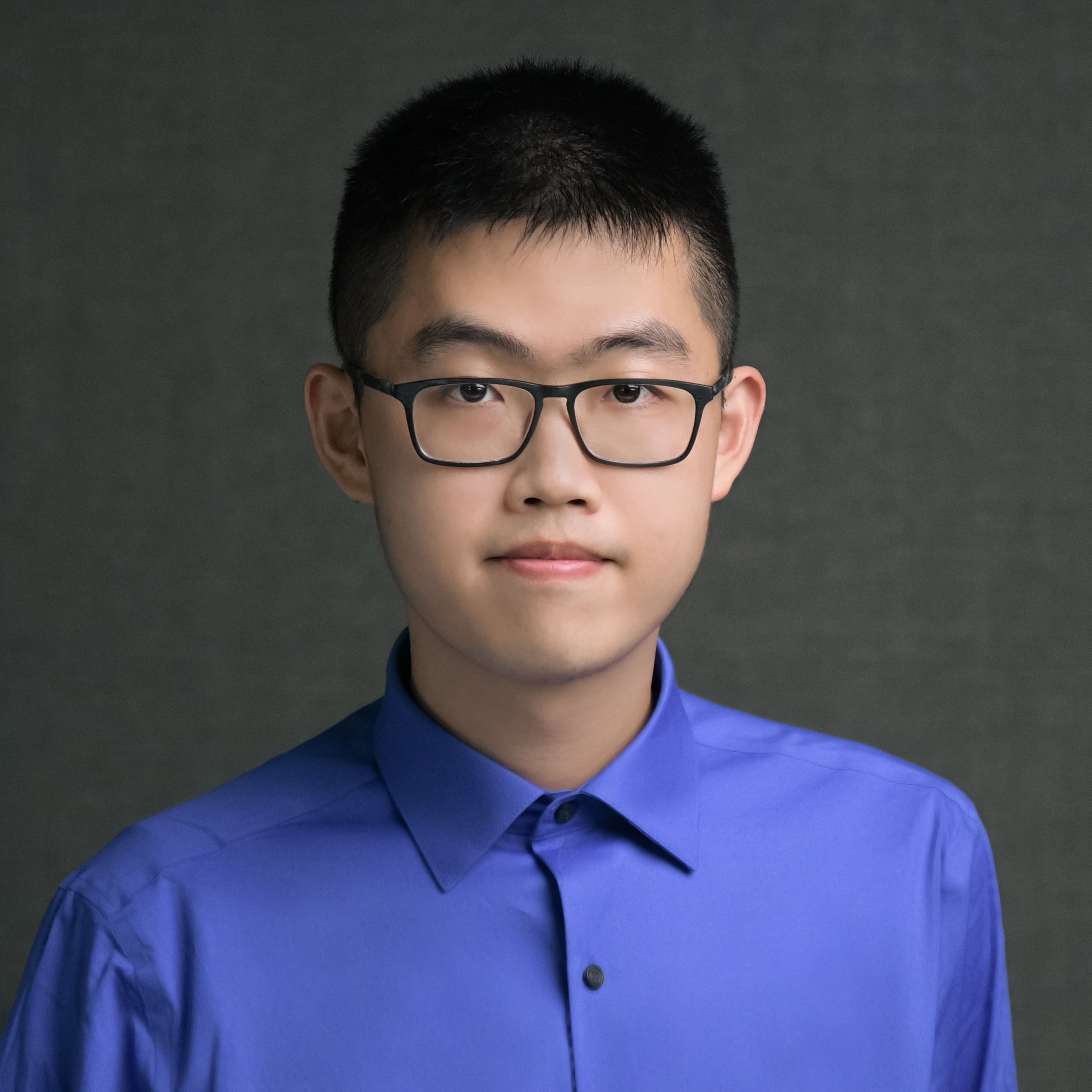
Roger Tam is an Associate Professor in the School of Biomedical Engineering (SBME) at the University of British Columbia (UBC), with a joint appointment in the Department of Radiology. He is also the Associate Director of Graduate Studies. His research focuses on machine learning and computer vision applied to medical imaging, particularly in personalized medicine and quantitative image analysis. Tam earned his PhD in computer science from UBC in 2004, specializing in computational geometry and visualization. Education: PhD in Computer Science, UBC (2004) MSc in Computer Science BSc (Honors) Research Interests: Medical imaging biomarkers Machine learning applications in healthcare Quantitative image analysis Personalized medicine His work bridges computer science and clinical medicine, emphasizing translational approaches to improve diagnostic accuracy and patient outcomes. Recent Research Trends: Focus on myelin content analysis in neurological disorders (e.g., multiple sclerosis) Development of efficient machine learning models for medical image classification Impact of physical activity on white matter health Labs & Programs: Directs the Engineers in Scrubs program, which integrates engineering principles into biomedical education. Active in collaborative research initiatives like the Centre for Brain Health and the Canadian Prospective Cohort Study (CanProCo).
Sarah Carton is a Teaching Professor in the Psychology Department at Rutgers University, part of the School of Arts and Sciences. She joined Rutgers in Fall 2019 after earning her Ph.D. in the Cognition & Perception Program at New York University (2008). Her research focuses on developmental psychology, visual perception, and cognitive development in infants and young children. She teaches courses such as Introductory Psychology, Drugs & Behavior, Sensation & Perception, and Cognition, with upcoming courses like Perception of Color (PSY 2xx). Dr. Carton’s research interests include object recognition, visual illusions, perceptual categorization, infant development, and eye-tracking methodologies. Her work explores how infants perceive impossible figures, haptic exploration of objects, and transitional saccades in response to visual stimuli. She investigates foundational questions about how infants distinguish possible from impossible objects and develop spatial and dimensional understanding through multisensory interactions. Her teaching portfolio includes undergraduate courses at both Livingston and New Brunswick campuses. She actively contributes to educational initiatives in psychology, emphasizing evidence-based pedagogy. Dr. Carton’s current research trends span perceptual development, cognitive differentiation in infants, and the role of visual and haptic modalities in forming conceptual categories. Dr. Carton’s work has been published in leading journals, with recent studies examining young children’s understanding of object coherence and infants’ visual responses to paradoxical stimuli. Her research integrates behavioral experiments and eye-tracking technology to unravel early perceptual and cognitive processes.
Stacy Holman Jones is a Professor of Theatre and Performance in the School of Languages, Literatures, Cultures and Linguistics at Monash University. With over 23 years of academic experience, she has developed an international reputation for leadership in performance studies, particularly in feminist and queer theory, new materialist research, and critical arts-based methodologies. Her educational background includes a PhD in Communication/Performance Studies from the University of Texas at Austin (2001), an MA in Communication from California State University Sacramento (1996), and a BA in Humanities (1988). Professor Jones's research focuses on performance as socially, culturally, and politically resistive and transformative activity. She is a recognized leader in critical autoethnography and has published over 100 articles, book chapters, and editorials, as well as authored, co-authored, and edited 14 books including the influential Handbook of Autoethnography (2013, 2021) and Queering Autoethnography (2018). Her work spans cultural critique, social inclusion, education, resilience building, designing for social impact, and enhancing health and wellbeing among minoritarian communities. Analysis of her recent publications reveals a strong trajectory toward creative ecological approaches to mental health, collaborative autoethnographic methods, and innovative design for social impact. Her research increasingly integrates performance studies with mental health applications, particularly in educational settings, while maintaining strong connections to queer theory, new materialisms, and critical autoethnography. International Congress of Qualitative Inquiry's Special Career Award National Communication Association's Distinguished Service Award in Performance Studies Janice Hocker Rushing Early Career Research Award Organization for the Study of Communication, Language, and Gender Feminist Teacher/Mentor Award Over the Rainbow Recommended Book List for Queering Autoethnography (2019) International Congress of Qualitative Inquiry Qualitative Book Award, Honourable Mention (2020) Multiple Good Design Awards for 'The Tomorrow Party' (2024) Professor Jones has been part of 3 successful ARC applications totaling $1,353,604, including as Lead CI for DP200102876 Staging Australian Women's Lives (2020-2023). She is currently accepting PhD students with supervision interests in theatre and performance studies, social change and social justice, and health and wellbeing research. She serves as the founding editor of Departures in Critical Qualitative Research and has been actively involved in professional organizations including serving as President of the International Congress of Qualitative Inquiry (2015-2018). Her current research activities include multiple collaborative projects such as 'Playing Transitions - Settling and Belonging in School together' (2024-2027), 'Learning Creates: Tomorrow Party' (2024), and 'Canopy: Creative partnerships for policy advocacy in Climate and Health' (2024), demonstrating her commitment to interdisciplinary, impact-focused research that bridges theory and creative practice.
Dr. Chenhao Chu is a Professor at ETH Zürich, holding the Professur für Elektronik (Professorship for Electronics). He specializes in RF/mm-Wave circuits, AI-driven design methods, and advanced power amplification technologies. His research focuses on energy-efficient, wideband systems, antenna-in-package solutions, and GaN-based applications for 6G and beyond. Education: Ph.D. in Electronic Engineering, University College Dublin (2022) M.Sc. in Electronic Information Engineering, City University of Hong Kong (2017) Research Interests: His work bridges AI and hardware design, emphasizing reconfigurable circuits , high-linearity power amplifiers , and mm-Wave phased arrays . Key areas include: AI-assisted rapid design synthesis III-V/Si co-design for mm-Wave Efficient antenna integration Dynamic load modulation techniques Awards: Award-winning researcher with distinctions including the First Place Best Student Paper Award (2022 Royal Irish Academy Colloquium) and multiple HEPA-SDC Competition Awards (2021-2022). Recognized for innovations in PA efficiency and design automation. Advising & Grants: Leading projects on 6G PA architectures and AI-driven RF design. Active in IEEE with contributions to conferences like IMS and ARFTG. No explicitly stated grants mentioned but widely cited in industry-academia collaborations. Labs & Teams: Associated with ETH Zürich's Electronics Laboratory, focusing on next-generation wireless systems. Collaborates internationally on 5G/6G infrastructure and mm-Wave innovations.
Nikos Hardavellas is a Professor of Computer Science and Electrical and Computer Engineering at Northwestern University, affiliated with the McCormick School of Engineering. He leads the Parallel Architecture Group at Northwestern (PARAG@N), focusing on energy-efficient parallel computing and quantum systems. His research spans quantum computing systems, fault-tolerant quantum error management, memory-centric architectures, and photonics-based interconnects. Education: Ph.D. Computer Science, Carnegie Mellon University (2009) M.S. Computer Science, Carnegie Mellon University (2006) M.S. Computer Science, University of Rochester (1997) B.S. Computer Science, University of Crete (1995) Research Interests: Quantum system software stack and error mitigation Memory-centric computing and programmable memory systems Energy-efficient architectures and dark silicon Photonics and optical interconnects Parallel systems and compiler-hardware co-design Key Contributions: Developed SupermarQ, a scalable quantum benchmark suite Pioneered optical cache hierarchies (Pho$) and energy-proportional photonic networks Advanced compiler-driven virtual memory systems (CARAT) and MPI autotuning (ACCLAiM) Awards & Honors: NSF CAREER Award (2015) Future CRA Leader (2024) Best Paper Awards at HPCA (2022) and ISLPED (2021 nomination) Test-of-Time Award at EDBT (2019) Grants & Service: Secured $4.8M in research funding from NSF, industry partners, and university initiatives Executive Committee member of Northwestern’s INQUIRE Institute for Quantum Research General Co-chair of IEEE/ACM MICRO 2022 Extensive service on departmental committees and thesis advisory boards Labs & Teams: Directs PARAG@N, collaborating on quantum computing, photonics, and energy-efficient architectures. Engages with industry partners like AMD, Intel, and Synopsys.
Paul O'Gorman is a Professor at the Department of Earth, Atmospheric and Planetary Sciences (EAPS) at the Massachusetts Institute of Technology. He currently serves as the Faculty Chair of the EAPS Committee on Education and as the EAPS Graduate Officer. His research focuses on understanding how climate change affects atmospheric circulation and precipitation patterns, particularly extreme events. Education: BA in Theoretical Physics, Trinity College Dublin MSc in High-Performance Computing, Trinity College Dublin PhD in Aeronautics with Minor in Applied Mathematics, California Institute of Technology Research Interests include atmospheric dynamics, hydrological cycle responses to climate change, moist convection, and the application of machine learning to climate modeling. His work addresses regional variability in extreme precipitation, vertical warming profiles in the tropics, and the fluid dynamics of land-ocean warming contrasts. Scientific Awards : Bernhard Haurwitz Memorial Lectureship (2023), American Meteorological Society MIT School of Science Graduate Teaching Prize (2018) Recent Contributions include co-leading the MIT Climate Grand Challenges flagship project "Preparing for a new world of weather and climate extremes" , which develops tools for predicting climate extremes and transitioning to low-carbon resources. He has also explored the asymmetrical generalization capabilities of machine learning algorithms in climate models under warming versus cooling scenarios.
Professor Michael Naef is the Head of the Department of Economics and a Professor at Durham University's Business School. His research focuses on Experimental and Behavioral Economics and Neuroeconomics , exploring topics such as trust dynamics, cultural influences on cooperation, and neurochemical effects on decision-making. He leads the Department of Economics within a triple-accredited business school, emphasizing academic excellence and global connections. Key research interests include investigating how dopamine receptors modulate trust behavior, the origins of cooperative behavior in rice-farming cultures, and the role of testosterone in social interactions. His work combines experimental economics with neuroscience and psychology, often employing pharmacological interventions and neuroimaging techniques. Publications highlight contributions to understanding volatility in trust beliefs (2023), the neurobiological basis of social learning (2019), and testosterone's influence on competitiveness (2017). He advises PhD students Angel Li and Zekun Lin, focusing on advancing behavioral economic theory and applications. Prof. Naef's research has implications for understanding cultural economic differences, mental health impacts on decision-making, and the biological underpinnings of social preferences. His work bridges disciplines, fostering interdisciplinary collaborations in economics, neuroscience, and endocrinology.
Jennifer A. Sandlin is an Associate Professor of Justice and Social Inquiry in the School of Social Transformation at Arizona State University (ASU). Her work focuses on public pedagogy, popular culture, and the intersections of education with consumption. She teaches courses on consumption and education, social justice, and cultural pedagogy. Sandlin holds a Ph.D. in Adult Education from the University of Georgia (2001), with a dissertation on educational programs for welfare recipients. She has authored/co-edited numerous books, including Paranoid Pedagogies (2018) and Critical Pedagogies of Consumption (2010), and has published widely in journals such as Journal of Consumer Culture and Adult Education Quarterly . Her research explores anti-consumerism activism, informal learning through popular culture, and the theory/practice of public pedagogy. She co-edits the Journal of Curriculum and Pedagogy and serves on editorial boards for multiple academic journals. Sandlin has received awards including the Early Career Award from the Commission of Professors of Adult Education (2005) and recognition as an Emerging Scholar by the American Association of University Women (2005). Her recent work addresses conspirituality, eco-horror, and pandemic pedagogies, reflecting her commitment to critically examining cultural and social structures. She actively engages in public scholarship through co-edited volumes and research on topics like Disney’s cultural curriculum and the political economy of consumption.
Md Sakib Hasan is an Assistant Professor in the Department of Electrical and Computer Engineering at the University of Mississippi. He holds a Ph.D. in Electrical Engineering from the University of Tennessee-Knoxville (2017). His research focuses on hardware acceleration, neuromorphic computing, and memristor-based systems. Research interests span: AI hardware accelerators and energy-efficient computing Biomimetic systems and bio-inspired electronics Hardware security through chaotic systems and PUFs Recent publications demonstrate strong emphasis on: Neuromorphic architectures for computer vision and temporal processing Biomembrane-based computing systems Chaotic cryptography and secure hardware design
Xinya Du is an Assistant Professor in the Department of Computer Science at the University of Texas at Dallas (UT Dallas), affiliated with the Erik Jonsson School of Engineering and Computer Science. She holds a Ph.D. in Computer Science from Cornell University and completed a postdoctoral fellowship at the University of Illinois at Urbana-Champaign. Her research focuses on advancing trustworthy and impactful AI systems, particularly in Natural Language Processing (NLP), Large Language Models (LLMs), and Vision-Language Models (VLMs). Key research areas include Document understanding and knowledge acquisition Trustworthy reasoning and hallucination detection in LLMs Applications of NLP in scientific research and multimodal systems Alignment of AI systems with human values Dr. Du has received notable awards such as the NSF CAREER Award (2024), Amazon Research Award (2023), and recognition as a Spotlight Rising Star in Data Science. She has authored over 30 papers in top venues like ACL, EMNLP, NeurIPS, and CVPR, contributing to foundational work in multimodal reasoning, LLM evaluation, and automated scientific hypothesis generation. She teaches advanced courses including CS 6301: Special Topics in Computer Science - Deep Learning for NLP and actively mentors students in research projects. Her work has been highlighted in major media and led to impactful open-source contributions, including repositories for event extraction and LLM benchmarking.
Dr. Jason D. Bakos is a Professor in the Department of Computer Science and Engineering at the University of South Carolina's Molinaroli College of Engineering and Computing. His research focuses on high-performance domain-specific architectures, including reconfigurable computing, embedded systems, and machine learning acceleration. He has held academic positions since 2005, progressing from Assistant to Associate Professor before becoming a full Professor in 2017. Education : Ph.D., Computer Science, University of Pittsburgh (2005) B.S., Computer Science, Youngstown State University (1999) Research Interests : Dr. Bakos specializes in computer architecture at multiple levels (circuit, micro-architectural, and system) with a focus on VLSI design, reconfigurable computing, high-performance computing, and applications in embedded systems. His recent work includes FPGA acceleration of machine learning algorithms, structural health monitoring systems, and real-time signal processing. Awards : 2018 Teaching Award in Computer Science and Engineering 2009 NSF CAREER Award Multiple design competition awards for innovative chip and circuit designs Grants & Funding : He leads and co-leads projects funded by NSF, Savannah River National Laboratory, and industry partners like Texas Instruments. Recent grants focus on edge computing for real-time machine learning, FPGA-based accelerators, and corrosion analysis of nuclear materials. Labs & Teams : His research group collaborates on projects involving embedded systems, FPGA design, and interdisciplinary applications in structural engineering and bioinformatics. He advises a dynamic team of graduate students and post-doctoral researchers.
Dr. Sylvester Boadi Aboagye is an Assistant Professor in the School of Engineering at the University of Guelph, Canada. His research focuses on next-generation wireless communication and sensing systems, including reconfigurable intelligent surfaces (RIS), physical layer security, visible light communication (VLC), terahertz networks, and integrated sensing-communication frameworks. He received his Ph.D. and M.Eng. from Memorial University (Canada) and B.Sc. (Honors) from Kwame Nkrumah University of Science and Technology (Ghana). Prior to joining University of Guelph, he was a Postdoctoral Fellow at York University (2023). Dr. Aboagye's expertise includes machine learning for resource allocation, energy-efficient network design, and prototyping optical RIS systems. He currently serves as an Editor for IEEE Communications Letters and has received notable awards including the Governor General’s Gold Medal and recognition as an Exemplary Reviewer. His work addresses challenges in 6G systems, underwater communications, and sustainable network architectures.
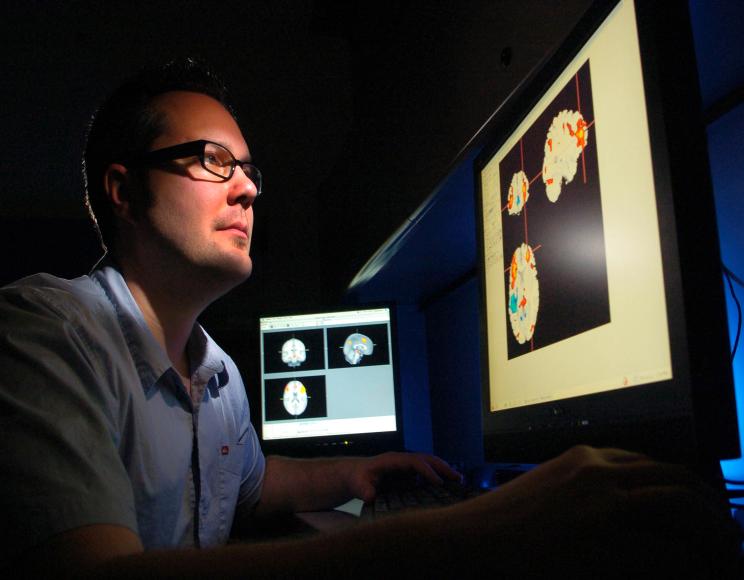
Brendan E. Depue, Ph.D., is an Associate Professor and Endowed Chair of Behavioral Brain Imaging and Neurobiology in the Department of Psychological and Brain Sciences at the University of Louisville. He also serves as an Affiliate Assistant Professor in the Department of Anatomical Sciences and Neurobiology. His research focuses on the neuroanatomical substrates of inhibitory and cognitive control, particularly within the prefrontal cortex (PFC), using neuroimaging techniques such as fMRI and structural MRI. Depue’s work explores emotional memory regulation, PTSD, anxiety, and decision-making processes. Depue earned his Ph.D. in 2009 from the University of Colorado at Boulder. His lab, the (N)euro(I)maging (L)aboratory of (C)ognitive, (A)ffective and (M)otoric Processes (NILCAMP), investigates how brain networks regulate cognitive, emotional, and motor functions. His research has identified key neural correlates of memory suppression in PTSD, structural covariance differences in depression, and gender-specific neural connectivity during emotion regulation. Recent publications highlight his exploration of fear learning mechanisms, neural networks underlying interoceptive awareness, and the translational potential of the bed nucleus of the stria terminalis in anxiety research. Depue’s interdisciplinary approach integrates clinical neuroscience with advanced imaging methodologies to address complex mental health challenges.
Rachid Guerraoui is a Full Professor at the École polytechnique fédérale de Lausanne (EPFL) where he leads the Distributed Computing Laboratory (DCL) within the School of Computer and Communication Sciences. He holds appointments in multiple departments including IC-SSC and IC-SIN for teaching, and serves on the IC Academic Evaluation Committee. A Moroccan/Swiss/French researcher, Guerraoui has previously been affiliated with Commissariat à l'Energie Atomique in Saclay, Hewlett-Packard Labs in Palo Alto, the Massachusetts Institute of Technology in Boston, and Collège de France in Paris. Guerraoui's research focuses on distributed and concurrent computing across various scales, from multiprocessors to wide-area networks. His work spans Byzantine fault tolerance, distributed machine learning, blockchain technologies, transactional memory, and consensus algorithms. His recent publications reveal a strong emphasis on Byzantine-resistant machine learning, decentralized learning systems, and the theoretical foundations of distributed consensus. The research demonstrates significant contributions to making distributed systems more robust, efficient, and secure against adversarial conditions. Guerraoui has received numerous prestigious awards including ACM Fellow (2012), Professor at College de France (2018), Nygaard-Dahl Award (2024), and Barroso Award (2025). His work has earned multiple best paper awards at top conferences including DISC, ICDCS, IPDPS, and ACM Middleware. He serves as Associate Editor of the Journal of the ACM (2010-2025) and has chaired program committees for major conferences such as PODC, DISC, and Middleware. As an educator, Guerraoui supervises numerous doctoral students and has mentored many successful researchers who now work at leading institutions and companies including Meta, Oracle Labs, Chainlink Labs, and Protocol Labs. He teaches courses on Distributed Algorithms and Concurrent Algorithms at EPFL, emphasizing both theoretical foundations and practical implementations. His educational initiatives include Wandida, a library of scientific e-synopses, and Zettabytes, projects aimed at making computer science accessible to broader audiences.
Andreas Peter Burg is a Tenured Associate Professor at the École Polytechnique Fédérale de Lausanne (EPFL), where he leads the Telecommunications Circuits Laboratory (TCL) within the School of Engineering. He holds multiple academic and administrative roles at EPFL including Associate Professor in Teaching (SEL, EDMI, EDEE), Director of SEL Management, and Member of the Doctoral Program Committee for Electrical Engineering. Dr. Burg received his Dipl.-Ing. degree in 2000 and Dr. sc. techn. degree in 2006 from ETH Zurich. His academic career includes positions as SNF Assistant Professor at ETH Zurich (2009-2011) before joining EPFL in January 2011 as a Tenure Track Assistant Professor, where he was promoted to Tenured Associate Professor in June 2018. His research focuses on circuits and systems for telecommunications , with particular expertise in silicon implementation of communication technologies, communication algorithms optimization for hardware, low-power VLSI signal processing, and digital integrated circuits. His work bridges theoretical communication concepts with practical circuit implementations, addressing challenges in wireless and wired communication systems. His recent publications (2024-2025) demonstrate a strong focus on next-generation communication technologies including 6G systems, advanced error correction coding, wireless sensing applications, and ultra-low power circuit design. These works span multiple subfields from LDPC and polar code decoding to RF signal processing and machine learning applications in wireless systems. Willi Studer Award (2000) ETH Medal for diploma thesis (2000) ETH Medal for Ph.D. dissertation (2006) Swiss National Science Foundation Assistant Professorship grant (2008) Dr. Burg has been involved in the development of more than 25 ASICs throughout his career and co-founded Celestrius, an ETH spinoff in MIMO wireless communication. His laboratory work focuses on practical implementations of communication algorithms with emphasis on power efficiency and hardware optimization. Current research directions include 6G technologies, wireless sensing applications, and novel error correction techniques for next-generation communication systems.