Hong Huaqing is a Professor and doctoral supervisor at the Corpus Research Institute of Shanghai International Studies University. He holds roles as honorary director of the Chinese Corpus Linguistics Research Association and international expert at Peking University's Education Development Center. Formerly, he worked at Nanyang Technological University (Singapore) in roles such as researcher at the Learning Research and Development Center and director of the e-Learning Center of the Lee Kong Chian School of Medicine. His research spans machine translation, natural language processing, corpus linguistics, and educational technology. He supervises master's and doctoral students, co-supervises postdoctoral researchers, and focuses on smart education driven by big data analysis and innovative learning ecosystems. Research emphasizes corpus-based methods applied to language education, including computational frameworks for student engagement, wearable sensors in learning analytics, and cross-linguistic rhetoric studies. His work bridges technological innovation (e.g., AI-driven tutorial systems) with pedagogical practice, addressing challenges in non-English language education and teacher training.
PD Dr. Lutz Rzehak is an academic staff member at the Institute for Asian and African Studies (IAAW) within the Faculty of Humanities at Humboldt University of Berlin, serving as a Teacher for special tasks specializing in Modern Iranian languages and the ethnography and cultural history of Afghanistan and Central Asia. His educational background includes: Oriental Studies/History from the State University of Leningrad (1985) Doctorate in Iranian Studies, Humboldt University of Berlin (1991) Habilitation in Central Asian Studies / Iranian Studies, Humboldt University of Berlin (2001) Dr. Rzehak's research spans Central Asian Studies , Iranian Studies , Ethnography , and Linguistics , with fieldwork focusing on Baloch, Pashtun, and Tajik communities. His work examines language evolution, social structures, and cultural practices through historical and contemporary lenses, particularly regarding Soviet influence and post-Taliban Afghanistan. Key contributions include grammatical analyses of Iranian languages and ethnographic studies of religious rituals and tribal systems. His recent publications (2016-2021) reveal consistent focus on Iranian language dynamics (especially Dari and Pashto), ethnic identity politics in Afghanistan, and cultural history of Central Asia. These works address language change mechanisms, ethnic consolidation strategies, and the interplay between tradition and modernity, often utilizing comparative linguistic and ethnographic methodologies. His scientific awards include: Heisenberg Fellow of the German Research Foundation Dr. Rzehak has held significant research positions including Research Associate in the Crossroads Asia Competence Network (2011-2016) and Heisenberg Fellow (2002-2011). While his CV does not list formal PhD advisees, his language lecturing and research supervision have mentored numerous students in Central Asian and Iranian studies through course instruction and fieldwork guidance. He has been actively involved in the Crossroads Asia Competence Network, a major interdisciplinary research initiative examining transregional connections and historical trajectories across Central, South, and West Asia.
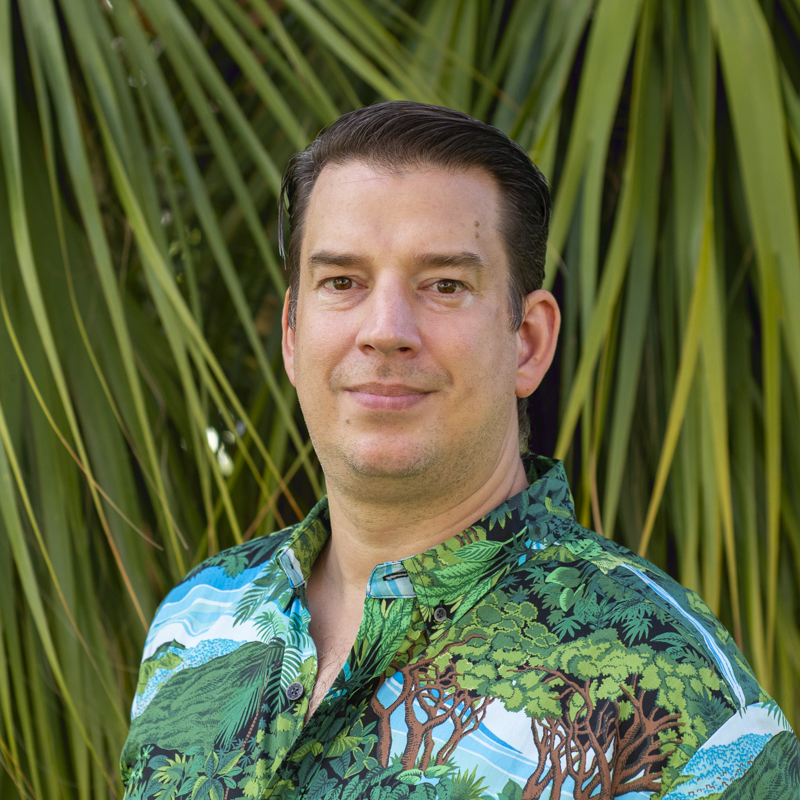
Dr. Dustin Crowther is an Associate Professor in the Department of Second Language Studies at the University of Hawaii at Manoa. He holds a PhD from Michigan State University and currently serves as Director of the Center for Academic Spoken English (CASE), an initiative supporting non-native English speakers in academic oral communication. His primary research focuses on second language speech comprehensibility, global Englishes pedagogy, and listener perception dynamics. Dr. Crowther has held editorial roles for TESOL Quarterly (2019-2024) and will become Editor of the Journal of Second Language Pronunciation in 2025. Dr. Crowther's expertise includes L2 pronunciation instruction, program development in SLA, and methodological practices in second language research. He co-authored Shaping Learners' Pronunciation: Teaching the Connected Speech of North American English (2022) and co-edited Investigating World Englishes: Research Methodology and Practical Applications (2019). His research appears in top-tier journals like Applied Linguistics , Language Learning , and TESOL Quarterly . Education: PhD, Michigan State University Professional Roles: Editor ( Journal of Second Language Pronunciation ), Director (CASE), Affiliate Faculty in Linguistics His work bridges SLA research with pedagogical applications, emphasizing global Englishes' role in multilingual academic contexts. Dr. Crowther collaborates with international scholars through the CASE initiative and has developed innovative assessment methodologies for L2 speaking tasks.
Li Nguyen is an Assistant Professor of Linguistics and Multilingual Studies at Nanyang Technological University (NTU), Singapore . Their work bridges linguistics with computational approaches, focusing on language variation, contact phenomena, and multilingual NLP. Education: PhD in Linguistics (University of Cambridge), Master’s in General and Applied Linguistics (Australian National University) Research interests include: Language variation and change in multilingual/diasporic communities Computational sociolinguistics and NLP for low-resource varieties Syntax-pragmatic interface in bicultural contexts Code-switching and heritage language documentation Recent publications highlight collaborations on Vietnamese-English and other code-switched language pairs, with a focus on NLP applications and corpus-based analysis. Their work has gained recognition through grants like the NTU Start-up Grant and Cambridge Language Sciences funding . Scientific awards: Cambridge International Scholarship, Philological Society Fieldwork Grant Li Nguyen actively collaborates on projects involving sociolinguistically informed NLP and community-driven language documentation. They have contributed to the development of the CanVEC corpus for Vietnamese-English speech research.
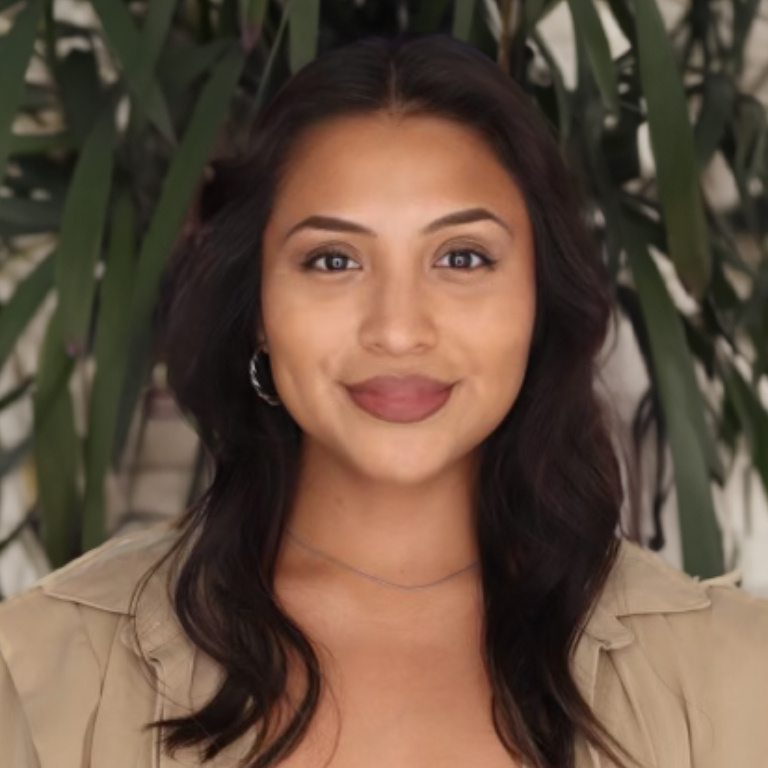
Leslie Del Carpio is an Assistant Professor in the Department of Spanish and Portuguese at Indiana University Bloomington’s College of Arts & Sciences. Her research focuses on Sociolinguistics, particularly Heritage Language Studies, Pedagogy, and Language Variation in Spanish-speaking communities. Education: Ph.D. in Spanish Linguistics (Arizona State University), M.A. and B.A. in Spanish Linguistics (University of Illinois at Urbana-Champaign), and A.S. in Sciences (Parkland College). Leslie investigates the role of Critical Language Awareness in improving educational experiences for Spanish Heritage Language Learners in Indiana and the morphosyntactic legitimacy of Spanish varieties in the United States. She also studies Spanish-Quechua/Kichwa contact in Peru and Ecuador, extending to linguistic attitudes and ideologies. Her recent publications address phonological variation, Spanglish in media, and equity in heritage language education. As co-principal investigator for the Peruzonians project, she contributes to creating a Living Archive of Peruvian migrant experiences in Arizona, emphasizing interculturality and identity. Her teaching includes undergraduate courses on Spanish for Heritage Speakers, US Spanish, and bilingualism, as well as graduate-level heritage language pedagogy and research methods.
Raffaella Bottini is a Lecturer in Corpus Linguistics at the School of Social Sciences, Lancaster University . She completed her PhD at the ESRC Centre for Corpus Approaches to Social Science (CASS), with prior academic training including an MA in Applied Linguistics (King's College London) and an MA in English Language and Literary Studies (Università degli Studi di Milano, Italy). Research Interests: Her work centers on applying corpus linguistics to language testing and second language acquisition, with a focus on lexical complexity and statistical analysis of learner corpora. She develops quantitative methods and automatic tools for analyzing vocabulary use across proficiency levels in spoken exams (e.g., the Trinity Lancaster Corpus). Her research expands into register analysis, data visualization, and pedagogical applications. Teaching: Bottini leads courses on corpus design, statistics, and vocabulary analysis in Lancaster's distance MA programs in Corpus Linguistics and TESOL. She also contributes to undergraduate modules on corpus-based English studies and summer schools in corpus linguistics. Scientific Awards: PhD Research Award PhD Students: Reem Alojaimi Chris Ott Projects: Includes "Linguistic demands of EMI in Higher Education" (2022-2025), analyzing EMI contexts in China, Italy, and Thailand, and participation in "Culture and Communication: Global Perspectives" and the LAEL-China Network.
Dr. Margot van den Berg is an Assistant Professor at Utrecht University's Department of Languages, Literature and Communication, affiliated with the Humanities Institute for Language Sciences. She specializes in sociolinguistics, language contact, and creole studies, focusing on migration-driven language dynamics. As co-coordinator of the Language and Culture Studies program (awarded top education quality), she emphasizes interdisciplinary and community-engaged learning. Education Background: PhD in Linguistics (University of Amsterdam, 2007), with expertise in Early Sranan grammar. Research Themes: Institutions for Open Societies (IOS), Migration and Societal Change, particularly exploring language birth, variation, and policy in Suriname and the Caribbean. Her research integrates historical creolistics with contemporary sociolinguistic issues, such as language policies in multilingual contexts and the sociocultural implications of language contact. Recent work includes analyzing parliamentary discourse in Suriname and documenting African influences in Caribbean creoles. Publications span over 20 years, addressing topics like plant names in Maroon communities, creole formation theories, and language variation in Suriname. She collaborates internationally, contributing to edited volumes like Manual of Romance Languages in Africa (2023) and Surviving the Middle Passage (2015). Grants & Activities: Involved in research networks on language contact and migration, including projects on creole learner varieties and interdisciplinary education initiatives.
Dr. P. Zitlali Morales is a Professor of Curriculum & Instruction in the College of Education at the University of Illinois at Chicago (UIC), with an affiliation in the Latin American and Latino Studies (LALS) program. She holds a PhD in Education from UCLA and a BA in Cultural Anthropology from Stanford University. Her research focuses on bilingual education equity, language ideologies in immigrant communities, and dismantling systemic inequities in teacher preparation. She co-edited Transforming Schooling for Second Language Learners and coordinates UIC’s Bilingual/ESL endorsement program. Dr. Morales advocates for dual language bilingual education (DLBE) as a right for Latina/o/x/e communities, emphasizing dignity-affirming pedagogies and centering racialized pre-service teachers. Education: PhD in Education, University of California, Los Angeles (2010) BA in Cultural Anthropology, Stanford University (1998) with a minor in History Research Interests: Dr. Morales investigates linguistic practices of bilingual communities, equitable DLBE access, and anti-racist teacher education. She collaborates with Latinx families and educators to challenge deficit narratives and promote culturally sustaining policies. Her work integrates testimonios of Latinx teachers and emphasizes language as a site of resistance. Awards: 2021 Graduate Mentoring Award, Behavioral and Social Sciences Division, UIC 2022-23 Victoria Chou Faculty Research Award, College of Education, UIC Grants & Leadership: Co-PI on Spencer Foundation Grant: Centering Racialized Pre-Service Teachers Secretary, National Council of Teachers of English Assembly for Research (NCTEAR) Service: Dr. Morales engages in community advocacy, including a Univision Chicago interview on bilingual education challenges. She prioritizes translational research to bridge academic and community needs.
Louisiana State University in ShreveportUnited States
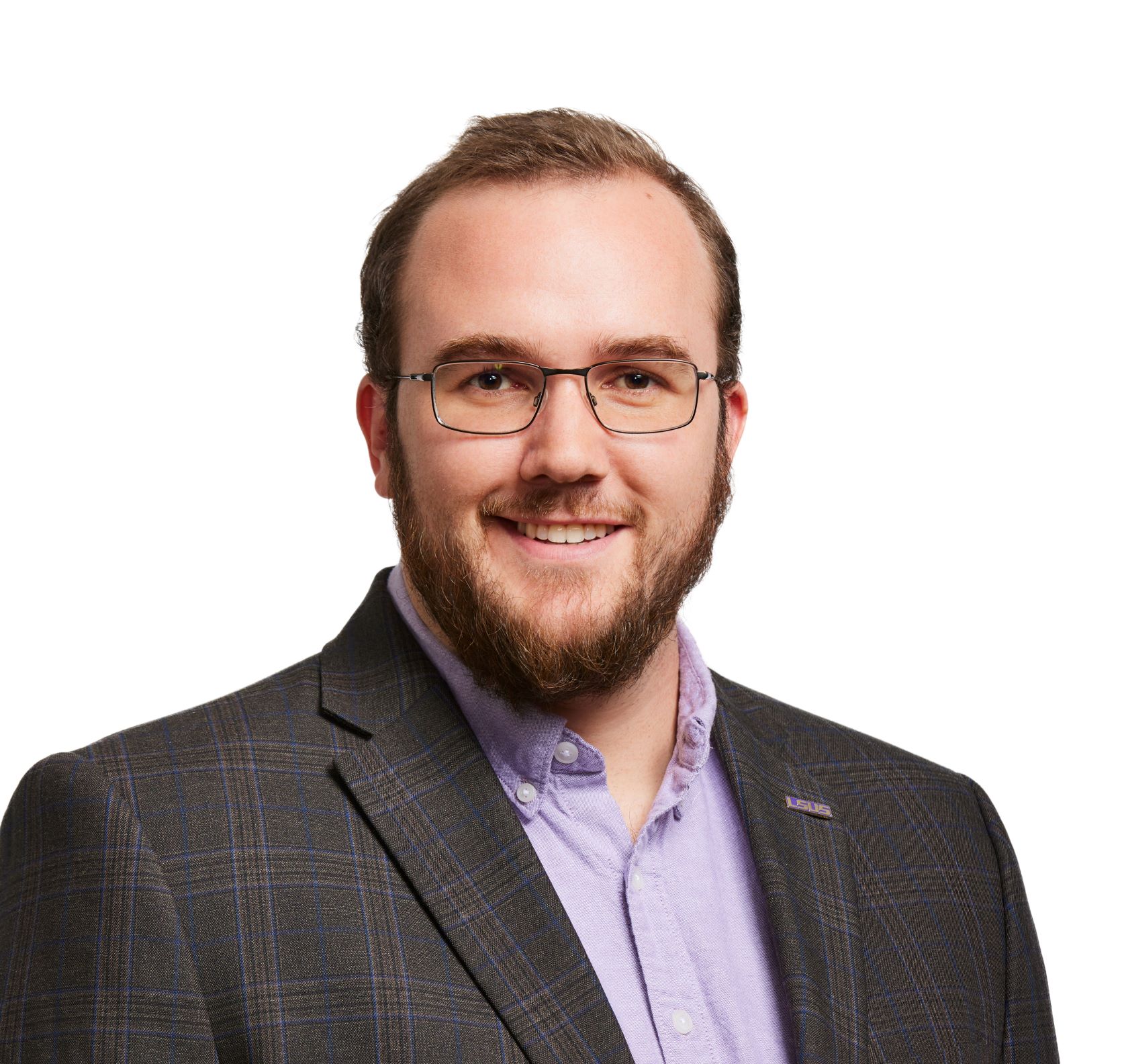
Dr. Matthew Pollock is an Assistant Professor of Linguistics and Spanish at Louisiana State University in Shreveport (LSUS), serving as Interim Chair of the Department of English and Foreign Languages. He holds dual PhDs in Hispanic Linguistics and Linguistics from Indiana University (2023), with prior teaching experience in Germany via a Fulbright Scholarship and Spain through the IU Honors Program. His research focuses on sociolinguistics, phonetics/phonology, bilingualism, second language acquisition, and usage-based approaches. Education: PhD in Spanish/Hispanic Linguistics (Indiana University, 2023) PhD in Linguistics (Indiana University, 2023) MA in Hispanic Linguistics (Indiana University, 2018) BA in Spanish and English Literature (Auburn University, 2015) Research Interests: Dr. Pollock examines political speech, sociophonetic variation (e.g., Andalusian/Caribbean Spanish), bilingual acquisition, and corpus-based methodologies. His work bridges theoretical linguistics with applied sociolinguistics, emphasizing style-shifting in political contexts and perceptual sociolinguistics. Teaching: At LSUS, he instructs courses in Linguistics, Spanish language, and Hispanic linguistics. He has extensive experience teaching across multiple levels, including high school abroad and university-level courses in the U.S. and Spain. Professional Contributions: He serves as an editor for major linguistic handbooks (e.g., The Oxford Handbook of the Spanish Language ), reviews for journals like Hispania , and actively participates in academic conferences globally. His research has been funded through grants and presented at institutions such as the Linguistic Society of America and NWAV.
Joy Lu is an Assistant Professor of Marketing at the Tepper School of Business, Carnegie Mellon University, where she has been a faculty member since July 2018. She also held the Xerox Junior Faculty Chair position from July 2023 to July 2024. Her research focuses on consumer behavior, information search processes, and digital media consumption patterns, with particular expertise in eye-tracking methodologies and online learning environments. Education: PhD in Marketing/Dual AM in Statistics, University of Pennsylvania, 2018 BS in Economics and Engineering & Applied Science, California Institute of Technology, 2013 Dr. Lu's research examines how consumers navigate information in digital environments, with a particular focus on eye-tracking studies of web page interactions. She has made significant contributions to understanding binge-watching and media consumption patterns, exploring how consumers plan and allocate time for future media consumption. Her research on online learning investigates how different content delivery formats affect learner engagement and outcomes. Additionally, she has explored topics in algorithmic transparency and how explainable AI can aid consumer decision making, particularly for vulnerable populations. Analysis of Dr. Lu's recent publications reveals a strong focus on digital consumer behavior, particularly how users interact with online content. Her work combines rigorous experimental methods with sophisticated modeling approaches to understand complex decision processes. A recurring theme is how consumers allocate attention and time in digital environments, whether for shopping, learning, or entertainment. Her research has important implications for website design, educational platform development, and content delivery strategies across multiple industries. Scientific Awards: 2020 Carnegie Bosch Institute Research Award 2019 Carnegie Bosch Institute Research Award 2013 David M. Grether Prize in Social Science Russell Ackoff Doctoral Student Fellowship Patty and Jay H. Baker Ph.D. Fellowship Innovative Models for Undergraduate Research Fellow (2020-2021) Dr. Lu serves on the editorial board of the Journal of Marketing Research and has conducted peer reviews for prestigious journals including PLoS ONE, Journal of the Academy of Marketing Science, and the Journal of Marketing Research. She has also reviewed for major conferences including the Society for Consumer Psychology and the Association for Consumer Research. Her research has been supported by grants from organizations such as the Jay H. Baker Retailing Center and the Wharton Behavioral Lab at the University of Pennsylvania. While specific laboratory information isn't provided in the available text, Dr. Lu's research involves sophisticated methodologies including eye-tracking experiments and analysis of large-scale user behavior data from online platforms. Her work suggests collaboration with interdisciplinary teams spanning marketing, psychology, and information systems to investigate complex consumer decision processes in digital environments.
Eva Liina Asu-Garcia is an Associate Professor of Phonetics at the University of Tartu's Faculty of Arts and Humanities, Institute of Estonian and General Linguistics (0.80 position), and an Associate Professor of Swedish Language at the Institute of Foreign Languages and Cultures (0.20 position). She has been affiliated with the University of Tartu since 1995, holding various academic positions including Lecturer, Research Fellow, Senior Research Fellow, and now Associate Professor. She also served as Head of Department at the Institute of Foreign Languages and Cultures from 2021 to 2024. Dr. Asu-Garcia earned her Doctoral degree in Linguistics from the University of Cambridge in 2004, with her dissertation titled 'The Phonetics and Phonology of Estonian Intonation,' supervised by Prof. Francis Nolan. Prior to this, she completed an M. Phil in English and Applied Linguistics (1996-1997) and a B.A. in English Language and Literature (1989-1995) from Tartu University. Her research primarily focuses on phonetics, with special emphasis on Estonian intonation, prosody, and speech production. She investigates the acoustic and articulatory properties of Estonian quantity distinctions, intonation patterns in various discourse contexts, and cross-linguistic aspects of phonetics, particularly in relation to Swedish and Spanish language learners. Her work often combines experimental methods with theoretical linguistics to understand how prosody functions in communication. She has published extensively in international journals and conference proceedings, with recent work examining multimodal aspects of speech, cross-cultural perception of vocalizations, and the documentation of endangered language varieties. Dr. Asu-Garcia has received numerous awards and scholarships throughout her career, including the Kordelin Foundation Scholarship (2016, 2006), Valter Niilus award (2010), and several Cambridge Overseas Trust scholarships. She is an active member of multiple professional organizations including the International Speech Communication Association (ISCA), International Phonetics Association (IPA), and the British Association of Academic Phoneticians (BAAP). She currently supervises PhD student Katrin Leppik (researching Estonian vowel categories and quantity degrees in Spanish L1 speakers) and Master's student Vootele Valter (studying Ruhnu Swedish language clusivity). She has successfully supervised several other students to completion of their degrees. Dr. Asu-Garcia also leads research projects funded by the Ministry of Education and Research and the Nordic Council of Ministers, focusing on multimodal analysis of spoken Estonian and documentation of Ruhnu Swedish dialect.
Alysa Hantgan is a Lecturer and Associate Chairperson in the Department of English, Writing & Cultural Studies at Dyson College of Arts and Sciences, Pace University, where she plays a key role in curriculum development and instruction. She is based at the Westchester campus and actively contributes to undergraduate education through a variety of writing and literature courses. Her research and teaching interests center on composition, rhetoric, and cultural studies. These areas are reflected in her diverse course offerings, which include Composition and Rhetoric I , Critical Writing , Writing in the Disciplines , and Introduction to Genre Studies . She also teaches specialized courses such as Creating a Good Life and Workshop in Fiction Writing , indicating a strong engagement with interdisciplinary and creative approaches to writing education. Alysa Hantgan has taught a wide range of foundational and advanced writing courses, demonstrating a long-standing commitment to student development in rhetorical and critical thinking skills. Her teaching portfolio reflects a curriculum focused on both academic and creative writing, serving first-year students through senior-level learners, including those engaged in internships and special topics such as cultural rhetorics. There are no scientific awards listed in the available information. Alysa Hantgan advises students through internship courses and special topics, though no formal list of graduate advisees is provided. There is no mention of external grants or funded research projects in the current data. Her leadership role as Associate Chairperson suggests administrative responsibilities in addition to her teaching duties. No information is available regarding laboratories, research teams, or collaborative research groups.
Cyrille GRANGET is a Professor in the Department of Language Sciences at Toulouse Jean Jaurès University (UT2J), where he also serves as Director of the NeuroPsychoLinguistics Laboratory (LNPL, UR4156). He is actively involved in academic governance, holding elected positions in the Departmental Council of Language Sciences, the CLESCO Doctoral School Council, and the Qualified Scientific College (CSQ). He is also the Educational Coordinator for International Relations and outgoing mobility in Language Sciences. His research lies at the intersection of linguistics, cognition, and education, with a strong focus on second and third language acquisition. Key interests include: Linguistic and cognitive representation of events in L2 Inflectional verbal morphology in L2 French Effects of orthography and metrical structure on pronunciation Role of context, prior languages, and literacy in language learning Sociolinguistic variation and critical appropriation of dominant varieties Language acquisition among migrant populations His recent publications reflect a multidisciplinary approach combining psycholinguistic experiments (eye-tracking), computational modeling, and sociolinguistic fieldwork. He frequently collaborates across languages including French, German, Japanese, Spanish, Arabic, and Portuguese, often in educational or migratory contexts. His work is published in journals such as Languages , Education Sciences , and Revue Romane , and presented at major conferences like EuroSLA and CMLF. Scientific contributions and service include: Member of the editorial board of Langage, Interaction, Acquisition (LIA) Member of the office of the Thematic Network Recherche en Acquisition des Langues Secondes (RéAL2) Participant in the Toulouse Political Ecology Workshop (Atecopol) Supervision of multiple research projects and students in linguistics and language education He is deeply committed to inclusive language education, particularly for newly arrived migrant adolescents, and integrates theoretical linguistics with practical pedagogical applications. His leadership in LNPL and involvement in national research networks underscore his significant role in advancing psycholinguistic and sociolinguistic research in France.
Dr. Stephen Fafulas is Associate Professor of Spanish and Linguistics in the Department of Modern Languages at the University of Mississippi. He serves as Director of the Study of Communities, Involvement & Outreach and Linguistics (SoCIOLing) Lab, which collaborates with scholars, trains students, and raises awareness about cultural and linguistic diversity across bilingual zones of the Americas. Dr. Fafulas holds a PhD in Hispanic Linguistics from Indiana University with a specialization in the intersection of Second Language Acquisition and Sociolinguistics. His educational background has prepared him for extensive research in language variation, contact linguistics, and bilingual communities. Dr. Fafulas's research incorporates current theories and methodologies in Sociolinguistics and Second Language Acquisition to examine morpho-syntactic and phonetic variation in native, learner, and contact varieties of language. He employs quantitative methods to uncover the social, linguistic, and cognitive factors that shape languages at individual and societal levels. His fieldwork spans various speech communities throughout the Americas and Europe, with particular focus on language shift and bilingualism in distinct settings, including investigations of the ethnolinguistic vitality of minority languages in the Amazon (Bora, Yagua and Ocaina) as well as Spanish in the USA. Dr. Fafulas's scholarly work demonstrates a consistent focus on language variation in contact situations, with particular attention to Amazonian Spanish varieties, Southern US Spanish dialects, and second language acquisition phenomena. His research bridges theoretical linguistics with community engagement, documenting emerging language varieties while addressing practical needs of bilingual communities. Dr. Fafulas has received notable recognition for his work, including: University of Mississippi's inaugural Faculty Laureate program Fulbright award to Spain (2022) Graduation from the Engagement and Outreach Scholars Academy at East Carolina University Dr. Fafulas is dedicated to cross-disciplinary scholarship that integrates community stakeholders in project design. He has secured funding from prestigious agencies including the National Science Foundation, Fulbright, and the National Endowment for the Humanities. As Director of the SoCIOLing Lab, he mentors undergraduate and graduate students, leading research initiatives with bilingual communities globally. He also co-founded the SEC Spanish Consortium, which promotes cross-disciplinary scholarship and cross-institutional collaborations aimed at documenting diversity among Latinx communities in the U.S. South. Through the SoCIOLing Lab, Dr. Fafulas collaborates with scholars across disciplines and institutions to document linguistic diversity in bilingual communities. His lab provides research opportunities for students and serves as a hub for community engagement, particularly focused on Latinx populations in the U.S. South. Current initiatives include documenting Latinx populations in Mississippi through oral histories, student mentoring, and bilingual education initiatives.
Stefanie Rottschäfer is a researcher at the Applied Linguistics and ELT chair of the Faculty of Cultural Studies at the Technische Universität Dortmund . Her work focuses on English as a lingua franca (ELF) , multilingualism , language attitudes , and language identity , particularly within family contexts and educational settings. Education : B.A. in Language and Communication (Universität Siegen, Université Paris XII), M.A. in Sprachlehrforschung (Universität Hamburg) Her research explores how families across Europe navigate multilingual communication using ELF, as seen in her 2024 publication on multilingual repertoires at dinner tables. She also investigates the phonetic and sociocognitive aspects of learner varieties of English, including accent perception and identity construction among German and French university students. Recent publications and presentations highlight her work on family language policies, ownership of English among pre-service teachers, and cross-cultural meaning-making. Notably, she was awarded a Fulbright scholarship in 2024 to conduct research at the University of Hawaiʻi at Mānoa. Key Contributions : Developed the FamiLingo project on ELF in multilingual families Created the first corpus of ELF interactions in domestic settings Advances discourse on language ideologies and global citizenship in family contexts Rottschäfer’s teaching spans topics like identity in language learning, sociophonetics, and bilingual education. Her methodological expertise includes narrative analysis, sociolinguistic fieldwork, and corpus compilation.