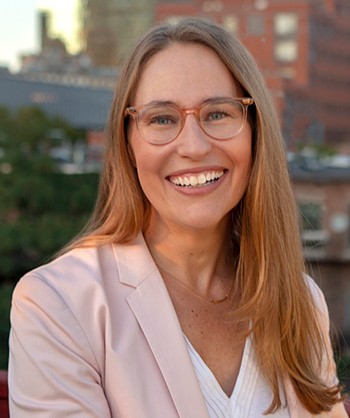
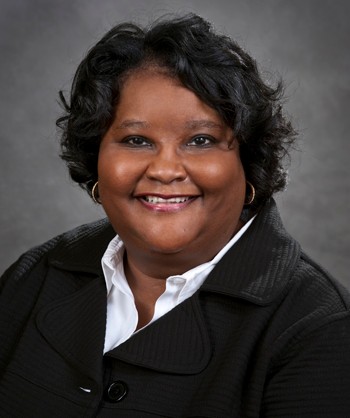
Maria Dove, Ed.D., is a Professor in the Department of Education at Molloy College. Her research focuses on co-teaching strategies, multilingual education, and educator collaboration to support diverse learners. She has published extensively in journals like NYS TESOL Journal and Language Magazine , emphasizing collaborative planning and resilience-building in educational settings. Dr. Dove’s work highlights the importance of shared instructional practices and teacher teamwork. Her educational background includes an Ed.D., though specific degree details are not provided. Collaborations with colleagues like Dr. Honigsfeld are central to her scholarship, focusing on practical solutions for multilingual learners and capacity-building in schools. No academic awards are explicitly mentioned in the provided materials.
Iliana Skrebneva is a Lecturer in Inclusive Education and Coordinator of the Master of Inclusive and Special Education at Macquarie University's Macquarie School of Education. She holds accreditation as a primary school teacher from the New South Wales Education Standards Authority. Her research focuses on inclusive education policies, disability studies, and teacher training strategies for supporting diverse learners in mainstream settings. Education: Certified primary school teacher (NSW Education Standards Authority) Research Interests: Iliana explores how inclusive strategies can be effectively implemented in early childhood and school environments, emphasizing teacher professional development and policy alignment with student needs. Her work addresses challenges faced by learners with disabilities, including deaf students and those with visual impairments, in both mainstream and specialist educational settings. Grants & Projects: ACT Govt Education Inclusive education professional learning: 5 program suite (2024-2025) Labs/Teams: Associated with the Early Childhood Education Research Centre at Macquarie University.
Liv T. Davila is an Associate Professor at the University of Illinois at Urbana-Champaign, with appointments across the College of Education, Center for Global Studies, and European Union Center. Her research focuses on language learning, identity formation, and equity for immigrant and refugee students, particularly in K-12 settings. Education: PhD in Education (University of North Carolina at Chapel Hill), MEd in TESL (University of North Carolina at Charlotte), MA in Comparative Education (University of Minnesota), BA in Anthropology/French (Grinnell College) Her work employs qualitative methods, including ethnography and discourse analysis, to examine multilingual learners’ experiences, teacher education practices, and global migration’s impact on schools. She has received the Outstanding Graduate Teaching Award (2020) and led research on language access during the pandemic. Recent publications highlight co-teaching dynamics, refugee youth resilience, and translanguaging in preschools. She advocates for pedagogies that affirm students’ identities through home languages and multicultural approaches. Scientific Awards: Outstanding Graduate Teaching Award, College of Education (2020)
Dr. Eunice Eunhee Jang is a Professor in the Department of Applied Psychology and Human Development at the Ontario Institute for Studies in Education (OISE), University of Toronto. Her research focuses on synergistic learner modeling, dynamic assessment systems, and the intersection of language testing with educational measurement. PhD with specializations in language testing, educational measurement, and program evaluation Develops interactive digital assessment interfaces for struggling readers Author of "Focus on Assessment" (2014) and co-author of OECD Reviews on Evaluation and Assessment in Education Research Interests Dr. Jang's work explores prismatic assessment analytics to understand learner potential and predict learning pathways. She integrates natural language processing and machine learning to create diagnostic feedback systems that support cognitive, metacognitive, and affective growth in technology-rich classrooms. Scientific Awards Jacqueline Ross TOEFL Dissertation Award Caroline Clapham IELTS Master’s Award Tatsuoka Measurement Award Professional Contributions She has served on major advisory boards including EQAO provincial assessments and TOEFL Committees of Examiners. Currently, she is an elected board member for the International Language Testing Association and contributes to the Broader Measures of Success Advisory Committee for People for Education.
Angela Boatman is an Associate Professor in the Department of Educational Leadership & Higher Education at Boston College specializing in higher education policy evaluation, with emphasis on improving access and success for underrepresented student populations through evidence-based interventions. Her educational credentials include: Ed.D. in Higher Education from Harvard University M.P.P. and M.A. in Higher Education from the University of Michigan B.A. from the University of Minnesota Dr. Boatman's research program systematically examines college access barriers and success pathways, focusing on remedial education reform (particularly mathematics), financial aid design, community college transfer policies, and behavioral interventions to reduce loan aversion. She employs rigorous quasi-experimental and experimental methodologies to evaluate policy impacts on student outcomes, with particular attention to equity implications for traditionally marginalized groups. Her work bridges academic research and practical policy implementation through sustained engagement with federal and state education agencies. Analysis of her recent publications (2019-2025) reveals consistent thematic focus on remediation models (corequisite vs. traditional, high school vs. college timing), behavioral economics applications in financial aid, and cross-institutional transfer policies. Her research spans diverse contexts including U.S. community colleges, technical institutions in Chile, and rural-serving universities, demonstrating methodological versatility through large-scale administrative data analysis, randomized trials, and comparative international studies. Dr. Boatman has secured substantial external research funding from the Institute for Education Sciences, Bill & Melinda Gates Foundation, Lumina Foundation, and Peabody College. She actively contributes to national discourse as a faculty affiliate of the Center for the Analysis of Postsecondary Readiness (CAPR) and the Center for Education Policy Research (CEPR) at Harvard University, frequently presenting findings to policymakers and practitioners through congressional briefings, Federal Reserve conferences, and national education forums.
Tessa H.S. Eysink is a Full Professor in Instructional Technology, affiliated with the Digital Society Institute. Her research focuses on educational technology, inquiry-based learning, and technology-enhanced STEM education for children. 2024 Research Highlights : Investigated physiological and gaze metrics for learner emotions in Frontiers in Psychology Studied hypothesis generation in simulation-based learning in the Journal of Research in Science Teaching Co-developed the gamified Science Chaser app for STEM engagement at the ACM Interaction Design and Children Conference Her work bridges psychology, computer science, and education, emphasizing multimedia learning and cognitive modeling. No scientific awards or student supervision details were explicitly mentioned in the provided texts.
Brian Magerko is Professor of Digital Media in the School of Literature, Media, and Communication at Georgia Institute of Technology , where he also serves as Director of Graduate Studies for the Digital Media program and holds an adjunct appointment in the School of Interactive Computing . He directs the Expressive Machinery Lab and has led over $20 million in federally funded research at the intersection of cognition, computation, and creativity. Education Ph.D. Computer Science and Engineering, University of Michigan (2006) M.S. Computer Science and Engineering, University of Michigan (2001) B.S. Cognitive Science (minor Computer Science & Jazz Performance), Carnegie Mellon University (1999) Research Interests Dr. Magerko’s scholarship integrates cognitive science , AI , and computational media to investigate three core themes: (1) social and creative collaboration between humans and AI; (2) design of interactive narrative, music, and arts-based computational experiences; and (3) inclusive STEAM education that leverages personal expression—most notably through the widely-adopted EarSketch platform, which engages learners in computer science via music remixing and coding. Publication Trends Recent publications (2022-2025) reveal a surge in work on generative and co-creative AI systems , AI literacy frameworks , and accessible computing education . Studies span dance improvisation agents (LuminAI), inclusive design for blind and visually-impaired learners, and large-scale evaluations of creativity and learning outcomes in EarSketch classrooms across the United States. Awards & Honors Methods Paper Recognition, ACM CSCW 2022 Best Paper Award, ACM Creativity & Cognition 2021 & 2017 Ivan Allen College Researcher of the Year 2018 NCWIT Engagement Excellence Award 2017 Multiple Best Student Paper Awards (AIED 2021, ICCCI 2021) CETL Thank-a-Teacher Award 2008 Grants & Advising Dr. Magerko has served as PI or Co-PI on numerous NSF, NEA, and private foundation grants totaling more than $20 million. His projects fund interdisciplinary teams of graduate and undergraduate students, post-docs, and external collaborators, producing open-source software, museum installations, and K-12 curricula. Labs & Teams As head of the Expressive Machinery Lab , he mentors researchers creating AI partners for dance, drawing, music, and storytelling. The lab’s artifacts have been exhibited at the Smithsonian, ArtScience Museum Singapore, MoogFest, and other international venues.
Elise Lavoué is a full Professor in Computer Science at iaelyon School of Management, Jean Moulin Lyon 3 University, and a key researcher at the LIRIS laboratory (CNRS). She leads the SICAL research team and holds leadership roles including Editor-in-Chief of the STICEF journal, member of Labex ASLAN’s management committee, and member of the University of Lyon’s Research Ethics Evaluation Committee (CER-UdL). She is also affiliated with the ATIEF association. Her research focuses on enhancing motivation and engagement in digital learning environments through adaptive gamification, learning analytics, and human-computer interaction. She explores how tailored game elements, emotional awareness tools, and immersive technologies like virtual reality can support self-regulated learning, critical thinking, and skill development in complex digital contexts. Her recent publications span top journals such as IEEE Transactions on Learning Technologies, International Journal of Human-Computer Studies, Computers & Education, and CHI PLAY. These works reflect a strong trend in adaptive and personalized learning technologies, emotion-aware systems, and immersive training environments, particularly in educational and professional settings. Honorable Mention Award at ACM CHI PLAY 2019 (top 4%) Best Industrial Paper award at CSEDU 2020 Elise Lavoué actively supervises PhD students and post-doctoral researchers and leads multiple funded projects including LudiMoodle+, RENFORCE, Lex.gaMe, BODEGA, and Emoviz. These projects involve collaborations with institutions across France and focus on gamification, VR training, emotional dashboards, and vocabulary acquisition. She has secured funding from ANR, Labex ASLAN, CNRS, and other national bodies. Her work emphasizes interdisciplinary collaboration between computer science, education, and social sciences. She is involved in several research teams and labs, primarily the SICAL team within the LIRIS laboratory, a major interdisciplinary research unit in computer science, images, and information systems. Her projects often involve industry partners such as SpeakPlus and Woonoz, and she contributes to both scientific advancement and practical educational innovation.
Lillie R. Albert is a Professor and Program Director for Secondary Education at Boston College’s Lynch School of Education, Department of Teaching, Curriculum, and Society. Her work bridges mathematics education, sociocultural contexts, and social justice, focusing on teacher training and equity in high-need schools. Education: Ph.D. (University of Illinois at Urbana-Champaign), M.A. (Xavier University), B.A. (Dillard University) Her research explores the pedagogical implications of writing-to-learn strategies, Vygotskian psychology in mathematical problem-solving, and multicultural education. She leads a $1.78 million NSF-funded project preparing teacher leaders for Boston’s high-need districts and co-authored a book on South Korean elementary math teaching. Recent publications highlight multilingual education, metalinguistic awareness, and textbook analysis. She received the 2023 Drylongso Anti-Racism Leadership Award and has secured multiple NSF and foundation grants for STEM equity initiatives. Scientific Awards: Drylongso Anti-Racism Leadership Award (2023) She has contributed to projects like WGBH Educational Foundation’s Keep Going! Building a Culture of Perseverance in the Math Classroom and developed technology badges for teacher preparation programs.
Tongguang Li is a Research Fellow at the Department of Human Centred Computing, Monash University. His research focuses on learning analytics, self-regulated learning, and AI applications in education. He has contributed to the development of the FLoRA engine, an AI tool designed to enhance hybrid human-AI regulated learning. Li’s work explores adaptive scaffolding, large language model (LLM) feedback systems, and the integration of multimodal data for educational insights. His recent studies investigate how LLMs like ChatGPT can provide effective feedback to students, analyze rhetorical patterns in writing, and measure the impact of scaffolding on learning processes. Li has been recognized for his research with the Conference Best Full Student Paper Award from the Australiasian Society for Computers in Learning in Tertiary Education (2022). Key themes in his work include understanding self-regulated learning strategies through trace data, optimizing adaptive systems for learner engagement, and leveraging AI for educational innovation. His research bridges cognitive science, data analytics, and educational technology to improve learning outcomes and pedagogical practices.
Nidhi Singal serves as Professor of Disability and Inclusive Education at the University of Cambridge's Faculty of Education and holds the position of Vice President at Hughes Hall. Her academic leadership extends to roles as Trustee of the Cambridge Trust and UKFIET, alongside significant contributions to global education initiatives through the World Bank, UNESCO, and UNPRPD. Her educational background includes a PhD and MPhil from the University of Cambridge, complemented by an M.A. and B.A. (Honours) in Applied Psychology from the University of Delhi. This clinical psychology foundation informs her distinctive approach to educational research. Singal's research centers on educational equity for marginalized groups in Southern contexts, with particular emphasis on children with disabilities in South Asia and Africa. She pioneers culturally-sensitive methodological frameworks that challenge power imbalances in North-South research partnerships and prioritize ethical knowledge dissemination. Her work critically examines classroom teaching quality, schooling impacts, and the complex interplay between disability, poverty, and development. Analysis of her recent publications reveals consistent focus on inclusive education measurement (2024), pandemic impacts on disabled learners (2021-2022), and Southern perspectives on disability-inclusive schooling. Her scholarship bridges rigorous academic research with actionable policy development, evident in her leadership of the Global Disability Summit's International Statement of Action. Fellow of the Academy of Social Sciences (2022) President of the British Association for International and Comparative Education Technical Advisory Council member for World Bank's Inclusive Education Initiative Contributor to UNESCO's Foundations of Disability-Inclusive Education Sector Planning Course Singal mentors a vibrant cohort of postgraduate researchers through the Cambridge Network for Disability and Education Research (CaNDER) and South Asian Approaches to Researching Education (SaareNetwork). Her grant portfolio demonstrates exceptional partnership with international agencies including the World Bank, UNESCO, and MasterCard Foundation, focusing on projects like the Girls Education Challenge Fund evaluation and Ethiopia's Inclusive Education Resource Centres. Current initiatives explore teacher effectiveness in African secondary schools and disability-inclusive education during humanitarian crises. Her research infrastructure includes CaNDER, which connects Global South stakeholders to advance disability-inclusive education scholarship, and active collaboration with international networks like UKFIET and UNPRPD to shape policy frameworks that center lived experiences of disabled learners.
Michael C Rodriguez is a Professor in the Quantitative Methods in Education department at the University of Minnesota's College of Education and Human Development. He serves as Dean in the Administration (CEHD) and is a leading expert in psychometrics and educational assessment. PhD in Measurement and Quantitative Methods, Michigan State University (1999) MA in Educational Psychology, University of Minnesota (1995) His research focuses on psychometric properties of tests , optimizing test accessibility for diverse learners, and advancing applied measurement through collaborations with schools. Key areas include constructed-response vs. multiple-choice item design, SDG-aligned educational practices, and the intersection of developmental assets with student engagement . Recent publications examine automated evaluation tools , bullying impacts on foster youth, and test validity frameworks . His work aligns with the UN Sustainable Development Goal 4 (Quality Education) . He collaborates on grants from the U.S. Department of Education and Institute of Education Sciences , including projects like the Individual Growth and Development Indicators for Hmong preschoolers and Computer Adaptive Storybook Assessment (CASA).
Professor Paul Rayson is a Professor of Natural Language Processing in the School of Computing & Communications at Lancaster University, UK. He serves as Director of the UCREL (University Centre for Computer Corpus Research on Language) interdisciplinary research centre and is affiliated with multiple research institutes including Security Lancaster, the Lancaster Centre for Digital Humanities, and the Data Science Institute. Education: PhD in Computer Science, Lancaster University (2003) BSc (Hons) Computer Science and Mathematics, Lancaster University (1990) Professor Rayson's research focuses on semantic multilingual Natural Language Processing (NLP) in challenging linguistic environments with noisy language data, including historical texts, learner language, speech, email, and other computer-mediated communication. His work spans applications in dementia detection, mental health analysis, online child protection, cyber security, learner dictionaries, and text mining of biomedical literature, historical corpora, and financial narratives. He has developed semantic tagging tools like USAS (UCREL Semantic Analysis System) and Wmatrix for corpus analysis. Major Awards and Honors: FHEA (Fellow of the Higher Education Academy) MBCS (Member of the British Computer Society) Professor Rayson has supervised numerous PhD students in NLP and corpus linguistics, with eight current students and seven completed doctorates. He has led or co-investigated multiple major research projects including the £3.5m ESRC-funded Centre for Corpus Approaches to Social Science (CASS), the National Corpus of Contemporary Welsh, and projects related to mental health forums, financial narrative analysis, and cyber security. His research has been supported by ESRC, EPSRC, and other funding bodies. As Director of UCREL, he oversees research in corpus linguistics and NLP. He is also active in the Cyber Security Research Centre, Digital Health Group, and multiple Data Science Institute initiatives. His lab has developed several widely-used NLP tools including CLAWS for English POS tagging, USAS semantic analysis system, Wmatrix corpus analysis tool, and the Variant Detector (VARD) for historical texts.
Ioana Jivet is a Research Professor and Head of the Learning Analytics Research Professorship at FernUniversität in Hagen, Germany. She leads interdisciplinary research focused on leveraging learning analytics to enhance educational practices through data-driven insights. Her role in the CATALPA Graduate School involves collaboration across disciplines to translate research into actionable educational strategies. Educational Background: PhD in Learning Analytics from Open Universiteit Nederland (2021) Postdoc at TU Delft (2019–2021) Research roles at DIPF (2021–2024) and studiumdigitale (2021–2024) Research Interests: Self-regulated learning mechanisms and feedback systems Cultural and ethical dimensions of learning analytics adoption Design of human-centered learning dashboards Privacy concerns in educational technology AI-driven educational decision support systems Her work emphasizes practical applications, such as developing adaptive feedback tools and investigating cross-cultural usage patterns of learning analytics platforms. Professional Contributions: Secretary of the Society for Learning Analytics Research (SoLAR) General Chair for the 2024 European Conference on Technology Enhanced Learning (EC-TEL) Co-editor of Springer volumes on technology-enhanced learning Lab & Teams: Active in the Learning Analytics research group at FernUniversität, focusing on translational research between academic theory and classroom practice.
Dr. Michelle Striepe is a Senior Lecturer in the School of Education at Edith Cowan University (ECU). She holds a Doctor of Education from the University of Western Australia (2010). Her career spans roles as a primary and middle school teacher in New Zealand, Japan, and the U.S., followed by higher education since 2010. She coordinates and teaches in Initial Teacher Education and Master of Education programs, specializing in leadership and crisis management. Research Interests : Educational leadership, teacher leadership, leadership in crisis contexts, visual research methods (e.g., concept mapping), academic integrity, and technology in education. Her work includes participation in the international Carpe Vitam Leadership for Learning project (University of Cambridge) and studies on leadership during the pandemic. Research Trends : Her publications emphasize leadership responses to crises (e.g., pandemic management in schools and industries), cross-cultural educational leadership (e.g., China, Australia, Sweden), and methodological innovations in qualitative research. She also explores policy implications for vocational education and academic integrity programs. Supervision : Current doctoral students research topics like ELICOS leadership during the pandemic, vocational education in WA secondary schools, and crisis management in the resources sector. Completed projects include family engagement in multilingual education during the pandemic and literacy development in EAL/D learners. Labs/Teams : Collaborates internationally on leadership projects, including the Carpe Vitam initiative. Engaged with ECU’s Partners in Literacy and Numeracy (PLaN) and WA Internships programs.