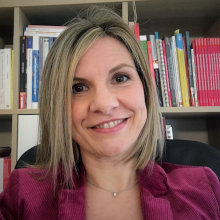
Marcella Menegale is an Associate Professor in the Department of Comparative Linguistic and Cultural Studies at Ca' Foscari University of Venice. She is affiliated with the Research Institute for Digital and Cultural Heritage. Her teaching responsibilities include courses on instructional design for language education, theories of language education, and multilingualism, across various degree programs such as Master’s in Languages and Civilizations, and Language Sciences. Her research focuses on multilingual education frameworks (CLIL, intercomprehension), learner autonomy, digital tools in language learning, and well-being in educational contexts. She has contributed to EU-funded projects like DigLit (combating social inequalities via digital tools) and EVAL-IC (evaluating intercomprehension skills). She has also served as an expert evaluator for the European Commission’s Horizon 2020 and ANVUR’s research evaluations. Key research areas include CLIL methodology, learner autonomy development, and the integration of technology in language pedagogy. She collaborates with international teams on projects like Transition from Secondary School CLIL to University EMI (funded by the British Council). Her work bridges theory and practice, addressing challenges in second-language teaching and digital-age curricula.
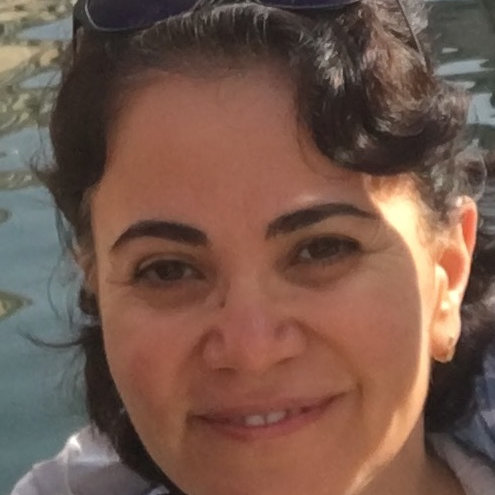
Meral OZKAN GURSES is a Contract Lecturer in the Department of Asian and North African Studies at Ca' Foscari University of Venice, where she has been teaching Turkish language and cultural dynamics since 2019. Her academic work centers on language education, particularly in second language acquisition and reading strategies. PhD in Curriculum Development and Instruction, Anadolu University, Türkiye (2011) Certificate in Teaching Turkish as a Foreign Language, TOMER, Eskisehir Osmangazi University (2019) Graduate Diploma in English Teaching, Anadolu University (2008) Bachelor’s in French Teaching, Anadolu University (2007) Her research interests include learner autonomy, reading comprehension strategies in foreign languages, and instructional methods in language teaching. She has conducted studies primarily on Turkish learners of French, exploring how cognitive and metacognitive strategies affect comprehension and learning outcomes. The trends in her publications indicate a consistent focus on applied linguistics and language pedagogy, particularly in higher education contexts. Her work often employs qualitative and mixed-methods approaches, including think-aloud protocols and student surveys, to investigate how learners process and engage with foreign language texts. She has not been listed as receiving any scientific awards or fellowships in the provided texts. Meral OZKAN GURSES has taught various courses in Turkish language and narratives at both undergraduate and graduate levels. There is no mention of grant funding or formal student advising roles in the available information. She was a Visiting Scholar at the School of Education, University of Wisconsin-Madison (2014–2015), indicating international academic engagement. No specific research labs or collaborative teams are mentioned in the provided content.
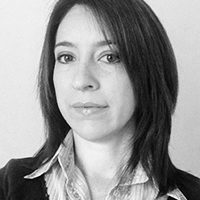
Giada Marinensi is a full-time Associate Professor at Link Campus University in Rome, Italy. She coordinates the interdisciplinary Serious Game and Gamification (SG&G) Research Group, focusing on digital learning innovations such as serious games, gamification, and interactive storytelling. Her work integrates technology into education to enhance teaching and learning processes. Dr. Marinensi holds certifications as a LEGO® Serious Play™ facilitator and flipped learning trainer. Her research spans national/international projects including ERASMUS+ initiatives like CT&ML (Critical Thinking & Media Literacy), FACTIVE (Flipped Classroom Training in Vocational Education), and TECLO (Textile Knowledge Alliance). She has also advised organizations like the Italian Revenue Agency, RSE S.p.A., and Alitalia on adopting innovative training technologies. Research Interests: Game-based learning methodologies EdTech applications in higher education Flipped classroom models Interactive narrative design Sustainability education via serious games Her recent publications explore gamification's impact on student motivation, flipped learning effectiveness, and interdisciplinary applications of serious games. She actively contributes to educational innovation through both academic research and industry partnerships. Professional Contributions: Lead researcher in 4+ international education projects Consultant for public institutions and private enterprises Author of teaching guides like Flipped Classroom: Reinvent Your Teaching Practice Her work bridges educational theory with practical applications, emphasizing technology's role in modernizing learning environments.
Micol Beseghi is a Research Fellow at the University of Parma , affiliated with the Department of Humanities, Social Sciences and Cultural Enterprises . Her work bridges Translation Studies , Audiovisual Translation , and Language Education , with a focus on Learner Autonomy , Subtitling , and CLIL Methodology . Education: Master's in European and Euro-American Civilizations and Languages (Translation specialization), University of Parma (2007) PhD in Comparative Languages and Cultures, University of Modena and Reggio Emilia (2011) Her research explores: Audiovisual translation (subtitling, fansubbing, and accessibility practices) Emotional and affective dimensions of language learning (anxiety, mindfulness, and autonomy) Cultural mediation in translation (postcolonial texts, multilingual films) Innovative teaching methods (digital tools, social networks, and e-portfolios) Recent publications highlight trends in: Community-driven translation practices (e.g., Italian fansubbing ethics) Multilingualism in cinema and its pedagogical applications Translation challenges in preserving linguistic opacity in postcolonial contexts Mindfulness-based interventions for reducing language learning anxiety Teaching activities include: University courses in English language and translation (2012–present) Leadership in the European Master's in Audiovisual Translation (coordination roles) Doctoral-level instruction in translational methodologies International guest lectures at University College London and Kanda University She actively contributes to academic communities as: Member of LASIG (IATEFL) Editorial board member for Language Learning in Higher Education (CercleS) Affiliated with ESIST (European Screen Translation association) and AIA (Italian Anglistic association) Contact: micol.beseghi@unipr.it
Sandro Mario Moraldo is a Full Professor at the Department of Interpretation and Translation (DIT), School of Languages and Literatures, Translation and Interpreting, University of Bologna. His research spans German linguistics , comparative literature , and digital communication , with a focus on language politics, migrant literature, and new media discourse. He earned his MA and PhD in Comparative Literature, German Studies, and Romance Languages from Heidelberg University. His academic career includes visiting professorships at Brown University, Heidelberg, and the University of Rhode Island. He received the Order of Merit of the Federal Republic of Germany (2022) for his contributions to German-Italian cultural exchange. His publications analyze Twitter linguistics , Anglicism debates , and corpus-based language teaching . He chairs the Italian Society of Comparative Literary Studies (SICL) and DAAD Alumni Italy (ADIT), with editorial roles in Muttersprache and Studi Comparatistici . Current projects include PREMIALE (multilingualism in EU/Mediterranean) and DFG Gesprochener Standard (spoken German analysis). Scientific Awards Order of Merit of the Federal Republic of Germany (2022)
María Joaquina Valero Gisbert is Associate Professor (Professore Associato, “II fascia”) of Spanish Language and Translation at the University of Parma , Italy, within the Department of Humanities, Social Sciences and Cultural Enterprises. Since 2016 she serves as President of the Master in Audiovisual Translation and sits on the PhD boards in “Philological-Literary Sciences, Historical-Philosophical and Artistic Sciences” and the National Doctorate in “Learning Sciences and Digital Technologies”. She is member of the Scientific Council of the Doctoral College and of the Executive Board of the Spanish Association of Italian Language and Translation (ASELIT). Education PhD in Linguistics, University of Valencia / University of Bologna Degree in Modern Foreign Languages and Literatures, University of Milan Research Qualification (Idoneità alla Ricerca), University of Valencia Pedagogical Aptitude Diploma, University of Valencia Degree in Hispanic Philology, University of Valencia Research interests centre on Spanish phraseology, bilingual Spanish-Italian lexicography, audiovisual translation with a special focus on accessibility through audio-description, and the application of digital technologies and game-based learning to translator and language training. Her work integrates linguistic, pedagogical and technological perspectives to enhance inclusive communication and cultural heritage accessibility. Her recent publications (2020-2023) reveal a clear trajectory: intensive investigation into inter-semiotic translation and audio-description for film, comics and cultural heritage; critical analysis of how cultural references and phraseological units are handled in bilingual dictionaries; and exploration of serious games and digital tools for developing transliteracy and language skills. Scientific evaluation and awards Registered expert reviewer for the Italian Ministry of University and Research (MIUR) since 2012 Member of REPRISE – Register of Expert Peer Reviewers for Italian Scientific Evaluation (2018) Referee for numerous Class-A journals and international conferences Doctoral supervision and teaching span BA, MA and PhD courses in Spanish language, translation, specialised languages, and audiovisual translation. She has supervised countless theses since 2002 and is actively involved in curriculum design for language teacher education programmes. Laboratory & projects : Coordinator of the local unit in the Horizon Europe project “TLIT4U – Improving Transliteracy Skills through Serious Games”; partner in the PRIN project “A new digital space for the lexicographical heritage: The Digital Treasury of Italian-Spanish Bilingual Lexicography”; member of the national Cluster TICHE on technological innovation in cultural heritage.
Antonella Napolitano is a Professor in the Department of Law, Economics, Management and MET.QUANT at the Università degli Studi del Sannio (Unisannio). Her work bridges Critical Discourse Analysis (CDA) , Corpus Linguistics , and Political Communication , with a focus on European identity , gender in advertising , and language dynamics in institutional contexts . Research Themes : Napolitano explores how political and institutional discourses construct identity, power, and ideology. Her studies include the European Union's communication strategies , populist rhetoric in the Trump administration , and gender stereotypes in cosmetic advertising . Methodological Approach : She integrates corpus-assisted CDA and multimodal analysis to dissect textual and visual narratives. Her 2018 monograph Love is in the (H)Air critically examines hair product ads in the UK and Italy. Recent Publications : Notable works include analyzing adversarial learning in cancer research (2024) and online educational platforms like EdX (2020) .
Catherine Elizabeth Riley is an Adjunct Professor in the Department of Humanities and Assistant Professor at the School of International Studies at the University of Trento. Her work bridges Higher Education , Language Education , and Intercultural Communication , with a focus on quality assurance, stakeholder engagement, and pedagogical innovation. Research Interests : Quality culture in higher education, CLIL (Content and Language Integrated Learning), language policy, student-centered syllabus design, intercultural competence, and European educational frameworks. Publications : Recent work includes a 2024 study on quality culture development in higher education and a 2017 edited volume on intercultural language teaching practices. Expertise : Critical discourse analysis, language policy, international relations, and translation studies.
Jemma F. Prior is a Lecturer in English for Specific and Academic Purposes (ESP/EAP) at the Free University of Bozen-Bolzano, where she has worked since 1998. She holds a PhD in Applied Linguistics from Aston University and teaches across multiple faculties, including Economics & Management, Design & Art, Science & Technology, and Computer Science. Her roles also include serving as an Adjunct faculty member in the School of Economics & Management and the Faculty of Engineering. Education: PhD in Applied Linguistics, Aston University Research Interests: Jemma’s work focuses on syllabus design, discourse analysis, cognitive approaches to language teaching, and gender-neutral language in education. She has conducted action research on curriculum development and student engagement, emphasizing learner-centered methodologies and the integration of gender equality principles into language materials. Teaching: She designs and teaches advanced ESP courses for undergraduate and postgraduate students, including technical English for computer science, engineering, and economics. Her courses emphasize academic writing, technical language skills, and the use of English in professional contexts. Advising & Grants: While no specific advisees are listed, her research projects involve collaboration with students and institutions on curriculum innovation and pedagogical practices.