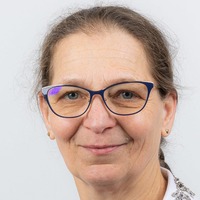
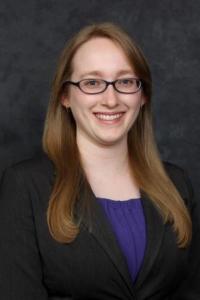
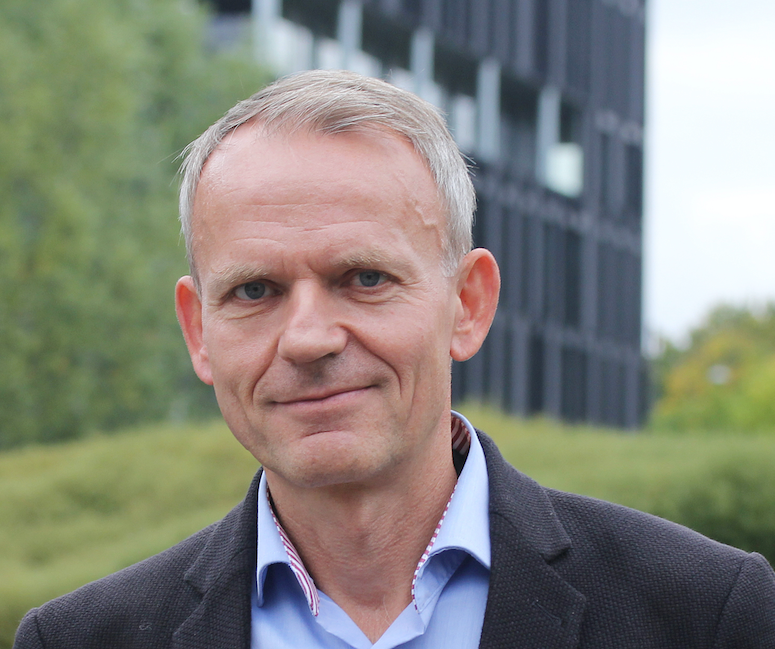
Maria Csernoch is an Associate Professor at the Faculty of Informatics, University of Debrecen, Hungary. Education: Teacher degree in mathematics, descriptive geometry, informatics and English Bachelor of Science in software engineering and lean management Doctor of Philosophy in mathematics and computer sciences Dr. habil. degree in applied linguistics Research Interests: Dr. Csernoch specializes in the didactics of Informatics, focusing on developing computational thinking skills through innovative pedagogical approaches. Her work emphasizes knowledge-transfer mechanisms, cross-disciplinary digital subject integration, sustainable digital practices, and lean methodologies in computing education to optimize resource efficiency while maintaining pedagogical rigor. Professional Service: She serves as an Editorial Board Member for PeerJ Computer Science.
Benneth Christiansson is an Assistant Professor at Karlstad University, focusing on software development paradigms, enterprise application integration, and open-source infrastructure. His research bridges the gap between emerging cloud-based tools (e.g., Software-as-a-Service) and traditional enterprise systems, emphasizing lean integration approaches. Research Interests: His work centers on component-based development, integration challenges in heterogeneous systems, and the adoption of open-source solutions to streamline enterprise processes. He explores frameworks for aligning software components with business processes, addressing interoperability and data standardization issues in public and private sectors. Publications: Over 15+ publications since 1995, with recent focus on lean integration strategies (2011-2012), open-source adoption in municipal systems (2007), and foundational component specification models (2003-2005). Key themes include COTS component acquisition, business-process-driven software specifications, and agile modeling techniques. Awards: No scientific awards explicitly listed in the text. Advising & Grants: No advisees or grants mentioned in the provided text. His contributions appear to focus on theoretical and applied research in software systems. Labs/Teams: No specific labs or collaborative teams described, though his work implies engagement with enterprise IT and software development communities.
Asta Halkjær From is a postdoctoral researcher in the Department of Computer Science at the University of Copenhagen, affiliated with the Software, Data, People & Society (SDPS) section under Dmitriy Traytel. She previously completed her PhD at DTU Compute from 2020 to 2023, focusing on formalized deduction methods in computational logic. She holds a Master’s and Bachelor’s degree from DTU in Computer Science and Software Technology, respectively, with a specialization in Artificial Intelligence and Algorithms. Her research lies at the intersection of formal logic and computer science, particularly in automated reasoning, proof assistants (Isabelle/HOL and Lean), and mechanized metatheory. She has contributed extensively to synthetic completeness proofs, tableau systems, and verified theorem provers. Her work emphasizes formal verification of logical systems, including epistemic logic, hybrid logic, and first-order logic, with a focus on soundness and completeness. The recent publications highlight a consistent trend: the mechanization of logical foundations in proof assistants. Her work bridges theoretical logic with practical verification tools, enabling reliable automation in theorem proving. She has developed and verified provers, explored axiomatic systems, and advanced the methodology of synthetic completeness, often leveraging Isabelle/HOL’s framework. Distinguished Paper Award, CPP 2023 DTU Young Researcher Award DTU Travel Grant (Executive Board Recognition) Otto Mønsted Fonden Travel Grant She has supervised BSc and MSc theses, special courses, and research projects at DTU, and currently teaches Software Development for Digital Health . She has served on program committees for CPP, ITP, and Dalí workshops and has reviewed for journals including Journal of Automated Reasoning and Journal of Logic and Computation . She has also participated in international research visits, including at VU Amsterdam. She is actively involved in building tools for formal reasoning and maintains a personal website with resources, including an Isabelle snippets generator and bibliography tools. Her work continues to advance the foundations of formal logic through mechanized proofs and practical automation.
Franco Lombardi is a Full Professor at the Department of Management and Production Engineering (DIGEP) , Polytechnic of Turin , with affiliations to the J-Tech@PoliTO Interdepartmental Center . He has been a PhD college member for the Production Systems & Industrial Design program since the 19th cycle (2003/2004) and served as a course lecturer in Production Systems (Management Engineering) and Graphic Communication and Mechanical Manufacturing (Industrial Production Engineering) since 2019/2020. Research Focus: Manufacturing technologies, product lifecycle management (PLM), Industry 4.0, sustainable production systems, joining processes, and human-centric knowledge management frameworks. Article Trends: Recent work spans friction stir welding of industrial alloys (2025), sustainability evaluation of AI in product lifecycles (2024), integration of Industry 4.0 in agriculture (2024), and additive manufacturing eco-design (2024). Earlier projects include reconfigurable production systems (2009) and real-time production planning (2019). Grants and Projects: Scientific manager for PNRR-funded initiatives like AGRITECH Spoke 6 (2022-2025) and MANAGE5.0 (2022-2024), alongside regional projects such as TECNOPROTEO (2024-2027) and DynLab4JMat (2018-2021). Collaborated on national patents for gear machining processes. PhD Advisees: Temur Turgunboev (Ingegneria Gestionale), Nicolo Grasso (Gestione, Produzione E Design), Giovanni Marongiu (Gestione, Produzione E Design), Benedetta Fasciolo (Gestione, Produzione E Design), Luigi Panza (Gestione, Produzione E Design), Alberto Faveto (Gestione, Produzione E Design).
Prof. Eva-Maria Schön is a Professor of Business Informatics at the University of Applied Sciences Emden/Leer, where she has held this position since 2022. Previously, she was a Professor at the Hamburg University of Applied Sciences (HAW Hamburg). She earned her PhD in Computer Science from the University of Seville, Spain, in 2017. Her research focuses on Agile methodologies, including their application in public administration (eGovernment), requirements engineering, and digital transformation. She emphasizes integrating human-centered design principles into agile processes and has extensive practical experience in developing digital products and training organizations. Her research interests span agile product development, UX design, and the challenges of fostering agile cultures in both private and public sectors. Notable areas include agile transformation in governmental institutions, agile pedagogical approaches in higher education, and leveraging AI in educational contexts. She has also contributed to frameworks like the NICO initiative, which addresses software quality assurance. Prof. Schön’s work bridges academia and industry, with publications addressing topics such as lean user research, cultural barriers to agile adoption, and the role of trust in organizational agility. Her contributions include developing methodologies for requirement engineering patterns and evaluating project work in e-government initiatives. Advising and Grants: While no formal advisees are listed, her research projects likely involve student and professional collaborations. She has been involved in initiatives like the NICO project (PID2019-105455GB-C31). Her academic network includes ResearchGate and Google Scholar profiles, highlighting her active engagement in collaborative research. Labs/Teams: Affiliated with the University’s research groups focusing on digital transformation and agile practices, though specific lab names are not detailed in the provided texts.
Ilya Verenich is a Researcher at Queensland University of Technology (QUT), known for his work in Business Process Management and Predictive Analytics. He completed his PhD in 2018 with a thesis titled 'Explainable predictive monitoring of temporal measures of business processes.' His research focuses on developing machine learning and AI-driven tools for predictive process monitoring, such as the Apromore platform and Nirdizati web tool. Collaborations with international experts like Marlon Dumas and Marcello La Rosa highlight his contributions to process mining, workflow optimization, and predictive modeling. His work bridges computer science, data mining, and business systems, addressing challenges in real-time process analysis, resource allocation, and anomaly detection. Key areas of expertise include temporal process analysis, LSTM neural networks for sequential data, and minimizing operational waste through predictive activity ordering. He has published extensively in top-tier conferences like CAiSE and BPM, with topics ranging from white-box process performance prediction to symbolic sequence clustering for process monitoring. His interdisciplinary approach combines theoretical frameworks with practical applications in industries requiring efficient workflow management.
Maurizio Morisio is a Full Professor at the Department of Control and Computer Science (DAUIN), Polytechnic University of Turin, where he is also a member of the Interdepartmental Center SmartData@PoliTO - Big Data and Data Science Laboratory. He has held numerous leadership roles in national and international research projects and academic events. University: Polytechnic University of Turin Department: Department of Control and Computer Science (DAUIN) Research Affiliation: SmartData@PoliTO, SOFTENG Research Group Email: maurizio.morisio@polito.it His research interests include software engineering, mobile and web application testing, energy efficiency of software, machine learning, data science, and green software. He has led significant research in empirical software engineering, gamification of testing, and user-centric service platforms. The recent publications highlight a strong focus on GUI testing , gamification in education and testing , and software process improvement . These works reflect interdisciplinary integration of software engineering with human factors, education, and AI. Scientific Awards and Editorial Roles: Editor-in-Chief of IEEE SOFTWARE since 2008 Program Chair of major conferences including ICSR, ESEM, and GREENS workshops Advising and Grants: He has advised multiple PhD students, including Anna Arnaudo and Simone Leonardi. He has served as the Scientific Manager or Director on over 20 research projects funded by EU, national, regional, and commercial sources, including FP6, Clean Sky, FIRB, and industrial contracts in data science, AI, and software engineering. Research Groups and Labs: He is a key member of the SOFTENG - Software Engineering Group (DAUIN) and contributes to the SmartData@PoliTO center, focusing on data-intensive systems and AI applications in software engineering.
Professor Chike F. Oduoza is a distinguished academic in Process and Manufacturing Engineering at the University of Wolverhampton, Faculty of Science and Engineering, Department of Chemical Engineering. He holds the rank of Professor and serves as the academic lead for chemical engineering, with extensive leadership in research, teaching, and professional service. His educational background includes a PhD in Instrumentation and Control from UMIST (University of Manchester), an MBA from the University of Exeter, and multiple postgraduate qualifications in management, teaching, and chemical engineering. He is a Chartered Engineer, Fellow of the Institution of Chemical Engineers, and Senior Fellow of the Higher Education Academy. His research interests span chemical and manufacturing engineering, with a focus on electroplating, corrosion protection, reactor design, sustainability, life cycle engineering, oil and gas processing, and risk management in industrial and construction sectors. He has developed innovative models for SMEs, particularly in risk assessment and lean-excellence business management. The recent publications reflect a strong trend in sustainable energy systems, risk and safety management, digital transformation in manufacturing and oil & gas, and advanced materials. His work integrates computational modelling, experimental validation, and practical application across industries. Chartered Engineer (CEng), 1996 Fellow, Institution of Chemical Engineers, 2006 Senior Fellow, Higher Education Academy, 2020 Winner, West Midlands Construction Excellence Award (Innovation, 2017) Professor Oduoza has supervised over 30 PhD students and secured significant research funding from EPSRC, EU (FP7, Horizon 2020), and industry. He is currently leading the FLAREMANAGER and PROCEDURE consortia, focusing on flare gas utilization and future process design. His editorial roles include guest editor for Robotics and Computer Integrated Manufacturing and International Journal of Advanced Manufacturing Technology . He has chaired major conferences such as FAIM 2015 and the Electrochemistry and Sustainability Conference (2010). He leads the RiMaCon project, a €1M EU FP7 initiative that developed a risk management software system for SMEs in construction, which won a regional innovation award. His professional memberships include the Engineering Professors Council, SCI Electrochemical and Energy Groups, and the UK Royal Academy of Engineering Ethics Committee.
Anne Fischer, M.Sc., is a researcher at the Chair of Material Handling, Material Flow, and Logistics at the Technical University of Munich (TUM). Her work focuses on digital twins, construction automation, and resource scheduling in heavy civil engineering. She is based in Garching near Munich and collaborates with institutions like UC Berkeley and Stanford University. Research Interests: Digital Twin frameworks, simulation-based optimization, BIM integration, activity recognition in construction, and sustainable logistics systems. Collaboration: Serves as a contact person for international exchanges with U.S. institutions. Publication Trends: Her recent articles (2024–2021) address construction automation, digital twin applications, and variability management in civil engineering projects. Key Projects: Engaged in initiatives like Bauen 4.0 , MiProcess2Twin , and SiteRoute , which focus on digitalization and automation in construction. Location: Boltzmannstraße 15, Garching bei München (Room: 5505.EG.501).
Felix Wortmann is a Professor and Senior Lecturer of Information and Operations Management at the University of St. Gallen (HSG), affiliated with the ITEM-HSG Institute. His research focuses on IoT platforms, platform business models, data ecosystems, and the integration of health informatics with automotive systems. He explores topics such as energy efficiency in smart buildings, machine learning applications for driver safety, and blockchain-based decentralized systems. Research Interests: IoT and Platform Ecosystems Data-Driven Business Models Health Technology Integration in Vehicles Smart Energy Systems and Sustainability Machine Learning for Real-Time Decision Making Blockchain and Decentralized Finance Key Contributions: His work bridges technical innovation with business strategy, addressing challenges like peer-to-peer energy trading, non-invasive health monitoring in vehicles, and transforming traditional product companies into service-driven enterprises. Grants & Collaborations: Collaborations include automotive manufacturers, energy companies, and healthcare institutions. Current research focuses on software-defined vehicles, circular economy catalysts, and AI-driven health interventions.
Casper Lassenius serves as an Associate Professor in the Department of Computer Science at Aalto University, Finland, where he is affiliated with the Software and Service Engineering (SSE) research group. His academic role focuses on advancing empirical methodologies within software engineering through rigorous research and industry collaboration. Professor Lassenius's research centers on Empirical Software Engineering, with specialized expertise in Agile and Lean software development methodologies. His work critically examines large-scale agile transformations, global software engineering challenges, and the delicate balance between organizational control and team autonomy. He investigates practical implementations of scaling frameworks like SAFe across diverse sectors including finance and public administration, addressing real-world adoption barriers and optimization strategies. Analysis of his 2020-2024 publications reveals dominant research trajectories in agile scaling frameworks, backsourcing of IT services, and organizational dynamics in large-scale development. His empirical studies consistently employ systematic literature reviews and case-based approaches to identify challenges like delay archetypes and autonomy-control tensions, providing actionable insights for enterprise agile adoption. Lassenius is an active contributor to the Software and Service Engineering (SSE) research group, which drives innovation in software processes, service design, and empirical validation of development practices. This collaborative environment enables his research to bridge theoretical rigor with industry applicability, particularly in complex organizational contexts.
Jens Abildskov is an Associate Professor at the Department of Chemical and Biochemical Engineering, Technical University of Denmark (DTU). He is affiliated with the KT Consortium PROSYS - Process and Systems Engineering Centre. His research focuses on thermodynamic properties of fluids, chemical process modeling, and simulation, with applications in biocatalysis, mixed solvents, and separation process optimization. Key areas include CO2 capture, biofuel processing, and energy-efficient separation systems. He collaborates extensively on integrating process modeling with control systems. His work aligns with UN Sustainable Development Goals addressing clean energy and responsible consumption. Recent projects include biogas upgrading technologies and open-source simulation tools like CADET-Julia. He supervises multiple PhD students in areas such as carbon capture, process digitalization, and safety engineering. Abildskov leads the PROSYS Centre, emphasizing process systems engineering. His lab develops models for fluid behavior in non-ideal systems, leveraging statistical mechanical methods and molecular correlation functions. He also explores applications in organic rankine cycles and heat integration for energy savings. Publications emphasize practical solutions for industrial challenges, such as solvent systems for CO2 capture and dynamic feeding strategies in separations. His research bridges theoretical and applied aspects of chemical engineering, with a focus on sustainability and innovation.
Heather Keathley is an Associate Professor in the Department of Industrial Engineering and Management Systems at the University of Central Florida (UCF), part of the College of Engineering and Computer Science. She holds a BS in Systems Engineering from the University of Arkansas at Little Rock, an MS in Industrial and Systems Engineering from Virginia Tech, and a dual doctoral degree from Virginia Tech’s Grado Department of Industrial and Systems Engineering and the Royal Military Academy in Belgium. Her research focuses on Management Systems Engineering, particularly organizational change and transformation, with an emphasis on performance measurement systems in healthcare and defense sectors. She actively contributes to professional societies like IISE and SEMS. Her research interests include system dynamics, performance measurement implementation challenges, and the integration of technology like augmented reality in managerial tasks. She has published extensively on strategic performance measurement frameworks for defense organizations, lean six sigma in healthcare, and causal modeling in organizational processes. Her work often bridges interdisciplinary gaps, combining quantitative methodologies with real-world applications. Notable trends in her publications include methodological advancements (e.g., systematic reviews, SEM analysis), critical sector analyses (healthcare, defense), and emerging technologies (e.g., AR). No scientific awards or grants are explicitly mentioned in the provided texts. She has no listed advisees or specific lab affiliations.
Professor Viktoria Stray is a leading figure in agile software development at the University of Oslo 's Department of Informatics and serves as a senior researcher at SINTEF Digital . With over 15 years at UiO and 8 years at SINTEF, she combines academic rigor with industry expertise in large-scale agile transformations. Her work bridges empirical software engineering, generative AI integration, and coordination mechanisms in distributed teams. PhD in Informatics (2014), MSc in Computer Engineering (2007) Executive Guest Editor for Information and Software Technology special issue on Generative AI Her research focuses on: Generative AI in developer workflows Large-Scale Agile coordination Autonomous Teams dynamics Human Factors in software testing Digital Transformation in public sector Recent publications analyze trends in agile coaching, hybrid team communication, and empirical studies on coordination mechanisms. She supervises numerous PhD and master's students while teaching large cohorts in courses like IN2000 (680+ students). As Deputy Head of Department and leader of the Gemini Center for Software Engineering, she shapes both institutional and industry-wide practices.
Dag Sjøberg is a Professor at the Department of Informatics (Ifi), University of Oslo . He also holds a part-time position at SINTEF Digital . His research focuses on empirical software engineering with emphasis on development processes , agile methodologies , technical debt , and programming skill assessment . Research Interests: Empirical methods (controlled experiments, case studies) Construct validity frameworks Agile and Lean practices Microservices architecture Software quality and maintainability Scientific Achievements: Led Simula Research Laboratory's Software Engineering department ranked #1 globally (2004-2008) Developed Guidelines for Construct Validity in software engineering research Extensive publication record in top venues like IEEE Transactions and Journal of Systems and Software Academic Background: Cand.scient. in Informatics (University of Oslo, 1987) PhD in Software Engineering (University of Glasgow, 1993) Professional Involvement: Co-founder and board member of three IT companies Former research director at Simula Research Laboratory (2001-2008) Current head of the Programming and Software Engineering research section at Ifi