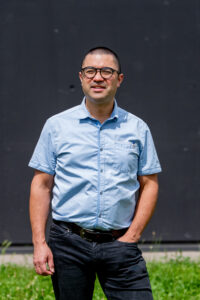
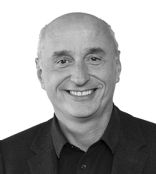
Frédéric Tran Minh is a Lecturer at Esisar – Grenoble INP-UGA and a PhD student affiliated with the CTSYS team at LCIS laboratory. His career spans academic teaching, software development, and research in formal verification for education. PhD in progress on proof assistants for teaching mathematics Former software engineer in computer-assisted surgery (8 years) Member of the APPAM ANR project Develops the Yalep proof assistant environment Research focus: Integration of Lean theorem prover and mechanized proofs into undergraduate mathematics pedagogy, emphasizing interactive learning and web-based accessibility. Teaching areas: Algebra, Analysis, C Programming, and automata theory, with innovative use of proof assistants in curricula.
Kevin Buzzard is a Professor of Pure Mathematics at the Department of Mathematics, Faculty of Natural Sciences, Imperial College London. His work focuses on formal proof verification and the integration of computers into mathematical research. He leads projects formalizing mathematical theorems using Lean, including a 21st-century proof of Fermat’s Last Theorem. Notable talks include the 2024 Stanford MRC Public Lecture on AI in mathematics and the 2022 International Congress of Mathematicians plenary lecture on formalism trends. His research spans Pure Mathematics and Computation Theory, emphasizing collaboration between mathematicians and computer scientists. He co-maintains Mathlib, a formalized mathematical library, and teaches Lean to undergraduates. Awards include the Whitehead Prize (2023) and Senior Berwick Prize (2023) from the London Mathematical Society. Buzzard’s career includes research positions at the University of Cambridge, Harvard, and the Institute for Advanced Study. He explores how AI and theorem provers will transform mathematical practice, advocating for formalization as a foundational tool for future mathematics.
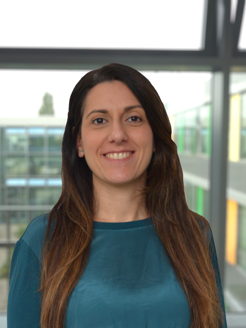
Jun.-Prof. Dr.-Ing. Federica Ferraro is an Assistant Professor in the Faculty of Mechanical Engineering at TU Braunschweig, leading the Reactive Flows in Aero Engines research group. Her work focuses on combustion dynamics, sustainable aviation propulsion, and numerical simulations of reactive flows. She investigates flame-wall interactions, soot formation mechanisms, and alternative fuels like hydrogen and oxymethylene ethers. Key projects include the Cluster of Excellence SE2A (C3.5) and CRC 150 (C07), addressing synthetic fuels and flame retardancy under aviation conditions. Ferraro teaches courses in numerical simulation and high-performance computing for CFD applications. Her research integrates advanced modeling techniques such as Large Eddy Simulation (LES), flamelet manifolds, and quadrature-based methods for particle dynamics. Her contributions span experimental validation, turbulent combustion analysis, and green fuel substitution strategies for decarbonizing aviation. Research Interests : Combustion physics, aero-engine propulsion, sustainable fuels, soot dynamics, CFD modeling, and thermo-chemical systems. Her studies often bridge fundamental combustion science with industrial applications in turbine design and emission control. Projects & Collaboration : Leads the Numerical investigations of synthetic fuel flames (SE2A) and Boundary layer flames with flame retardants (CRC 150). Collaborates with institutions like the Lower Saxony Graduate School on hydrogen/ammonia energy systems. Her team develops novel numerical frameworks for predictive combustion modeling. Labs & Teams : Manages the Reactive Flows group at TU Braunschweig's Institute of Jet Propulsion and Turbomachinery, fostering interdisciplinary research in propulsion and energy technologies.
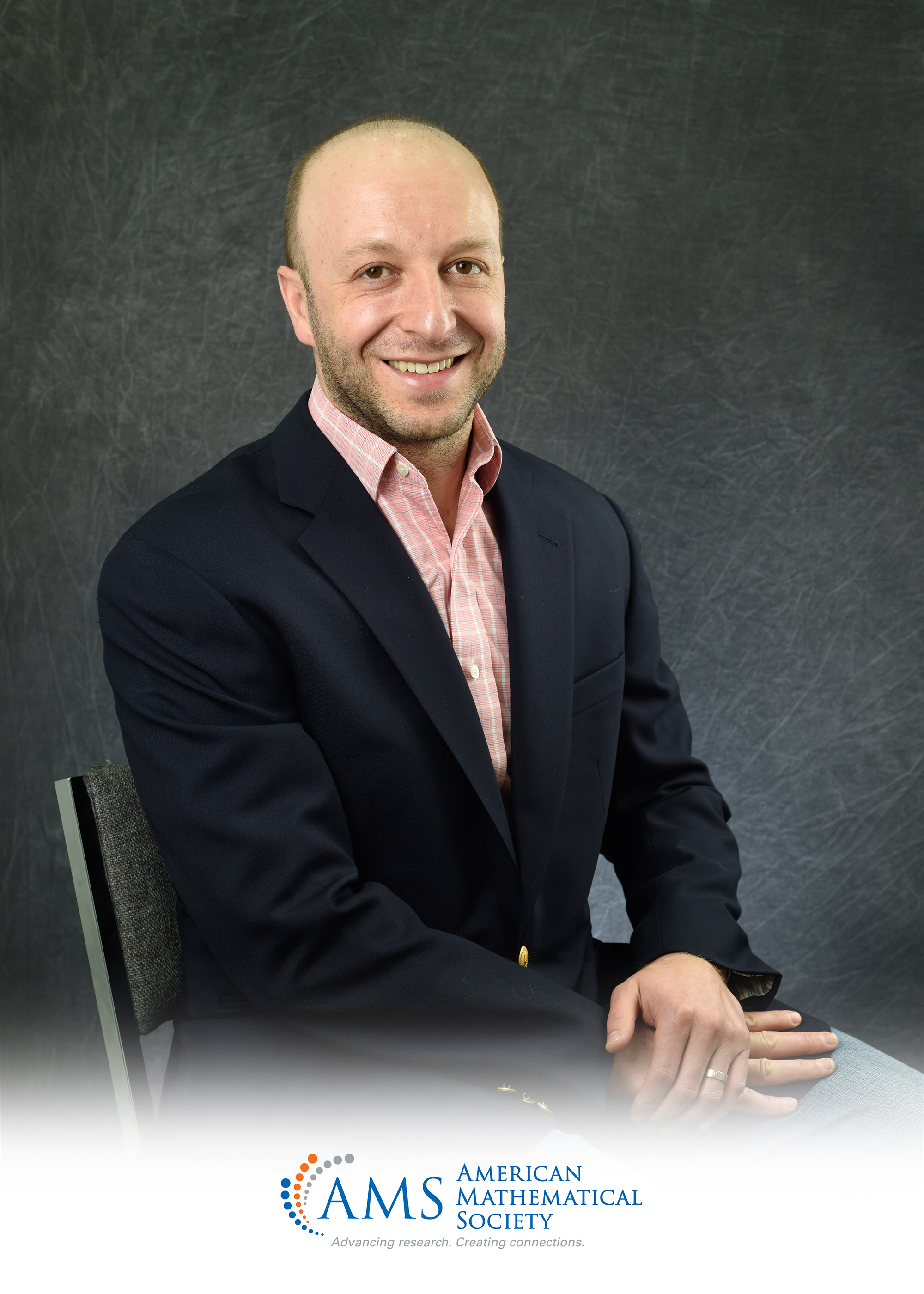
Alex Kontorovich is a Distinguished Professor of Mathematics at Rutgers University, where he holds the academic rank of Professor. His primary affiliation is with the Department of Mathematics, School of Arts and Sciences. He currently serves as Managing Editor of the Journal of the Association for Mathematical Research and is Executive Director of Rutgers MathCorps . During the 2024-2025 academic year, he is on leave, visiting Princeton University and the Institute for Advanced Study (IAS). Kontorovich's research focuses on automorphic forms, homogeneous dynamics, harmonic analysis, and number theory, with interdisciplinary connections to data science and machine learning. His work bridges pure mathematics with computational aspects, including sphere packing geometry and arithmetic dynamics. He has held distinguished visiting roles, such as the 2020-21 Distinguished Visiting Professor for the Public Dissemination of Mathematics at the National Museum of Mathematics (MoMath), where he contributed to academic content and exhibits. His academic career includes teaching advanced courses like Graduate Complex Analysis, Automorphic Representations, and History of Mathematics. Notable awards include the Simons Foundation Fellowship, von Neumann Fellowship at IAS, and Alfred P. Sloan Research Fellowship. Grants include multiple NSF awards (regular, CAREER, FRG) and a Binational Science Foundation grant. His research explores topics like spectral gaps, thin groups, and applications of modular forms to equidistribution problems. Kontorovich’s scholarly contributions extend beyond academia: he serves on the Scientific Board of Quanta Magazine , advises the Lean Focused Research Organization , and participates in editorial and strategic roles across institutions. His work emphasizes the interplay between theoretical mathematics and computational methods, shaping modern research in number theory and dynamics.
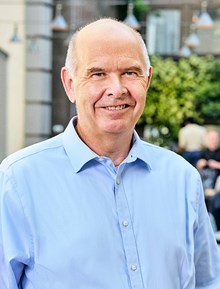
Pär Åhlström is a Professor at the Department of Entrepreneurship, Innovation and Technology at the Stockholm School of Economics (SSE), and serves as Vice President of Degree Programs. He holds the prestigious Torsten and Ragnar Söderberg Chair in Business Administration. His research focuses on lean manufacturing, agile processes, sustainability in operations, and innovation management. He is affiliated with the Mistra Center for Sustainable Markets. Åhlström’s work bridges theory and practice, emphasizing dynamic capabilities, quality management, and the integration of IT with lean principles. His research spans longitudinal studies in manufacturing and services, exploring topics like organizational slack in R&D, modular product design, and healthcare process optimization. He has published extensively across academic journals and presented at international conferences. His awards include the Torsten and Ragnar Söderberg Chair, reflecting his scholarly contributions. His articles highlight trends in sustainable business performance, lean service adoption, and the evolving role of technology in operations. He actively engages in educational leadership, shaping curricula and overseeing degree programs at SSE.
Dr. Amir Andargoli is a Senior Lecturer in Information Systems at Swinburne University of Technology's School of Business, Law and Entrepreneurship. His research focuses on digital transformation, healthcare innovation, and strategic information management. He has published extensively in journals like Journal of Strategic Information Systems and Information & Management, with a particular emphasis on digital ecosystems, blockchain in healthcare, and AI applications. Research Interests: Dr. Andargoli's work bridges information systems theory with practical applications in healthcare and industry. His recent projects explore digital twins for dementia care, blockchain architectures for healthcare data sharing, and the socio-technical dynamics of Lean management systems. He emphasizes user-centered design in digital technologies to enhance organizational value and patient outcomes. Grants & Projects: He has secured grants from institutions including the Australian Academy of Science and Barbara Dicker Brain Science Foundation. Notable projects include examining Spotify's algorithmic playlists (Contemporary Music Victoria), developing digital solutions for ME/CFS care (Emerge Australia), and conceptualizing digital twins for dementia care (Ian Dicker Family Settlement). Teaching & Supervision: Dr. Andargoli teaches in Swinburne's Business Information Systems programs and supervises Higher Degree by Research candidates. His supervision focuses on topics like data governance, digital innovation in supply chains, and psychological safety in digital transformation projects. He has advised on doctoral theses addressing healthcare resilience, suicide helpline systems, and digital transformation in post-pandemic contexts. Professional Recognition: He is a 2011 finalist in Griffith University's Innovation Challenge for the A-SOSim project. His research has been cited in leading conferences like the Hawaii International Conference on System Sciences and Bled eConference.
Gerhard Hillmer is a Professor and Program Director of the Industrial Engineering & Management Master's program at the Management Center Innsbruck. He holds a Dr.-Ing. in Chemical Engineering from Friedrich-Alexander-University Erlangen-Nuremberg (1993) and an MSc in Management from Management Center Innsbruck (2008). His career spans over 25 years in academia and industry, including leadership roles as Department Head (2009-2023) and Study Coordinator in Process Engineering. Prior to academia, he held strategic roles in ExxonMobil and Esso Italiana focusing on business planning and operations optimization. His research focuses on leadership development in engineering education, interdisciplinary competency models, and organizational change management. He has authored textbooks such as Key Competencies in Leadership and Project Work (2022) and pioneered training concepts for engineering graduates' soft skills and responsible management practices. His work emphasizes integrating non-technical competencies like conflict resolution, project management, and ethical decision-making into engineering curricula. Recent publications address global business strategies in Africa, AI-driven HR practices, and corporate ethics expectations. Hillmer has supervised over 50 theses on topics ranging from cross-cultural leadership to resilient supply chains. His presentations at international conferences highlight trends in engineering education reform and organizational transformation in VUCA environments. Notable contributions include developing the PRiME-based Responsible Management certificate and advancing qualitative research methods for change processes in manufacturing. His work bridges academic research with practical industry challenges, emphasizing sustainable career development for engineers and leadership excellence in multinational contexts.
Dr. Elena Gheorghiu is an Associate Professor in the Department of Psychology at the University of Stirling, within the Faculty of Natural Sciences. She holds a PhD from Utrecht University (Netherlands) and has held post-doctoral positions at McGill University (Canada) and KU Leuven (Belgium). Her research focuses on human visual perception, specifically contour-shape processing, texture analysis, binocular vision, and visual illusions. She has received the prestigious 1st Prize at the Best Visual Illusion of the Year Contest (2007) for the 'Leaning Tower Illusion.' Education: PhD in Psychology, Utrecht University (Netherlands) Postdoctoral Fellowships: McGill University (Canada) and University of Leuven (Belgium) Research Interests: Contour/Texture Processing Stereopsis and Binocular Vision Symmetry and Regularity Perception EEG/ERP and Computational Modelling Her grants include funding from EPSRC (2024-2027), MOD-Dstl (2023), and Wellcome Trust (2015-2019). She has advised numerous postdoctoral researchers and students, including Dr. Rebecca Sharman (now at Abertay University) and Dr. Damien Wright (University of Edinburgh). Her lab explores topics such as mirror symmetry detection, contextual modulation effects, and temporal dynamics of visual perception. Key achievements include over 60 peer-reviewed articles and advancements in understanding visual perception mechanisms through psychophysical and neurophysiological methods.
Vanja Bevanda is a Full Professor at the Faculty of Economics and Tourism, University of Primorska in Pula. She holds a PhD from 2002 and has been employed at the institution since 2005, contributing to the Department of Quantitative Methods. Her educational background includes a BSc (1989), MSc (1995), and PhD (2002). Research Interests : Her work focuses on decision analytics, business intelligence, artificial intelligence applications in SMEs, data mining for customer behavior analysis, tourism development strategies, and the integration of technology in education. She explores topics like AI-driven managerial journeys, microchip implant adoption, and post-pandemic technology use trends. Publications : Recent articles highlight her contributions to AI transformation in SMEs, sentiment analysis during the pandemic, and mobile BI adoption in SMEs. Her research spans both theoretical frameworks and practical case studies across Croatia and beyond. Teaching : She teaches courses including Business Decision-Making, IT Project Management, and Database Systems. She emphasizes bridging theoretical knowledge with practical skills in information systems education.
Dr. Shaun Aghili serves as an Assistant Professor in the Faculty of Management at Concordia University of Edmonton (CUE), bringing extensive industry experience from the financial services sector. His academic focus centers on internal audit, fraud prevention, and information systems assurance within financial institutions. His educational credentials include: D.B.A. from Argosy University, USA (2003) M.Sc. in Financial Planning and Wealth Management from College for Financial Planning, USA (1999) B.A. from The Catholic University of America, USA (1985) Dr. Aghili's research integrates Risk Management , Cybersecurity , and Financial Services through frameworks like COBIT 5 and Lean Six Sigma. His work develops methodologies for fraud detection using data analytics, improves information systems audit protocols, and addresses security challenges in cloud computing and biometric authentication systems. Notable contributions include operational audit frameworks and corporate forensics governance models. His publication trend (2009-2014) reveals a strategic shift toward interdisciplinary solutions combining information security standards with financial risk management. This evolution demonstrates increasing focus on automated forensic approaches, e-government security models, and cloud computing SLA evaluations within financial contexts. Award recognitions include: IMA Certificate of merit for advancing management accounting literature 2009 IMA merit award for Lean Six Sigma audit framework research As a doctoral advisor, Dr. Aghili has successfully guided three PhD candidates through dissertation research on leadership dynamics in Taiwanese hospitality, workers' compensation fraud patterns, and RFID privacy implications in identification systems. His professional certifications—including CISSP, CISA, and CIA—enhance his industry-relevant research approach within the ISSAM Research Cluster. He actively contributes to CUE's ISSAM (Information Systems Security and Assurance Management) Research Cluster, focusing on cybersecurity risk mitigation strategies for financial institutions through collaborative framework development.
Maurizio Marco Bocconcino is an Associate Professor in the Department of Structural, Building and Geotechnical Engineering (DISEG) at Politecnico di Torino. He is a member of the Interdepartmental Center R3C (Responsible Risk Resilience Center) and serves as Coordinator of basic subjects for the 2nd year of Engineering. His academic work bridges civil engineering and architectural design, with a strong focus on representation and digital modeling. His research interests include engineering drawing, territorial and urban surveying, geographic information systems (GIS), Building Information Modeling (BIM), data representation, and tools for urban and social regeneration. He investigates methods for surveying historic buildings, urban resilience, and the integration of digital technologies in heritage and urban planning. His work is aligned with UN Sustainable Development Goals 11 and 17, emphasizing sustainable cities and collaborative research. Bocconcino's recent publications explore digital archives for academic heritage, analog artifacts in engineering education, urban form, LEAN-BIM integration, and the visualization of social impact. His research outputs span journals such as DISEGNO , International Archives of the Photogrammetry, Remote Sensing and Spatial Information Sciences , and AGATHÓN , as well as conference proceedings in representation and urban planning disciplines. He is actively involved in research projects, including the EU-funded MAINCODE project on urban climate shelters and multiple commercial consulting contracts as Scientific Manager, focusing on urban and social regeneration. His teaching responsibilities include courses in engineering drawing, digital modeling, and graphic language across Civil, Environmental, and Building Engineering programs. Bocconcino collaborates with researchers such as Mariapaola Vozzola, Giorgio Garzino, Martino Pavignano, and Fabio Manzone. His affiliations with ERC sectors highlight expertise in civil engineering, computational modeling in culture, computer graphics, design, and information systems.
Peter Nelson is an Associate Professor in the Department of Combinatorics and Optimization at the University of Waterloo, Canada. He currently serves as the Associate Chair for Undergraduate Studies, coordinating academic advising and managing departmental operations. His research focuses on structural and extremal matroid theory, graph theory, and their connections to coding theory, additive combinatorics, and finite geometry. He holds an NSERC Discovery Grant and has contributed to foundational work on matroid minors, binary matroid classification, and combinatorial enumeration. His recent interests include formalizing proofs in the LEAN theorem prover. Education: Ph.D. in Mathematics (University of Waterloo, 2008) with a thesis titled *Exponentially dense matroids*. His academic journey includes postdoctoral research and teaching roles prior to his current position. Research Interests: Structural matroid theory (e.g., minor-closed classes, forbidden configurations) Binary matroid extremal problems Applications to coding theory and additive combinatorics Formal proof systems like LEAN Advising & Grants: As Associate Chair, he oversees undergraduate academic advising via coundergrad.officer@uwaterloo.ca . His NSERC grant supports investigations into matroid density and extremal configurations. He has collaborated extensively with institutions globally, including co-authoring over 40 peer-reviewed publications. Labs/Teams: Active member of the Combinatorics and Optimization research group at Waterloo, contributing to collaborative projects on matroid theory and discrete mathematics.
Annachiara Longoni serves as Associate Professor in the Department of Operations, Innovation and Data Sciences at Esade Business School, Ramon Llull University. She directs the Master of Research in Management Sciences program and leads BUNED (Business Networks Dynamics), focusing on sustainability-driven innovation in operations and supply chains. Education: PhD in Management, Economics and Industrial Engineering, Politecnico di Milano Master of Science in Management Engineering, Politecnico di Milano Bachelor degree in Management Engineering, Politecnico di Milano Her research centers on sustainable operations management, examining how sustainability practices transform product/process innovation within global supply chains. She investigates organizational mechanisms for optimizing triple bottom line performance through sustainable operations strategies, with particular emphasis on social sustainability dimensions including labor conditions and migrant integration in supply networks. Her work bridges theoretical frameworks with practical applications in manufacturing and logistics contexts. Analysis of her 15 most recent publications reveals dominant themes in sustainable supply chain management, social enterprise integration, and systemic change toward post-growth paradigms. Key trends include empirical investigations of working conditions in platform economies, the role of national culture in sustainability performance, and technological impacts on sustainable manufacturing. Her research consistently employs large-scale empirical methods and international collaboration networks. Scientific Awards: None documented in source materials. Dr. Longoni actively mentors through her directorship of the Master of Research program and BUNED research group. She collaborates extensively with the International Manufacturing Strategies Survey (IMSS) across 20+ countries and the USC-led sustainability network involving European and American institutions. Her research is supported through multinational university-industry partnerships focused on sustainable operations. As Director of BUNED, she leads research on business network dynamics and sustainable supply chain transformation. Her involvement in the EurOMA Forum organizing committee and international research networks demonstrates leadership in advancing sustainable operations scholarship through collaborative platforms spanning academic and industry stakeholders.
Marcus Birkenkrahe serves as an active Professor at the Berlin School of Economics and Law within the Faculty of Business Administration and Department of Business Informatics. His academic work bridges information technology with business management, focusing on practical applications in corporate and educational environments across Germany and Europe. His research spans E-Learning methodologies, Knowledge Management frameworks, Digital Community dynamics, and Leadership strategies. He pioneered virtual teaching systems and organizational learning tools, notably developing systemic constellations for change management and lean IT solutions for enterprise optimization. His work consistently explores technology-driven transformations in both academic and multinational business contexts. Publication analysis from 2000-2010 reveals dominant themes in knowledge management evolution within the new economy, organizational learning systems, and digital community governance. His research trajectory shows progression from theoretical foundations (2000-2001) toward practical applications in multinational corporations (2002-2004) and innovative educational models (2006-2010), with recurring emphasis on systemic approaches to complex organizational challenges. His distinguished awards include: Best article in the UA Business Review (2002) Fellow of the Royal Society of Arts (RSA) London (1998) Best campus-wide information site on the WWW (1994) Best online course offering on the WWW (1994) Professor Birkenkrahe has significantly advanced digital education infrastructure and knowledge-sharing platforms, though specific current advising roles and grant details aren't documented in available sources. His early 1990s web innovations established foundational models for online course delivery and campus information systems that received international recognition.
Bruno Vallespir is a Professor at Universite de Bordeaux, affiliated with the Production Engineering research group and MEI team. His work focuses on lean manufacturing, industry 4.0 integration, and enterprise interoperability using simulation frameworks. Key research themes: Lean techniques evaluation Co-simulation for manufacturing systems Organizational interoperability Safe work activity design His recent publications address: Combining lean methods with Industry 4.0 technologies Human-machine interaction in production environments Verification of collaborative processes Performance metrics for dynamic industrial contexts Collaborations include institutions like IMS Bordeaux , INCOSE , and industrial partners such as STMicroelectronics , Thales , and Stellantis .