Norwegian University of Science And TechnologyNorway
Torgeir Welo is a Professor at the Department of Mechanical and Industrial Engineering , Norwegian University of Science and Technology (NTNU) . He specializes in metal forming , particularly aluminum alloy structures , with a focus on plastic bending behavior , dimensional stability , and 3D forming technologies . His research also encompasses Lean Product Development , emphasizing knowledge reuse and maximizing customer value in automotive and aerospace applications. Key Research Areas : Metal Forming, Aluminum Processing, Springback Control, Lean Development, Additive Manufacturing, Material Substitution Teaching : Courses on Aluminum Technology , Metal Forming Analysis , and Machine Element Design Publications (15 most recent): Focus on springback monitoring , charge weld evolution , flexible forming , machine learning applications , and circular economy frameworks in metal manufacturing.
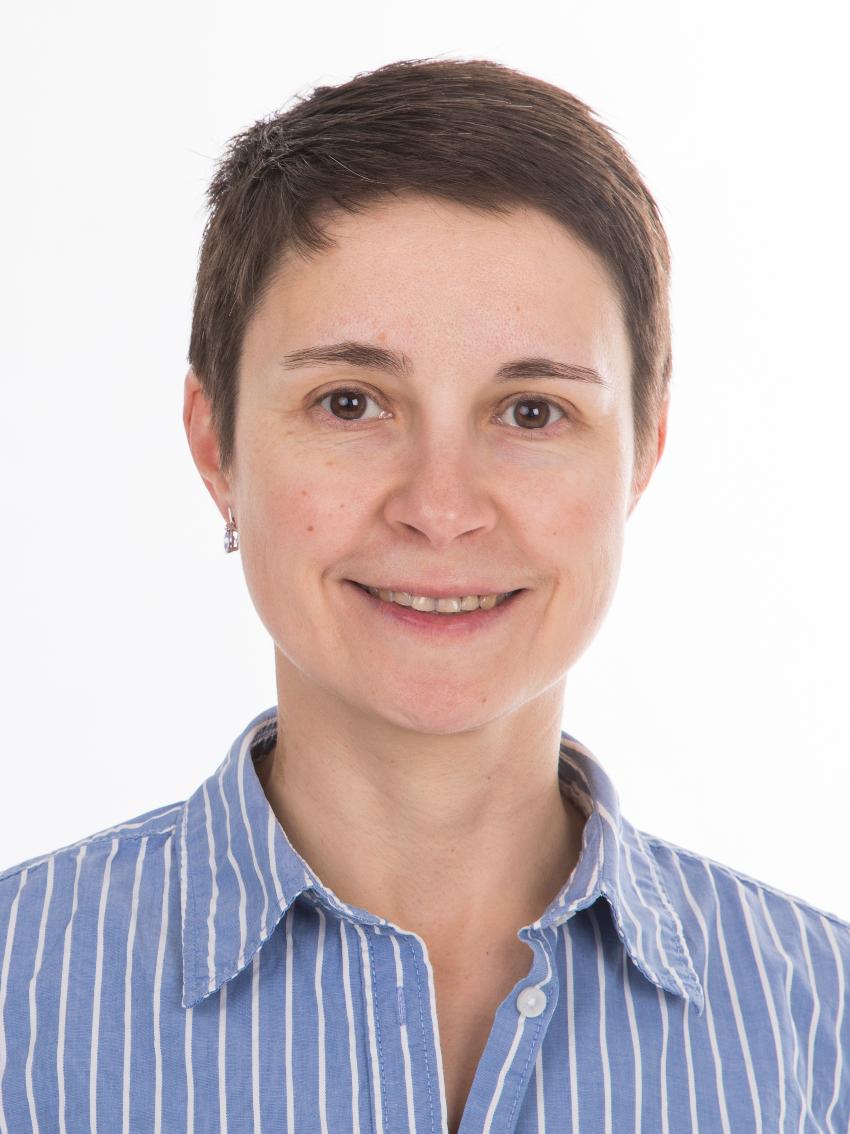
Maria Sydnes serves as an Associate Professor in the Department of Technology and Security at UiT The Arctic University of Norway, Tromsø. Her academic work focuses on emergency management and organizational resilience within high-risk Arctic environments, with particular emphasis on maritime safety and cross-border crisis coordination between Norway and Russia. Her research interests span interorganizational coordination during emergencies, organizational learning for resilience building, and practical applications of lean production principles in crisis contexts. She investigates Arctic-specific challenges including avalanche response in Longyearbyen, oil spill management in polar waters, and integration of unorganized volunteers into formal emergency systems, consistently addressing the intersection of climate change impacts and security vulnerabilities. Analysis of her publication record reveals a strong trend toward interdisciplinary solutions for Arctic safety, with recurring themes of Norwegian-Russian cooperation, maritime risk assessment, and adaptive governance structures. Her work bridges theoretical frameworks with real-world case studies—from Svalbard waters to the Barents Sea—demonstrating practical approaches to disaster risk reduction in extreme environments. Dr. Sydnes actively participates in multiple research initiatives including the Climate Change Adaptation and Secure Societies groups. Her current projects encompass Co-producing knowledge about risk and safety of maritime activities around Svalbard SPRICE (spray icing modelling for maritime decision support) GLOBSEC (North-South security partnerships) NoCoU (civil security for Norwegian communities) Beredt! (risk-based governance for climate-driven natural hazards) highlighting her commitment to scalable, community-focused security solutions in vulnerable Arctic regions.
Norwegian University of Science and TechnologyNorway
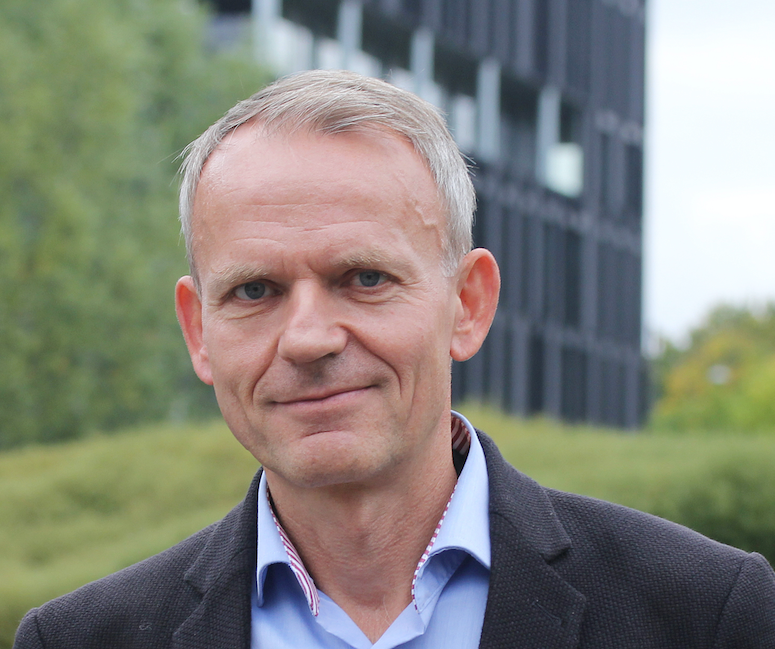
Jan Emblemsvåg is a Professor at NTNU’s Department of Ocean Space Operations and Civil Engineering in Ålesund, Norway. He has held senior industry roles including Shipyard Director at Vard, SVP Ship Design & Systems at Rolls-Royce Marine, and Managing Director at Midsund Bruk. His academic positions span BI Norwegian Business School, Ålesund University College, and NTNU since 2006. Emblemsvåg’s expertise bridges engineering and management, focusing on sustainable development through rigorous analytical frameworks. Education: PhD from Georgia Institute of Technology (1999), MSc (1995), and Civil Engineering degree from Norwegian Institute of Technology (1994). R&D focuses on six core areas: 1) Product/process development with Lean methodologies, 2) Life-Cycle Costing/Analyses (integrating cost, environmental, and social dimensions), 3) Risk management and uncertainty analysis using Monte Carlo methods, 4) Operations/General management under Lean principles, 5) Project management with Lean integration, and 6) Renewable energy (especially nuclear power’s role in maritime and industrial sectors). Publications emphasize energy policy critiques, nuclear propulsion feasibility, and sustainable shipping. Recent work highlights nuclear energy’s potential as a cost-effective, low-emission solution for maritime transport and industrial needs. Active in policy debates advocating evidence-based energy strategies. Labs/Teams: Leads NTNU’s research initiatives on nuclear propulsion for merchant ships (NuProShip project) and collaborates internationally on maritime safety and evacuation modeling.
Trond Bølviken is a Professor at the Department of Engineering Sciences, University of Agder. His research focuses on Lean Construction methodologies, project management, and construction waste reduction. He has contributed to advancing understanding of collaborative project teams, waste economics, and production planning. His work emphasizes practical applications of theoretical principles in construction, aiming to bridge gaps between academic research and industry practices. Key areas include uncertainty management, production control systems, and the integration of Lean principles with traditional construction workflows. Bølviken has published extensively in peer-reviewed journals and conference proceedings, particularly within the International Group for Lean Construction (IGLC). He collaborates with international researchers and industry practitioners to address challenges in project delivery and workflow optimization.
Norwegian University of Science and TechnologyNorway
Eilif Pedersen is a Professor and Program Leader for Marine Technology at the Norwegian University of Science and Technology (NTNU). He leads the Department of Marine Technology under the Faculty of Engineering. His research focuses on mathematical modeling, simulation of machinery systems, and energy-efficient solutions in marine and offshore contexts. He is actively involved in projects such as SEACo, SFI Smart Maritime, and ViProMa, emphasizing virtual prototyping and hybrid power systems. Key research areas include bond graph methodology, thermodynamic system modeling, and dynamic analysis of marine systems. Pedersen supervises numerous PhD and industrial projects, including studies on hybrid propulsion, wind turbine dynamics, and fuel cell integration. He has contributed to over 50 publications, with recent work addressing co-simulation techniques, energy conservation in marine systems, and emission reduction strategies. His expertise spans marine engines, fluid dynamics, and renewable energy applications. Collaborations with industry partners like Rolls-Royce and Kongsberg Digital highlight his commitment to bridging academic research with practical maritime challenges.
Norwegian University of Science And TechnologyNorway
Monica Rolfsen is Pro-Rector for Outreach and Social Responsibility at NTNU since 2025. Previously served as dean of the Faculty of Economics and Management (2017–2025) and head of the Department of Industrial Economics and Technology Management (IØT). Holds a PhD from NTNU’s predecessor, NTH (1993), and has been a professor since 2015. Her research focuses on organizational development, lean management, and the Norwegian labor-management model. Education: Chartered Engineer (1989) and PhD (1993) from NTH/NTNU. Published extensively on management concepts, including books like Lean blir norsk (2014) and Lean organisering i norsk arbeidsliv (2012). Served as senior researcher at SINTEF and visiting fellow at Cornell University. Political/civic roles include advisor to the Norwegian Ministry of Trade, Liberal Party committee member, and board leadership in organizations like Trondheim Jazz Festival and Hospital Pharmacies. Active in higher education governance through roles at Universities Norway (UHR) and NTNU’s Campus Cluster User Group.
Professor Viktoria Stray is a leading figure in agile software development at the University of Oslo 's Department of Informatics and serves as a senior researcher at SINTEF Digital . With over 15 years at UiO and 8 years at SINTEF, she combines academic rigor with industry expertise in large-scale agile transformations. Her work bridges empirical software engineering, generative AI integration, and coordination mechanisms in distributed teams. PhD in Informatics (2014), MSc in Computer Engineering (2007) Executive Guest Editor for Information and Software Technology special issue on Generative AI Her research focuses on: Generative AI in developer workflows Large-Scale Agile coordination Autonomous Teams dynamics Human Factors in software testing Digital Transformation in public sector Recent publications analyze trends in agile coaching, hybrid team communication, and empirical studies on coordination mechanisms. She supervises numerous PhD and master's students while teaching large cohorts in courses like IN2000 (680+ students). As Deputy Head of Department and leader of the Gemini Center for Software Engineering, she shapes both institutional and industry-wide practices.
Dag Sjøberg is a Professor at the Department of Informatics (Ifi), University of Oslo . He also holds a part-time position at SINTEF Digital . His research focuses on empirical software engineering with emphasis on development processes , agile methodologies , technical debt , and programming skill assessment . Research Interests: Empirical methods (controlled experiments, case studies) Construct validity frameworks Agile and Lean practices Microservices architecture Software quality and maintainability Scientific Achievements: Led Simula Research Laboratory's Software Engineering department ranked #1 globally (2004-2008) Developed Guidelines for Construct Validity in software engineering research Extensive publication record in top venues like IEEE Transactions and Journal of Systems and Software Academic Background: Cand.scient. in Informatics (University of Oslo, 1987) PhD in Software Engineering (University of Glasgow, 1993) Professional Involvement: Co-founder and board member of three IT companies Former research director at Simula Research Laboratory (2001-2008) Current head of the Programming and Software Engineering research section at Ifi
Matthew Patrick James Lynch is an Associate Professor at the Department of Engineering, Oslo and Akershus University College of Applied Sciences. His academic focus revolves around entrepreneurship education, design thinking, and innovation. He teaches courses such as 'Studentbedrift' (entrepreneurship and startups), 'Creativity and Entrepreneurship', and 'Design Thinking'. Background: Lynch transitioned from practicing entrepreneurship to academia, teaching since 2014. He is pursuing a doctorate in Innovation at NTNU, researching entrepreneurial mindset and innovation, emphasizing human potential and value creation through innovation. His professional background includes being a chartered accountant. Research Interests: His work explores entrepreneurial mindset development, design thinking integration in education, and adapting entrepreneurship education to a rapidly changing world. He emphasizes practical methods and pedagogical innovation, such as gamification and systems thinking. Key Projects: He leads initiatives like the FREIIA (Facilitating Resilience Embracing Islands Innovation) project and GreenBizz. His research outputs include over 20 peer-reviewed articles and conference contributions, focusing on pedagogy, innovation strategies, and systemic challenges in entrepreneurship. Grants & Labs: While specific grants are unmentioned, his involvement in collaborative projects (e.g., Fredrikstad Living Lab) highlights applied research. He actively engages with industry through executive education programs (e.g., for Wilhelmsen) and workshops (e.g., Design Thinking for startups in Vietnam).
Norwegian University of Science and TechnologyNorway
Fabio Sgarbossa is a Full Professor of Industrial Logistics at NTNU's Department of Mechanical and Industrial Engineering, Faculty of Engineering. He holds editorial roles in journals like the International Journal of Production Research and has authored over 150 publications. His research focuses on industrial logistics systems, supply chain resilience, and Industry 4.0 technologies, with a strong emphasis on human-centric design and digital transformation. Education: Master's in Management Engineering (2005) and PhD in Industrial Engineering (2010), both from the University of Padova, Italy. Research Interests: Design and management of industrial logistics; supply chain optimization; digitalization in manufacturing; human factors in production systems; autonomous mobile robots (AMRs); predictive maintenance; and circular economy integration. He leads NTNU's Logistics 4.0 Lab and collaborates on EU-funded projects. Key Contributions: Developed frameworks for Industry 4.0 adoption in logistics, decision support systems for additive manufacturing, and human-centric warehouse design. His work bridges operational efficiency with worker well-being. Grants & Collaborations: Active in EU and national projects focusing on smart manufacturing, resilient supply chains, and aging workforce challenges. Supervises graduate students in logistics systems and technology integration. Labs/Teams: Head of Logistics 4.0 Lab at NTNU, collaborating with industry partners on AMR implementations and digital twin applications.
Norwegian University of Science And TechnologyNorway
Ann Charlott Pedersen is a Professor at the Department of Industrial Economics and Technology Management, Norwegian University of Science and Technology (NTNU), within the Faculty of Economics and Management. Her work focuses on supply chain management, lean strategies, and inter-organizational networks. She holds a doctoral degree from NTNU (1996). Her research explores business network dynamics, strategic supplier development, and the integration of digital technologies with lean practices. Key themes include resource heterogeneity management, network foresighting, and triadic relationship analysis in manufacturing contexts. Over 30 years of academic contributions span journals like Industrial Marketing Management and Journal of Business Research . Pedersen collaborates widely, with frequent co-authorship on topics such as supplier network initiatives, lean implementation, and start-up customer relationship strategies. Her teaching includes advanced courses on strategic supply chain management and business network leadership at the master’s level.
Norwegian University of Science And TechnologyNorway
Hajnalka Vaagen is an Associate Professor in the Department of Ocean Operations and Civil Engineering at the Faculty of Engineering, Norwegian University of Science and Technology (NTNU), with an additional affiliation as Associate Professor II at the Norwegian School of Economics (NHH). Her research bridges theoretical and applied aspects of operations management, decision-making under uncertainty, and sustainable transformation. Her educational background includes a PhD in Quantitative Logistics from Molde University College (2009). She has held senior researcher roles at SINTEF Industry and SINTEF Technology and Society, contributing to operations research and industrial applications. Her research interests focus on: Risk and uncertainty management in project-based production systems, particularly in engineer-to-order contexts. Portfolio and assortment optimization in consumer goods, using stochastic modeling. Lean and flexible project delivery, integrating mathematical modeling with empirical data from lean construction. Circular economy initiatives in maritime industries, including ocean plastic pollution mitigation and sustainable supply chains. Industrialization of advanced 3D knitting technologies through digital platforms. The trends in her recent publications reflect a strong interdisciplinary focus combining operations research, sustainability, and behavioral insights. Her work frequently applies stochastic optimization to real-world challenges in shipbuilding, construction, and supply chains, emphasizing both technical and social dimensions of performance. She collaborates internationally, notably with the University of California, Berkeley’s Project Production Systems Laboratory. She has supervised multiple Master’s theses at NTNU, contributing to education in lean principles and ship design planning. Her outreach includes academic lectures at international conferences such as APMS, IFAC, and IGLC. Her research is supported by involvement in EU-funded projects like Blue Circular Economy (BCE) and CIRCNETS, as well as national initiatives such as SuSDesign and Sweet Spot under NTNU’s SusRes program. These projects aim to enable sustainable transformation through innovation ecosystems and policy-oriented operations management.
Magnus Mikael Hellström is an Associate Professor in project and supply chain management at the Department for Working Life and Innovation , School of Business and Law , University of Agder , Norway. He holds a PhD in Industrial Management and an M.Sc. in Chemical Engineering from Åbo Akademi University, Finland. His career bridges academia and industry, with extensive experience in global construction projects across India, Brazil, and Poland. His research interests center on innovation in project-based industries, with a focus on: Servitization and service-oriented business models Modularization and functional solutions Digitalization in ports and maritime logistics Sustainability and circular economy, particularly in battery recycling and clean shipping Collaborative project delivery and governance Project management education using serious games His recent publications (2022–2025) reflect a strong interdisciplinary focus on sustainable transitions in maritime systems, digital port-city integration, and circular business models for EV batteries. He frequently employs qualitative, case-based, and Delphi methodologies, often in collaboration with Nordic and international partners. Scientific awards or honors are not explicitly mentioned in the provided text. He is actively involved in consulting for technology firms and has authored practical booklets on modularization and solution selling. He leads the scientific council of the Project Management Association Finland (IPMA). He is affiliated with the RIST – Research Centre for Studies of Innovation for Sustainable Transition .
Mona Jerndahl Fineide is a Professor at the Department of Welfare, Management and Organisation at Oslo Metropolitan University (HiOA). She holds a PhD in Working Life Science from Karlstad University, Sweden. Her research focuses on governance, organization, and management of health and welfare services, particularly coordination of services for citizens with complex challenges and the role of professions in welfare systems. She is affiliated with the Master’s program in Integrated Health and Welfare Services, coordinating the 'Organization and Management' course. Key research projects include ROPIT (Integrated Services for Dual Diagnosis Patients) and future welfare services initiatives. She has served on the University College Board (2017–2021) and is a deputy member (2021–2025). Research interests span healthcare policy, digitalization in welfare, and interdisciplinary collaboration. Over 30 publications include works on clinical pathways, Lean management in public services, and the impact of organizational structures on care outcomes. She co-edited the book Organizational Perspectives on Coordination of Health and Welfare Services . Recent work explores digitalization barriers in child welfare, team-based obesity treatment models, and public perceptions of future welfare systems.
Erlend Alfnes is an Associate Professor at the Department of Industrial Technology , UiT The Arctic University of Norway, based in Narvik. His work focuses on industrial technology and production management within engineer-to-order (ETO) manufacturing environments. Research Themes : Industry 4.0 integration, Lean manufacturing, sustainable shipbuilding, supply chain uncertainty mitigation, hydrogen transition in maritime, and digitalized logistics frameworks. Methodologies : Multiple case studies, systematic literature reviews, framework development, and empirical investigations into ETO operations. Key Collaborations : Regularly co-authors with researchers like Marco Giovanni Semini, Fabio Sgarbossa, and Jonathan Gosling on projects such as Industry 5.0 enabled Smart Logistics . Publication Trends : Recent works emphasize Industry 4.0's impact on Lean barriers (2025), circular economy practices in ETO shipbuilding (2025), operator 4.0 frameworks (2024), and hydrogen transition in maritime value chains (2024). Earlier contributions explore digitalized yard logistics (2023), spare parts inventory guidelines (2023), and tactical delivery date practices (2022). Technical Expertise : Advanced knowledge in CONWIP systems, Kanban optimization, and spare parts classification. His work bridges theoretical models with practical applications in shipbuilding and engineer-to-order production.