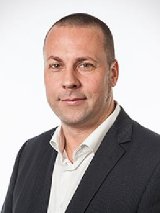
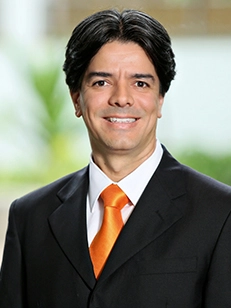
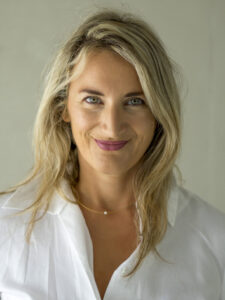
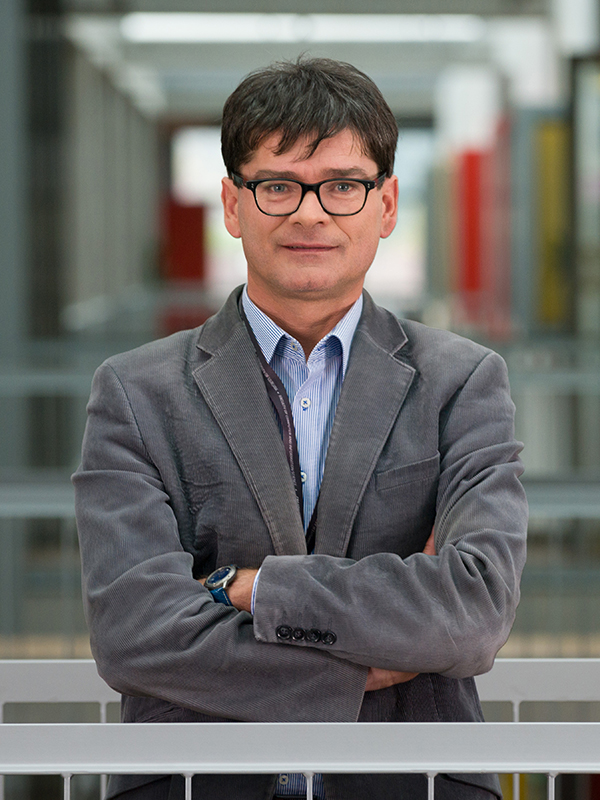
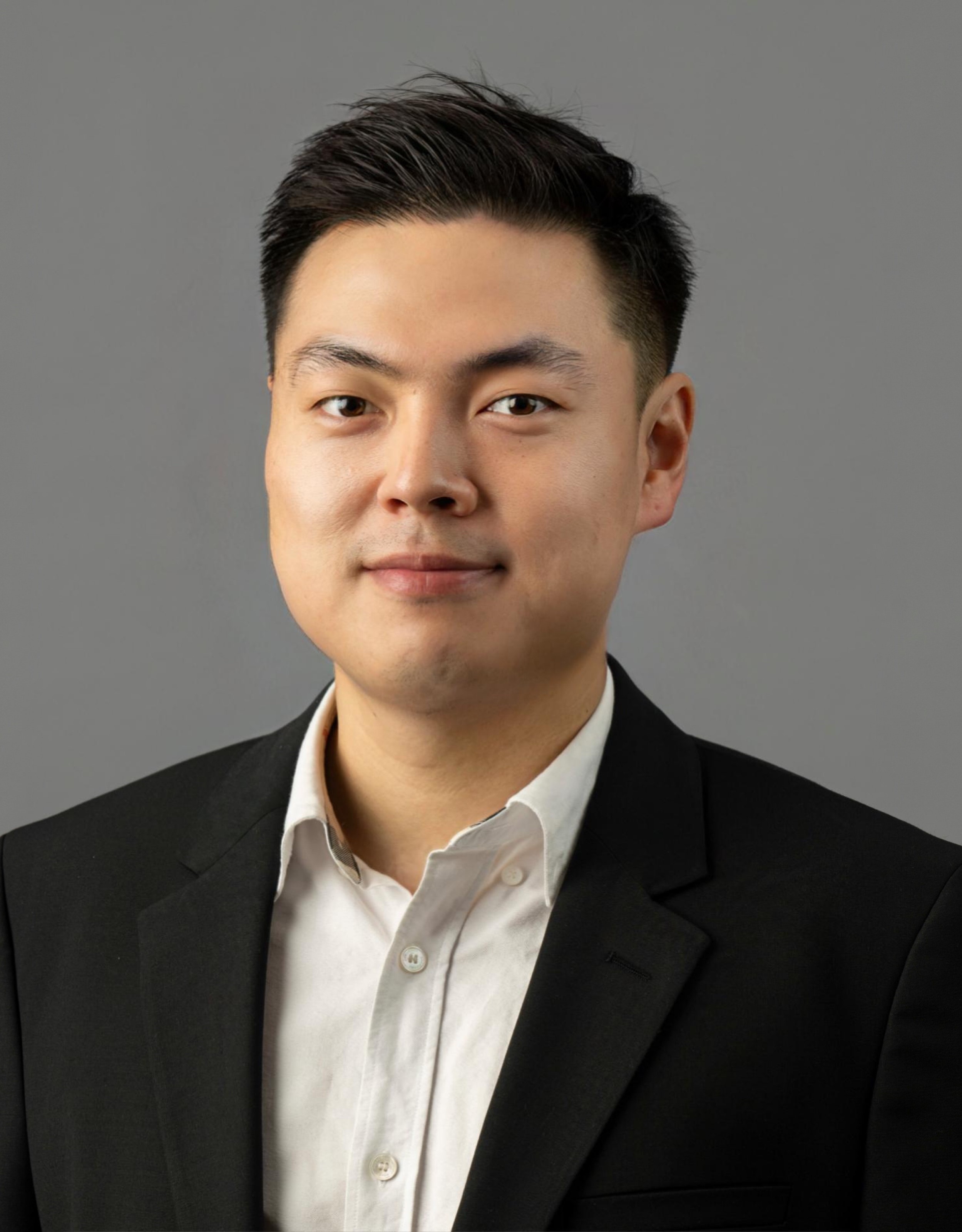
Professor Dan Högberg is affiliated with the University of Skövde , specifically the School of Engineering Science . His work bridges ergonomics , digital human modeling (DHM) , and multi-objective optimization in industrial contexts. Research Interests: Human-centric manufacturing systems Simulation-based design optimization Remote collaboration tools Machine learning for ergonomic evaluation Recent publications focus on virtual design reviews , automated layout planning , and hand posture classification , integrating NSGA-II algorithms and digital twins . His projects include PLENUM (funded by Vinnova) and VF-KDO (Knowledge Foundation). He collaborates with researchers like Francisco Garcia Rivera , Aitor Iriondo Pascual , and Lars Hanson , contributing to decision support tools for factory ergonomics and worker well-being . Key labs include the Interaction Lab (ILAB) , with methods aligned with Industry 4.0/5.0 principles.
Anna Trubetskaya is a Professor at Nord University, specializing in sustainable chemical engineering and bioproduction. She directs the BSc program in 'Sustainable Bioproduction' and teaches courses in biomaterials and biochemistry. Her research focuses on integrating Lean Six Sigma methodologies with sustainable engineering practices, particularly in the energy, pharmaceutical, and food & beverage industries. She collaborates globally with industrial partners to develop biofuels , bioplastics , and biomaterials for circular economy applications. Education : PhD in Chemical Engineering (Technical University of Denmark, 2016), MSc in Bio-Engineering (University of Kassel, 2011), BSc in Biotechnology (University of Applied Sciences Flensburg, 2009) Teaching : 'Biomaterials', 'Biochemistry & Biomolecular Sciences' in BSc programs Her work emphasizes life cycle assessment and Lean Six Sigma to enhance sustainability in sectors like pharmaceutical manufacturing and biomass processing. Current research explores microwave hydrolysis for seaweed-derived nanocellulose and thermochemical processing of organic wastes for energy recovery. Anna supervises MSc students in industrial projects and has delivered guest lectures at MIT, University of Galway, and Trinity College Dublin. She specializes in bridging engineering and business perspectives for sustainable process development.
Dr. Yan He is a Research Fellow at the School of Engineering , Cardiff University , focusing on renewable energy systems and wind turbine optimization. Their work bridges advanced computational modeling with practical energy solutions. Education: PhD in Electrical Engineering (2016), Cardiff University Research Interests span wind turbine aerodynamics, wake modeling, machine learning for energy systems, and fatigue analysis in wind farms. They develop innovative frameworks for offshore wind farm layout optimization and yaw control strategies to enhance efficiency while reducing structural loads. Publications highlight expertise in floating offshore wind turbines , yaw misalignment mitigation , and rotating stall dynamics , combining theoretical models with experimental validation. Their recent work integrates generative adversarial networks and convolutional neural networks for wind farm power prediction. Labs & Teams include collaborations with Cardiff's renewable energy research units, utilizing wind tunnel experiments and computational simulations to advance turbine design and control systems.
J.F.J. Pruyn is a researcher at Delft University of Technology , specializing in Ship Design, Production and Operations . His work bridges marine engineering with optimization techniques, focusing on energy systems and sustainable shipping solutions. Key Research Areas : Ship design, methanol power systems, energy transition, climate scenario modeling, and resource-constrained project scheduling. His recent projects include PATH2ZERO (zero-emission inland shipping) and READINESS (robust ship designs for uncertain transitions). He has contributed datasets to open science platforms and participated in conferences and workshops on environmental policy and maritime engineering.
Dr. Maciej Górowski , Assistant Professor at Cracow University of Technology's Department of Rail Vehicles and Transport since 2008, is a dual-role academic and industry expert. He also serves as Deputy Head of the Research and Development Department at NEWAG Nowy Sącz since 2010, bridging academic innovation with industrial application. Academy of Fine Arts, Krakow (Industrial Design, Transport Design specialization) Postgraduate studies: Cracow University of Technology (Rail Vehicle Construction and Operation) Master's thesis: "Design of a Modern Tram Driver Station" (awarded TPSP Medal) Holding a 2021 PhD thesis on control cabin standards, his research focuses on rail vehicle ergonomics , autonomous tram systems , and control cabin design . His work integrates human-machine interaction , operator safety , and educational technology through physical and digital simulation platforms. Publications emphasize design standardization and technical innovation in rail transport, with over a dozen practical control station implementations. Dr. Górowski's teaching innovations include co-creating Poland's first Rail Vehicle Engineering dual specialization program (2017), winning multiple Rector's awards for didactic achievements. His NGT6 tram simulator (2017) and 1:1 driver cabin replica serve as key educational and research tools, accompanied by industrial collaboration with Siemens, MPK SA, and PKP PLK SA. Scientific recognitions include: TPSP Medal (Krakow, 2008) CIOP National Team Award (2009) Rector's Team Awards (2017, 2018, 2020) Individual Rector's Award (2023) He leads industrial projects for major rail operators, including: Diesel locomotive 6Dg series (2009, over 200 produced) Siemens INSPIRO metro train driver stations EP09 electric locomotive control systems His educational initiatives extend beyond academia through: NGT6 Tram Simulator public training programs "UWAŻAJ! TRAMWAJ!" safety campaign (2023) "Laboratorium Małego Inżyniera" outreach (2017-2021)
Tallys Yunes is an Associate Professor of Management Science at the Miami Herbert Business School, University of Miami. Originally from Rio de Janeiro, Brazil ("carioca"), he studied computer engineering and computer science at UNICAMP in Brazil before earning his Ph.D. from Carnegie Mellon University. His research focuses on applying optimization techniques to solve practical problems across various domains. Dr. Yunes's research interests span a wide range of applications in operations research and optimization: Healthcare operations and appointment scheduling Sports analytics and umpire scheduling (including Major League Baseball) Product line optimization and complexity cost analysis Information display on maps and proportional symbol maps Political districting and electoral systems Supply chain management and multi-supplier procurement Resource allocation and parallel task scheduling Hybrid optimization methods combining different techniques His recent publications demonstrate a consistent focus on applying mathematical optimization to real-world problems. He has published in top journals like Management Science, Production and Operations Management, INFORMS Journal on Computing, and European Journal of Operational Research. His work often involves collaboration with industry partners such as Caterpillar and MLB, demonstrating the practical impact of his research. Dr. Yunes is actively engaged in the academic community through his blog "O.R. by the Beach," where he discusses operations research concepts and applications. He has also developed educational content including games and YouTube videos to make optimization concepts more accessible.
Assoc. Prof. Dr. Arch. Stefan Asparuhov is an Associate Professor at the Faculty of Architecture, Department of Industrial Buildings, at the University of Architecture, Civil Engineering and Geodesy (UACEG) since 2015. He holds additional roles as Acting Chief Architect of Sofia Municipality (2025–present) and Director of Territorial Planning at NAG-Sofia Municipality (2025–present), alongside previous governmental positions including Deputy Minister of Regional Development (2022). PhD in Architecture of Buildings, Constructions, Structures and Details (UACEG, 2014) Master of Economics in International Project Management (UNWE, 2010) Master of Architecture in Industrial and Agricultural Buildings (UACEG, 2009) Level 1 Building Energy Efficiency Consultant (Technical University of Sofia) His research focuses on industrial architecture, territorial planning, and sustainable design practices with a strong emphasis on energy efficiency and microclimate optimization in residential and industrial spaces. His academic work intersects with practical applications through over 300 urban development plans and 800 building permits issued during his tenure as Chief Architect of Elin Pelin Municipality (2016–2020). Recent publications highlight his expertise in: Industrial heritage preservation Biofuel production facility design Building information modeling (BIM) integration Post-socialist urban space reconfiguration Architectural responses to climate challenges Public space optimization in prefabricated housing blocks Scientific achievements include: 2012: 2nd Place - Best Presentation by Young Scientist, International Scientific Conference VSU 2022 & 2024: Winner - Teacher of the Year, UACEG Faculty of Architecture 2010: Top Graduate - International Project Management, UNWE 2006: Co-Organizer - National Prize 'Student of the Year' Professional experience spans academic leadership, governmental advisory roles, and practical implementation of territorial development plans. Currently conducting office hours by appointment in Cabinet 719, Building A, Sofia.
Assoc. Prof. Dr. Ramazan Köprü serves as a full-time Associate Professor in the Department of Electrical and Electronics Engineering at Işık University's Faculty of Engineering and Natural Sciences, Istanbul. His academic career spans over two decades with continuous contributions to microwave engineering, circuit design, and antenna technologies, maintaining an active teaching and research profile through 2025. His educational foundation includes: PhD in Electronics Engineering (1995-2013) from Istanbul Technical University Master's in Electronics and Communication Engineering (1991-1994) from Istanbul Technical University BSc in Electronics and Communication Engineering (1987-1991) from Yıldız University Dr. Köprü's research centers on advanced microwave systems with emphasis on wideband amplifier design, active inductor circuits, and antenna matching networks. His work bridges theoretical circuit synthesis with practical RF implementations, particularly focusing on GaN-based amplifiers, tunable components, and UWB systems. Recent publications demonstrate innovative approaches like the Normalized Gain Function Method and FSRFT techniques for optimizing power transfer and bandwidth in wireless communication systems. Analysis of his 2024 publications reveals a concentrated effort in solving impedance matching challenges for next-generation wireless devices, with significant attention to low-loss active components and precision synthesis methods. These works consistently target applications in high-speed data transmission, mobile communications, and sensor systems, reflecting strong industry relevance. He has supervised two graduate students to completion: Hadi Ghasemzadeh Momen (2016 MSc thesis on tunable active inductors) and Moaamen Magdy Abdelrazeq Mohamed (2025 PhD thesis on time-domain ADC circuits). His research is supported by projects including the ASELSAN HEWS PROGRAM and microwave circuit design packages developed for industrial applications. As an IEEE member since 2016, he contributes to the academic community through conference participation and peer review activities.
Dr. Georgia Zouni is an Assistant Professor in the Department of Tourism Studies at the University of Piraeus, Greece. She holds a PhD in Strategic Marketing of Tourist Destinations and an MBA in Tourism Management from the same university, complemented by a BSc in Operations Research and Marketing from Athens University of Economics and Business. Her research focuses on: Tourism marketing and destination branding strategies Consumer psychology and emotional engagement in tourism Digital transformation of tourism experiences Crisis management (notably COVID-19 impacts) Niche tourism development (cultural, religious, gastronomic) Her publication portfolio (2019-2025) demonstrates strong emphasis on destination experience design, digital consumer behavior analysis, and resilience strategies for tourism crises. Recent works explore AI applications, generational travel patterns, and emotional connections with destinations. Awards: Best Full Paper Award at 17th Annual CHME Research Conference She actively supervises doctoral, postgraduate and undergraduate students while participating in EU-funded research programs (ENI CBC MED, Interreg). Professional roles include: Council of Europe/EU Expert for Cultural Routes Head of Greek Project Team for Tourism Education Reform Advisor to multiple Greek ministries Founding member of OpenTourism network (16,000+ professionals)
Professor Pallis Athanasios is a distinguished academic in the Department of Maritime Studies at the University of Piraeus, where he has established himself as a leading expert in maritime economics and port policy. His academic profile demonstrates extensive contributions to the field of maritime studies, with a particular focus on port economics, container terminal operations, and shipping management. Professor Pallis's research interests encompass a wide range of maritime topics, including port governance, container terminal automation, liner shipping connectivity, and cruise industry economics. His work bridges theoretical frameworks with practical applications, addressing contemporary challenges in global port systems and maritime transportation. His research has particular relevance to Mediterranean and European port systems, with numerous publications analyzing regional port hierarchies and governance models. His publication record reveals a strong focus on emerging trends in port operations, particularly the technological transformation of container terminals and the evolving dynamics of global shipping networks. Professor Pallis has conducted significant research on port automation, examining both the technological drivers and the institutional implications of these changes. His work on port governance provides valuable insights into the complex institutional arrangements that shape port development worldwide. As an active member of the academic community, Professor Pallis contributes to advancing knowledge in maritime economics through his scholarly publications and participation in research initiatives at the University of Piraeus. His expertise is reflected in the comprehensive analysis of port performance metrics, shipping network dynamics, and the economic impacts of port operations.
Miha Mraz serves as a Full Professor at the Faculty of Computer and Information Science, University of Ljubljana, where he teaches Computer Networks, Computer Systems Reliability, Unconventional Information Processing, and Computational Biology courses from office R3.59. His research spans Computational Biology (gene regulatory networks, circadian biology), Ubiquitous Computing , and Unconventional Computing (Quantum-dot Cellular Automata, fuzzy logic systems). He employs stochastic simulations, genetic algorithms, and multi-valued logic to model biological processes and optimize logistical systems. Analysis of his 2005-2015 publications reveals consistent interdisciplinary work at the computer science-biology interface, particularly in computational modeling of biological networks and novel computing architectures. Key themes include information processing in gene networks and quantum-dot cellular automata design for multi-valued logic systems. Professor Mraz leads current ARRS projects including hypoxia-cholesterol synthesis research (J1-50024, 2023-2026) and Ubiquitous Computing (P2-0359, 2023-2027), alongside past European initiatives like RFID F2F. As a core member of the Computer Structures and Systems Laboratory, he focuses on computer architecture reliability and unconventional computing platforms despite no listed advisees in available materials.
Donghyun Kim serves as an Assistant Professor in the Department of Electrical and Computer Engineering at Missouri University of Science and Technology, where he leads research in electromagnetic compatibility (EMC), signal integrity (SI), and power integrity (PI) for high-speed electronic systems at the Electromagnetic Compatibility Laboratory in Rolla, Missouri. His academic credentials include: Ph.D. in Electrical Engineering, KAIST, Daejeon, Korea (2018) M.S. in Electrical Engineering, KAIST, Daejeon, Korea (2014) B.S. in Electrical Engineering, KAIST, Daejeon, Korea (2012) Dr. Kim's research spans electromagnetic challenges in advanced electronic packaging, with core expertise in 2.5D/3D IC systems, through-silicon via (TSV) technology, and nanometer-scale device design. His work addresses critical signal integrity issues in high-speed digital channels, power distribution network noise, and electromagnetic interference in printed circuit boards (PCBs), while also exploring nanomaterial applications like MXene-graphene hybrids for viral biosensors. Analysis of his 2024 publications reveals dominant themes in high-frequency modeling up to 100 GHz, PCB dielectric characterization techniques, statistical eye diagram methodologies, and surface roughness effects on transmission lines. This body of work demonstrates consistent focus on solving practical EMC and SI challenges in next-generation electronic packaging through rigorous electromagnetic theory and measurement validation. Scientific recognition: No awards listed in available sources Academic mentoring and research funding details are not publicly specified, though his role in the Electromagnetic Compatibility Laboratory indicates active supervision of graduate research. The laboratory provides critical infrastructure for industry-academic collaboration in EMC testing, high-frequency measurements, and signal integrity analysis. The Electromagnetic Compatibility Laboratory at Missouri S&T serves as Dr. Kim's primary research base, featuring state-of-the-art facilities for electromagnetic testing, high-speed channel characterization, and nanomaterial-based sensor development, supporting both fundamental research and industry-driven solutions.
R. R. K. Sharma is a Professor in the Department of Management Sciences at the Indian Institute of Technology Kanpur , with a career spanning over three decades since joining in 1989. His work bridges Operations Research , Supply Chain Management , and Strategic Management . Specialization in Operations Research and Strategic Alignment Education: Fellow in Management (IIM Ahmedabad, 1988), BE in Mechanical Engineering (VNIT Nagpur, 1980) Research focuses on mathematical formulations for warehouse location, lot sizing, and supply chain optimization, with empirical studies comparing algorithmic approaches. His work extends to organizational culture-strategy alignment , ERP implementation , and technology management in manufacturing and retail contexts. Recent publications (2018-2023) emphasize sustainable supply chains , horizontal strategy in conglomerates, and IOT integration in retail formats. Earlier works (1991-2018) developed foundational methods in MRP performance , Benders' decomposition , and genetic algorithm applications . Key collaborations include work with researchers in Germany, Thailand, China, and India on manufacturing-flexibility interplay , TQM implementation , and retail analytics . His extensive 781 working papers cover diverse topics in management science, though no formal awards or student advisement details are listed in the provided text.
Jae-Hyun Shim is a Professor in the Department of Architecture at Sejong University, where he leads the MXD: Complex Design Lab. His research specializes in high-rise buildings, urban design, and sustainable architectural planning. With professional experience at firms like Samoo Architects and RTKL Associates, he bridges industry practice with academic rigor. Education M.Arch, Yale University (1991) B.S. in Architecture, University of Maryland (1985) Research Focus Professor Shim investigates spatial efficiency in super-tall structures, mixed-use complexes, and urban infrastructure. His work includes developing evaluation metrics for architectural forms, analyzing historical urban transformations, and optimizing BIM workflows. Current projects explore green vertical cities and high-density residential design. Awards Gangnam Beautiful Architecture Award (2009) Seoul Architecture Award Bronze (2003) Honorable Mention, Gwangbok-ro Revival Competition (2005) 3rd Place, Shanghai International Center Design (1993) Leadership He directs national research initiatives like 'Green Vertical City' and serves on committees for the Architectural Institute of Korea and Seoul Metropolitan Government. His lab focuses on competitions, with students winning accolades in spatial design exhibitions.
Antonio Chica is an Associate Professor at the Department of Computer Science, Universitat Politècnica de Catalunya (UPC), specializing in geometry processing, real-time rendering, and virtual reality applications. His research focuses on 3D reconstruction, procedural landscape generation, and LiDAR data optimization. Teaching at Terrassa School of Engineering and Barcelona School of Informatics Member of the Modeling, Visualization, Interaction and Virtual Reality Group Key research areas include: Geometry processing techniques for signed distance fields Procedural generation of 3D landscapes and vegetation Game development frameworks and VR training systems Efficient algorithms for massive point cloud rendering His recent publications emphasize Bayesian reconstruction methods, adaptive SDF approximations, and optimized VR training tools. He actively collaborates on LiDAR data calibration, terrain modeling, and cultural heritage visualization projects. Antonio Chica's work integrates advanced graphics algorithms with practical applications in urban modeling, medical training, and historical preservation. He develops open-source tools like MeshPipe to simplify geometry processing workflows.