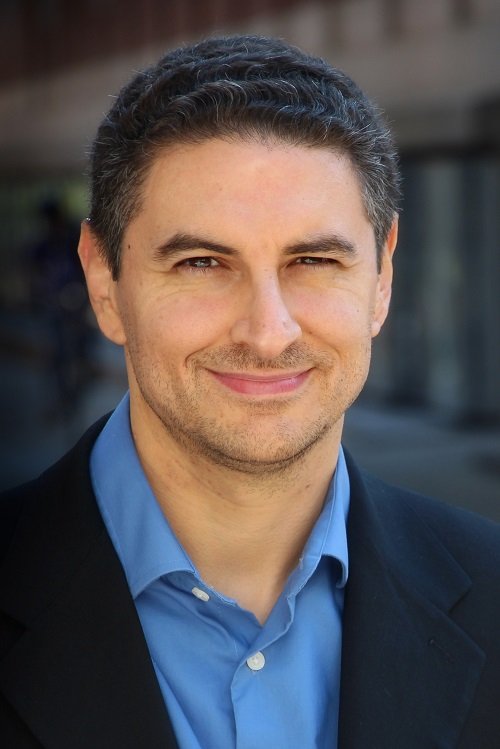
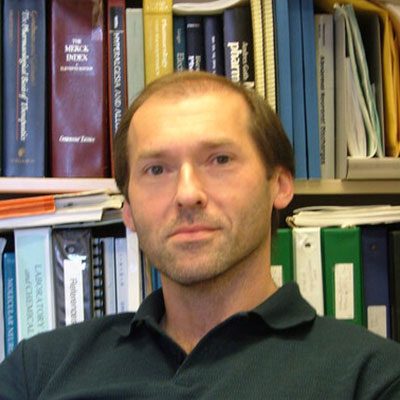
Michael McAlpine is a Professor in the Mechanical Engineering department at the University of Minnesota . He also holds affiliations with the Biomedical Engineering and Electrical and Computer Engineering departments. His research focuses on 3D printing functional materials & devices , Nanoscale inks , Biomedical devices , Bioelectronics , and Flexible Microsystems . Research Interests : 3D Printing, Biomedical Engineering, Nanotechnology, Flexible Electronics, Microfluidics Labs : ME 361/363 Contact : mcalpine@umn.edu , (612) 626-3303, ME 117 Recent Research Trends include 3D Printed Biomedical Devices , Flexible Electronics , and Bioprinting Applications . His work spans from Spinal Organoid Formation to Programmable Drug Release Capsules . Scientific Award : Circulation Research 2020 Best Manuscript Award
Sushmita Roy is a Professor at the University of Wisconsin–Madison, affiliated with the Department of Computer Sciences and the College of Letters and Science. Her research focuses on developing computational methods in statistical machine learning to understand gene regulatory networks in living cells, particularly under environmental, developmental, disease, and evolutionary contexts. She explores bulk and single-cell genomic data integration to study processes like cell fate specification, host-microbe interactions, and diseases such as cancer and neurodevelopmental disorders. Her work emphasizes three key areas: inference of genome-scale transcriptional networks, evolutionary analysis of regulatory networks, and 3D genome organization dynamics. Roy’s lab collaborates across disciplines, leveraging genomic data from plant and mammalian systems. She has contributed to methodologies for analyzing chromatin accessibility, single-cell profiling, and network-based models of pathogen systems. Her affiliations include Wisconsin Institutes for Discovery, and she is a leader in computational biology and systems genomics research.
Jeremy Dahl is a Professor of Radiology (Pediatric Radiology) at Stanford University School of Medicine. He directs the Ultrasound Imaging & Instrumentation Lab and serves as Director of Research Academic Affairs in the Department of Radiology since 2020. He holds multiple affiliations across Stanford including Bio-X, the Cardiovascular Institute, Wu Tsai Human Performance Alliance, Maternal & Child Health Research Institute, Stanford Cancer Institute, and Wu Tsai Neurosciences Institute. Dr. Dahl received his B.S. in Electrical Engineering from the University of Cincinnati (1999) and Ph.D. in Biomedical Engineering from Duke University (2004). His research focuses on developing ultrasonic beamforming and image reconstruction methods for diagnostic imaging applications, particularly techniques that generate high-quality images in difficult-to-image patients. His laboratory specializes in B-mode and Doppler imaging techniques that utilize additional information from ultrasonic wavefields to improve image quality and develop real-time imaging systems for clinical applications including cardiac, liver, and fetal imaging. Dr. Dahl's research has led to significant advancements in ultrasound molecular imaging platforms, sound speed estimation, aberration correction, and reverberation noise suppression. His work often bridges engineering innovation with clinical applications for cancer detection and other diseases. His recent publications demonstrate strong focus on machine learning applications in ultrasound, distributed aberration correction, and molecular imaging techniques. Fellow, American Institute of Ultrasound in Medicine (2021) Senior Member, Institute of Electrical and Electronics Engineers (2020) Distinguished Investigator Award, The Academy for Radiology & Biomedical Imaging Research (2018) Outstanding Paper Award, IEEE Ultrasonics, Ferroelectrics, and Frequency Control Society (2011) Dr. Dahl serves in editorial roles for major journals including IEEE Transactions on Medical Imaging (2017-2024) and IEEE Transactions on Ultrasonics, Ferroelectrics, and Frequency Control (2013-Present). His laboratory has successfully translated numerous innovations into clinical applications, with multiple patents including recent developments in pulsed focused ultrasound therapy and speed of sound quantification.
Dr Juliet Coates is an Associate Professor in Plant Molecular Genetics at the University of Birmingham, School of Biosciences, working part-time. Her research focuses on plant development, evolution, and cell biology, particularly the transition of plants to land. She advocates strongly for inclusion and diversity in academia, holding roles such as Quality Assurance and Enhancement (QAE) lead and APP lead. She earned her PhD from University College London and undergraduate degree from the University of Cambridge, specializing in Natural Sciences. Her teaching spans undergraduate and postgraduate levels, including courses on plant science, molecular genetics, and communication skills. Recent research projects include investigating submergence tolerance in seaweeds, MYB93 protein function in Arabidopsis and tomatoes, and DELLA proteins in moss. She has been awarded the University of Birmingham’s Excellent Practice Award and a Royal Society-Leverhulme Trust fellowship. Coates collaborates widely, including with artists and on public engagement projects like the 'Kelp Road' exhibition. Key roles: QAE Lead, APP Lead, Equality & Diversity Champion Research Themes: Plant evolution, environmental adaptation, and molecular genetics Grants: BBSRC, Gatsby Foundation, EU-Marie Skłodowska Curie Outreach: STEM ambassador, author of popular science, radio features
Dorota Kawa is an Assistant Professor at the Faculty of Science, Utrecht University , specializing in Plant Stress Resilience and Experimental and Computational Plant Development . Her research focuses on plant-microbiome interactions, root development under stress, and bioinformatics approaches to enhance crop sustainability. Education : PhD in Plant Physiology and Cell Biology (2017, University of Amsterdam) MSc in Plant Biotechnology (2011, Warsaw University of Life Sciences) BSc in Biotechnology (2010, Warsaw University of Life Sciences) Research Interests span plant adaptation to abiotic stresses, microbiome-driven root cell modifications, and computational modeling of development. She investigates how microbial communities and genetic pathways regulate root metabolomes and cellular traits, particularly under salt and drought stress. Publication Trends show her work centers on Striga resistance in cereal crops, stress-induced root architecture changes , and microbiome-root interactions . She explores auxin-independent signaling and mRNA decay mechanisms to improve multi-stress resilience. Teaching includes courses on plant development and research design at Utrecht University. Her work contributes to Pathways to Sustainability and Future Food initiatives.
Dr. Jeremia Pelgrom is an Assistant Professor in Ancient History at the University of Groningen's Faculty of Arts. His research focuses on Roman Republican colonialism, rural history, and Hellenistic Italy. He directs projects such as the Landscapes of Early Roman Colonization (NWO-funded) and co-leads the Settler Colonial Paradigms network (SECOPS), exploring the long-term structures of Western colonialism. Pelgrom has held roles including Director of Ancient Studies at the Royal Netherlands Institute in Rome (2012–2018) and co-directed the Mapping the Via Appia project. His work integrates archaeology, history, and comparative studies to analyze colonial strategies and their modern legacies. Education: PhD in Ancient History (Leiden University, 2012) with a thesis on Roman colonial landscapes. Key projects include comparative analyses of classical and Hellenistic colonization, funded by NWO and collaborative initiatives. He also engages in interdisciplinary research on settler colonialism's historical roots and legal frameworks, notably through the Renaissance of Roman Colonization study. Research Interests: Roman imperialism, colonialism in antiquity, rural settlement patterns, and the reception of classical models in modern colonial discourse. Pelgrom's work bridges ancient and modern contexts, examining how ancient colonial paradigms influenced later colonial practices. His fieldwork includes surveys in southern Italy and the Via Appia corridor. Publications Highlight: Recent studies (2023–2024) focus on Daunian population centers, Roman colonial landscapes, and comparative colonial strategies. His work often employs GIS and legacy data analysis to reconstruct ancient settlement dynamics. Pelgrom collaborates with international teams on projects like the Ancient Colonization comparative platform (www.ancientcolonisation.nl). Grants & Leadership: Secured NWO grants for LERC and MaVA projects. Serves as co-director of SECOPS and contributes to the Colonialism as a Structure theme group at Groningen. His research emphasizes methodological innovation in archaeology and interdisciplinary dialogue. Labs/Teams: Active in the Crasis ancient colonialism network and collaborates with the Royal Netherlands Institute in Rome. Projects like Santa Prisca involve re-examining legacy excavation data to uncover new insights into Roman urban and religious landscapes.
Dr. Pei-Chun Tsai is an Associate Professor in the Doctoral Program in Clinical Psychology at Palo Alto University. She previously served as an assistant and later associate professor at Radford University, where she advanced her research and teaching in counseling psychology. She holds a PhD in Counseling Psychology from Iowa State University and a master’s in Counseling and Counselor Education from Indiana University-Bloomington. PhD in Counseling Psychology – Iowa State University M.S.Ed. in Counseling and Counselor Education – Indiana University Bloomington Bachelor’s Degree – National Taipei University of Education, Taiwan Dr. Tsai’s research centers on strength-based approaches to coping with adversity, particularly among racial and ethnic minorities, international students, and counseling trainees. She investigates how culturally relevant resources such as bicultural competence, collective self-esteem, and supervisory alliances moderate the impact of discrimination and stress on mental health outcomes. Her recent publications reflect a consistent focus on identity, discrimination, and resilience. Across her work, themes of language barriers, racial microaggressions, and acculturative stress emerge, analyzed through the lens of protective coping mechanisms. Her research often employs both quantitative and qualitative methods, with a strong emphasis on culturally sensitive assessment and intervention. Dr. Tsai has been recognized with several awards, including: Outstanding Counseling Psychology Graduate Student Award University Teaching Excellence Award Diversity in Psychological Science Graduate Research Award She is actively involved in mentoring future psychologists and has collaborated on national and international research projects. Currently, she is leading a qualitative study with colleagues from San Francisco University on non-native English-speaking faculty in the U.S., exploring their developmental trajectories and coping strategies. Her teaching philosophy emphasizes empowering students by helping them identify and utilize their personal strengths in clinical practice. Dr. Tsai also maintains strong ties to her cultural roots, often integrating insights from Taiwanese traditions, particularly around food and care, into her personal and professional life.
Dr. Ramzi Abou-Arraj is a tenured Professor and Interim Associate Dean at the University of Alabama at Birmingham School of Dentistry , where he has served since 2012. His academic appointments span Periodontology, the Global Center for Craniofacial Oral and Dental Disorders (GC-CODED), and the School of Medicine's Center for Clinical and Translational Science (CCTS). Education : Doctor of Dental Surgery (DDS) from Saint-Joseph University (2003), Certificate in Periodontics (2012), and Master of Science in Dental Clinical Sciences from UAB (2012). Dr. Abou-Arraj's research focuses on periodontal regeneration , bone augmentation techniques , and soft tissue grafting around dental implants. His work evaluates biomaterials (e.g., acellular dermal matrix, rh-FGF-2/β-TCP), anatomical factors in sinus surgery, and patient-centered outcomes in mucogingival procedures. Recent publications (2015-2023) demonstrate trends in bone particle size effects , wound dressing modalities , and peri-implant tissue management . He has secured extramural funding from NIH, Straumann, and Medtronic for clinical trials on implant complications and regenerative therapies. Scientific Awards : AADR William B. Clark Fellowship and AAPF Richard Lazzara Fellowship in Advanced Implant Surgery. As an educator, Dr. Abou-Arraj has taught graduate implantology, periodontology, and clinical integration courses since 2012. He has served on thesis committees for students researching implantology and mucogingival surgeries, while maintaining active roles in interdisciplinary clinical decision-making and curriculum development.
Prof. Dr. Sebastian Wolf leads the Plant Cell Wall Signalling research group at the Center for Molecular Biology of the University of Tübingen (ZMBP) within the Faculty of Science. His work focuses on understanding how plant cell walls generate and transmit signals that regulate growth, development, and stress responses. Key areas include pectin surveillance via receptors like RLP44, integration of cell wall signals with brassinosteroid pathways, and cell fate decisions in meristems. He also explores cell wall biology in Miscanthus for bioenergy applications, targeting lignin quality optimization. Research highlights include discovering RLP44's role in BR signaling activation, developing inducible CRISPR-Cas9 systems for cell ablation, and identifying MYB transcription factors regulating lignin biosynthesis. His group uses Arabidopsis as a model with cutting-edge techniques like quantitative imaging and omics approaches. Current projects investigate cell wall signaling in shoot apical meristems and transcriptional networks in Miscanthus. Prof. Wolf collaborates internationally and publishes in high-impact journals (Nature Plants, EMBO Journal, Plant Cell). His lab trains PhD students and postdocs in plant cell biology, molecular genetics, and systems biology. Technical staff support advanced microscopy and biochemical analyses. No formal awards are listed, but his work has shaped understanding of cell wall signaling's role in plant development and stress adaptation.
Igor Spigelman is a Professor in the Dentistry Department at the University of California Los Angeles (UCLA), with a robust research program spanning neuroscience, alcohol effects on the brain, pain mechanisms, and cannabinoid pharmacology. His work bridges dental and medical neuroscience, focusing on the neural mechanisms underlying pain, addiction, and stress responses. Spigelman's research interests primarily center on neurophysiological mechanisms of pain and addiction. His laboratory investigates GABAergic neurotransmission, trigeminal system function, and the molecular basis of alcohol dependence. He has made significant contributions to understanding how chronic alcohol exposure alters neuronal function in brain regions involved in stress response and reward processing. His work on peripheral cannabinoid receptors has implications for developing novel pain therapeutics without central side effects. Recent research has expanded into AI applications for neurodegenerative disease biomarker discovery, particularly for ALS. Analysis of his publication record reveals consistent research themes across three decades: the neurobiology of alcohol dependence, trigeminal pain pathways, and GABA receptor plasticity. His most cited work focuses on ethanol-induced changes in GABA receptor function and the role of peripheral cannabinoid receptors in pain management. The research demonstrates strong translational potential, with several publications exploring therapeutic approaches for alcohol use disorders and chronic pain conditions. Spigelman's laboratory has maintained active collaborations across multiple institutions, with frequent co-authorship with researchers from UCLA's neuroscience, psychology, and medical departments. His work shows consistent funding support as evidenced by the sustained publication record and involvement in NIH T32 training grants mentioned in the departmental information.
Dr. Esther Herrmann is a Senior Lecturer in the Department of Psychology at the University of Portsmouth, affiliated with the Faculty of Science and Health and the Centre for Comparative and Evolutionary Psychology. She holds a PhD from the Max Planck Institute for Evolutionary Anthropology, where she later led her own Minerva Research Group. Her work investigates the evolutionary roots of human cooperation and self-regulation through comparative and developmental lenses. Key research focuses include socio-cognitive abilities in humans and non-human primates, cultural influences on social cognition, and cross-cultural studies. Dr. Herrmann has conducted fieldwork in African chimpanzee sanctuaries and collaborates with international teams. She currently supervises PhD students and contributes to interdisciplinary research initiatives like the ManyPrimates collaboration. Education: PhD in Evolutionary Anthropology, Max Planck Institute for Evolutionary Anthropology (Leipzig, Germany) Postdoctoral roles including coordinator for African chimpanzee sanctuary research Research Interests: Evolutionary origins of human cooperation Cognitive comparisons between humans and great apes Developmental and cultural factors in social cognition Risk assessment and decision-making in non-human primates Publications: Over 70 peer-reviewed articles (e.g., in Nature Communications , Proceedings of the Royal Society B ) exploring topics like primate reasoning, prosocial behavior, and cross-species comparative cognition. Labs/Teams: Leads the Human Origins of Self-Regulation research group and contributes to the Centre for Interaction, Development and Diversity at Portsmouth.
Charles Anderson is a Professor of Biology and Associate Department Head of Research and Faculty Success at Pennsylvania State University's Department of Biology. He holds affiliations with the Institutes of Energy and the Environment and the Huck Institutes of the Life Sciences. His research focuses on plant cell walls, particularly their roles in carbon capture via stomata, biomechanical dynamics, and applications in sustainable agriculture. Anderson earned his B.S. in Biology from the University of North Carolina at Chapel Hill and his Ph.D. in Cell & Molecular Biology from Stanford University, followed by postdoctoral training at UC Berkeley. His lab investigates how plant cell walls influence development, environmental adaptation, and bioenergy applications. Recent work includes studying stomatal guard cell mechanics, seed coatings for reforestation, and plant-based hydrogels. Anderson chairs Penn State's Plant Biology graduate program as of July 2025, succeeding Teh-hui Kao. He has advised students like Alec Paradiso (Moderna-bound) and Quentin Hays (PhD 2025). Grants include NSF-funded projects on grass stomata dynamics and collaborations with institutions like the University of Rouen. Key research themes include cell wall polysaccharide function (e.g., rhamnogalacturonan-II), enzymatic degradation mechanisms, and plant resilience in climate crises. He advocates science policy, participating in Stand Up For Science 2025 and co-authoring policy pieces on research funding. The Anderson Lab also explores emergency food systems using lignocellulosic biomass and develops biohybrid robotics for ecological restoration.
Dr. Mark Sterken is an Assistant Professor in the Laboratory of Nematology at Wageningen University & Research. His research focuses on understanding plant-parasitic nematodes, particularly their molecular interactions with host plants, genetic diversity, and mechanisms of resistance. He leads projects on cyst nematodes (e.g., Globodera pallida ) and their effector proteins, contributing to sustainable crop protection strategies. Key research areas include nematode genetics, plant defense mechanisms, and the application of genomic tools to study parasitism. He has received notable awards such as the Veni Award (2019) for his work on host-parasite supergenomes and the PE&RC Publication Award (2014). His work integrates functional genomics, quantitative trait loci (QTL) analysis, and systems biology approaches. Dr. Sterken supervises multiple PhD and EngD candidates, including projects on cyst nematode virulence genes, population genetics, and nematode-resistant crop development. He collaborates internationally and actively disseminates findings through conferences and media. His research also involves developing bioanalytical tools using Caenorhabditis elegans for toxicity assessment and genetic studies.
Dr. Jingyi Han is a Postdoctoral Research Associate in the Department of Biosciences at Durham University. Their research spans interdisciplinary fields including plant molecular biology, genetics, and computer vision. Early work focused on computer vision applications such as human pose classification in near-infrared imagery and multi-modal target detection for surveillance systems. Later research transitioned to plant biology, investigating stem cell factors in cambium development, auxin signaling pathways, and transcriptional regulation mechanisms. This shift reflects expertise in integrating computational methods with biological systems. Key contributions include studies on auxin response networks (Nature, 2021), root tip gene expression regulation (iScience, 2024), and cambium stem cell positioning (Science, 2024). Their publications demonstrate a progression from engineering-focused computer vision projects (2008-2013) to molecular genetics research in plant developmental biology. No scientific awards or grants are explicitly mentioned in the provided materials. Dr. Han has not listed formal advisees or lab affiliations in the available data.
Linda Nicholson is a Professor in the Department of Molecular Biology and Genetics at Cornell University, and the Hays and James M. Clark Director of the Office of Undergraduate Biology. Her research focuses on protein dynamics and function using NMR spectroscopy, with applications to diseases like Alzheimer’s and asthma. She has pioneered studies on proline isomerization switches and the coupling of innate immunity signaling to actin cytoskeleton regulation. Education: While specific academic degrees are not detailed in the provided text, Nicholson joined Cornell’s faculty in 1994, indicating advanced training in molecular biology or related fields. Research Interests: Nicholson’s work integrates biophysics, structural biology, and disease mechanisms. Key areas include protein dynamics in disease contexts (e.g., Src proto-oncoprotein, Lyme disease proteins), and the thermodynamics of protein interactions. Her lab explores how ligand binding propagates through protein structures, informing therapeutic strategies. Awards & Recognition: Nicholson has received multiple accolades, including the 2023 Faculty Award for Excellence in Research, Teaching, and Service through Diversity. Her advising and mentorship efforts, particularly with underrepresented students via the Posse Foundation, have been widely recognized. Scholarly Impact: Over 30+ publications span protein structure-function relationships, antimicrobial peptides, and signaling pathways. Her work bridges basic science and translational research, with implications for drug discovery and immune modulation. Leadership: As Director of Undergraduate Biology, Nicholson oversees curriculum development and student support. She chairs diversity initiatives and collaborates across disciplines to enhance inclusive excellence in STEM education.