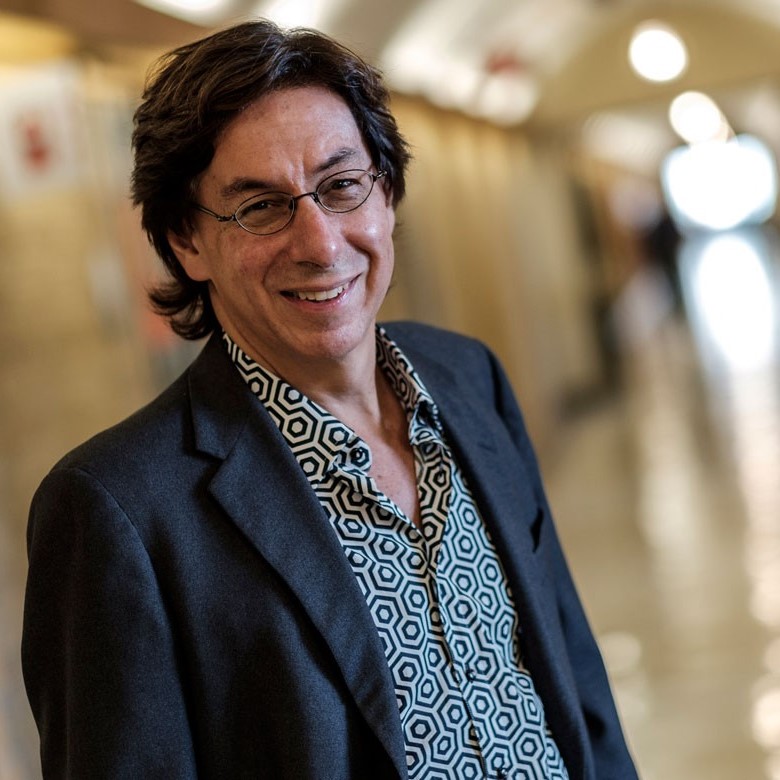
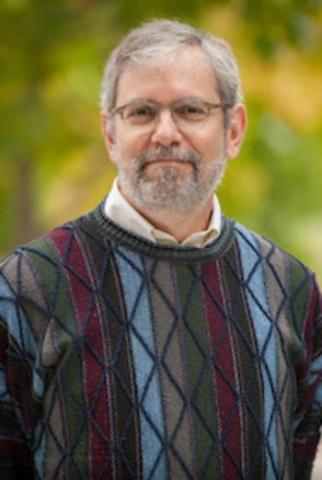
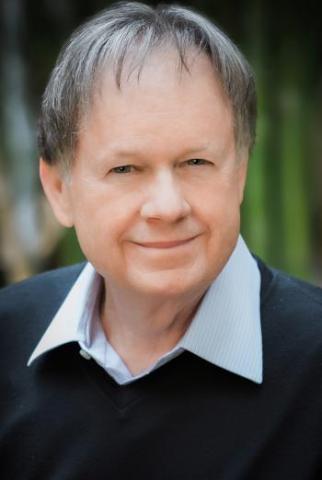
Shyamsunder Erramilli is a Professor and Chair of the Department of Physics at Boston University, with joint appointments in Biomedical Engineering and Materials Science & Engineering. He leads the FemtoSpec Laboratory, focusing on ultrafast spectroscopy and nanoscale imaging. His research integrates physics, engineering, and biology to study biomolecular systems, energy relaxation in gases, and plasmonic effects in nanotechnology. Education: PhD in Physics, University of Illinois M.Sc. Physics, Indian Institute of Technology Research Interests: Erramilli’s work centers on near-field infrared spectroscopy and ultrafast laser techniques . He pioneers label-free imaging of biological systems at sub-diffraction resolution, studies vibrational dynamics of anesthetic gases (e.g., N₂O), and develops plasmonic sensors for pathogen inactivation. His lab also explores energy transfer mechanisms in dense fluids and semiconductor-based mid-IR fibers for clinical diagnostics. Labs/Teams: FemtoSpec Laboratory (specializing in ultrafast infrared microscopy and nanoscale spectroscopy). Collaborates with Professors Ziegler, Rothschild, and Wang on interdisciplinary projects involving molecular dynamics simulations and nanoconfined systems.
Albert Stolow is a Professor of Chemistry and Physics at the University of Ottawa and holds the Canada Research Chair in Molecular Photonics. He is also an Adjunct Professor at Queen’s University and a Fellow of the Max-Planck-uOttawa Centre for Extreme and Quantum Photonics. His primary affiliations include the National Research Council Canada (NRC), where he leads the Molecular Photonics Group and maintains a collaborative research program, and the Joint Center for Extreme Photonics (JCEP). Stolow’s work bridges fundamental and applied science, emphasizing interdisciplinary collaboration across physics, chemistry, and biomedical engineering. Stolow studied Chemistry and Physics at Queen’s University before completing his PhD in Chemical Physics at the University of Toronto under Nobel Laureate John C. Polanyi. He pursued postdoctoral research at the University of California, Berkeley (1989–1992) with another Nobel Laureate, Yuan T. Lee. Since 1992, he has been at the NRC in Ottawa and assumed the Canada Research Chair in 2014. His research focuses on ultrafast laser technology to capture molecular dynamics, quantum control, and strong-field ionization techniques. He pioneered methods like stimulated Raman scattering microscopy and molecular frame quantum tomography, contributing to innovations in geophotonics, live-cell imaging, and responsive materials. His research interests include femtochemistry, coherent non-linear optical microscopy (CARS), and X-ray-induced structural dynamics. His team develops ultrashort laser pulses (infrared to X-rays) and advanced imaging tools such as the PImMS camera for multi-mass ion imaging. Stolow has received major awards including the Earle K. Plyler Prize and Polanyi Award. He sits on editorial boards of international journals and advises institutions globally, reflecting his leadership in scientific communication. His grants and collaborations span laser-materials processing, photoactivated drugs, and mineralogical imaging technologies. Key Roles: Canada Research Chair (Molecular Photonics), NRC Molecular Photonics Group Lead, Adjunct Professor (Queen’s University). Awards: Earle K. Plyler Prize, Polanyi Award, Queen Elizabeth II Diamond Jubilee Medal, Laidler Award, Barringer Award. Stolow’s labs and teams focus on ultrafast molecular imaging and quantum control. His work on label-free hyperspectral stimulated Raman microscopy enables real-time observation of live cells and mineral composition. Future directions include advancing femtosecond UV-VUV pump-probe spectroscopy and translating biophotonics techniques into clinical applications through microendoscopy.
Thanh Nhut Do is a Research Associate at the LaserLaB - Energy within the Faculty of Science at Vrije Universiteit Amsterdam . His work focuses on biophysics, energy transfer, and spectroscopy in photosynthetic systems and microbial rhodopsins.
Prof. Kjeld Eikema is a Full Professor at the Faculty of Science of Vrije Universiteit Amsterdam, affiliated with the Quantum Metrology & Laser Applications department and the LaserLaB - Physics of Light institute. He concurrently serves as a part-time group leader at ARCNL since 2014. His research focuses on ultrafast laser physics, high-harmonic generation, quantum metrology, and precision spectroscopy. Key contributions include studies on particle charge radii in quantum-degenerate helium, extreme ultraviolet vortex beams, and ptychographic imaging techniques. He has supervised 25 PhD theses and holds the Fresnel Prize 2003 for Fundamental Aspects from the European Physical Society. His work bridges fundamental physics with applied laser technologies, including innovations in laser pulse shaping and plasma-based light sources. Research interests span high-order harmonic generation, laser-matter interactions, and precision measurements . His group develops cutting-edge methods for extreme ultraviolet ptychography and coherent beam control. Recent advancements include structured illumination techniques and vortex beam applications. He teaches Ultrafast Laser Physics and contributes to interdisciplinary projects at the interface of quantum optics and metrology. Notable achievements include the first observation of the 1S-2S transition in helium ions and breakthroughs in Ramsey-comb spectroscopy. His lab, LaserLaB, is a hub for advanced laser systems and ultrafast dynamics research. Future work emphasizes quantum-degenerate gases and applications of extreme ultraviolet imaging in materials science.
Andrej Singer is an Assistant Professor in the Department of Materials Science and Engineering at Cornell Engineering , where he joined the faculty in 2017. As a Croll Sesquicentennial Fellow , his research focuses on operando X-ray characterization of nanomaterials for energy storage and quantum applications. Ph.D. Physics, University of Hamburg (2012) Postdoctoral Research, University of California San Diego Current Research Themes His group leverages synchrotron radiation and free-electron lasers to study mesoscale phenomena in materials during operation. Key areas include electrocatalyst durability , ion transport mechanisms , and defect engineering in solid-state electrolytes. Recent work published in Nature Physics and PNAS reveals nano-scale crystal defects that could enhance energy storage performance. NSF CAREER Award (2019) Sloan Research Fellowship (2023) Cornell Engineering Research & Teaching Excellence Awards Collaborations span Virginia Tech , Argonne National Laboratory , and POLAR-X projects. His lab trains graduate students in advanced X-ray techniques and complex oxide analysis .
Dr. Iman Ghamarian is an Assistant Professor in the School of Aerospace and Mechanical Engineering at The University of Oklahoma. His research focuses on advancing materials development through additive manufacturing, data analytics, and advanced characterization techniques. He leads the Accelerated Materials Development Lab (AMDL), which integrates experimental and computational approaches to optimize material properties. Dr. Ghamarian holds a Ph.D. in Materials Science from Iowa State University and a postdoctoral fellowship at the University of Michigan. Education: Postdoc, Materials Science & Engineering, University of Michigan (2021) Ph.D., Materials Science & Engineering, Iowa State University (2017) M.S., Materials Science & Engineering, University of North Texas (2012) B.S., Materials Science & Engineering, Sharif University of Technology (2010) His research explores microstructure-property relationships in metallic materials, emphasizing cost-efficient development aligned with Materials Genome Initiative goals. Key areas include real-time machine learning for microstructural analysis, corrosion-resistant alloy design, and energy-efficient manufacturing processes. Awards: SAMPE's First Place Outstanding Paper Award (2015) Featured Article on JOM Journal Cover (2014) Outstanding K-12 Volunteer Award (2013) Master/Doctoral Fellowship (2010) Lab and Collaborations: AMDL collaborates with journals like Metallurgical and Materials Transactions A and Acta Materialia . Dr. Ghamarian serves on editorial boards and is a member of professional societies such as TMS and MSA.
Matthew Roy is a Senior Lecturer in Mechanical and Aerospace Engineering at The University of Manchester. He joined in 2013 as a Research Associate in weld modeling, focusing on residual stress and metallurgy. In 2014, he became a Lecturer supporting the EPSRC Centre for Doctoral Training in Materials for Demanding Environments. His research emphasizes advanced manufacturing, materials processing, welding, and resource efficiency. He holds a PhD in Materials Engineering from the University of British Columbia, following degrees from Western University. Education: BESc in Integrated Engineering, Western University MESc in Mechanical and Materials Engineering, Western University PhD in Materials Engineering, University of British Columbia Research Interests: Dr. Roy investigates advanced manufacturing techniques (e.g., additive manufacturing, welding), materials processing, and their applications in aerospace, nuclear, and energy sectors. His work addresses material performance under extreme conditions, including thermal-mechanical processing and sustainability. Grants & Projects: DBO-IM: Design, build, and operation of fusion power plants in the industrial metaverse Regolith Excavation Device for lunar ISRU Development of Tailored Properties in Aluminium Automotive Body Sheet Labs & Equipment: He contributes to the Henry Royce Institute, overseeing equipment like the MEBW-60 Micro Electron Beam Welder, Robotic Welding Cell, and SLM 280 Laser Powder Bed Fusion System, enabling cutting-edge materials research and manufacturing innovation.
Professor Philip Withers is the Regius Professor of Materials and Professor of Materials Science at the University of Manchester. He leads research in advanced materials characterization, with a focus on residual stress analysis, 3D imaging, and structural integrity of aerospace and nuclear materials. His work integrates cutting-edge techniques like synchrotron X-ray tomography and neutron diffraction to study material behavior under extreme conditions. Withers earned his PhD in Metallurgy from Cambridge University and held a lectureship there before joining Manchester in 1998. He established the Henry Moseley X-ray Imaging Facility, recognized globally for its 3D imaging capabilities. His contributions span academic leadership roles, including directing the BP International Centre for Advanced Materials and serving as Chief Scientist at the Henry Royce Institute for Advanced Materials. Research interests include nanotomography, metal matrix composites, laser peening, friction welding, and stress-related transformations. His awards include the Royal Society Armourers & Brasiers’ Company Prize (2010), ASM Henry Marion Howe Medal (2020), and Fellowship of the Royal Society (2016). He has advised over 40 doctoral students and oversees collaborative projects like the Materials for Demanding Environments CDT. Key contributions include correlative tomography linking X-ray and electron imaging, and advancements in additive manufacturing and nuclear materials science. His work addresses global challenges in energy, aerospace, and sustainable materials through interdisciplinary collaborations.
Professor Michael Preuss is Deputy Director of the Materials Performance Centre and the Nuclear Rolls-Royce University Technology Centre at the University of Manchester. He holds a Professorship in Metallurgy and is a member of the ILL Scientific Council. His research focuses on high-temperature materials for nuclear and aeroengine applications, particularly zirconium alloys for nuclear fuel cladding, titanium alloys, and nickel-base superalloys. He uses advanced characterization tools like synchrotron radiation and neutron diffraction. Education: PhD in Physical Metallurgy from Technical University Hamburg-Harburg (Germany), 1999–present at University of Manchester. Research interests include microstructure-mechanical property relationships, corrosion mechanisms, and irradiation effects. He leads the MPC and collaborates with institutions like the European Synchrotron Radiation Facility. Scientific Awards: EPSRC Leadership Fellowship (2010). Projects include the Materials Performance Centre, low-tensile-properties studies in Ti alloys, and hydrogen diffusion in zirconium alloys. Supervises over 60 students across CDTs like M4DE and NEXTGENNuclear. Labs/Teams: Materials Performance Centre, Dalton Nuclear Institute. Key collaborations involve ISIS neutron source and European facilities. Research emphasizes physically based understanding of material behavior through in-situ 3D characterization.
Dr. Ibrahim Dar is a Researcher at the University of Cambridge's Cavendish Laboratory, affiliated with the Ray Dolby Centre Energy Materials. His work focuses on advanced energy materials, particularly perovskite-based solar cells, nanotechnology, and quantum materials. Key research themes include photovoltaic applications, excitonic phenomena in nanomaterials, and defect mitigation strategies for high-efficiency devices. His research interests span interdisciplinary areas such as condensed matter physics, applied quantum physics, and soft matter systems. He has contributed to breakthroughs in perovskite solar cell stability, heterostructure design, and novel synthesis techniques for optoelectronic materials. Dr. Dar leads efforts in developing open-access databases for perovskite solar cells adhering to FAIR data principles, advancing materials informatics. Recent publications highlight innovations in high-efficiency solar cell architectures, lattice-matched interfaces, and nanocrystal-based light-emitting devices. His work emphasizes scalability and cost-effectiveness while addressing challenges in operational stability and environmental impact. Collaborations in quantum information and soft matter physics further expand his interdisciplinary research portfolio. Dr. Dar’s lab focuses on translating fundamental discoveries into practical applications, with a focus on energy materials and sustainable technologies. His team employs advanced characterization techniques, computational modeling, and experimental material synthesis to drive photovoltaic technology forward.
Dr. Keita Nomoto is an ARC DECRA Research Fellow at the University of Sydney's School of Aerospace, Mechanical and Mechatronic Engineering, working within the Australian Centre for Microscopy and Microanalysis (ACMM). His research focuses on advanced microscopy techniques to characterize microstructures of materials at atomic scales, including silicon nanocrystals, bulk metallic glasses, and copper-based alloys. He holds a PhD from UNSW (2017), a master's from Kyushu University (Japan), and a bachelor's from University of Miyazaki (Japan). Prior to academia, he worked at SHARP Corporation (2002-2007). Research interests include structure-property relationships in materials, with emphasis on sustainable applications. Current projects explore high-performance copper alloys via additive manufacturing and mechanical behaviors of bulk metallic glasses. Nomoto has received awards such as the 2022 DECRA and 2014 Commonwealth Scholarship. His work spans 100+ peer-reviewed articles in journals like Advanced Materials , Acta Materialia , and Nature Communications . Key grants include a 2023 Linkage Project on copper alloys and a 2021 DECRA project on additive manufacturing. He advises students like Kirk Chen on novel materials development. Labs/affiliations include the Sydney Nano Institute and ACMM. Research highlights include discovering medium-range order effects on bulk metallic glass hardness and developing Mg alloys with unprecedented strength-to-weight ratios.
Dr. Levi Tegg is a Researcher at the University of Sydney, affiliated with the Australian Centre for Microscopy and Microanalysis and the Net Zero Institute. His academic background includes a BSc (Hons) and PhD from the University of Newcastle. He specializes in advanced microscopy techniques to study material microstructures, particularly ferroelectric materials and nanoporous metals. His research focuses on linking microstructural properties to real-world applications such as energy storage and photovoltaics. Current projects include domain structure analysis in ferroelectrics, cryogenic atom probe tomography workflows, and hydrogen-embrittlement in alloys. Education: BSc (Hons) in Materials Science and Physics from the University of Newcastle (2020 PhD). Research interests span materials characterization via electron microscopy, powder diffraction, and plasmonics. He collaborates with institutions like Sydney Nano and the Australian Microscopy and Microanalysis Society (AMMS). Key projects include studying relaxor ferroelectrics' domain structures, nanoporous metals for energy applications, and optimizing atom probe tomography techniques. He advises PhD student Nathan Brichta on relaxor ferroelectric crystal characterization. Affiliations: Member of Sydney Nano Institute, Net Zero Initiative, AMMS, and Australian Nanotechnology Network. His work bridges fundamental material science with applied technologies, emphasizing interdisciplinary collaboration.
Philip Bucksbaum is the Marguerite Blake Wilbur Professor of Natural Science at Stanford University with joint appointments in Photon Science, Applied Physics, and Physics. He directs the Stanford PULSE Institute, pioneering research using X-ray free-electron lasers to study femtosecond-scale molecular dynamics. His research spans attosecond electron imaging, strong-field laser-matter interactions, and molecular movie techniques capturing chemical reactions. Recent work includes breakthroughs in measuring attosecond delays in molecular ionization and probing electronic coherence. Bucksbaum has received the Norman F. Ramsey Prize and serves on multiple national science advisory boards. He previously served as President of the American Physical Society and Optical Society.
Keith Hodgson is the David Mulvane Ehrsam and Edward Curtis Franklin Professor of Chemistry and Professor of Photon Science at SLAC National Accelerator Laboratory, Stanford University, with a joint appointment as Adjunct Professor at the University of Michigan. His pioneering research uses synchrotron X-radiation to study metalloprotein structures and functions critical to Earth's biosphere. Research Focus: Hodgson's laboratory investigates the relationship between molecular structure and biological function using X-ray absorption spectroscopy (XAS), X-ray emission spectroscopy (XES), and diffraction techniques. Key research areas include enzymatic mechanisms of nitrogenase (N₂→NH₃) and methane monooxygenase (CH₄→CH₃OH), cytochrome oxidase function, and iron-sulfur cluster dynamics. The team is developing next-generation X-ray free electron laser (XFEL) applications for ultrafast imaging of non-crystalline biomolecules. Administrative Leadership: Director, Stanford Synchrotron Radiation Lightsource (SSRL): 1998–2005 Deputy Director, SLAC National Accelerator Laboratory: 2005–2007 Associate Laboratory Director for Photon Science: 2007–2011 Education: PhD in Chemistry, University of California, Berkeley (1972) BS in Chemistry, University of Virginia (1969) NATO Postdoctoral Fellow, ETH Zurich (1973)
Benjamin Ofori Okai is an Assistant Professor of Photon Science at SLAC National Accelerator Laboratory, operated by Stanford University. His research focuses on ultrafast dynamics, terahertz spectroscopy, and materials under extreme conditions. He holds a PhD in Physical Chemistry from MIT (2016), an S.M. from MIT (2013), and a B.Sc. from Yale University (2009). Research Interests: Okai explores phenomena such as warm dense matter, laser-matter interactions, and structural dynamics using advanced techniques like X-ray diffraction and ultrafast electron diffraction. His work bridges condensed matter physics and applied photon science, with applications in energy materials and planetary science. Key Contributions: Recent studies include measuring phonon hardening in gold, nanodiamond formation under shock compression, and giant terahertz birefringence in WTe2. He has pioneered single-shot THz spectroscopy methods for conductivity measurements in extreme states of matter. Awards: Honors include the Panofsky Fellowship (2021), NSF Graduate Fellowship (2011), and Howard Douglass Moore Prize (2009). Advising: Mentors postdoctoral researcher Eric Sung. Engaged in experimental setups at SLAC and the Linac Coherent Light Source (LCLS). Labs/Teams: Principal Investigator at Stanford PULSE Institute; collaborates with groups at SLAC, MIT, and European XFEL.