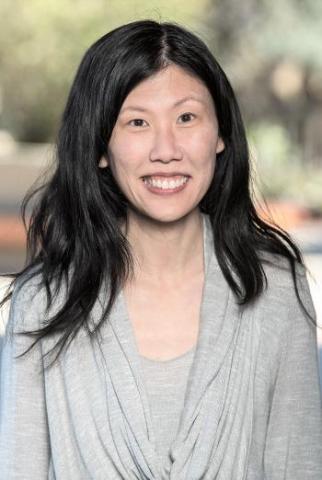
Wendy Mao is a Professor of Earth and Planetary Sciences, Photon Science, and (by courtesy) Geophysics at Stanford University, affiliated with SLAC National Accelerator Laboratory. Her research focuses on materials under extreme conditions, particularly high pressure, to understand planetary interiors, energy materials, and novel phases. Key interests include phase transitions in minerals, silicate melts, and light-element alloys, with applications in planetary core modeling and hydrogen storage. Education: Ph.D. in Geophysical Sciences from the University of Chicago (2005). Teaching includes Earth's interior dynamics, mineralogy, and a freshman seminar on diamonds. Research emphasizes high-pressure experimentation using diamond anvil cells and synchrotron X-ray techniques. Recent work explores metallic hydrogen, iron spin states in super-Earths, and amorphization in halide perovskites. Collaborations leverage machine learning and advanced imaging for material characterization. Her lab develops methods to stabilize metastable phases and study ultrafast structural responses under shock compression. The group also investigates defects in quantum sensors and novel synthesis pathways for energy materials.
Thorsten Stumpf is a Professor and Director of the Institute of Resource Ecology at Helmholtz-Zentrum Dresden-Rossendorf (HZDR), with a joint professorship in Radiochemistry/Radioecology at Technische Universität Dresden. His work bridges fundamental chemistry and environmental safety in nuclear waste management. Research Interests: His research focuses on the molecular-level understanding of actinide and radionuclide behavior in the environment, including speciation, migration, and interaction with minerals, organic matter, and microorganisms. Key areas include radiochemistry, geochemistry, environmental chemistry, and nuclear waste disposal science. The recent publications reflect a strong trend in using advanced spectroscopic and synchrotron techniques (e.g., TRLFS, EXAFS, XRD) to study actinide speciation and redox behavior. Themes include bioassociation of radionuclides with plants and fungi, formation of actinide nanoparticles, and molecular interactions at mineral-water interfaces—critical for deep geological repository safety assessments. Scientific Awards: Fritz-Straßmann-Preis of the GDCh 'Fachgruppe Nuklearchemie' (2013) Advising and Grants: He has led significant research initiatives, including the Helmholtz-University Young Investigator Group and the Virtual Institute 'Advanced Solid – Aqueous Radiogeochemistry'. While specific students are not listed, his extensive publication record with multiple co-authors suggests active mentoring. His work is supported by Helmholtz Association funding and strategic collaborations. Labs and Teams: He leads the Institute of Resource Ecology at HZDR, which houses advanced laboratories for radiochemistry, spectroscopy, and environmental simulation. The institute is part of a larger network including CASUS and the Dresden High Magnetic Field Laboratory, enabling interdisciplinary research.
Stephen W. Hoag is a Professor in the Department of Pharmaceutical Sciences at the University of Maryland School of Pharmacy. His research spans pharmaceutical formulation, process development, and analytical technologies, with a strong emphasis on solid oral dosage forms and controlled release systems. University: University of Maryland School: School of Pharmacy Department: Department of Pharmaceutical Sciences Email: shoag@umaryland.edu Phone: (410) 706-6865 Fax: (410) 706-0346 Address: 20 North Pine Street, Baltimore, MD 21201 Education: B.S. in Biochemistry, University of Wisconsin–Madison, 1982 Ph.D. in Pharmaceutics, University of Minnesota, Twin Cities, 1990 Dr. Hoag's research is centered on two primary areas: (1) the development of systematic methods for formulating immediate and controlled release tablets, utilizing instrumented tablet presses, shear cell analysis, and process analytical technology (PAT) such as Near-Infrared (NIR) and Raman spectroscopy; and (2) the application of mathematical models to understand mass transport in hydrogels, including calcium alginate and silk-elastinlike protein polymers. His work on folic acid supplementation and prenatal vitamins has important public health implications due to the role of folic acid in preventing neural tube defects. Although no recent publications are listed in the provided text, his research output is evident through his co-editorship of the widely used reference work Pharmaceutical Dosage Forms: Tablets (3rd edition, 2008), and his leadership in developing best practices for PAT in pharmaceutical manufacturing. Scientific Awards: No specific awards mentioned in the provided text. Dr. Hoag has actively mentored a large number of graduate students, postdoctoral fellows, and visiting scientists, contributing significantly to pharmaceutical education and workforce development. His laboratory is equipped with state-of-the-art instrumentation for preformulation, formulation, tableting, coating, dissolution testing, and analytical characterization. The lab supports both non-clinical and GMP-level manufacturing research, enabling translational development of dosage forms. He also leads a hands-on short course on tablets and capsules, further extending his educational impact. Research Facilities: Thermal analysis (DSC, MDSC) Solubility and viscosity measurement Moisture analysis (Karl Fisher, LOD) Mechanical testing (Instron) Flow characterization (shear cell, angle of repose) Particle size analysis (laser diffraction, SEM, sieve) Tablet presses (Stoke’s B2, Manesty Beta, fully instrumented) Coating systems (fluid bed, pan coaters) UV/Vis, HPLC, GC, MS instrumentation Environmental stability chambers Granulation, milling, blending equipment Dissolution testing with autosampler
Robert Thorne is a Professor in the Department of Physics at Cornell University's College of Arts and Sciences. His research spans biological physics, experimental condensed matter physics, and physics education innovations. He holds a B.Sc. from the University of Manitoba (1981) and a Ph.D. from the University of Illinois at Urbana (1987). Stephen H. Weiss Presidential Fellow (2011-present) Founder and CTO of MiTeGen LLC (2004-present) Research Interests: Thorne's work focuses on: Single-particle cryo-EM and time-resolved molecular movies Advanced X-ray crystallography and SAXS techniques Water/ice physics in biological and materials contexts X-ray fluorescence imaging for archaeology Physics education curriculum reform and outreach programs Publication Trends: His 15 most recent articles (2004-2021) demonstrate expertise in: Structural biology methodology Radiation damage mitigation Nanoconfined material behavior Cultural heritage imaging Physics education innovation Crystallography instrumentation Awards: Presidential Young Investigator (1988-1993) Alfred P. Sloan Fellow (1988-1990) Stephen H. Weiss Presidential Fellow (2011-present) Advising & Grants: Active mentor of M.S. student Myeonghak Lee and undergraduate Andrew DiFabbio . His research has received grants supporting student engagement and CHESS synchrotron upgrades.
Prof. David J. Norris is a Full Professor at ETH Zurich's Department of Mechanical and Process Engineering and Director of the Optical Materials Engineering Laboratory. He holds a B.S. in Chemistry from the University of Chicago (1990) and a Ph.D. in Physical Chemistry from MIT (1995). His research focuses on engineering materials to achieve novel optical properties, particularly semiconductor nanocrystals (quantum dots) and plasmonic films. Notable awards include the Max Rössler Prize (2015) and ERC Advanced Grant (2014-2019). Research interests span nanoscale optical phenomena, including exciton dynamics in colloidal systems and plasmonic nanofocusing. He has pioneered studies on magic-sized semiconductor nanocrystals and developed methods for high-throughput characterization of atomically thin semiconductors. His work bridges nanotechnology and photonics, addressing applications in lasers, sensors, and energy systems. Awards also include the Credit Suisse Award for Best Teaching (2015) and fellowships from the American Physical Society and AAAS. He serves on editorial boards for ACS Photonics and Nano Letters , reflecting his leadership in nanophotonics and materials science. Grants include an ERC Advanced Grant supporting his exploration of optical materials. His lab’s innovations include template-stripping techniques for plasmonic devices and plasmon-enhanced catalysis. Past roles include Director of Graduate Studies at the University of Minnesota and an Alexander von Humboldt Fellowship at TU Munich (2006-2007).
Vinod Kumarappan is a Professor in the Department of Physics at Kansas State University specializing in laser-induced molecular alignment/orientation for ultrafast molecular-frame studies. His group combines experimental gas-phase measurements with computational modeling of rotational dynamics. Education: Ph.D. Physics, Tata Institute of Fundamental Research, Mumbai (2002) M.S. Physics, Indian Institute of Technology Madras (1996) B.S. Physics, University of Calicut (1994) Research Focus: Atomic, Molecular and Optical Physics utilizing femtosecond lasers to restrict molecular orientations. His work enables orientation-specific measurements of strong-field ionization, fragmentation, and harmonic generation. Current projects include molecular-frame photoelectron spectroscopy and ultrafast electron diffraction. Publication Trends: Recent work (2017-2021) examines strong-field interactions in O2, CO2, and methanol using rotational wave packets, bridging experimental ultrafast physics with computational quantum dynamics simulations for asymmetric molecules. Grants & Advising: Funded by the U.S. Department of Energy. Advises PhD students including Tomthin Wangjam. Research Group: Operates experimental laser facilities and develops parallel computational codes (OpenMP) for 3D rotational dynamics of asymmetric tops.
Matthew R. Edwards is an Assistant Professor of Mechanical Engineering at Stanford University, affiliated with the School of Engineering. His research focuses on high-power lasers and plasma physics, developing optical diagnostics for fluids and plasmas, and exploring light-matter interactions. He holds a PhD and prior degrees from Princeton University in Mechanical and Aerospace Engineering, followed by a Lawrence Fellowship at Lawrence Livermore National Laboratory. Education : PhD in Mechanical and Aerospace Engineering, Princeton University (2019) MA in Mechanical and Aerospace Engineering, Princeton University (2015) BSE in Mechanical and Aerospace Engineering, Princeton University (2012) Research Interests : Edwards' work bridges mechanical engineering and plasma physics, emphasizing ultrafast laser-plasma interactions, plasma-based optical components, and applications in energy science. His lab, the SAPPHIRE Laser Laboratory, explores femtosecond laser technologies for creating novel optical elements (e.g., plasma gratings, holographic lenses) and advancing laser-driven particle acceleration, fusion research, and diagnostic tools. Key areas include: Design of plasma-based optical components for high-power laser control Simulation of laser-matter interactions at relativistic intensities Development of compact light and particle sources Research Trends : His recent articles (2024–2025) highlight advancements in plasma gratings, relativistic birefringence, and laser wakefield acceleration. Notable contributions include ionization-based compression of ultrafast laser pulses and polarization control in underdense plasmas. Awards/Grants : No awards explicitly listed, but his Lawrence Fellowship indicates prior recognition. His work aligns with grants in plasma physics and laser technology. Labs/Teams : He leads the SAPPHIRE Laser Laboratory , collaborating with the PULSE Institute and National Ignition Facility (NIF) on plasma optics and high-energy laser applications.
Joel Villatoro is an Ikerbasque Research Professor at the Faculty of Engineering, University of the Basque Country (UPV/EHU), specializing in applied photonics and optical fiber sensor technology. He holds M.Sc. and Ph.D. degrees in Optics from the National Institute for Astrophysics, Optics, and Electronics (Mexico, 1995 and 1999). His research focuses on interferometric sensors, biomedical applications, and advanced optical fiber technologies, with notable contributions to multicore and photonic-crystal fiber sensors. He has held positions at institutions such as ICFO (Spain), Aston Institute (UK), and Case Western Reserve University (USA). Education: M.Sc. in Optics, National Institute for Astrophysics, Optics, and Electronics, Mexico (1995) Ph.D. in Optics, National Institute for Astrophysics, Optics, and Electronics, Mexico (1999) Research Interests: Interferometric sensors, real-world environmental monitoring, micro/nano-biosensors, and fiber-optic sensor integration into industrial systems. His work emphasizes practical applications in aerospace, healthcare, and environmental sectors. Key Contributions: Over 130 publications, 6 patents, and 2,500+ citations. His research bridges fundamental photonics with industrial applications, including sensor fabrication, multiparameter sensing, and additive manufacturing of embedded sensors. Labs/Teams: Leads the Applied Photonics Group at UPV/EHU, focusing on prototyping and real-world sensor deployment.
Prof. Valerio Pruneri is an ICREA Professor and Group Leader at the Institute of Photonic Sciences (ICFO), holding the Corning Inc. Chair in Optoelectronics. He leads a research group focused on quantum optics, nanophotonics, and biomedical imaging. His academic background includes a PhD in Laser Physics from the University of Southampton (UK). Research interests span quantum communication technologies, plasmonic sensors, and nanomaterials for optical applications. Recent advancements include work on quantum key distribution systems, graphene-based devices, and super-sensitive phase imaging techniques. Articles highlight innovations in quantum-enhanced imaging, integrated photonic circuits, and hyperbolic metamaterials. His team collaborates on EU projects like NANO-GLASS ITN and FLIGHT, with a strong emphasis on translational research. Over 50 students and researchers are advised, many funded by national and international grants (e.g., Agencia Estatal de Investigación, CELLEX Foundation). Key lab facilities include state-of-the-art cleanrooms and optical characterization tools.
Professor Michael De Volder is a Fellow and College Lecturer at St John's College, University of Cambridge, holding the position of Professor of Advanced Materials Engineering in the Department of Engineering. His research focuses on energy storage solutions, nanotechnology, and scalable manufacturing methods for sustainable battery technologies. Belgian Royal Academy Laureate Co-founder of Echion Technologies (niobium-based anode materials) Expert in Li-ion/Zn-ion battery innovation Research activities center on improving battery sustainability through novel synthesis techniques, extending battery lifetime via structural optimization, and developing high-energy-density materials. His work spans nanoscale engineering, electrode design, and fundamental electrochemical investigations. Scientific publications from 2022-2025 demonstrate expertise in: Li-ion/Zn-ion battery systems, nanotube integration, electrode manufacturing, and degradation analysis. Recent work explores mechanochromic displays, dual-gradient electrodes, and aqueous-organic electrolyte formulations. Belgian Royal Academy Laureate Co-founder of battery technology startup Echion Technologies
Leijun Li, PhD, P.Eng., is a Professor in the Department of Chemical and Materials Engineering at the University of Alberta, where he also serves as Chair. With a career spanning institutions including Rensselaer Polytechnic Institute, University of Northern Iowa, and Utah State University, he specializes in physical metallurgy , welding metallurgy , and additive manufacturing . His research focuses on microstructure characterization, mechanical properties, and modeling of non-equilibrium phase transformations during welding and AM processes. Current affiliations: University of Alberta, American Welding Society, ASM International Research themes: Additive manufacturing of alloys, Corrosion science, Pipeline metallurgy, Phase transformations, Welding robotics He has received multiple AWS Hobart Awards (4 times) and Savage Awards (2 times) for his work on pipeline welding and metallurgy. His group has published extensively on topics including delta-ferrite retention in Grade 91 steel, inverse bainite transformations , and welding defect analysis . Recent projects include NSERC Alliance Missions Grant for rare earth mineral recovery and Alberta Innovates Ecosystem Program for advanced manufacturing. Key collaborators: Dr. Tom Lienert, Dr. Xiaoying Fang, Dr. P-Q Xu Labs: Rooms 2-158/3-133 (CME Building), Office 12th Floor DICE Building
Edgar J.D. Vredenbregt is an Associate Professor in the Department of Applied Physics at Eindhoven University of Technology (TU/e). His research focuses on quantum technologies, including ultracold atom trapping for quantum computing and novel charged particle sources. He leads projects on Rydberg atom-based quantum computing and ultracold ion beams for nanoscale applications. Education: MSc in Applied Physics (TU/e, 1986), PhD in Atomic and Molecular Physics (TU/e, 1990). Postdoctoral research at SUNY Stony Brook (1991-1993) and NIST (1998). He holds a KNAW fellowship (1995-2000) and has been a project member in KAT-1: Rydberg Atom Quantum Computing and Simulation since 2020. Research interests include ultracold electrons/ions for high-brightness applications, Rydberg atom arrays for quantum gates, and laser-cooled ion beams for nanotechnology. He has developed ultracold electron sources for ultrafast diffraction and focused-ion beam tools for 1 nm-scale silicon wafer modification. Publications span quantum computing, atomic physics, and nanotechnology. He teaches courses like Hybrid Quantum Computing and Physics of Plasma and Radiation. Supervised 69 student works but no names are listed in the provided texts.
Dr. Stephen Brown is an Associate Professor in the Department of Human Kinetics at the University of Guelph. His research focuses on lumbar spine mechanics, muscle physiology, and injury rehabilitation. He holds a BHK and MHK from the University of Windsor, a PhD from the University of Waterloo, and completed postdoctoral training at the University of California San Diego. Education: BHK, MHK - University of Windsor PhD - University of Waterloo Post-doctoral Fellowship - University of California San Diego His research integrates anatomical studies, mechanical testing, and human participant analysis to address four core themes: lumbar spine function, injury mechanisms, adaptation responses, and rehabilitation strategies. Current work combines novel techniques like laser diffraction with biomechanical modeling to explore muscle-tissue interactions. His lab employs three main methodologies: cadaveric tissue analysis, mechanical testing of muscles/spine tissues, and human movement studies using EMG and kinematic modeling. Recent publications (2016–2018) highlight investigations into spine kinematics, kinesio taping effects, muscle fatigue impacts, and postural control in athletic populations. Advising & Grants: Advises 5 graduate students (3 PhD, 2 MSc) Teaching: HK*4600 Applied Human Kinetics II, HK*4240 Occupational Biomechanics Labs are located in ANNU 358/362. Research aims to reduce low-back pain incidence through mechanistic insights into spine-muscle interactions.
Vera Popovich is a researcher in the Department of Mechanical Engineering at Delft University of Technology and a member of Team Vera Popovich. Her work focuses on advanced manufacturing techniques and material behavior analysis. Education: MSc in Engineering (implied PhD) Her research spans additive manufacturing, microstructure engineering, and material degradation mechanisms: Specializes in additive manufacturing processes and their impact on material microstructure. Investigates hydrogen embrittlement in high-strength steels. Pioneers texture control for corrosion resistance in NiTi alloys. Studies fatigue crack propagation in bi-material systems. Recent publications highlight computational modeling of grain structures, interface mechanics in wire-arc additive manufacturing, and advanced characterization techniques for material degradation. She contributes to editorial activities as an editor for Applied Sciences . Scientific Awards: 2012 Poster Prize: X-ray diffraction stress analysis in silicon solar cells She collaborates on projects like the Rhizome initiative (2021-2022) for off-Earth habitat robotics and participates in public engagement, including a 2023 media feature on Delft's 3D-printing lab.
O.J. Luiten is Full Professor in the Coherence and Quantum Technology group at Eindhoven University of Technology. His research focuses on fundamental quantum physics, materials science, nanotechnology, and life sciences, with emphasis on improving temporal resolution in electron microscopy and developing ultracold electron sources. He leads the Coherence and Quantum Technology group and is a core member of ICMS. His research interests center on quantum materials, ultrafast electron microscopy, and coherent light-electron interactions. Key areas include: Ultracold plasma applications for high-coherence electron sources Coherent manipulation of electron beams using laser light X-ray generation via electron beams His publications demonstrate a consistent focus on advancing charged particle beam technologies and light-matter interactions, with recent work emphasizing compact X-ray sources, ultrafast microscopy, and quantum electron manipulation. Scientific Awards: Smart*Light: Een tafelmodel synchrotron (2016) He leads multiple research projects including 'ICS-SAXS: Hard X-ray metrology' and 'Smart*Light 2.0', collaborating with institutions like ASML. Manages labs for ultrafast electron microscopy and quantum beam technology.