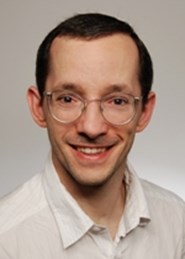
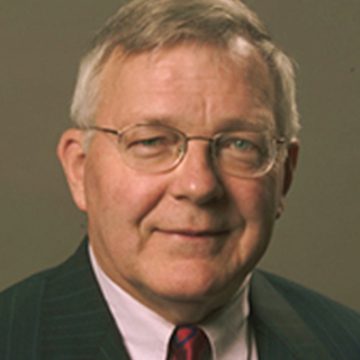
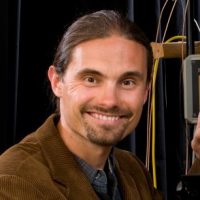
László Veisz is a Professor at the Department of Physics and Head of the RElativistic Attosecond physics Laboratory (REAL) at Umeå University. His research focuses on ultrafast phenomena in high-intensity laser-plasma interactions, attosecond science, and relativistic nanophotonics. Key projects include nonlinear attosecond spectroscopy (2021–2024) and relativistic nanophotonics (2020–2025). Research areas encompass relativistic plasma dynamics, ultrafast laser systems, and advanced pulse characterization techniques. His group develops compact laser-driven accelerators and investigates attosecond light-pulse generation from plasma surfaces. Publications highlight breakthroughs in femtosecond X-ray generation, spatio-temporal analysis of relativistic plasmas, and dual-energy electron beam creation. Collaborations include work with Nobel laureates and contributions to the 2023 Nobel Prize-winning physics research. REAL lab innovations include novel methods for pulse compression, plasma lensing, and nanoscale acceleration. Ongoing work focuses on optimizing optical parametric amplifiers and exploring relativistic effects in nanoplasmonics.
Daniele Allegri is a Professor of 'Programmable and Integrated Microelectronic Systems' at the University of Applied Sciences and Arts of Southern Switzerland (SUPSI), leading the Department of Innovative Technologies. He serves as Director of the Institute for Systems and Applied Electronics (ISEA) since 2023 and previously held roles including Head of the 'Digital Electronics, Microelectronics, and Bioelectronics' research area (since 2019). His professional career spans engineering roles at Mandozzi Elettronica SA (1998–2014) and academic research at SUPSI (2014–present). Education: Ing.-Dipl. in Electronic Engineering from ETH Zurich (1998), PhD in Microelectronics from the University of Pavia (2017). Research Focus: Development of integrated circuits and embedded systems for biomedical applications, mixed analog-digital circuits, FPGA systems, signal processing, imaging technologies, and Edge AI. His work addresses clinical needs like real-time hydration monitoring for dialysis patients and advanced solar telescope instrumentation. Key Projects: Probing semiconductor rad-hardness via ions/lasers Next-gen tunnel safety sensors High-precision 3D imaging systems Cardio Pulmonary Rescue Support System Wireless pulmonary edema sensing networks Publications emphasize biomedical instrumentation and astrophysical engineering. No scientific awards explicitly listed in text, but contributions suggest strong peer recognition. Advising activity details not provided in source text. Current affiliations include leadership roles at SUPSI's ISEA and teaching responsibilities in multiple electronics-related courses.
R. Berger is a Professor at the Department of Chemistry , Philipps-University Marburg , leading the Theoretical Chemistry research group (AG Berger). He has been actively involved in teaching and research since at least 1998, with a focus on theoretical chemistry, computational spectroscopy, and fundamental symmetry tests. Active in symposium organization (e.g., Symmetries in Science Symposium XX, 2025) Hosts doctoral candidates in his group (Mihnea Mlak-Mărginean, Namrata Gohain, Kjell Janke) Develops theoretical frameworks for parity violation, relativistic effects, and chiral systems His research spans quantum chemistry for fundamental physics experiments, including parity-violating energy differences , laser cooling of molecules, and electroweak effects in molecular systems. Recent publications highlight studies on radioactive molecules (RaF, AcF) and highly charged ions for precision tests of fundamental symmetries. Key scientific awards include the 2008 Hellmann Award and the 2012 Outstanding Young German Investigator Award Lectureship . He collaborates internationally with institutions like CERN , ETH Zurich , and University of Mainz .
Dr. M. Carmen Alamar is a Senior Lecturer in Postharvest Biology at Cranfield University's Centre for Soil, Agrifood and Biosciences. She holds a PhD in Food Technology from Polytechnic University of Valencia (2007) and has maintained continuous academic-industrial collaborations with USDA, Unilever, and Zespri. Key research areas: Postharvest Biology, Food Quality Assessment, Food Safety, Non-Destructive Technologies Research themes: Postharvest technology implementation Plant physiology and biochemistry under storage Chemometric analysis of quality markers Dormancy gene identification Transcriptomic understanding of plant senescence Recent publications demonstrate significant contributions to: potato dormancy regulation, mango ripening prediction models, citrus postharvest biomarkers, metallurgical site remediation, and food loss reduction strategies. Supervises MSc and PhD students in sustainable food systems. Scientific awards: Postgraduate Fellowship (Rank 1st) by Spanish Research and Food Technology Department (2009)
Nathan I. Hammer is a Professor of Chemistry and Biochemistry at the University of Mississippi, holding the Margaret McLean Coulter Professorship. He specializes in laser-based molecular spectroscopy, focusing on non-covalent interactions and material properties, with over 100 publications and $7M+ in NSF grants. His research bridges experimental and theoretical approaches to study molecular systems. Education: BS in Chemistry (University of Tennessee, 1998), PhD in Physical Chemistry & Chemical Physics (University of Tennessee, 2003) His work spans ultrafast spectroscopy, Raman spectroscopy, and computational chemistry, with notable contributions to quantum dot nanostructures, chiroptical responses, and organic light emitting diode (OLED) defects. He developed an award-winning summer research program for undergraduates and has mentored over 100 students. Science magazine breakthrough (2004) NSF CAREER Award (2010) NSF grant recipient (7 grants, >$7M total) Hammer teaches general chemistry, physical chemistry courses, and laboratories, while coordinating the ACS-certified B.S. Chemistry degree program. He chairs the Ole Miss Local Section of the American Chemical Society and oversees annual student awards banquets.
Johannes Hübl is a Full Professor at the University of Natural Resources and Life Sciences, Vienna (BOKU), leading the Institute for Alpine Natural Hazards within the Department of Landscape, Water and Infrastructure. His research focuses on alpine mass movement dynamics—particularly debris flows, rockfalls, and floods—with emphasis on risk management, mitigation engineering, and climate change adaptation. He maintains an active project portfolio including EU-funded initiatives and Austrian federal collaborations. His primary research interests include the physical processes of debris flows (surge dynamics, run-up behavior, sediment transport), rockfall hazard assessment, flood protection engineering, and climate change impacts on alpine hazards. Recent work pioneers advanced monitoring techniques like pulse-Doppler radar and LiDAR for real-time measurement of flow velocity and height, directly informing protective dam design and early warning systems. He also develops GIS-integrated simulation models for granular flows and risk assessment. Hübl's publications trend toward high-resolution field studies of debris flow dynamics, with significant focus on spatial impact distribution, statistical discharge modeling, and wildfire-hazard linkages. This reflects growing priorities in climate-resilient infrastructure and quantifiable risk assessment methodologies across European alpine regions. Scientific awards: No awards, fellowships, or medals are documented in the provided materials. Advising and grants: Professor Hübl has supervised numerous university theses as indicated by his profile. His grant leadership spans over 30 projects since 1994, including: EU projects: Nature-Based Solutions for Climate-Resilient Infrastructure (2024-2028), THARMIT (2000-2003) Austrian federal funding: 20+ projects with BMLFUW/BMF (e.g., rockfall detection, sediment management) International commissions: Bhutan flood mitigation (2000), Melamchi River reviews (2023) Industry collaborations: Check dam failure analysis, Cougar Creek optimization Labs and teams: He directs field monitoring operations including the Illgraben (Switzerland) and Gadria Creek (Italy) test sites. His institute employs physical modeling (hydraulic experiments, laser scanning) and develops real-time warning systems for alpine catchments, working closely with Austrian watershed management agencies and European consortia on event documentation and structural countermeasures.
Ulrich Lorenz is a Scientist at the Laboratory of Molecular Nanodynamics (LND) within the Institute of Chemical Sciences and Engineering (ISIC) at École polytechnique fédérale de Lausanne (EPFL). He also holds a position at the Swiss Center for Gerontology and Geriatrics (SCGC-ENS). His research focuses on developing advanced cryo-electron microscopy techniques to study the fundamental properties of water and protein dynamics. Lorenz's research interests center on time-resolved cryo-electron microscopy , where he has pioneered methods using laser flash melting to study water in the so-called "no man's land" temperature range. His work addresses critical challenges in cryo-EM including preferred orientation of proteins, vitrification processes, and the fundamental thermodynamics of supercooled water. He has developed techniques using shaped microsecond laser pulses to precisely control heating and cooling rates, enabling unprecedented observations of water's structural transitions. Analysis of his recent publications reveals a strong focus on measuring critical cooling/heating rates for water vitrification overcoming technical limitations in cryo-EM sample preparation studying protein dynamics at microsecond timescales investigating isotopic effects in water structure His work bridges physics, chemistry, and structural biology, with applications spanning from fundamental water science to practical improvements in cryo-EM methodology. Lorenz actively supervises PhD students and has mentored several researchers to completion, including Krüger Constantin Richard, Mowry Nathan Junior, and Harder Oliver Florian. His research is supported by funding agencies including the Swiss National Science Foundation (SNSF) and Horizon 2020. At his Laboratory of Molecular Nanodynamics, he leads a team developing innovative approaches to capture transient molecular states using time-resolved electron microscopy techniques.
Wolfgang H. Sachse is a Professor at Cornell University's College of Engineering, specializing in ultrasonic wave applications for materials characterization. He contributes to the graduate fields of Mechanical Engineering, Theoretical and Applied Mechanics, and Materials Science and Engineering, with visiting roles at NIST and the University of Tokyo. B.S. in Physics from Penn State University M.S.E. and Ph.D. in Mechanics and Materials from Johns Hopkins University His research pioneered active/passive ultrasonic techniques for flaw detection, dynamic fracture analysis, and stress measurement in metals. Early work on laser-spark-X-ray ultrasound generation and point-source/point-receiver methods advanced anisotropic material characterization. Recent innovations include air-coupled ultrasonics for powders and acoustic microscopy of bio-materials. Collaborating with Igor Grabec, he developed intelligent measurement systems described in their Springer-Verlag monograph Synergetics of Measurement, Prediction and Control (1997). His publications span geophysical acoustics (2015), transducer calibration (2015), crystal wave phenomena (2013), and conference proceedings (2008-2010), reflecting interdisciplinary impacts across Acoustics, Materials Science, and Physics. The Golden Whistle (2013) - International Congress on Ultrasonics' highest award German Academic Exchange Fellow Humboldt Fellow Editor-in-Chief of Ultrasonics (Elsevier) Former Editor-in-Chief of Materials Evaluation As an educator, he developed Cornell's acclaimed ENGRI 118 Design Integration course and teaches Mechanics of Solids (250+ students) and Mechanical Properties Laboratory (140+ students). His laboratory innovations include two patents for advanced acoustic measurement systems.
Lukas Chrostowski is a Professor in the Department of Electrical and Computer Engineering at the University of British Columbia (UBC). He earned his BEng in Electrical Engineering from McGill University (1998) and a PhD in electrical engineering and computer science from the University of California, Berkeley (2004). Since joining UBC in 2005 and being promoted to full Professor in 2015, his work focuses on silicon photonics, optoelectronics, and VCSEL design for optical communication systems and biophotonics. Education: BEng, Electrical Engineering, McGill University (1998) PhD, Electrical Engineering and Computer Science, UC Berkeley (2004) Chrostowski leads cutting-edge research in silicon photonic device design, nanofabrication, and quantum computing applications. He directs the NSERC CREATE Silicon Electronic-Photonic Integrated Circuits (Si-EPIC) training program and co-directed the AMPEL Nanofabrication Facility (2008–2016). His contributions span biomedical sensor development, high-speed optical switches, and cryogenic photonic packaging. Key Research Areas: Silicon photonics enables low-cost, scalable integration of optical components for applications in biophotonics, quantum computing, and optical communications. His team explores sub-wavelength grating waveguides, photonic wire bonding for chip-scale integration, and feedback control systems using photoconductive heater-detectors. Scientific Awards: Killam Teaching Prize (2014) NSERC Discovery Accelerator Supplements Award (2015) Chrostowski actively teaches graduate and undergraduate courses, including semiconductor lasers, nanophotonics fabrication, and active silicon photonic design. His research group is affiliated with the Quantum Matter Institute, ICICS, and the Quantum Computing Research Cluster. He also pioneered the first online silicon photonics course on edX and the SiEPIC workshops.
Dr. Hongrong Hu is a Research Fellow at the Institute of Nanotechnology, Karlsruhe Institute of Technology (KIT), Germany, affiliated with the Electronic Devices and Systems research unit. Her work focuses on advancing printed memristive technologies for next-generation memory applications. Her research expertise spans: Memristive Devices and Resistive Random-Access Memory (ReRAM) Printed Electronics Fabrication (Inkjet/Laser Printing) Non-Volatile Memory Systems Metal-Oxide Semiconductor Materials High-Entropy Compounds for Memory Neuromorphic Computing Hardware Analysis of her 2021-2025 publications reveals a strategic progression from fundamental device characterization (e.g., noise properties in printed transistors) toward sophisticated material engineering (high-entropy Prussian Blue analogs, metal-organic frameworks) and neuromorphic applications. Her work consistently bridges materials science, electrical engineering, and nanofabrication to solve scalability challenges in printed memory devices. Scientific recognition: No awards or fellowships documented in available sources Dr. Hu's academic mentoring and grant activities are not publicly detailed, though her collaborative publications suggest active participation in KIT's research ecosystem. She contributes to the Electronic Devices and Systems unit's mission of developing innovative electronic solutions through printed and flexible technologies for real-world applications.
Professor David P. Crabb is a leading researcher in the Department of Optometry and Visual Science within the School of Health Sciences at City, University of London. With over 180 publications spanning from 2010 to 2025, his work has significantly contributed to the fields of glaucoma research, age-related macular degeneration, and visual field testing methodologies. He is particularly known for his involvement in the MACUSTAR study, a major international research initiative focused on developing clinical endpoints for intermediate age-related macular degeneration. Crabb's research interests span a wide range of ophthalmic topics with particular emphasis on visual field progression in glaucoma, structure-function relationships in retinal diseases, and patient-centered outcomes in eye care. His work has consistently bridged the gap between clinical practice and research methodology, developing novel approaches to visual field testing and analysis. He has made substantial contributions to understanding eye movements in patients with visual field loss and their implications for daily functioning. His recent publications (2024-2025) demonstrate continued leadership in the field, with significant contributions to MACUSTAR study reports, glaucoma progression analysis, and patient-centered research in geographic atrophy. These works showcase his dual focus on technical innovation in visual assessment and the practical implications for patient care and quality of life. Professor Crabb has collaborated extensively with international research groups across Europe and has contributed to major multicenter studies including the United Kingdom Glaucoma Treatment Study (UKGTS) and the LiGHT trial. His work frequently appears in top ophthalmology journals including Ophthalmology, Investigative Ophthalmology & Visual Science, and American Journal of Ophthalmology. His research methodology often combines traditional clinical approaches with advanced data analysis techniques, including machine learning applications for predicting visual field progression and optimizing testing protocols. This interdisciplinary approach has positioned him as a key contributor to evidence-based practice in ophthalmology.
Dr. Hannah Sirianni is an Assistant Professor of Geographic Information Science & Technology in the Department of Geography, Planning & Environment at East Carolina University. She leads the Coastal Geography & Terrain Analysis Lab, which specializes in advanced mapping, monitoring, and modeling of coastal environments to support sustainable development and resilience decision-making. Her research employs cutting-edge geospatial technologies including airborne/terrestrial laser scanning, RTK-GNSS, sUAS, and geospatial AI techniques. Education: Ph.D. in Geosciences from Florida Atlantic University M.A. in Geography from University of Hawaiʻi at Mānoa B.A. in Geography (Highest Honors) from University of Hawaiʻi at Mānoa Research Focus: Dr. Sirianni's research integrates geomatics, GeoAI, OBIA, SfM photogrammetry, and Monte Carlo simulation to address coastal challenges. Her work focuses on shoreline dynamics, bluff erosion, living shoreline effectiveness, and coastal carbon capture monitoring. Current projects include the Sugarloaf Island Restoration and monitoring olivine sand placement for climate mitigation. Publication Trends: Her recent publications demonstrate strong focus on coastal vulnerability assessment, LiDAR/UAS applications, shoreline classification, storm impact quantification, and machine learning applications in geospatial analysis. Research consistently addresses practical coastal management solutions. Grants & Projects: Co-PI for NOAA Sea Grant/USCRP project: "Co-developing a community and data-driven framework for coastal protection decision-making" Living shoreline restoration research at NC Aquarium at Pine Knoll Shores Coastal Carbon Capture™ monitoring using UAS technology Student Advising: Dr. Sirianni actively mentors graduate and undergraduate researchers in coastal geospatial applications. Current advisees include 3 MS students and 1 PhD candidate, with 12 former students now working in environmental science and GIS positions. Lab Operations: The Coastal Geography & Terrain Analysis Lab conducts extensive fieldwork including sUAS surveys, RTK-GNSS measurements, and bathymetric mapping, supported by collaborative partnerships with NC Coastal Federation and other institutions.
Dr. Hans-Peter Schlenvoigt is a researcher at the Helmholtz-Zentrum Dresden-Rossendorf (HZDR), working in the Department of Laser Particle Acceleration. His research focuses on experimental and theoretical aspects of high-intensity laser-matter interactions, with emphasis on advancing laser-driven particle acceleration techniques. Research Interests: Dr. Schlenvoigt's work spans laser-plasma physics, laser-driven ion acceleration, X-ray polarimetry, and strong-field quantum electrodynamics. Key themes include: Development of diagnostic methods for relativistic plasmas Optimization of laser-driven proton/ion sources Applications in radiobiology and fundamental physics Advanced laser technologies for extreme conditions Publication Trends: His recent articles (2023-2025) demonstrate a focus on laser-driven particle acceleration mechanisms, plasma diagnostics using X-ray techniques, and quantum electrodynamics in strong fields. The research integrates experimental work at major facilities like J-KAREN-P and theoretical modeling, with growing emphasis on medical applications of laser-accelerated particles. Facilities and Tools: He utilizes HZDR's DRACO-PW laser system and collaborates on projects at international facilities including the Helmholtz International Beamline for Extreme Fields (HIBEF).
Alessandra Martucci is a Fixed-term Assistant Professor at the Department of Applied Science and Technology (DISAT) at Politecnico di Torino, affiliated with the College of Chemical and Materials Engineering. Her research focuses on materials science, additive manufacturing, and microstructural analysis of alloys. Scientific Branch: IMAT-01/A - Materials Science and Technology (Area 0009 - Industrial and information engineering) Email: alessandra.martucci@polito.it Research Interests: Martucci’s work centers on additive manufacturing technologies (e.g., laser powder bed fusion), alloy development (Aluminum, Titanium), corrosion behavior, and process optimization for aerospace and industrial applications. She investigates microstructural evolution, heat treatment effects, and sustainability in manufacturing. Recent Publications Trends: Her studies address challenges in additive manufacturing, including cracking sensitivity, powder reuse, support structure optimization, and mechanical properties of Ti-6Al-2Sn-4Zr-6Mo and Al-based alloys. Key themes include sustainability, defect analysis, and phase characterization. Teaching Roles: Martucci collaborates in courses such as Materials & Design, Materials Engineering for Industry 4.0, Design and Additive Manufacturing for Aerospace Applications, and Materials for Additive Manufacturing at Politecnico di Torino.
Ayhan Demircan is an Adjunct Professor at the Leibniz School of Optics and Photonics in Leibniz University Hannover. He leads the Micro and Nano Photonics task group and contributes to institutions including the Institute of Quantum Optics , Ultrafast Laser Laboratory , and Hannover Centre for Optical Technologies (HOT) . His work spans photonics, quantum optics, and nonlinear dynamics, with applications in terahertz technology, soliton physics, and optical modeling. Research Interests: Photonics, quantum optics, terahertz radiation, soliton dynamics, nanophotonics, and computational modeling of optical systems. Key Institutions: Leibniz School of Optics and Photonics, Institute of Quantum Optics, HOT, and PhoenixD Cluster of Excellence. Technical Expertise: Develops Python-based tools for nonlinear Schrödinger equations, optical parametric oscillators, and ultrafast laser systems. Contact: demircan@iqo.uni-hannover.de