Martin Beyer is a researcher at the Institute for Optics and Quantum Electronics, Friedrich Schiller University Jena. His work aligns with the institute's focus areas, including relativistic laser plasma interactions and quantum field theory. Contact information includes email m.beyer@uni-jena.de and phone number +49 3641 947-676. Research interests span atomic physics, X-ray science, and high-intensity laser applications. Active in projects related to quantum logic spectroscopy and soft X-ray spectroscopy/microscopy.
Markus Schmidt is a Professor of Fiber Optics at Friedrich Schiller University Jena and serves as Head of the Research Department of Fiber Photonics at the Leibniz Institute for Photonic Technologies (IPHT), where he leads the Hybrid Fibers work group. He previously held a team leadership position at the Max Planck Institute for the Science of Light (2006–2012) and conducted research at Imperial College London (2011). His research integrates fiber optics and photonics for applications in biophotonics, optofluidics, plasmonics, and nonlinear optics. Key innovations include 3D nanoprinted holograms for remote focus control, liquid-core fibers for stable supercontinuum generation, and fiber-integrated platforms for nanorheology and quantum spectroscopy. His work bridges materials science and applied photonics , enabling advancements in telecommunications, environmental monitoring, and bioanalytics. Scientific awards and student mentorship details are not explicitly mentioned in the provided texts. His email is markus.schmidt@leibniz-ipht.de .
University Medical Center Hamburg-EppendorfGermany
Martin Gosau is a Professor at the Clinic and Polyclinic for Oral and Maxillofacial Surgery within the Medical Faculty of the University Medical Center Hamburg-Eppendorf (UKE). His research focuses on Oral Surgery , Maxillofacial Surgery , and Regenerative Medicine , with a strong emphasis on Dental Implants , Head and Neck Cancer , and Oral Pathology . University: University Medical Center Hamburg-Eppendorf School: Medical Faculty Department: Oral and Maxillofacial Surgery Academic Rank: Professor His recent work explores: Oral Health in Genetic Disorders (e.g., hypophosphatasia) Advanced Surgical Techniques (e.g., nanosecond lasers, fluorescence angiography) Biomaterials and Tissue Engineering (e.g., silk fibroin membranes, extracellular vesicles) Cancer Prognostics (e.g., DCBLD1 overexpression in HNSCC) Key trends in his 15 most recent articles include applications of machine learning in oral diagnostics, stem cell research for bone regeneration, and biomaterials in reconstructive surgery. He frequently collaborates with Ralf Smeets and Thomas Vollkommer , with publications spanning Frontiers in Immunology , Oral Surgery , and Scientific Reports .
Mark Aleksiejuk is a researcher at the Helmholtz-Institut Jena, affiliated with the working groups focused on relativistic laser plasma theory, quantum field theory at highest intensities, and high-intensity laser physics. His work intersects atomic physics with highly charged ions and X-ray spectroscopy. Contact: Email: M.Aleksiejuk@hi-jena.gsi.de Room: D210 Location: Helmholtzweg 4, 07743 Jena Research areas include soft X-ray spectroscopy, high-purity X-ray polarimetry, and quantum logic spectroscopy of highly-charged heavy ions. He operates within the Helmholtz Institute's experimental facilities, such as the POLARIS and JETI lasers, and collaborates with institutions like GSI, DESY, and FAIR.
Benedikt Günther is a research scientist at the Technical University of Munich (TUM) working within the Chair of Biomedical Physics led by Prof. Dr. Franz Pfeiffer. His research focuses on the Munich Compact Light Source (MuCLS), a laboratory-scale inverse Compton X-ray source that provides synchrotron-like radiation for biomedical applications. Günther plays a key role in developing, optimizing, and characterizing this innovative technology, contributing to both its fundamental physics and practical medical applications. His primary research interests center around X-ray physics and imaging techniques, particularly laser enhancement cavities for inverse Compton X-ray sources, X-ray microscopy, dynamic phase-contrast imaging, and X-ray spectroscopy. Günther's work bridges fundamental physics with practical medical applications, developing instrumentation that brings synchrotron-quality imaging to conventional laboratory settings. His research has significant implications for improving medical diagnostics while making advanced imaging techniques more accessible. Analysis of Günther's publication record reveals a consistent focus on advancing compact X-ray source technology and its applications. His work demonstrates expertise in both theoretical modeling and experimental implementation, with publications spanning instrument development, imaging techniques, and specific medical applications. The research shows progression from fundamental source characterization to increasingly sophisticated biomedical applications, particularly in breast imaging, dental diagnostics, and materials science. 2019 Best Poster Award at the combined meeting of the 68th Denver X-ray Conference (DXC) & 25th International Congress on X-ray Optics and Microanalysis (ICXOM) for 'Full-Field Structured Illumination Super-Resolution X-ray Transmission Microscopy' Günther regularly presents his work at major international conferences including the International Particle Accelerator Conference, High-Brightness Sources and Light-driven Interactions Congress, and specialized X-ray imaging meetings. His research is conducted within the Munich Compact Light Source facility, a collaborative project involving physicists, engineers, and medical researchers working to develop laboratory-scale synchrotron technology for widespread biomedical use.
Rupert Huber is a Professor at the Department of Experimental and Applied Physics, University of Regensburg, where he has held a chair since 2010. His research focuses on ultrafast quantum phenomena, terahertz science, and lightwave electronics, with a strong emphasis on nanoscale imaging and quantum materials. He leads the Huber group, which has launched the ERC project 'Orbital Cinema' and produced numerous high-impact publications in journals like Nature and Nano Letters . Chair for Experimental and Applied Physics, University of Regensburg (2010–present) Emmy Noether Group Leader, University of Konstanz (2007–2010) Alexander von Humboldt Fellow, UC Berkeley/Lawrence Berkeley National Lab (2004–2006) His research explores terahertz spectroscopy , quantum materials , and ultrafast nanoscopy , often combining experimental innovation with theoretical insights. Recent work includes groundbreaking studies on exciton dynamics in van der Waals magnets and subcycle imaging of electron wave motion. The group’s publications frequently appear as coverstories in Nature Photonics and Nano Letters . Huber has received prestigious awards such as the Gottfried Wilhelm Leibniz Prize (2019) , ERC Starting Grant (2012) , and OSA Fellowship (2018) . He has supervised numerous Ph.D. and Master’s students, including recent awardees like Joshua Mornhinweg (faculty dissertation prize, 2024) and Josef Riepl (best tutor award, 2024).
Max Born Institute for Nonlinear Optics and Short Pulse SpectroscopyGermany
Prof. Stefan Eisebitt is a Director at the Max-Born-Institut für Nichtlineare Optik und Kurzzeitspektroskopie and holds a Professorship in Experimental Physics at the Technische Universität Berlin. His research focuses on ultrafast magnetization dynamics, nanoscale structure analysis, and novel imaging techniques using coherent XUV/X-ray spectroscopy. He leads the Transient Electronic Structure and Nanoscience group and is involved in cutting-edge projects involving femtosecond laser-driven X-ray sources and spintronic materials. Education and Career: He obtained his Diplom (1992) and Ph.D. (1996) from Cologne University, followed by postdoctoral research at the University of British Columbia and Forschungszentrum Jülich. He became a Privatdozent at Humboldt-Universität Berlin (2005) and held professorships at TU Berlin (2008–2015) and Lund University (2012–2015) before his current role since 2015. He leads the Functional Nanomaterials joint research group between Helmholtz-Zentrum Berlin and TU Berlin. Research Interests: His work spans transient electronic structure, ultrafast optical manipulation of magnetization, nanoscale material characterization, and advanced coherent imaging methods. Key techniques include XUV/X-ray spectroscopy, laser-driven plasma sources, and femtosecond time-resolved studies. Professional Roles: He chairs the Physikalische Gesellschaft zu Berlin and the Elettra Scientific Advisory Council. He has held leadership roles in the European XFEL Scientific Advisory Committee and the Komitee für Forschung mit Synchrotronstrahlung (KFS). His lab develops state-of-the-art setups for ultrafast X-ray scattering and holography.
Prof. Dr. Sven Höfling is the Head of Chair and leader of the '2D Materials' Group at the Department of Technical Physics, University of Würzburg. His research focuses on semiconductor nanostructures, photonic systems, and quantum materials, with expertise in low-dimensional systems and light-matter interactions. He leads projects in the Cluster of Excellence ct.qmat and collaborates on EU, DFG, and industry-funded initiatives in quantum technology and nanophotonics. Affiliations: Chair of Technical Physics, University of Würzburg Address: Am Hubland, P1 Building (Room AU26), 97074 Würzburg, Germany Research highlights include topological polariton lasers, quantum dot photonics, and mid-infrared optoelectronics. His work spans experimental physics with strong ties to theoretical models, emphasizing applications in quantum computing and optoelectronic devices. Recent advances include room-temperature polariton lasers and strain-tunable single-photon sources. Key projects include the Würzburg-Wroclaw Nanophotonics Center and collaborations with KAIST-JMU on quantum technology. His lab employs advanced fabrication techniques like circular Bragg gratings and resonant tunneling diodes.
Prof. Dr. Ioachim Pupeza serves as Group Leader in the Department of Spectroscopy/Imaging at the Leibniz Institute of Photonic Technology (Leibniz-IPHT) in Jena, Germany. His research focuses on advanced optical measurement techniques, particularly in the field of field-resolved spectroscopy and precision optical measurements. Dr. Pupeza's research interests center around optical spectroscopy with a particular emphasis on field-resolved techniques that capture the complete electric field waveform of light-matter interactions. His work spans infrared spectroscopy , molecular fingerprinting , ultrafast laser technology , and precision optical measurements . He has made significant contributions to electro-optic sampling techniques, which enable characterization of electric-field waveforms across the terahertz to visible spectral range. His research also extends to mid-infrared light generation , terahertz spintronic emitters , and cavity-enhanced spectroscopy , with applications ranging from fundamental physics to medical diagnostics. Analysis of Dr. Pupeza's recent publications reveals a strong trend toward increasingly sophisticated field-resolved spectroscopy techniques with applications in both fundamental science and practical diagnostics. His work has evolved from basic measurement techniques to applications in cancer detection through molecular fingerprinting of biofluids. A consistent theme across his publications is the pursuit of higher precision, broader bandwidth, and improved sensitivity in optical measurements, often achieving attosecond-level precision. His research bridges physics, engineering, and medical applications, demonstrating how fundamental optical advances can translate to real-world diagnostic tools. Dr. Pupeza leads the research group "Field-Resolved Optical Precision Measurement Methods" at Leibniz-IPHT, which appears to collaborate extensively with other research institutions and groups. His work involves sophisticated laser systems including high-power Yb:YAG thin-disk oscillators, femtosecond enhancement cavities, and dual-oscillator systems for precision measurements. The group's research has implications for molecular spectroscopy, medical diagnostics, and fundamental studies of light-matter interactions at the most fundamental time scales.
Max Born Institute for Nonlinear Optics and Short Pulse SpectroscopyGermany
Dr. Alexandre Mermillod-Blondin is a Principal Investigator heading a DFG-funded project on 'Micromachining with few-cycle pulses' at the Max Born Institute. His research focuses on fundamental laser-matter interactions and direct laser writing of 3D micro-optical systems in transparent materials. Key investigations include plasma formation mechanisms in dielectrics, relaxation dynamics, and applications in photonic device fabrication. His group utilizes phase-contrast microscopy and time-resolved techniques to characterize ultrafast processes.
Lukas Seitner is a researcher at the Technical University of Munich (TUM), affiliated with the School of Computation, Information and Technology and the Department of Electrical Engineering. He operates within the Associate Professorship of Computational Photonics led by Prof. Christian Jirauschek, focusing on advanced modeling of quantum cascade devices and terahertz photonics systems. His research spans quantum cascade lasers (QCLs), terahertz frequency combs, optical solitons, and computational photonics. Seitner has developed sophisticated simulation frameworks including Maxwell-Bloch and density matrix approaches to study nonlinear dynamics in optoelectronic devices. Key contributions involve passive mode-locking mechanisms in THz QCLs, graphene-integrated saturable absorbers for pulse generation, and backscattering effects in ring-cavity soliton formation. His work bridges theoretical modeling with practical device engineering for next-generation terahertz sources. As an educator, Seitner serves as assistant lecturer for multiple courses including Computational Photonics Laboratory (5 PR), Partial Differential Equations for Electrical Engineering (4 VI), and Simulation of Quantum Devices (4 VI). He actively participates in doctoral candidate seminars and specialized courses on quantum engineering, demonstrating strong commitment to academic training in photonics and quantum device physics. His teaching integrates cutting-edge research concepts into practical computational exercises. Seitner maintains active collaboration within the EU Project QOMBS and contributes to TUM's Computational Photonics group research infrastructure. His technical expertise encompasses numerical methods for partial differential equations, semiconductor device simulation, and nonlinear optical modeling. Current projects focus on optimizing THz comb sources for spectroscopic applications and extending quantum walk models for novel frequency comb generation mechanisms.
Jun Ye is a Chinese-American physicist affiliated with JILA, the National Institute of Standards and Technology (NIST), and the University of Colorado Boulder. He holds the academic rank of Research Professor and has made groundbreaking contributions to atomic, molecular, and optical (AMO) physics, particularly in precision measurement and quantum control of atomic and molecular systems. Education: BS in Physics (Shanghai Jiao Tong University, 1989), MS in Quantum Optics (University of New Mexico, 1991), PhD in Physics (University of Colorado Boulder, 1997) under Nobel laureate John L. Hall. His research spans ultracold atoms, ultracold molecules, and laser-based precision measurement, including the development of the 3D quantum gas clock with 2.5 × 10⁻¹⁹ frequency precision. He explores applications in gravitational field sensing, dark matter detection, quantum simulations, and fundamental physics tests. Recent work includes thorium nuclear clocks, topological optical lattice clocks, and spin dynamics in ultracold polar molecules. Jun Ye's publications (e.g., 2025 articles) focus on atomic clocks, quantum sensing, and precision metrology, with keywords like quantum physics, atomic physics, and optical engineering. His subfields include frequency combs, spin squeezing, superexchange interactions, and many-body quantum systems. Scientific Awards: Department of Commerce Gold Medal (multiple years), Breakthrough Prize in Fundamental Physics (2022), National Academy of Sciences (2011), Norman F. Ramsey Prize (2019), and numerous fellowships. Patents: Four U.S. patents for frequency combs and laser technology. He leads research at JILA, collaborating with institutions like Caltech and MIT, and has been featured in documentaries such as The Most Unknown (2018). His work bridges experimental physics, quantum information science, and applied photonics.
Max Planck Institute for Multidisciplinary SciencesGermany
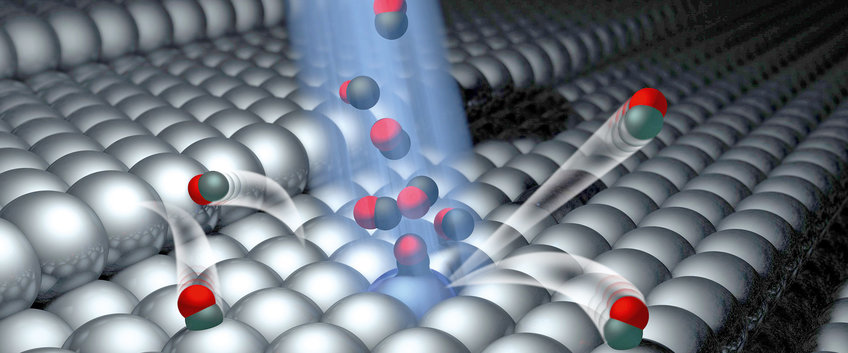
Alec M. Wodtke serves as Director at the Max Planck Institute for Biophysical Chemistry and holds a Professorship at the University of Göttingen. He leads the Dynamics at Surfaces research group, which employs cutting-edge laser, molecular beam, and ultrahigh vacuum technologies to study molecular interactions at interfaces. His research focuses on understanding the fundamental rules governing energy conversion at molecular interfaces. Wodtke's work bridges macroscopic energy conversion phenomena with molecular-scale processes, investigating how energy transfers occur one molecule and one collision at a time. His group specializes in designing well-defined experiments that capture molecules in the act of reacting, providing benchmark measurements for theoretical advances in surface chemistry. Recent research trends show a strong focus on ultrafast molecular dynamics, with significant contributions to understanding hydrogen-graphene interactions, energy dissipation mechanisms at surfaces, and atomic-scale reaction kinetics. His work has important implications for developing heterogeneous catalysts, photovoltaics, and fuel cell technologies. Alexander von Humboldt Professorship (2011) ERC Synergy Grant worth 12 million euros (2024) Ertl Lecture Prize (2022) Somorjai Visiting Miller Research Professorship Moore Distinguished Scholar at Caltech Wodtke directs multiple project groups including Atom-surface scattering dynamics, Chemical dynamics using ultra-short atom pulses, First-principles simulations of molecule-surface dynamics, and Time-resolved spectroscopy of surface adsorbates. His research team has secured significant funding including Advanced ERC Grants and operates specialized facilities for surface science research.
Prof. Dr. Michael Horn-von Hoegen is a full professor in the Faculty of Physics at the University of Duisburg-Essen , Germany. His research focuses on ultrafast structural dynamics , surface physics , and 2D materials , particularly using electron diffraction and plasmonic imaging techniques. He leads the Horn-von Hoegen Group , which plays a central role in the Collaborative Research Center CRC 1242 Non-Equilibrium Dynamics of Condensed Matter in the Time Domain , where his team investigates driven phase transitions and phonon systems with sub-femtosecond temporal resolution. Location: Office Window MF260, Faculty of Physics, Lotharstr. 1-21, 47057 Duisburg Contact: Tel. +49 (203) 379 1439 | Fax +49 (203) 379 1555 His research spans ultrafast electron diffraction of photo-induced phase transitions in atomic wires and topological materials , with recent breakthroughs on Kibble-Zurek dynamics in the Si(001) surface and chiral plasmon polaritons . The group’s 15 most recent publications (2025-2022) address phenomena such as negative thermal expansion in 2D materials , electron-phonon coupling in Pb/Si heterostructures , and quantum pathway analysis in Bismuth films . These works are categorized under disciplines like Condensed Matter Physics , Nanooptics , and Ultrafast Dynamics , with subfields including Ising Model Transitions , Plasmon Focusing , and Time-Resolved Diffraction . Prof. Horn-von Hoegen serves as DFG Liaison Officer for the University of Duisburg-Essen, providing guidance on Deutsche Forschungsgemeinschaft (DFG) proposals . His group has mentored notable researchers including Dr. Simon Sindermann (postdoc at IBM), Dr. Anja Hanisch-Blicharski (Leopoldina Fellow), Dr. Hichem Hattab (Leopoldina Fellowship), and Dr. Marin Petrovic (Humboldt Fellow). The group’s laboratory facilities include advanced ultrafast electron diffraction and photoemission microscopy systems, enabling studies of atomic-scale processes such as molecular dynamics simulations of laser-excited surfaces and domain wall motion in Si(553)-Au systems .
Christoph Becher is a Professor in the Department of Physics at the University of Saarland, Faculty of Natural Sciences and Technology. He leads the Research Group for Quantum Optics, focusing on experimental quantum technologies. He is actively involved in major national and interdisciplinary research centers including the Collaborative Research Center TRR 306 QuCoLiMa and the newly established Center for Quantum Technologies (QuTe) funded by the Transformationsfonds. His research lies at the intersection of quantum optics, solid-state physics, and quantum information science. Key areas include quantum photonics with diamond color centers (especially SiV centers), nanophotonic integration, quantum frequency conversion, and quantum communication using quantum repeaters. His group employs advanced laser spectroscopy and nanofabrication techniques to manipulate single quantum emitters and develop building blocks for quantum networks. The recent publications reflect a strong trend in quantum technologies, particularly in coupling quantum emitters to nanophotonic structures, quantum networking over fiber, and nonlinear quantum optics with single photons. His work frequently appears in high-impact journals such as Nature Communications , Physical Review Letters , and Nature Nanotechnology . Scientific Awards: Member of acatech (German Academy of Science and Engineering), elected 2020 Advising and Grants: Prof. Becher supervises a dynamic team of PhD students and postdoctoral researchers. He leads and participates in major funded projects including the BMBF-funded Quantenrepeater.Net (QR.N) (20 million Euro, 42 partners), the DFG-funded Collaborative Research Center QuCoLiMa , and the state-funded Center for Quantum Technologies (QuTe) at Saarland University. Labs and Teams: He heads the Quantum Optics research group at Campus E2 6, Saarbrücken, housing experimental setups for low-temperature spectroscopy, quantum frequency conversion, and quantum networking. His team includes doctoral researchers, postdocs, technical staff, and student assistants, working collaboratively on advancing quantum technologies.