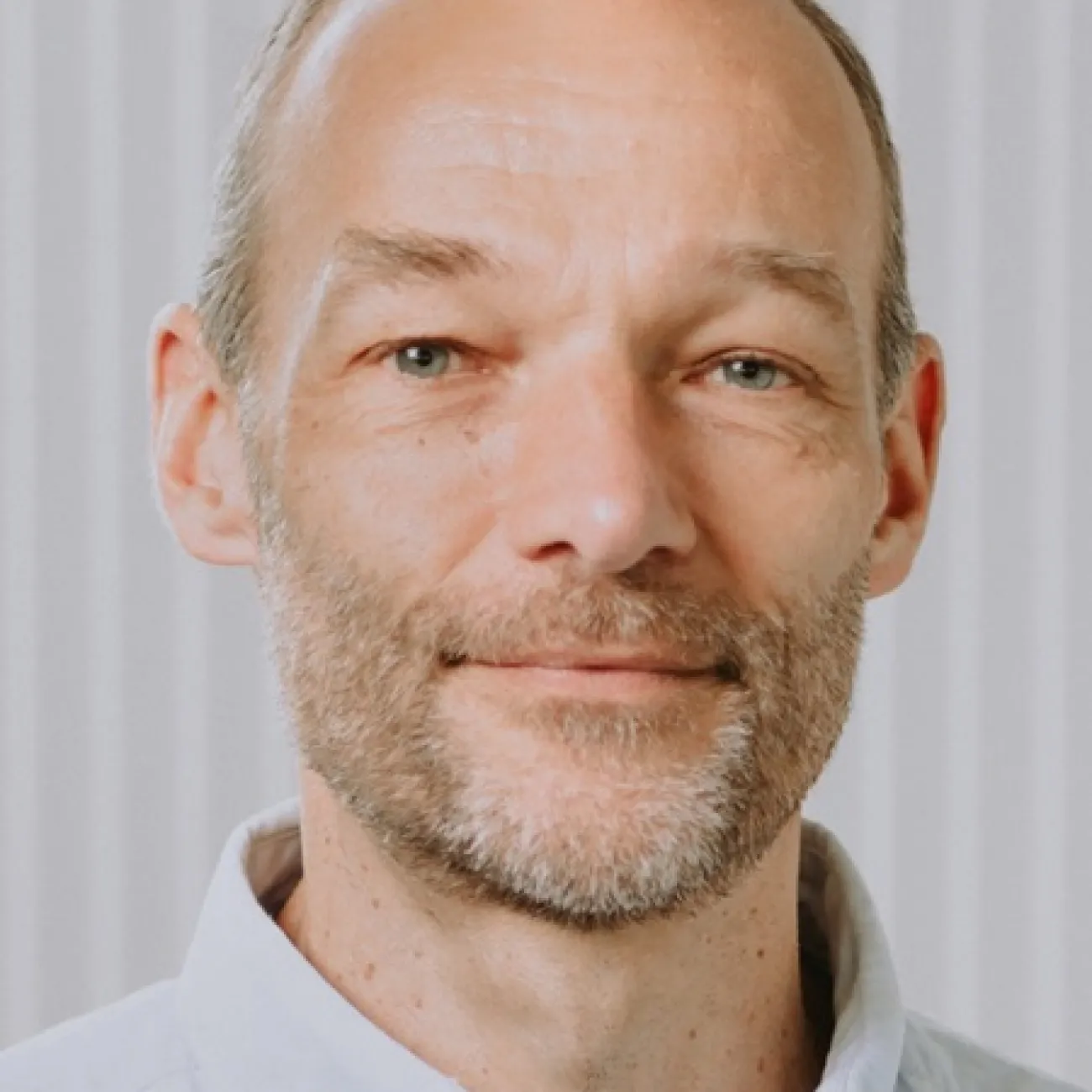
Prof. Matthias Nießner is a Professor at the Technical University of Munich , where he leads the Visual Computing Lab . Prior to this, he held a Visiting Assistant Professor position at Stanford University . His work bridges computer vision , graphics , and machine learning , focusing on 3D reconstruction , semantic scene understanding , and AI-driven video synthesis . Prof. Nießner has published over 150 works in top venues like SIGGRAPH , CVPR , and ECCV , with several receiving best paper awards (SIGCHI’14, HPG’15, SPG’18, SIGGRAPH’16 Emerging Tech). His research has garnered international media attention, including features in the New York Times , Wall Street Journal , and MIT Technological Review , as well as TV demonstrations (e.g., Jimmy Kimmel Live for Face2Face technology). Awards : TUM-IAS Rudolph Moessbauer Fellowship (2017–ongoing) Google Faculty Award (2017) Nvidia Professor Partnership Award (2018) ERC Starting Grant (2018, €1.5M) Eurographics Young Researcher Award (2019) Research Trends : 3D Gaussian Splatting for real-time rendering Neural Radiance Fields (NeRF) with mesh supervision Audio-driven facial animation via diffusion models Latent space diffusion for 3D scenes Self-supervised and zero-shot methods for 3D and image analysis As a co-founder and director of Synthesia Inc. , he drives democratization of synthetic media. His YouTube channel has over 5 million views, reflecting his impact beyond academia.
Yang Liu is a tenured Associate Professor at the Department of Management and Engineering , Linköping University, Sweden, and an Adjunct Professor at the University of Oulu, Finland. His expertise spans smart manufacturing, clean energy transition, and Industry 4.0 applications. He holds an M.Sc. and D.Sc. from the University of Vaasa, Finland. Research & Awards: Liu's work focuses on sustainable systems, decision support systems, and AI-driven energy efficiency. He has authored over 140 Web of Science publications, including top 0.1% ESI Hot Papers. He is ranked among the world's top 2% scientists (Stanford-Elsevier) and leads globally in 'big data analytics in manufacturing' and 'Industry 4.0-driven circular economy' research. Leadership & Projects: He leads projects like FlexSUS (EU Horizon 2020) and PERSEUS, developing tools for smart urban energy planning and 15-minute city models. He serves as Editor-in-Chief of Cleaner Engineering and Technology and Guest Editor for multiple journals. His research emphasizes bridging data science with sustainability challenges in manufacturing and energy systems. Key Achievements: Top-ranked in global citations, ESI Highly Cited Papers, and industry-driven sustainability frameworks. Grants: Leads EU-funded projects and collaborates with Siemens Energy on energy transition solutions. Labs & Teams: Part of the Environmental Technology and Management (MILJÖ) division and Unit for Product Service Innovation (MILJOPSI) at Linköping.
Juan Zhai is an Assistant Professor in the Manning College of Information and Computer Sciences (CICS) at the University of Massachusetts Amherst. She co-directs the Laboratory for Advanced Software Engineering Research (LASER) and is a member of the UMass NLP group. Her research advances software engineering through automated techniques for building high-quality systems with emphasis on behavioral specifications, AI safety, and trustworthy AI. Her work addresses the fundamental challenge of aligning software behavior with intended specifications through two main directions: automated specification synthesis (translating natural language comments to formal specifications via tools like C2S and LLMCup) and defect detection/repair (developing frameworks for AI system testing, bias mitigation, and training diagnostics). Her vision integrates these into end-to-end assurance systems that continuously validate, repair, and audit evolving software in dynamic environments. Recent publications (2024-2025) reveal dominant trends at the software engineering/AI intersection: formal specification synthesis for IoT and code generation, comment maintenance using LLMs, deep learning framework testing (DevMuT, Citadel), bias detection in LLMs, and automated training repair (AutoTrainer, DREAM). These contributions appear in top venues including ICSE, FSE, ASE, ISSTA, and ACL. Professor Zhai currently advises PhD student Gehao Zhang (focusing on Software Engineering and AI Safety) and actively recruits new PhD/Master's students. Her LASER lab develops practical tools for specification inference, LLM-driven synthesis, and trustworthy AI, while collaborating with the UMass NLP group on language-centric software analysis. The LASER lab, co-directed by Zhai, pioneers techniques for behavioral specification enforcement across traditional and AI-powered systems. Key projects include CPC for bidirectional code-comment analysis, ModelMeta for deep learning framework testing, and frameworks for bias mitigation across the ML lifecycle. The lab emphasizes practical, scalable tools that enhance correctness, robustness, and fairness in critical AI applications.
James R. Fienup is the Robert E. Hopkins Professor of Optics at the University of Rochester's Institute of Optics, with additional appointments as Distinguished Scientist at the Laboratory for Laser Energetics, Professor at the Center for Visual Science, Professor of Electrical and Computer Engineering, and Affiliated Faculty at the Goergen Institute for Data Science and Artificial Intelligence. His office is located at Wilmot 410, 275 Hutchison Rd., Rochester, NY. Education PhD in Applied Physics from Stanford University (1975) MS in Applied Physics from Stanford University (1972) BA in Physics & Mathematics (magna cum laude) from Holy Cross College (1970) Research Focus Professor Fienup's research specializes in imaging science , with emphasis on phase retrieval algorithms, unconventional imaging techniques, and wavefront sensing. His work spans computational methods for image reconstruction, sparse-aperture systems, and synthetic-aperture imaging. Recent innovations include applying machine learning to wavefront control and developing advanced digital holography techniques for 3D imaging through atmospheric turbulence. Publication Trends His recent articles (2018-2024) demonstrate a strong focus on computational imaging techniques, particularly phase retrieval algorithms applied to optical metrology and wavefront correction. Key themes include multi-plane digital holography, coronagraphic wavefront control for astronomical applications, machine learning-enhanced sensing, and novel approaches for segmented-aperture systems. His work consistently bridges theoretical optics with practical instrumentation challenges. Awards and Honors Lifetime Achievement Award, Hajim School of Engineering (2019) Emmett N. Leith Medal, Optical Society of America (2013) National Academy of Engineering Member (2012) Distinguished Visiting Scientist, JPL (2009) Fellow of OSA and SPIE International Prize in Optics (1983) Rudolf Kingslake Medal (1979) NSF Graduate Fellow (1970-1972) Professional Activities Professor Fienup has served as Editor-in-Chief of the Journal of the Optical Society of America A (1998-2003) and held editorial roles at Applied Optics and Optics Letters . He consults for NASA (James Webb Space Telescope, Hubble), national laboratories, and aerospace companies, and holds five patents in optical systems design.
Trey Porto is an Adjunct Professor at the University of Maryland, affiliated with the Joint Quantum Institute (JQI) and NIST. His research focuses on ultra-cold atoms, quantum optics, and quantum information science. He leads projects on Rydberg atoms, optical lattices, and quantum networking, leveraging cold atom systems to explore novel quantum phenomena and control strategies. Research areas include ultra-cold Rb/Yb mixtures for studying Bose-Einstein condensates and engineered dissipation, as well as photon-photon interactions using Rydberg-dressed polaritons. His work bridges quantum simulation, quantum computing, and precision measurement, with applications in quantum networking and many-body physics. Key achievements include the 2023 UMD Quantum Invention of the Year Award for developing photon-counting methods that preserve quantum states. Porto collaborates with groups such as RQS and JQI, contributing to advancements in subwavelength optical potentials and Floquet-engineered systems. He mentors graduate students in experimental and theoretical aspects of cold atoms and quantum technologies. Publications highlight breakthroughs in Rydberg blockade enhancement, prethermal Bose-Einstein condensation, and compact auto-alignment systems for experimental setups. His lab is based in the Physical Sciences Complex on the UMD campus, with ongoing projects exploring quantum dissipation and photon-atom hybrid systems.
Jacob Mackenzie is an Associate Professor at the University of Southampton's Faculty of Engineering and Physical Sciences , affiliated with the Optoelectronics Research Centre (ORC) and Zepler Institute. His work spans advanced laser physics and photonics, focusing on efficient solid-state systems via planar waveguide geometries and cryogenic cooling for power scaling. Research interests: Waveguide amplifiers, cryogenically cooled lasers, ultra-fast compact lasers Key applications: Materials processing, space-borne LIDAR, silicon photonics Research Themes include innovative gain media engineering, thermal management, and spectroscopic optimization. His group explores non-standard laser transitions to expand accessible wavelengths and power regimes in continuous-wave (CW) and pulsed configurations. Publications highlight advancements in resonant waveguide gratings, thermal performance metrics, high-repetition rate systems, and optical coating durability. These align with his leadership in high-power laser design and novel manufacturing techniques. Scientific Awards Royal Academy of Engineering Postdoctoral Fellow (2004) Senior Member of the Optical Society (OSA) PhD Supervision includes Isaac Brock, Georgia Mourkioti, and Sahar Alidousti. He also mentors postgraduate students through technical workshops and co-teaches Photonics II (ELEC3217) for undergraduates. External Roles encompass invited speaking (2020), journal reviewing (2021-2022), and chairing conferences like the 10TH EPS-QEOD EUROPHOTON CONFERENCE (2022).
Associate Professor Judy Hart is a materials scientist at the School of Materials Science & Engineering, UNSW Sydney , specializing in the development of semiconducting materials for renewable energy applications. Her work integrates computational (DFT) and experimental approaches to understand composition-property relationships in systems like solid solutions , heterostructures , and doped materials for photocatalysis and solar cells . She leads projects funded by ARC Discovery and Linkage grants , including work on photo-electro-catalysis systems and stabilizing ceramic materials . Education: PhD in Materials Engineering (Monash University, 2007), BEng (Materials) (Monash, 2002) Professional Experience: Senior Lecturer (UNSW, 2017–), Lecturer (UNSW, 2013–2017), University of Bristol (2007–2012) Research Interests Her research focuses on designing materials for renewable energy , particularly photoelectrochemical water splitting and organic oxidation reactions . Key areas include Density Functional Theory (DFT) , defect engineering , band gap tuning , and nanostructured materials . She investigates ferroelectric polarization effects , metal oxide heterostructures , and stability of battery components , with applications in hydrogen production , CO2 conversion , and advanced battery materials . Scientific Awards Ramsay Memorial Fellowship (University of Bristol, 2007–2009) Teaching Contributions She is co-author of the 1st Australian & New Zealand edition of "Materials Science and Engineering: An Introduction" , and teaches courses on computational materials science , corrosion-resistant surfaces , mechanical behavior of metals , and materials design .
Dr Peter Horak is an Associate Professor at the Optoelectronics Research Centre (ORC) of the University of Southampton. With expertise in theoretical and computational photonics, his research spans nonlinear optics, quantum technology, and fiber optics. He obtained his MSc in Theoretical Physics (1993) and PhD in Theoretical Quantum Optics (1997) from the University of Innsbruck, followed by postdoctoral positions in Paris and Glasgow before joining the ORC in 2001. Current roles: ORC Exam Officer Admissions Tutor, EPSRC CDT in Quantum Technology Engineering Dr Horak leads the Computational Nonlinear Optics group, focusing on theoretical and numerical modeling of photonics systems across scales—from single photons to gigawatt laser pulses. His work addresses fundamental physics and device optimization in hollow-core fibers, quantum devices, and high-harmonic generation. Recent publications highlight hollow-core fiber gas dynamics, nonlinear optical sensing, and microresonator alignment challenges. Collaborations include the UK National Quantum Technology Programme and EPSRC-funded projects like QCI3 and HiPPo. External roles: Editorial Board, Physical Review A (2017–2022) Peer reviewer for EPSRC (since 2012) and ESF (since 2017) He supervises PhD students in nonlinear and quantum optics, and teaches optical fiber and computational modeling topics.
Muharrem Bayraktar is an Assistant Professor at the MESA+ Institute for Nanotechnology at the University of Twente, specializing in XUV Optics. His research focuses on extreme ultraviolet (EUV) optics, plasma spectroscopy, and adaptive optical systems. He leads projects involving EUV source metrology, piezoelectric thin film actuators, and laser-driven plasma diagnostics. Research Interests: Bayraktar’s work centers on developing advanced EUV light sources for nanolithography applications. He investigates plasma physics in tin-based EUV emitters, optimizing thin film materials for adaptive optics, and improving spectral characterization techniques. His group explores piezoelectric thin films for precision wafer tables and multilayer mirror systems to enhance EUV beam control. Awards: 3rd Place in Simon Stevin Fellow Contest (2016) Best poster award (2018) Best poster award (2019) Advising & Activities: Supervises research on EUV source development and piezoelectric actuators. Engages in international collaborations on plasma diagnostics and adaptive optics. Active in presenting at conferences on topics like ‘EUV Source Metrology’ and ‘Nanolithography Systems’. Labs/Teams: Leads the XUV Optics team within MESA+, collaborating with industry partners on EUV lithography systems and advanced optical components.
Sapun Parekh is an Associate Professor in the Department of Biomedical Engineering at the University of Texas at Austin, supported by the Cockrell Family Fellowship. His research focuses on developing label-free imaging and analytical tools using nonlinear chemical microscopy to diagnose pathologies such as type 2 diabetes. The Parekh Lab, operating at UT Austin and the Max Planck Institute, investigates molecular basis of pathology, microscopy instrumentation, and mechano-chemical coupling in cancer. Key research areas include chemical and nonlinear microscopy, molecular physics of biomaterials, and imaging molecular structure under mechanical deformation. Recent work emphasizes biomolecular condensates, blood clot mechanics, and metabolic defense mechanisms in cancer cells. The lab actively recruits graduate students and postdoctoral researchers in topics like nonlinear microscopy and neurodegeneration imaging. Notable students include Jacob, Sam, Nick, and Advika, who have passed exams or defended theses. Collaborations with institutions like Brown University and EMBL advance interdisciplinary projects. The lab’s innovations bridge fundamental biophysics with clinical applications, emphasizing inclusion and innovation. Education Background: Not explicitly stated in provided texts. Affiliations: UT Austin Biomedical Engineering, Max Planck Institute. Research interests span imaging technologies, biomaterials, and disease mechanisms, with recent articles addressing biomolecular condensates, clot mechanics, and nanotechnology. The lab’s work is published in high-impact journals, reflecting its commitment to advancing biomedical diagnostics and therapies.
Professor David Mowbray is a Professor of Physics at the University of Sheffield, affiliated with the School of Mathematical and Physical Sciences and the Department of Physics. His research focuses on III-V semiconductors, quantum dots, and nanostructures, emphasizing applications in high-efficiency lasers and light emitters. He has pioneered studies on AlGaInP band structures and quantum dot-based devices, including lasers on Si substrates for silicon integration. Qualifications: B.A. in Physics (Hertford College, Oxford, 1984) and D.Phil. in Physics (Hertford College, Oxford, 1989). Research interests include optical spectroscopy of wide band gap materials (AlGaInP, AlInGaN) for visible/UV emitters, quantum dot lasers with low threshold currents, and nanowire quantum dots for single-photon sources. Current projects involve quantum dots in quantum wires with UCL and Warwick, aiming for nanoscale lasers and efficient photon sources. Teaching includes courses on Fourier Techniques, Electromagnetism, and nanotechnology. He has held leadership roles, such as Head of Department and Senior Tutor, and serves on professional committees like the Institute of Physics Degree Accreditation Committee. Grants include EPSRC funding for quantum dot lasers on Si (2012–2016) and nanowire quantum dots for silicon-based emitters (2016–2020). His work bridges semiconductor physics, nanostructure engineering, and optoelectronic device applications.
Jerome Hastings is a Research Professor at the Photon Science Directorate , Stanford University, and a Principal Investigator at the Stanford PULSE Institute. He is affiliated with the SLAC National Accelerator Laboratory and holds the academic rank of Research Professor (A.R.). His research focuses on advanced X-ray scattering techniques, femtosecond laser interactions, and high-energy-density material physics. Currently on leave from June 15, 2025, to September 15, 2025, Hastings has taught courses such as Advanced Topics in X-ray Scattering (APPPHYS 322) and Principles of X-ray Scattering (APPPHYS 222, PHOTON 222). Teaching : 2025-26: Advanced Topics in X-ray Scattering (Spr), Principles of X-ray Scattering (Win), Directed Studies (Aut/Wi/Spr), Research (Aut/Wi/Spr) Prior courses (2024-25, 2023-24) include similar offerings. Research Interests : His work explores the intersection of photon science and material dynamics, utilizing free-electron lasers to probe ultrafast structural changes, phonon hardening, and electronic responses in materials under extreme conditions. Key areas include X-ray diffraction , time-resolved spectroscopy , and high-intensity X-ray interactions . Publications : Hastings has contributed to 47 publications, with recent studies (2024) on supercooled liquid hydrogen crystallization and phonon hardening in laser-excited gold. Earlier works (2019-2016) address X-ray split-delay systems, photodissociation dynamics, and anomalous Compton scattering. Scientific Contributions : Notable projects include the development of compact X-ray diagnostics and phase-contrast imaging instruments at LCLS, enabling nanoscale temporal and spatial resolution for high-energy-density experiments. Students : He has advised doctoral candidates Arijit Majumdar, Chance Ornelas-Skarin, Madison Singleton, and Catherine Weibel. Contact : Academic email jerome.hastings@stanford.edu
Dr. Jonathan Hu is a Professor in the Department of Electrical and Computer Engineering at Baylor University's School of Engineering and Computer Science. He holds a PhD from the University of Maryland Baltimore County (2008) and completed a postdoctoral fellowship at Princeton University (2009–2011). He is an active researcher in optics and photonics, leading the Photonics Research Laboratory and advising both graduate and undergraduate research assistants. Research Interests: Nanophotonics and metamaterials for photovoltaic and biomedical applications Mid-IR supercontinuum generation using chalcogenide photonic crystal fibers 2D materials such as graphene and their alignment via magnetic fields Coherent optical communication and quantum optical Fredkin gates Numerical simulation of electromagnetic problems and leaky mode analysis His recent publications (2019–2024) demonstrate a strong focus on quantum plasmonics, specialty optical fibers, optofluidics, and nonlinear optical phenomena, with high-impact work in journals like Science Advances , ACS Photonics , and Advanced Materials . The research shows a clear trend toward integrating photonics with 2D materials and quantum systems, with applications in sensing, communication, and materials characterization. Scientific Awards and Recognition: 35 Baylor faculty named among top 2% most cited researchers (2023) Editor’s Pick, Journal of Applied Physics (2018) Top three downloads in OSA journals for three consecutive months (2009) NSF Graduate Research Fellowship (awarded to advisee) Chinese Government Award for Outstanding Self-Financed Students Abroad (awarded to advisee) Second Place in FiO + LS Student Competition (awarded to advisee) Advising and Grants: Dr. Hu actively mentors students at all levels, with current graduate research assistants including Wei Zhang, Zhihao Hu, and Sterling Walzel. His lab is supported by external funding, though specific grants are not detailed in the text. He has advised PhD students such as Joshua Young, Chao Niu, and Chengli Wei, many of whom have gone on to successful academic and industry careers. His teaching includes core courses like EGR 1302, ELC 2320, and ELC 4320, as well as advanced topics in computational photonics and integrated photonics. Labs and Teams: He leads the Photonics Research Laboratory at Baylor University, located at the BRIC facility. He is also involved with the Baylor University Optica Student Chapter, promoting optics outreach and networking among students and researchers.
Tim J. Nye is an Associate Professor in the Department of Mechanical Engineering at McMaster University's Faculty of Engineering. He holds a Ph.D. in Mechanical Engineering (1997) from the University of Waterloo, following an M.Sc. (1989) at Ohio State and B.A.Sc. (1987) at Waterloo. His research focuses on applying operations research techniques to manufacturing systems, with specific expertise in optimization algorithms for sheet metal processes, hydroforming reliability, and adaptive control in forging. Education: Ph.D. Mechanical Engineering, University of Waterloo (1997) M.Sc. Mechanical Engineering, Ohio State (1989) B.A.Sc. Mechanical Engineering, University of Waterloo (1987) Research interests span multiple dimensions of advanced manufacturing: developing decision models for production investment, creating novel lot-sizing algorithms incorporating work-in-process costs, exact solutions for 2D nesting problems, and agent-based systems for reliability prediction using warranty data. His work bridges theoretical operations research with practical metal forming applications. Recent publications demonstrate consistent contributions to manufacturing optimization, with particular focus on stamping processes, sheet metal design, and hydroforming reliability. These align with McMaster's research clusters in Advanced Materials & Manufacturing and Infrastructure. Scientific awards include the 2002 CSME Best Student Paper competition win for machine vision research with S. Dworkin. He maintains active collaborations with industry partners, as evidenced by his research on industry-university R&D ventures. Current projects explore intelligent open die forging as a solid freeform fabrication method, demonstrating his commitment to both traditional manufacturing improvement and emerging rapid prototyping technologies.
Professor Francois Ladouceur is a distinguished academic at the University of New South Wales (UNSW), where he serves in the Faculty of Engineering, specifically within the School of Electrical Engineering and Telecommunications. With a career spanning over three decades, Professor Ladouceur has established himself as a leading expert in photonics, optical engineering, and neural interfaces. His educational background includes: Ph.D. in Optical Communication from The Australian National University (1992) Masters in Solid State Physics from École Polytechnique, Montréal, Canada (1987) B. Eng. in Engineering Physics from École Polytechnique, Montréal, Canada (1985) Professor Ladouceur's research spans several cutting-edge areas in photonics and optical engineering. His work focuses on integrated optics, silica and diamond-based photonics, optical sensing networks, and photonics-based brain/machine interfaces. He has made significant contributions to both fundamental waveguide theory and applied integrated optics, introducing innovative approaches to waveguide path design that have improved the size and ease of design of integrated optics devices. His recent work has particularly emphasized the development of liquid crystal-based optical electrodes for neural interfacing and brain/machine interfaces. Analysis of his recent publications reveals a strong trend toward biomedical applications of photonics, particularly in neural interfaces and optrode technology. His research has evolved from fundamental optical engineering to practical applications in healthcare, with a focus on developing novel optical sensing technologies for electrophysiological measurements. The interdisciplinary nature of his work combines optical engineering, materials science, and biomedical engineering to create innovative solutions for neural interfacing. Professor Ladouceur has secured significant research funding through multiple prestigious grants: ARC Discovery (DP200102825): "A Multi-Optrode Array for Closed-Loop Bionics" ($495k) NHMRC Ideas Grant (APP2002282): "Re-engineering the Future of Electrophysiological Measurements" ($732k) ARC Discovery 2016 (DP160104625): "Design of an optrode for next generation brain-machine interfaces" ($457.6k) CRC Project 2016: "High performance optical telemetry system for ocean monitoring" ($1,014,320) US Office of Naval Research: "Multi-Optrode Array for Neural Interfacing" (US$360,000) Professor Ladouceur has extensive experience in translating research into practical applications, having founded Bandwidth Foundry Pty Ltd after raising approximately $20 million from private and public sources. His work bridges the gap between academic research and commercial applications, with a particular focus on developing novel hybrid opto-electronics devices from initial design through to commercial realization. He collaborates extensively with researchers across disciplines, particularly with Professor Nigel Lovell and other colleagues in biomedical engineering. His laboratory focuses on developing optical technologies for neural interfaces, with current projects including multi-optrode arrays for brain-machine interfaces, optical telemetry systems for various sensing applications, and diamond-based photonic structures. The research group maintains strong connections with industry partners and defense organizations, applying photonics solutions to real-world problems in healthcare, mining safety, and ocean monitoring.