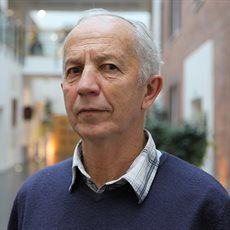
Dr. Claudia Cabrera is a Senior Lecturer in Bioinformatics at Queen Mary University of London, affiliated with the William Harvey Research Institute within the Faculty of Medicine and Dentistry. Her primary department is Clinical Pharmacology and Precision Medicine. Her research focuses on developing bioinformatics tools for understanding complex traits and diseases, particularly in genetical genomics of hypertension, cardiovascular diseases, trauma response, and pediatric endocrinology. She leads the development of software like genomicper , which uses circular genomic permutation to analyze GWAS data, enhancing pathway association significance while accounting for genomic structure. Her work integrates high-throughput data analysis (e.g., whole-genome sequencing, RNA-Seq) and genomic pathway testing frameworks. Key projects include studying somatic mutations in aldosterone-producing adenomas and genetic variants linked to puberty timing. She collaborates with the NIHR Barts Cardiovascular Biomedical Research Centre and has published extensively on hypertension genetics, genomic permutation methods, and precision medicine applications. Dr. Cabrera’s research emphasizes translational medicine, bridging computational biology with clinical outcomes in cardiovascular and endocrine disorders. Her lab’s innovations in genomic analysis tools are widely applied in understanding disease mechanisms and drug target discovery. She also investigates trauma-induced inflammation and genomic drivers of blood pressure regulation through large-scale genetic studies.
H. Metin Aktulga is an Associate Professor in the Department of Computer Science and Engineering at Michigan State University's College of Engineering. His research focuses on high-performance computing, parallel algorithms, and numerical methods for large-scale scientific applications. He leads interdisciplinary projects involving collaborations with computational physicists and materials scientists to develop scalable software systems. His work includes the development of PuReMD, a reactive molecular dynamics code, and DOoC+LAF, a task-based middleware for data analytics. He explores parallel computing on emerging architectures, emphasizing energy efficiency and performance optimization. His research spans applications in molecular modeling, nuclear physics, and computational biology. Awards and grants are not explicitly listed, but his contributions are highlighted through collaborations with projects like MFDn (nuclear structure) and SHINES (electronic structure computations). He advises students in computational methods and leads efforts to automate force field optimization using machine learning and big data analytics. Labs and teams include the High-Performance Computing group at MSU, with active participation in interdisciplinary initiatives to bridge simulation and data-driven discovery in materials science and quantum systems.
Edwin Huang is an Assistant Professor in the Department of Physics & Astronomy at the University of Notre Dame. His research focuses on studying emergent properties of strongly correlated quantum materials using large-scale numerical and analytical techniques, with a particular emphasis on model calculations and experimental spectroscopy comparisons. Education: PhD in Physics, Stanford University, 2019 B.A. in Physics and B.A. in Statistics, UC Berkeley, 2013 Research Interests: Huang’s work explores phenomena such as charge and spin density waves, superconductivity, and antiferromagnetic correlations in quantum materials. He employs advanced computational methods like determinantal quantum Monte Carlo and cluster perturbation theory to analyze systems such as the Hubbard model, cuprates, and nickelates. His research bridges theoretical predictions with experimental observations, particularly in understanding strange metallicity and the breakdown of conventional quasiparticle descriptions. Articles Trends: Recent publications highlight studies on charge susceptibility in topological models, fluctuating stripe order in Hubbard systems, and thermodynamic properties of doped Mott insulators. His work often addresses the interplay of symmetry breaking, electronic correlations, and emergent phenomena in strongly correlated systems. Advising & Grants: No formal advisees or grant details are listed in the provided text. Labs/Teams: While not explicitly mentioned, his research likely involves collaborations with experimental groups and computational physics teams focusing on quantum materials.
Kjetil Nørvåg is a Professor at NTNU's Department of Computer and Information Science, affiliated with the Data and Artificial Intelligence group. His research focuses on distributed systems, database technologies, and large-scale data processing. He teaches courses covering data mining, big data architecture, information retrieval, and distributed systems. Nørvåg leads significant research projects including the Norwegian Center for Research-based AI Innovation (NorwAI, 2020-2028) and Big Data & Machine Learning collaboration with DNB (2018-2023). His publication record includes nearly 200 works addressing challenges in database systems and information retrieval.
Srinivas Shakkottai is a Professor in the Department of Electrical and Computer Engineering (ECE) and affiliated faculty in the Department of Computer Science and Engineering (CSE) at Texas A&M University. He holds a Ph.D. from the University of Illinois at Urbana-Champaign (2007), followed by a postdoctoral stint at Stanford University. Since 2008, he has been at Texas A&M, advancing through roles from Assistant to Associate Professor before attaining full Professor status. Education: Ph.D., Electrical Engineering, University of Illinois at Urbana-Champaign (2007) Postdoctoral Associate, Stanford University Research Interests: Focus on algorithms for communication, energy, and transportation networks. Key areas include wireless networks, reinforcement learning, caching/content distribution, multi-agent learning, game theory, networked markets, and systems design. He co-directs the LENS Laboratory and the Texas A&M Initiative on Connected Intelligence (TICI). Key Awards: NSF CAREER Award (2012) Google Faculty Research Award (2010) Defense Threat Reduction Agency Young Investigator Award (2009) Grants & Labs: Leads research projects funded by NSF, including collaborative efforts on EdgeRIC (NextG cellular networks) and Caching systems. Active in labs focused on AI-driven network optimization and intelligent control systems. Lab & Teams: Co-director of LENS Lab and TICI, emphasizing real-time intelligent control, edge computing, and networked intelligence.
Adam Young is a Researcher at the Scripps Institution of Oceanography, UC San Diego, affiliated with the INTEGR OCEANOGRAPHY DIV. He holds a B.S. from California State Polytechnic University, SLO, and M.S. and Ph.D. degrees from UC San Diego. His work focuses on coastal processes, including cliff retreat mechanisms, natural hazards, and quantitative geomorphology. He employs advanced techniques like LiDAR, satellite imagery, and machine learning to monitor erosion patterns and assess coastal vulnerabilities. Research interests include coastal cliff stability, wave-cliff interactions, and the integration of remote sensing data for environmental monitoring. His projects often involve sensor networks and large-scale datasets to track erosion hotspots and model future scenarios under climate change. Notable studies include Arctic coastal morphology analysis using machine learning and predictive modeling of shoreline changes in California using deep learning. Key contributions include developing automated workflows for cliff change detection and advancing understanding of gravel berm dynamics and subsurface hydrology. His work bridges field observations with computational methods, informing coastal management strategies and disaster preparedness.
Dr. Ashleigh Landau is an Adjunct Lecturer at Georgetown University and a full-time researcher at the US Holocaust Memorial Museum's Simon-Skjodt Center for the Prevention of Genocide. Her work focuses on atrocity prevention, early warning systems, and the psychological underpinnings of mass violence. Education: PhD in Social Psychology, University of Oregon MS in Social Psychology, University of Oregon BS in Psychology, St. Mary’s College of California Her research integrates social psychology with genocide prevention, emphasizing the measurement of exclusionary thinking patterns that precede mass atrocities. She contributes to the Early Warning Project and has developed analytical tools used in conflict assessment. Her interdisciplinary approach bridges academic research with policy and practice. Through partnerships with the Oxford Consortium for Human Rights, government agencies, and NGOs, she conducts conflict-analysis simulations and delivers training workshops. She is a recurring speaker at human rights forums and actively engages with practitioners in the field of atrocity prevention. Scientific Affiliations and Collaborations: Simon-Skjodt Center for the Prevention of Genocide, US Holocaust Memorial Museum Oxford Consortium for Human Rights Dr. Landau advises on early warning methodologies and has co-directed large-scale simulations to model conflict dynamics. While no formal students or grants are listed, her applied research has significant policy implications and operational impact in the field of human rights and genocide prevention. She is involved in research teams focused on developing predictive frameworks for mass atrocities and contributes to training programs that enhance institutional capacity for early response.
Dr. John G. Ayisi is a prominent researcher in public health and infectious diseases, with affiliations including the Kenya Medical Research Institute (KEMRI), Johns Hopkins Bloomberg School of Public Health, and Amsterdam UMC – University of Amsterdam. His work focuses on maternal and child health in sub-Saharan Africa, particularly the interplay between malaria, HIV, and malnutrition during pregnancy. Kenya Medical Research Institute Johns Hopkins Bloomberg School of Public Health Amsterdam UMC - University of Amsterdam His research interests include infectious disease epidemiology, maternal immunology, and integrated public health interventions. He employs meta-analytic and field-based methodologies to assess the impact of preventive therapies and genetic factors on perinatal outcomes in malaria- and HIV-endemic regions. The recent publications show a consistent focus on pregnancy-associated malaria, genetic susceptibility to HIV transmission, and the combined burden of malnutrition and infection. His work often involves large-scale data synthesis and community-based trials, emphasizing evidence-based policy formulation for low-resource settings. Dr. Ayisi has received funding and support from leading global health institutions, including: National Institutes of Health (NIH) Centers for Disease Control and Prevention (CDC) National Research Foundation Natural Sciences and Engineering Research Council of Canada Department for International Development (UK) Association Française contre les Myopathies He has advised or collaborated on numerous research projects aimed at reducing maternal and child morbidity in Africa. While no formal students are listed, his leadership in multi-institutional studies suggests a mentorship and collaborative role. His research has been instrumental in shaping malaria prevention policies, particularly regarding intermittent preventive therapy in pregnancy (IPTp) and integrated maternal health programs. Dr. Ayisi has contributed to major initiatives such as the Maternal Malaria and Malnutrition (M3) program and has developed novel methodologies for placental immunology studies. His work bridges laboratory science, epidemiology, and public health implementation, often conducted in partnership with local and international research teams in Kenya and beyond.
Professor Rachel Kennedy is a co-founder and Associate Director (Product Development) at the Ehrenberg-Bass Institute for Marketing Science, the world's largest center for marketing research. Based at the University of South Australia, she plays a pivotal role in translating cutting-edge research into actionable insights and industry products. Her work bridges academia and practice, serving global brands such as Unilever, Mars, Google, and HSBC through evidence-based marketing strategies. Research Interests: Rachel’s research is centered on marketing science, with a focus on advertising effectiveness, brand growth, consumer behavior, and neuromarketing. She investigates how advertising works using biometrics, attention metrics, and single-source data. Her work emphasizes evidence-based approaches, challenging industry myths and promoting scientific rigor in marketing decisions. Key areas include ad likeability, price promotions, packaging design, and the long-term effects of advertising cessation. The analysis of her recent publications reveals a consistent trend toward understanding measurable, long-term brand performance. Her work increasingly incorporates biometric and eye-tracking methods to assess attention and persuasion in advertising. Themes such as duplication of purchase, brand user profile similarity, and the validity of marketing metrics recur across her research, reinforcing foundational principles of marketing science. Scientific Awards and Recognition: Incorporated Society of British Advertisers award for advancing understanding of advertising Named one of 'Advertising’s Big Thinkers' by the UK Advertising Association Advising and Grants: While specific students are not listed, Rachel has mentored and collaborated extensively with researchers at the Ehrenberg-Bass Institute. Her role in product development implies leadership in research funding and industry sponsorship programs. She has led and contributed to numerous market research projects funded by global advertisers and media organizations, helping to embed evidence-based practices across industries. Labs and Teams: Rachel is a core member of the Ehrenberg-Bass Institute, a world-renowned research center with over 60 marketing scientists. The institute operates as a collaborative hub for empirical marketing research, offering executive programs like 'How Brands Grow – Live!' and conducting large-scale studies on consumer behavior, advertising, and brand strategy.
Professor Jenni Romaniuk is a Research Professor of Marketing and Associate Director (International) at the Ehrenberg-Bass Institute for Marketing Science, formally affiliated with the University of South Australia through UniSA Business School. She is a leading authority in marketing science, particularly in brand growth, mental availability, and distinctive brand assets. Her research focuses on understanding how brands grow through empirical generalizations, with significant contributions to the measurement of brand health, category entry points, and advertising effectiveness. She has authored three major books: Building Distinctive Brand Assets , How Brands Grow Part 2 , and Better Brand Health , all published by Oxford University Press. The 15 most recent publications reveal a strong trend in consumer behavior across diverse contexts, including non-profits, luxury brands, co-branding, and emerging markets. Her work integrates quantitative modeling with behavioral insights, often using large-scale datasets to validate marketing laws such as the Pareto principle and mental availability theory. She frequently publishes in top journals like the European Journal of Marketing , International Journal of Market Research , and Journal of Advertising Research . She is a past editor and current member of the Senior Advisory Board of the Journal of Advertising Research , reflecting her leadership in the academic marketing community. Her collaborations span global researchers, contributing to foundational knowledge in brand equity, private labels, and word-of-mouth dynamics. Jenni Romaniuk has not disclosed any PhD or Master’s students in the provided text. She is actively engaged in research and has no indication of part-time status, retirement, or former staff designation. She is not listed with any specific email address in the text.
Dr. Greg Eisenhauer is a Senior Research Scientist at the Georgia Institute of Technology's School of Computer Science and affiliated with the Center for Experimental Research in Computer Systems (CERCS). His research focuses on high-performance computing (HPC), systems, and enterprise computing, with an emphasis on program monitoring, dynamic adaptation, performance evaluation, and I/O systems like ADIOS. Supported by NSF, DOE, DARPA, and industry grants, his work addresses challenges in HPC workflows, data management, and streaming analytics. He leads efforts in scalable data environments, metadata optimization, and exascale computing resilience.
Dr. V.L. Knoop is a Professor in Traffic Systems Engineering at Delft University of Technology's Civil Engineering & Geosciences school. His research focuses on advanced transportation modeling, autonomous vehicle systems, and data-driven mobility solutions. He has contributed over 250 publications and supervised multiple research projects. Notable awards include the Greenshields Prize (2012, 2015, 2016) and D. Grant Mickle Award (2016). Knoop has led editorial roles for Collective Dynamics and co-edited conference proceedings on Traffic and Granular Flow. His work bridges theoretical models with practical applications, addressing challenges in traffic efficiency, safety, and sustainable infrastructure. Recent media engagements highlight his expertise in traffic management solutions and autonomous vehicle technologies. Education: PhD in Civil Engineering (assumed) Research Interests: Development of macroscopic traffic flow models Integration of autonomous systems into existing transport networks Data analytics for traffic prediction and optimization Key Contributions: Large-scale car-following dataset analysis (Lyft Level-5 collaboration) Ramp metering optimization studies using empirical trajectory data Publications on adaptive cruise control and uncertainty-based decision-making in autonomous vehicles Labs/Teams: Traffic Systems Group at TU Delft Collaborations with Rijkswaterstaat (Dutch Ministry of Infrastructure) and Flitsmeister
Dominik Kopczynski is a researcher affiliated with the Department of Analytical Chemistry at the Faculty of Chemistry. His work focuses on lipidomics, mass spectrometry, and the development of bioinformatics tools for lipid structure analysis and experimental standardization. He has contributed to initiatives like the lipidomics reporting checklist and Goslin nomenclature system. Active in organizing academic events such as the de.NBI Spring School for lipidomics bioinformatics and Keystone Symposia on lipid biology, he collaborates extensively with international researchers. Research Interests: Lipid metabolism, mass spectrometry-based analytical methods, lipid nomenclature standardization, proteomics, and computational tools for omics data analysis. His work bridges biochemical experimentation with bioinformatics to enhance reproducibility and interdisciplinary collaboration in lipidomics research. Activities: Organized 36 academic events including conferences, schools, and poster sessions. Notable contributions include co-organizing the 2025 de.NBI Spring School and contributing to the Keystone Symposia on lipid cellular function and disease. Engaged in both presenting research and fostering collaborative research networks. Labs/Teams: Collaborates within the Department of Analytical Chemistry and participates in international lipidomics consortia. His work often involves cross-disciplinary teams focused on integrating biochemical and computational approaches. Grants/Advising: While specific grants are not detailed, his extensive publication record and collaborative activities suggest involvement in funded projects related to lipidomics infrastructure development and analytical method standardization.
Dmitry Korkin is a Professor of Computer Science at Worcester Polytechnic Institute (WPI) and holds the prestigious Harold L. Jurist '61 and Heather E. Jurist Dean's Professor title. He maintains strong interdisciplinary connections across campus, with formal affiliations in Bioinformatics & Computational Biology, Data Science, Biology & Biotechnology, and Mathematical Sciences departments. His educational background includes: Postdoctoral training in Bioinformatics & Computational Biology at the University of California, San Francisco (2007) PhD in Computer Science from the University of New Brunswick, Canada (2003) MS in Applied Mathematics from Moscow State University, Russia with High Distinction (1999) Professor Korkin leads an interdisciplinary research program at the intersection of computer science and biology. His lab specializes in applying machine learning, data mining, and massive data analytics to investigate molecular mechanisms underlying complex diseases including cancer, diabetes, and autism, as well as deadly infections like pandemic flu. The research integrates multi-omic, systems, and structural biology data to develop comprehensive models of disease mechanisms. A distinctive aspect of his work involves developing hardware-optimized algorithms for large-scale genome evolution analysis, enabling studies of animal and plant genomes at unprecedented scale. The lab maintains strong collaborative ties with experimental biologists to validate computational predictions through wet-lab experiments. His publication record demonstrates a clear evolution from foundational work in protein structure analysis toward increasingly complex systems biology applications. Early research focused on protein binding sites and structural classification, while more recent work addresses host-pathogen interactions and pandemic virus structure. The lab's work on SARS-CoV-2 represents a significant pivot toward immediate public health applications, developing what has been described as a 'periodic table' of structural elements for the virus. Key recognition: Harold L. Jurist '61 and Heather E. Jurist Dean's Professor Professor Korkin has secured multiple research grants including WPI President's Research Catalyst Grants and seed funding for early-stage projects. His work on SARS-CoV-2 structure was published in Viruses and featured in Nature Neuroscience. He maintains active collaborations both nationally and internationally, with research findings covered by major media outlets including Spectrum News 1, Phys.org, and Nautilus magazine. Notably, his lab's structural analysis of the COVID-19 virus led to a unique collaboration with Scottish artist Angela Palmer, resulting in a sculptural model displayed at the Oxford Museum of Natural History. He directs the Korkin Lab (korkinlab.org), which maintains a strong focus on computational approaches to biological problems. Beyond research, Professor Korkin has demonstrated significant humanitarian engagement, opening his home to the family of Ukrainian professor Vitaly Yurkiv amid the Russian invasion and working to help find academic positions for displaced Ukrainian scholars in the United States. His office is located in Unity Hall, Room UH460, and he can be reached at dkorkin@wpi.edu.
Professor Stan Siebert is a distinguished academic in the Department of Management at the Birmingham Business School, University of Birmingham, where he has been a faculty member since 1980. He holds the position of Professor of Labour Economics and is actively engaged in research and teaching in personnel economics and industrial relations. PhD, London School of Economics Stan Siebert's research centers on labour economics, with a strong focus on wage issues, industrial relations, European labour market regulation, and vocational training. His work investigates critical topics such as the gender wage gap, minimum wages, wage inequalities, and the impact of labour policies on employment. He has conducted research on unskilled workers in OECD countries and has explored education feedback mechanisms in rural China. His recent publications span top-tier journals such as Management Science , Industrial & Labor Relations Review , and Oxford Economic Papers , covering themes like intergenerational income mobility, temporary employment regulation in Greece, and the consequences of piece-rate pay. His research often combines theoretical insights with empirical analysis using large-scale datasets. Evidence on intergenerational income transmission using complete Dutch population data Management Economics in a Large Retail Company The impact of Greek labour market regulation on temporary employment Work-life balance: promises made and promises kept The Consequences of a Piece Rate on Quantity and Quality: Evidence from a Field Experiment Professor Siebert is a member of IZA (Institute for the Study of Labour, Bonn), where his recent working papers are available. He teaches Personnel Economics at the undergraduate level and has co-authored influential texts including The Market for Labor: An Analytical Treatment and The Economics of Earnings . He has also edited Labour Markets in Europe: Issues of Harmonisation and Regulation . While no specific grants or scientific awards are listed, his sustained publication record and long-standing academic position reflect significant scholarly impact. He is involved in research projects examining the cost-effectiveness of education feedback in rural China and the employment effects of minimum wages and employment protection laws in OECD countries. His work bridges economic theory, policy analysis, and empirical research, contributing to both academic discourse and real-world labour market understanding.