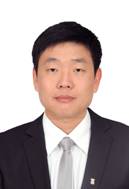
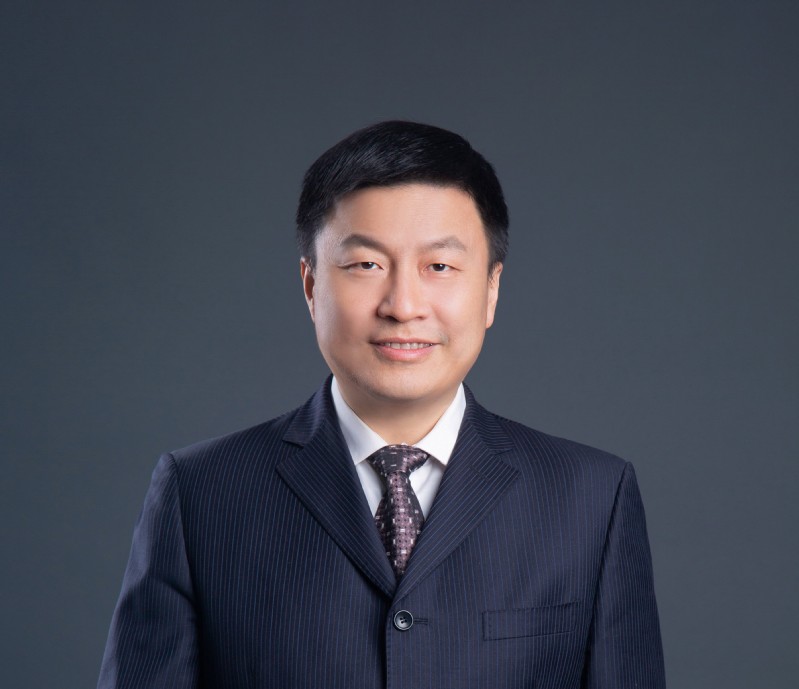
Zhan Ma is a Professor and PhD Advisor at the School of Electronic Science and Engineering, Nanjing University. He leads research in Neural Video Communication, Smart Cameras, and Computational Vision Models. His work focuses on end-to-end learning for compression, networking, and hardware-software co-design. Dr. Ma holds a PhD from New York University's Tandon School of Engineering (2010), and prior to his current role, he served as Senior Staff Researcher at Huawei (2013-2015) and Senior Researcher at Samsung (2011-2013). Research highlights include pioneering work in point cloud compression (adopted into IEEE standards) and dual-camera systems for high-resolution video acquisition. His algorithms are deployed in WeChat/WeChat Video for rate-quality optimization and in ISO standards for video complexity indicators. Recent work emphasizes machine learning-driven approaches for image/video compression and adaptive streaming frameworks. Honors include the 2023 IEEE CAS Society Outstanding Young Author Award and multiple best paper awards at IEEE WACV, BMSB, and other venues. He leads the Vision Lab at Nanjing University and collaborates with industry partners on practical implementations of his research.
Shi Li is a Professor in the Theory Group at the Department of Computer Science and Technology, School of Computer Science, Nanjing University. He previously held faculty positions at the University at Buffalo (2015–2023) as Assistant and Associate Professor, and was a Research Assistant Professor at Toyota Technological Institute at Chicago (2013–2015). He earned his Ph.D. from Princeton University in 2014 under Moses Charikar and completed his B.S. in Computer Science and Technology at Tsinghua University, where he was part of Andrew Chi-Chih Yao’s Special Pilot Class. His research lies at the intersection of theoretical computer science and combinatorial optimization, with a focus on the design and analysis of algorithms for problems in clustering, scheduling, network design, facility location, and online algorithms. He also explores learning-augmented algorithms and differential privacy in algorithmic contexts. His work combines deep theoretical insights with practical algorithmic frameworks, often leveraging linear programming relaxations, iterative rounding, and randomized techniques. The recent publications highlight a consistent trend in approximation algorithms, particularly in clustering (e.g., correlation clustering, fair k-set selection), scheduling (e.g., unrelated machine scheduling, load balancing), and robust optimization. His work frequently appears in top-tier theoretical venues such as STOC, FOCS, SODA, and ICALP, with increasing emphasis on fairness, privacy, and efficiency in algorithm design. Best Paper Award of Track A, ICALP 2011 Co-winner of Best Paper Award, FOCS 2012 Invited to Special Issue of SICOMP (FOCS 2017 paper) Best Paper Award, COCOON 2018 Invited to Special Issue of SICOMP (STOC 2019 paper) Best Paper Award of Track A, ICALP 2024 Outstanding Paper Award, SPAA 2024 Shi Li has advised several PhD and master’s students, including Yuda Feng, Han Dai, Zihao Liang, and Jia Ye, and has mentored postdoctoral researcher Ruilong Zhang. He has served on numerous program committees (e.g., STOC, SODA, ICALP) and is an Editorial Board Member of ACM Transactions on Algorithms . He teaches core algorithm courses such as Design and Analysis of Algorithms and Advanced Algorithms , and actively collaborates with researchers worldwide. His lab focuses on theoretical foundations of efficient and fair algorithm design, with applications in large-scale data analysis and distributed systems.
Professor Li Tian (b. 1982) is a full professor and PhD supervisor at the Department of Civil Engineering, School of Civil Engineering, Shandong University. He serves as Director of the Shandong Green Building Intelligent Construction Center and was selected into Shandong University's Youth Scholar Future Plan (2017-2022). His research focuses on seismic and wind resistance of civil infrastructure, with 38 SCI publications and 56 patents (26 inventions). Research Interests Structural Earthquake and Wind Resilience Vibration Control Systems Smart Material Applications Multi-hazard Structural Analysis Long-span Transmission Tower Dynamics Publications Overview His 15 most recent works (2018-2019) demonstrate expertise in seismic/wind vulnerability of power infrastructure, vibration control devices (particularly SMA-TMD systems), and multi-hazard structural analysis. Key contributions include probabilistic seismic demand modeling, bidirectional damping mechanisms, and collapse failure simulations. Scientific Awards Multiple Shandong Electric Power Science and Technology Progress Prizes (2018, 2015) Shandong University Teaching Awards (2017, 2012, 2014) National and Regional Academic Paper Prizes Academic Engagement He actively participates in structural engineering societies, serves on NSFC review panels, and acts as reviewer for over 30 journals including Engineering Structures and Earthquake Engineering and Engineering Vibration .
Xuyang Wu serves as Associate Professor at the School of Automation and Intelligent Manufacturing (AiM), Southern University of Science and Technology (SUSTech) in Shenzhen, China. He was promoted from Assistant Professor in June 2025 after joining SUSTech in February 2024, following postdoctoral research at KTH Royal Institute of Technology (2020-2023) and a visiting position at The Chinese University of Hong Kong (2023-2024). His educational background includes: Ph.D. in Communication and Information Systems, University of Chinese Academy of Sciences (2015-2020) B.S. in Applied Mathematics, Northwestern Polytechnical University (2011-2015) Wu's research centers on distributed and large-scale optimization with applications in machine learning and networked systems. His work develops asynchronous algorithms that handle communication delays and coupling constraints, bridging control theory with modern machine learning. Key contributions include barrier function methods for safe resource allocation and delay-agnostic coordinate updates, emphasizing convergence guarantees in decentralized settings. Analysis of his 15 most recent publications (2021-2025) reveals consistent focus on asynchronous distributed optimization across top venues including IEEE Transactions on Automatic Control and ICML. His work demonstrates increasing sophistication in handling non-convex objectives and time-varying networks while maintaining theoretical convergence guarantees, with recent expansion into high-performance decentralized training frameworks. Scientific recognition includes: Best Student Paper Finalist at IEEE International Conference on Control & Automation (2019) While specific advised students and grant details aren't documented in available sources, Wu's publication record indicates active collaboration with researchers at KTH Royal Institute of Technology and The Chinese University of Hong Kong. His work shows clear progression from theoretical foundations toward practical distributed learning applications. Current research focuses on enabling violation-free optimization under constraints and developing communication-efficient decentralized training frameworks for real-world deployment scenarios.
Dr. Fengwei An is an Associate Professor at the Shenzhen-Hong Kong Institute of Microelectronics , Southern University of Science and Technology (SUSTech). He earned his Ph.D. in Engineering from Hiroshima University (2013) , following a Master's (2010) and Bachelor's (2006) from Qingdao University of Science and Technology. Current Role : 2025-Present - Associate Dean and Associate Professor, SUSTech Shenzhen-Hong Kong Institute of Microelectronics Prior Academic Roles : 2017-2018 - Associate Professor, Hiroshima University; 2013-2017 - Assistant Professor, Hiroshima University Industry Experience : 2018-2019 - Chief Engineer, Panasonic Semiconductor Co., Ltd., Japan Research Interests focus on low-power edge artificial intelligence chip design for computer vision, including: Ultra-large-scale digital integrated circuit design System-on-Chip (SoC) integration Image processing and recognition Machine learning hardware Autonomous driving applications High-speed motion tracking systems Publications include over 80 top-tier journal/conference papers (e.g., TCAS-I/II, ESSCIRC, APCCAS) on AI accelerators, stereo vision processors, and sensor interfaces, with 15 recent articles highlighting advancements in stereo matching, video denoising, and reconfigurable coprocessors. Scientific Awards : 2023 - SUSTech Outstanding Teaching Award 2022 - APCCAS Best Paper Nomination 2022 - PrimeAsia Bronze Leaf Award 2020 - Wu Wenjun Artificial Intelligence Science and Technology Award (Second Prize) Patents : 9 Chinese and 3 Japanese inventions in AI chip design, stereo matching systems, and sensor interfaces.
Li Junguo is a Research Professor at the School of Innovation and Entrepreneurship, Southern University of Science and Technology (SUSTech), where he also serves as Assistant Dean of the Clean Energy Institute. He joined SUSTech in 2019 and was promoted to Research Professor in January 2024. Prior to this, he worked as an Assistant Professor at the Institute of Coal Chemistry, Chinese Academy of Sciences (CAS) from 2014 to 2019. His academic journey began with a Bachelor's degree in Mineral Processing Engineering from China University of Mining and Technology in 2008, followed by a Ph.D. in Chemical Engineering and Technology from the University of Chinese Academy of Sciences, completed in January 2014. His educational background includes: 2004-2008: B.S. in Mineral Processing Engineering, China University of Mining and Technology 2009-2014: Ph.D. in Chemical Engineering and Technology, University of Chinese Academy of Sciences Professor Li's research focuses on the clean conversion of carbon-containing fuels , carbon materials development , fluidization engineering , and scale-up fundamentals . His work spans both fundamental and applied research, with particular emphasis on sustainable energy solutions that address carbon neutrality goals. He investigates pyrolysis and gasification characteristics of various fuels, develops high-performance carbon materials for diverse applications, and studies soil improvement techniques. His research on fluidized bed reactors explores flow characteristics and scale-up mechanisms critical for industrial applications. His publication record demonstrates a strong focus on sustainable energy solutions and carbon management. Recent work emphasizes green methanol production as a pathway to carbon neutrality, advanced biomass conversion technologies, and innovative approaches to coal water slurry processing. His research integrates chemical engineering principles with environmental sustainability goals, particularly addressing China's carbon reduction targets. The interdisciplinary nature of his work bridges energy engineering, materials science, and environmental remediation. Professor Li has received numerous honors and awards for his contributions to science and engineering: Second Prize for Innovation of the China Invention Association Entrepreneurship Award (2024) Academic Editor of the Journal of Fuel Chemistry and Technology (2021, 2023) Shenzhen High-level Professional Talent (Category D, 2019) Member of the Youth Innovation Promotion Association of the Chinese Academy of Sciences (2019) "Shanxi Talent" Young Outstanding Talent (2019) Second Prize of Science and Technology Progress Award of Chinese Society of Particulate Science (2018) As a research leader, Professor Li has secured significant funding for his work, including projects under the National Key R&D Program, National Natural Science Foundation of China, and various industry collaborations. His current research portfolio includes high-value utilization of domestic sludge, key technologies for low-rank coal processing, and large-scale treatment of low-calorific-value municipal solid waste. He also serves as the project leader for the Shenzhen Low-Quality Coal Comprehensive Utilization Engineering Research Center. In addition to his research activities, he teaches graduate courses in Industrial Product Dissection and Transformation Practice and Engineering Ethics. Professor Li leads the Clean Energy Institute at SUSTech, where his team focuses on developing technologies for carbon-neutral energy systems. His laboratory work emphasizes practical applications of fundamental research, particularly in the areas of biomass conversion, coal utilization, and carbon material synthesis. The institute collaborates with both domestic and international partners to advance sustainable energy solutions.
Bo Zhang is an Associate Professor at the Department of Chemistry, College of Chemistry and Chemical Engineering, Xiamen University. His research focuses on advanced chromatography techniques, microfluidic chip fabrication, proteomics, and biomedical analysis through liquid phase separation-mass spectrometry integration. Education: Doctor of Chemistry from York University (2007), Postdoctoral Fellow at Imperial College London (2007-2009), B.S. in Chemistry from Jilin University (1999). Current position: Associate Professor at Xiamen University since November 2009. Research Interests span multiple cutting-edge areas: Development of microfluidic chips for precision chromatography and separation science Innovations in liquid phase separation-mass spectrometry interfaces Advanced core-shell particle electrochromatography analysis High-throughput capillary column fabrication using segmented microfluidic packing Biomedical applications through urinary protein digest analysis 3D printing of robust HPLC media via stereolithography Publication Trends demonstrate expertise in: Microfluidic device development for chromatography (2015-2025) Innovations in stationary phase selection and column fabrication (2018-2025) Advancements in two-dimensional separation systems (2015, 2021) Mass spectrometry interface technologies (2018-2024) Core-shell particle electrochromatography (2018) Large-scale additive manufacturing for HPLC media (2025)
Zhuozhao Li is an Assistant Professor in the Department of Computer Science and Engineering at Southern University of Science and Technology (SUSTech) in Shenzhen, China. He joined SUSTech in August 2021 after serving as a Postdoctoral Scholar at the University of Chicago from July 2018 to July 2021. His research focuses on high-performance computing, distributed systems, and cloud/edge computing, with applications across scientific domains. Ph.D. in Computer Science, University of Virginia, May 2018 M.S. in Computer Science, University of Southern California, May 2012 B.E. in Computer Science, Zhejiang University, July 2010 Dr. Li's research spans several critical areas in modern computing infrastructure. His primary focus is on High Performance Computing , where he develops novel approaches to optimize computational efficiency in scientific applications. In Distributed Systems , his work addresses challenges in large-scale system coordination and resource management. His contributions to Cloud/Edge Computing focus on improving virtualization techniques and resource allocation strategies. Additionally, he explores applications in the Internet of Things , examining how distributed computing paradigms can enhance IoT infrastructure. Dr. Li's publication record demonstrates a consistent focus on advancing distributed computing systems and their scientific applications. His recent work shows a clear progression from foundational research on data-parallel frameworks and job scheduling toward more applied systems for scientific computing. His contributions to projects like funcX and DLHub represent significant advancements in making distributed computing more accessible for scientific workflows. A notable trend is the increasing interdisciplinary nature of his work, with applications spanning from computational biology (SARS-CoV-2 research) to privacy-preserving spatial crowdsourcing. ACM HPDC Best Paper Nominees, 2019 IEEEMASS Service Award, 2019 Outstanding Graduate Research Assistant, University of Virginia, 2018 Dr. Li actively mentors students and researchers, currently recruiting PhD students, Master's students, postdocs, and research assistants for his research group at SUSTech. His research has been supported through various collaborative projects, including significant contributions to the U.S. Department of Energy National Virtual Biotechnology Laboratory Project about COVID-19, which was awarded the Secretary of Energy Achievement Award. His work on funcX, DLHub, and Parsl represents major software infrastructure development efforts with broad scientific impact. Dr. Li is affiliated with multiple research initiatives, including the Globus Lab (during his postdoc at University of Chicago) and various collaborative projects involving high-performance computing resources. At SUSTech, he leads a research group focused on distributed systems and high-performance computing. His work often involves collaboration with researchers across institutions, particularly in projects related to scientific computing infrastructure like funcX and DLHub.
WANG Xishi is a Professor at the University of Science and Technology of China affiliated with the State Key Laboratory of Fire Science in Hefei. He has served as Director of the Clean and effective fire suppression section since 2010 and previously as Executive Director of the Experimental Facility Division (2005-2010), maintaining active research leadership through 2021 publications. Education: PhD, University of Science and Technology of China (2002) Professor Wang's research pioneers clean fire suppression and explosion mitigation technologies with emphasis on water mist systems. His work spans lithium-ion battery thermal runaway control, propane/ethanol-gasoline vapor explosion suppression, and laser-based flow diagnostics. Recent studies combine experimental validation with numerical modeling to address real-world safety challenges in energy storage and industrial environments, demonstrating significant improvements in suppression efficiency through innovative agent delivery mechanisms. His 2019-2021 publications reveal a strategic shift toward energy storage safety (35% of recent work) and alternative fuel explosions (30%), with growing integration of laser diagnostics for precision measurement. This reflects evolving research priorities aligned with China's high-tech development goals in battery technology and clean energy. Scientific Awards: Anhui province Science and Technology Progress Award, First-class (2010) 6th Anhui Provincial Excellent Academic Papers Award, First-class (2010) Outstanding contributor in high-tech Olympics (2008) Wang Kuan Cheng YuCai Award, First-class (2007) 5th Anhui Provincial Excellent Academic Papers Award, First-class (2007) 4th Anhui Provincial Excellent Academic Papers Award, Third-class (2003) Best Paper Award of 5th AOSFST, Second Prize (2001) Professor Wang has led approximately 30 research projects including ten major grants from China's Ministry of Science and Technology, National Natural Science Foundation, and Ministry of Education. His team has produced over 120 journal papers, three books/chapters, and 15+ patents, with his 2007 selection into the "New Century Talents Supporting Program" marking significant career recognition. Current projects focus on water mist optimization for next-generation battery safety systems. As Director of the Clean fire suppression section at SKLFS, he oversees laboratory facilities for large-scale fire/explosion testing and laser diagnostics. His team collaborates with international institutions including The University of Tokyo and Hong Kong universities, maintaining active participation in the International Association for Fire Safety Science as a Lifetime Member since 2011.
Hao Wang is an Assistant Researcher in the Department of Computer Science and Technology at Nanjing University, China. He is affiliated with the Reasoning & Learning Group and conducts research at the intersection of data management and machine learning. Bachelor of Mathematics, Nanjing University (2005) Master of Computer Science, Nanjing University (2008) Ph.D. in Computer Science, The University of Hong Kong (2014) His research interests span Data Management and Machine Learning , with recent focus on rank-aware query processing, recommender systems (especially location-based), reinforcement learning, and transfer learning. His work often integrates user behavior modeling, efficient indexing, and scalable algorithms for large-scale data. Hao Wang's publication record shows a consistent trend in solving practical problems in data-intensive AI systems. His recent articles focus on personalized location recommendation , crowdsourced data labeling , distributed learning for imbalanced data , and reinforcement learning transfer . These works appear in top venues such as VLDB, SIGMOD, ICDM, AAAI, and journals like TKDE and GeoInformatica, indicating strong technical depth and interdisciplinary impact. Hao Wang has not been explicitly mentioned as receiving scientific awards in the provided text. He has collaborated extensively with researchers such as Yang Gao, Nikos Mamoulis, and David Cheung. While no formal advisees are listed, his involvement in supervising PhD work (as co-supervisor) and publishing with students suggests an active mentoring role. His research has been supported through academic collaborations and institutional affiliations, though specific grant details are not provided. Hao Wang is a member of the Reasoning & Learning Group at Nanjing University, where he contributes to advancing intelligent systems that combine logical reasoning with statistical learning. The group focuses on foundational and applied aspects of AI, particularly in data mining, knowledge discovery, and autonomous decision-making.
Wei Chen is a Professor at the State Key Laboratory of CAD&CG, College of Computer Science, Zhejiang University, Hangzhou, China. His academic journey began and ended at Zhejiang University, where he earned both his Bachelor's (1996) and Ph.D. (2002) in Computer Science, followed by a visiting Ph.D. position at the Fraunhofer Institute in Germany (2000-2002) and a visiting scholar role at Purdue University (2006-2008). Research Focus: Visualization, Visual Analytics, Biomedical Image Computing, Big Data Analytics. Academic Leadership: Served on editorial boards of journals like IEEE Transactions on Visualization and Computer Graphics, Journal of Visual Informatics, and as Chair of IEEE Pacific Visualization Symposium. Impact: Over 110 IEEE/ACM Transactions and CCF-A papers, four Chinese textbooks on visualization, and two monographs on big data technology. His recent publications (2023-2024) span domains like visual analytics for health insurance fraud detection, quantum circuit visualization, federated learning visualization, urban mobility modeling, and AI-enhanced cultural heritage preservation. A thematic trend shows integration of deep learning, large language models, and human-in-the-loop systems with visual interfaces. Scientific Awards include the Zhejiang Province Natural Science First Prize (2021, 2017), CCF Technology Invention First Prize (2020), Wu Wenjun Artificial Intelligence Science and Technology Progress First Prize (2023), and multiple Best Paper/Poster recognitions at IEEE VIS and Pacific Visualization conferences. He actively mentors graduate students and leads the Visual Analytics Group , contributing to national and international standards in visualization research. His editorial and organizational roles in top conferences further solidify his influence in shaping the field.
Zhang Lixin is a Professor and Foreign Member of the European Academy of Sciences at East China University of Science and Technology. He serves as Director of the National Key Laboratory of Bioreactor Engineering and holds leadership roles in multiple research programs. His academic journey includes a PhD from the Chinese Academy of Sciences and postdoctoral work at Emory University. Education: PhD in Microbial Pharmacy (1994), Master in Microbial Pharmacy (1990), Bachelor in Microbiology (1990) Current Affiliation: School of Bioengineering, East China University of Science and Technology His research integrates synthetic biology with bioreactor engineering to address key challenges in intelligent biomanufacturing, including cellular metabolic conversion mechanisms and large-scale production bottlenecks. His work spans microbial drug discovery, green manufacturing of high-value compounds like coenzyme Q10 and astaxanthin, and CRISPR-based biosensing platforms. Recent publications highlight advancements in porphyrin production (2024), CRISPR-Cas systems (2023), and metabolic engineering of Streptomyces for polyketides (2020). His research trends emphasize synthetic regulatory elements, thermostable genetic tools, and high-throughput screening methodologies. Major scientific awards include: National Science and Technology Progress Award (2016, Second Prize) WuXi AppTec Life Chemistry Research Award (2017) Inner Mongolia Science and Technology Progress Award (2011, First Prize) Royal Society-Roche Young Scientist Award (2014) UNIDO Global Science and Technology Innovation Silver Medal (2022) Zhang has secured major grants including National Key R&D Program (Synthetic Biology), National Natural Science Foundation projects, and EU PharmaSea program. He founded the journal Synthetic and Systems Biotechnology and received the Outstanding Editor-in-Chief Award (2023).
CHEN Zhizong is an Associate Professor in the Department of Management Science and Engineering at Tongji University's School of Economics and Management . With a career spanning over three decades at Tongji University, he has focused on interdisciplinary research bridging Operations Research , Supply Chain Management , and Emergency Management . Education: Ph.D. in Management Science and Engineering (2004-2007, Tongji University) Bachelor in Electronic Engineering (1979-1984, Tongji University) Chen's research explores how mathematical optimization techniques can enhance disaster response systems and supply chain efficiency. His work on hub coverage models , DEA analysis , and facility location optimization has received national funding through the National Natural Science Fund Project . His teaching combines theoretical rigor with practical applications in Operations Research and Statistics . Recent publications demonstrate his focus on disaster prevention infrastructure (2005) and regional innovation systems (2016), showing a consistent emphasis on applying management science tools to critical real-world challenges. His methodological repertoire includes context-dependent DEA , multi-objective decision models , and robust optimization .
Jiming Cao is a Professor at the Department of Construction Management and Real Estate , School of Economics and Management , Tongji University. He serves as Vice Director of the Large Complex Project Management Institute and Director of the Tongji Institute of Facility Management. Ph.D., School of Economics and Management, Tongji University (2004) Master, School of Economics and Management, Tongji University (1989) Bachelor, Department of Civil Engineering, Tongji University (1982) His research focuses on Facility Management , Construction Project Management , and Construction Investment & Operation Management . Recent work explores contract incentive mechanisms, knowledge transfer in project-based organizations, and risk management in construction projects using network analysis and fuzzy logic. Key publications analyze topics like work-family conflict in construction professionals , collaborative innovation contract design , and facility management maturity models . His research combines theoretical frameworks with practical applications in public buildings and infrastructure projects. Outstanding Expert in Construction Project Supervision Industry (2009) Procurement Consulting Expert for Shanghai Municipal Government Former member: RICS, CoreNet, IFMA Active in pedagogical development, he leads national-level MOOC courses in Construction Management and has contributed to facility management education systems. His consulting activities span major corporations and government projects, including China State Construction International Holdings Limited.
Professor Meng Qingchun is a second-level professor and doctoral supervisor at the School of Management, Shandong University. He leads the Digital Intelligence Management and Decision Simulation Laboratory (Class A) and focuses on emergency resource coordination, supply chain resilience, and disaster response strategies. His research has been supported by multiple National Natural Science Foundation projects and resulted in over 80 publications, including works in Transportation Research Part E , Production and Operations Management , and Risk Analysis . Key achievements include optimizing emergency material reserves, volunteer task allocation algorithms, and fairness-aware decision models. Education details are not explicitly mentioned in the provided texts, but his academic roles and publications indicate advanced training in operations research and management science. He serves as deputy secretary-general of the China Association for Optimization and chairs its Network Science Branch. His work bridges theoretical advancements with practical applications in disaster management and public policy. Research interests emphasize emergency governance, collaborative decision-making mechanisms, and government-enterprise partnerships. Recent projects address volunteer scheduling efficiency, risk integration under uncertainty, and loan subsidy policies post-disasters. His team’s work has been published in top-tier journals like Production and Operations Management (UTD 24) and Risk Analysis (ABS 4). Scientific awards include the National Teaching Achievement Award (2nd Prize) and Shandong Provincial Social Science Award (1st Prize). He has secured grants totaling four National Natural Science Foundation key/general projects and a National Social Science Foundation key project. His lab collaborates with industry leaders in manufacturing and public health, applying optimization theories to real-world challenges.