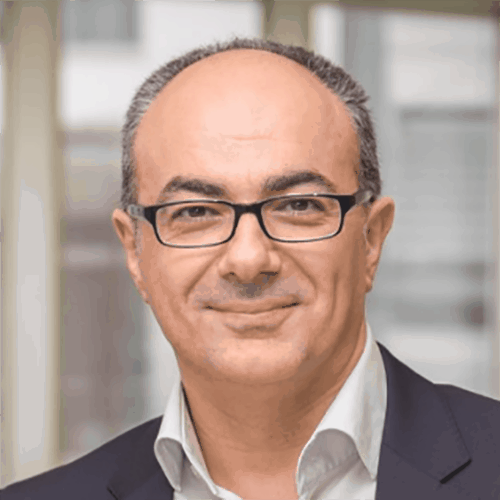
Mogens Fosgerau is a Professor in the Department of Technology, Management and Economics at the Technical University of Denmark (DTU), where he conducts research in transport policy and transportation science. His work spans econometrics, travel behavior modeling, and transport economics, contributing to sustainable urban mobility and policy design. Institution: Technical University of Denmark Department: Department of Technology, Management and Economics Email: mogens.fosgerau@econ.ku.dk ORCID: https://orcid.org/0000-0002-6452-5215 His research focuses on discrete choice modeling, travel time valuation, scheduling preferences, and congestion pricing. He develops theoretical and empirical models to understand how individuals make travel decisions under uncertainty and how these behaviors affect urban transport systems. His work integrates economic theory with data-driven methods, often using large-scale datasets and advanced econometric techniques. The recent trend in his publications highlights innovations in perturbed utility models for route choice, stochastic traffic assignment, and the analysis of induced demand for cycling. His research bridges transportation science, behavioral economics, and operations research, with applications in urban planning and policy evaluation. Scientific awards received include: The International Choice Modeling Conference (ICMC) award for Most Innovative Application (2022) Best Overall Paper Award, ITEA Conference (2015) Best Paper Awards from BIVEC-GIVET (2007), Kuhmo-Nectar (2008) Hedorfs Fonds Pris for Transportforskning (2011) Mogens Fosgerau has supervised PhD students such as Fentie Abegaz and has been involved in multiple externally funded research projects, including URBAN (Innovation Fund Denmark), IRUC (Danish Council for Strategic Research), and Horizon 2020 initiatives. He has also served on review panels, including for the Norwegian Research Council, and contributed to peer review and editorial duties. He is actively engaged in research networks and has presented his work at international conferences. His projects often involve interdisciplinary collaboration with researchers in economics, engineering, and urban planning.