معرفی
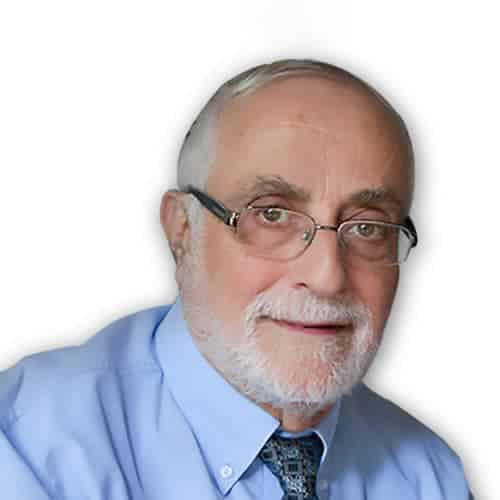
Shlomo Havlin is a Professor in the Department of Physics at Bar-Ilan University, Israel, within the Faculty of Exact Sciences. He has held major academic leadership roles, including Dean of the Faculty of Exact Sciences (1999–2001), Chairman of the Physics Department (1984–1988), and President of the Israel Physical Society (1996–1999). He is also recognized as an External Faculty member at the Complexity Science Hub (CSH) in Vienna.
His research focuses on statistical physics and its applications in complex networks, with far-reaching implications across disciplines such as climate science, biology, medicine, geophysics, and computer science. Havlin's work explores the behavior of interdependent systems, phase transitions, and systemic risk, contributing to foundational understanding in network resilience and abrupt system failures.
The recent publications highlight a consistent trend in studying abrupt transitions and mixed-order phase transitions in complex systems, particularly focusing on the microscopic origins of such phenomena. These works sit at the intersection of statistical mechanics, network theory, and multidisciplinary modeling, often published in high-impact journals and preprint repositories.
Scientific Awards:
- Landau Prize for outstanding Research (1988)
- Humboldt Senior Scientist Award (1992)
- Nicholson Medal, American Physical Society (2006)
- Weizmann Prize (2009)
- Lilienfeld Prize, American Physical Society (2010)
- Rothschild Prize in Physical and Chemical Sciences (2014)
- Order of the Star of Italy (2017)
- Israel Prize in Physics and Chemistry (2018)
- Bakhuis Roozeboom Medal
Shlomo Havlin has led major research initiatives, including the Excellence National Network Center (Israel Science Foundation, 1990–2011) and the Minerva Center (1994–2011). He has been a Fellow of the American Physical Society since 1995 and the Institute of Physics (UK) since 2000. His editorial roles include membership on the boards of Physica A, New Journal of Physics, Fractals, and Co-Editor of Europhysics Letters. While specific grant details are not listed, his long-term leadership in nationally and internationally funded centers indicates sustained grant support and collaborative research mentorship.
He is actively involved in the global network science community, as evidenced by participation in events like NetSci 2023 and organizing workshops such as the Statistical Mechanical Approaches of Complex Systems at CSH Vienna. His affiliation with the Complexity Science Hub underscores his engagement in interdisciplinary, large-scale scientific collaboration.