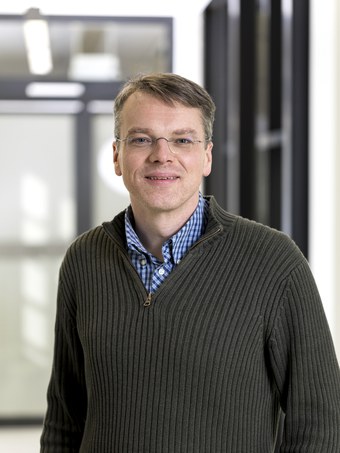
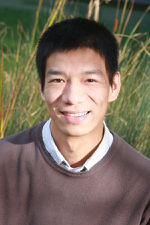
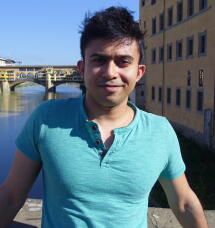
Michael Hanke is Professor at the Institute of Neuroscience and Medicine at Research Center Jülich, leading research in Brain and Behavior (INM-7). His work focuses on neuroimaging, data management, and reproducible research methodologies in neuroscience. Research interests include neuroinformatics, open science initiatives, computational neuroscience, and developing tools for reproducible analysis of large-scale neuroimaging datasets. Specializes in creating infrastructures for FAIR data management. Recent publications focus on research data management (particularly DataLad ecosystem), neuroimaging workflow standardization, reproducible analysis pipelines, and applications in neuroimmunology. Work emphasizes open science practices and collaborative research infrastructure. Developed HeuDiConv for DICOM conversion and contributed to BIDS standards for neuroimaging data organization. Active in community initiatives including OHBM Brainhack and NFDI Neuroscience.
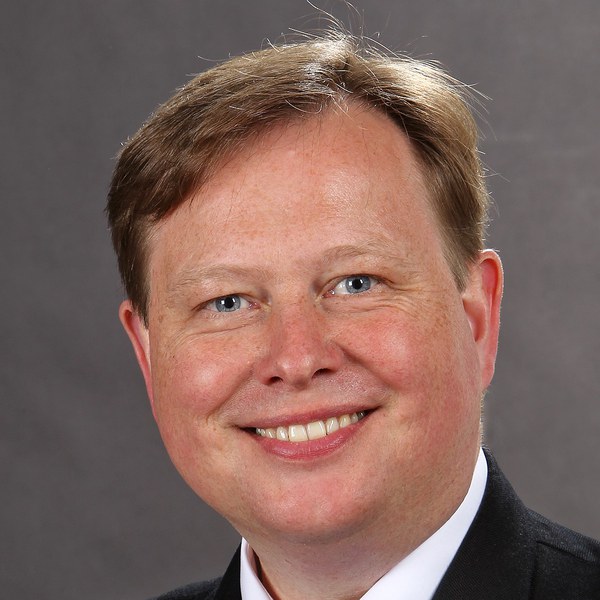
Prof. Dr. Stefan Heim leads the Neuroanatomy of Language working group at Research Center Jülich's Institute of Neuroscience and Medicine (INM-1). His research bridges cognitive neuroscience and computational approaches to language processing. Research Focus His work investigates the structural and functional organization of language networks in the brain, combining neuroanatomical approaches with advanced computational methods. Current projects explore machine learning applications in neuroscience and computational linguistics. Publication Trends Recent publications focus on machine learning innovations including large language models, efficient training techniques, and applications in scientific domains like plasma physics and renewable energy.
Prof. Klaus Bogenberger is a full professor at the Technical University of Munich (TUM), holding the Traffic Engineering and Control professorship within the TUM School of Engineering and Design. His career includes roles at BMW Group, TRANSVER GmbH, and the University of the Bundeswehr Munich. He holds a doctorate from TUM on adaptive fuzzy systems for traffic control. His research focuses on urban traffic flow theory, mathematical modeling using novel data sources (vehicle/drone data), and emerging technologies like autonomous vehicles. Key areas include traffic simulation, traffic control methods prioritizing pedestrians/cyclists, quality analysis of traffic information, and innovative mobility systems (on-demand transit, robot taxis, shared mobility). Notable achievements include the HEUREKA Prize (2001). Recent work explores tradable mobility credit schemes (MobilityCoins), digital twin benchmarking (TUM2TWIN), and infrastructure optimization for electric vehicles (CDRpy framework). His interdisciplinary projects integrate machine learning, agent-based modeling, and sensor networks. Current initiatives emphasize equitable mobility solutions and policy analysis using large-scale data from tracking panels like the Mobilität.Leben study.
Dr. Clara Hoppe is a Research Scientist in Phytoplankton Ecophysiology at the Alfred Wegener Institute (AWI). Her work focuses on Arctic primary production, phytoplankton ecology, and the effects of ocean acidification and climate change on polar marine ecosystems. She leads the Kongsfjorden Ecosystem Flagship Program and contributes to international initiatives like the MOSAiC expedition, which studied the Central Arctic Ocean's coupled system. Her research integrates field observations, experimental studies, and interdisciplinary collaborations to understand Arctic biogeochemical processes and ecosystem resilience. Affiliations: Alfred Wegener Institute, Helmholtz Centre for Polar and Marine Research MOSAiC Project Board Member SIOS SOAG Representative Research Interests: Dr. Hoppe's work addresses how Arctic phytoplankton communities respond to environmental stressors such as warming, acidification, and light variability. She investigates the physiological and ecological mechanisms driving species distribution, productivity, and toxin production in polar regions. Her studies contribute to predicting ecosystem shifts under global change scenarios. Publications: Her recent work includes studies on Arctic phytoplankton responses to heatwaves, ocean acidification impacts on toxin production, and large-scale Arctic ecosystem dynamics during the MOSAiC expedition.
Benjamin Rabe is a Research Scientist and Honorary Professor at the University of Applied Sciences, Bremerhaven, affiliated with the Department of Physical Oceanography at the Alfred Wegener Institute (AWI). His primary roles include conducting scientific research, leading fieldwork in Arctic regions, and coordinating large-scale projects like MOSAiC and Tara Polar Station. He also engages in teaching, public outreach, and interdisciplinary collaborations. Research Focus: Rabe specializes in Arctic ice dynamics, freshwater processes, and mesoscale oceanographic phenomena. His work emphasizes autonomous observational systems, such as drifting CTD profilers, and integrates data from diverse platforms to study coupled Arctic systems. Key topics include sea ice thickness, ocean circulation patterns, and their implications for climate change. Publications & Projects: Rabe has authored/co-authored over 128 publications, focusing on MOSAiC expedition outcomes, Arctic freshwater budgets, and observational methodologies. His projects often involve international collaborations, such as the MOSAiC drift campaign and the FRAM observing system. Recent work highlights include studies on the Transpolar Drift’s role in trace element transport and the dynamics of sea ice and ocean interactions. Key Contributions: Rabe’s research bridges physical processes and climate impacts, providing critical insights into Arctic Ocean circulation, freshwater fluxes, and the evolving Arctic environment. He actively participates in policy-related panels on ocean observing systems and contributes to global climate monitoring initiatives.
Wei Jia is a Professor at the School of Computer and Information, Hefei University of Technology, China. Their research focuses on artificial intelligence, machine learning, computer vision, and robotics, with contributions to knowledge graphs, biometric systems, and autonomous systems. They have co-authored over 130+ publications in top-tier journals and conferences, including venues like IEEE Transactions, CVPR, and AAAI. Research interests span deep learning techniques, graph neural networks, and optimization for large-scale systems. Notable work includes entity extraction frameworks, safety analysis in engineering systems, and swarm control algorithms for unmanned vehicles. Contributions also extend to data management systems, such as the TierBase key-value store and the OVERLORD data loader for foundation models. Publications highlight interdisciplinary applications in cybersecurity, robotics, and biomedical imaging. Their work often bridges theoretical advancements with practical implementations, addressing challenges in both software and hardware systems. No specific awards or grants are listed in the provided text.
Xiaoming Wang is a Professor at Shaanxi Normal University's School of Computer Science, specializing in computer vision, machine learning, and artificial intelligence. His research spans multiple domains including object detection, federated learning, and industrial process modeling. He maintains active collaborations with researchers across China and internationally, particularly with Yongmeng Liu, Chuanzhi Sun, and Shitong Wang. Dr. Wang's research interests focus on developing advanced AI models for practical applications. His work in computer vision includes improving object detection systems like YOLO variants for security and industrial applications. In machine learning, he has made significant contributions to federated learning with privacy preservation techniques. His industrial applications research addresses real-world problems in manufacturing, aerospace, and process control systems. Analysis of Dr. Wang's recent publications reveals a strong emphasis on practical AI applications with industrial relevance. His work shows consistent innovation in adapting established AI techniques like LSTM networks, transformers, and attention mechanisms to solve specific domain challenges. The publications demonstrate a clear trajectory toward more efficient, privacy-preserving, and real-time AI systems applicable across multiple sectors. Dr. Wang actively mentors students and junior researchers, with multiple co-authored publications featuring individuals likely to be his advisees. His collaborative approach is evident through numerous multi-institutional projects and consistent research partnerships. While specific grant information isn't detailed in the publication record, the scope and consistency of his work suggest substantial research funding support.
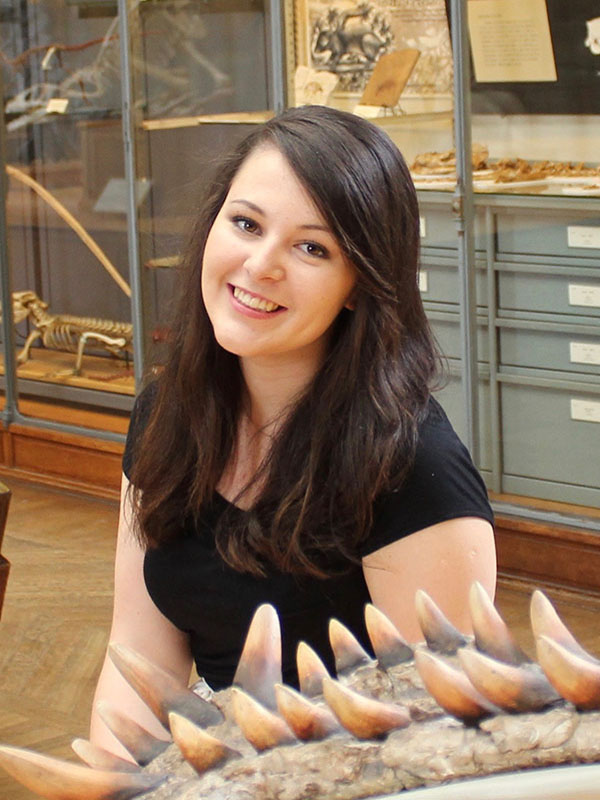
Dr. Emma Dunne is an Assistant Professor at Friedrich-Alexander-Universität Erlangen-Nürnberg, based in the Department of Geography and Geosciences. Her research focuses on understanding how environmental, climatic, and socio-economic factors shape vertebrate biodiversity through deep time. She is particularly renowned for her work on fossil vertebrates, including dinosaurs and squamates, and her critical analyses of colonial legacies in paleontological research. Dunne co-leads the Pal(a)eoscientometrics Research Collective, addressing systemic biases in scientific practices. Her research integrates quantitative methods from paleobiology, phylogenetics, and ecology to explore large-scale evolutionary patterns. Notable projects include studies on climate-driven dinosaur evolution, sampling biases in the fossil record, and ethical challenges in global data equity. Dunne also advocates for inclusive academic publishing and field safety guidelines. Her work has been featured in high-impact journals like Nature Ecology & Evolution , Current Biology , and Paleobiology , and she actively contributes to public science communication through social media and outreach. Dunne serves on the executive committee of the Paleobiology Database, further emphasizing her commitment to advancing open science. Her advising spans topics from cetacean latitudinal diversity to morphological disparity in cave bears, reflecting her interdisciplinary approach. She collaborates internationally, fostering equity in data access and challenging historical colonialist practices in paleontology.
Dr. Long Cheng was a former Researcher at the International Center for Computational Logic (ICCL) within the Faculty of Computer Science at TU Dresden. His research focused on cloud computing, big data analytics, and distributed systems, particularly in optimizing large-scale data processing, outer join operations, and semantic web technologies. He contributed to projects involving parallel programming models like X10, MapReduce frameworks, and efficient data compression techniques for RDF datasets. Cheng collaborated with the Knowledge-Based Systems research group, addressing challenges in scalable systems, high-throughput indexing, and parallel reasoning under non-monotonic logics. His work emphasized performance optimization in distributed environments, including skew handling, data redistribution strategies, and algorithm scalability for large datasets. Publications span topics such as outer join evaluation in cloud environments, efficient compression of semantic web data, and high-performance query execution over distributed systems. His research bridges theoretical computational logic with practical applications in big data and cloud infrastructure.
Prof. Dr. Chiranjib Mukherjee is a Professor of Mathematics at the University of Münster, affiliated with the Institute of Mathematical Stochastics. He holds a leadership role as an Investigator in Mathematics Münster and contributes to the Collaborative Research Center (CRC) projects on Groups, Geometry & Actions. His research focuses on stochastic analysis, large deviations, stochastic PDEs, and applications in statistical mechanics. Education and Academic Background: While specific degree details are not explicitly listed, his academic trajectory includes postdoctoral work at institutions like the Courant Institute (NYU) and his current role as a full professor indicates advanced academic qualifications. Research Interests: His work bridges probability theory and mathematical physics, addressing topics like directed polymers, stochastic homogenization, percolation, and geometric group theory. Recent projects include studies on polaron measures, Gaussian multiplicative chaos, and the interplay between stochastic processes and geometric structures. Publications: Over 30 peer-reviewed articles since 2016, appearing in journals such as Annals of Probability , Communications on Pure and Applied Mathematics , and Probability Theory and Related Fields . Key contributions address the effective mass of polarons, large deviation principles for random walks, and SPDEs in disordered media. Teaching & Supervision: Supervised over 10 master's and bachelor's theses on topics like Liouville first passage percolation, electrical networks, and machine learning applications. Teaches advanced courses on stochastic analysis, Markov processes, and probability theory on groups/networks. Labs/Teams: Leads the research group in stochastic analysis at the Institute of Mathematical Stochastics, collaborating with postdocs like Konstantin Recke and PhD students such as Luzie Kupffer. Active in organizing conferences on probability, dynamics, and group theory.
Axel Arango Garcia is a Postdoc at the Center for Computational and Theoretical Biology (CCTB) within the University of Würzburg, Germany. His research focuses on understanding large-scale patterns of species distribution, diversification, and evolutionary processes over time. He investigates how ecological specialization and dispersal dynamics shape biodiversity in avian systems, particularly within the Emberizoidea clade. Education: BSc in Biology (2012-2016), Universidad Veracruzana, Mexico MSc in Ecology (2017-2019), Instituto de Ecología A.C., Mexico PhD in Evolutionary Biology (2019-2023), Instituto de Ecología A.C., Mexico Research Interests: Axel’s work integrates computational models and phylogenetic analyses to explore biogeographical patterns, evolutionary drivers of diversification, and the impact of habitat fragmentation on genetic diversity. His current project examines the ecological and evolutionary mechanisms behind specialization in Emberizoidea birds. Professional Affiliations: He is part of the Theoretical Biology Group at CCTB, collaborating on interdisciplinary projects at the intersection of computational biology and evolutionary genomics.
Dr. Mirko Schäfer is a Research Associate at the Gips-Schuele-Chair of Sustainable Systems Engineering at INATECH, University of Freiburg, since 2018. Previously, he held postdoctoral positions at Aarhus University (2016–2018, Department of Engineering) and Frankfurt Institute for Advanced Studies (2011). He earned his Dr. phil. nat. in Physics (summa cum laude) from Goethe University Frankfurt in 2011 and a Diploma in Physics from Giessen University in 2006. His research focuses on renewable energy systems, grid emission analysis, and energy policy. Key interests include electricity market modeling, carbon intensity tracking, and flow tracing methodologies for large-scale networks. He develops tools like PyPSA-Eur to evaluate cross-border energy flows and cost-optimal decarbonization pathways. Awards: Carlsberg Fellowship (2016–2018), German Academic Scholarship Foundation Reviewer: Energy (Elsevier), Energies (MDPI), Sustainability (MDPI) Publications highlight work on European energy systems, transmission infrastructure scaling, and cross-border power dynamics. His work bridges physics-based modeling with socio-technical energy challenges, emphasizing equitable cost allocation and grid resilience.
Prof. Dr.-Ing. habil. Jörg Schröder is a full Professor of Mechanics at the University of Duisburg-Essen, Faculty of Engineering, Department of Civil Engineering, and leads the Institute of Mechanics. He has held significant leadership roles, including Vice-Rector for Research and Knowledge Transfer, and is currently Vice-President (2023–2025) and former President (2020–2022) of the International Association of Applied Mathematics and Mechanics (GAMM). He is a member of acatech and the Academy of Sciences and Literature, Mainz. PhD and Habilitation, Universität Stuttgart Professor since 2001, University of Duisburg-Essen Spokesperson, DFG Priority Programme 1748 and Research Unit 1509 Editor-in-Chief, Archive of Applied Mechanics His research centers on computational and continuum mechanics, with a focus on constitutive modeling, finite element methods, and multiscale simulations of materials such as dual-phase steels, high-performance concrete, and magneto-mechanical systems. He employs advanced numerical techniques including mixed and hybrid finite elements, phase-field modeling, and least-squares formulations. His work spans theoretical development and practical applications in manufacturing, civil engineering, and material science. The recent publications demonstrate a strong emphasis on multi-physics problems, including thermo-elastoplastic analysis in laser welding, micromagnetic simulations, sea ice dynamics, and fracture modeling in fiber-reinforced concrete. There is a clear trend toward high-fidelity, multi-scale simulations integrating microstructural details with macroscopic behavior, often using phase-field and reduced-order modeling approaches. Notable scientific recognitions include: Member of the Senate of the German Science Foundation (DFG) Selection Committee, Alexander von Humboldt Foundation Member of acatech and the Academy of Sciences and Literature, Mainz Leadership roles in GAMM Prof. Schröder leads major research initiatives funded by the DFG, serves on editorial boards of leading journals, and collaborates extensively with national and international researchers. He advises numerous doctoral candidates and postdoctoral researchers, though specific student names are not listed in the source text. His team conducts research in areas such as computational inelasticity, multiscale modeling, and simulation of coupled physical phenomena.
Stefan Weßel is a Professor of Theoretical Physics (Condensed Matter) at RWTH Aachen University, affiliated with the Department of Physics within the Faculty of Mathematics, Computer Science and Natural Sciences. He has been a faculty member since 2011 and is actively engaged in research and teaching in theoretical and computational condensed matter physics. Education: Ph.D., University of Southern California (1998–2001) Diplom, Ludwig-Maximilians-Universität München (1994–1998) Vordiplom, Technische Universität Dortmund (1991–1994) His research focuses on quantum magnetism, frustrated spin systems, quantum phase transitions, and topological aspects of condensed matter. He employs advanced computational techniques, particularly quantum Monte Carlo simulations, to study strongly correlated electron systems. His work often involves collaboration with international research groups and has appeared in leading journals such as Nature , Nature Communications , and Physical Review Letters . The recent publications reveal a strong trend toward understanding exotic quantum phases, including spin-nematic transitions, topological order, and magnetic analogues of classical phase transitions. His work spans both fundamental theoretical developments and applications to real quantum materials. He has made significant contributions to the understanding of the Shastry-Sutherland model, honeycomb lattice systems, and edge magnetism in nanoribbons. Scientific Awards: No specific awards were mentioned in the provided text. Stefan Weßel has supervised or collaborated with numerous researchers, though formal advisee names are not listed. He is involved in large collaborative projects such as the ALPS (Algorithms and Libraries for Physics Simulations) initiative, contributing to open-source software for strongly correlated systems. He teaches a range of courses including Theoretical Physics, Statistical Physics, and Computational Physics, indicating a strong commitment to education at both undergraduate and graduate levels. He leads a research group focused on computational quantum many-body physics, utilizing high-performance computing to simulate quantum materials. The group's work has implications for the design and understanding of novel quantum states in low-dimensional and frustrated magnetic systems.
Dr. Carolin Edler is a research scientist in the Department of Legal Medicine at the University Medical Center Hamburg-Eppendorf's Faculty of Medicine. With over 69 publications spanning from 2009 to 2024, she has established herself as a prominent researcher in forensic pathology, particularly in the areas of autopsy studies and infectious disease pathology. Her extensive work during the COVID-19 pandemic has positioned her as a key contributor to understanding SARS-CoV-2 pathology through systematic autopsy-based research. Dr. Edler's research primarily focuses on forensic pathology with specialized expertise in autopsy studies of infectious diseases, particularly SARS-CoV-2. Her work spans forensic analysis of trauma patterns including stab wounds, toxicology investigations of substances like Kratom, and detailed pathological examinations of multiorgan involvement in viral infections. Her research methodology combines traditional forensic pathology with modern molecular techniques to understand disease mechanisms at both macroscopic and microscopic levels. She has been instrumental in establishing standardized protocols for COVID-19 autopsies and investigating unusual substances in forensic contexts. Dr. Edler's publication record demonstrates consistent research productivity with significant contributions to high-impact journals in forensic medicine, pathology, and infectious diseases. Her work shows a clear trajectory from general forensic pathology topics toward specialized research on pandemic-related pathology, with particular emphasis on understanding the mechanisms of SARS-CoV-2 infection across multiple organ systems. She frequently collaborates with interdisciplinary teams across Germany, contributing to national registry studies and cooperative research initiatives. Her scientific contributions include methodological advancements in forensic toxicology, innovative approaches to understanding viral pathogenesis through autopsy studies, and practical guidelines for safe autopsy procedures during pandemics. Dr. Edler has been particularly active in translating autopsy findings into clinical and public health implications, especially regarding thromboembolic complications, multiorgan involvement, and unusual presentations of SARS-CoV-2 infection. Dr. Edler has demonstrated strong collaborative skills through her involvement in large-scale research initiatives including the German Registry of COVID-19 Autopsies (DeRegCOVID). Her work bridges forensic pathology with clinical medicine, providing critical insights into disease mechanisms that inform both death investigation practices and clinical management approaches. She has contributed to establishing standardized autopsy protocols that have been adopted across multiple institutions in Germany.