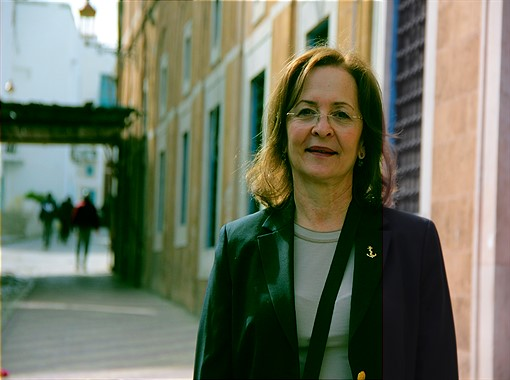
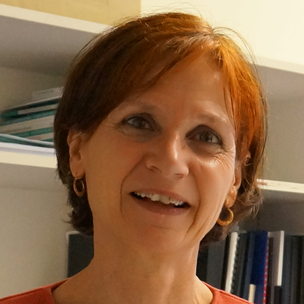
Belgin Ergenç Bostanoğlu is an Associate Professor in the Computer Engineering Department at Izmir Institute of Technology (Turkey). Her research focuses on query optimization in distributed databases, association rule mining, privacy-preserving data mining, and graph-based algorithms. She leads the Dworld research laboratory and has held academic and industry roles since the 1980s. Education: B.Sc. in Computer Engineering, Middle East Technical University (1983) M.Sc. in Computer Engineering, Izmir Institute of Technology (2002) Ph.D. in Computer Engineering, Paul Sabatier University, France (2008) Research Interests: Dynamic frequent itemset mining and hiding under multiple support thresholds Subgraph mining in evolving graphs Federated query processing over linked data Privacy-preserving techniques in distributed databases Medical NLP applications (e.g., TurkMedNLI dataset) Her recent work emphasizes large-scale graph analysis, medical NLP dataset development, and adaptive join operators for federated SPARQL queries. She has contributed to over 30 peer-reviewed publications and led projects like the TÜBİTAK ARDEB 3501 platform for dynamic frequent itemset mining. Teaching: Courses include Advanced Database Management Systems, Knowledge Discovery, and Privacy-Preserving Data Mining. Labs & Projects: Manages Dworld lab and coordinates projects such as 'Turkish Medical NLP Model Development' (BAP-funded) and the Behavioral Next Generation Wireless Networks COST Action.
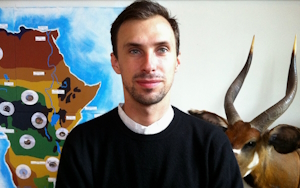
Mulugeta Weldezgina Asres is a Researcher at the Department of Information and Communication Technology , University of Agder, Norway. His roles include developing large-scale anomaly detection systems for CERN detectors and advancing AI-driven industrial data analytics. He holds a Ph.D. in machine learning for non-intrusive load monitoring (NILM) and has prior academic experience at Mekelle University (Ethiopia) and Politecnico di Torino (Italy). Education: B.Sc. (Gold Medal) and M.Sc. (Gold Medal) in Computer Engineering from Mekelle University, followed by doctoral research at the Center for Artificial Intelligence Research (CAIR), Norway. His research focuses on time-series analysis, anomaly detection, IoT, and Industry 4.0 applications. Key research areas include multivariate time-series modeling, deep learning for anomaly prediction in high-energy physics detectors, and AI-powered industrial monitoring. He has contributed to projects at CERN, Telecom Italia, and automotive manufacturing, emphasizing data-driven solutions. Awards include Gold-Medal Awards for academic excellence in both B.Sc. and M.Sc. His work bridges theoretical machine learning with practical applications in energy efficiency, telecommunications, and particle physics instrumentation. Publications span IEEE journals and conferences, focusing on anomaly detection frameworks, NILM algorithms, and predictive modeling for industrial systems. Collaborations include institutions like CERN, Politecnico di Torino, and Midori srl, an energy efficiency startup.
Dr. Lucinda Grummitt is a Research Fellow at the Matilda Centre for Research in Mental Health and Substance Use within the Faculty of Medicine and Health at the University of Sydney. Her research program focuses on childhood adversity and trauma as critical risk factors for mental ill-health and substance use disorders, with particular emphasis on adolescent and young adult populations. She leads large-scale implementation trials of trauma-informed mental health prevention programs in Australian schools and coordinates international research collaborations. Education PhD, University of Sydney (awarded circa 2019, supported by NHMRC CRE PREMISE PhD Scholarship) Bachelor's degree, University of Sydney (Academic Merit Prize, 2013) Graduate studies, Northeastern University, Boston, USA (Dean's List for Academic Achievement, 2014) Research Focus Dr. Grummitt's work integrates epidemiological, clinical, and public health approaches to address childhood adversity's lifelong impacts. She develops trauma-informed, gender-inclusive prevention strategies targeting schools and healthcare settings, with special attention to vulnerable populations including gender and sexuality diverse youth. Her research spans improving childhood adversity monitoring systems, understanding trauma's psychological and social consequences, and creating evidence-based preventive interventions that address structural determinants of health. Publication Impact Her recent publications (2023-2025) reveal a strategic shift toward gender-affirming, trauma-informed mental health prevention with strong methodological diversity. She publishes extensively in top-tier journals including JAMA Psychiatry and The American Journal of Preventive Medicine, with growing emphasis on intersectional approaches that address co-occurring mental health and substance use issues among marginalized youth populations. Her work increasingly incorporates machine learning for risk prediction and mixed-methods designs for program refinement. Scientific Recognition Professor Helen Herrman Award for Social Mental Health (2022) NHMRC PREMISE Travel and Career Development Support Grant (2019, 2020, 2022) The Matilda Centre Award for Research Excellence (2022) SPR Early Career Travel Award (2022) NHMRC Centre of Research Excellence PREMISE PhD Scholarship (2019) Research Leadership Dr. Grummitt has secured over $1.5 million in competitive funding since 2019, including multiple NHMRC grants and international travel awards. She currently manages a large randomised controlled trial of the OurFutures Mental Health program and coordinates Australia's participation in the International Study of Pro/Anti-social behaviour. Her leadership extends to co-chairing the Trauma and Substance Use Special Interest Group at the International Society of Trauma and Stress Studies, where she shapes global research priorities. Collaborative Networks She actively contributes to the Matilda Centre's research ecosystem while maintaining international collaborations with Columbia University and King's College London. Her professional affiliations include the Society for Mental Health Research, Growing Minds Australia, and the International Society of Trauma and Stress Studies, where she bridges clinical research with policy implementation through cross-sector partnerships focused on trauma-informed systems change.
Dr. Hongye Liu is a Teaching Assistant Professor in the Department of Computer Science at the University of Illinois Urbana-Champaign, affiliated with the Siebel School of Computing and Data Science. She joined the Illinois Department of Computer Science after years of research in Biomedical informatics at Harvard Medical School and its affiliated hospitals in the Boston Longwood Medical area. Her educational background includes a B.E. in Precision Machinery and Instrumentation from the University of Science and Technology of China and a PhD from MIT in computer aided design for 3-D Printing. Her academic journey reflects her belief that 'learning is a lifelong journey' and 'there are always surprises and we must embrace changes.' Dr. Liu's research focuses on understanding the needs of students with disabilities and broadening their participation in STEM fields. She is passionate about mentoring undergraduate students and developing Universal Design for Learning (UDL) approaches for STEM education. Her work specifically targets making mathematics and other STEM content more accessible in college engineering courses. Her publication record shows a clear evolution from biomedical informatics to educational research, with recent publications heavily concentrated on accessibility in engineering education. Her work bridges computer science education with practical applications that improve learning experiences for all students, particularly those with disabilities. She has received several awards for her contributions to diversity and inclusion: 2nd Best DEI paper award in NEE session at ASEE Conference 2025 Best DEI paper award in NEE session at ASEE Conference 2022 2nd best DEI paper and 3rd best paper in NEE session at ASEE Conference 2021 As Principal Investigator, Dr. Liu leads multiple projects including the SIIP project 'UDL based best practices including utilizing Canvas for the needs of students with disability' and the GIANT project 'Developing tools to make Mathematics and other STEM contents more accessible in college engineering courses.' She actively mentors undergraduate researchers and serves on committees focused on broadening participation across campus. Dr. Liu leads the UDL and Accessibility Research Lab, collaborating with faculty across engineering disciplines to develop inclusive learning environments and tools that support diverse student needs.
Berkant Savas is an Associate Professor at Linköping University's Department of Science and Technology (ITN) within the Physics, Electronics and Mathematics school. His research focuses on scientific computing, numerical linear/multilinear algebra, large-scale graph/network computations, and tensor analysis. He has developed influential algorithms like Clustered Matrix Approximation (CMAPP) and Grassmann manifold computational tools. His work bridges theoretical foundations with practical applications in data science and engineering. Key contributions include scalable methods for massive graphs, low-rank tensor approximations, and optimization on manifolds. Savas' MATLAB-based tools (e.g., Grassmann classes, tensor approximation packages) are widely used in academic and industrial research. He has published extensively in top journals and conferences such as SIAM Journal on Matrix Analysis and IEEE transactions. Current research explores applications in link prediction, recommendation systems, and high-dimensional data analysis. Savas collaborates internationally, with notable co-authors like Inderjit Dhillon and Lars Eldén. His work emphasizes computational efficiency and memory optimization for large-scale problems arising in networks and information retrieval. Though no explicit awards are mentioned, his impactful contributions highlight recognition within the computational mathematics community.
Giovanni Iacobello is a Lecturer in Mechanical Engineering Sciences at the University of Surrey and a Research Fellow at the Institute for Sustainability. He holds a PhD, MEng, and BEng in Aerospace Engineering from the Polytechnic University of Turin. His research focuses on wall-bounded turbulence, Lagrangian mixing, unsteady aerodynamics, and data-driven modeling using complex networks and time-series analysis. He has contributed to over 20 peer-reviewed articles, including studies on turbulence statistics estimation, flow-state estimation under sparse data, and network-based analysis of coherent structures. His academic roles include serving as a Sustainability Institute Representative at Surrey Research Compute (SRC) and teaching courses such as ENG3162 Aircraft Design and ENG3207 Aerodynamics 2. He has been awarded Fellowships from the Institute for Sustainability and the Higher Education Academy (FHEA). His work integrates fluid dynamics with interdisciplinary methods, addressing challenges in environmental flows, urban resilience, and sustainable engineering through collaborations on grants like the NE/W002825/1 and EP/V010921/1 projects. Iacobello’s research also explores large-to-small scale interactions in turbulence, leveraging visibility networks to analyze time irreversibility and frequency modulation. His datasets, such as those on roughness-induced turbulence, emphasize reproducibility and open science. He previously held postdoctoral roles at Queen’s University (Canada) and research assistant positions at Turin, further enriching his expertise in experimental and computational fluid dynamics.
Sarunas Girdzijauskas is a Professor at the Department of Computer Science within KTH Royal Institute of Technology's School of Electrical Engineering and Computer Science (EECS), where he leads the Graph Analytics and Network Learning group (GALE) . He also holds a Senior Researcher position at RISE (Research Institutes of Sweden) and has served as Program Director for EECS's doctoral program in Information and Communication Technology (2019-2022) and Deputy Director of Third-Cycle Education at EECS. PhD from Ecole Polytechnique Fédérale de Lausanne (EPFL) in 2016 Docent in Computer Science at KTH (2016) Coordinated multiple large-scale projects: H2020 Marie Curie RAIS, Marie Curie ITN iSocial Research Focus : His work spans decentralized machine learning systems, graph analytics, and blockchain infrastructure. Key areas include: Information network analysis for social and technical systems Federated learning with adaptive personalization Graph partitioning and distributed algorithms Privacy-preserving models with differential privacy Knowledge distillation for evolving graph representations Scalable solutions for big data and IoT botnet detection Article Trends : Recent work demonstrates convergence of graph neural networks with federated learning, emphasizing privacy (differential privacy in 5/15 articles), robustness (out-of-distribution detection in 3 articles), and decentralized infrastructure (blockchain, gossip protocols, and P2P overlays). The articles frequently address temporal modeling, knowledge distillation, and heterogeneous graph representations. Scientific Leadership : Coordinated H2020 Marie Curie European Training Network 'RAIS' (2018-2023) Coordinated Marie Curie ITN 'iSocial' (2012-2017) Activity Leader for EIT Digital Innovation Activities Teaching & Advising : Has supervised/examined over 60 master theses and currently advises 8 PhD students, including Adam Orucu (Main Supervisor, 2024-), Filip Cornell (Main Supervisor, 2020-), and Ahmed Emad Samy Youssif (Main Supervisor, 2019-). Former supervisees include 9 PhDs like Dr. Edvin Listo Zec (2025) and Dr. Debaditya Roy (2024).
Sigbert Klinke is a Professor in the Chair of Statistics at Humboldt University of Berlin's Faculty of Economics and Business Administration. He specializes in statistical methodology, computational statistics, and educational technology. His work focuses on developing interactive e-learning platforms for statistics, such as MM*Stat and wiki-based systems. Klinke leads research in statistical software development, including R packages and open-source tools like Yxilon. Education: PhD in Statistics (implied by academic role). Research interests include data visualization, exploratory analysis, and reproducible research. He has authored numerous publications in statistical methodology, software development, and pedagogical innovations. His contributions span over 20 years, with impactful work in both academic research and educational tool creation. Publications emphasize statistical software (e.g., R packages, XploRe), e-learning frameworks, and methodological advancements. His work bridges theoretical statistics with practical applications, particularly in large-scale educational settings. Klinke's projects often involve interdisciplinary collaboration, such as integrating satellite image analysis with statistical computing environments.
Dr. Giacomo Vaccario is a Lecturer at ETH Zurich's Department of Management, Technology, and Economics, where he researches socio-economic systems through computational approaches. His work bridges complexity science, data analysis, and network theory, with applications in supply chain optimization and scientific collaboration patterns. His research focuses on understanding cooperation determinants in socio-economic systems using agent-based models and statistical analysis of large-scale data. Current projects examine wood supply chains for sustainable construction and knowledge creation patterns through patent/publication networks. Recent publications demonstrate strong emphasis on network resilience, distribution systems, and methodological innovations in interdisciplinary research. As editorial board member for Social Network Analysis and Mining, Dr. Vaccario actively shapes scholarly discourse in complex systems research.
Dr. Qing Wang is an Associate Professor at the Australian National University (ANU) since 2012, leading the Graph Research Lab and the Database Group within the School of Computing. Her research focuses on graph machine learning, data management, and algorithms for dynamic networks. With over a decade of industry experience in data analysis and management, she holds a PhD in Computer Science (Summa Cum Laude) from Christian-Albrechts-University Kiel, Germany. Education: PhD (Dr.rer.nat.) in Computer Science, Christian-Albrechts-University Kiel, Germany (2010) Master of Information Systems (First Class Honours), Massey University, New Zealand (2009) Master of Economics, Jinan University, China Bachelor of Engineering, South China University of Technology, China Research Interests: Dr. Wang explores cutting-edge techniques in graph machine learning, scalable algorithms for large-scale data, and knowledge tracing. Her work bridges theoretical foundations with practical applications, such as improving graph neural networks' expressivity and optimizing distance queries on dynamic road networks. She actively contributes to the development of tools for data integration and privacy-preserving analytics. Grants & Awards: ARC Discovery Project (2021–2023): 'Deep Learning for Graph Isomorphism' ARC Discovery Project (2016–2018): 'Creating the Social Genome' ANU Dean’s Award for Teaching Excellence (2015) Fellow of the Higher Education Academy (2015) Labs & Teams: She leads the Graph Research Lab , focusing on advancing graph algorithms and their applications in real-world systems. Her team collaborates on projects involving dynamic data integration, privacy-preserving techniques, and educational data analytics.
Dr. Annabel Latham is a Senior Lecturer in Computer Science at Manchester Metropolitan University within the Faculty of Science and Engineering’s Computing and Mathematics department. She holds a PhD in Artificial Intelligence, an MSc in Computing, a Postgraduate Certificate in Academic Practice, a CIM Diploma in Marketing, and a BSc(Hons) in Computation. As a Fellow of the Higher Education Academy (FHEA) and Senior Member of IEEE (SMIEEE), she contributes extensively to AI research and education. PhD in Artificial Intelligence MSc in Computing PGC Academic Practice CIM Diploma in Marketing BSc(Hons) Computation FHEA (2015) SMIEEE (2018) Research Interests include Artificial Intelligence in Education , Ethics of AI , and Computational Intelligence . She specializes in conversational agents, intelligent tutoring systems, and public trust in AI. Her work addresses fairness, accountability, and accessibility in AI-driven education, leveraging technologies like large language models and fuzzy logic. Research Outputs span 15 years, with a focus on explainable AI, educational applications of conversational agents, and ethical frameworks. Recent work (2024-2025) explores postdigital citizen science, trustworthy AI implementation, and XAI usability for non-specialists. 2023 IEEE Region 8 Outstanding Women in Engineering Volunteer Award 2019 IEEE Region 8 Outstanding Women in Engineering Affinity Group of the Year 2018 Outstanding Peer Reviewer, Elsevier: Computers & Education Senior Member IEEE (2018) FHEA (2015) Teaching and Supervision includes undergraduate Databases, postgraduate units in Information Systems and AI Ethics. She supervises MSc and PhD students in areas like explainability-aware machine learning, data responsibility, and AI trustworthiness. Her grants involve collaborations with international funding bodies such as NAFOSTED (Vietnam) and Croatia’s National Council for Science. Labs and Groups include the Computational Intelligence Lab, Machine Intelligence research group, and the Data and AI Ethics research group, where she co-leads initiatives on ethical AI in education.
Achim Rettinger is a full professor at Trier University, leading the research group krAil (Knowledge Representation Learning). He specializes in machine learning, natural language understanding, and human-centered AI. His work focuses on expressive knowledge representations and their applications in semantic technologies. Education: Studied Computer Science at Universität Koblenz (Germany), University of Georgia (USA), and University of Alberta (Canada). PhD in machine learning at TU Munich/Siemens AG, followed by habilitation at KIT (2016). Served as interim professor at Karlsruhe Institute of Technology (2018/19). Research interests include knowledge graphs, cross-lingual semantic annotation, and data-driven analysis in political and medical domains. Notable contributions include the X-LiSA framework and work on semantic web technologies. Awards include best paper and challenge awards at ISWC and ESWC conferences. Leadership roles include senior PC member at ISWC, track chair at ESWC, and membership in AI for Good Foundation. Active in EU projects, DFG grants, and large-scale collaborative initiatives. Key projects: BreXearch (cross-lingual Brexit analysis), xLiMe System (semantic search), and medical decision support systems for liver surgery. Collaborates with interdisciplinary teams on cognition-guided surgery and data integration. Publications span top venues like ISWC, NeurIPS, ICLR, and CVPR, with a focus on semantic web, machine learning, and applied AI solutions.
Agathe Merceron is a Professor at Beuth University of Applied Sciences Berlin, leading the online Media Informatics Bachelor and Master programs. She specializes in Educational Data Mining, Learning Analytics, and Technology-Enhanced Learning. Her research focuses on analyzing student performance, predicting academic success/dropout, and developing tools like the LeMo application for learning process monitoring. She chairs the Media Informatics committee at the Virtual University of Applied Sciences (VFH) and has contributed to EU projects like PROMIS and DiSEA. Research projects: DiSEA (dropout factors in online degrees), mEDUator (educational platform), fMOOC (wearable learning for seniors), and LeMo (learning analytics). Editorial roles: Associate Editor of the Journal of Educational Data Mining (JEDM) and member of STICEF editorial board. Professional memberships: ACM, GI Learning Analytics Group, International Educational Data Mining Society. Her work bridges data science with education, emphasizing practical applications in course recommendation systems, adaptive learning environments, and analyzing large-scale educational datasets.
Dirk Hovy is an Associate Professor in the Department of Computing Sciences at Bocconi University. He serves as Scientific Director of BIDSA’s Data and Marketing Insights (DMI) research unit and heads the MilaNLP lab. His work focuses on natural language processing (NLP) and computational social science, with a particular interest in ethics and fairness in AI, large language models, transfer learning, and computational methods for social science. He has organized major conferences such as EMNLP 2017 and workshops on abusive language detection and computational social science. Education: PhD in Computer Science from the University of Southern California (USC), Master’s in Sociolinguistics from Germany. Research interests span NLP techniques like reinforcement learning and adversarial learning, alongside societal impacts of AI. His recent work explores sociodemographic variables in NLP models and their integration with demographic information. Notable contributions include geolocation via social media text, gender bias in NLP systems, and hate speech detection on Twitter. Labs/Teams: Leads MilaNLP and directs BIDSA’s DMI unit. Grants: Received a 2020 ERC Starting Grant to study sociodemographic variables and NLP models.
Dr. Maxwell Farrell is a Lecturer in Artificial Intelligence at the University of Glasgow's School of Biodiversity, One Health and Veterinary Medicine and an Affiliate Researcher at the MRC-University of Glasgow Centre for Virus Research . He earned a PhD in Biology from McGill University and conducted postdoctoral work at the University of Georgia , University of Toronto , and University of Glasgow . Since 2024, he has led a research group focusing on the ecology and evolution of infectious diseases through a macroecological lens. Research Affiliations: MRC-University of Glasgow Centre for Virus Research Leverhulme Programme for Doctoral Training in Ecological Data Science Crucible-funded Data Sonification Working Group Research Interests include: Host-pathogen interaction networks Text mining and AI for biodiversity science Phylogenetic comparative methods in disease ecology Macroecological modeling of multi-species pathogens Computational statistics for ecological synthesis Biodiversity genomics for disease surveillance Publication Trends show sustained contributions to Proceedings of the Royal Society B , Nature Microbiology , Lancet Planetary Health , and Philosophical Transactions of the Royal Society B , with recent articles emphasizing large language models for pest control synthesis, text mining frameworks in ecology, and global threat interconnections between climate change and zoonotic diseases. Supervision: Avery Holmes (Wellcome Trust IIB PhD) Erwin John Sioson (NorthWest Bio DTP) Claire Walden (VetFund PhD Scholarship) Collaborative Networks include the Viral Informatics, Biostatistics, and Evolution (VIBE) Lab , the SBOHVM Stats Support Group , and the Leverhulme Ecological Data Science DTP .