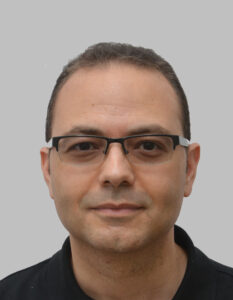
Professor Vitali Wachtel of Bielefeld University's Faculty of Mathematics specializes in advanced stochastic processes, probability theory, and their applications in mathematical modeling. Since 2021, he holds a W3 Professorship and serves as Principal Investigator in CRC 1283 'Taming uncertainty and profiting from randomness and low regularity in analysis, stochastics and their applications' since 2023. Chaired Examination Boards for Bachelor & Master Business Mathematics Member, Bielefeld Graduate School in Theoretical Sciences Research focus: Markov processes, random walks in cones, branching processes Research Trends: His recent work spans critical multitype branching in random environments (2025), asymptotic expansions for conditioned random walks (2024), and invariance principles for integrated processes. He explores connections between stochastic processes, combinatorial structures, and risk modeling with level-dependent premiums. Awards: Feodor Lynen Research Fellowship (2017), Alexander von Humboldt Foundation Teaching: Coordinates modules including 'Stochastic Processes' (24-M-PT-STP) and 'Introduction to Probability Theory' (24-B-EW-5). Active in curriculum development and academic governance through multiple university committees.
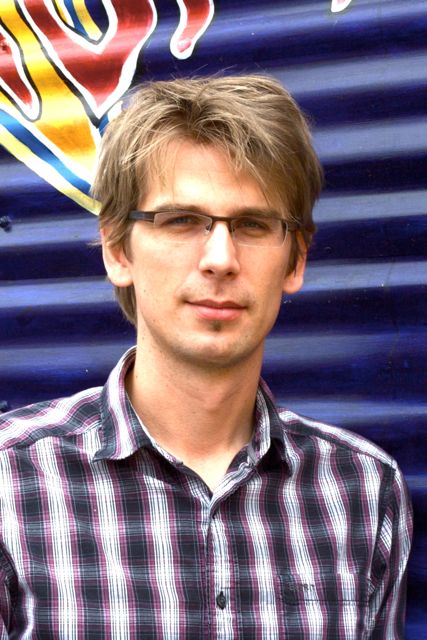
Dr. Quirin Thomas Simon Vogel is a Senior Lecturer at the Department of Statistics, University of Klagenfurt. He previously held postdoctoral positions at the Technical University of Munich, New York University Shanghai, and served as an Interim Professor at Ludwig-Maximilians University of Munich. His research bridges probability theory with statistical mechanics and algorithmic applications. Current role: Senior Lecturer (2025) Previous roles: Postdoc (TUM, NYU Shanghai), Interim Professor (LMU Munich) His research focuses on: Random walks and their geometric/stochastic properties Randomized algorithms with applications in statistical models Quantum-inspired probabilistic systems (e.g. interacting bosonic loop soups) Large deviation theory for complex systems Percolation and phase transitions in particle models The articles reflect trends in probability theory, mathematical physics, and algorithmic applications. Key topics include high-dimensional percolation, Bose gas models, neural network theory, and stochastic geometry. The work combines rigorous mathematical analysis with interdisciplinary applications in physics and computer science. Scientific awards and functions cannot be determined from the provided data, as they describe other researchers. The department's research activities include projects on statistical learning, quantum models, and algorithmic probability, though Vogel's direct involvement in these specific funded projects isn't explicitly stated.
Fima Klebaner is Professor in the School of Mathematics at Monash University and Director of the Centre for Modelling of Stochastic Systems. His research spans stochastic processes, financial mathematics, and population biology, with emphasis on limit theorems, branching processes, and diffusion models. Current projects include ARC-funded work on stochastic population dynamics and financial derivatives pricing. Key research areas: 1) Population-dependent stochastic systems; 2) Large deviation principles; 3) Financial mathematics (Dupire formula, volatility); 4) Approximation methods for complex processes. Recent publications (2018-2025) show balanced focus on theoretical probability (45%) and applied modeling (55%), particularly in ecology and finance. Article analysis reveals advanced methodologies in: 1) Stochastic calculus applications (33% of recent works); 2) Limit theorems for interacting systems (27%); 3) Financial mathematics innovations (20%). Theoretical contributions frequently interface with biological and financial applications.
Michel Mandjes is a Professor at the University of Amsterdam's Faculty of Science and holds a Visiting Professor position at the Faculty of Economics and Business (FEB). His research focuses on stochastic processes, queueing theory, and probability theory, with applications in risk modeling, network analysis, and operations research. Recent publications highlight his contributions to multivariate Hawkes processes , Lévy-driven systems , and dynamic random graphs , emphasizing large deviations, rare event simulation, and statistical inference. His work bridges theoretical probability with practical challenges in traffic flow, financial risk, and social network modeling. The trends in his research include the development of stochastic models for network stability, appointment scheduling optimization, and inference techniques for non-stationary processes. His methodological innovations often leverage advanced probability theory and queueing frameworks to address real-world problems in transportation, healthcare, and finance.
Vladimir Vinogradov is a Professor in the Department of Mathematics at the College of Arts and Sciences, Ohio University. He is based in Morton Hall 579 and can be reached at vinograd@ohio.edu. His academic career reflects long-standing engagement in probabilistic and statistical theory with applications in finance, actuarial science, and population dynamics. Research Interests: His work spans a wide spectrum of stochastic processes and statistical methodologies. Key areas include Stochastic Analysis, Lévy and Markov Processes, Branching and Particle Systems, Fluctuation and Extreme Value Theory, Large Deviations, and Asymptotic Expansions. He also contributes to Distribution Theory, Saddlepoint Approximations, Generalized Linear Models, and probabilistic models in Population Genetics. Grants and Awards: Dr. Vinogradov has received sustained research support, including multiple Ohio University Research Challenge Program Grants (1999–2003), NSERC Canada Individual Research Grants (1995–2003), and a Fields Institute Conference Grant (2014). He also received the BC Asia Pacific Scholars' Award and several UNBC Conference Travel Grants. Education: Ph.D., Moscow State University Professional Activities: He co-organized the International Conference on Analysis, Applications and Computations in memory of Lee Lorch in 2014. His funding history indicates active collaboration and academic leadership. There is no mention of advising students or lab affiliations in the provided text.
Prof. Dr. Matthias Weidlich is a faculty member at Humboldt University of Berlin within the Institute of Computer Science under the Faculty of Mathematics and Natural Sciences . His research focuses on Process Mining , Complex Event Processing , and Data Privacy with applications in Business Process Management and Scientific Workflows . Research Interests: Business Process Management and Process Mining Complex Event Processing and Stream Data Analysis Data Privacy and Security in Process Systems Scientific Workflow Systems and User Behavior Heterogeneous Network Embeddings Algorithm Design and Optimization Recent Publications (2023-2025) demonstrate expertise in: Efficient stream processing techniques Privacy-preserving process mining frameworks Scientific workflow analysis tools Graph neural network applications Multi-modal data integration Adaptive querying systems Contact: Office: Unter den Linden 6, 10099 Berlin Phone: 030 2093-41277 Email: matthias.weidlich@hu-berlin.de Web: hu.berlin/data
Youness Lamzouri is a Professor of Mathematics at the Université de Lorraine, France, affiliated with the Institut Elie Cartan de Lorraine (IECL) and a Junior Member of the Institut Universitaire de France (IUF). His research focuses on analytic and probabilistic number theory, particularly character sums, L-functions, prime number distributions, and random multiplicative functions. PhD in Mathematics from Université de Montréal (2009) B.Sc. in Pure Mathematics from Université de Montréal (2004) He has contributed extensively to understanding extreme values in character sums, biases in prime number races, and statistical properties of L-functions. His recent work explores GCD graphs, random walks in number theory, and probabilistic models for prime distributions. He has received prestigious awards including the CMS Blair Spearman Doctoral Prize and NSERC Postdoctoral Fellowship. Currently, he supervises doctoral and master students and contributes to editorial boards of leading journals.
Georg Stadler is a Professor of Mathematics and Computer Science at New York University's Courant Institute. His research focuses on computational inverse problems, uncertainty quantification, and PDE-constrained optimization, driven by applications in climate modeling, geophysics, and plasma physics. He holds a PhD from the University of Graz (2004) and has been recognized with awards including the Gordon Bell Prize (2015) and the SIAM Computational Science & Engineering Best Paper Prize (2019). Education: Ph.D. (Dr.), Mathematics, University of Graz, Austria, 2004. M.S. (Mag.), Mathematics, University of Graz, Austria, 2001. M.S., Mathematics and Geometry Education, Graz University of Technology and University of Graz, 2001. Research Interests: Large-scale PDE solvers, Bayesian inverse problems, extreme event probability estimation, and optimization under uncertainty. Applications in climate (sea/land ice, tsunamis), plasma physics (fusion), and computational earth science (mantle flow, plate tectonics). Recent Research Trends: His work emphasizes scalable algorithms for high-dimensional Bayesian inverse problems, with applications to tsunamis, stellarator coil design, and ice sheet dynamics. Recent articles highlight advancements in extreme event probability estimation and robust multigrid solvers for incompressible Stokes equations. Awards: Gordon Bell Prize (2015) for extreme scalability of implicit solvers. SIAM Best Paper Prize (2019) for computational science contributions. Young Scientist ASCINA Award and Springer CSE Prize (2011). Advising & Grants: Current PhD student Sonia Reilly and former advisees include Chen Li and Shanyin Tong. His research is supported by NSF, ONR MURI, and the Simons Foundation. He co-leads the Computational Mathematics and Scientific Computing Seminar at Courant. Labs & Collaborations: Active in Courant’s interdisciplinary groups, focusing on high-performance computing and inverse problems. Collaborates with institutions like UT Austin on mantle dynamics and fusion energy projects.
Florent Krzakala is a Full Professor at École polytechnique fédérale de Lausanne (EPFL) in Switzerland, holding positions across multiple departments including the School of Basic Sciences (SB), School of Engineering (STI), and specifically within the Department of Physics (IPHYS) and Department of Electrical Engineering (IEM). He leads the Information, Learning and Physics Laboratory (IdePHICS) and maintains an office at ELD 239, Station 11, 1015 Lausanne. His research bridges statistical physics and computational disciplines, with significant contributions to understanding the theoretical foundations of machine learning and optimization problems. Dr. Krzakala received his MSc in Physics from Orsay, France in 1999, followed by a PhD in Statistical Physics from Orsay, Paris XI, France in 2002, and completed a postdoctoral position at Roma La Sapienza in 2004. This strong foundation in physics has informed his interdisciplinary approach to computational problems. His research interests span Statistical Physics, Machine Learning, Probability and Statistics, Computer Science, Information Theory, Inference on Graphs, Random Constraint Optimization, and Computational Optics. Krzakala's work focuses on applying methods from statistical physics to problems in theoretical computer science, probability, and machine learning. He investigates how concepts from disordered systems and phase transitions can illuminate computational barriers in optimization and inference tasks. His research has particular relevance for understanding the behavior of neural networks, compressed sensing, and high-dimensional statistical models. Analysis of his recent publications reveals a strong trend toward understanding the fundamental limits of learning in high-dimensional settings, with particular emphasis on phase transitions, statistical-to-computational gaps, and the theoretical properties of deep learning architectures. His work frequently bridges rigorous mathematical analysis with practical machine learning applications, demonstrating how insights from statistical physics can inform algorithm design and theoretical understanding in AI. Krzakala actively mentors the next generation of researchers, supervising numerous PhD students whose work continues to advance these interdisciplinary fields. His laboratory serves as a hub for researchers exploring the intersection of physics and computation, fostering collaborations across traditional disciplinary boundaries. He teaches advanced courses including Fundamentals of Inference and Learning, Statistical Physics, and Statistical Physics for Optimization & Learning, which examine the connections between physical principles and computational methods. His educational materials, including lecture notes on statistical physics methods in optimization and machine learning, have become valuable resources for students and researchers worldwide. As founder and scientific advisor of the startup Lighton, Krzakala has also demonstrated a commitment to translating theoretical insights into practical applications, particularly in the realm of optical computing for machine learning tasks.
Vincent Vargas is a French mathematician and Associate Professor at the University of Geneva, where he joined in 2021 after holding a research position at CNRS. He completed his PhD in mathematics at Paris-Diderot University under the supervision of Francis Comets. His primary research interests include: Probability Mathematical Physics Statistical Mechanics Quantum Field Theory Gaussian Multiplicative Chaos Liouville Quantum Gravity Vargas has made significant contributions to the rigorous probabilistic construction of Liouville field theory and the proof of the DOZZ formula, work that was featured in Quanta Magazine. His research bridges mathematics and theoretical physics through probabilistic methods applied to quantum gravity. Analysis of his recent publications reveals a strong focus on mathematical structures underlying conformal field theory, with particular attention to Liouville quantum gravity across various geometries and the connections between probability and quantum physics. His notable scientific achievements have been recognized with prestigious awards: Marc Yor Prize (2019) George Pólya Prize (2022) Vincent Vargas has mentored several PhD students including Romain Allez, Yichao Huang, Guillaume Rémy, and Tunan Zhu. He has been actively involved in the academic community through organizing conferences and workshops, including a trimester at the Institut Henri Poincaré in 2015 and a conference on 'Probability and quantum field theory' in 2019. His professional activities extend to industry applications through his previous consultancy with Capital Fund Management (2007-2013) and his current role on the board of their research foundation.
Samuel Herrmann is a Professor of Applied Mathematics at the University of Burgundy, France. He is a member of the Statistics, Probability, Optimization and Control team and an external member of the TOSCA project team at INRIA. His research focuses on stochastic processes, particularly asymptotic analysis of non-linear stochastic processes, large deviations, and stochastic resonance phenomena, with applications in climatology, biology, and financial modeling. Education: PhD in Mathematics (2001) - University of Burgundy Habilitation (2009) - Asymptotic analysis related to stochastic processes Research Interests: Stochastic differential equations and their numerical simulation Large deviation phenomena in stochastic processes Self-stabilizing diffusions and stochastic resonance First-passage and exit time problems for diffusions Applications in climatology, biology, and finance Scientific Contributions: Professor Herrmann has published extensively on stochastic processes, with over 50 peer-reviewed articles and a monograph on stochastic resonance. His work includes exact simulation methods for diffusion processes, studies on self-stabilizing systems, and theoretical contributions to large deviations theory. He has collaborated with leading researchers such as Peter Imkeller and David Peithmann. Awards and Recognition: Contributed to the encyclopedia of mathematical physics Co-authored the book "Stochastic Resonance: A Mathematical Approach in the Small Noise Limit" (2014) Teaching and Supervision: He teaches courses on stochastic processes and their simulation at both undergraduate and master's levels, including the Master in Turin program. He has supervised numerous PhD and master's students in stochastic processes and related fields.
Andrea Collevecchio is a Professor in the School of Mathematics at Monash University, Australia, where he has been a faculty member since 2012. His research focuses on the intersection of Probability, Mathematical Physics, and Statistical Mechanics, with particular expertise in stochastic processes and theoretical modeling. He earned his PhD in Statistics from Purdue University in 2004, followed by postdoctoral positions in Italy and Germany. In 2006, he became Assistant Professor at Ca’Foscari University in Venice before joining Monash University. Collevecchio specializes in Reinforced Processes and Large Deviations, investigating complex systems through random walk models. His work bridges abstract probability theory with applications in statistical mechanics, examining phenomena like memory effects in stochastic processes and phase transitions in lattice systems. Recent research emphasizes hypercube structures, non-reversible dynamics, and reinforcement mechanisms. His 2021-2025 publications reveal a concentrated focus on hypercube random walks, with increasing exploration of non-reversible processes, vertex-reinforced dynamics, and bootstrap methods. These works consistently apply probabilistic frameworks to problems in mathematical physics, demonstrating strong connections between theoretical probability and physical modeling. Collevecchio has secured multiple research grants including ARC-funded projects on self-interacting random walks (2023-2026) and random walks with long memory (2018-2022). He contributes to interdisciplinary initiatives like the Smart Vehicles project for dementia support (2025-2027) and actively organizes academic events including the AIM Day series connecting mathematics, AI, and industry applications.
Dr Nicholas Simm is a Principal Research Fellow in the Department of Mathematics at the University of Sussex, affiliated with the School of Mathematical and Physical Sciences. He has been funded by the Royal Society since October 2018 as a University Research Fellow. His research focuses on random matrix theory, probability, and mathematical physics, with applications to areas such as quantum physics and statistical mechanics. Key research interests include orthogonal polynomials, eigenvalue statistics, multiplicative chaos, and Painlevé transcendents. His work bridges pure mathematics and applied problems, leveraging tools from probability theory and integrable systems. Notable publications include studies on asymptotics of orthogonal polynomials, fluctuations in eigenvalues of random matrices, and connections to the Riemann zeta function. His recent work explores high-frequency limits in holomorphic multiplicative chaos and large deviations in elliptic random matrices. Dr Simm has secured grants from the Royal Society and Leverhulme Trust for projects on random matrices, log-correlated fields, and mesoscopic statistics. He collaborates widely, with co-authors including leading researchers in probability and mathematical physics.
Guangqu Zheng is an Assistant Professor in the Department of Mathematics and Statistics at Boston University. He holds a BA from Wuhan University, a Master's from Université Paris-Saclay, and a Ph.D. from the University of Luxembourg. Prior to Boston University, he was a Lecturer at the University of Liverpool and conducted postdoctoral research at the University of Melbourne and the University of Kansas. Education: Ph.D. in Mathematics, University of Luxembourg (2018) Master in Probability, Université Paris-Orsay (2014) BA in Economics and Management, Wuhan University (2011) Research Interests: His work focuses on probability theory, stochastic analysis, and SPDEs. Key areas include Malliavin calculus, Stein’s method, limit theorems, and applications to stochastic partial differential equations. Recent projects involve hyperbolic Anderson models, Lévy noise-driven systems, and spatial ergodicity. Publications: His recent articles explore central limit theorems for SPDEs, hyperbolic models, and applications of Stein’s method. These contributions highlight advancements in stochastic processes and their interdisciplinary applications. Teaching & Advising: At BU, he teaches advanced courses in stochastic analysis and advises students in probability and statistics. Expectations for students include proficiency in real analysis and probability theory.
Professor Zdzislaw Brzezniak is a Professor in the Department of Mathematics at the University of York, where he has been since 2005. He holds a PhD in PDEs from Jagellonian University, Krakow (1988). His research focuses on stochastic partial differential equations (SPDEs), turbulence, geometric analysis, and harmonic analysis, with notable contributions to Navier-Stokes and Euler equations. He has organized major international workshops, including events on stochastic PDEs at ICMS (Edinburgh) and the Isaac Newton Institute. Education: PhD in PDEs (Jagellonian University, 1988). Research Interests: SPDEs, stochastic geometric problems (e.g., Landau-Lifshitz equations), fluid dynamics, and applications in physics. His work bridges pure and applied mathematics, influencing theoretical frameworks in micromagnetism and quantum field theory. Key Awards: 2013 Best Paper Award, 1st Prize, Institute of Information Theory and Automation. Supervision: Advised over 10 PhD students, including Nimit Rana (2019) and Fabian Hornung (2018). Current students include Asma Alalyani and Hessa Alharbi. Active in mentoring across stochastic analysis and geometric PDEs. Labs/Groups: Member of Mathematical Finance and Stochastic Analysis Research Group, and Geometry and Analysis Research Group at the University of York.