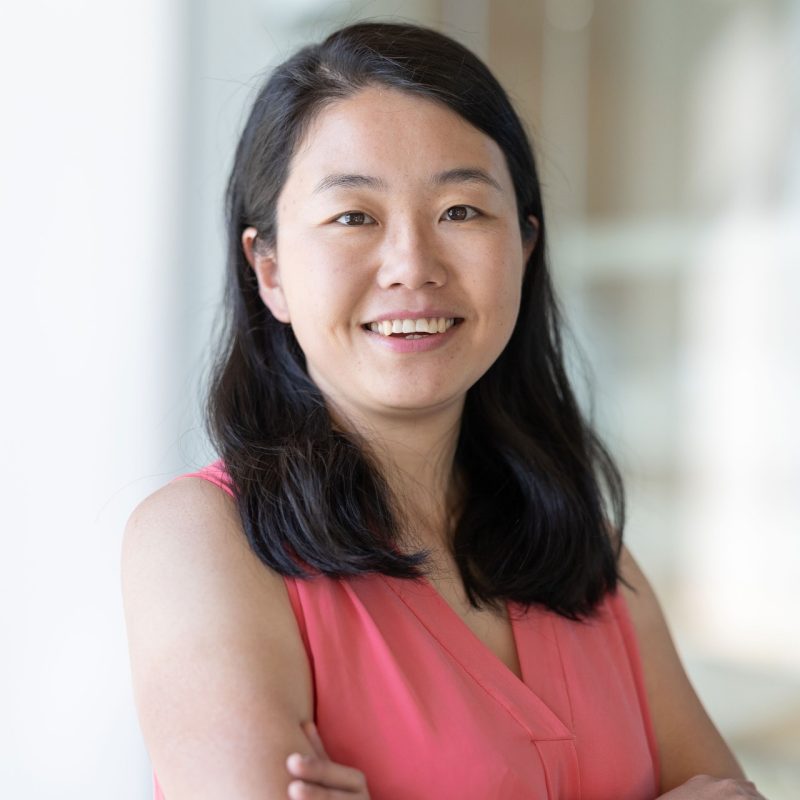
Bing Qin is a Researcher specializing in computational linguistics, artificial intelligence, and multimodal learning. Their work focuses on enhancing large language models' capabilities in temporal knowledge graph forecasting, cross-lingual alignment, and safety mechanisms. Core Research Areas: Knowledge graphs, multimodal systems, reasoning frameworks Technical Innovations: Analogical replay, gain signal estimation, cross-modal attention intervention Recent Trends: 2025 publications emphasize training-free methods and preference alignment in LLMs
Tim Finin is a Professor in the Computer Science and Electrical Engineering department at the University of Maryland, Baltimore County (UMBC), where he serves as Director of the UMBC Center for Artificial Intelligence and holds the Willard and Lillian Hackerman Chair in Engineering. With over 50 years of experience, his research focuses on knowledge graphs, natural language processing, machine learning, and applications to information systems security and social media. Education: Ph.D. in Computer Science from the University of Illinois (1980), M.S. in Computer Science (1977), and S.B. in Electrical Engineering (1971) from MIT Current Roles: Director, UMBC Center for AI; Hackerman Chair; Professor, UMBC Previous Roles: Adjunct Associate Professor at University of Pennsylvania; positions at Unisys, JHU HLT CoE, and MIT AI Lab Research Interests: Dr. Finin's work spans Knowledge graphs and semantic web technologies Natural language processing for cybersecurity Machine learning for data assimilation Privacy and security in distributed systems Social media analysis Quantum computing applications Recent Grant Trends: His funded research includes projects on knowledge graph optimization, AI cybersecurity, semantic manufacturing standards, and quantum machine learning. Grants from DoD, NSF, NIST, and industry partners like IBM and Google demonstrate his interdisciplinary impact. Scientific Honors: ACM Fellow (2018) AAAI Fellow (2013) IEEE Technical Achievement Award (2009) UMBC Presidential Research Professor (2012) Fellow, Foundation for Intelligent Physical Agents (1997) Academic Leadership: Dr. Finin has chaired UMBC's Computer Science department, served on the Computing Research Association board, and held editorial roles including Editor-in-Chief of the Journal of Web Semantics (2005-2016).
Debora Nozza is an Assistant Professor in Computing Sciences at Bocconi University, where she leads research at the intersection of Natural Language Processing, ethics, and social impact. Her work focuses on detecting and countering hate speech, understanding algorithmic bias, and examining how people use large language models in everyday contexts. Education: PhD in Computer Science, 2018, University of Milano Bicocca Dr. Nozza's research centers on ethical challenges in Natural Language Processing, with particular emphasis on hate speech detection across multilingual contexts and bias mitigation in language technologies. Her work bridges technical NLP methods with social science perspectives, examining how language models interact with societal structures and cultural contexts. She has made significant contributions to understanding gender bias in machine translation and developing methods for more equitable language technologies. Her recent publications reveal a strong focus on practical applications of NLP for social good, with an increasing emphasis on evaluating and mitigating bias in multimodal systems and large language models. Her research spans technical methodology development, dataset creation for under-resourced languages, and critical analysis of evaluation metrics in bias research. Scientific Awards: €1.5 million ERC Starting Grant (2023) for research on personalized and subjective approaches to Natural Language Processing €120,000 grant from Fondazione Cariplo for the MONICA project on monitoring Italian measures in response to COVID-19 Dr. Nozza actively contributes to the NLP community through her leadership in the MilaNLP group. She has secured significant research funding that supports multiple researchers working on NLP for social impact. Her work has practical implications for social media platforms, policymakers, and organizations developing language technologies. She co-leads the MilaNLP research group at Bocconi University, which focuses on Natural Language Processing with social impact. The group has been active in major NLP conferences, organizing workshops on online abuse and gender bias, and contributing to shared tasks that advance the field's understanding of hate speech and bias in multilingual contexts.
Guillem Alenyà Ribas is a Researcher and Director of the Perception and Manipulation group at the Institut de Robòtica i Informàtica Industrial (IRI), a joint center of the Spanish National Research Council (CSIC) and the Polytechnic University of Catalonia (UPC), Barcelona. His research focuses on integrating robots into human environments, particularly in assistive robotics and the manipulation of deformable objects such as garments. His research interests span Human-Robot Interaction (HRI) , assistive robotics , explainable AI , robot personalization , deformable object manipulation , and benchmarking . He aims to make robots more transparent, adaptive, and safe in real-world applications. His work combines AI planning, vision, learning from demonstration, and user-centered design to develop systems that can assist in healthcare, domestic, and industrial settings. Recent publications reveal a strong trend in explainability and personalization in HRI, with a focus on frailty assessment in elderly care , real-time explanations , and counterfactual reasoning . His team also advances benchmarking in cloth manipulation , 3D reconstruction of clothed humans , and ontology-based reasoning for robot plans . This reflects a multidisciplinary approach combining robotics, AI, and social sciences. Coordinator of ROB-IN, CLOE-GRAPH, and BURG projects Principal Investigator in SeCuRoPS and DEMETER 5.0 Former coordinator of SIMBIOTS, HuMoUR, and SOCRATES He has supervised numerous PhD students, many of whom have received prestigious awards such as the Georges Giralt PhD Award and the AIHUB.CSIC Prize. His leadership in technology transfer and European projects highlights his role in bridging academic research with real-world applications. He leads the Perception and Manipulation group at IRI, fostering collaboration across disciplines and mentoring a large team of researchers, PhD students, and technical staff. The group actively contributes to open science through standardized datasets and reproducible methodologies.
Douglas M. Blough is a Professor at the Georgia Institute of Technology's School of Electrical and Computer Engineering, where he has served since 1999. He previously held faculty positions at the University of California at Irvine from 1988 to 1999. Dr. Blough directs the Critical Networking Laboratory and has served as the School's associate chair for faculty development since January 2018, including a five-month term as Interim Steve W. Chaddick School Chair in 2021. Dr. Blough's research focuses on wireless networks, distributed computer systems, and computer systems security. His specific interests include healthcare security, mobile and wireless communications, telecommunications, and computer systems and software. He has led 37 federally-funded or industry-sponsored research projects with over $8 million in funding, including current NSF grants for next-generation wireless networks exploring design challenges for networks operating in the millimeter-wave bands. His recent scholarly work demonstrates a strong emphasis on millimeter-wave communications, intelligent reflecting surfaces, and next-generation wireless LAN technologies. His publications reveal a progression from foundational work in dependable computing systems to cutting-edge research in wireless networking, with a particular focus on mmWave technology and intelligent surfaces in recent years. His research group has produced numerous award-winning papers, including multiple Best Paper Awards in 2021-2022. Professional Distinctions: Best Paper Award, IEEE International Symposium on Local and Metropolitan Area Networks, 2022 Best Paper Award, IEEE Consumer Communications and Networking Conference, 2021 Associate Editor, IEEE Transactions on Wireless Communications (2020-present) Associate Editor, IEEE Transactions on Cloud Computing (2020-present) Japan Society for the Promotion of Science (JSPS) Faculty Fellow, 1996 NASA/ASEE Faculty Fellow, 1993 Dr. Blough has advised numerous PhD students who now hold positions at leading technology companies including Microsoft, Google, Amazon, Intel, and Huawei. His research has resulted in over 160 archival publications and 10 patents related to wireless communications, bioinformatics, verifiable health records, and identity management. He has held significant leadership roles within his department, including chairing technical interest groups and serving on key committees for faculty development and honors.
Aron Henriksson is a Senior Lecturer and Associate Professor at the Department of Computer and Systems Sciences, Stockholm University. He co-leads the Natural Language Processing Research Group and contributes to the Learning Analytics and AI for Education Group , focusing on large language models, privacy, explainability, and domain adaptation across healthcare and education. His research integrates AI and NLP into critical domains, including Developing SweClinEval - the first Swedish clinical NLP benchmark Privacy-preserving techniques for LLMs using pseudonymization Multimodal prediction models for healthcare outcomes (e.g., COVID-19 mortality) Educational applications of retrieval-augmented generation Henriksson teaches courses in Big Data, AI management, NLP, and information retrieval. His work bridges technical innovation with practical implementation across EU-funded projects like Extreme Food Risk Analytics (EFRA) and clinical AI initiatives, emphasizing ethical AI deployment and data utility preservation.
George Drettakis is a Senior Researcher at INRIA Sophia-Antipolis and leads the GRAPHDECO research group. He has held professorial roles at institutions including MIT, University of Reims, University of Toronto, and École Normale Supérieure. His research focuses on rendering for computer graphics and sound, with emphasis on image-based rendering, perceptual rendering, and audio-visual cross-modal effects. He has also explored interactive illumination, shadows, relighting, and generative models. Current Students: G. Kopanas (Neural Rendering), N. Violante (Generative Models), A. Petitjean (co-supervised), Y. Poirier-Ginter (co-supervised), P. Panantonakis (starting fall 2023). Postdoctoral Researchers: A. Gauthier at INRIA. His recent work includes 3D Gaussian Splatting , Diffusion-based Relighting , and Neural Radiance Fields . He has received the Eurographics Outstanding Technical Contributions Award (2007) and was named an Eurographics Fellow . He manages projects like ERC Advanced Grant FUNGRAPH and has participated in H2020 EMOTIVE , ANR SEMAPOLIS , and CROSSMOD . His group collaborates internationally and has hosted researchers from institutions such as UC Berkeley, Imperial College London, and TU Wien.
Tuhin Das is a Professor of Mechanical and Aerospace Engineering at the University of Central Florida (UCF), where he has been since 2011. He holds a B.Tech from IIT Kharagpur (1997), and M.S. and Ph.D. from Michigan State University (2000, 2002). His research focuses on dynamics and controls applied to energy systems (fuel cells, wind energy), robotics (mobile/biomimetic systems), and sensing (compressive sensing). His work is funded by NSF, ONR, Siemens Energy, and ARPA-E. He is an ASME Fellow and co-founder of the Energy Systems Technical Committee. Education: Bachelor of Technology in Mechanical Engineering, Indian Institute of Technology, Kharagpur (1997) M.S. and Ph.D. in Mechanical Engineering, Michigan State University (2000, 2002) Research Interests: Energy systems (wind turbines, hybrid fuel cells) Nonlinear dynamics and control Robotics and mobile systems Advanced modeling/simulation techniques Phase-space kinematics and Hamiltonian systems Recent Work Trends: Recent publications emphasize offshore wind energy systems, floating platform dynamics, and advanced control strategies for energy systems. Experimental validation of models (e.g., tuned mass dampers for semisubmersible platforms) and theoretical advancements in system dynamics (Hamiltonian approaches) are prominent themes. Awards: UCF College of Engineering Excellence in Graduate Teaching Award (2016) ASME Fellow Inductee into Pi Tau Sigma (2009) Grants & Advising: Leading a $3.3M project for floating offshore wind turbine simulators Received $771K grant for offshore wind turbine simulation tools Active in mentoring graduate students in mechanical systems research Labs/Teams: Directs the Hybrid Sustainable Energy Systems Lab at UCF, focusing on interdisciplinary energy solutions and advanced control system development.
Christopher Sittl is a Researcher at the Chair of Vibroacoustics of Vehicles and Machines within the Department of Engineering Physics and Computation at the TUM School of Engineering and Design, Technical University of Munich. Pursuing an External PhD, his work focuses on developing efficient computational methods for acoustic optimization in automotive applications. His research interests span computational acoustics, vehicle noise control, and advanced numerical methods: Computational Acoustics Vehicle Acoustics and Noise Optimization Boundary Element Method applications Finite Element Method for vibroacoustic problems Matrix-Padé-via-Lanczos Method implementation Sound quality engineering for automotive powertrains Sittl's research addresses the computational challenge of solving large linear systems in acoustic scattering tasks, moving beyond traditional frequency-by-frequency approaches to develop more efficient Padé-approximation methods applicable across frequency ranges. His work bridges theoretical numerical methods with practical automotive engineering needs, particularly in creating customer-pleasant noise profiles rather than merely minimizing sound pressure levels. His primary publication demonstrates application of Krylov subspace methods for efficient acoustic transfer function solutions. Collaborating with Ostbayerische Technische Hochschule Regensburg, Otto von Guericke University of Magdeburg, and CHP Messtechnik GmbH, his research contributes to the department's focus on computational vibroacoustics and automotive noise control.
Roberta Sinatra is a Professor at IT University of Copenhagen working in the domain of Data Science Networks, Data, and Society. Her research spans network science, computational social science, and the science of science, with particular focus on algorithmic fairness, gender equality in scientific careers, and urban mobility networks. Research Interests Professor Sinatra's research focuses on understanding complex systems through network analysis with applications in social science, science policy, and urban planning. Her work examines how algorithms impact society, particularly in sensitive domains like child protection systems. She investigates historical patterns of gender inequality in scientific careers across countries and disciplines, and studies urban infrastructure networks such as bicycle systems. Her approach combines large-scale data analysis with theoretical modeling to address questions at the intersection of technology and society. Publication Trends Her recent publications demonstrate a growing focus on the societal impacts of algorithms and AI systems. From analyzing gender inequality in scientific careers to examining fairness in decision support algorithms for child protection, her work bridges technical analysis with social implications. The 2020 paper on gender inequality has been particularly influential with over 670 citations and significant policy impact, while her 2024 publications reflect increasing attention to real-world AI implementation challenges. Awards Årets Forskningsmiljø 2022 (Research Environment of the Year 2022) Research Funding and Leadership As principal investigator, Professor Sinatra leads multiple significant research projects including 'Pushing Algorithmic Fairness with Models and Experiments' funded by the Villum Foundation (2021-2024), 'Mechanistic Models for Fair Science' funded by the Independent Research Fund Denmark (2021), and 'AIPrevalence: Quantifying the Prevalence and Diffusion of Generative AI in Science' (2024-2026). Her research on algorithmic bias received 6 million DKK in funding, demonstrating strong institutional support for her work. Research Environment She is part of a vibrant research group at ITU that was recognized as the Research Environment of the Year in 2022. Her team includes collaborators like Michael Szell and Vedran Sekara, working at the intersection of data science, social science, and policy. Media coverage of their work has appeared in numerous Danish outlets, reaching policy makers and the general public.
Remy Dupas is a Professor at the University of Bordeaux , affiliated with the IMS Bordeaux - Integration, Material to System Laboratory within the Production Engineering research group. His work focuses on Operations Research , Logistics , and Transportation Systems , developing advanced algorithms for complex routing and supply chain optimization problems. Research Highlights: Innovative Branch-Cut-and-Price algorithms for Two-Echelon Vehicle Routing Problems with drones and time windows City Logistics models for sustainable urban freight distribution in Tokyo MultiAgent Systems for supply chain coordination 3D Loading Constraints integration in pickup-and-delivery problem solving Rail-Rail Transshipment scheduling methodologies Key Publications (2024-2007) demonstrate expertise in Combinatorial Optimization , Dynamic Routing , and Interoperability Metrics for enterprise systems. His research is characterized by strong Algorithm Development and Real-Time Transportation solutions.
Richard Lemoine-Rodriguez is a Postdoctoral Research Fellow in the English Linguistics department at the Institute of Modern Languages, University of Würzburg. His unique interdisciplinary position bridges traditional linguistics with advanced geospatial analysis through the emerging field of Geolingual Studies, which examines the interconnection between language patterns and physical urban spaces. His educational background reflects this interdisciplinary approach, holding a Dr. rer. nat. in Geography from Ruhr-Universität Bochum (dissertation: "Urban form, urban warming and time. From global regularities to local heterogeneities"), a Master in Geography from the National Autonomous University of Mexico (thesis on urban conurbations in Morelia), and a Bachelor in Biology from the University of Veracruz (thesis on vegetation cover changes in Xalapa). Lemoine-Rodriguez's research integrates concepts from urban ecology, geoinformatics, and digital humanities to study cities as complex socio-ecological systems. His primary interests include urban form, social perception, urban big data, urban heat island effects, remote sensing, and the relationship between linguistic patterns and spatial organization. He approaches cities as complex systems where physical and social dimensions interact, aiming to uncover patterns that can inform more sustainable urban development. His work often employs large-scale spatial analysis of social media data to understand how people interact with and perceive urban environments. His recent publications (2024-2025) reveal a strong focus on the intersection of urban morphology, social media analytics, and climate impacts. He has developed innovative methods for analyzing geotagged social media content to understand urban concerns, particularly regarding heat exposure. His work on "Geolingual Studies" represents a novel approach combining linguistics with remote sensing to assess how physical and social spaces interrelate. The publication pattern shows increasing international collaboration, particularly with researchers from Germany, Mexico, and other global partners. As a developer of research tools, he co-created LSTtools, an R package for processing thermal data from Landsat and MODIS images, demonstrating his technical expertise in geospatial analysis. He is actively involved in multiple professional networks including the Global Land Programme, Ecosystem Services Partnership, Society for Urban Ecology, and the International Association for Urban Climate, reflecting the interdisciplinary nature of his work. Lemoine-Rodriguez teaches in the Spatio-temporal dynamics of urban systems and the EAGLE Master program at the University of Würzburg, sharing his expertise in geospatial analysis and urban studies. He has previously taught courses on GIS modeling, remote sensing, and spatial analysis at institutions including Ruhr-Universität Bochum and the National Autonomous University of Mexico.
Dr. Procheta Sen is a Lecturer in Computer Science at the University of Liverpool's Faculty of Science and Engineering, Department of Computer Science, where she joined in 2022 as part of the Natural Language Processing research group. Her work focuses on developing transparent, fair, and accessible AI language models through explainability research. She earned her PhD from Dublin City University, Ireland (2021) under supervisor Gareth J.F. Jones, with affiliation at ADAPT Centre Ireland. Prior to Liverpool, she conducted postdoctoral research with Emine Yilmaz in University College London's Web Intelligence Group. Dr. Sen's research spans three explainability categories: post-hoc methods (feature attribution, counterfactuals), mechanistic interpretability (neural network circuit mapping), and intrinsic interpretability (human-readable model design). She targets diverse end-users including clinicians, legal experts, and laypersons, with applications in bias mitigation and socially responsible AI systems. Her work bridges Natural Language Processing, Machine Learning, and Information Retrieval to address real-world challenges in transparency and equity. Analysis of her 2023-2025 publications reveals dominant trends in LLM bias analysis, legal document processing, and adaptive conversational systems. Key themes include mechanistic interpretability for bias detection, retrieval-augmented generation for dialogue systems, and multilingual knowledge extraction—demonstrating consistent focus on making AI both technically robust and socially beneficial across domains like law and finance. Dr. Sen actively advises PhD student Lingfang Li (AAAI 2025 accepted work) and emphasizes compassionate talent development. Her open-source research has been deployed in legal sector applications, and she organizes the annual NLP for Social Good symposium fostering interdisciplinary collaboration for responsible AI. She leads initiatives including the 2025 virtual NLP for Social Good Symposium and collaborates with institutions like Nokia Bell Labs Cambridge, maintaining active research momentum in transparent AI systems.
Dr. Arne Bewersdorff is a Post Doctoral Researcher in Educational Sciences at the Technical University of Munich (TUM), School of Social Sciences and Technology. He coordinates the TUM-DigiLLab (Digital Teaching and Learning Lab), which promotes digital skills in secondary and vocational teacher training. His work focuses on fostering AI literacy and developing AI tools for STEM education through research and teaching activities. Dr. Bewersdorff's research interests center on AI literacy, educational technologies, science education, and teacher training. His work explores how AI can enhance science education through adaptive feedback systems, experimentation protocols, and digital learning environments. He investigates AI attitudes, self-efficacy, and the development of AI literacy among university students and pre-service teachers. His research spans both theoretical frameworks and practical implementations of AI in educational contexts. His recent publications reveal a strong trend toward AI applications in education, particularly focusing on AI literacy assessment, adaptive feedback systems, and the integration of large language models in science education. His work spans multiple methodologies including systematic reviews, test development, experimental studies comparing AI and human performance, and multinational assessments of AI literacy. The research consistently addresses practical applications of AI in educational settings while maintaining strong theoretical foundations in educational psychology and science pedagogy. Fellow of the TUM Center for Educational Technologies Recipient of ESERA Travel Award Member of winning HOLA Innovation Pitch team at Medien- und Filmgesellschaft Baden-Württemberg Dr. Bewersdorff coordinates multiple significant research projects including the TUM-DigiLLab infrastructure, EPIC-AI (an AI feedback tool for student experimentation protocols), Junior Fellowship Artificial Intelligence (developing AI literacy courses for pre-service science teachers), and the Knowledge Hub project providing Open Educational Resources on emerging technologies. He has received funding from the Joachim Herz Foundation and through TUM's Excellence Strategy initiative. His work bridges research and practice through close collaboration with educational institutions and practitioners. As coordinator of the TUM-DigiLLab, Dr. Bewersdorff leads a multidisciplinary team focused on creating innovative digital teaching and learning environments. The lab serves as both a research and development space for digital competencies and a practical training ground for future educators. His team collaborates across disciplines to develop and assess AI tools specifically designed for STEM education contexts.
Ruoxi Jia is an Assistant Professor in the Bradley Department of Electrical and Computer Engineering at Virginia Tech, affiliated with the Sanghani Center for Artificial Intelligence and Data Analytics. She holds a Ph.D. from UC Berkeley and a B.S. from Peking University. Her research focuses on machine learning, security, privacy, and cyber-physical systems, with recent emphasis on data-centric AI and trustworthy machine learning. Education: Ph.D., Electrical Engineering and Computer Sciences, UC Berkeley (2018) B.S., Peking University Research interests include adversarial machine learning, AI safety, data valuation, and privacy-preserving techniques. Her work addresses challenges in AI ethics, backdoor detection, and scalable model security. Recent publications explore topics like defense mechanisms against poisoning attacks, large model safety surveys, and red teaming strategies. She actively seeks students (PhD, Masters, interns) and emphasizes collaboration through her group. Her work bridges theoretical foundations and practical applications in AI and cybersecurity, with contributions to both technical and ethical dimensions of modern machine learning systems.