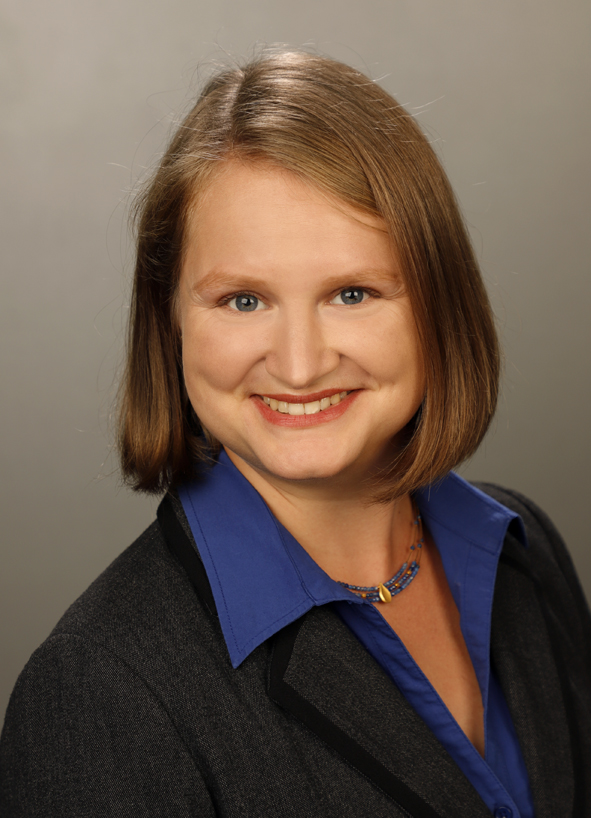
Adi Foord is Assistant Professor of Physics at UMBC, specializing in supermassive black hole evolution. She holds a Ph.D. from University of Michigan and was previously Porat Fellow at Stanford's Kavli Institute. Leads research group studying dual AGN in merging galaxies. Research Focus: Combines X-ray (Chandra, XMM-Newton), optical (HST), and infrared (WISE) data to probe black hole-galaxy co-evolution during cosmic mergers. Develops detection methods for binary AGN systems. Key Projects: AXIS probe mission science team member; develops 'Dual AGN Finder' for Rubin Observatory LSST data; investigates hyperluminous X-ray sources. Honors: RCSA Scialog Fellowship for LSST early science. Secured NSF funding for multi-wavelength AGN studies. Team: Mentors 3 graduate and 2 undergraduate researchers in high-energy astrophysics.
Dr. Yi Xiong is an Assistant Professor in the Department of Biostatistics at the School of Public Health and Health Professions, University at Buffalo. Her research focuses on developing statistical methodologies for analyzing imperfect and spatio-temporally correlated event history data, causal inference for survival analysis, and subsampling techniques. She applies these methods to cancer risk prediction using environmental risk factors and evaluates cost-effectiveness in health policies. Dr. Xiong holds a PhD in Statistics from Simon Fraser University, Canada, and has conducted postdoctoral research at the Fred Hutchinson Cancer Center. Education: PhD, Statistics, Simon Fraser University, Canada MSc, Statistics, Simon Fraser University, Canada BEng, Computer Science, Zhejiang University, China Research Interests: Missing data mechanisms, survival analysis for recurrent events, causal inference frameworks, subsampling strategies for complex datasets, and applications in environmental epidemiology and healthcare policy evaluation. Publications: Dr. Xiong's recent work emphasizes material science and optoelectronics (e.g., photodetectors, semiconductor interfaces), potentially reflecting interdisciplinary collaborations or dual research focuses. Key themes include heterojunction properties, nanostructure fabrication, and thermal/ electrical material characterization. Grants & Advising: No specific grants or advisees listed in available data. Labs/Teams: No lab affiliations explicitly mentioned.
Françoise Combes is Professor at the prestigious Collège de France (Chair of Galaxies and Cosmology) and Astronomer at Paris Observatory , affiliated with the LERMA laboratory. She has held successive academic and research positions since 1975, including Assistant Professor, Associate Professor, and Astronomer ranks at École Normale Supérieure and Paris Observatory. Education 1980 – PhD Thesis, Paris VII: "Dynamics and structure of galaxies" 1975 – Agrégation of Physics 1974-75 – Thèse de 3ème cycle, Paris VII: "Conditions of nucleosynthesis in a symmetric universe of matter-antimatter" 1971-75 – Student, École Normale Supérieure (Ulm), Paris Research Interests Professor Combes leads investigations into the formation and evolution of galaxies , focusing on the dynamics of spiral and barred structures, galaxy interactions, and the role of dark matter . Her work combines N-body and hydrodynamic simulations with cutting-edge observations of the interstellar medium , molecular gas , and high-redshift galaxies . She also studies active galactic nuclei (AGN) , their fueling mechanisms, and the feedback processes that regulate star formation in galaxies. Recent efforts emphasize molecular absorption systems toward quasars and the use of facilities such as ALMA and MeerKAT. Scientific Awards & Distinctions 2021 L'Oréal-UNESCO International Award for Women in Science 2020 Gold Medal of CNRS 2019 Commander of the National Order of Merit 2017 Jules Janssen Medal (SAF), Gothenburg Lise Meitner Prize 2013 R.M. Petrie Prize (CASC), Honorary Fellow of the RAS 2009 Tycho Brahe Prize (EAS), Member of Academia Europaea 2004 Member of the French Academy of Sciences 2001 Silver Medal of CNRS and numerous other national and international honors Leadership & Service Professor Combes is the incoming President of the French Academy of Sciences (2025-2026) and has served as Vice-President of the Academy (2023-2024). She is Vice-President of the Assembly of Professors at the Collège de France and has chaired or been a member of countless international committees, including ERC, ANR, ALMA, ESO, HST, and IAU panels. Since 2003 she has been Scientific Editor of Astronomy & Astrophysics . Laboratory & Collaborations Her research is anchored at LERMA , the Laboratoire d'Études du Rayonnement et de la Matière en Astrophysique, a joint CNRS–Observatoire de Paris research unit. She leads collaborative projects using ALMA, NOEMA, MeerKAT, and other world-class observatories, working with a global network of post-docs, PhD students, and senior researchers.
Professor Ann-Christine Davis is a faculty member at the Department of Applied Mathematics and Theoretical Physics (DAMTP) at the University of Cambridge since 2013, previously holding the title of Professor of Theoretical Physics there from 2002–2013. Her research focuses on Particle Cosmology, Astrophysics, and String Theory, with particular emphasis on modified gravity theories like chameleon models and scalar-tensor gravity. University Gender Equality Champion for STEMM subjects (2014–present) Professor of Mathematical Physics, DAMTP (2013–present) Professor of Theoretical Physics, DAMTP (2002–2013) Reader in Theoretical Physics, DAMTP (1996–2000) College Teaching Officer, King's College Cambridge (1988–1995) Her recent work explores modified gravity theories, including chameleon models and scalar-tensor gravity, analyzing their cosmological evolution, solar system constraints, and potential detection in laboratory experiments. She also investigates dark energy dynamics, inflationary models, and extra-dimensional theories. Key publication trends reveal a focus on dark energy interactions (6 articles), scalar-tensor theories (5 articles), and experimental verification of screened gravity (4 articles). She frequently collaborates on topics spanning cosmic microwave background anomalies, compact binary systems, and galactic dynamics under modified gravity frameworks. Professor Davis is affiliated with the High Energy Physics and Relativity & Gravitation research groups at DAMTP. She teaches principles of quantum mechanics and maintains active research in theoretical cosmology and gravity models.
Zuzana Hofmanová serves as Group Leader at the Genetic History Group within the Department of Archaeogenetics at the Max Planck Institute for Evolutionary Anthropology in Leipzig, Germany. She concurrently established and leads the Ancient DNA Research Team at Masaryk University in Brno, Czech Republic, under the EXPRO grant FORMOR. Her educational background includes anthropology, archaeology and human genetics training at Masaryk University in Brno (2010) and Charles University in Prague (2012), followed by a PhD in ancient genomics of European hunter-gatherers and early farmers from Johannes Gutenberg University Mainz (2016). Hofmanová specializes in archaeogenetics with a focus on ancient DNA analysis to reconstruct population histories, migration patterns, and social structures. Her research integrates computational genomics with archaeological contexts to investigate major historical transitions including Slavic expansions, Avar elite migrations, and early farmer dispersals. Key methodologies include large pedigree reconstruction, fine-scale population sampling, and trans-Eurasian genetic connectivity analysis. Her publication trends reveal concentrated expertise in Eurasian migration history, with particular emphasis on Early Medieval Central Europe. Recent work demonstrates how genetic data can reveal reproductive barriers within culturally homogenous communities and reconstruct transcontinental connections between empires like the Xiongnu and European Huns. Honors include the prestigious EMBO Long-Term Fellowship supporting her computational population genetics research at the University of Fribourg. Current projects include the FORMOR initiative analyzing complex society formation in Early Medieval Moravia through multidisciplinary integration of genetic, archaeological, and isotopic evidence. Her work combines large-scale genomic analysis with fine-grained community studies to bridge macro- and micro-historical perspectives.
Remo Burn is a Researcher at the Max Planck Institute for Astronomy (MPIA) in Heidelberg, Germany. His research focuses on Planet and Star Formation within the ERC Origins, Planet Formation and Exoplanets, and Theory of Planet and Star Formation research groups. Key areas of expertise include protoplanetary disk dynamics, exoplanet formation mechanisms, and planetary population synthesis modeling. Remo’s work addresses fundamental questions about how giant planets form in gas-rich disks, the role of pebble accretion in planetary growth, and the connection between planetary architectures and stellar host properties. Recent projects include analyzing protoplanet dynamics around PDS 70, studying resonant exoplanet systems like TOI-6695, and investigating the ‘radius valley’ phenomenon observed in sub-Neptune populations. His research leverages cutting-edge observational facilities such as TESS, CARMENES, and HARPS, combining empirical data with advanced numerical models to simulate planet formation processes. Collaborations with international teams (e.g., WINE Survey, NCORES Program) highlight his role in large-scale exoplanet detection and characterization efforts. Remo’s contributions bridge observational astronomy and theoretical astrophysics, emphasizing the interplay between disk evolution, planetary migration, and atmospheric evolution. His work has advanced understanding of planet formation pathways around low-mass stars, particularly challenging existing models with discoveries like the gas giant around GJ 3512.
Prof. Dr. Wolfram Kollatschny is a Professor at the Institute for Astrophysics at Georg-August University Göttingen, Germany. His research focuses on extragalactic astrophysics, particularly active galactic nuclei (AGN), supermassive black holes, and galaxy evolution. His work integrates multi-wavelength observations, including X-ray, UV, optical, infrared, and radio data, to study AGN physics, accretion processes, and host galaxy interactions. Research Interests: Active and Normal Galaxies Supermassive Black Hole Dynamics AGN Spectral Variability and Reverberation Mapping Multi-Wavelength Observations of AGN (X-ray to Radio) Host Galaxy Morphology and Starburst Activity Circumgalactic Nebulae and Large-Scale Structures Publications Trends: Recent work emphasizes AGN variability, black hole binaries (e.g., NGC 1566), and the discovery of optically emitting circumgalactic nebulae around quasars. Studies also explore transient AGN phenomena, galaxy-group dynamics via the MAGIC survey, and progenitor environments of supernovae (e.g., SN 2023ixf). Collaborations and Grants: Active in international projects like HETDEX (Hobby-Eberly Telescope Dark Energy Experiment) and MUSE (Multi Unit Spectroscopic Explorer). His team investigates changing-look AGN and uses large surveys to probe cosmic evolution. Funding supports observational campaigns and data analysis for AGN feedback mechanisms. Labs/Teams: Leads the Extragalaktische Astrophysik research group at Göttingen, focusing on observational AGN studies and advanced spectroscopic techniques. Collaborates with global institutions (e.g., ESA, NASA) for multi-mission data analysis.
Tavinder K. Ark, PhD, is an Associate Professor at the Data Science Institute of the Medical College of Wisconsin (MCW). She earned her PhD in Measurement, Evaluation, and Research Methodology from the University of British Columbia, with a focus on Generalizability Theory and Structural Equation Modeling under Dr. Bruno D. Zumbo. Her BSc and MSc in Psychology from McMaster University centered on diagnostic accuracy and bias in medical education. Dr. Ark’s career includes roles as a research associate at NYU School of Medicine, data analytic director at the Human Early Learning Partnership, and senior data scientist at Population Data BC. Her expertise spans data infrastructure development, large-scale data analysis, and computational methods like machine learning and natural language processing. Her research focuses on medical education innovation: studying communication skills, professional identity formation, and clinical competence. She explores AI collaboration in medical training, data visualization for curriculum evaluation, and residency transition via initiatives like Night-onCall. Methodologically, she specializes in psychometrics, latent profile analysis, and advanced statistical modeling (SEM, multilevel modeling). Her work addresses societal challenges through interdisciplinary projects linking social-emotional well-being to health outcomes and educational success. She advocates for equitable medical education through bias mitigation and curriculum design that supports both learners and educators. Dr. Ark collaborates widely, contributing to multi-institution studies on evidence-based medicine, resident well-being programs (REACH), and telehealth adaptation during the pandemic. Her recent focus includes leveraging simulation labs to study implicit bias impacts and refining assessment tools like the CCSAT and CCSE.
Dr. David Nidever is an Assistant Professor in the Department of Physics at the University of Montana, affiliated with the College of Letters & Science. His research focuses on galaxy formation and evolution, particularly analyzing the Magellanic Clouds using large-scale surveys like APOGEE and Gaia. He teaches advanced astrophysics courses including stellar astrophysics, observational techniques, and Python programming for physics. His work emphasizes understanding the structure and chemical evolution of galaxies through stellar populations, abundance gradients, and dynamic interactions. Recent studies include discoveries of ancient star clusters, metal-rich stellar knots in the galactic center, and split stellar streams in the Magellanic periphery. He leads the NSF-funded 'Survey of the Magellanic Stellar History' and serves on committees for conferences like 'XMC II: Clouds Over Yellowstone' and the Sloan Digital Sky Survey-V review board. Nidever actively contributes to the DELVE and APOGEE collaborations, advancing observational and computational methods in galactic astronomy.
Eric Gawiser is a Distinguished Professor in the Department of Physics & Astronomy at Rutgers University . His research focuses on observational cosmology and galaxy formation, with leadership roles in major collaborations like the LSST DESC , CANDELS , and the Simons Observatory . He co-leads the ODIN survey , discovering protoclusters via Lyman Alpha Emitters (LAEs). He has received prestigious awards including the NSF CAREER Award (2010), election as an APS Fellow (2018), and the 2020-2021 Award for Distinguished Contributions to Undergraduate Education. His teaching includes advanced courses like Observational Astrophysics and Cosmology . Notable research contributions include discovering LAEs as progenitors of Milky Way-like galaxies and advancing statistical methods for analyzing large-scale structure. His group has produced over 60 refereed papers through the MUSYC survey .
Dr. Monika Feldmann is a PostDoc researcher at the Institute of Geography at the University of Bern, specializing in climate impacts . She is affiliated with the Climate Impacts research group and focuses on severe convective storms, large-scale meteorological connections, and AI-based weather forecasting. Her work aims to improve predictability of extreme weather events and evaluate novel computational models. Research Projects: Severe convective outbreaks and large-scale atmospheric drivers Subseasonal predictability of convective events in Central Europe Performance of AI models in forecasting convective environments Key Research Interests: She examines how large-scale atmospheric patterns influence severe thunderstorms, particularly in complex topographies like the Swiss Alps. Her work bridges traditional meteorology with advanced AI techniques to enhance forecast accuracy. Publications Overview: Recent work includes studies on AI-driven convective outlooks, subseasonal forecasting challenges, and the role of mountain environments in storm intensification. Her research emphasizes both theoretical advancements and practical applications for societal resilience against extreme weather. Labs/Teams: Active member of the Climate Impacts team at the Institute of Geography, collaborating on interdisciplinary projects involving climatology, atmospheric science, and computational modeling.
Catherine Heymans is a Professor of Astrophysics at the University of Edinburgh and Director of the German Centre for Cosmological Lensing at Ruhr University Bochum. She holds a European Research Council Fellowship and specializes in studying dark matter and dark energy, exploring their roles in shaping the universe's structure and expansion. Her work challenges Einstein's gravity theory through large-scale observational studies like the European Southern Observatory's Kilo-Degree Survey. Research Interests: Heymans' work focuses on cosmological lensing techniques to map dark matter distributions and test gravitational models. She investigates cosmic acceleration driven by dark energy, with implications for fundamental physics beyond current theories. Her contributions bridge observational astronomy and theoretical cosmology. Key Projects: Kilo-Degree Survey (KiDS), Max Planck-Humboldt Research Award-funded studies Public Engagement: Creator of 'AstroTech' online course (40,000+ enrollments), science communication via radio shows and festivals Awards: Darwin Lectureship (2017), Max Planck-Humboldt Research Award (2018)
Christopher J. Conselice is a Professor of Extragalactic Astronomy at the University of Manchester , specializing in galaxy formation and evolution across cosmic time. He utilizes space- and ground-based telescopes, simulations, and data analysis to study early universe galaxies. Research Focus : Galaxy formation, stellar mass functions, high-redshift observations, and large-scale surveys. His work is anchored in cosmology and observational astronomy , with a strong emphasis on galactic evolution and cosmic time modeling. Scientific Contributions : Principal Investigator for the ERC Advanced Grant EPOCHS (JWST-based galaxy formation studies) Lead editor for the Astrophysical Journal "Galaxies and Cosmology" corridor Co-founder of the CANDELS and GOODS surveys Scientific Awards : Elected member of the American Astronomical Society Recipient of the Leverhulme Prize Recent Research Trends : His 2024-2025 publications focus on stellar mass functions , galaxy structure , JWST SED modeling , and dark energy constraints via Euclid mission data. Collaborations span institutions like Caltech, University of Nottingham, and Euclid Consortium.
Prof. Duncan Gallie is the CBE FBA Professor of Sociology at Nuffield College, University of Oxford. His research focuses on labor markets, employment change, and the quality of work, with notable projects examining European work quality post-economic crisis and longitudinal British skills surveys since 1992. He has held visiting roles at institutions like the Research Department Skill Formation and Labor Markets. Research Interests: Work quality metrics, gender disparities in part-time employment, institutional comparisons of workplace influence, and policy impacts on work-life balance. His work bridges sociology and labor economics to analyze structural shifts in labor markets. Key Publications Trends: His articles consistently address intersectional dynamics between labor structures and societal outcomes, using large-scale datasets like the European Social Survey. Recent work emphasizes gendered dimensions of job skills and cross-national institutional frameworks. Awards: Commander of the Order of the British Empire (CBE), Fellow of the British Academy (FBA) Grants/Advising: Led major surveys including the British Skills and Employment Survey 2012. Advised policy bodies on labor market trends and work quality frameworks. Collaborative projects include international comparisons of employee influence systems. Labs/Teams: Active in Nuffield College's interdisciplinary research groups on labor markets and social policy, contributing to both academic and policy-oriented outputs.
Marcella Brusa is a Full Professor at the Department of Physics and Astronomy 'Augusto Righi', Università di Bologna, affiliated with INAF. Her academic journey includes a PhD in Astronomy (2004) and a Master's in Astronomy (2000), both from Università di Bologna. She held research positions at the Max Planck Institute for Extraterrestrial Physics (2004-2012) before joining her current institution. Her research focuses on extragalactic astrophysics with emphasis on: Active Galactic Nuclei (AGN) evolution across cosmic time Galaxy-AGN coevolution through multiwavelength surveys Feedback mechanisms via AGN-driven outflows Properties of obscured quasars and their role in the X-ray background High-redshift universe exploration using X-ray, optical, and radio data Analysis of her 15 most recent publications (2023-2025) reveals strong emphasis on AGN outflows and high-redshift quasars, with frequent use of X-ray (eROSITA, XMM-Newton, Chandra) and optical (VLT/MUSE) datasets. Key trends include characterization of multiphase galactic winds (>50% of recent papers), obscured AGN populations, and connections between nuclear activity and galaxy evolution. She actively advises graduate students and leads multiple research initiatives, including: Career Integration Grant 'eEASy' (EU-funded, €100K) DFG grant 'Unveiling Supermassive Black Holes' (€60K) Principal Investigator for 125ks XMM time, 8hrs VLT/SINFONI time, and 6.5hrs ALMA observations She collaborates internationally through COSMOS, VANDELS, Euclid, and eROSITA consortia, with strong ties to Max Planck Institute and European Southern Observatory teams working on next-generation surveys.